In this guide
💡 The Short Version: Eating well in Mexico City comes down to street-stall grazing plus, if you want it, one guided food experience. Taquerías post the price per taco on a board above the counter and rarely use English menus; pay in cash and pick stalls with a steady queue of local diners. Book a guided evening tour early in your trip to learn how to order cuts and salsas, or take a cooking class. Or book a tour: the Mexico City: Tacos & Mezcal Night Food Tourad (from MXN 2,580, 4.9 stars from 126 reviews, 4 hours) pairs tacos with mezcal in the evening, while the 3h Cooking Class in Mexico City: 8 Recipes & Drinksad (from MXN 1,290, 4.4 stars from 16 reviews, 3.5 hours) is a hands-on daytime alternative.
Guided food tours vs eating independently
Mexico City’s food scene runs on two tracks: street stalls (puestos) and covered markets (mercados) by day, then taquerías and mezcalerías after dark. Doing it yourself is inexpensive, but reading hand-painted Spanish signs, telling the pork cuts apart on a steel comal and knowing which salsa is mild takes practice.
| Experience | Format | Cost | Duration | Suits |
|---|---|---|---|---|
| Evening taco & mezcal tour | Guided evening tour of tacos and mezcal | From MXN 2,580 | 4 hours | First-timers who want tacos and mezcal with a guide |
| Hands-on cooking class | Guided class (8 recipes + drinks) | From MXN 1,290 | 3.5 hours | Travellers who want to cook Mexican recipes |
| DIY street taco crawl | Self-guided walk in Roma Norte, Condesa or Centro | Priced per taco on the board | Your own pace | Repeat visitors comfortable ordering in basic Spanish |
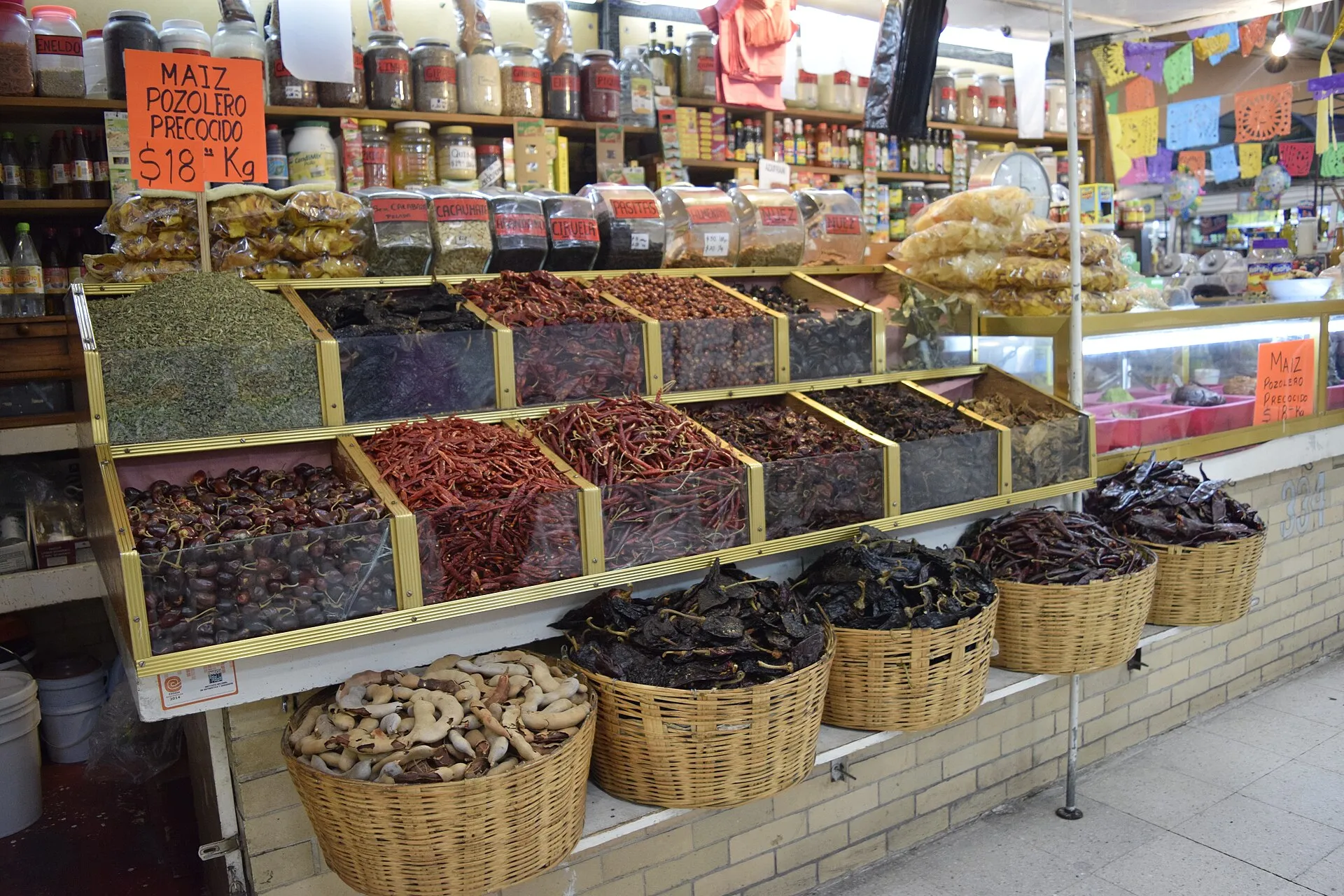
| Covered market lunch | Self-guided stalls at a market such as Mercado de Jamaica or Coyoacán | Priced per dish at each stall | Your own pace | Daytime grazing on tostadas, esquites, carnitas and fruit |
If you are in town for three or four days, a guided evening on the first night helps for the rest of your trip: once you know the difference between suadero, campechano and maciza, ordering at a corner stand is easier.
Top guided food tours and cooking classes
The two GetYourGuide options below are the ones we list for this city.
Mexico City: Tacos & Mezcal Night Food Tour
From MXN 2,580 · 4.9 stars from 126 reviews · 4 hours
The Mexico City: Tacos & Mezcal Night Food Tourad is a 4-hour evening tour on which you taste tacos and drink mezcal while you take in Mexico City’s nightlife, according to its listing.
3h Cooking Class in Mexico City: 8 Recipes & Drinks
From MXN 1,290 · 4.4 stars from 16 reviews · 3.5 hours
The 3h Cooking Class in Mexico City: 8 Recipes & Drinksad is a class in the heart of Mexico City with a local guide, in which you prepare eight recipes and drinks and learn the cultural significance of each dish, along with techniques and cooking methods.
Key Mexico City street foods to know
Even if you book a tour, you will pass dozens of kerbside carts between sights. Knowing the core dishes helps you order cleanly.
Tacos al pastor and tacos de suadero
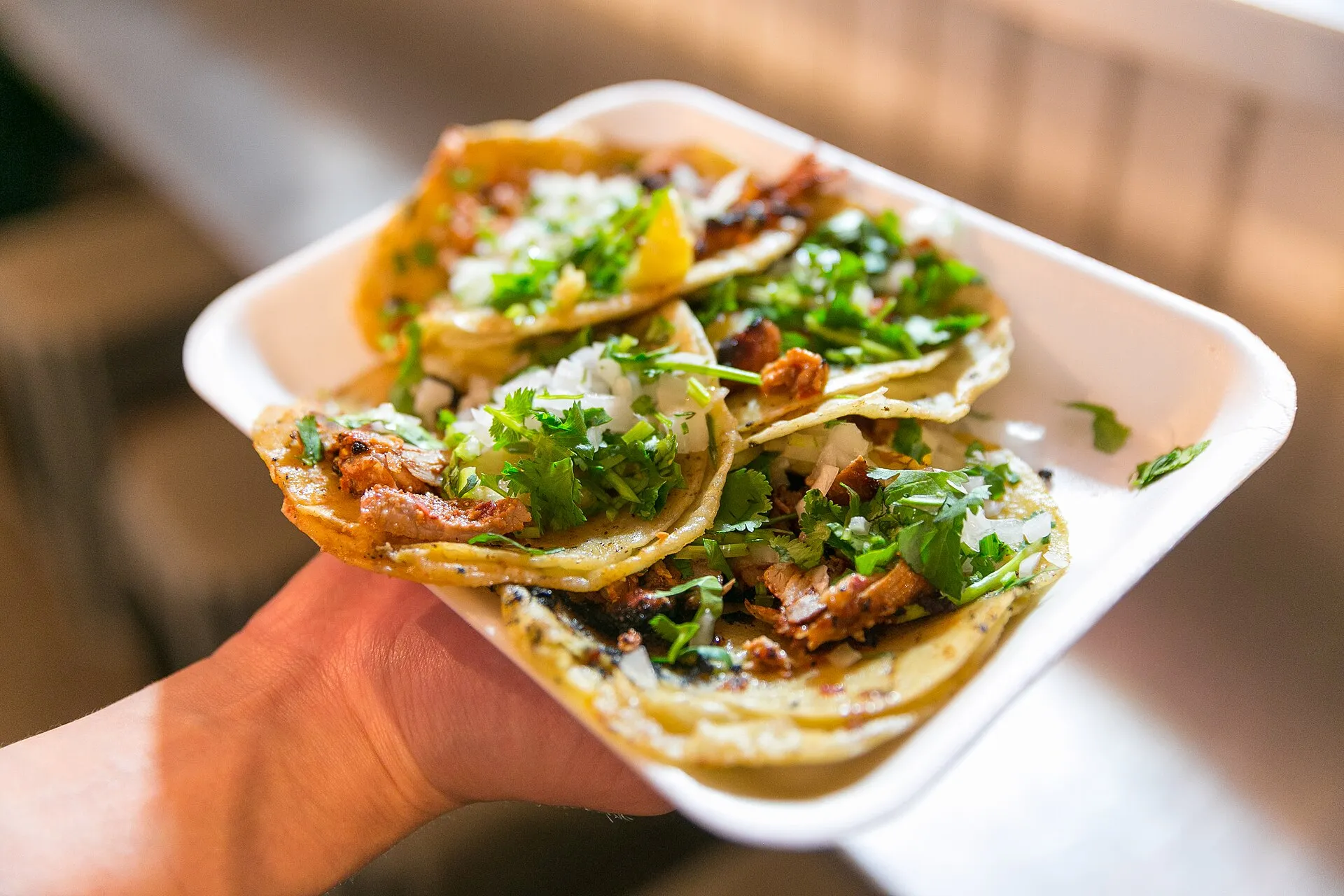
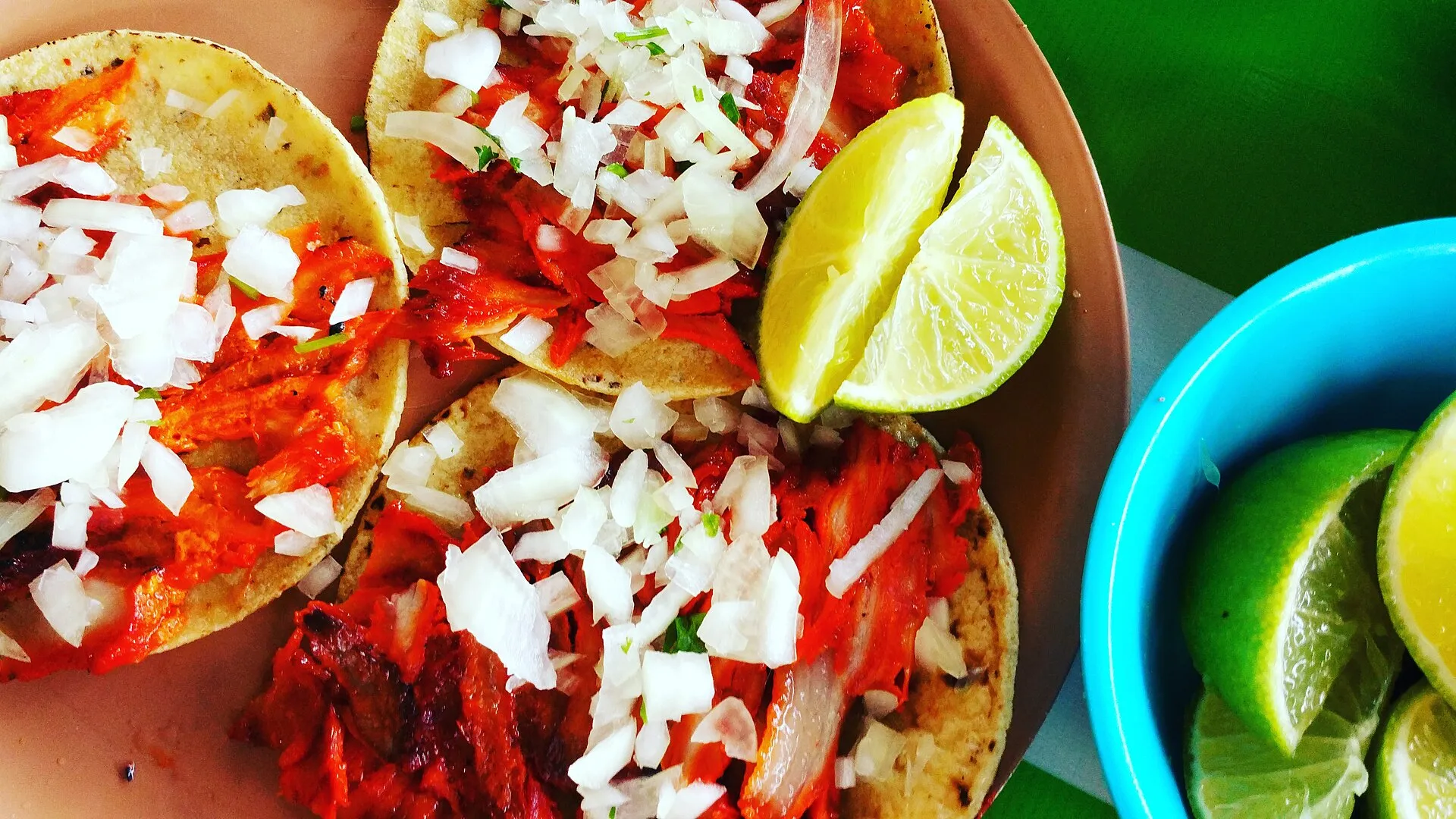
Tacos al pastor are marinated pork stacked on a vertical rotating spit (trompo), a method that came from Lebanese shawarma brought to Puebla and Mexico City in the twentieth century. The taquero shaves thin strips onto small corn tortillas, flicks a slice of roasted pineapple (piña) from the top of the spit, and finishes them with raw white onion and cilantro. Order them con todo (“with everything”) or sin piña if you prefer them savoury.
Tacos de suadero are just as central. Suadero is a thin cut of beef from between the belly and the leg, cooked slowly in a concave steel pan (choricera) beside longaniza (spiced sausage) and tripa. Ask for a campechano to get chopped suadero and crisp longaniza in the same tortilla.
Esquites and market snacks
Carts steaming with corn kernels appear outside Metro stations, plazas and markets such as Mercado de Jamaica, Mexico City’s flower market. Esquites are corn kernels simmered with epazote and served hot in a cup with mayonnaise, grated queso cotija, lime juice and powdered chilli (chile piquín or del que pica if you want heat). Ask the price before the vendor fills the cup.
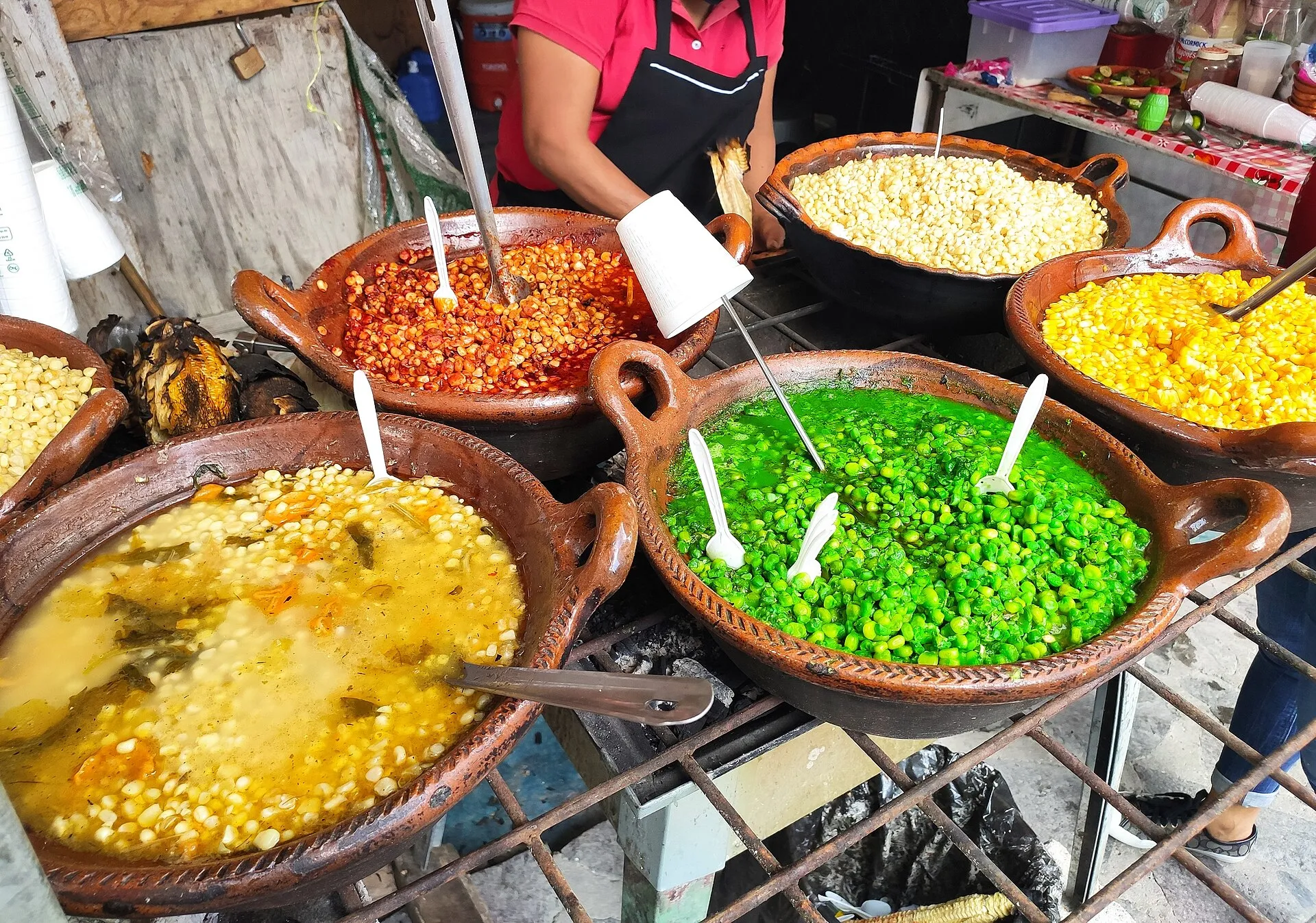
Clay pots of esquites at a market stall. Photo: Ezaleta, Wikimedia Commons, CC BY-SA 4.0.
Salsas, molcajetes and mezcal
No taco is finished until you spoon on salsa. Most taquerías set out at least two bowls (a green tomatillo-and-serrano salsa verde and a roasted red chilli salsa roja, often ground in a volcanic-stone mortar called a molcajete), plus a hotter oil on the side. Test a tiny drop on the edge of your tortilla first, because colour does not tell you how hot a salsa is.
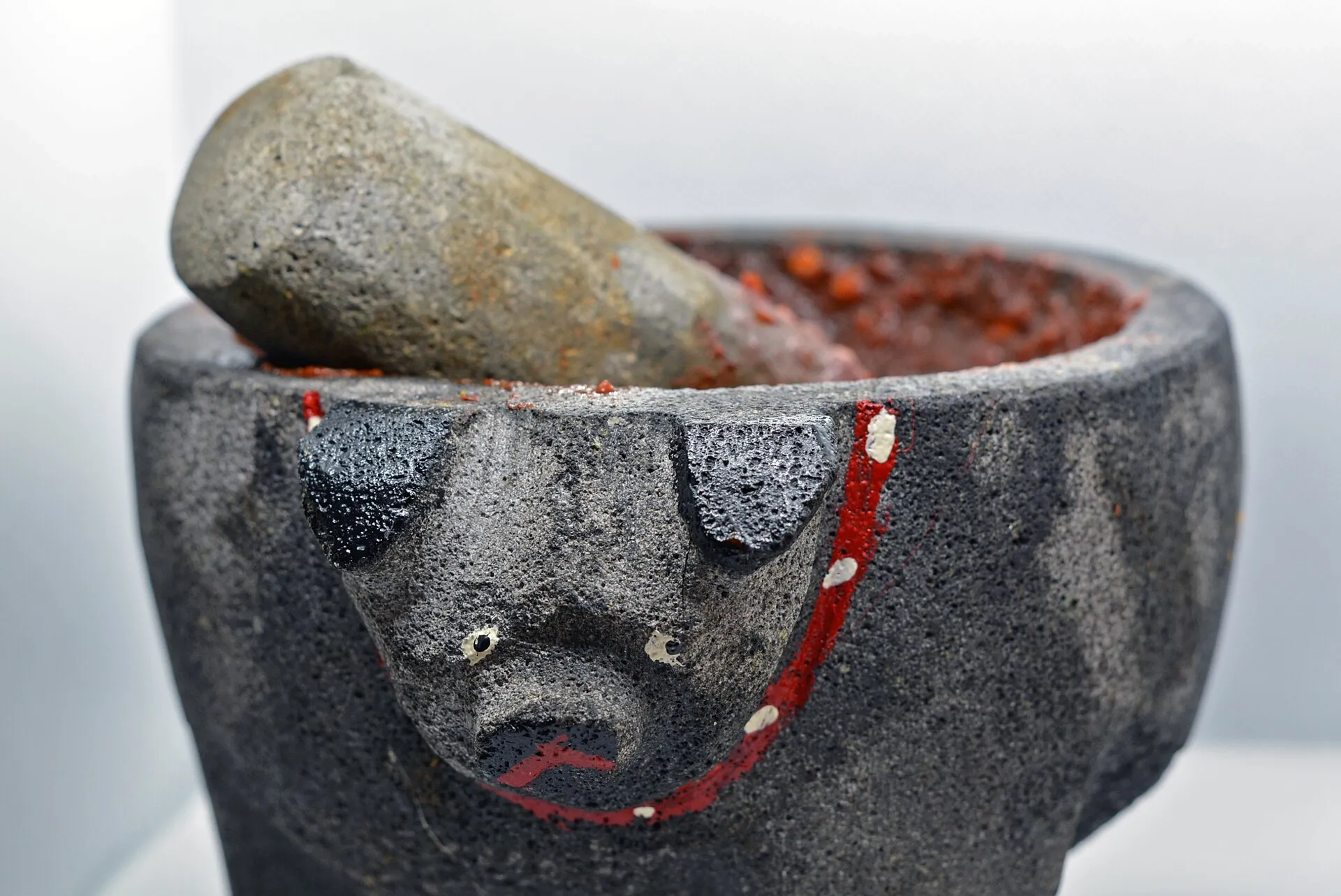
A pig-shaped volcanic-stone molcajete and pestle. Photo: ProtoplasmaKid, Wikimedia Commons, CC BY-SA 4.0.
At a mezcalería in Roma Norte, Condesa or Juárez, sip mezcal slowly from a clay copita or small glass rather than shooting it. Many bars serve it with orange slices dusted with sal de gusano, a salt made with toasted agave-worm.
Churros and hot chocolate
Late evenings in Centro Histórico or Roma Norte often end with freshly fried churros rolled in cinnamon sugar and dipped in thick hot chocolate. Churrería El Moro opened in the Centro Histórico in 1935. Its own site lists the Eje Central Lázaro Cárdenas 42 branch as open 24 hours, and the Condesa, Roma Norte and Polanco branches from 09:00 to 23:00. It says its chocolate is made with cacao from Tabasco.
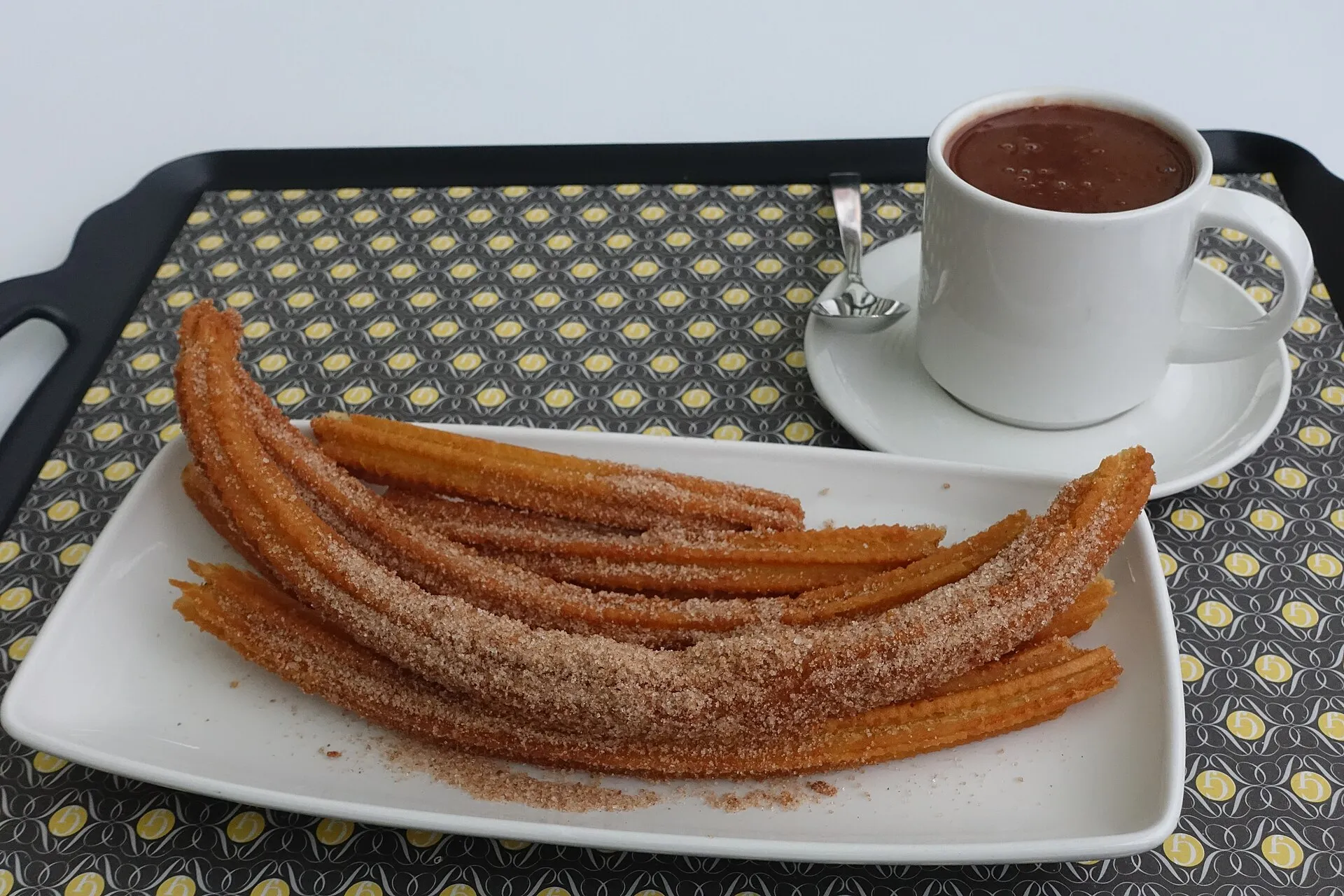
Churros with hot chocolate. Photo: mike from New York, NY, US, Wikimedia Commons, CC BY-SA 2.0.
How to order at a street taco stand
- Watch the crowd first: Pick a stall with brisk turnover and locals eating at the counter.
- State the filling and quantity clearly: Say “Dos de pastor y uno de suadero, con todo, por favor” (two al pastor and one suadero, with onion and cilantro).
- Check how the stall charges: At many kerbside stalls you keep count of what you ate and settle at the end. Some sit-down taquerías use a cashier desk (caja) where you buy a slip first and hand it to the cook.
- Carry small bills: Street stalls rarely have change for large notes, so keep small notes and coins on hand; see money in Mexico City for ATM advice.
- Know the tip etiquette: Kerbside stands do not expect a tip, while sit-down taquerías expect 10 to 15 percent propina.
For sit-down restaurants, from breakfast chilaquiles and pozole halls to Polanco tasting menus, read our dedicated where to eat in Mexico City guide, or pair your evening eating with the Roma Norte, Condesa and Coyoacán walk and the Centro Histórico walk.
For mezcal bars and cantinas see mezcal bars and cantinas in Mexico City, and for a hands-on class with a market visit, cooking classes in Mexico City.
Common questions
How much do street tacos cost in Mexico City?
Taquerías post the price per taco on a board above the counter, so read it before you order and ask if there is none. As one data point, the MICHELIN Guide listing for Los Especiales prices a plate of four tacos de canasta with a bottled Coca-Cola at MXN 65. Newer taquerías and tacos with premium cuts cost more.
Is a Mexico City food tour worth the money?
It depends on how much you want handled. The Tacos & Mezcal Night Food Tour is listed from MXN 2,580 for 4 hours of tacos and mezcal. Ordering yourself costs the price per taco on the board, but street stalls rarely have English menus, so a guide helps if you want fillings explained.
Is Mexico City street food safe to eat?
Choose stalls with high turnover, a queue of local diners and meat cooked to order on the griddle or trompo. Avoid pre-cut fruit left uncovered in the sun and drink bottled or filtered water.
Should I tip at street taco stands in Mexico City?
Tipping is optional at kerbside stands. At sit-down taquerías and restaurants with table service, leave 10 to 15 percent as a tip (propina).
Can vegetarians enjoy a Mexico City food tour or cooking class?
Tell the operator your dietary needs when you book. Meat-free taco fillings in Mexico City include huitlacoche (corn truffle), flor de calabaza (squash blossom), grilled nopales (cactus) and roasted poblano peppers.