In this guide
💡 The Short Version: Mexico City sits at 2,240 metres, so daytime temperatures stay between 22 and 27°C on average all year and nights are cool. The top months are March–April (dry, with jacaranda blooms) and late October–November (rains ending and Día de Muertos). June–September is the wet season, with 137 to 177 mm of rain a month, so plan sights for the morning.
⚠️ Pack layers whatever the month. Average lows are 8 to 14°C all year, so evenings are cool even after a warm afternoon, and many historic hotels and cafés have no central heating. Add a compact umbrella from June to October.
Mexico City seasons at a glance
The figures are the 1991 to 2020 climate normals for the Tacubaya weather station.
| Season | Months | Avg. high / low | Rainfall | Crowds and events | Suits |
|---|---|---|---|---|---|
| Spring (jacaranda season) | Mar – May | 26–27°C / 11–14°C | Mar 12 mm, Apr 25 mm, May 63 mm | Semana Santa (Easter week) | Purple jacaranda streets, outdoor dining, Teotihuacán |
| Rainy season | Jun – Sep | 24–26°C / 13–14°C | 137–177 mm a month | 15–16 September (Independence Day) | Green parks, morning sightseeing with museums in the afternoon |
| Autumn and festival season | Oct – Nov | 23°C / 10–12°C | Oct 71 mm, Nov 18 mm | Mexican Grand Prix (usually late October), Día de Muertos | Día de Muertos, clear skies as the rains end |
| Dry winter | Dec – Feb | 22–24°C / 8–9°C | Dec 5 mm, Jan 13 mm, Feb 6 mm | 12 December (Virgin of Guadalupe), Christmas and New Year | Clear volcano views, museum visits |
Spring (March to May): jacarandas and dry sunshine
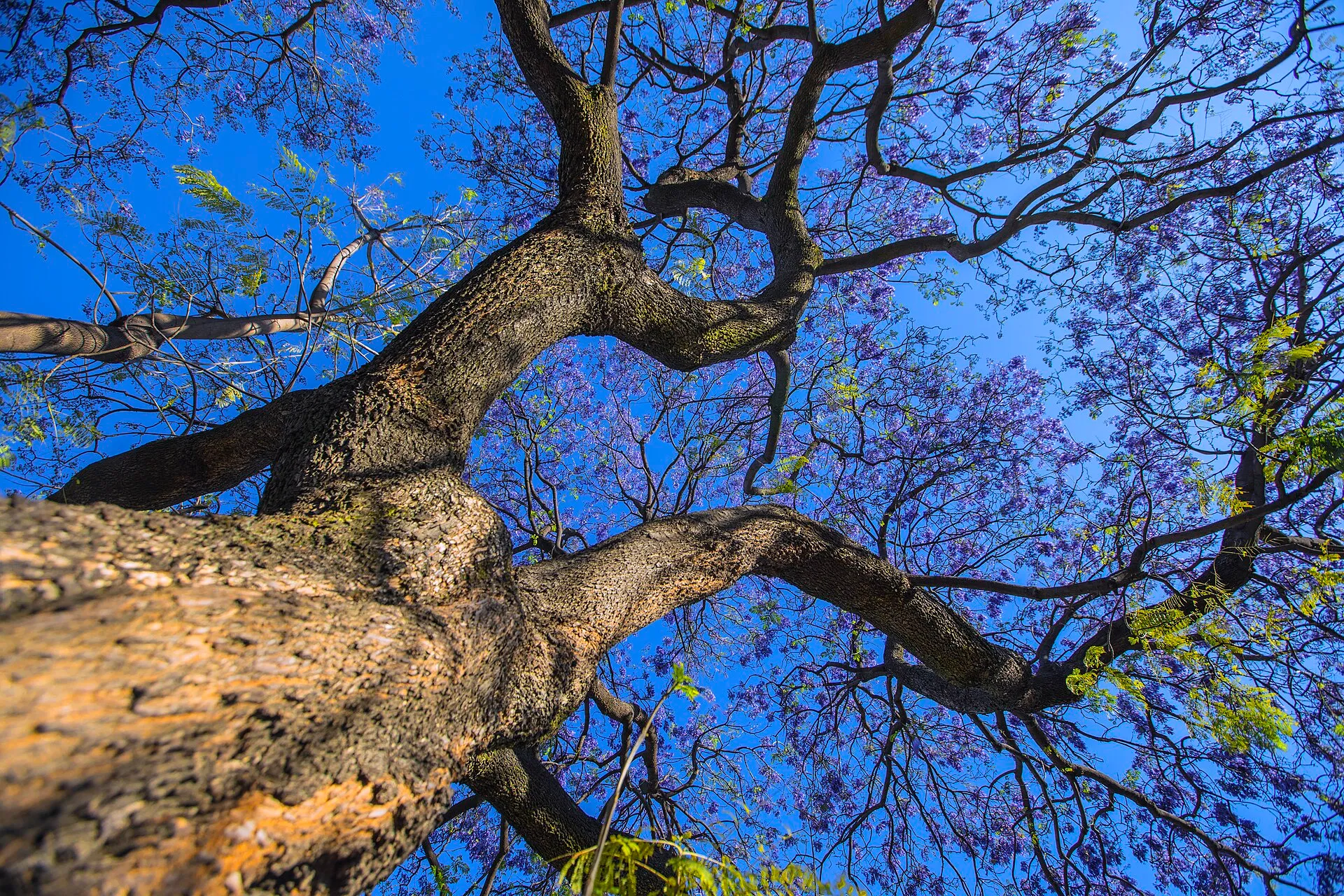
March and April are the months for jacaranda blossom, with violet canopies along Paseo de la Reforma, in Parque México, along Avenida Ámsterdam, in Alameda Central and around Coyoacán. They are also the warmest months on average: 26.0°C in March, 27.3°C in April and 27.1°C in May.
- Semana Santa (Easter week): Many residents leave the city, which lightens traffic, though popular sights and Teotihuacán stay busy.
- May caveat: The wet season begins in May, with an average of 62.5 mm of rain against 24.9 mm in April. Visit Teotihuacán early, when the site opens at 08:00, and take water and sun protection.
Autumn (October to November): Día de Muertos
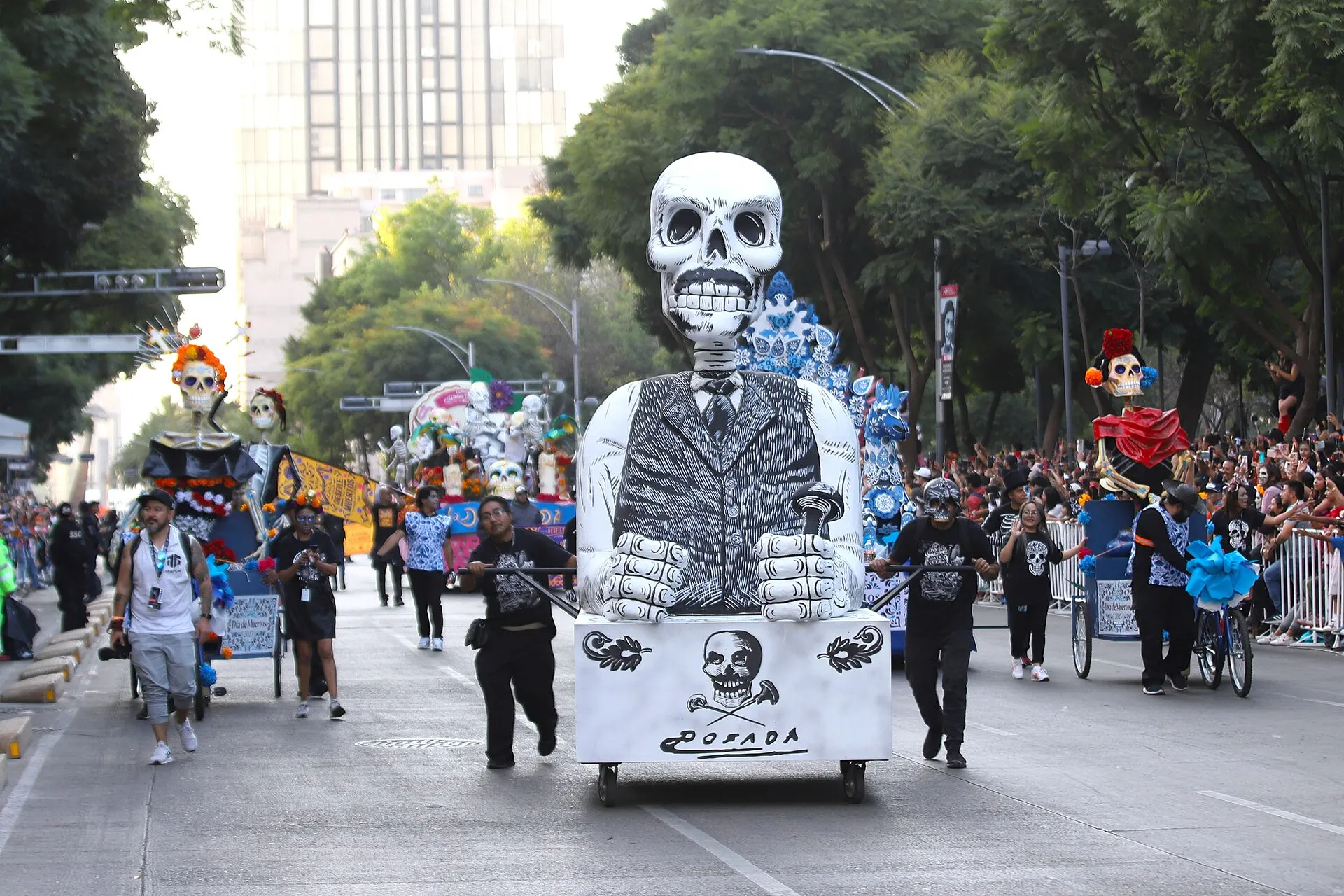
Late October and the first days of November are the busiest time for events, when the city marks Día de Muertos (Day of the Dead).
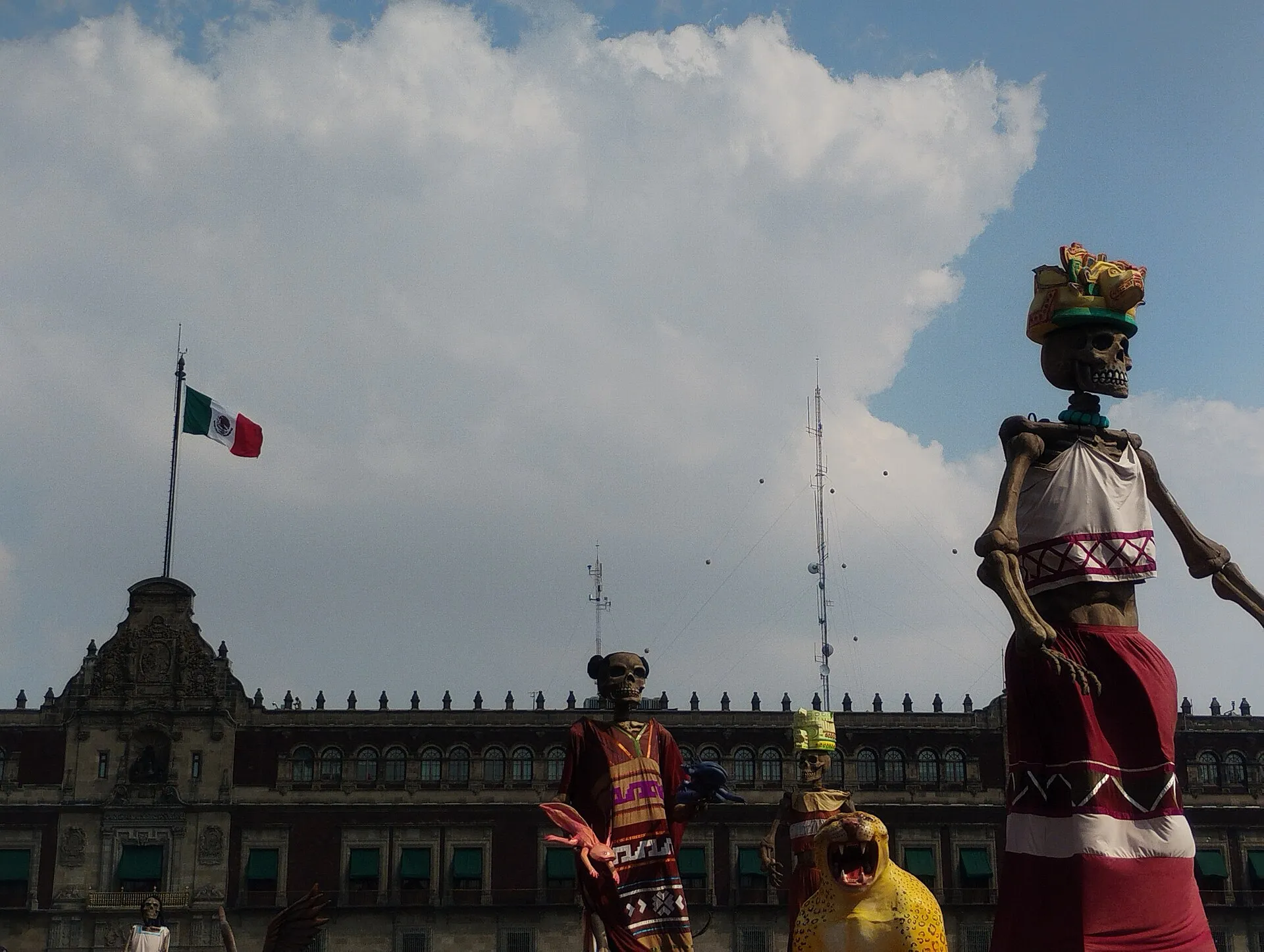 Giant skeleton figures in the Zócalo. Photo: Ferfive, Wikimedia Commons, CC BY 4.0.
- What happens: The city builds ofrendas (altars) in the Zócalo, decorates Paseo de la Reforma with cempasúchil marigolds, holds a monumental alebrije parade and stages a Día de Muertos parade along Paseo de la Reforma to the Zócalo; Día de Muertos in Mexico City has the 2026 and 2027 dates, the route, Mixquic and Xochimilco.
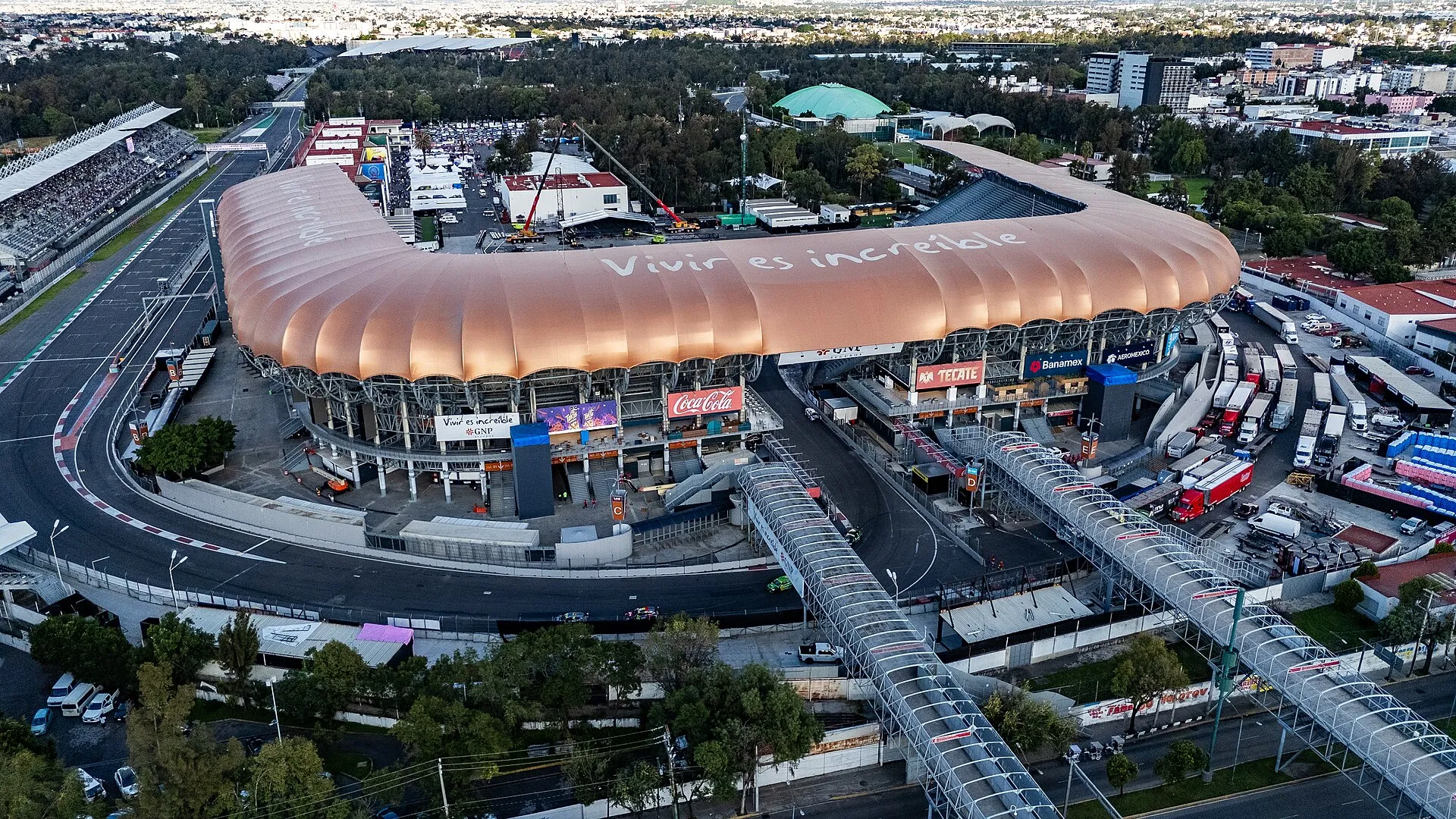
- Formula 1 Mexican Grand Prix: It falls in late October or early November, overlapping the festival: 30 October to 1 November in 2026 and 29 to 31 October in 2027 (see the Mexico City Grand Prix page). If you plan to visit between 20 October and 5 November, book hotels in Roma, Condesa, Polanco or Centro months ahead, as rooms sell out.
- Mid- to late November: Rainfall drops to 18 mm on average in November, and the festival crowds have gone, which makes the second half of the month a calm time to visit.
Rainy season (June to September): green parks and afternoon storms
Rain is concentrated in the wet months: 137 mm in June, 177 mm in July, 175 mm in August and 160 mm in September on average. Storms tend to arrive in the afternoon or evening, so mornings are the time for open-air sights.
 Paddle boats on the Lago Menor in Chapultepec, with the castle behind. Photo: ProtoplasmaKid, Wikimedia Commons, CC BY-SA 3.0.
- How to structure rainy-season days: Put outdoor sights (Teotihuacán, Chapultepec Castle, Xochimilco and our Centro Histórico walk) in the morning, then move indoors to the National Museum of Anthropology, the Palacio de Bellas Artes or a long lunch when the clouds build.
- Independence Day: On 15–16 September the Zócalo hosts El Grito, with fireworks and parades.
Winter (December to February): clear skies and cool nights
December to February is the driest part of the year, with 5 mm of rain in December, 13 mm in January and 6 mm in February on average. Clear mornings can show the snow-capped Popocatépetl and Iztaccíhuatl volcanoes.
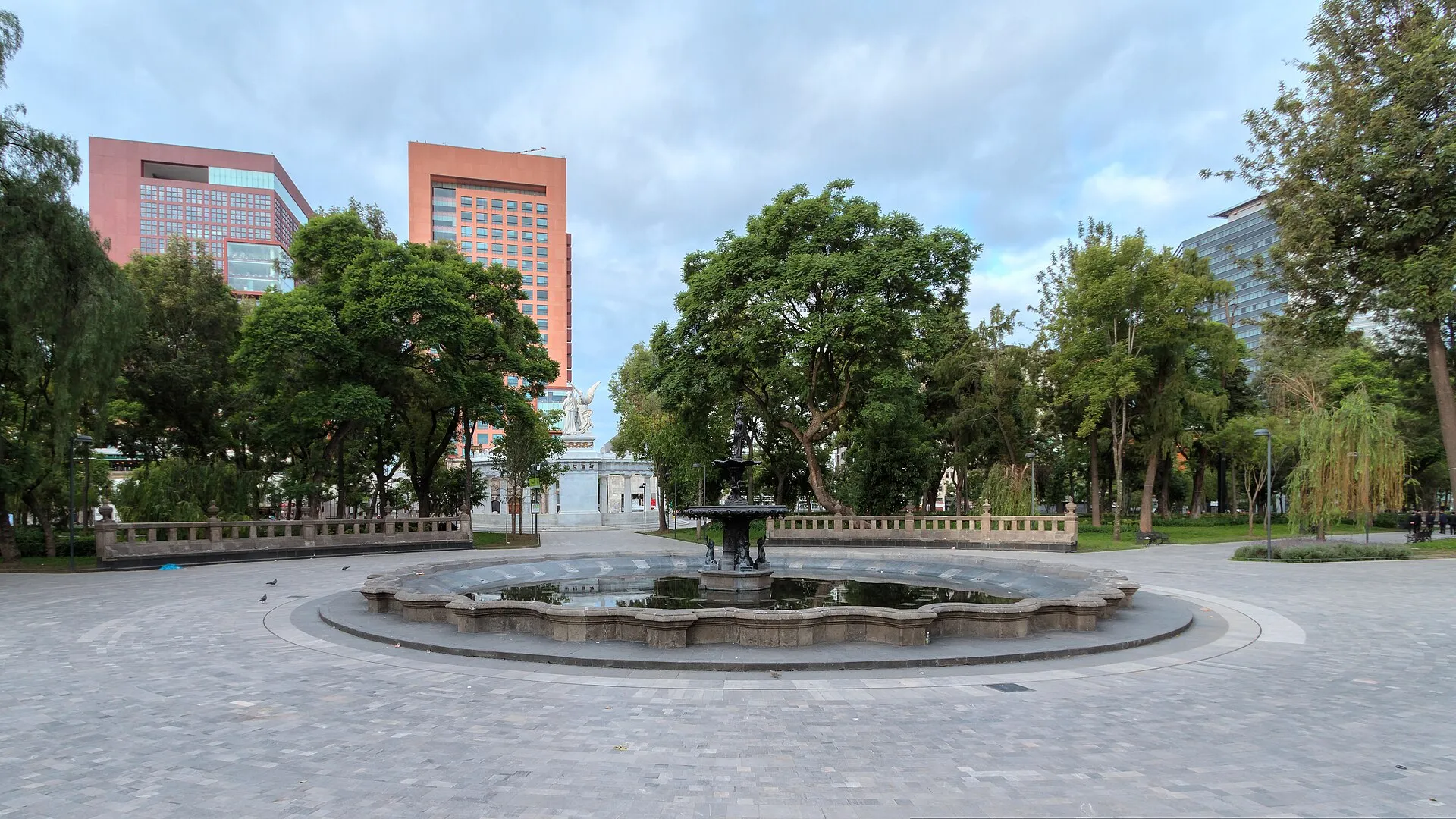 A fountain in Alameda Central. Photo: Pierre-Selim Huard, Wikimedia Commons, CC BY 4.0.
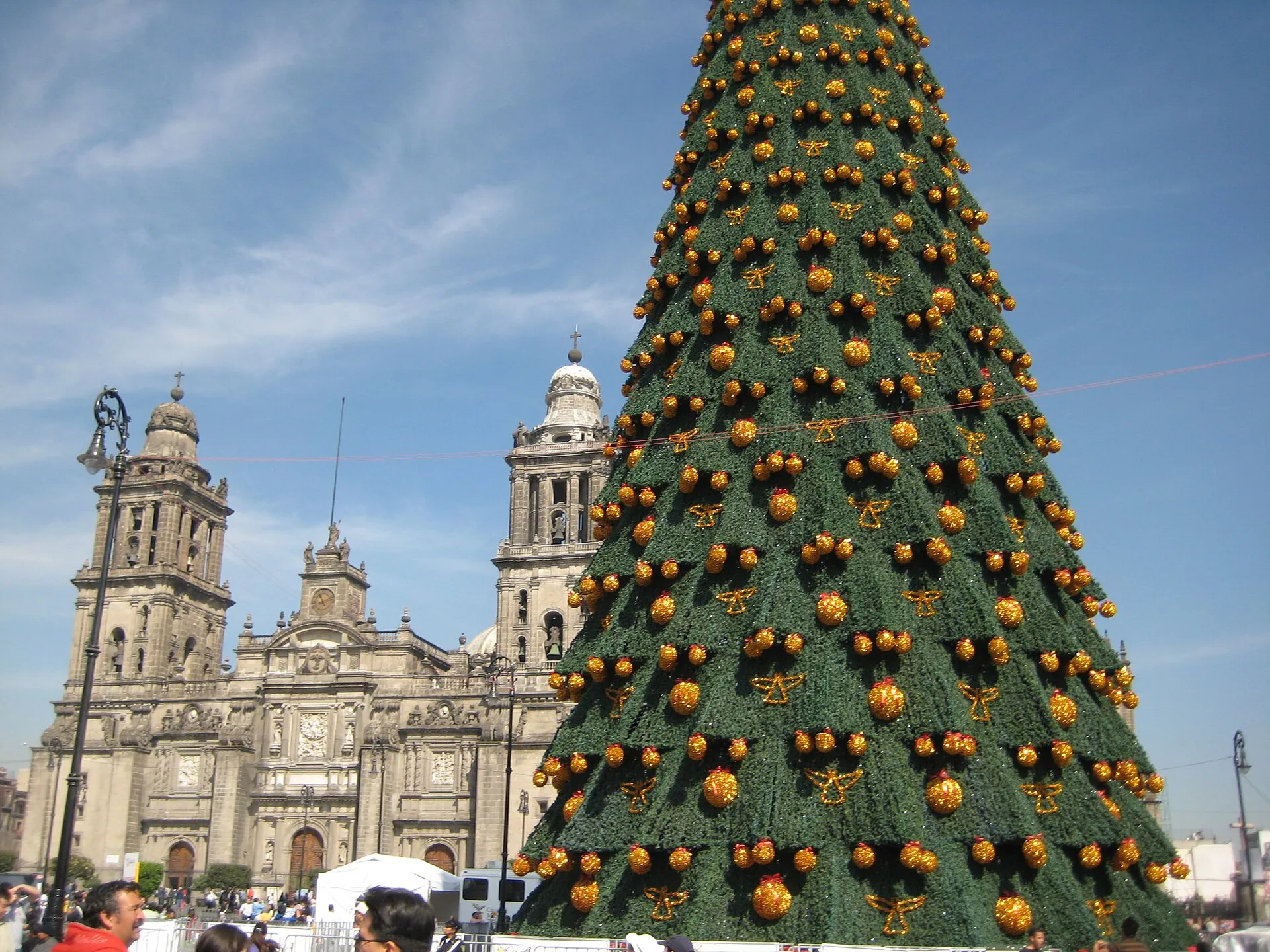
- Festive dates: 12 December (Día de la Virgen de Guadalupe) draws pilgrims to the Basilica of Our Lady of Guadalupe, with road closures and heavy crowds around La Villa on 11 and 12 December. Posadas, Christmas lights and New Year events follow later in the month; see Christmas in Mexico City for the dates.
- January and February: Average highs of 22 and 24°C and average lows of 8 and 9°C, with little rain.
- Art week (February): Zona Maco, a contemporary art fair, brings collectors to Polanco, Roma and Juárez for a week each February.
Key public holidays and closure reminders
- Every Monday: State museums (Anthropology Museum, Chapultepec Castle, Templo Mayor, Palacio de Bellas Artes, Casa Azul) close. Teotihuacán, Museo Soumaya, Xochimilco and the Basilica stay open.
- Public holidays (1 January, 1 May, 16 September, 25 December): Some restaurants and smaller museums close or run reduced hours. Check opening times before you lock in your 3-day or 4-day itinerary.
Common questions
What is the best time to visit Mexico City?
March to May and late October to November are the two standout windows. In the 1991 to 2020 climate normals for Tacubaya, average daytime highs reach 26°C in March and 27°C in April, with little rain, and jacaranda trees are in bloom across Roma, Condesa and Reforma. Late October to mid-November has Día de Muertos and clear skies as the rains end.
When do the jacarandas bloom in Mexico City?
Jacarandas bloom in spring, with March and April the usual peak, along Paseo de la Reforma, in Parque México, along Avenida Ámsterdam and around Coyoacán.
Is the rainy season (June to October) a bad time to visit Mexico City?
It is a good time for anyone who plans around the rain. June to September are the wettest months, with 137 to 177 mm of rain a month on average in the Tacubaya normals, and storms tend to arrive in the afternoon or evening. Put outdoor sights (Teotihuacán, Chapultepec, Xochimilco) in the morning and museums in the afternoon.
When is Día de Muertos in Mexico City and how early should I book?
Día de Muertos is on 1 and 2 November, and the city's events (the Zócalo ofrendas, the Reforma parade and the marigold displays) run in the days around it. Book hotels in Roma, Condesa or Centro months ahead, because the Mexican Grand Prix usually falls in the same weeks.
Does Mexico City get cold in winter?
Days are mild and nights are cool. Average highs from December to February are 22 to 24°C and average lows 8 to 9°C in the Tacubaya normals, at an altitude of 2,240 metres. Many older hotels and restaurants have no central heating, so pack a warm jacket or fleece.
What is the warmest month in Mexico City?
April, with an average high of 27.3°C in the 1991 to 2020 Tacubaya normals, followed by May at 27.1°C. May is also the month the wet season begins, with 62.5 mm of rain on average, against 24.9 mm in April.