In this guide
💡 The Short Version: Petty crime and fake guides are the problems in the medina, not violence. Use a guide with an official badge and permission from the local authority, or none. Say “la chakrun” and keep walking when a stranger offers to show you the way or tells you a place is closed. Agree taxi fares in dirhams before you get in, and ask for the meter in the city. Cover shoulders and knees, ask before photographing people, and do not pay for a photo with a chained monkey or a snake. Drink alcohol only in licensed venues. The rules below come from the Foreign Office’s advice for Morocco.
What the Foreign Office says
The advice covers the whole country (GOV.UK).
- Crime. Petty crime is common in tourist areas, especially medina quarters: pickpocketing, bag-snatching and drive-by motorcycle theft of visible jewellery and handbags. Occasional violent crime occurs, and knives have been used against tourists in street attacks and thefts in major cities. Avoid quiet areas, particularly after dark, and do not carry large amounts of money or valuables.
- Cash machines and directions. Be cautious when asking for directions and using cash machines: aggressive begging is common.
- Scams. Credit card fraud and scams are common. Check that the goods in the bag are the goods you bought.
- Terrorism. Terrorists are likely to try to carry out attacks in Morocco, including in places visited by foreign nationals. There are protective security measures at hotels and tourist sites.
- Protests. They can occur without warning, particularly in large cities. Avoid them.
- Earthquakes. Know the procedures in your hotel room. See Marrakech after the earthquake for what has reopened.
Guides and the scams that recur
A guide in the medina should have an official badge and permission from the local authority. The Foreign Office says it is common for people posing as official guides to harass tourists, and police arrested a man on 20 July 2026 after a tourist posted a video of an extortion and assault when he refused to pay for an unauthorised tour (Yabiladi), and another on 5 August 2026 for posing as a guide and demanding money (Le Brief). Marrakech medina tours compares the guided options.
| Scam | What happens | What to do |
|---|---|---|
| The faux guide | A man appears on a lane and offers to show you the way or a sight, then leads you to a relative’s carpet or spice shop | Say “la chakrun”, walk in your own direction |
| “I work at your hotel” | A man on a bike names your hotel and offers to take you to a “Berber market” or a special event | Ask the hotel, not him |
| “It’s closed” | A man says the palace or museum is shut and steers you elsewhere | Check the opening hours on the operator’s own page before you leave |
| Taxi with no meter | A flat fare far above the meter, or “100” meaning euros | Ask for the meter; agree dirhams aloud |
| Swapped goods | The bag you leave with holds a cheaper item | Open the bag in the shop |
Lonely Planet’s advice for the faux guide is a firm but polite “la chakrun” while you walk confidently in the direction you planned; if you do ask a local lad to show the way, 20 MAD is reasonable (Lonely Planet, 2023). It adds that plain-clothes police patrol the medina and that there is a police station at Jemaa el-Fnaa. Download an offline map first, since covered lanes lose the signal.
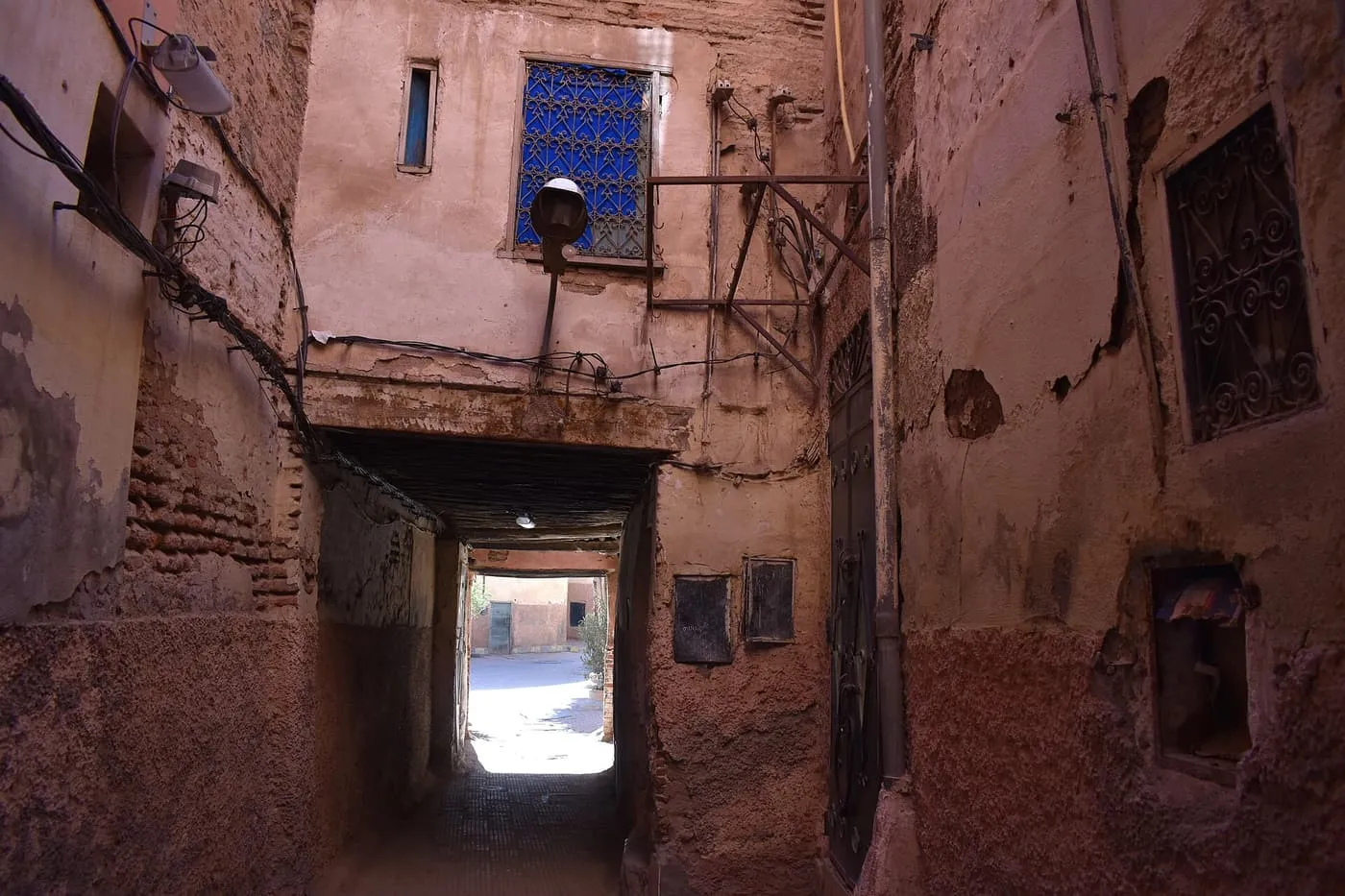
A quiet lane in the Marrakech medina. Photo: Misa.stefanovic.07, Wikimedia Commons, CC BY-SA 4.0.
Taxis and money
Petit taxis must use the meter, and many drivers refuse; the fares and what to say are in Marrakech airport to the medina. The Foreign Office warns that taxis booked through ride-sharing apps may be unregulated, unlicensed and uninsured; Uber says it works only through licensed vehicles. It also says petit taxi drivers will often pick up other customers during the journey, and that you should end the journey as soon as it is safe to do so if you feel uncomfortable.
Dress and behaviour
- Dress. Cover shoulders and knees in the medina. Lonely Planet advises dresses below the knee or trousers and a shirt that covers the shoulders for women, and knee-length shorts or trousers for men, with closed flat shoes for the uneven paths. The Foreign Office suggests loose clothing that covers the arms, legs and chest, especially for women travelling alone, who may receive unwanted attention.
- Ramadan. It next starts in February 2027. Eating, drinking, smoking or chewing gum in public in the daytime may cause offence.
- Affection. Avoid showing affection in public, particularly near religious sites. Same-sex relations are illegal and public affection can lead to prosecution. Unmarried people sharing a hotel room is generally not enforced against visiting foreigners in popular tourist areas.
- Alcohol. It is available in licensed venues. Drinking in the street or anywhere other than a licensed restaurant or bar is illegal and can lead to arrest. There have been deaths and serious illness from drinks containing methanol; seek urgent medical help for the signs.
- Drugs. Morocco takes a zero-tolerance approach, including to cannabis, and sentences are long. Do not carry items for strangers.
Photography
Ask permission before photographing people, especially children. It is illegal to photograph near sensitive political or military sites. A drone needs permission from the Directorate General for Civil Aviation before you fly it, or you risk fines and confiscation.
Animals
Jemaa el-Fnaa · calèches · camels
Do not pay to hold or photograph a monkey or a snake. Born Free’s 2025 visit to Jemaa el-Fnaa saw at least eight Barbary macaques with chains around their necks, dragged from visitor to visitor and in some cases dressed in clothes, and cobras dragged by the tail; several visitors, including families, paid the handlers. The Barbary macaque is classed Endangered by the IUCN, and since 2016 has had the highest protection against international commercial trade (Born Free). A petition addressed to Marrakech’s council against the use of snakes, macaques and horse-drawn carriages as tourist attractions had collected 17,360 signatures when Morocco World News reported it in August 2026 (MWN).
For calèche horses, donkeys and camels, the UK charity SPANA, which works in Morocco, advises choosing an animal that looks fit, with no prominent hips or backbone and no limp, avoiding wounds around the mouth, harness or saddle, and asking a carriage driver to go no faster than a trot. A camel should carry no more than 150 kg. If an animal looks thin or hurt, walk away (SPANA). The Agafay Desert page has the camel checklist in full.
Practical information
- Tour operators. Book balloon flights only through licensed operators; see Marrakech hot air balloon. Check that your insurance covers quad biking, water sports and balloon flights, since some policies do not.
- Hiking. For the Atlas, the Foreign Office advises researching trails, hiring a professional guide and carrying insurance that covers the activity; see the Imlil and Atlas Mountains day trip.
- Roads. Poor lighting makes night driving dangerous, and mountain roads are hazardous in bad weather.
- The one thing that ruins a trip. Following a stranger who offers to show you the way.
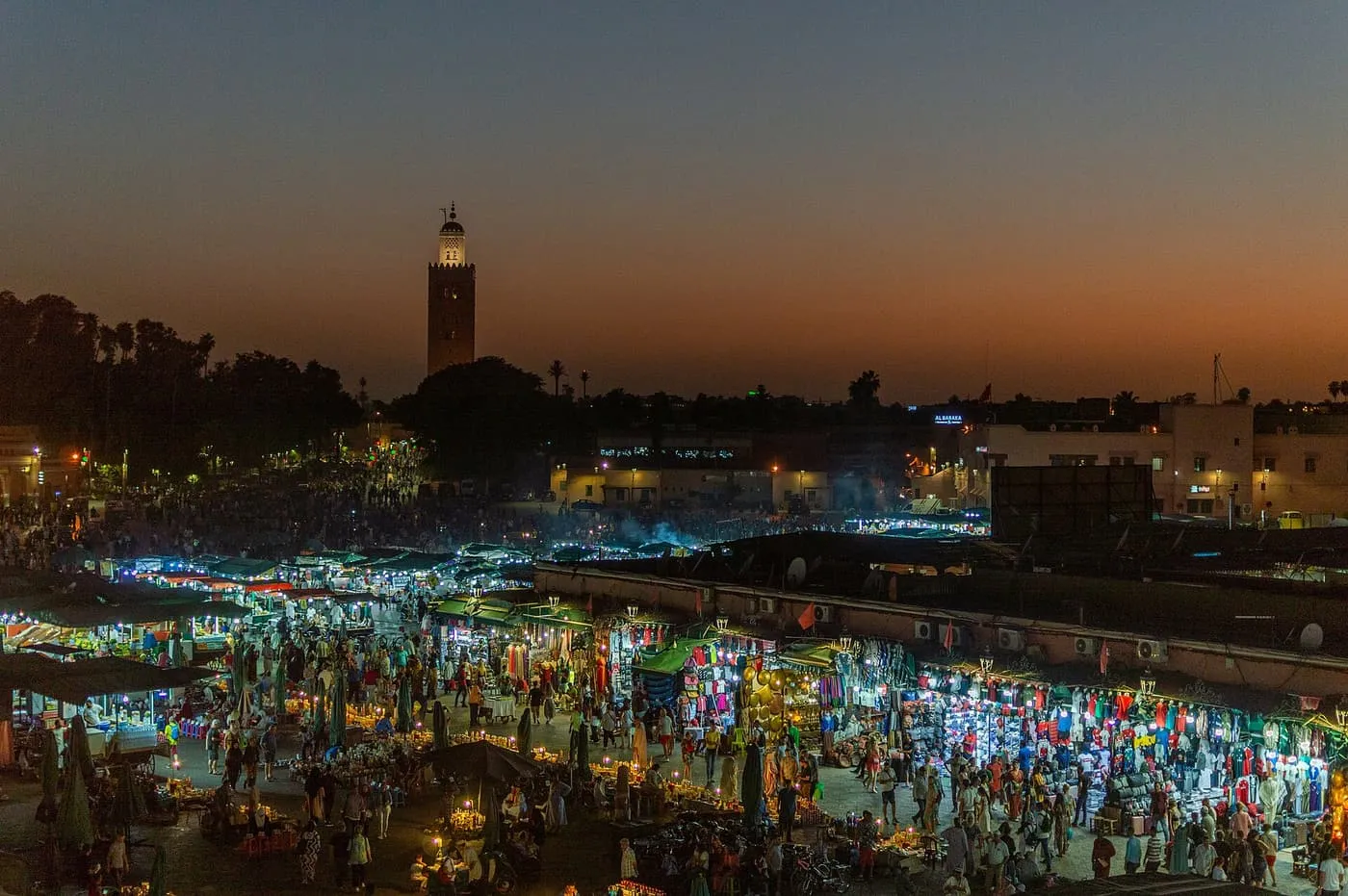
Jemaa el-Fnaa and the souks are where most of these come up, and the medina walk puts the rules on a route. For the rest of the planning, see what to book before you go to Marrakech, 3 days in Marrakech, where to stay in Marrakech and the best time to visit Marrakech. The day trips from Marrakech have their own safety notes.
Common questions
Is Marrakech safe for tourists?
Mostly, with the usual city risks. The Foreign Office says petty crime is common in medina quarters, including pickpocketing, bag-snatching and motorcycle theft of visible jewellery and handbags, that scams are common, and that people posing as official guides harass tourists. Avoid quiet areas after dark and do not carry large sums.
How do I avoid fake guides in Marrakech?
Use a guide only if they hold an official badge and permission from the local authority, which is the Foreign Office's advice, or use none. Say a firm "la chakrun" (no thank you) and keep walking in your own direction. Police arrested one man on 20 July 2026 and another on 5 August 2026 over unauthorised guiding and demands for money.
What should I wear in the Marrakech medina?
Cover shoulders and knees. The Foreign Office suggests loose clothing that covers the arms, legs and chest, especially for women travelling alone, and says to follow local dress codes during Ramadan, which next starts in February 2027.
Should I pay for a photo with the monkeys or snakes in Jemaa el-Fnaa?
No. Born Free saw at least eight Barbary macaques on chains in the square in 2025, dragged from visitor to visitor, and cobras dragged by the tail. The macaque is classed Endangered. Paying for the photo pays for the practice.