In this guide
💡 The Short Version: Start at the Koutoubia and finish at Bab Agnaou: 3.3 km, about 45 minutes of walking and most of a day with the three monuments. Leave the Koutoubia at 08:30 to reach the Bahia Palace as it opens at 09:00, or walk the route in reverse: the Bahia, El Badi Palace and the Saadian Tombs are 100 MAD each, open 09:00 to 17:00 daily, with no combined ticket and no timed slot. Jemaa el-Fnaa has no ticket and its food stalls start about 17:00, so a reverse walk ends there at dusk. The one thing that ruins a day is following a stranger who offers to show you the way: use a guide only with an official badge, or none, and say “la chakrun”. Or book a tour: the Bahia Palace, Saadian Tombs, souk and medina tourad (from £13, 4 hours) meets on Jemaa el-Fnaa and walks the same monuments with a guide.
The route
Map of the walk numbered stops in walking order
Open the whole route in Google Maps - all the stops in walking order, set to walking directions, which is the version to put on your phone. Download an offline map first: covered lanes lose the signal.
The walk goes from the Koutoubia, at the west edge of the medina, across Jemaa el-Fnaa and south-east to the Bahia Palace, through the Mellah to El Badi, and ends at the gate of the Kasbah. Prices are the adult rate for a foreign visitor in dirhams (MAD) from the operator, at about 13 MAD to the pound.
| Stop | Entry (adult) | Open |
|---|---|---|
| 1. The Koutoubia | Minaret and gardens free; mosque closed to non-Muslims | Always |
| 2. Jemaa el-Fnaa | Free | Always; food stalls from about 17:00 |
| 3. Rue Riad Zitoun el-Jdid | Free | Always |
| 4. The Bahia Palace | 100 MAD | Daily 09:00 to 17:00 |
| 5. The Mellah and the Lazama Synagogue | Streets free | Always |
| 6. El Badi Palace | 100 MAD | Daily 09:00 to 17:00 |
| 7. The Saadian Tombs | 100 MAD | Daily 09:00 to 17:00 |
| 8. Bab Agnaou | Free | Always |
Guides and scams on this route
Petty crime and fake guides are the problems in the medina. Is Marrakech safe? has the full list; on this walk:
- A guide needs an official badge and permission from the local authority, the UK Foreign Office’s advice. Otherwise go without one: the three monuments sell their own tickets.
- Say “la chakrun” and keep walking in the direction you planned when a man offers to show you the way, or tells you a palace is closed. The Bahia, El Badi and the Saadian Tombs are open 09:00 to 17:00 on the ministry’s own pages: check there, not with him.
- A “guide” who leads you to a carpet or spice shop is the common version.
- Agree every price first on Jemaa el-Fnaa, including a photo or a henna design, or decline. Do not pay for a photo with a chained monkey or a snake.
- Dress: cover shoulders and knees. Ask before photographing people.
Walk it with a guide
A guide adds the history, and the entry tickets may not be included: read what the booking covers before you rely on it. Prices are GetYourGuide’s lowest “from” prices, per person.
- Marrakech: Bahia Palace, Saadian Tombs, Souk and Medina Tourad: from £13, 4.7 stars from 7,604 reviews, 4 hours. It meets by the Café de France on Jemaa el-Fnaa and covers the Bahia, the Saadian Tombs, the souks and the square.
- Marrakech: Bahia Palace, Saadian Tombs & Koutoubia Mosquead: from £17, 4.5 stars from 3,577 reviews, 3 hours, a shared walking tour of the Kasbah monuments and the Koutoubia, which it does not enter.
- Marrakech: Saadian Tombs & Bahia Palace, Medina Guided Tourad: from £12, 4.6 stars from 2,031 reviews, 4 hours.
1. The Koutoubia
The minaret and gardens are free · the mosque is closed to non-Muslims · always open from outside
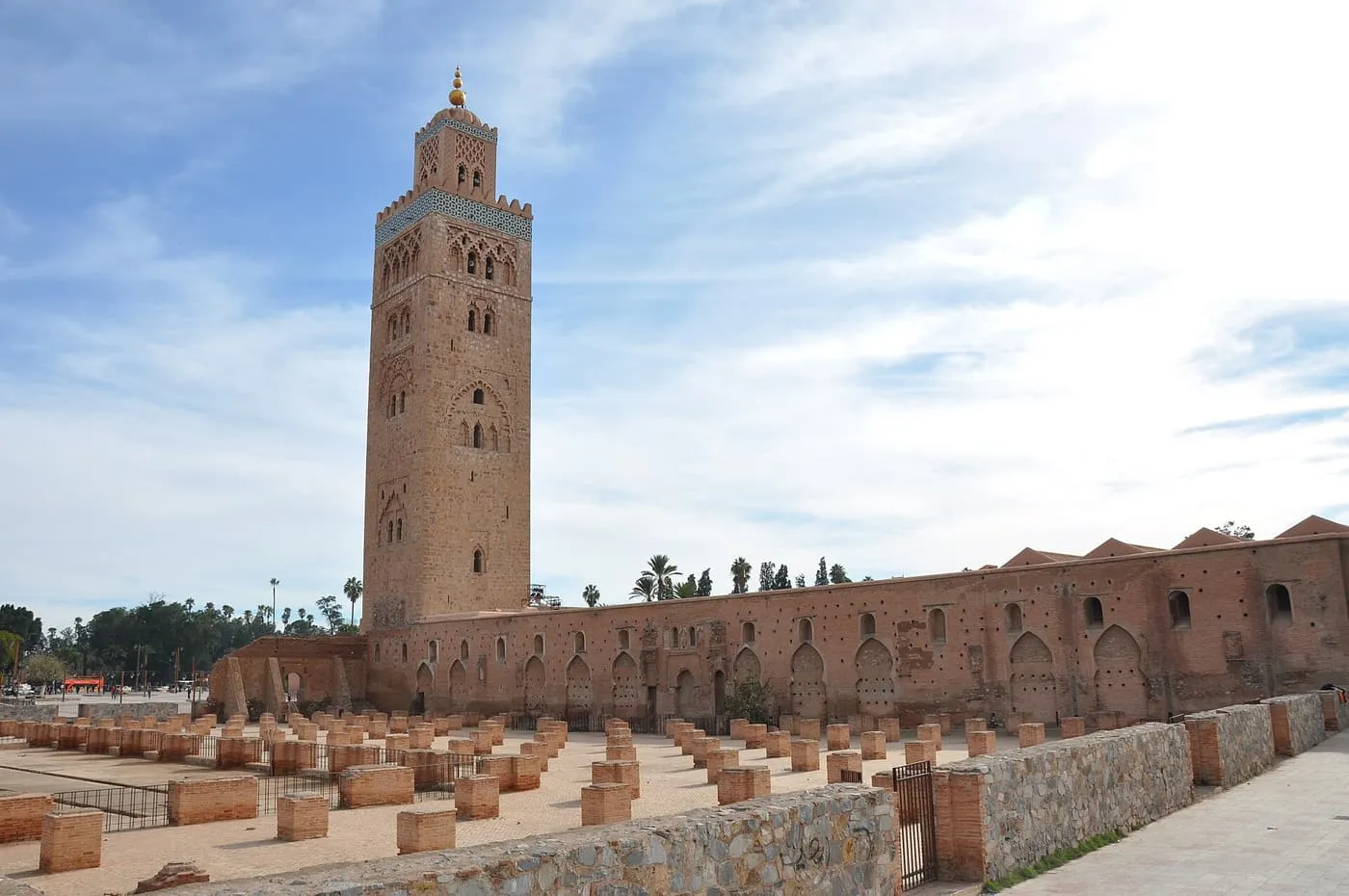
The Koutoubia minaret. Photo: Jorge Láscar, Wikimedia Commons, CC BY 2.0.
The largest mosque in Marrakech was founded in 1147 by the Almohad caliph Abd al-Mu’min and rebuilt about 1158; the minaret was finished around 1195. It is 77 m tall and decorated with varying arch motifs, and its name comes from the Arabic for booksellers, who once had as many as a hundred stalls at its foot. The mosque reopened to worshippers on 16 March 2024 after earthquake repairs.
- Non-Muslims cannot go in. The visit is the minaret from outside and the public gardens beside it.
- To the start: the tourism board lists a taxi station near the Koutoubia. Ask for the meter and agree the fare in dirhams: Marrakech airport to the medina has the rules.
2. Jemaa el-Fnaa
Free · no ticket and no opening time · the food stalls are set up from about 17:00 and busiest about 19:00 to 22:00
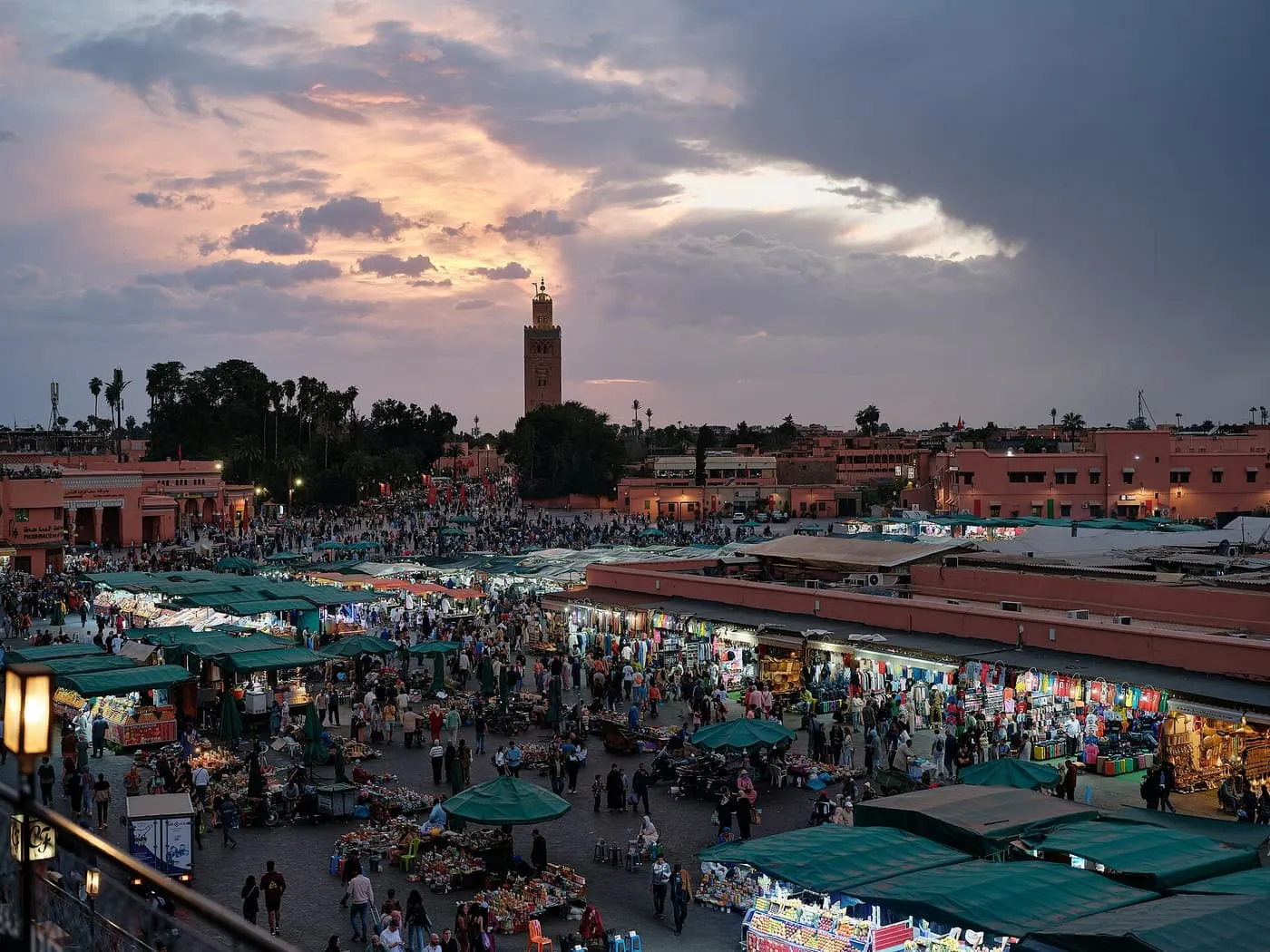
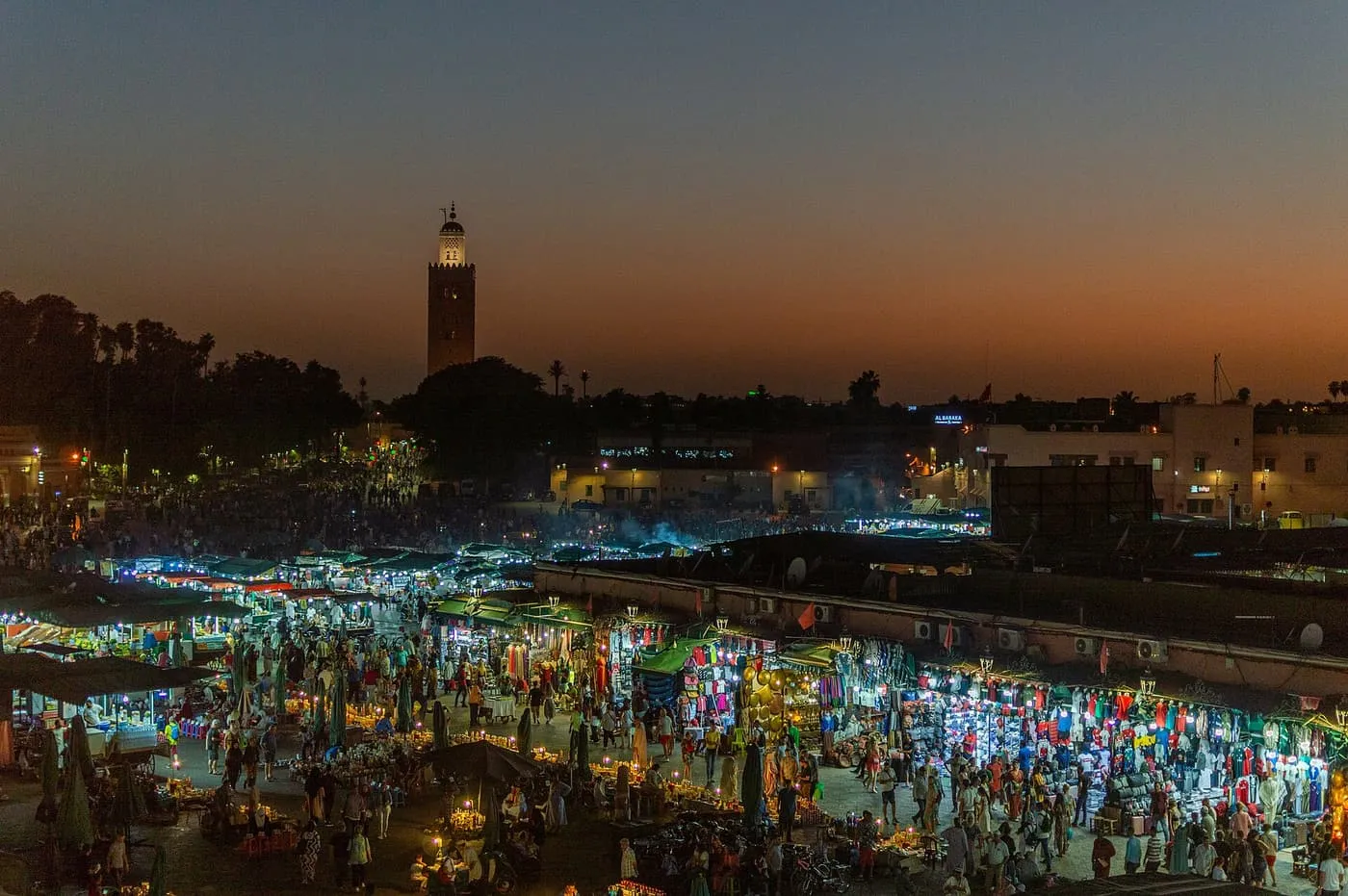
Jemaa el-Fnaa at dusk, with the Koutoubia on the horizon. Photo: Herokk, Wikimedia Commons, CC BY-SA 4.0.
UNESCO inscribed the square on its list of intangible cultural heritage in 2008. By day it is quiet, with orange-juice carts, herbalists and henna artists; storytellers, musicians and the food stalls take it over from the late afternoon. The square is being rebuilt, and the stalls are due to be replaced with new stands. See Jemaa el-Fnaa for the works and the evening.
- Agree every price first, including a photo or henna.
- Do not pay for photos with the chained monkeys or the snakes. The Barbary macaque is an endangered species.
- Pickpockets: the UK Foreign Office says pickpocketing and bag-snatching are common in medinas. A police station stands on the square.
- A food tour of the stalls: Marrakech food tours compares the guided tastings.
3. Rue Riad Zitoun el-Jdid
Free · always · the lane south-east from the square to the Bahia Palace
The lane runs from Jemaa el-Fnaa towards the Bahia, and the palace’s address is on it: 5 Rue Riad Zitoun el Jedid. A man who offers to show you the way, or says the Bahia is shut, is the scam in the list above: walk on and say “la chakrun”. Two restaurants on it are in where to eat.
4. The Bahia Palace
100 MAD (about £7.50), 50 MAD for a child aged 7 to 13 · daily 09:00 to 17:00 · no timed slot · bought at the gate or on the Ministry of Culture’s e-services site
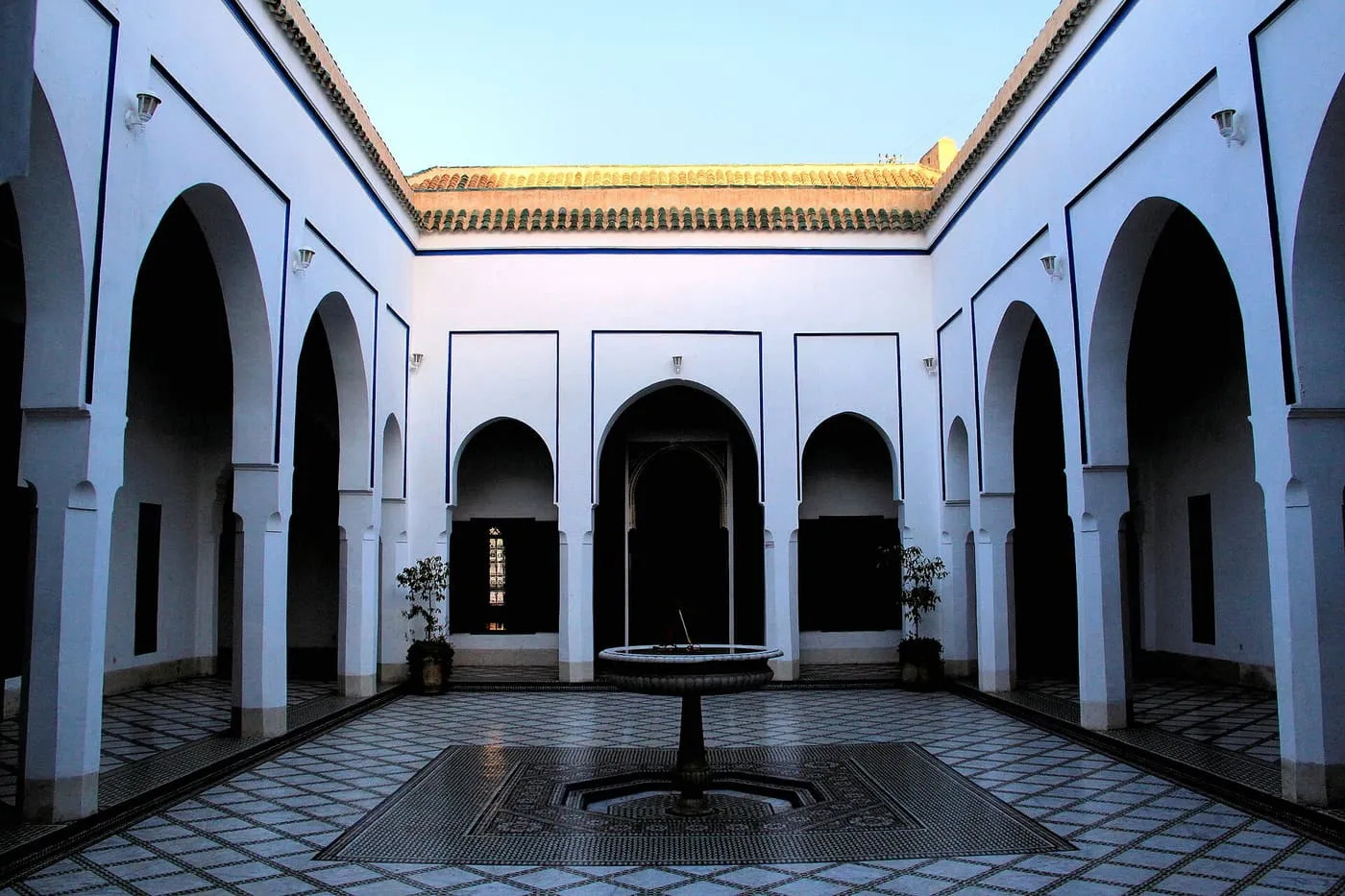
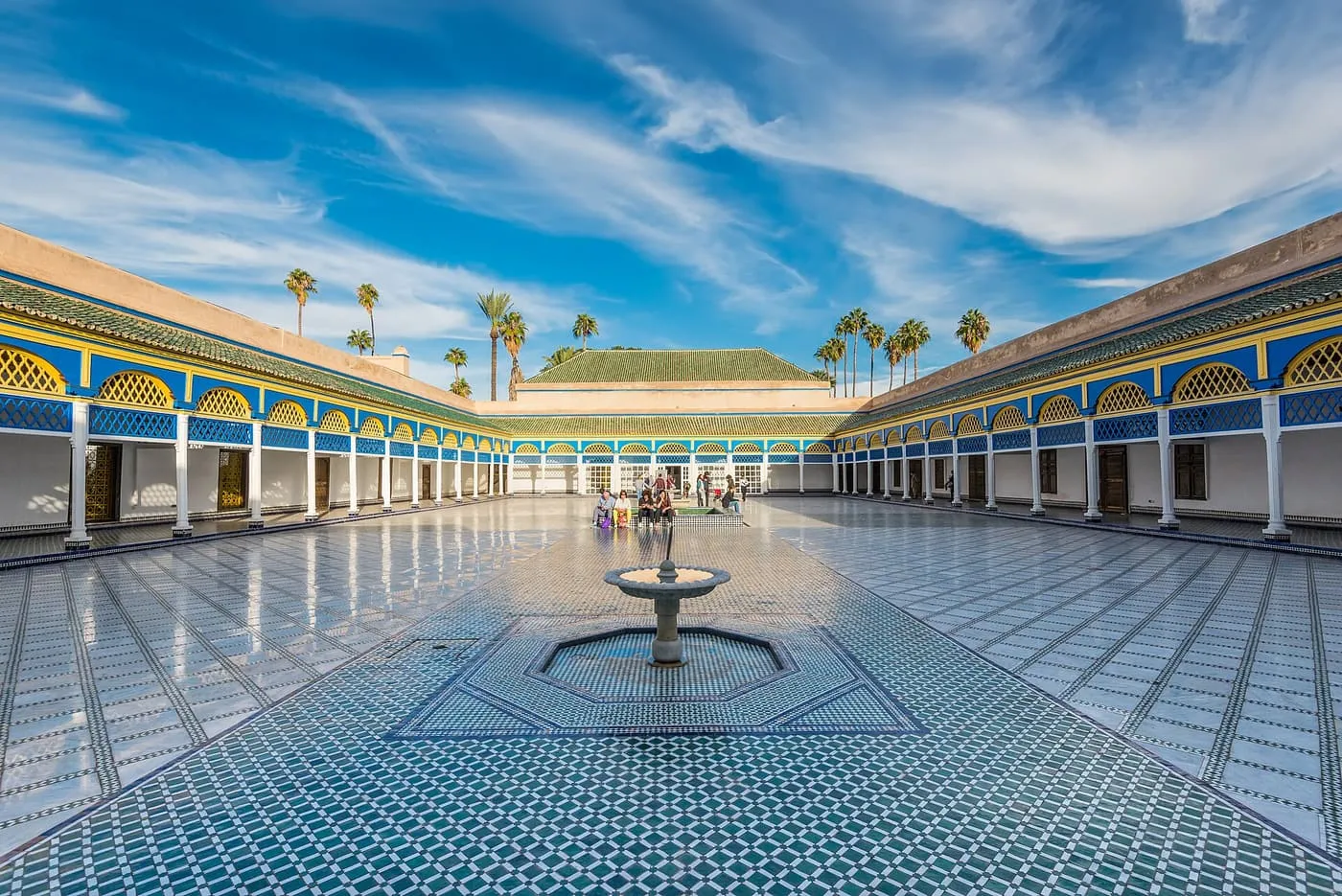
A courtyard of the Bahia Palace. Photo: Lionel Leo, Wikimedia Commons, CC BY-SA 3.0.
Si Musa, grand vizier to the sultan, began the palace in the 1860s, and his son Ba Ahmed expanded it from 1894 to 1900. It has about 150 rooms round courtyards and riad gardens, and is known for its painted wooden ceilings, carved stucco and tilework.
- Reach it at 09:00. The state says the palace is under heavy visitor pressure.
- Restoration after the 2023 earthquake continues, so expect fenced-off areas. Bahia Palace tickets has the details.
- No combined ticket with El Badi or the Saadian Tombs.
- A guide at the gate is optional.
5. The Mellah and the Lazama Synagogue
Streets free · always
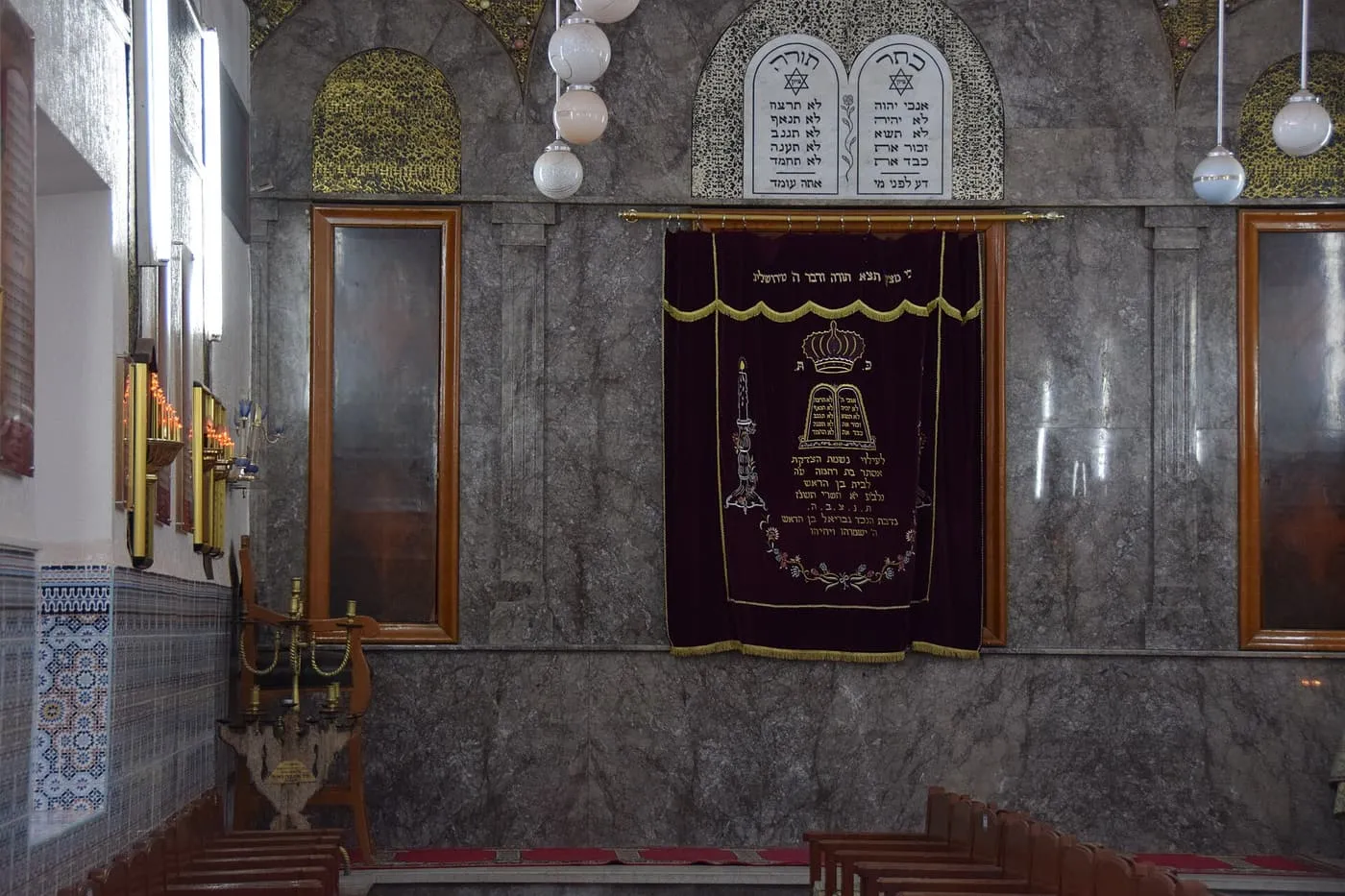
Inside the Lazama Synagogue. Photo: Noahedits, Wikimedia Commons, CC BY-SA 4.0.
The Mellah, the Jewish quarter, was created in 1558 by decree of the Saadian sultan Abdallah al-Ghalib, outside the walls of El Badi. It is the second-oldest of its kind in Morocco. The Lazama Synagogue, Slat al-Azama, is traditionally linked to the Sephardic Jews expelled from Spain in 1492. It is built into a courtyard house with zellij tilework, and is still used for worship; the earthquake of 8 September 2023 damaged the quarter and the synagogue.
6. El Badi Palace
100 MAD (about £7.50), 50 MAD for a child aged 7 to 13 · daily 09:00 to 17:00 · no timed slot
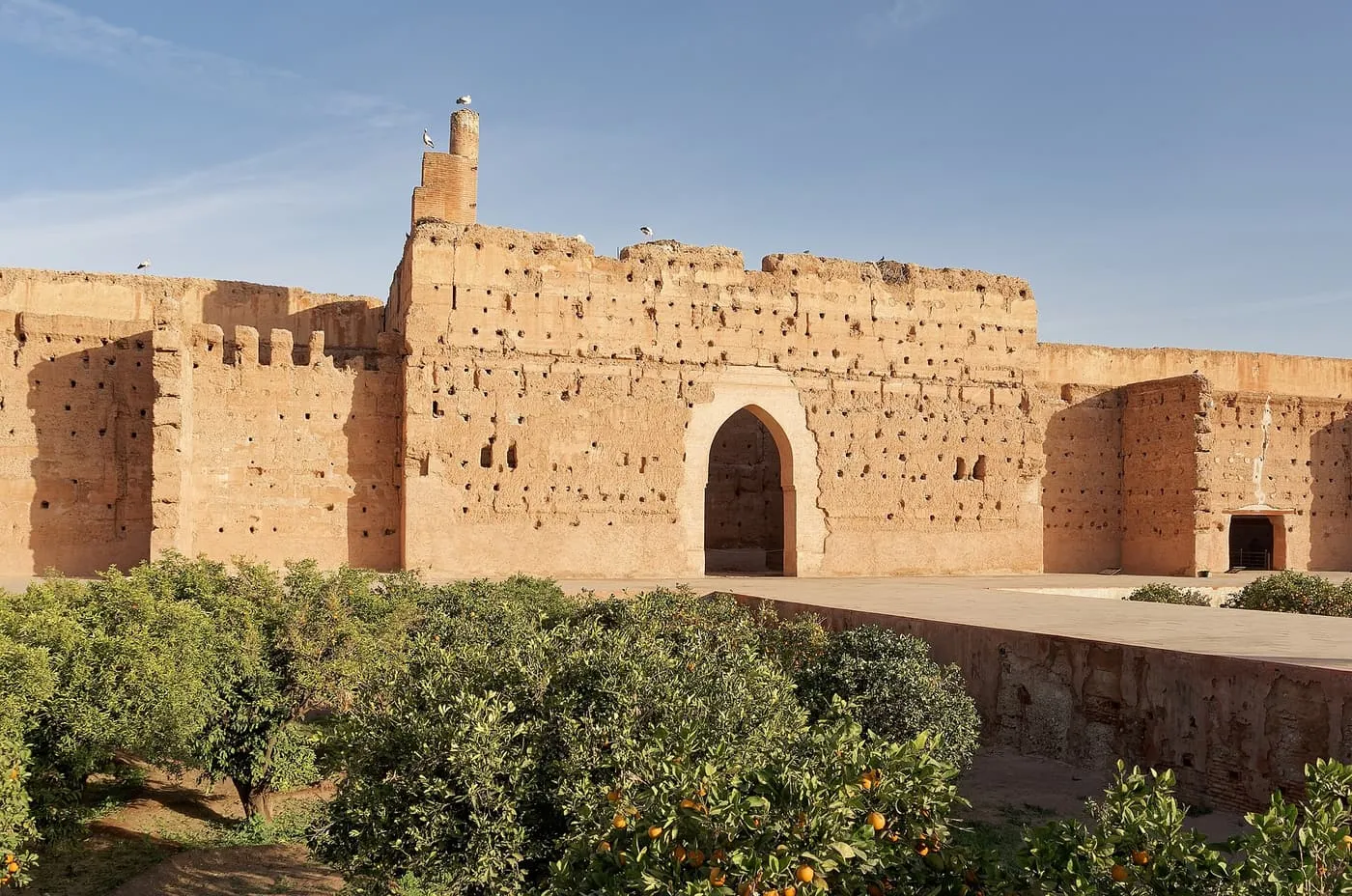
The walls of El Badi Palace. Photo: Jakub Hałun, Wikimedia Commons, CC BY 4.0.
The sultan Ahmad al-Mansur began the palace in 1578, a few months after he came to power, and it took until 1593. After his death in 1603 it was neglected, and its marble was stripped for other buildings. The courtyard, 135 by 110 m, holds a central pool 90 m long, with sunken gardens round it, and white storks nest on the walls. The 12th-century minbar of the Koutoubia is displayed here.
- Allow about an hour.
- Restoration continues: the state’s November 2025 report to UNESCO put El Badi at 40%. Expect some areas to be fenced off. Saadian Tombs and El Badi tickets has the details.
7. The Saadian Tombs
100 MAD (about £7.50), 50 MAD for a child aged 7 to 13 · daily 09:00 to 17:00 · no timed slot
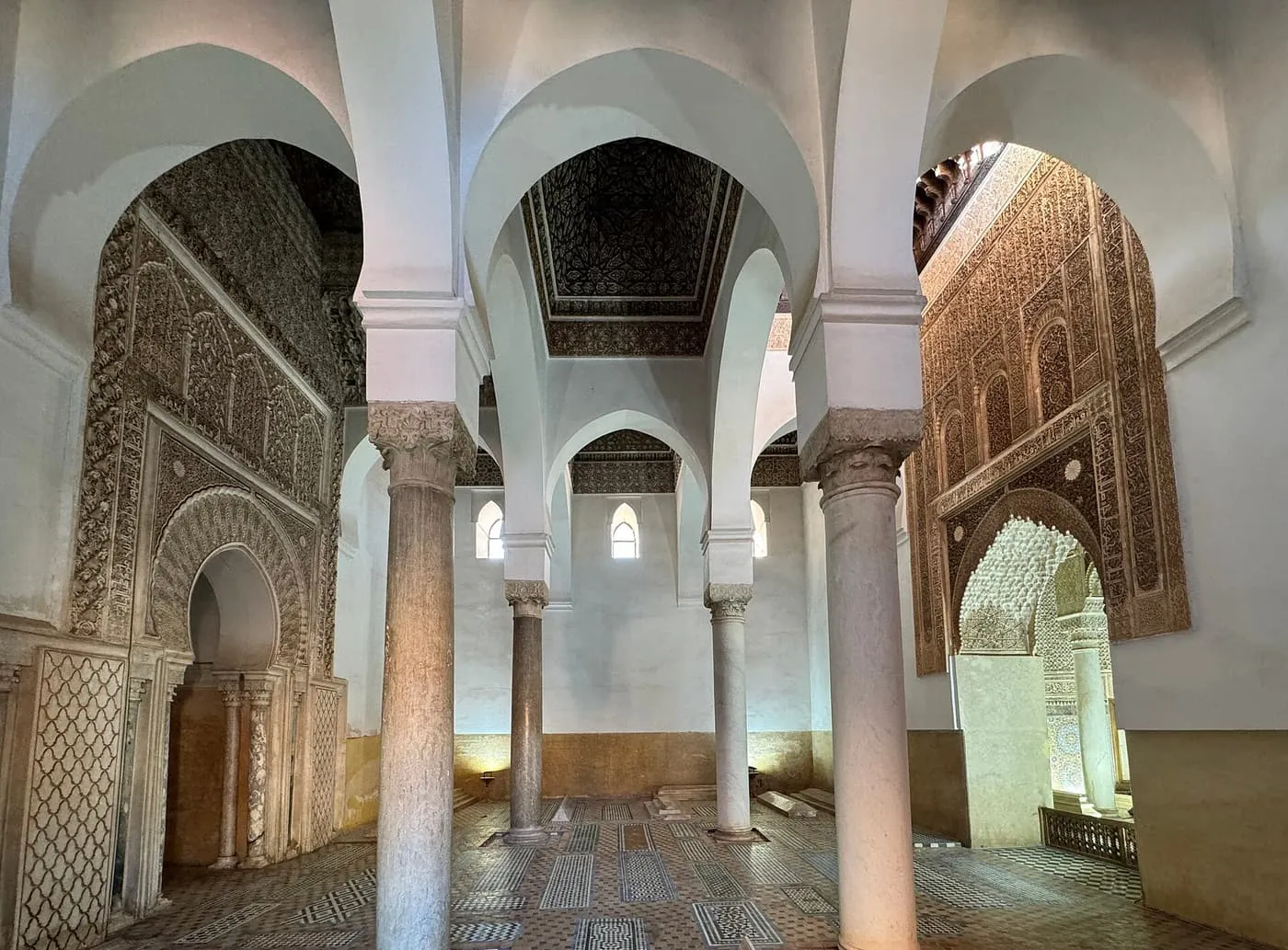
Inside a Saadian mausoleum. Photo: John Leeson, Wikimedia Commons, CC BY 2.0.
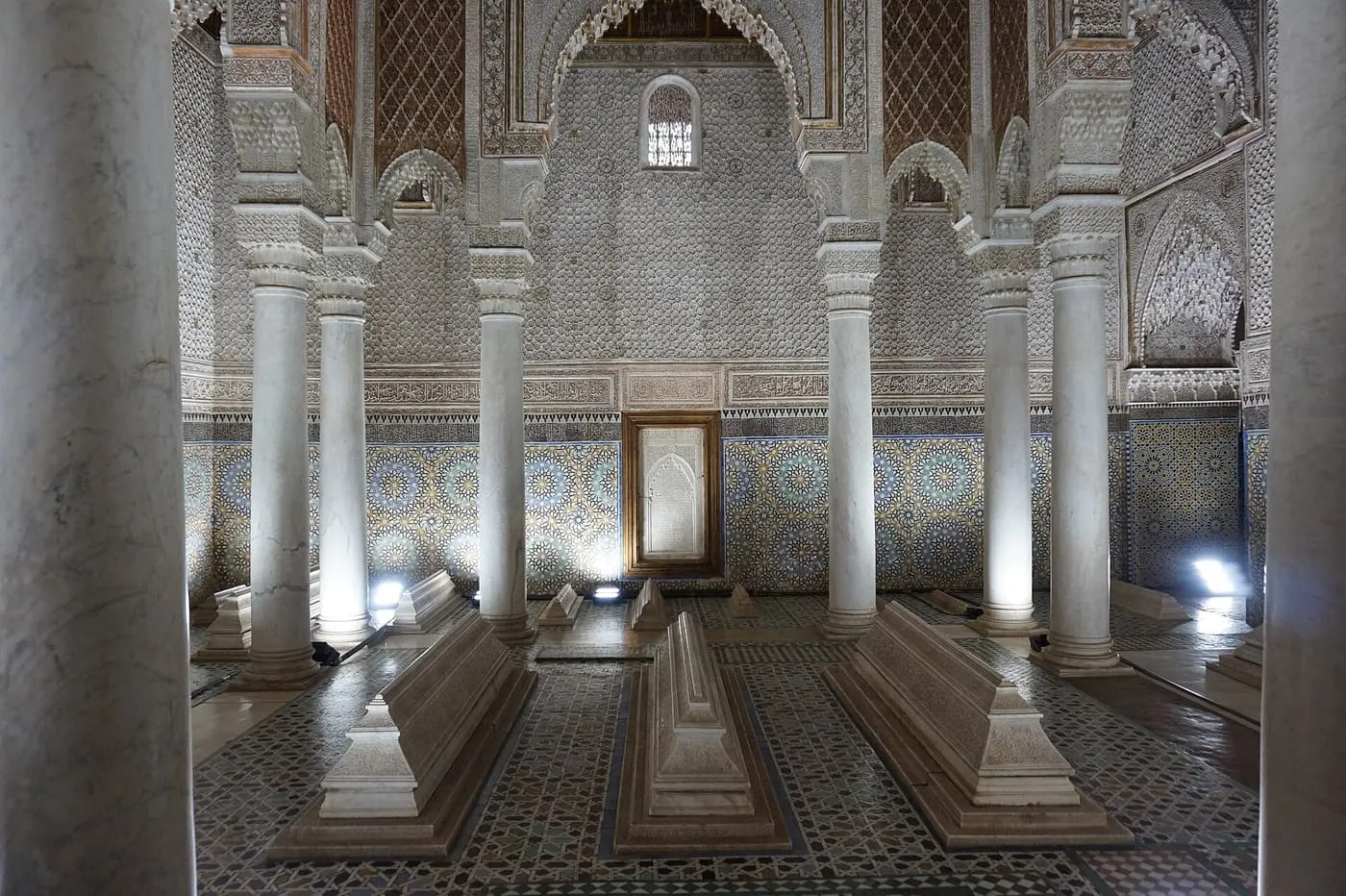
The royal necropolis stands behind the Kasbah Mosque and dates from the reign of Ahmad al-Mansur, 1578 to 1603, though members of the dynasty were buried here afterwards. His own mausoleum is the Chamber of the Twelve Columns. The tombs were closed off from the streets round them, and rediscovered in 1917.
- Allow about 30 minutes. The state says the tombs are under heavy visitor pressure, so early is best.
- Restoration continues: the state’s report put the tombs at 65%, and they reopened on 9 October 2023.
8. Bab Agnaou
Free · always
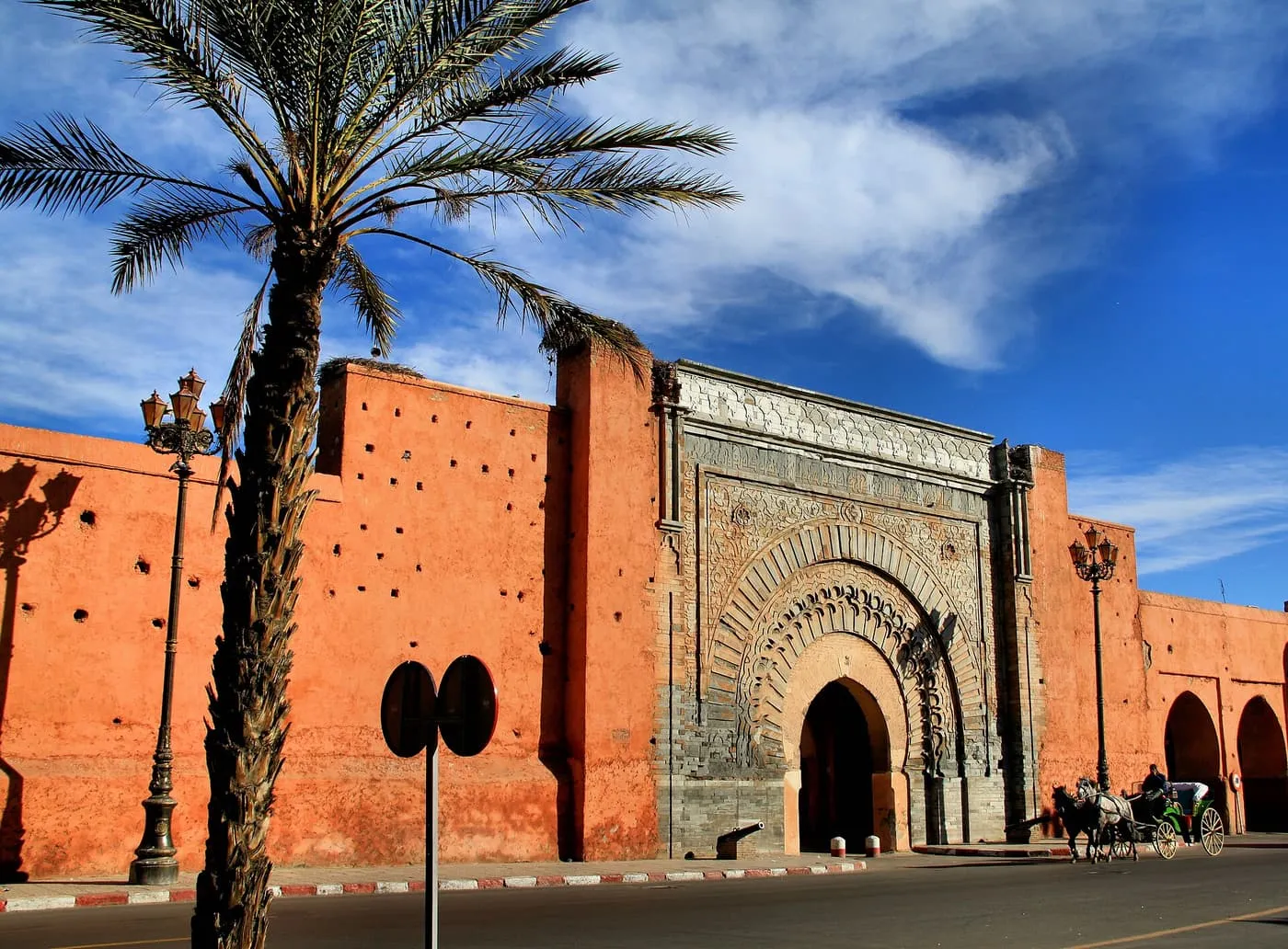
Bab Agnaou. Photo: Lionel Leo, Wikimedia Commons, CC BY-SA 3.0.
The Almohad caliph Yaqub al-Mansur’s gate was completed around 1188 or 1190, and was the main public entrance to the royal Kasbah, the citadel in the south of the medina. Its Berber name agnaou has several reported meanings. The Kasbah Mosque, the Saadian Tombs and El Badi Palace are all behind it.
Where to eat
La Famille
42 Riad Zitoun Jdid · lunch only, Monday to Saturday 12:00 to 16:00
A vegetarian restaurant in a garden of lemon trees, open since 2015, with a menu that changes daily: two vegetable dips with crackers, then the day’s salad, a pasta or a focaccia pizza, and a dessert.
Naranj
84 Rue Riad Zitoun el Jdid · Monday to Saturday 12:30 to 22:30
A Lebanese restaurant on a rooftop terrace, cooking Levantine dishes to share. It is on the lane to the Bahia, so it suits lunch before the palaces.
Kabana
Rooftop at the gates of the medina, by the Koutoubia · every day 11:00 to 02:00
A rooftop bar and restaurant with a terrace over the Koutoubia, a Mediterranean menu and a wine list. It suits the start or the end of the day. See where to eat in Marrakech for more.
The best day to go
All three monuments are listed as open from 09:00 to 17:00 every day, so the walk has no closed day to avoid. What changes is the hour.
| When | What changes on the route |
|---|---|
| 09:00 | The Bahia, El Badi and the Saadian Tombs open, and the state says the Bahia and the tombs are under heavy visitor pressure, so the first hour is the quietest |
| Midday | Lunch on Rue Riad Zitoun el-Jdid: La Famille serves until 16:00 and Naranj until 22:30 |
| 17:00 | The three monuments close. Jemaa el-Fnaa’s food stalls are set up from about this time |
| 19:00 to 22:00 | Jemaa el-Fnaa is at its busiest |
| Friday | Moroccan nationals enter the Bahia, El Badi and the Saadian Tombs free, as on the first day of national and religious holidays |
| Ramadan, from February 2027 | The Jemaa el-Fnaa food stalls open after sunset, around 19:30 to 20:00 |
The timing that works: leave the Koutoubia at 08:30, be at the Bahia at 09:00, walk through the Mellah to El Badi, then the Saadian Tombs, and finish at Bab Agnaou with lunch on the way. Walk back to Jemaa el-Fnaa for the evening. In reverse, start at Bab Agnaou and the Saadian Tombs at 09:00 and end on Jemaa el-Fnaa as the food stalls open, with the Koutoubia lit at dusk.
What does not close: the lanes, the square, the Koutoubia from outside and Bab Agnaou.
Getting there and back
- To the start: take a petit taxi to the Koutoubia, or walk from Jemaa el-Fnaa, 485 m away. Jemaa el-Fnaa is closed to cars from 13:00.
- From the end: Bab Agnaou is 1 km, about 15 minutes, from Jemaa el-Fnaa. Walk back through the Kasbah, or take a petit taxi with the meter.
What to do with the rest of the day
- The north of the medina: Marrakech souks and the Ben Youssef Madrasa are on the other side of Jemaa el-Fnaa.
- A guided walk: Marrakech medina tours compared.
- The whole trip: 3 days in Marrakech builds the days round the tickets, and what to book before you go to Marrakech lists the rest. To sleep on the route, hotels near Jemaa el-Fnaa lists the riads beside the square, and where to stay in Marrakech compares the areas.
Common questions
How long is the Marrakech medina walk?
3.3 km from the Koutoubia to Bab Agnaou, measured along the lanes: about 45 minutes of walking. With the Bahia Palace, El Badi Palace and the Saadian Tombs it fills most of a day.
How much does the medina walk cost?
The lanes, Jemaa el-Fnaa, the Koutoubia's gardens, the Mellah and Bab Agnaou are free. The Bahia Palace, El Badi Palace and the Saadian Tombs are 100 MAD each (about £7.50) for a foreign adult, 300 MAD (about £23) for the three. There is no combined ticket.
What time should I start the medina walk?
At 08:30 from the Koutoubia, which is about 25 minutes' walk from the Bahia Palace, so you reach it as it opens at 09:00. The Bahia, El Badi Palace and the Saadian Tombs are all listed as open from 09:00 to 17:00 daily, with no timed slot, and the state says the Bahia and the tombs are under heavy visitor pressure. Or walk it in reverse, from Bab Agnaou at 09:00, and finish on Jemaa el-Fnaa when the food stalls open.
Do I need a guide in the Marrakech medina?
No. The three monuments sell their own tickets, and the route is on this page. If you want a guide, the UK Foreign Office advises using only one with an official badge and permission from the local authority. Say "la chakrun" (no thank you) to a stranger who offers to show you the way.
Can I go inside the Koutoubia Mosque?
No. Non-Muslims cannot enter. The 77 m minaret and the gardens beside it are the visit, and both are free.
Where do I buy tickets for the Bahia Palace, El Badi and the Saadian Tombs?
On the Ministry of Culture's e-services site, e-services.minculture.gov.ma, or at each gate. Look-alike sites sell the same entry at a mark-up.