In this guide
💡 The Short Version: You do not need a rental car to build a European city break around kayaking, rafting, mountain hikes or coastal cycling. On the Adriatic, Dubrovnik puts sea kayaking below the city walls from €32 to €40, while Split reaches Cetina River rafting at Omiš on a €2.50 bus or €39 guided package. In the Alps, Munich’s €34 Bayern-Ticket connects straight to the 2,962 m Zugspitze and Salzburg’s free Guest Mobility Ticket covers trains to Werfen’s ice cave (€41) and Berchtesgaden. In the north, Reykjavik runs car-free South Coast glacier and waterfall tours from €121, and Edinburgh pairs the free Arthur’s Seat volcanic loop with Highland coaches from GBP 58. On two wheels, Copenhagen (from DKK 224) and Amsterdam (from €29) lead for guided cycling, while Lisbon (€5.10 Cascais rail) and Porto (Metro to Matosinhos) deliver Atlantic surf and e-bike coasts. Or book a tour: Dubrovnik sea kayaking and snorkellingad is from €35, Split/Omiš Cetina River raftingad from €39, and the Reykjavik South Coast & Glacier tourad from €121 (GetYourGuide).
⚠️ Respect seasonal closures, wind warnings and safety rules before packing boots or swimwear. Outdoor breaks carry harder cut-offs than museum weekends: Werfen’s Eisriesenwelt ice cave closes on 1 November, the Eagle’s Nest shuts after 8 November, and the Zugspitze closes for November maintenance (9–13, 16–20 and 23–26 November 2026). On the coast, Dubrovnik kayaks cancel in rough seas, Reynisfjara’s sneaker waves enforce a strict red-light beach ban in Iceland, and Edinburgh’s Radical Road under Salisbury Crags remains closed for rockfall.
Public transport fares and park/cable-car rates are each operator’s published local-currency adult prices; GetYourGuide figures are the lowest published “from” rates per adult and move by date.
Ten outdoor adventure cities side by side
Every city links to its dedicated hub guide (including entry rules: all nine Schengen hubs here operate the EU Entry/Exit System, running in full since 10 April 2026, while ETIAS is not yet required and has no start date; see Edinburgh for UK ETA rules). All ten activities below are reachable from the city centre by foot, metro, regional train, bus or organised pickup with no hire car.
| City | Headline outdoor sport | DIY access & cost | Guided tour from | Best season & key trap |
|---|---|---|---|---|
| Dubrovnik | Adriatic sea kayaking & cave snorkelling | Pile Gate meeting point (€2.50 bus from Gruž) | €32–€40 (2–3 hrs) | May–Oct; arrive 15 min early or lose slot with no refund |
| Split | Cetina River rafting, cliff jumping & waterfalls | Promet bus 60 to Omiš (€2.50 single) | €39 rafting (3 hrs) | May–Oct; Krka park boat/bus only runs 1 Apr–31 Oct |
| Reykjavik | Glacier tongues, waterfalls & volcanic coasts | No rail; self-drive + 3,650 ISK South Coast parking | €121 South Coast; €133 Snæfellsnes | Year-round; never step onto glacier ice unguided; winter ice favours coaches |
| Edinburgh | Arthur’s Seat volcano loop & Highland valleys | Walk 1.4 km from Waverley (free); no rail to Glencoe | GBP 26 Arthur’s Seat; GBP 58 Highlands | Year-round; Radical Road & climbing areas closed for rockfall |
| Munich | Zugspitze (2,962 m) glacier plateau & Alpine hikes | €34 Bayern-Ticket + €70.50–€78 mountain round trip | €125 van tour (9 hrs) | Dec–Oct; closed 9–13, 16–20 & 23–26 Nov 2026; last ascent 14:15 |
| Salzburg | Eisriesenwelt ice cave (1,400 steps) & Berchtesgaden | Free regional train (Guest Mobility Ticket) + €41 cave | €75 Berchtesgaden & Königssee | May–Oct; ice cave shuts 1 Nov; passport needed for bus 840 |
| Lisbon | Atlantic surf beaches & Sintra–Cascais e-biking | €5.10 return CP train to Carcavelos/Cascais or Sintra | €27 Alfama e-bike; €80 Sintra–Cascais e-bike | Year-round; evening Cascais rail works start 21:50 weekdays |
| Porto | Matosinhos Atlantic surfing & Douro Valley trips | €1.40–€1.85 Metro Line A to Matosinhos Sul | €50 Douro cruise & valley day | Year-round surf; Douro rail bus replacements 3 Nov 2026–24 Mar 2027 |
| Amsterdam | Canal-ring & countryside guided cycling | GVB/OVpay + bike shop hire | €29 3-hr bike tour | Apr–Oct; watch tram tracks and commuter rush hours |
| Copenhagen | Harbour-bridge & Christiania cycling | Donkey Republic app or bike shops (e-bike hire DKK 464) | DKK 224–399 (2–3 hrs); DKK 550 e-bike | Apr–Oct; avoid 07:00–09:00 & 15:00–17:00 rush on main lanes |
The Adriatic: sea kayaking and limestone river canyons
Croatia’s Dalmatian coast pairs historic stone centres with turquoise water and steep karst gorges right on the edge of town. Both Dubrovnik and Split let you sleep in the old town and launch onto the sea or river within 15 to 45 minutes.
Dubrovnik
2-hr kayak €30–€35 · Sunset with wine €40–€45 · Meet at Pile Gate · No landing on Lokrum
Dubrovnik turns its 1,940-metre medieval fortifications into an open-water paddle route. DSK (Dubrovnik Sea Kayaking) runs guided double-kayak circuits launching beside Pile Gate (at the western entrance to the Old Town, 10 minutes by Libertas bus 1A, 1B or 3 from Gruž port at €2.50 on board). Direct prices are €35 for a 2-hour, 4 km daytime paddle, €40 for a 2-hour sunset paddle with a glass of wine, and €45 for a 3-hour, 7 km extended sunset paddle—all including kayak, life jacket, dry barrel, snorkel mask, water and insurance.
On GetYourGuide, prices match or undercut direct rates while adding free 24-hour cancellation: Dubrovnik: Sea Kayaking & Snorkelling Guided Day/Sunset Toursad (from €35, 4.9 stars from 4,536 reviews, 2 hours) includes a 30-minute swim and snorkel break inside sea-only Betina Cave; 2- or 3-Hour Morning Sea Kayaking & Snorkel Tourad starts at €32 (4.9 stars from 859 reviews, 2–3 hours); and Guided Sunset Sea Kayaking Tour with Winead starts at €40 for 3 hours (4.9 stars from 562 reviews).
Three rules prevent frustration: arrive 15 minutes early (turning up at start time forfeits your slot with no refund), wear swimwear under your clothes (there are no changing rooms at Pile), and remember that kayak tours paddle around Lokrum Island without landing, as the nature reserve charges a separate €30 ticket. Minimum age is 8 (one child aged 5–7 can share a centre seat free with parents).
Verdict: Book a morning slot for calmer Adriatic water and lower heat, or the sunset paddle for golden light on Fort Lovrijenac and the walls. Read our full Dubrovnik sea kayaking guide, getting around Dubrovnik, where to stay in Dubrovnik and the Dubrovnik hub.
Split
Promet bus 60 to Omiš €2.50 · Cetina River rafting from €39 · Krka waterfalls €7–€40 by season
Split is the Adriatic’s multi-sport base because the Cetina River carves a dramatic limestone canyon straight into the sea at Omiš, just 25 km south-east of Diocletian’s Palace. Reaching Omiš independently is trivial: Promet Split bus 60 runs along the coast for €2.50 single bought at the ticket office or online (€5.00 from the driver). Once at the river mouth, rafting and canyoning require a licensed operator with helmets, wetsuits and safety gear.
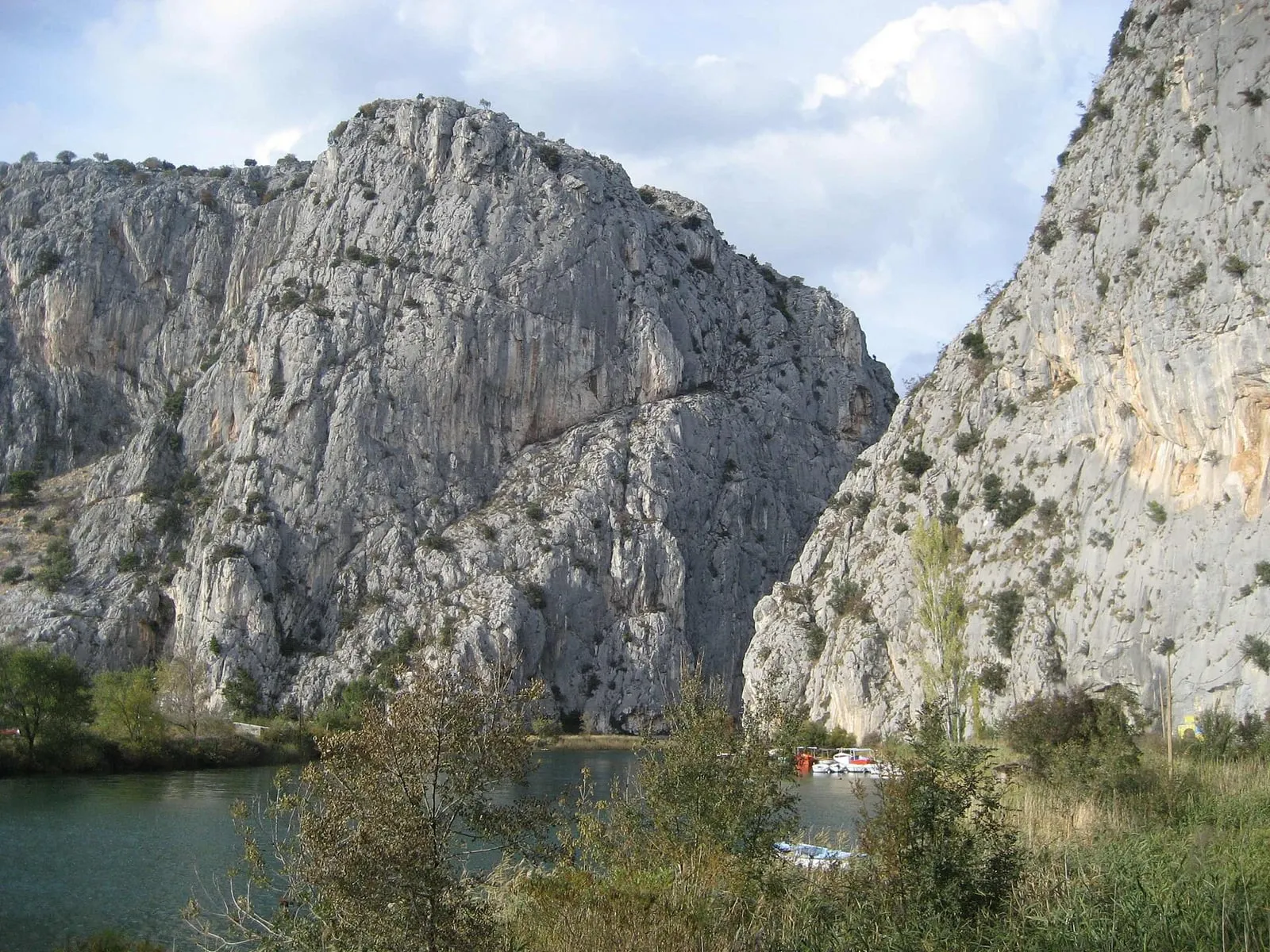
The Cetina canyon at Omiš. Photo: Modzzak, Wikimedia Commons, Public domain.
On GetYourGuide, Split/Omiš: Cetina River Rafting with Cliff Jump & Swimmingad (from €39, 4.7 stars from 1,506 reviews, 3 hours, free cancellation) runs past canyon rapids, a waterfall cave and optional cliff-jump spots; Omiš/Split: Cetina River Rafting Adventure & Cliff Jumpingad (from €40, 3 hours, 4.9 stars from 343 reviews) offers a similar half-day run. Pair a river day with boardwalk hiking at Krka National Park (adult entry €7 Nov–Mar, €20 Apr/May/Oct, €40 Jun–Sep; Krka Waterfalls Trip with Boat Cruisead from €35, 9 hours, 4.8 stars from 13,695 reviews) or Plitvice Lakes (guided day with ticketsad from €109, 12 hours, 4.9 stars from 3,575 reviews). Note that swimming at Krka’s Skradinski buk is prohibited, and the park boat and bus run only from 1 April to 31 October.
Verdict: Ride bus 60 for €2.50 if you want a morning in Omiš before meeting your river guide, or book a Split-transfer rafting package to keep logistics tight. See day trips from Split, getting around Split, where to stay in Split and the Split hub.
North Atlantic: volcanic ridges, glaciers and Highland valleys
Reykjavik and Edinburgh prove that high-latitude capitals deliver raw geological terrain within minutes—or a single coach ride—of city hotels.
Reykjavik
No passenger rail · South Coast & glacier tours from €121 · Snæfellsnes from €133
Iceland has no passenger railways, turning Reykjavik into Europe’s premier coach-launched wilderness hub. Along the South Coast (Route 1 to Vík, 372 km round trip), one day links Seljalandsfoss (a 60-metre waterfall with a walk-behind cavern trail that closes in winter glaze ice), Skógafoss (527 steps up to the start of the Fimmvörðuháls gorge trail), the ash-banded ice tongue of Sólheimajökull glacier, and the basalt cliffs of Reynisfjara.
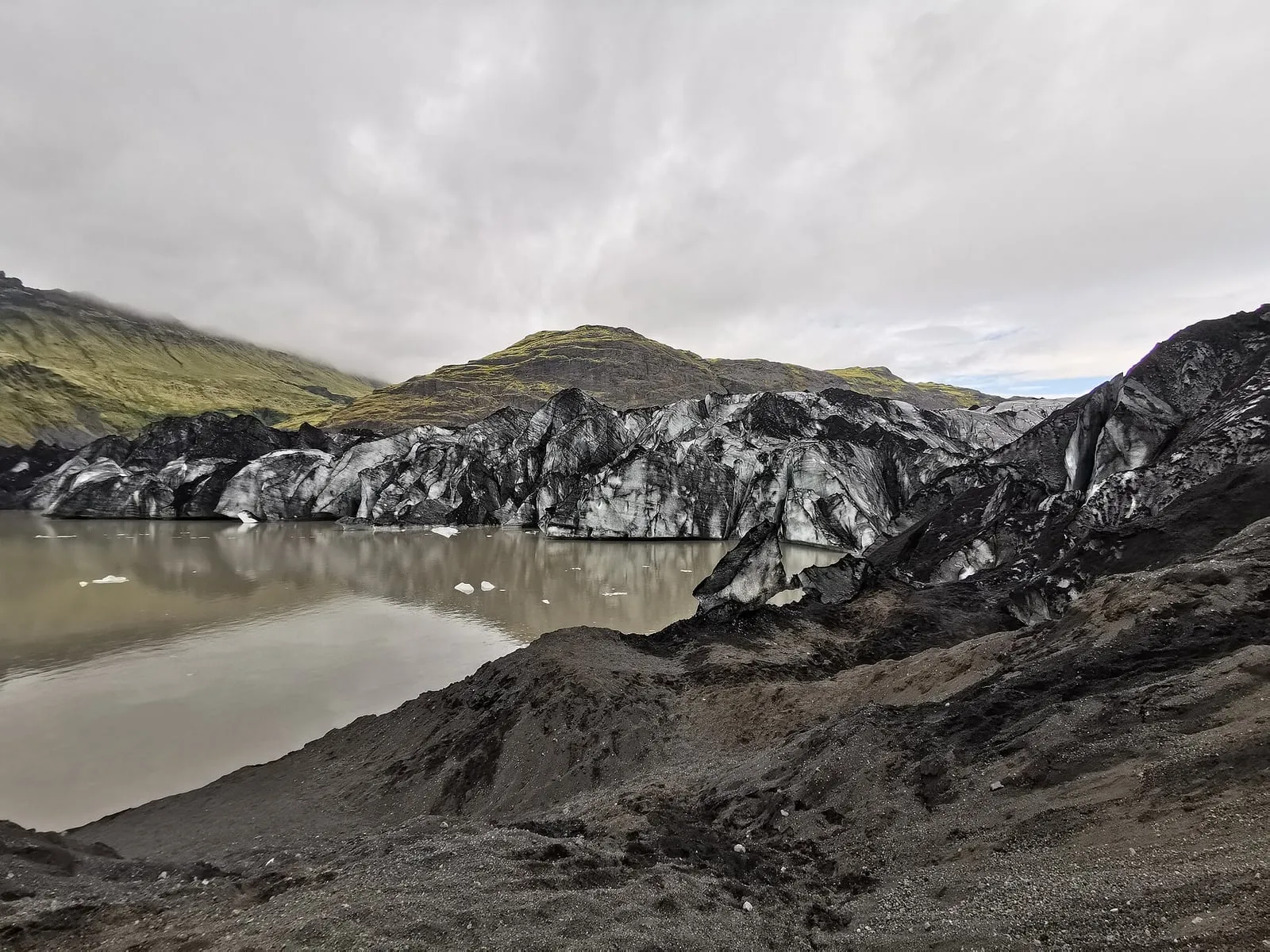
Sólheimajökull glacier on Iceland’s South Coast. Photo: Netha Hussain, Wikimedia Commons, CC BY-SA 4.0.
Two strict safety boundaries dictate how you visit. First, never step onto Sólheimajökull glacier ice without a certified mountain guide, steel crampons, harness and helmet—concealed crevasses and shifting terminal ice walls make unguided access lethal. Second, Reynisfjara black sand beach is prone to sudden sneaker waves; obey the electronic traffic-light warning board at the path entrance (red means beach entry is forbidden) and never turn your back on the surf.
Between late October and April, sub-arctic ice, gale crosswinds and roughly 3,650 ISK in South Coast car-park fees make guided coaches the smart car-free choice: South Coast Waterfalls, Black Sand & Glacier Tourad starts at €121 (10 hours, 4.8 stars from 13,133 reviews), small-group glacier and Katla ice-cave variants run via South Coast and Katla Ice Cave Small Group Tourad (from €239, 10 hours, 4.7 stars from 821 reviews), and the 450 km coastal hike-and-cliff loop of the Snæfellsnes Peninsula Full-Day Tourad starts at €133 (11 hours, 4.7 stars from 3,971 reviews). Pack full waterproof jacket and overtrousers—umbrellas snap instantly in Icelandic waterfall spray.
Verdict: Base yourself in central Reykjavik and book guided South Coast, glacier and Snæfellsnes days—especially outside summer. Read our South Coast Iceland day trip, Snæfellsnes Peninsula, day trips from Reykjavik, where to stay in Reykjavik and the Reykjavik hub.
Edinburgh
Arthur’s Seat 251 m (free, 4.75 km loop) · Guided hike from GBP 26 · Highland coaches from GBP 58
Few capitals put an extinct 340-million-year-old volcano inside walking distance of the main railway station. Arthur’s Seat (251 m) in Holyrood Park is free, open 24 hours a day, and starts just 1.4 km on foot from Edinburgh Waverley beside the Scottish Parliament. The classic Holyrood loop covers 4.75 km with 279 m of ascent (2 to 2.5 hours) over Salisbury Crags, the summit trig point and down past Whinny Hill and St Margaret’s Loch. Shorter ascents start from Dunsapie Loch (0.7 km) or Duddingston village (1.2 km). Wear grippy trail shoes: the crag steps are steep and slick when wet, and both the Radical Road under Salisbury Crags and all climbing areas remain closed due to falling rock. If you want local volcanic geology and Calton Hill added in, Edinburgh: Picturesque Hike to Arthur’s Seat & Calton Hillad starts at GBP 26 (3 hours, 4.9 stars from 101 reviews).
For bigger mountain scenery, ScotRail abolished peak fares and reaches Stirling in 41 to 49 minutes or North Berwick in 35 minutes. For the Scottish Highlands and Glen Coe, however, public transport collapses—the Citylink coach to Fort William takes 4 hours 24 minutes each way. A 12.5-hour guided coach such as Loch Ness, Glencoe and the Highlandsad (from GBP 58, 4.6 stars from 21,398 reviews) handles the entire loop without a car.
Verdict: Hike Arthur’s Seat on your own for free on a clear morning, then let a Highland coach handle Glen Coe and Loch Ness. See our Arthur’s Seat hike guide, Loch Ness and Glencoe day trip, Edinburgh public transport, where to stay in Edinburgh and the Edinburgh hub.
The Alps: cogwheel railways, ice caves and border buses
Munich and Salzburg put 2,000- to 3,000-metre peaks on regional commuter rail passes—making them Europe’s easiest car-free mountain bases from May through October (and Munich right through the ski season).
Munich
Zugspitze (2,962 m) via RB6 train · €34 Bayern-Ticket + €70.50–€78 round trip · Van tour from €125
From Munich Hauptbahnhof, the hourly RB6 (Werdenfelsbahn) regional train climbs into Garmisch-Partenkirchen in 1 hour 23 minutes, fully covered by the €34 Bayern-Ticket (€44 for two, valid from 09:00 weekdays and all day at weekends). Right beside the DB platform, the Bayerische Zugspitzbahn cogwheel train climbs 75 minutes to the Zugspitzplatt glacier plateau, where the Gletscherbahn cable car lifts you to the 2,962-metre summit—Germany’s highest peak—before you descend via the Eibsee cable car.
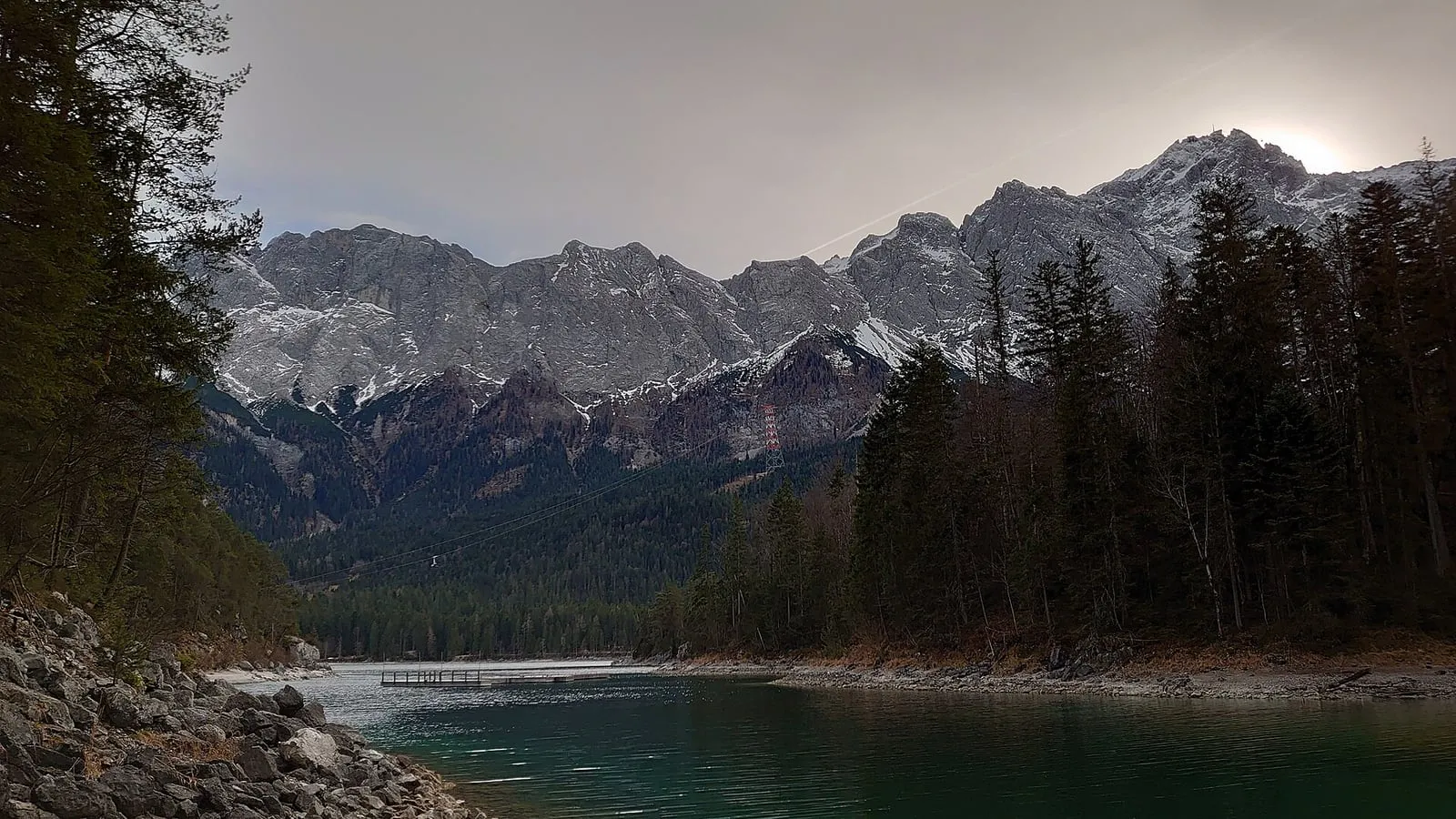
The Zugspitze above the Eibsee. Photo: 958s, Wikimedia Commons, CC0.
The mountain round trip costs €78 on the summer tariff (to 22 November 2026) and €70.50 online (€78 at the desk) from 27 November, putting a DIY day at €104.50 to €112 per adult. Skip the Eibsee bus from Garmisch (the Bayern-Ticket is invalid on it and it adds a toll); ride the cogwheel train instead, and watch the 14:15 last ascent from Garmisch. Because DIY already exceeds €104, From Munich: Zugspitze Mountain Van Tour with Garmisch Townad (from €125, 9 hours, 4.7 stars from 823 reviews) costs only €13 to €20 more and removes every transfer. Hard closure alert: the entire mountain shuts for maintenance on 9–13, 16–20 and 23–26 November 2026 before reopening for skiing on 27 November.
Verdict: Buy a Bayern-Ticket for two or more travellers in summer or winter ski season; book the €125 van tour if travelling solo and short on time. See our Zugspitze day trip from Munich, Munich public transport, where to stay in Munich and the Munich hub.
Salzburg
Guest Mobility Ticket free · Werfen ice cave €41 (1,400 steps) · Berchtesgaden bus 840 · Shuts early Nov
Every overnight hotel guest in Salzburg receives the Guest Mobility Ticket, making regional trains across Salzburg province completely free. That puts Werfen (38 to 46 minutes from Hauptbahnhof) at zero rail cost for the Eisriesenwelt—over 40 kilometres of alpine ice caverns reached by station bus, a 20-minute uphill walk, a 3-minute cable car (500 m vertical climb) and another 20-minute walk to 1,641 metres. The online ticket (€41; €45 at the desk) includes the cable car and a 75-minute carbide-lamp tour covering 1,400 steps and 134 m of vertical climb at below 0°C even in July. Pack gloves, a fleece and sturdy boots.
South across the German border, bus 840 from Engelbert-Weiß-Weg beside Salzburg Hauptbahnhof reaches Berchtesgaden in 49 to 55 minutes for alpine ridge walks around the Kehlsteinhaus (Eagle’s Nest, 1,834 m, €34.70 bus and lift) and electric boat crossings on the fjord-like Königssee (€23.40 return to St Bartholomä). Carry a passport or EU national ID on bus 840—Germany enforces Austrian border checks until 15 March 2027. If you prefer a guided half-day with no bus transfers, the Berchtesgaden half-day tour with the Königsseead starts at €75 (4 hours, 4.3 stars from 438 reviews), and the wet-weather Bavarian salt mine tourad at €90 (4 hours, 4.7 stars from 415 reviews). Hard closure alert: Eisriesenwelt closes 1 November, Hohenwerfen Castle 2 November, and the Eagle’s Nest after 8 November until mid-May.
Verdict: Strong May-to-October alpine value thanks to free regional transit—just never plan Werfen or the Eagle’s Nest for mid-November. Read our Werfen ice cave and Hohenwerfen guide, Eagle’s Nest and Berchtesgaden guide, Salzburg public transport, where to stay in Salzburg and the Salzburg hub.
Atlantic coasts & Northern bike capitals: surf, e-bikes and flat lanes
If your idea of an active city break leans toward ocean swell, coastal e-biking or covering 20 kilometres of waterfront cycle lanes in an afternoon, Iberia and Northern Europe deliver year-round options.
Lisbon & Porto
Lisbon–Cascais/Carcavelos €5.10 return · Sintra–Cascais e-bike €80 · Porto Metro to Matosinhos €1.40–€1.85
Portugal’s two Atlantic hubs put surf breaks and coastal cycling directly on commuter rail and metro networks. From Lisbon, CP urban trains leave Cais do Sodré every 20 minutes along the Tagus estuary to Carcavelos (one of Europe’s easiest rail-access beginner surf beaches, with board hire and schools right on the sand) and Cascais (38–40 minutes, €5.10 return, or included on the €11.40 24-hour Carris/Metro/CP ticket). Just leave Cascais before late-evening engineering closures (replacement buses run from 21:50 weekdays and 20:50 Saturdays). For hilly inland-to-coast riding without burning out your legs, From Lisbon: Sintra to Cascais Full-Day E-Bikead starts at €80 (8 hours, 4.9 stars from 429 reviews), while inside the capital the Alfama and Mouraria e-bike tourad (from €27, 4.8 stars from 3,912 reviews, 3 hours) flattens Lisbon’s seven hills.
Up north, Porto puts Matosinhos beach—a wide, consistent Atlantic beach break lined with surf schools and charcoal-grilled fish restaurants—directly on Metro Line A (Matosinhos Sul) for €1.40 to €1.85 on an Andante Azul card (plus €0.60 card fee). Inland, the terraced Douro Valley offers river cruises and vineyard walks, though note that CP suspends Douro trains between Marco de Canaveses and Régua from 3 November 2026 to 24 March 2027 with replacement buses; the Douro Valley tour with boat cruise, wine tastings and lunchad (from €50, 7–10 hours, 4.7 stars from 23,984 reviews) bypasses the rail disruption year-round.
Verdict: Choose Lisbon for Carcavelos surf plus Sintra–Cascais e-biking; choose Porto for Metro-access surfing at Matosinhos paired with Douro Valley river days. See Cascais day trip, Sintra day trip, Lisbon public transport, Douro Valley from Porto, Porto public transport, where to stay in Lisbon and where to stay in Porto.
Amsterdam & Copenhagen
Amsterdam 3-hr bike tour from €29 · Copenhagen 2–3 hr rides DKK 224–399 · E-bike tour DKK 550
Amsterdam and Copenhagen are Europe’s two flattest, best-engineered cycling capitals—yet both punish visitors who rent a bike blind and drift into commuter traffic. In Copenhagen, dedicated raised lanes and harbour cycle bridges such as Inderhavnsbroen and Bryggebroen make riding joyful once you learn four non-negotiable Danish rules: keep right, stop on the right (never mid-lane), signal turns and stops by hand, and turn left in two separate crossings. Visit Copenhagen warns against riding major streets during rush hours (07:00–09:00 and 15:00–17:00). Start with a guided ride—the 2-hour City Highlights via Nyhavnad is DKK 224 (4.7 stars from 782 reviews), the Highlights 3-Hour tour with a local guidead is DKK 399 (4.8 stars from 3,157 reviews), and the Guided E-Bike Tourad is DKK 550 (2–3 hours, 4.8 stars from 190 reviews)—before hiring your own bike via Donkey Republic or an e-bike rentalad (from DKK 464, 7 hours, 4.7 stars from 42 reviews).
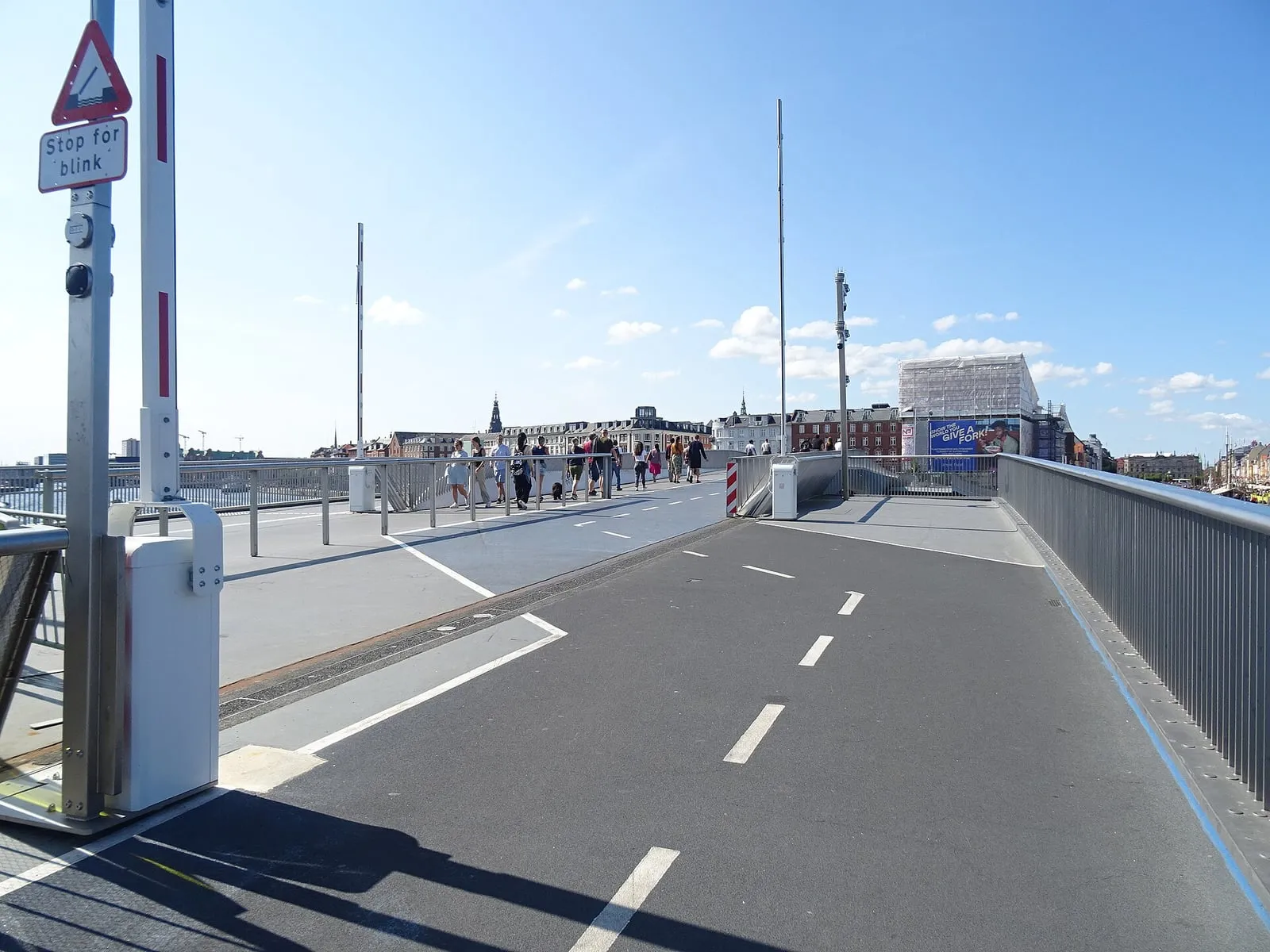
The Inderhavnsbroen cycle and pedestrian bridge in Copenhagen. Photo: Leif Jørgensen, Wikimedia Commons, CC BY-SA 4.0.
In Amsterdam, narrow canal bridges, tram rails and fast-moving locals make a guided introduction even more useful. The Big Amsterdam Bike Tourad (from €29, 4.7 stars from 6,018 reviews, 3 hours) covers the Jordaan, canal ring and Vondelpark on safe back-street routes; food-minded riders can combine 10 Dutch tastings on Flagship’s 3-hour bike food tourad (from €79, 4.9 stars from 50 reviews). Off the bike, both cities offer effortless transit via contactless OVpay in Amsterdam and metro/harbour buses in Copenhagen.
Verdict: Book a 2- to 3-hour guided bike tour on Day 1 in either city to learn the local rhythm, then rent independently on Day 2 for harbour loops or countryside paths. Read Copenhagen bike tours, cycling in Copenhagen, where to stay in Copenhagen, Amsterdam public transport and where to stay in Amsterdam.
Choosing the right season for an active city break
- May to October (all ten cities open): Prime window for Dubrovnik sea kayaking, Split’s Cetina rafting, Salzburg’s Eisriesenwelt ice cave and Eagle’s Nest, and long daylight hours in Reykjavik and Edinburgh.
- November (shoulder-season trap): Avoid Salzburg’s ice cave and Eagle’s Nest (closed early November) and Munich’s Zugspitze maintenance weeks (9–26 November 2026). Pick Lisbon, Porto, Edinburgh or Reykjavik instead.
- December to March (winter snow and surf): Munich’s Zugspitze enters full ski season (27 November to 2 May), Reykjavik switches to ice-cave and glacier coaches, and Lisbon/Porto deliver consistent Atlantic winter swell.
Other cities and other trips
If you want to combine active days with matchday stadium visits, see best European city breaks for football fans. For rail-and-coach excursion comparisons, see best European cities for day trips without a car. For water-based sightseeing, see best cities for boat tours and river cruises, for two- or three-day plans long weekend city breaks, and for budget-friendly hubs cheap city breaks in Europe. All comparison guides are gathered on Compare cities.
Common questions
Which European city is best for outdoor adventure without hiring a car?
Dubrovnik, Split, Munich and Salzburg offer the easiest car-free access to real outdoor sport. Dubrovnik launches sea-kayaking paddles from Pile Gate (10 minutes by €2.50 bus from Gruž port), Split links to Omiš and Cetina River rafting on €2.50 Promet bus 60, Munich reaches the 2,962 m Zugspitze via the €34 Bayern-Ticket, and Salzburg gives overnight hotel guests free regional trains to Werfen and Alpine lakes.
Can you hike on a glacier from Reykjavik without renting a car?
Yes, and a guided tour is mandatory for stepping onto the ice. Unguided access onto Sólheimajökull glacier is dangerous due to crevasses and collapsing ice bridges. Full-day South Coast tours from Reykjavik start at €121 (10 hours) on GetYourGuide and eliminate winter ice driving and roughly 3,650 ISK in parking fees.
When do Alpine outdoor excursions from Munich and Salzburg shut for winter?
Early November brings hard seasonal cut-offs. From Salzburg, the Eisriesenwelt ice cave at Werfen closes on 1 November, Hohenwerfen Castle closes on 2 November, and the Eagle's Nest shuts after 8 November until mid-May. From Munich, the Zugspitze shuts for three weeks of November maintenance (9 to 13, 16 to 20 and 23 to 26 November 2026) before reopening for skiing on 27 November.
Do I need a guided tour to hike Arthur's Seat in Edinburgh?
No. Holyrood Park is free and open 24 hours, and the 4.75 km Holyrood loop (279 m ascent, 2 to 2.5 hours) starts 1.4 km on foot from Waverley station. Book a guided hike (from GBP 26) only if you want local geology and history; however, for the Scottish Highlands and Glen Coe, a guided coach tour (from GBP 58) beats the 4-hour-24-minute one-way public bus to Fort William.
Where can you surf or cycle along the Atlantic coast near Lisbon and Porto without a car?
From Lisbon, CP urban trains from Cais do Sodré reach the surf beaches of Carcavelos and Cascais in 38 to 40 minutes for €5.10 return, and guided e-bike tours link Sintra to Cascais from €80. From Porto, Metro Line A runs straight to Matosinhos Sul beach for €1.40 to €1.85 on an Andante card, while Douro Valley boat-and-vineyard days start at €50.
Is it better to hire a bike or book a guided bike tour in Amsterdam and Copenhagen?
For first-time visitors, a 2- to 3-hour guided tour (from €29 in Amsterdam; DKK 224 to DKK 399 in Copenhagen) teaches local junction rules and avoids commuter rush-hour stress (07:00–09:00 and 15:00–17:00). Hire a standalone bike once you know how to signal, keep right and execute Copenhagen's two-stage left turns.