In this guide
💡 The Short Version: The Hungry Ghost Festival (Zhongyuan Jie) encompasses the entire seventh lunar month: 2 to 31 August 2027, with the peak Ghost Day on Monday 16 August 2027. According to traditional Taoist and Buddhist beliefs, the gates of the underworld open, releasing spirits to roam the living world. The most fascinating cultural spectacle for visitors is getai—boisterous outdoor song-and-dance shows erected on empty fields in public housing estates. The cardinal rule: never sit in the front row of chairs, which is reserved strictly for spirit spectators. Mind the pavements: avoid kicking or stepping on roadside incense sticks, fruit offerings, or joss paper ash. Or book a tour: travellers wanting an insightful introduction to Singapore’s folklore and spiritual traditions can join a guided Chinatown and cultural walking tourad from S$113.
While Singapore is globally celebrated for futuristic architecture and cutting-edge technology, its cultural fabric remains deeply intertwined with ancestral traditions. Few annual observances illustrate this living heritage as vividly as the Hungry Ghost Festival, known locally in Chinese as Zhongyuan Jie (Taoist) or Yulanpen (Buddhist), and colloquially referred to by Singaporeans as the “Seventh Month” (Chat Gueh).
For 30 consecutive days each year, the air in residential heartland neighbourhoods fills with the smoky fragrance of sandalwood incense and burnt joss paper, while pop music echoes across housing estates from temporary stage tents.
Festival dates: 2026 and 2027 calendar
The Hungry Ghost Festival is observed throughout the entire seventh lunar month. Exact Gregorian dates correspond to official lunisolar calendar tables published by the Hong Kong Observatory:
| Festival Year | Seventh Lunar Month Duration | Ghost Day (15th Lunar Day) | Seasonal Travel Context |
|---|---|---|---|
| Hungry Ghost Festival 2026 | 13 August to 10 September 2026 | Thursday 27 August 2026 | Southwest Monsoon season; occasional morning squalls |
| Hungry Ghost Festival 2027 | 2 August to 31 August 2027 | Monday 16 August 2027 | Overlaps Singapore National Day (9 Aug 2027) |
Ghost Day—the 15th day of the seventh lunar month—marks the zenith of the festival, when lunar energies peak and rituals of appeasement are most intense.
Beliefs and roadside rituals
According to centuries-old Taoist and Buddhist cosmology, King Yanluo (the ruler of the underworld) opens the gates of the netherworld on the first day of the seventh lunar month. Deceased ancestors visit their living descendants, while “hungry ghosts”—forgotten, wandering souls who died without relatives or proper funerary rites—are released to wander the mortal realm in search of food and entertainment.
To pacify these restless spirits and prevent them from causing misfortune, illness, or financial loss, residents, business owners, and market associations organize communal offerings.
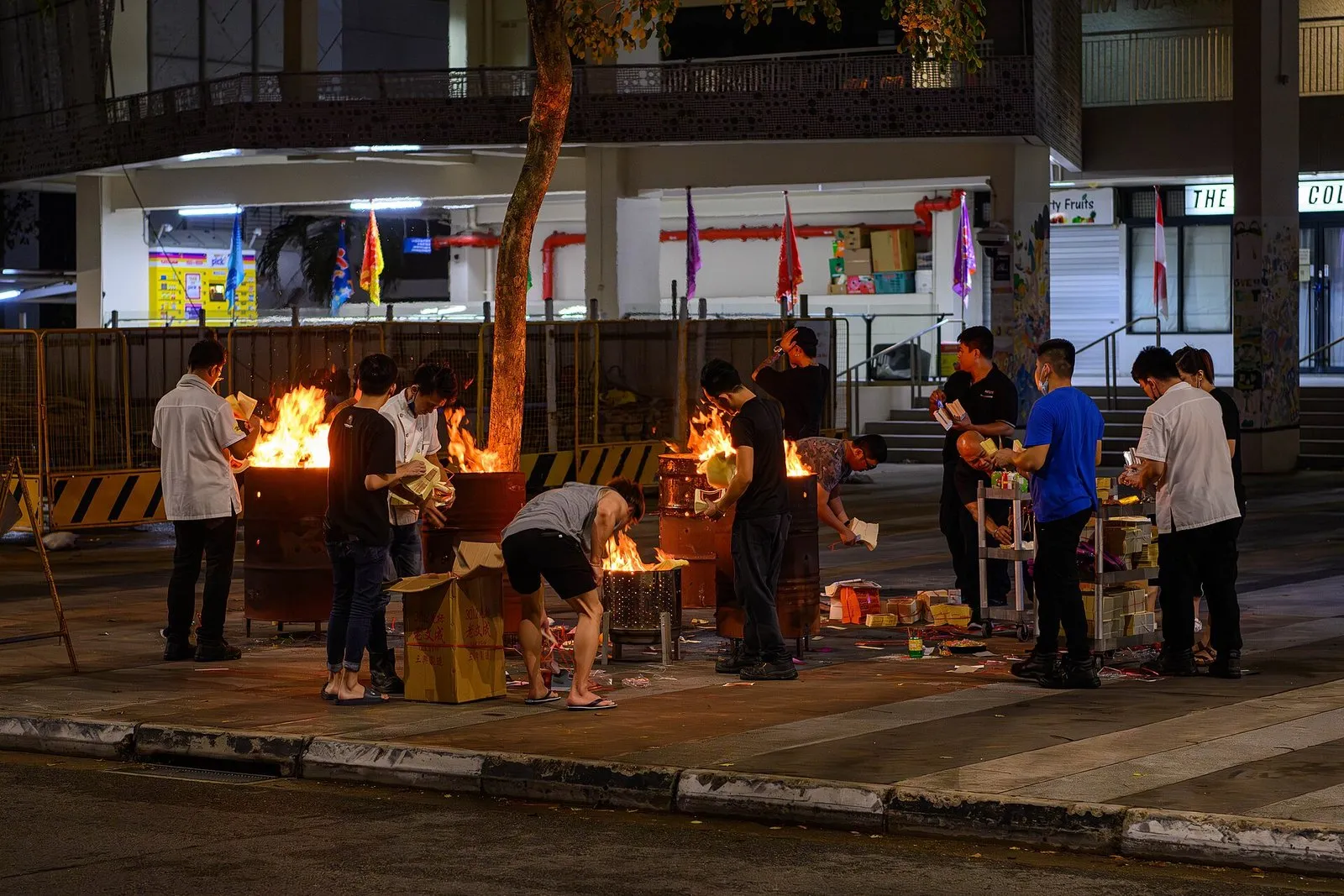
Joss paper burning in metal bins at the roadside. Photo: Kari.Shouur, Wikimedia Commons, CC BY-SA 4.0.
Roadside food offerings
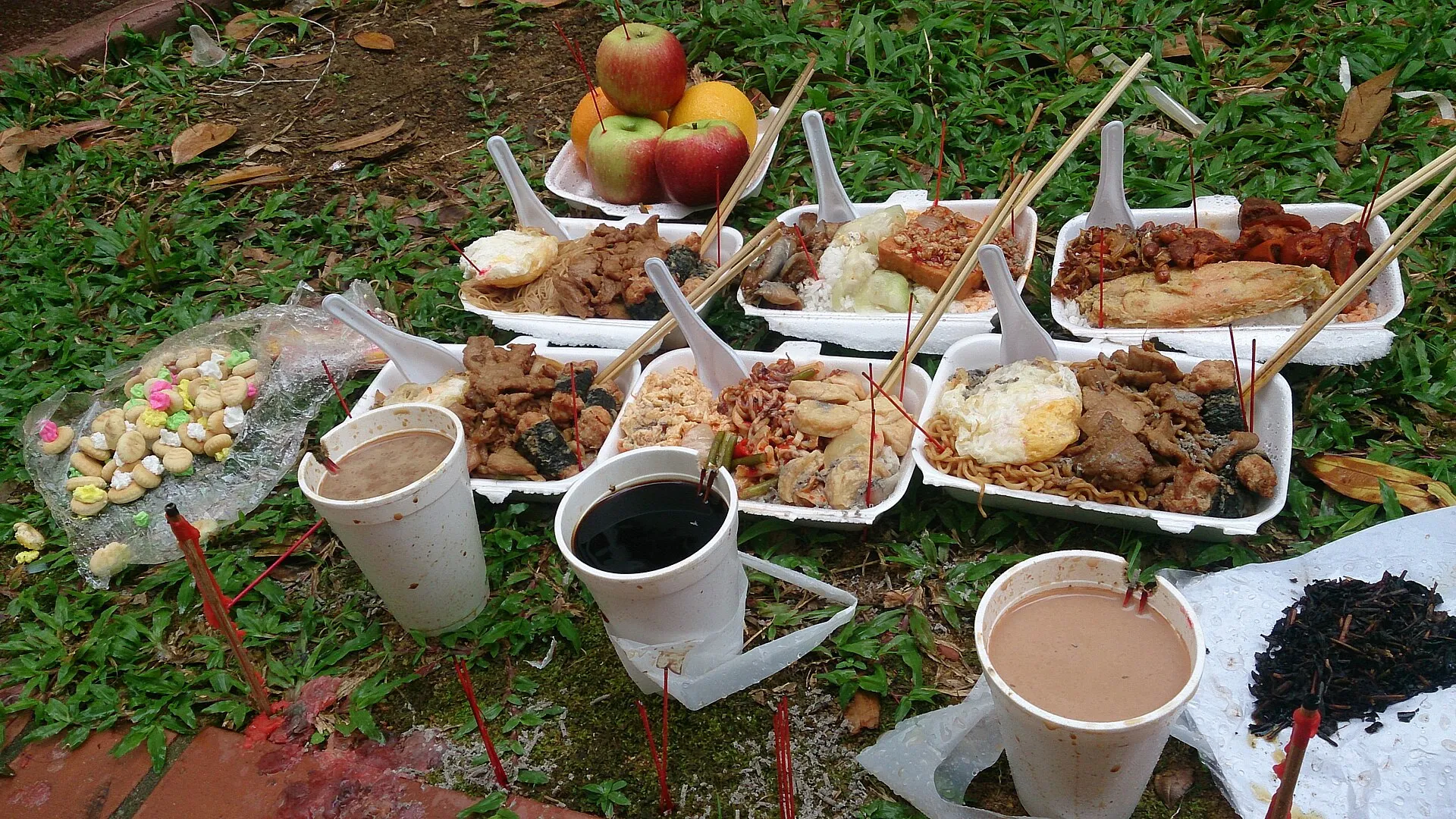
Walking through public housing estates (HDB estates) or historic shophouse streets like Chinatown, you will see small shrines assembled along pavement curbs, roadside grass verges, and at the bases of mature banyan trees:
- Small plastic plates laden with uncooked rice, oranges, pineapples, steamed buns, peanuts, and cups of Chinese tea or rice wine.
- Red candles and burning incense sticks planted directly into the soil or fruit.
- Uncooked instant noodles, sweets, and biscuits laid out for wandering ghost children.
Burning joss paper and paper effigies
To provide wandering spirits with financial wealth and worldly comforts in the afterlife, devotees burn paper offerings inside designated red metal incineration bins provided by municipal Town Councils:
- Joss Paper (Hell Money): Stacks of yellow paper stamped with gold and silver foil, functioning as spiritual currency.
- Papier-Mâché Effigies: Elaborate paper models of luxury commodities, ranging from multi-storey bungalows, sports cars, and private jets to smartphones, designer handbags, gold watches, and paper servants.
⚠️ The Golden Rule on Pavements: When walking along footpaths in Singapore during the seventh month, watch your footing carefully. Never step over, kick, or disturb roadside food offerings, incense sticks, or ash mounds. Accidental disturbance is considered deeply disrespectful to roaming spirits. If you accidentally step on or brush against an offering, immediately apologize aloud with a sincere “Excuse me” or “Sorry.”
The Getai phenomenon: live street stage performances
The most colourful and entertaining secular manifestation of the festival is Getai (歌台, literally “song stage”). Staged by merchant associations and neighborhood committees (Zhongyuan Hui), getai shows are free outdoor variety performances designed to entertain both living spectators and spirit guests.
Where and when to find Getai:
- Locations: Getai stages do not typically operate in the tourist center of Marina Bay. Instead, they are erected in public residential heartlands—including Toa Payoh, Ang Mo Kio, Bedok, Chinatown (Kreta Ayer), and industrial estates. Stages occupy open grass fields, basketball courts, and temple courtyards.
- Timing: Performances run nightly from 19:30 to 22:30 throughout the seventh lunar month.
- Atmosphere: Getai features state-of-the-art concert sound systems, dazzling LED backdrops, laser lighting, and extravagant, feather-trimmed stage costumes reminiscent of Las Vegas shows.
- Musical Repertoire: Energetic hosts (MC) deliver rapid-fire comedic banter and double-entendres, primarily in Hokkien, interspersed with Mandarin, Cantonese, and English pop songs, traditional Chinese opera arias, and upbeat techno dance tracks.
- Charity Auctions: Between musical acts, energetic auctioneers auction off auspicious blessed items—such as golden abacus ornaments, charcoal sculptures, and vintage brandy—often raising tens of thousands of dollars for local charities and festival funds.
The Sacred Front Row Rule:
When attending an outdoor getai performance, you will observe neat rows of red plastic chairs set out before the stage. The entire front row (and sometimes the first two rows) is left strictly vacant.
- These seats are reserved exclusively for the invisible spirit audience members.
- Never sit in, place your bags upon, or rest your feet on the front row of chairs. Take a seat from the second or third row onward, where foreign visitors are welcomed warmly by neighbourhood residents.
Independent festival viewing vs guided cultural tours
Wandering through residential HDB estates independently offers authentic, unfiltered glimpses into community life. However, joining an accredited heritage tour provides essential context regarding Taoist rituals, temple architecture, and festival folklore.
| Feature | Self-Guided Neighbourhood Exploration | Guided Cultural Walking Tour (GYG) |
|---|---|---|
| Cost | Completely Free | From S$69 to S$113 per person |
| Cultural Explanations | Self-directed observation | Expert local storyteller deciphering taboos, offerings, and dialect traditions |
| Route Security | Easy to miss hidden getai stages in heartlands | Direct navigation through heritage temples and festival markets |
| Tasting Experience | Buy snacks independently | Curated food tastings in heritage shophouse eateries included |
Recommended cultural tours
Singapore: Chinatown, Little India, Arab Street Walking Tour
From S$90 · 4.9 stars from 466 reviews · 4 hours · Cultural walk
Discover how Singapore’s different cultural and religious traditions thrive side-by-side. Led by an expert guide, this tour explores the temples and clan alleys of Chinatown where Seventh Month rituals are deeply observed, complete with MRT transit and food tastings. Book on GetYourGuidead.
Singapore: Chinatown Historic Walking Tour with Lunch
From S$69 · 5.0 stars from 155 reviews · 3.5 hours · Small group with lunch
Delve into the historic core of Chinatown, visiting the Buddha Tooth Relic Temple, Sri Mariamman Temple, and century-old clan associations while learning about ghost month folklore, followed by an authentic local lunch. Book on GetYourGuidead.
Singapore: Chinatown, Little India & Kampong Glam Walk
From S$100 · 4.8 stars from 200 reviews · 3 hours · Small group
An immersive walking tour taking in the temples, traditional apothecaries, and community spirit of Singapore’s three principal historic quarters. Book on GetYourGuidead.
Common Seventh Month superstitions and taboos
While educated modern Singaporeans view many Hungry Ghost traditions with good-natured humor, elders and traditionalists observe a strict series of behavioural taboos throughout the month:
- Avoid swimming at night: Folklore holds that water spirits (shui gui) seek living substitutes to drown in order to reincarnate.
- Do not turn your head if called from behind: Believers believe humans have three spiritual flames (on the forehead and both shoulders) protecting them from spirits. Turning your head extinguishes a flame, leaving you vulnerable to possession.
- Avoid wearing solid red or pure black clothing at night: Bright red is believed to attract aggressive spirits, while black represents mournful energy.
- Do not whistle after sunset: Whistling is believed to resemble the calling sound of wandering ghosts.
- Never open umbrellas indoors: Opening umbrellas inside the home is thought to provide shade for wandering spirits to enter and take shelter.
Practical advice for travellers during August
- Weather considerations: August falls within the Southwest Monsoon season. Rainfall averages 146.9 mm across 14 rain days, with typical daytime temperatures of 31.4°C. Expect clear, sunny mornings followed by occasional early afternoon thunderstorms.
- Smoke and Ash Awareness: If you suffer from asthma or respiratory sensitivities, be aware that roadside joss paper burning can generate localized smoke plumes in residential housing estates on the 1st, 15th, and 30th days of the lunar month.
- Where to see Seventh Month activities downtown: In central Singapore, the most accessible public offerings occur in Chinatown around the Buddha Tooth Relic Temple, Telok Ayer Street (outside Thian Hock Keng), and at Chinatown Complex food centre.
- Photography Etiquette: Foreign visitors are welcome to photograph roadside offerings, temple rituals, and getai stages. However, maintain a respectful distance, avoid stepping over joss paper burners, and do not use bright flash photography directly into the faces of worshippers engaged in prayer.
More Singapore guides
Continue planning your Singapore journey:
- Best time to visit Singapore: month-by-month weather, rainfall, and festive calendars.
- Chinatown Singapore guide: temples, clan houses, and street markets.
- Chinatown to Marina Bay walk: scenic walking trail linking heritage streets to the bayfront.
- Where to eat in Singapore: neighbourhood dining guide, from street hawkers to fine dining.
- Singapore rules and fines: complete guide to local laws and customs.
- What to book before you go to Singapore: essential ticket planning and reservation timeline.
Common questions
When is the Hungry Ghost Festival in Singapore in 2027?
The festival spans the entire seventh lunar month, running from 2 August to 31 August 2027. The peak day—known as Ghost Day or the 15th day of the seventh lunar month—falls on Monday 16 August 2027. In 2026, the seventh lunar month ran from 13 August to 10 September.
What is a getai show in Singapore?
Getai (literally 'song stage' in Chinese) refers to lively, open-air live musical stage shows staged in temporary tents and fields across Singapore's residential housing estates during the Hungry Ghost Festival. Performances feature flamboyant singers, LED light displays, Hokkien pop songs, and comedic banter intended to entertain both living audiences and roaming spirits.
Why is the front row of plastic chairs left empty at getai performances?
The entire front row of red plastic chairs at every getai performance is strictly reserved for invisible visiting spirits and wandering ghosts. Living audience members must never sit in the front row; always choose a seat in the second row or further back.
What should tourists avoid doing during the Hungry Ghost month?
Never step on, kick, or tamper with roadside food offerings, joss sticks, or burnt paper ashes placed along footpaths and grass verges. If you step on offerings accidentally, politely apologise aloud to show respect. Traditional taboos also advise against swimming at night, whistling after dark, or sitting on offering altars.