In this guide
💡 The Short Version: Start in the morning to beat the midday heat and catch Sri Mariamman Temple before its 12:00 afternoon closure. The ornate Buddha Tooth Relic Temple opens daily from 07:30 to 17:00 and provides free sarongs if your shoulders or knees are uncovered. Walk the pedestrianised shophouses of Pagoda Street, pay respects at Thian Hock Keng on historic Telok Ayer Street, and finish with lunch at Chinatown Complex or Maxwell Food Centre. Or book a tour: If you prefer an expert-led cultural walk covering Chinatown, Little India, and Kampong Glam with food tastings included, book a guided Chinatown and cultural walking tourad.
⚠️ Sri Mariamman Temple enforces a strict midday closure. Singapore’s oldest Hindu temple welcomes visitors from 06:00 to 12:00 and 18:00 to 21:00 (to 21:15 on Fridays). Arriving between 12:01 and 17:59 leaves you facing locked gates, so schedule your exterior and interior temple visits before noon or after 18:00.
Overview and cultural heritage
Chinatown (known locally as Niu Che Shui, or “bullock cart water”, referencing the 19th-century water carts that supplied the settlement) originated in Sir Stamford Raffles’ 1822 urban town plan, which allocated land southwest of the Singapore River to early Chinese immigrants. Hokkien, Teochew, Cantonese, Hakka, and Hainanese dialect groups settled along defined clan boundaries, establishing clan associations (kongsi), clan temples, and commercial trading houses.
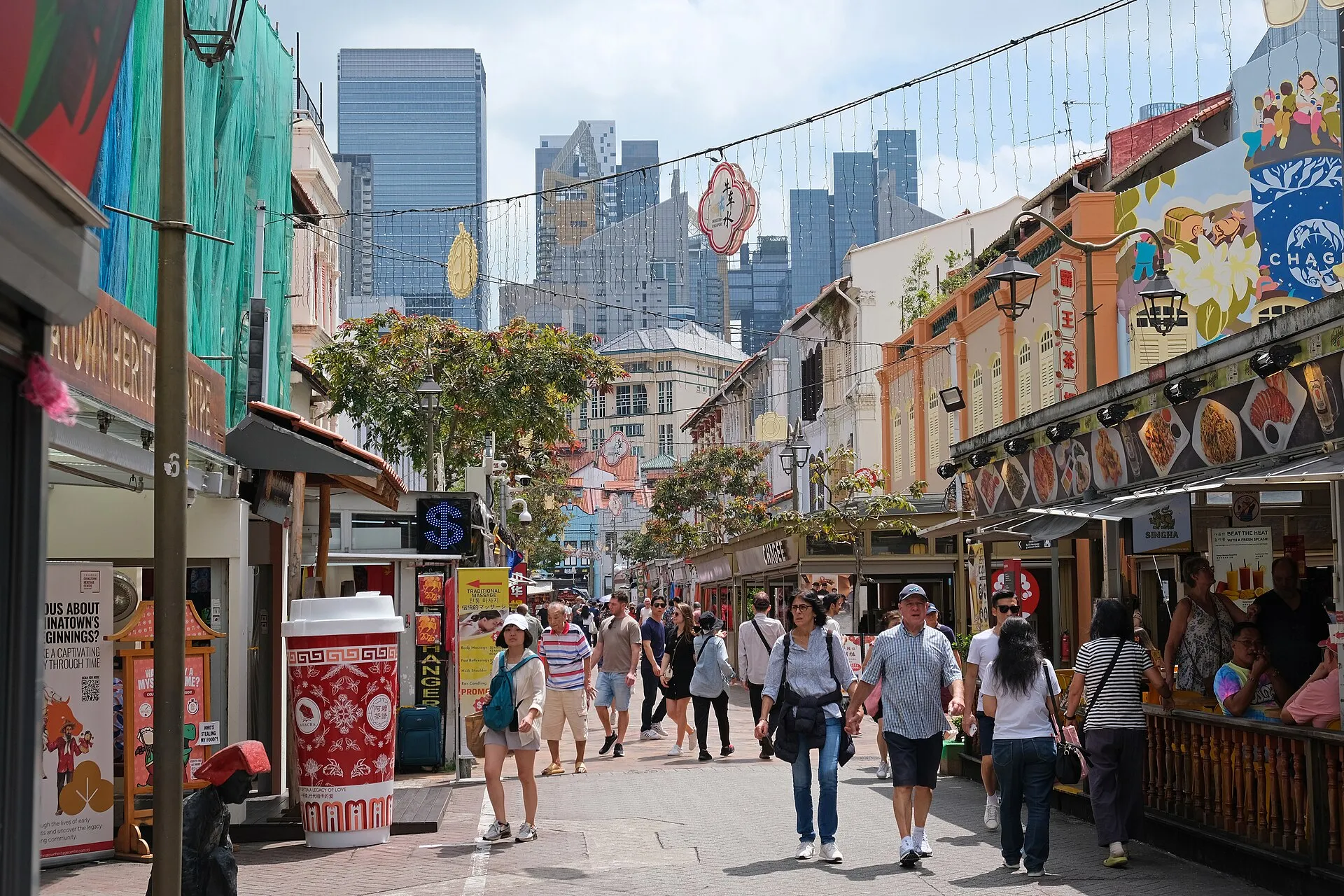
Today, Chinatown stands out internationally for its peaceful multi-faith coexistence: within a single 300-metre stretch along South Bridge Road sit a Chinese Buddhist temple, a South Indian Tamil Hindu temple, and an Indian Muslim mosque. The district is characterised by restored two- and three-storey shophouses featuring pastel facades, Corinthian pilasters, timber louvred shutters, and sheltered five-foot ways designed to shield pedestrians from tropical sun and torrential downpours.
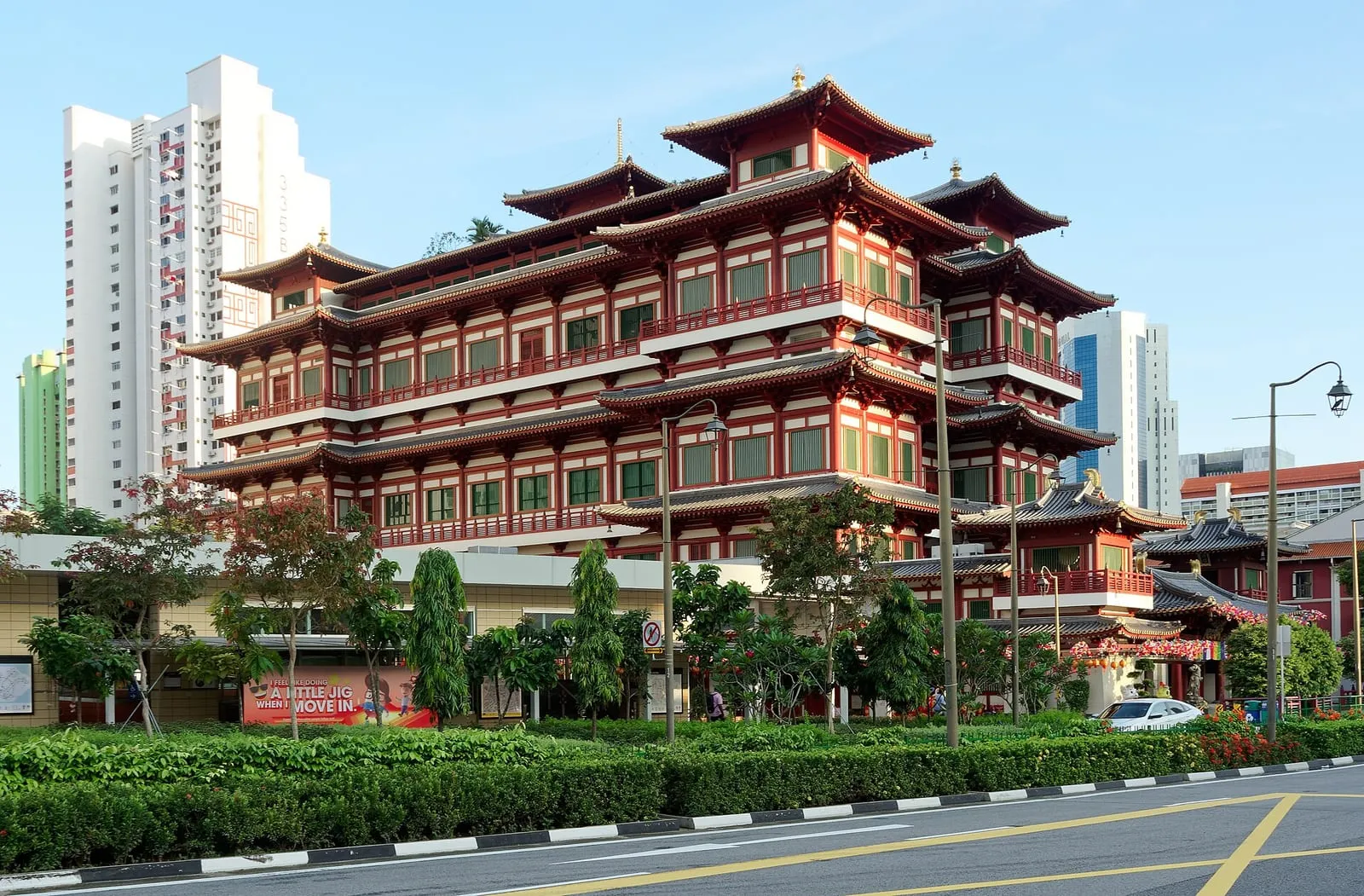
The Buddha Tooth Relic Temple on South Bridge Road. Photo: Jakub Hałun, Wikimedia Commons, CC BY 4.0.
Historic temples and religious landmarks
Every religious monument in Chinatown remains an active centre of daily community worship. Admission to all temples and mosques is free of charge, though modest donations into temple collection boxes are welcome.
| Landmark | Address | Operating hours | Dress code and visiting etiquette |
|---|---|---|---|
| Buddha Tooth Relic Temple & Museum | 288 South Bridge Road | Temple daily 07:30 to 17:00; Museum 09:00 to 17:00 | Free entry. No bare shoulders, low-cut tops, shorts, or mini-skirts. Free sarongs and scarves available at entrance. Photography permitted without flash (no photos inside fourth-floor Sacred Light Hall). |
| Sri Mariamman Temple | 244 South Bridge Road | Daily 06:00 to 12:00, and 18:00 to 21:00 (Fridays to 21:15) | Free entry. Remove footwear outside. Dress modestly covering shoulders and knees; shawls provided. Shoe storage racks located outside gate. |
| Thian Hock Keng | 158 Telok Ayer Street | Daily 07:30 to 17:00 | Free entry. Remove hats; speak softly. Hokkien maritime temple built without nails in 1842; gazetted a National Monument. |
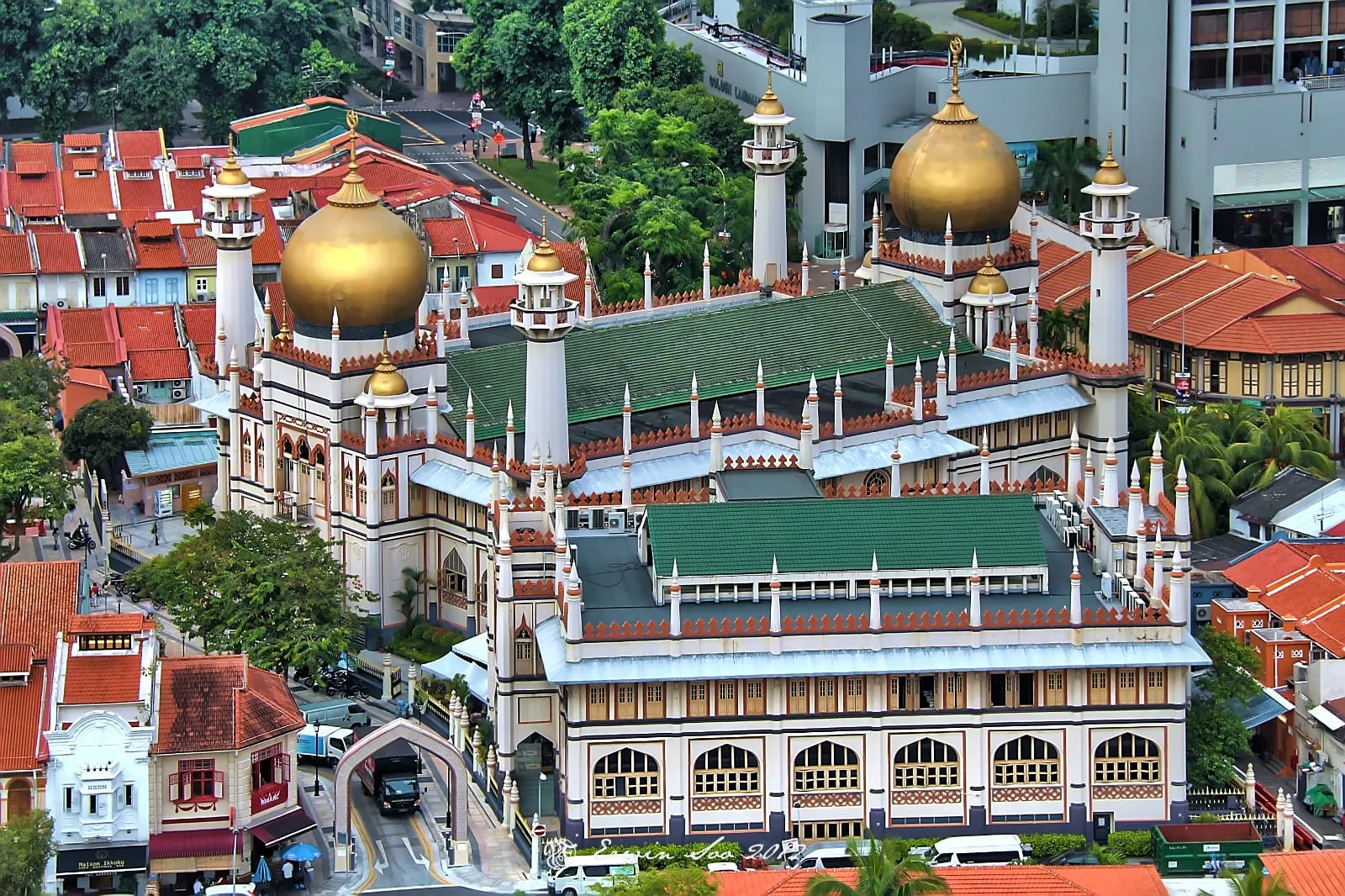
| Masjid Jamae (Chulia Mosque) | 218 South Bridge Road | Daily 09:00 to 18:00 (closed to visitors during congregational prayers) | Free entry. Remove footwear. Robes and head coverings provided for female visitors at entrance lobby. |
Buddha Tooth Relic Temple & Museum
Completed in 2007 at a cost of S$75 million, this imposing five-storey temple was designed in the Tang Dynasty architectural style to house what Buddhists venerate as a sacred canine tooth relic of Gautama Buddha.
- First Floor (Hundred Dragons Hall): Features a magnificent 8-metre statue of Maitreya Buddha flanked by ornate gilded dragon carvings and 100 miniature Buddhas. Daily chanting ceremonies occur at 09:00, 11:00, and 14:00.
- Third Floor (Buddhist Culture Museum): Displays rare Gandharan statues, ancient Southeast Asian bronzes, and sacred scriptures.
- Fourth Floor (Sacred Light Hall): The inner sanctum holding the Buddha Tooth Relic, encased in a stupa forged from 320 kilograms of solid gold (donated by devotees). Visitors can view the relic from behind glass partition walls; photography is prohibited on this floor.
- Rooftop Garden: A tranquil retreat featuring the Ten Thousand Buddhas Pagoda and an enormous Tibetan prayer wheel inscribed with the Vairocana mantra. Visitors can turn the wheel clockwise while walking its circuit.
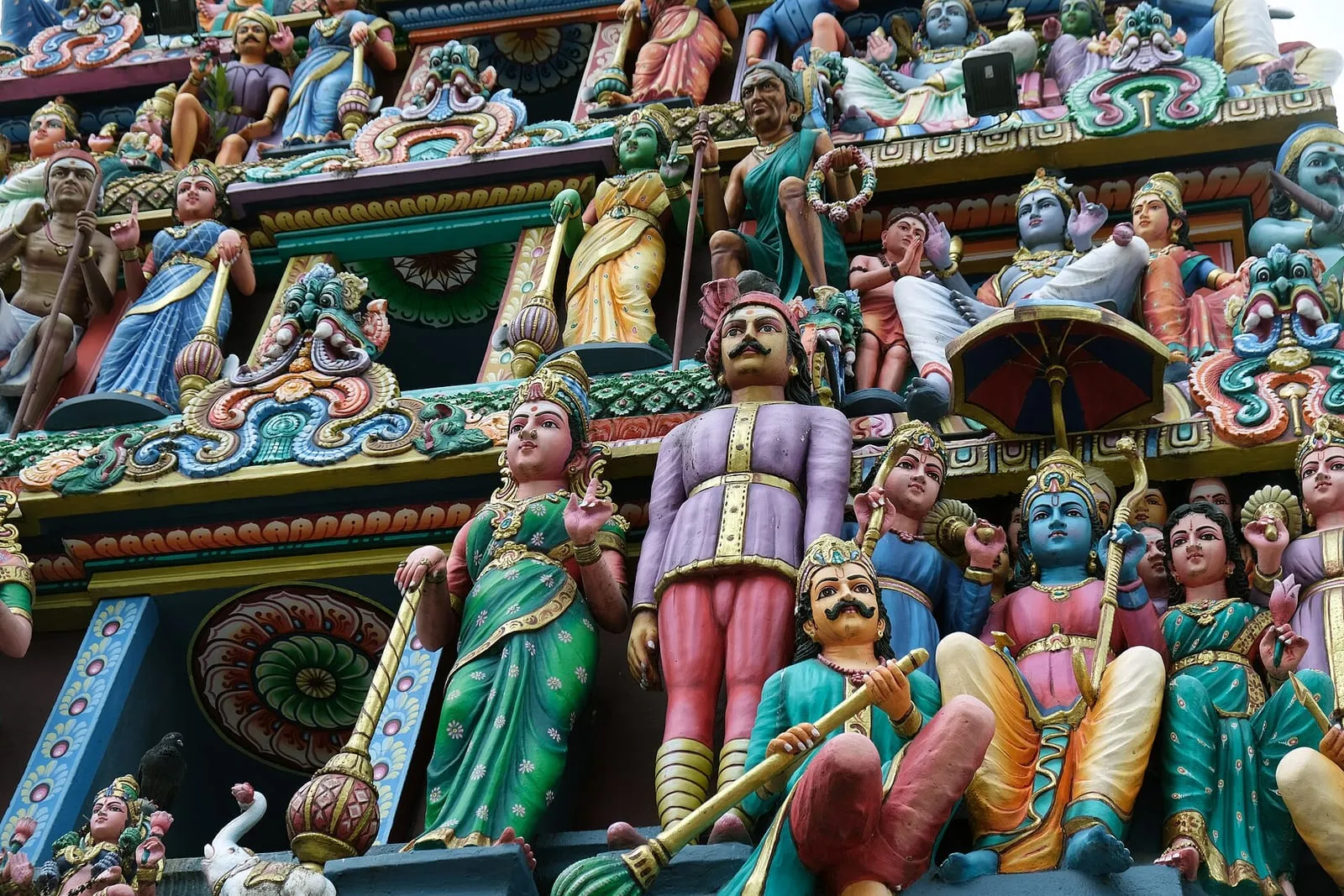
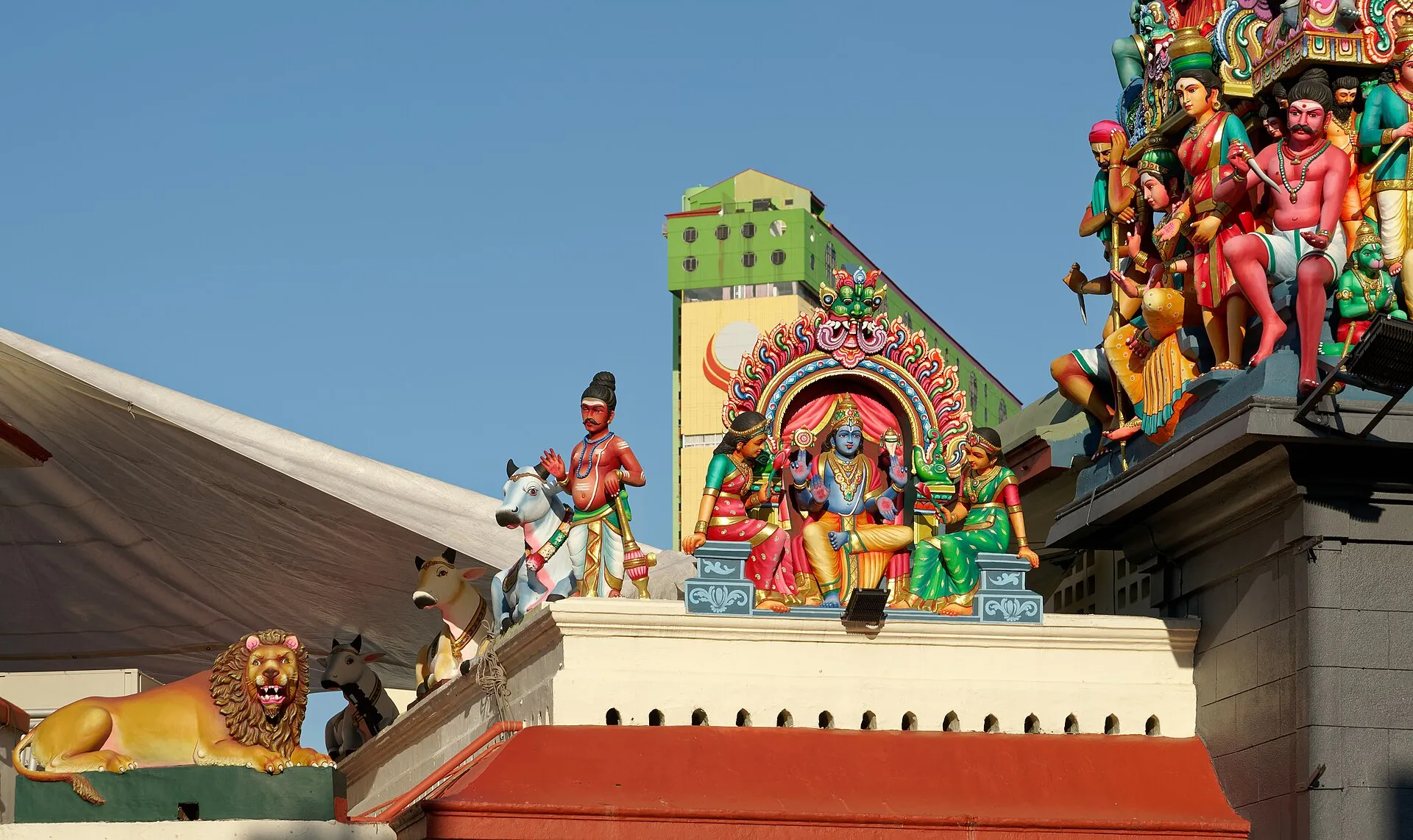
The sculptural gopuram of Sri Mariamman Temple. Photo: kallerna, Wikimedia Commons, CC BY-SA 4.0.
Sri Mariamman Temple
Founded in 1827 by Naraina Pillai, a government clerk who travelled with Stamford Raffles from Penang, Sri Mariamman is Singapore’s oldest Hindu temple. Dedicated to the goddess Mariamman—revered for curing illnesses and epidemic diseases—the temple is a cornerstone of the Tamil community.
The temple is crowned by an imposing six-tiered gopuram (entrance tower) encrusted with painted plaster sculptures of Hindu deities, mythological guardians, and sacred cows. The interior prayer hall features intricate ceiling frescoes depicting the circular wheel of Hindu astrology and nine astrological planets (Navagraha).
Every October or November, the temple stages the dramatic Theemithi (fire-walking ceremony), where thousands of male devotees walk barefoot across a four-metre pit of glowing embers to fulfil vows to goddess Draupadi.
Thian Hock Keng Temple
Situated on Telok Ayer Street, Thian Hock Keng (“Palace of Heavenly Happiness”) was originally built directly on the shoreline before 19th-century land reclamation pushed the harbour eastwards. Chinese sailors and immigrants stepping off junks from Fujian province gave thanks here to Mazu, the Taoist goddess of the sea, for safe ocean passage across the South China Sea.
The temple complex was constructed between 1839 and 1842 using ironwood beams from Malacca, granite from Fujian, and ceramic roof tiles from southern China. Remarkably, the entire traditional timber frame was assembled without driving a single iron nail. In 1907, Qing Dynasty Emperor Guangxu presented an imperial scroll inscribed with the four characters Bo Jing Nan Jiang (“Gentle Waves over the Southern Seas”), which hangs framed above the main shrine.
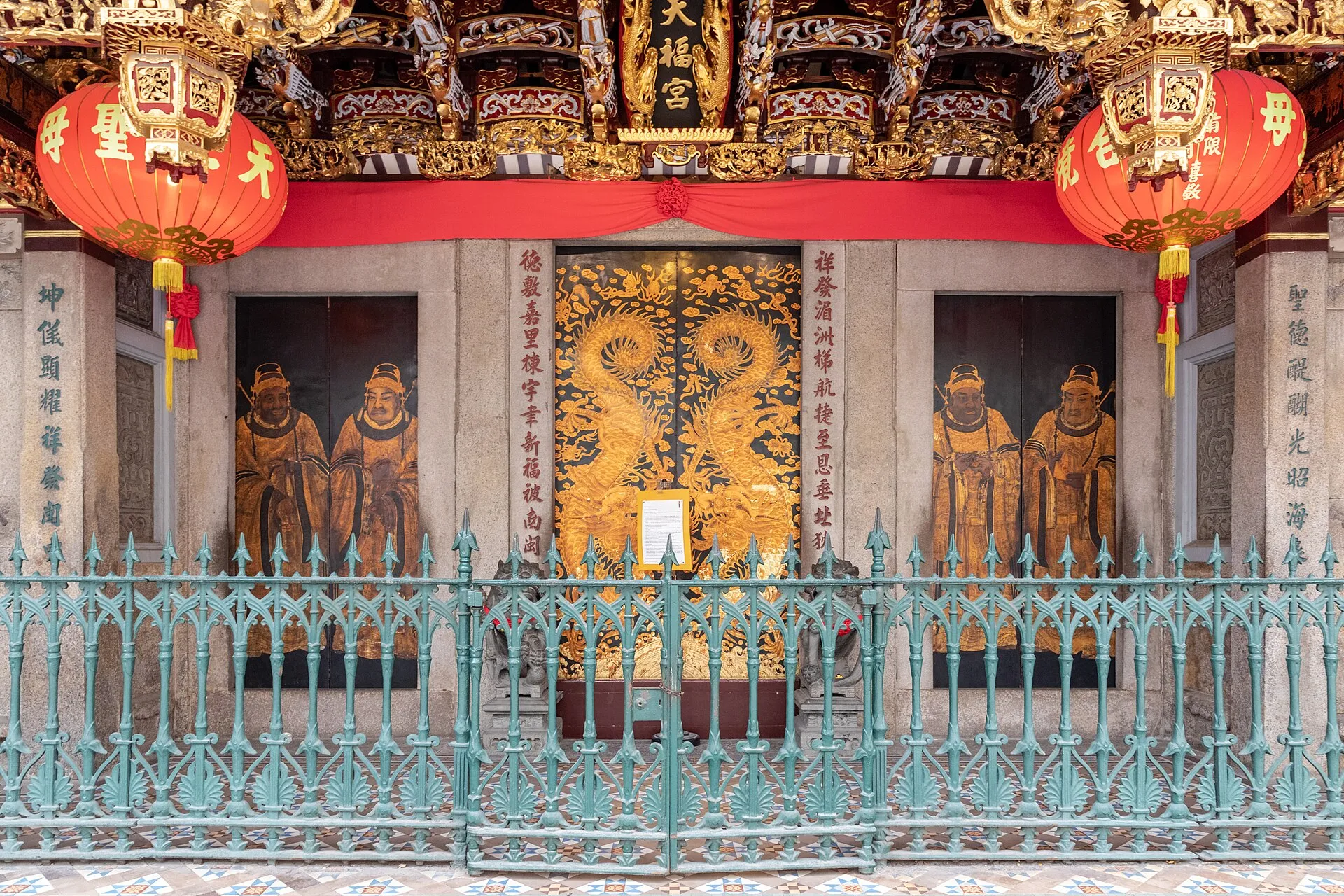
The front doors of Thian Hock Keng temple in Chinatown. Photo: Dietmar Rabich, Wikimedia Commons, CC BY-SA 4.0.
Key streets and architectural highlights
- Pagoda Street: Directly outside Chinatown MRT Exit A, this pedestrian mall is lined with souvenir vendors and restored three-storey shophouses. In the 1850s, this street was the notorious centre of the coolie trade, where impoverished indentured labourers were housed in cramped dormitory conditions before dispatch to tin mines and plantations.
- Temple Street: Flanked by traditional Chinese medicine apothecaries (such as Eu Yan Sang), porcelain shops, and traditional bakeries selling mooncakes and flaky egg tarts.
- Smith Street: Historically known as Hei Ba Gai (Theatre Street), it formerly hosted Cantonese opera houses. It later became Chinatown Food Street and remains lined with outdoor dining establishments.
- Telok Ayer Street: Once the commercial waterfront of Singapore, Telok Ayer features an extraordinary architectural concentration of places of worship: Thian Hock Keng, the 1828 Al-Abrar Mosque, the 1894 Fuk Tak Chi Temple (now a boutique hotel museum), and the 1924 Telok Ayer Chinese Methodist Church.
Chinatown walking tours and experiences
Joining a guided heritage walk provides historical context regarding secret society brotherhoods, opium dens, clan disputes, and dialect food traditions that shaped 19th-century Singapore.
1. Chinatown, Little India and Arab Street Walking Tour
From S$90 · 4.9 stars from 466 reviews · 4 hours
This four-hour guided walking tourad links Chinatown with Little India and Arab Street.
2. Chinatown Historic Walking Tour with Lunch
From S$69 · 5.0 stars from 155 reviews · 3.5 hours · Lunch included
A Chinatown walking tour with lunchad, led by a local guide.
3. Chinatown, Little India and Kampong Glam Walk
From S$100 · 4.8 stars from 200 reviews · 3 hours
A three-hour guided walkad through the shophouse quarters of Chinatown, Little India and Kampong Glam.
Independent exploration vs guided tours
| Feature | Self-guided walking | Organised guided tour |
|---|---|---|
| Cost | Completely free (pay only for food and transit) | S$69 to S$100 per person |
| Flexibility | Set your own pace; linger at temples or shops | Fixed 3 to 4 hour itinerary with scheduled stops |
| Temple etiquette guidance | Must research dress rules and hours independently | Guide provides sarongs and explains prayer rituals |
| Historical commentary | Self-directed reading on markers and signs | Live narration on coolie trade, secret societies, clans |
| Food ordering | Navigate hawker queues and stall choices alone | Guide secures table seating and orders signature dishes |
How to see Chinatown in half a day
Follow this 3.5-hour morning walking route to maximise opening hours and beat the midday heat:
- 08:30 – Arrival at Chinatown MRT (NE4/DT19): Take Exit A onto Pagoda Street. Enjoy the quiet morning streets as shopkeepers roll up security shutters.
- 09:00 – Sri Mariamman Temple: Enter before morning prayer sessions conclude at noon. Observe priests performing puja ceremonies and admire the ceiling frescoes.
- 09:45 – Buddha Tooth Relic Temple: Enter the Hundred Dragons Hall to hear morning monastic chanting. Take the lift to the 3rd floor museum and 4th floor gold stupa, then visit the rooftop prayer wheel.
- 11:00 – Heritage Shophouses & Telok Ayer: Walk down Sago Street, cross South Bridge Road into Ann Siang Hill Park, and descend the staircase to Telok Ayer Street. Tour Thian Hock Keng Temple.
- 12:00 – Hawker Lunch at Maxwell or Chinatown Complex: Walk to Maxwell Food Centre (across from Buddha Tooth Relic) for Tian Tian chicken rice and Zhen Zhen porridge, or head into Chinatown Complex basement market and 2nd-floor food hall.
- 13:00 – Traditional Tea Tasting: Wind down with a gongfu tea sampling session at Tea Chapter on Neil Road or Yixing Xuan Teahouse on Tanjong Pagar Road.
Hawker dining in Chinatown
Chinatown boasts some of the finest culinary concentrations in Southeast Asia:
- Chinatown Complex Food Centre (335 Smith Street): Level 2 hosts 226 stalls. Key stalls include Lian He Ben Ji Claypot Rice (cooked over charcoal braziers, 30-minute queue), Zhong Guo La Mian Xiao Long Bao (steamed dumplings and spicy handmade noodles), and Hawker Chan (soya sauce chicken).
- Maxwell Food Centre (1 Kadayanallur Street): Renowned for Tian Tian Hainanese Chicken Rice (Anthony Bourdain favourite), Ah Tai Chicken Rice (opened by Tian Tian’s former head chef), Rojak, Popiah & Cockle, and Maxwell Fuzhou Oyster Cake.
- Hong Lim Market & Food Centre (531A Upper Cross Street): Famed for Outram Park Fried Kway Teow Mee (charred smoky noodles tossed with cockles and eggs) and Famous Sungei Road Trishaw Laksa. See our detailed guides to best hawker centres and Michelin hawker stalls for stall opening hours and queuing tips.
Practical transport and connections
- MRT Stations: Chinatown station (NE4/DT19) sits under Pagoda Street. Maxwell station (TE18) on the Thomson-East Coast Line sits directly opposite Maxwell Food Centre and the Buddha Tooth Relic Temple. Telok Ayer station (DT20) provides direct access to Thian Hock Keng.
- Continuing your journey: From Chinatown, follow our self-guided Chinatown to Marina Bay walk along the historic waterfront past Lau Pa Sat and Boat Quay to the Merlion.
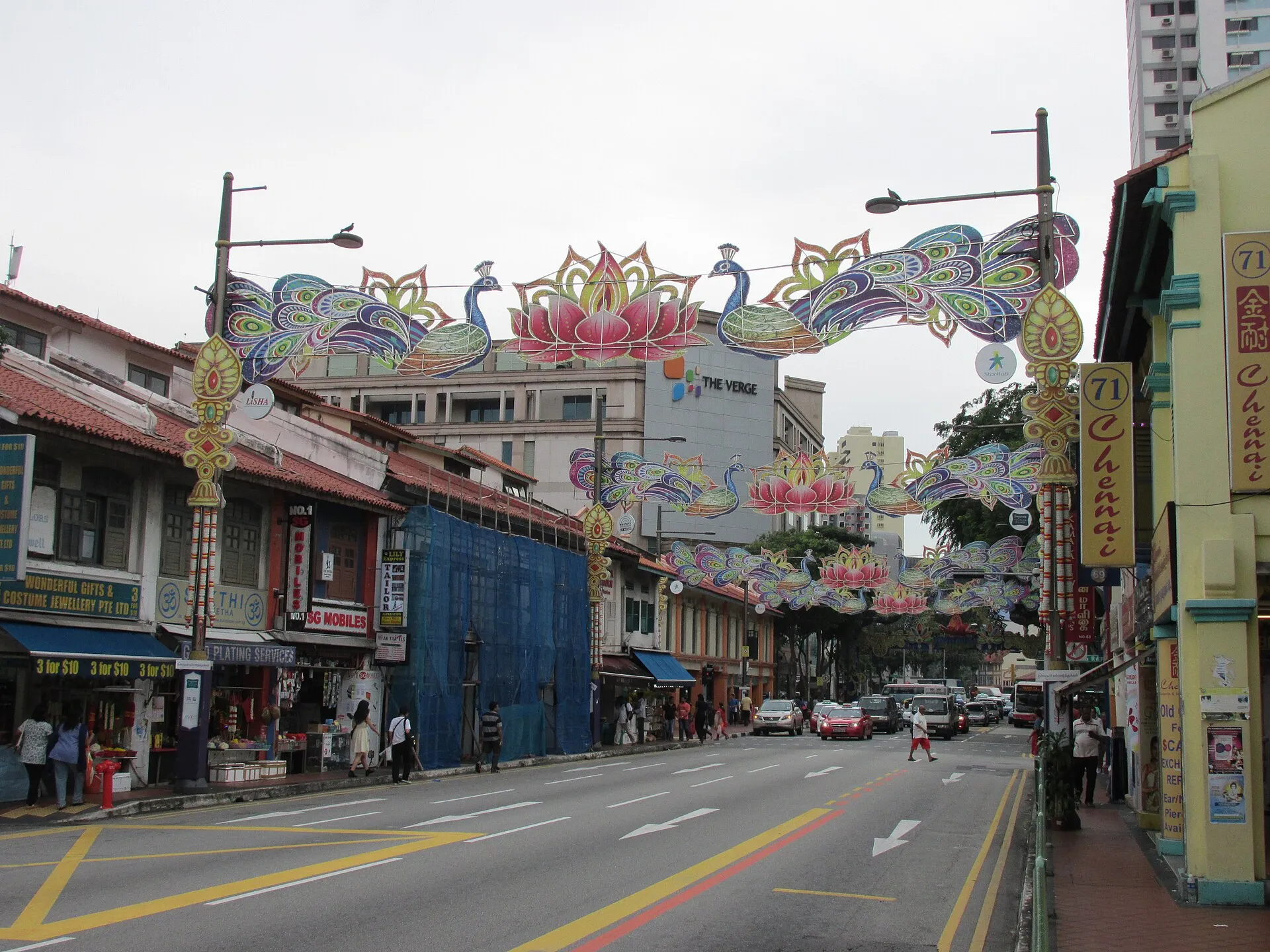
- Festivals: Chinatown is the centre of the annual Chinese New Year celebrations in January/February, featuring massive street light displays and festive night markets. In August, the district observes the Hungry Ghost Festival with roadside joss paper offerings and lively getai performances. For accommodations, consult our where to stay in Singapore guide.
Common questions
What are the Buddha Tooth Relic Temple's opening hours?
The temple is open daily from 07:30 to 17:00, with museum galleries on the third and fourth floors open from 09:00 to 17:00. Admission is completely free. Visitors must cover shoulders and knees, and sleeveless tops, shorts, and mini-skirts are prohibited.
When is Sri Mariamman Temple open?
Sri Mariamman Temple opens daily from 06:00 to 12:00 for morning prayers, closes for six hours in the afternoon, and reopens from 18:00 to 21:00 (extended to 21:15 on Fridays). Admission is free; visitors remove footwear before entering the temple compound.
What should I wear to visit temples in Chinatown?
Modest attire covering shoulders and knees is mandatory at all active places of worship in Chinatown. At the Buddha Tooth Relic Temple, free wrap-around sarongs and shawls are provided at the entrance. At Hindu temples, remove your shoes and deposit them on the open racks outside.
Which MRT station is best for Chinatown?
Chinatown MRT station (interchange for the North East Line NE4 and Downtown Line DT19) exits directly onto Pagoda Street (Exit A). For Maxwell Food Centre and the Buddha Tooth Relic Temple, Maxwell MRT station (Thomson-East Coast Line TE18) sits 100 metres away across South Bridge Road.
What are the best hawker centres in Chinatown?
Chinatown is home to three premier hawker centres within a ten-minute walk of each other: Chinatown Complex (Singapore's largest with over 220 food stalls), Maxwell Food Centre (famed for Tian Tian Hainanese Chicken Rice), and Hong Lim Market & Food Centre (celebrated for Michelin Bib Gourmand laksa and fried kway teow).