In this guide
💡 The Short Version: Start your culinary exploration at Maxwell Food Centre in Chinatown for world-famous chicken rice, Old Airport Road Food Centre for the highest concentration of local favourites, or Tiong Bahru Market for breakfast chwee kueh and noodles. Singapore’s dining culture spans three realms: humble hawker stalls (meals S$4 to S$8; order at the counter, carry your tray, and clear your table), historic zi char seafood restaurants for communal chilli crab, and refined Peranakan restaurants serving heritage Straits Chinese cooking. Bring physical cash: 46 of Michelin’s 97 Bib Gourmand stalls remain cash-only. Beware Monday closures: stalls including Tian Tian chicken rice, Hill Street Tai Hwa Pork Noodle, and Outram Park Fried Kway Teow close on Mondays. Return your tray and litter to avoid NEA fines. Or book a food tour: travellers wanting an insider introduction across multiple quarters can join the top-rated Stories Food Tourad from S$127.
Singapore is widely acclaimed as one of the world’s greatest food capitals. The island nation’s cuisine reflects over two centuries of maritime trade, blending Southern Chinese (Hokkien, Teochew, Cantonese, Hainanese, Hakka), Malay, Tamil Indian, Peranakan (Straits Chinese), and British colonial culinary traditions into an extraordinary everyday food culture.
Whether you are pulling up a plastic stool beneath ceiling fans at a hawker centre or settling into a restored colonial shophouse for Michelin-starred Peranakan dining, this comprehensive guide explains what to eat, where to find the defining version of each dish, and the local customs required to order like a resident.
How to navigate Singapore dining: hawker etiquette and rules
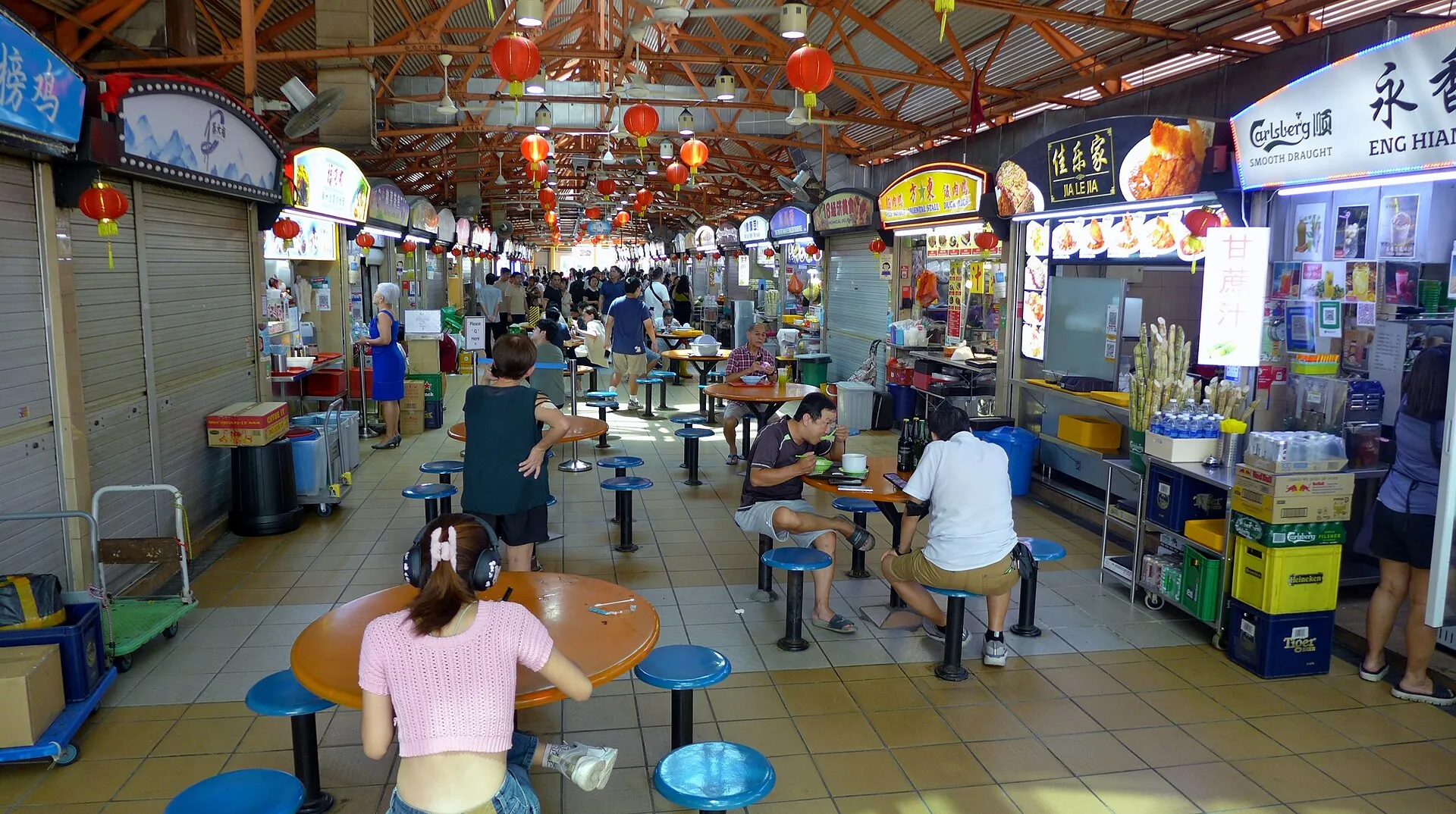
Eating at a hawker centre is Singapore’s primary cultural ritual, but first-time visitors should understand four golden ground rules:
- The ‘Choping’ Table Custom: Before joining a long queue at a popular food stall, secure a seat. At busy hours, Singaporeans reserve empty tables by leaving an inexpensive personal item—most commonly a small packet of pocket tissue paper, an umbrella, or an office pass—on the tabletop or chair. This practice is called choping. If you see an unoccupied table with a tissue packet on it, it is claimed; find another table and place your own tissue packet to hold your place.
- Mandatory Tray Return Laws: By law, all diners in hawker centres, food courts, and coffee shops must clear their dirty trays, plates, bowls, cutlery, drink cans, and used tissues to designated Tray Return Stations upon finishing. Enforced by the National Environment Agency since September 2021, failure to clear your table results in a written warning for first offenders and a S$300 composition fine for repeat offenders. Stations are segregated into Halal and Non-Halal racks; place your tray on the appropriate rack.
- Carry Cash: While Singapore is largely cashless, many generational hawkers do not accept international credit cards due to transaction fees. Over 45 Michelin Bib Gourmand stalls remain strictly cash-only. Always carry S$2, S$5, and S$10 notes.
- Understanding the ’++’ on Bills: When dining in sit-down cafes, bistros, and restaurants, menu prices are typically quoted with two plus signs (e.g. S$50++). The first plus represents a 10 percent service charge; the second represents Singapore’s 9 percent Goods and Services Tax (GST), which is applied on top of the subtotal and service charge (multiplying the menu price by 1.199). Tipping is not customary in Singapore because the service charge covers staff remuneration. Hawker centres do not charge service charge or GST.
Independent dining vs guided culinary food tours
While eating independently is affordable, joining a curated food tour provides valuable cultural context, unlocks multiple tastings without queue fatigue, and introduces you to hidden heritage stalls.
| Dining Approach | Independent Hawker Crawl | Small-Group Guided Tour (GYG) |
|---|---|---|
| Typical Spend | S$5 to S$15 per person per meal | S$90 to S$127 per person (all food included) |
| Queue Management | Wait 30–60 mins per famous stall | Guide coordinates pre-orders; shared group tables |
| Dish Diversity | Limited by personal appetite (1–2 dishes) | 8 to 12 distinct dishes portioned for sharing |
| Dietary Navigation | Self-directed ingredient checks | Curated tastings accommodating spice and preferences |
| Cultural Context | Reading menus and food blogs | Live commentary on dialect groups, spices, and history |
Recommended Singapore food tours
The Singapore Story: Stories Food Tour
From S$127 · 4.9 stars from 497 reviews · 4 hours · 12+ tastings
The highest-rated multi-neighbourhood food walk in Singapore. Traverse Chinatown, Little India, and Kampong Glam with an expert culinary guide, tasting 12+ signature dishes—from Hainanese chicken rice to roti prata and Peranakan kueh—while riding the MRT like a local. Book on GetYourGuidead.
Guided Street Food Tour at Night with 9 Tastings
From S$109 · 4.6 stars from 545 reviews · 3.5 hours · Evening food walk
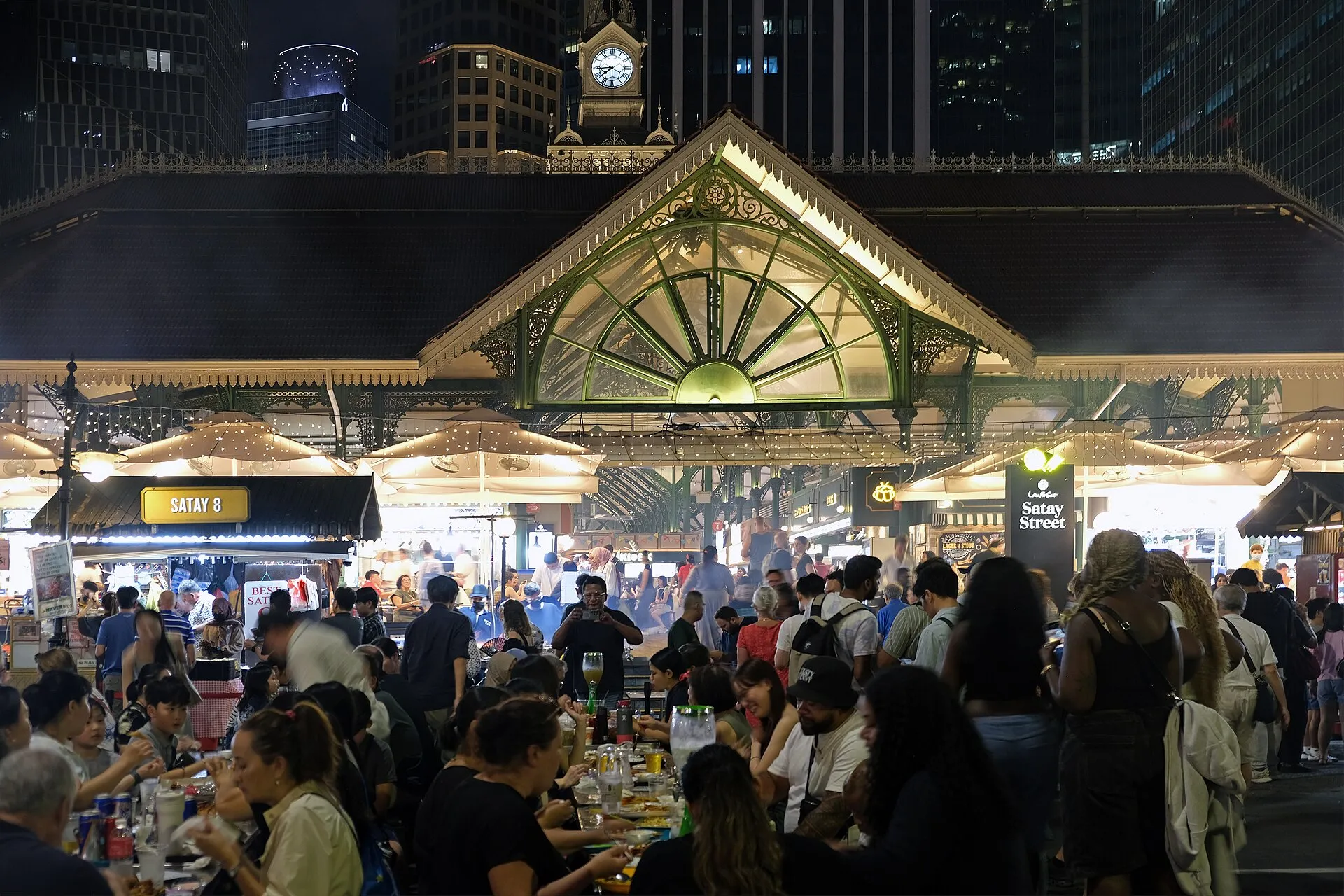
Experience Singapore’s street food after dark. Feast on sizzling satay on Lau Pa Sat’s famous Satay Street, sample wok-charred noodles, and sip fresh tropical juices along the illuminated Singapore River quays. Book on GetYourGuidead.
Foodie Experience Guided Tour with 5 Tastings
From S$94 · 4.7 stars from 362 reviews · 3 hours · Small group
A fast-paced introduction to Singapore’s core street food flavours, exploring Chinatown and central markets with five substantial tastings. Book on GetYourGuidead.
1. Traditional breakfast: Kaya toast and kopi
The quintessential Singaporean morning ritual centers on kaya toast accompanied by soft-boiled eggs and traditional sock-brewed coffee (kopi).
- The Dish: Thin, crustless slices of white or brown bread toasted over charcoal or grill plates, slathered with rich butter and kaya (a luscious, fragrant jam made from coconut milk, duck or chicken eggs, sugar, and pandan leaves).
- How to Eat It: Crack two runny soft-boiled eggs into a saucer, add a splash of dark soya sauce and a dash of ground white pepper, whisk with a spoon, and dip the crunchy, warm butter-kaya toast directly into the savoury egg mixture.
- Where to Eat:
- Ya Kun Kaya Toast (18 China Street, Far East Square): Operating since 1944, this historic flagship branch near Telok Ayer MRT serves the classic charcoal-toasted brown bread set (S$5.80 with eggs and hot drink).
- Tong Ah Eating House (35 Keong Saik Road, Chinatown): Famed for its crispy thin toast and traditional French toast with kaya, operating since 1939.
2. The national dish: Hainanese chicken rice
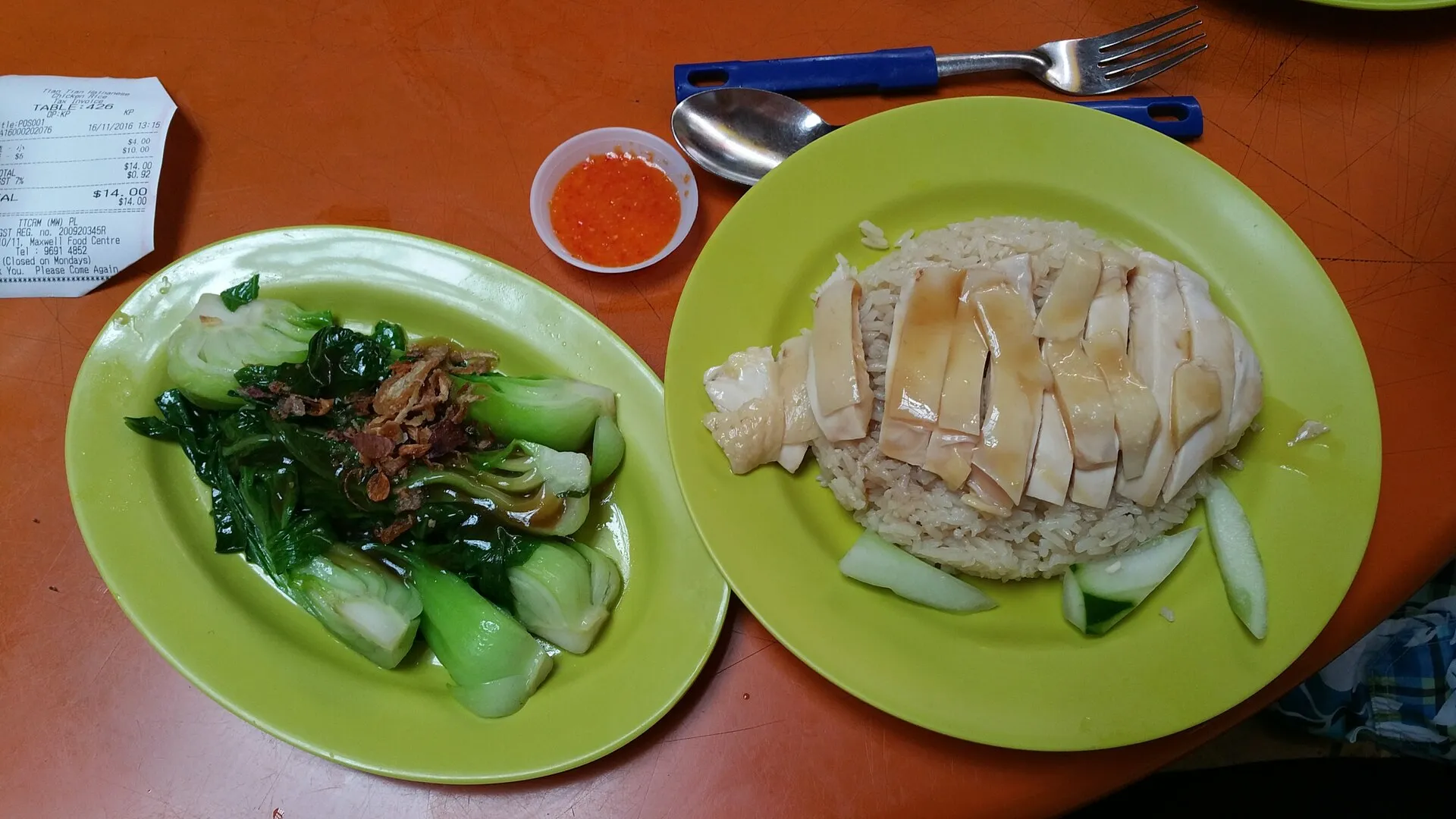
Hainanese chicken rice is widely regarded as Singapore’s unofficial national dish, adapted from the Wenchang chicken recipe of Hainan island immigrants in the early 20th century.
- The Dish: Whole chickens gently poached in sub-boiling water seasoned with ginger and garlic, then immediately plunged into an ice bath to create a delicate gelatinous layer beneath the skin. The poaching broth and chicken fat are then used to fry and boil fragrant jasmine rice infused with pandan leaves, lemongrass, and garlic. Served with fiery freshly blended chilli sauce, pounded ginger puree, and dark sweet soya sauce.
- Where to Eat:
- Tian Tian Hainanese Chicken Rice (Maxwell Food Centre #01-10/11): Singapore’s most celebrated stall, holding a Michelin Bib Gourmand. Glossy, intensely flavourful rice with succulent chicken (S$5.00–S$9.00; cash only; closed Mondays).
- Ah Tai Hainanese Chicken Rice (Maxwell Food Centre #01-07): Run by Tian Tian’s former head cook, located just two stalls down, serving virtually identical quality with shorter queues.
- Tiong Bahru Hainanese Boneless Chicken Rice (Tiong Bahru Market #02-82): Michelin Bib Gourmand recipient renowned for its tender boneless cuts and savoury pickled cucumber (S$4.50–S$6.50; closed Mondays).
- Boon Tong Kee (399/401/403 Balestier Road): Full-service restaurant known for silky smooth poached chicken and crispy fried bean curd with dipping sauce.
3. Minced meat and stir-fried noodles: Bak chor mee and char kway teow
Singapore’s noodle repertoire is dominated by blistering wok techniques and vinegar-chilli dressings.
Bak Chor Mee (Minced Meat Noodles)
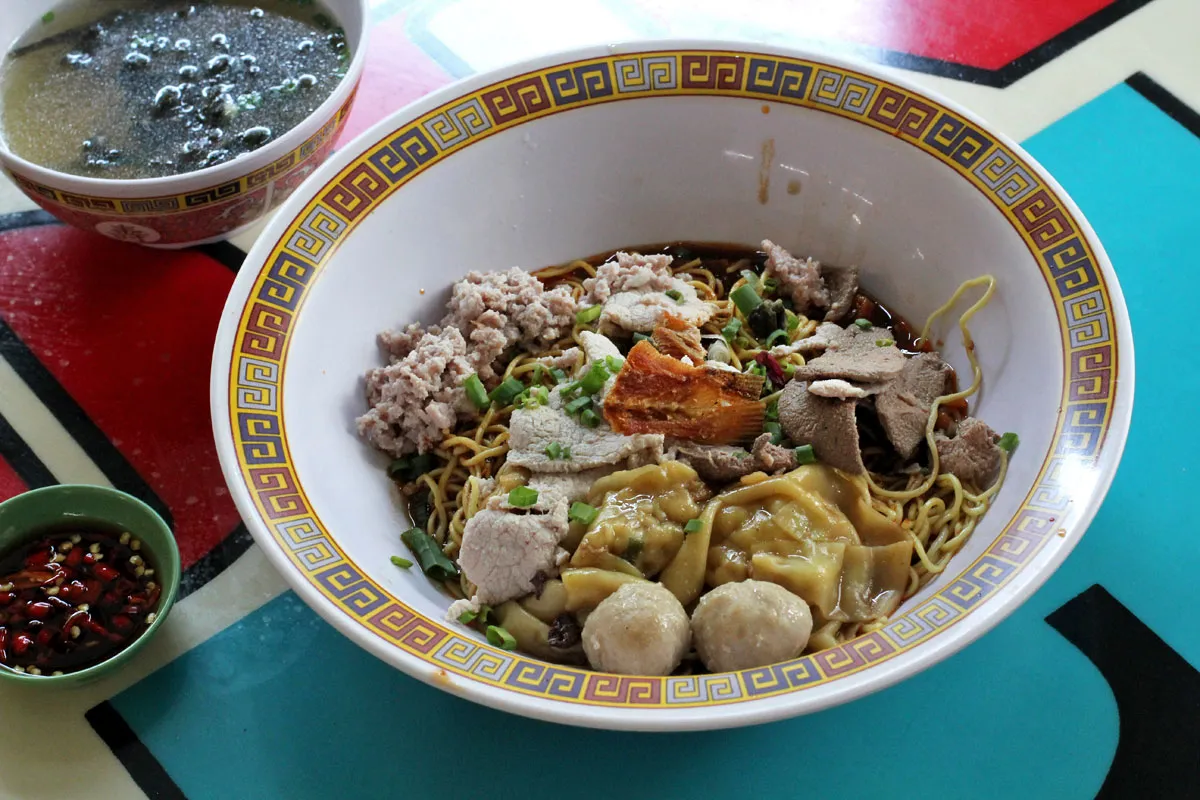
- The Dish: Thin egg noodles (mee kia) or flat noodles (mee pok) tossed in a piquant dressing of black vinegar, chilli paste, and lard oil, topped with minced pork, pork slices, stewed mushrooms, wontons, and crispy fried plaice fish.
- Where to Eat:
- Hill Street Tai Hwa Pork Noodle (466 Crawford Lane #01-12, Lavender): Singapore’s only Michelin-starred hawker stall. Every bowl is cooked to order by master hawkers (S$6.00–S$10.00; cash only; closed Mondays; expect 45- to 75-minute queues).
- Tai Wah Pork Noodle (Hong Lim Food Centre #02-16): Michelin Bib Gourmand stall run by the younger brother of Tai Hwa’s founder, offering exceptional vinegar-glazed noodles (closed Mondays).
Char Kway Teow
- The Dish: Broad flat rice noodles and yellow egg noodles stir-fried over roaring wok heat with sweet dark soya sauce, light soya sauce, chilli paste, whole cockles, sliced Chinese sausage (lap cheong), fish cake, egg, bean sprouts, and crispy golden pork lard cubes. The defining hallmark is wok hei—the smoky aroma imparted by vaporised oil over extreme heat.
- Where to Eat:
- Outram Park Fried Kway Teow Mee (Hong Lim Food Centre #02-17): Michelin Bib Gourmand stall frying moist, velvety char kway teow laden with fresh cockles and double-beaten egg (S$5.00–S$6.00; closed Sunday and Monday).
- Lao Fu Zi Fried Kway Teow (Old Airport Road Food Centre #01-12): Michelin Bib Gourmand vendor serving a darker, drier, sweet-savoury version (S$6.00–S$10.00; closed Wednesdays).
4. Skewered barbecue: Satay
Satay consists of skewered, marinated meats grilled over open charcoal trenches, fanned with handheld wicker fans, and served with a rich, spiced peanut sauce.
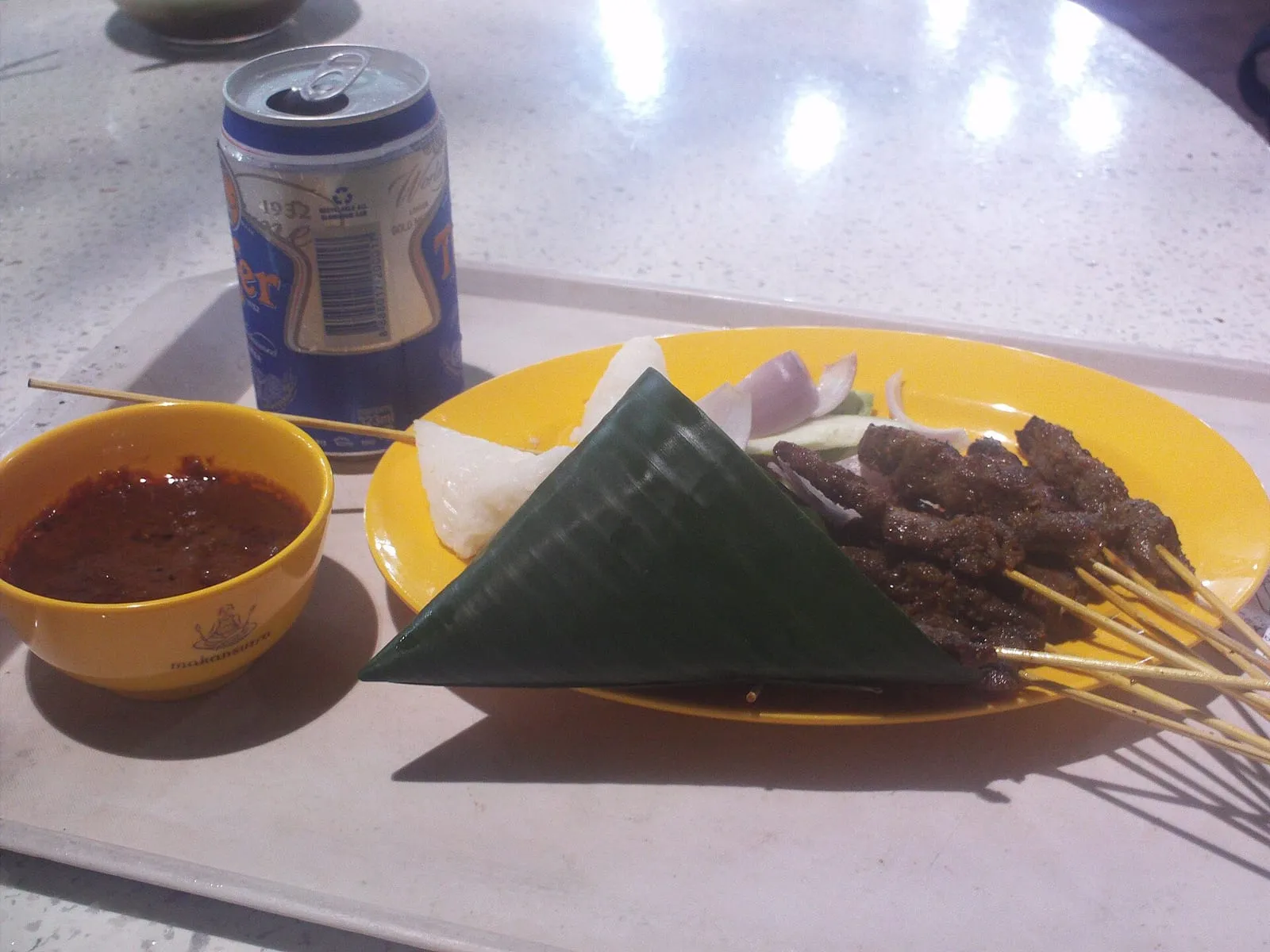
Satay with peanut sauce. Photo: Ypsilon, Wikimedia Commons, CC0 1.0.
- Where to Eat:
- Lau Pa Sat Satay Street (Boon Tat Street, Raffles Place): Singapore’s premier evening satay spectacle. The public street beside the Victorian market hall closes at 19:00 on weekdays and 15:00 on weekends to host dozens of charcoal grills. Order from Stalls 7 and 8 (Set A: 10 chicken, 10 beef/mutton, and 6 king prawns for approx. S$31.20).
- 168 CMY Satay (Chinatown Complex #02-168): Michelin-selected stall known for juicy pork satay accompanied by crushed pineapple mixed into warm peanut gravy (S$0.90 per stick; closed Mondays).
5. Rich coconut noodle broth: Laksa
Singapore’s noodle soup blends Chinese rice noodles with rich Southeast Asian coconut and spice broths.
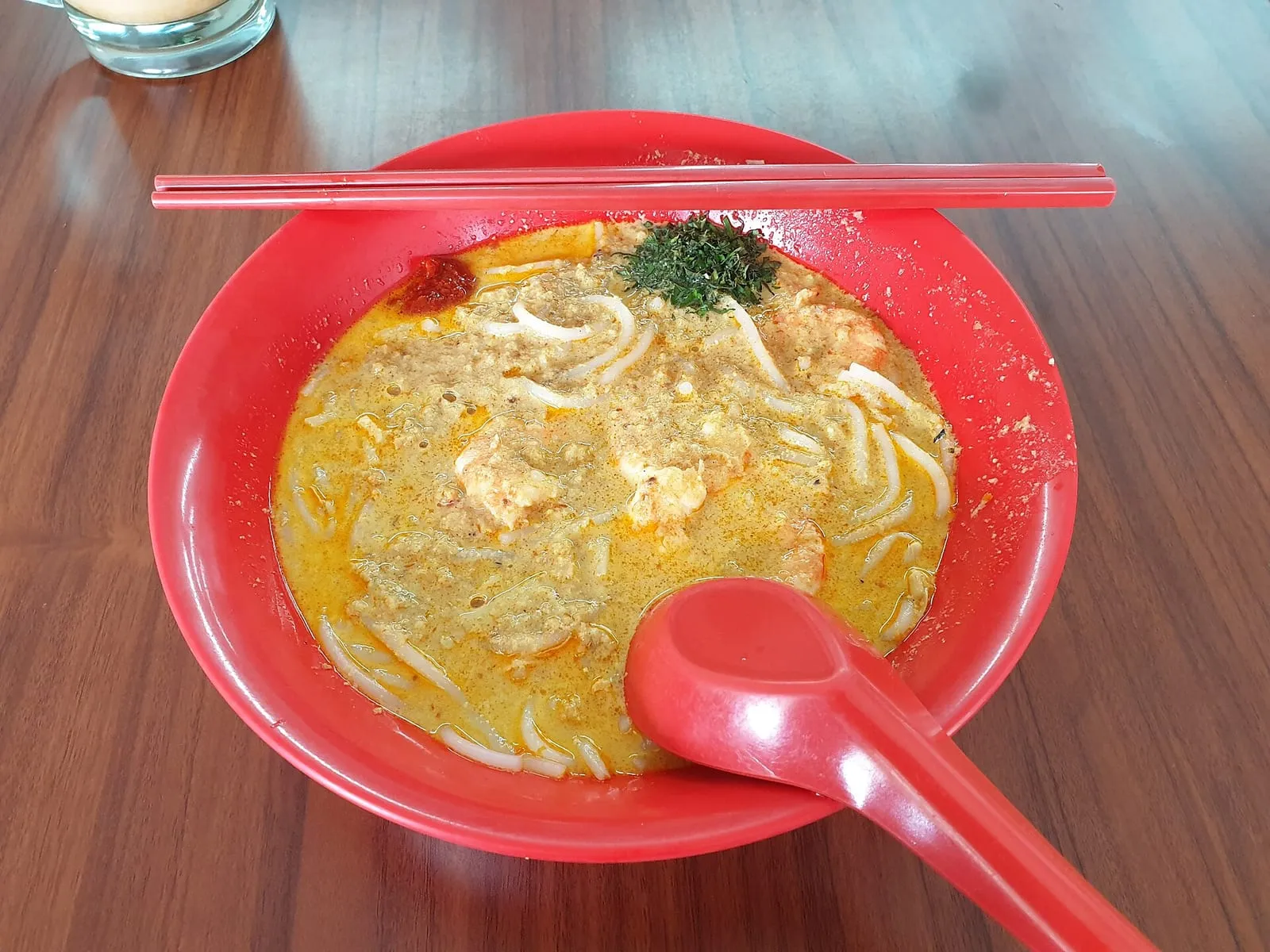
Katong laksa. Photo: JaventheAlderick, Wikimedia Commons, CC BY-SA 4.0.
- The Dish (Katong Laksa): Thick rice vermicelli cut into short, spoon-friendly lengths, submerged in a spicy, creamy soup brewed from coconut milk, dried shrimp, lemongrass, and chilli paste, garnished with cockles, prawns, fishcake slices, and fresh Vietnamese coriander (daun kesum). Because the noodles are pre-cut, the dish is traditionally eaten exclusively with a porcelain Chinese soup spoon—no chopsticks required.
- Where to Eat:
- 328 Katong Laksa (51/216 East Coast Road): Michelin Bib Gourmand institution famous for its deeply aromatic broth and sambal chilli (S$7.00–S$9.00).
- King of Laksa (118 Aljunied Avenue 2, #02-100): Newly awarded a Michelin Bib Gourmand in 2026 for its velvety, robust seafood broth.
- Sungei Road Laksa (27 Jalan Berseh, #01-100): One of the last stalls in Singapore that still simmers its fragrant laksa broth over traditional charcoal stoves (S$4.00 per bowl).
6. Peppery pork broth: Bak kut teh
Translating to “meat bone tea” in Hokkien, bak kut teh is a restorative pork rib soup developed by early Chinese dockworkers who needed stamina for strenuous manual labour.
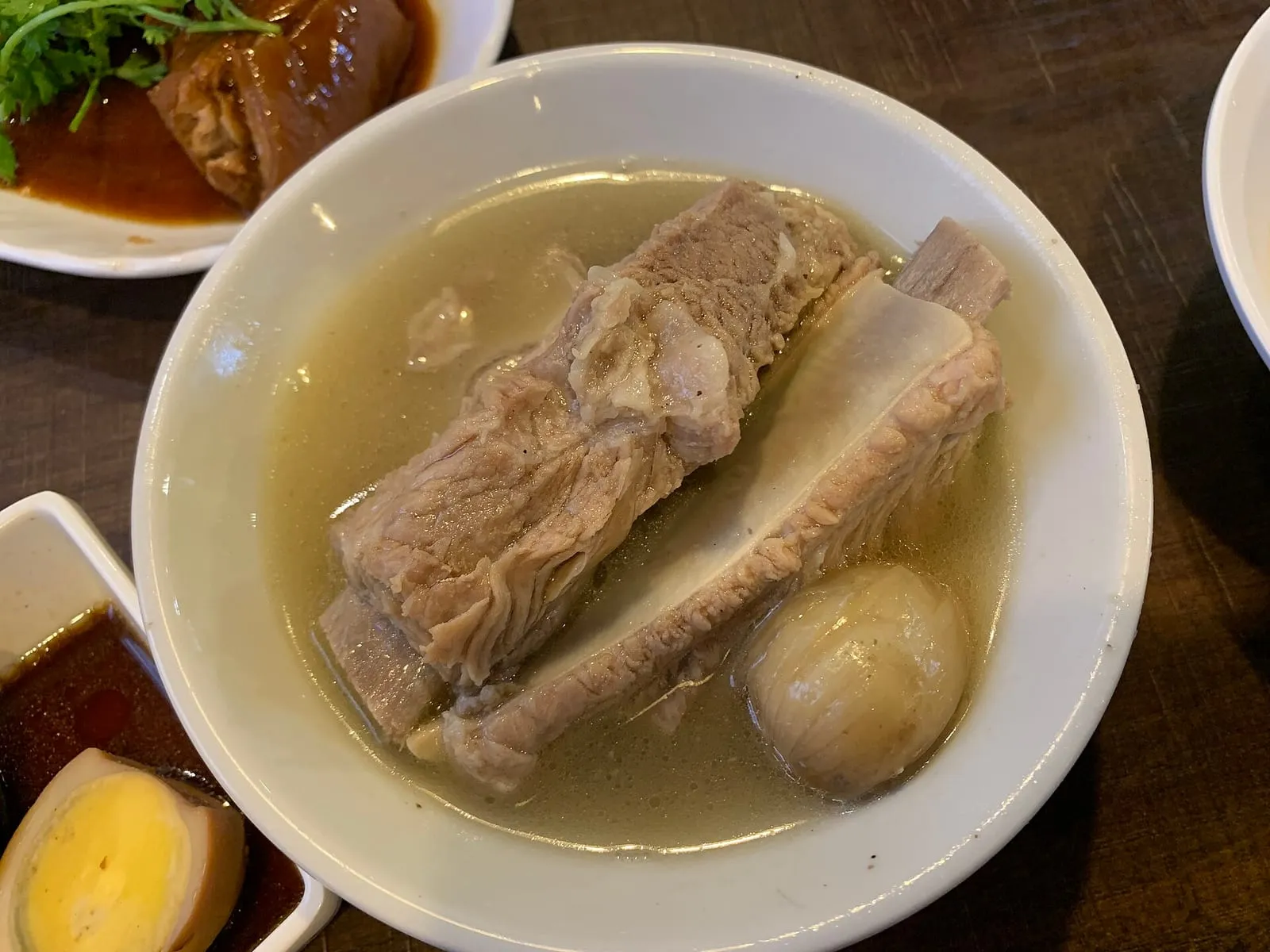
Bak kut teh. Photo: Chainwit, Wikimedia Commons, CC BY 4.0.
- The Styles: Singapore primarily favours the clear, heavily peppery Teochew style seasoned with whole garlic heads and Sarawak white peppercorns, in contrast to Malaysia’s dark, herbal Hokkien style brewed with angelica root and star anise.
- How to Eat: Dip the tender ribs into dark soya sauce with sliced bird’s eye chillies, dip crispy fried dough sticks (youtiao) into the broth, and enjoy unlimited hot broth refills poured directly from steaming kettles.
- Where to Eat:
- Song Fa Bak Kut Teh (11 New Bridge Road, Clarke Quay): Michelin Bib Gourmand chain that began as a roadside pushcart in 1969. Generous tender pork ribs in a clear, fiercely peppery garlic broth with free soup refills (S$9.00–S$14.00; air-conditioned table service).
- Ng Ah Sio Bak Kut Teh (208 Rangoon Road): Legendary heritage institution renowned for its intensely punchy, full-bodied peppery kick.
7. The seafood banquet: Singapore chilli crab
Singapore’s most internationally celebrated feast is fresh mud crab stir-fried in a rich, sweet, savoury, and mildly spicy sauce.
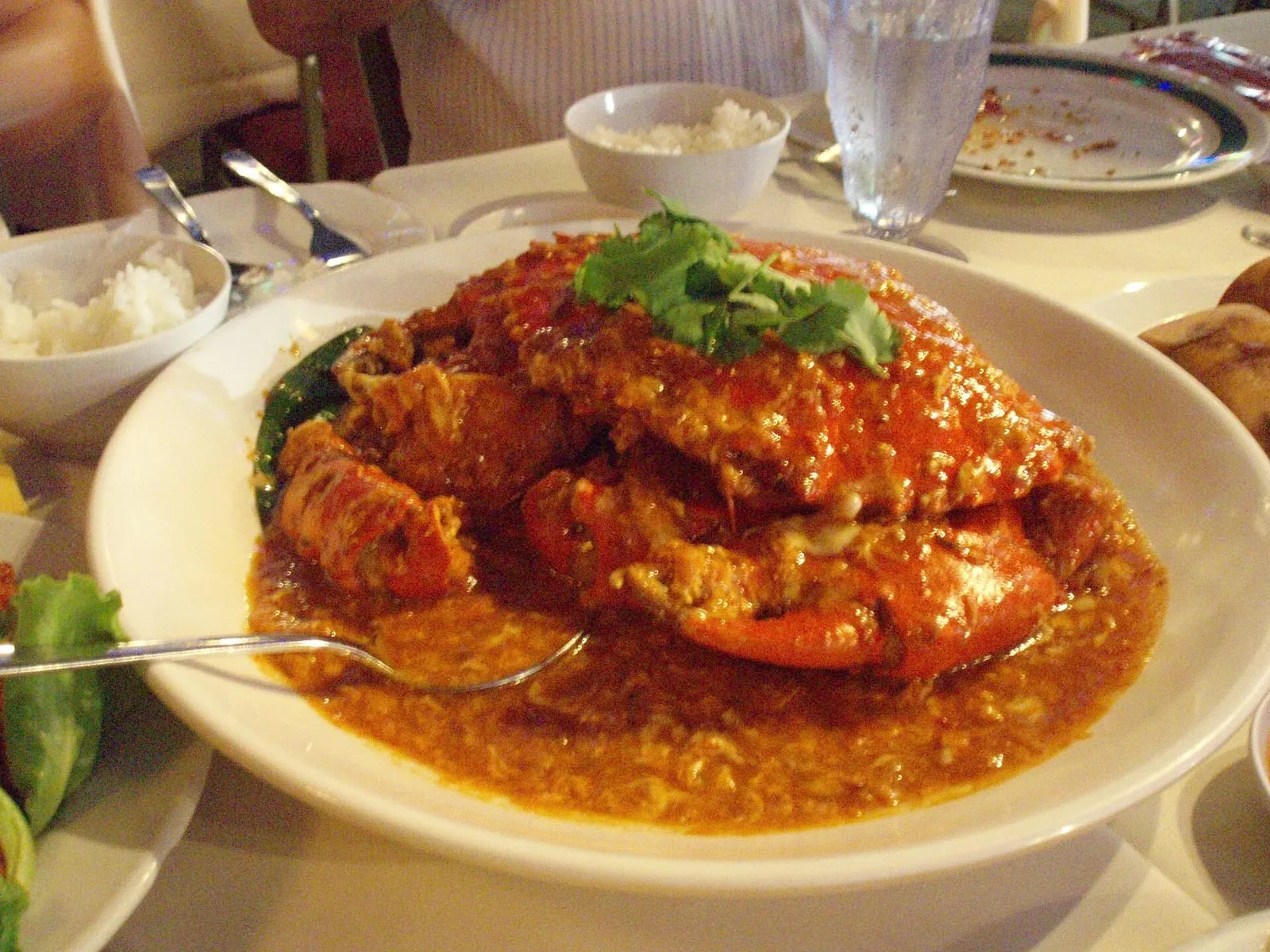
Chilli crab. Photo: Dekcuf, Wikimedia Commons, CC BY-SA 2.0.
- The Dish: Live Sri Lankan mud crabs cracked and braised in a thick gravy crafted from fresh tomatoes, red chillies, shallots, garlic, and vinegar, thickened with cornstarch and ribboned with beaten egg. Eaten with deep-fried golden mantou (steamed Chinese wheat buns) dipped into the luscious gravy.
- How it is priced: Crab is sold strictly by weight (quoted per 100 grams). Whole crabs typically weigh between 800 grams and 1.5 kilograms, making a single crab cost approximately S$80 to S$150 depending on seasonal market rates. Always verify the crab’s weight and total price before ordering.
- Where to Eat:
- Jumbo Seafood (Riverside Point / East Coast Seafood Centre): Singapore’s benchmark seafood group, serving sweet, tangy chilli crab overlooking the Singapore River (advance dinner booking essential).
- Keng Eng Kee Seafood (124 Bukit Merah Lane 1): Celebrated zi char institution holding a Michelin Selected rating, famous for chilli crab, black pepper crab, and signature moonlight hor fun.
- Mellben Seafood (211 Toa Payoh Lorong 8 / Ang Mo Kio): Renowned for its claypot crab bee hoon soup alongside traditional chilli crab.
8. South Asian feasts: Tekka Centre and Little India
Singapore’s Indian food scene centers on the rich culinary divide between North and South India.
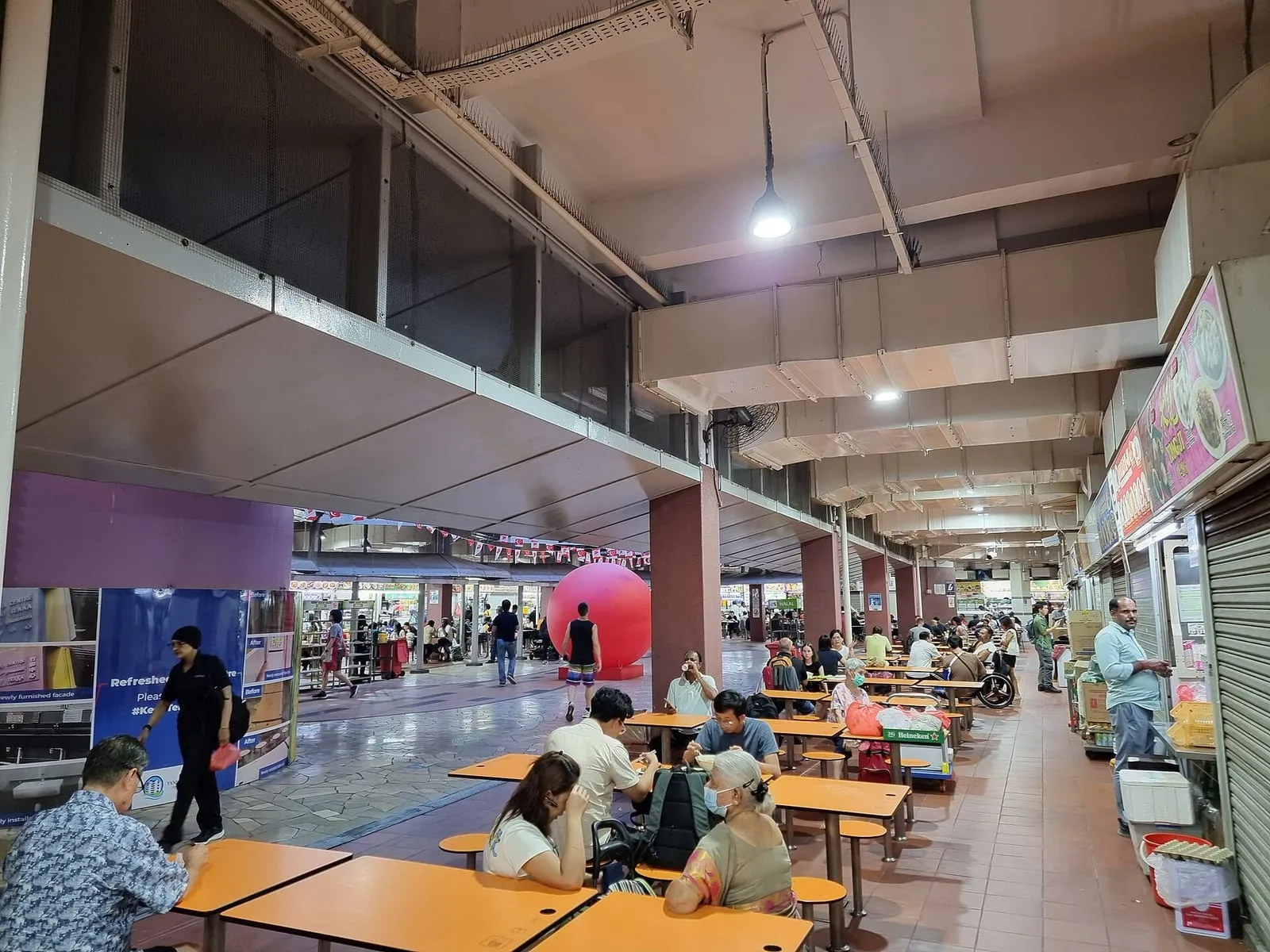
Tekka Centre in Little India. Photo: Kbseah, Wikimedia Commons, CC BY-SA 4.0.
- Allauddin’s Briyani (Tekka Centre #01-229/232): Michelin-selected biryani specialist serving aromatic long-grain basmati rice with fall-apart tender mutton or spiced chicken (S$7.00–S$9.00; open daily 08:00 to 20:00).
- Delhi Lahori (Tekka Centre #01-266): Michelin Bib Gourmand vendor baking fresh tandoori chicken, hot garlic naan, and butter chicken in authentic clay tandoor ovens (cash only).
- Komala Vilas (76 Serangoon Road): Operating since 1947, serving authentic South Indian vegetarian meals on banana leaves with unlimited rice, sambar, rasam, and fresh chutneys.
- Singapore Zam Zam (188 Arab Street, Kampong Glam): Founded in 1908, legendary for crispy, pan-fried murtabak stuffed with minced mutton, chicken, or beef, served with thick curry gravy.
9. Peranakan cuisine: Heritage Straits Chinese dining
Peranakan (or Nyonya) cuisine emerged from the intermarriage of early Chinese merchants with local Malay women across the Straits Settlements. It features complex, labor-intensive spice pastes (rempah) requiring hours of stone-mortar pounding.
- Signature Dishes: Ayam Buah Keluak (chicken simmered in a dark, earthy stew with fermented black pangium edule nuts whose poisonous seeds are laboriously soaked, scrubbed, and minced with spices), Babi Pongteh (braised pork belly in fermented soybean and shallot gravy), and Itek Tim (salted vegetable and duck soup).
- Where to Eat:
- Candlenut (17A Dempsey Road): The world’s first Michelin-starred Peranakan restaurant. Chef Malcolm Lee elevates traditional heritage recipes into refined multi-course tasting menus (tasting menu approx. S$138++; reserve weeks in advance).
- The Blue Ginger (97 Tanjong Pagar Road): Michelin Bib Gourmand restaurant housed in an artfully restored shophouse, serving exemplary ayam buah keluak and beef rendang in a relaxed, elegant setting.
- True Blue Cuisine (47/49 Armenian Street): Michelin Bib Gourmand establishment adjacent to the Peranakan Museum, furnished with antique mother-of-pearl furniture and serving authentic home-style Nyonya classics.
10. Vegetarian and plant-based dining
Singapore is exceptionally accommodating for plant-based travellers:
- Whole Earth (76 Peck Seah Street, Tanjong Pagar): Singapore’s premier vegetarian Peranakan and Thai restaurant, holding a continuous Michelin Bib Gourmand since 2016. Famous for plant-based versions of beef rendang (crafted from slow-simmered shiitake mushrooms) and sweet-and-sour crispy bean curd.
- Gokul Vegetarian Restaurant (19 Upper Dickson Road, Little India): A 100 percent vegetarian eatery serving over 100 dishes spanning North Indian, South Indian, and Asian cuisines without eggs, onions, or garlic.
More Singapore food and travel guides
Continue planning your culinary journey across Singapore:
- Best hawker centres in Singapore: Maxwell, Old Airport Road, and Chinatown Complex compared.
- Michelin hawker stalls in Singapore: directory of all Star and Bib Gourmand stalls.
- Singapore food tours compared: top guided culinary walks with ratings and prices.
- Chinatown Singapore guide: temples, markets, and food streets.
- Little India Singapore guide: spice shops, sari bazaars, and dining.
- What to book before you go to Singapore: essential ticket planning and booking checklist.
Common questions
What dishes should you definitely eat in Singapore?
Essential dishes include Hainanese chicken rice (poached chicken on fragrant rice simmered in chicken broth and pandan), bak chor mee (minced pork noodles in black vinegar and chilli), char kway teow (smoky stir-fried flat rice noodles with cockles), Katong laksa (spicy coconut-curry noodle soup eaten with a spoon), charcoal-grilled satay with spicy peanut sauce, peppery bak kut teh (pork rib broth), and Singapore chilli crab eaten with fried mantou buns.
Which hawker centre should you visit first in Singapore?
Maxwell Food Centre in Chinatown is the ideal starting point. Positioned right outside Maxwell MRT station (TE18), it houses 103 food stalls, offers breezy communal seating, and is home to the world-famous Tian Tian Hainanese Chicken Rice alongside traditional oyster cakes and congee.
Do Singapore hawker stalls take credit cards or cash?
Most traditional hawker stalls require Singapore Dollar cash or local SGQR banking apps (PayNow). Over 45 Michelin-recognised hawker stalls remain strictly cash-only. Upscale restaurants, food halls like Lau Pa Sat, and casual chains accept international Visa and Mastercard cards.
Is leaving dirty trays on tables at hawker centres illegal?
Yes. Under National Environment Agency (NEA) regulations enforced since September 2021, leaving used trays, plates, drink cups, or tissues on tables is a punishable legal offence. First-time offenders receive a formal written warning; subsequent offences incur composition fines of S$300 or court fines up to S$2,000.
What does the ++ mean on Singapore restaurant menus?
The '++' suffix indicates that the stated price does not include Singapore's mandatory 10 percent service charge and 9 percent Goods and Services Tax (GST). A meal listed at S$100++ will total S$119.90 on your final bill.