In this guide
💡 The Short Version: Chinese New Year 2027 falls on Saturday 6 February and Sunday 7 February, with Monday 8 February observed as a gazetted public holiday. February is statistically Singapore’s driest month (averaging only 105 mm of rain over 9 days), providing ideal conditions for outdoor festivals. Head straight to Chinatown for the magnificent street light-up, evening bazaars, and traditional lion dances, or visit Gardens by the Bay for the free River Hongbao lantern exhibition. Plan for dining closures: many traditional Chinese hawker stalls shut for 3 to 5 days over the holiday period, but Indian eateries in Little India, Malay restaurants in Kampong Glam, and central hotel dining venues operate normally. Or book a tour: travellers wanting to explore the festive enclaves with historical commentary can join a guided Chinatown and cultural walking tourad from S$113.
Chinese New Year (the Lunar New Year or Spring Festival) is Singapore’s most significant cultural and public holiday. For roughly five weeks spanning January and February, the city transforms into an explosion of scarlet lanterns, gold calligraphy banners, theatrical lion dances, and fragrant festive markets.
For travellers, visiting during Chinese New Year offers an incomparable cultural spectacle. While some traditional family-run eateries close for several days, Singapore’s multicultural composition ensures that public transport, major tourist attractions, and non-Chinese dining enclaves operate seamlessly.
The festive dates and official public holidays
The dates of the Lunar New Year fluctuate annually according to the lunisolar calendar, occurring between 21 January and 20 February.
| Lunar New Year Edition | Lunar Zodiac Sign | Official Public Holiday Dates | Key Practical Implications |
|---|---|---|---|
| Chinese New Year 2026 | Year of the Horse | Tuesday 17 & Wednesday 18 February 2026 | Standard mid-week 2-day public holiday |
| Chinese New Year 2027 | Year of the Goat / Sheep | Saturday 6 & Sunday 7 February 2027 (Monday 8 February observed) | Long holiday weekend; high domestic staycation demand |
Under Singapore employment law, when a gazetted public holiday falls on a Sunday, the following Monday is designated as a paid public holiday. New Year’s Eve (Friday 5 February 2027) is not a public holiday, but businesses and government offices typically close by midday so families can gather for their annual Reunion Dinner (Tuan Nian Fan).
Where to experience Chinese New Year in Singapore
The celebrations radiate across multiple districts, with each neighbourhood hosting distinct festivities:
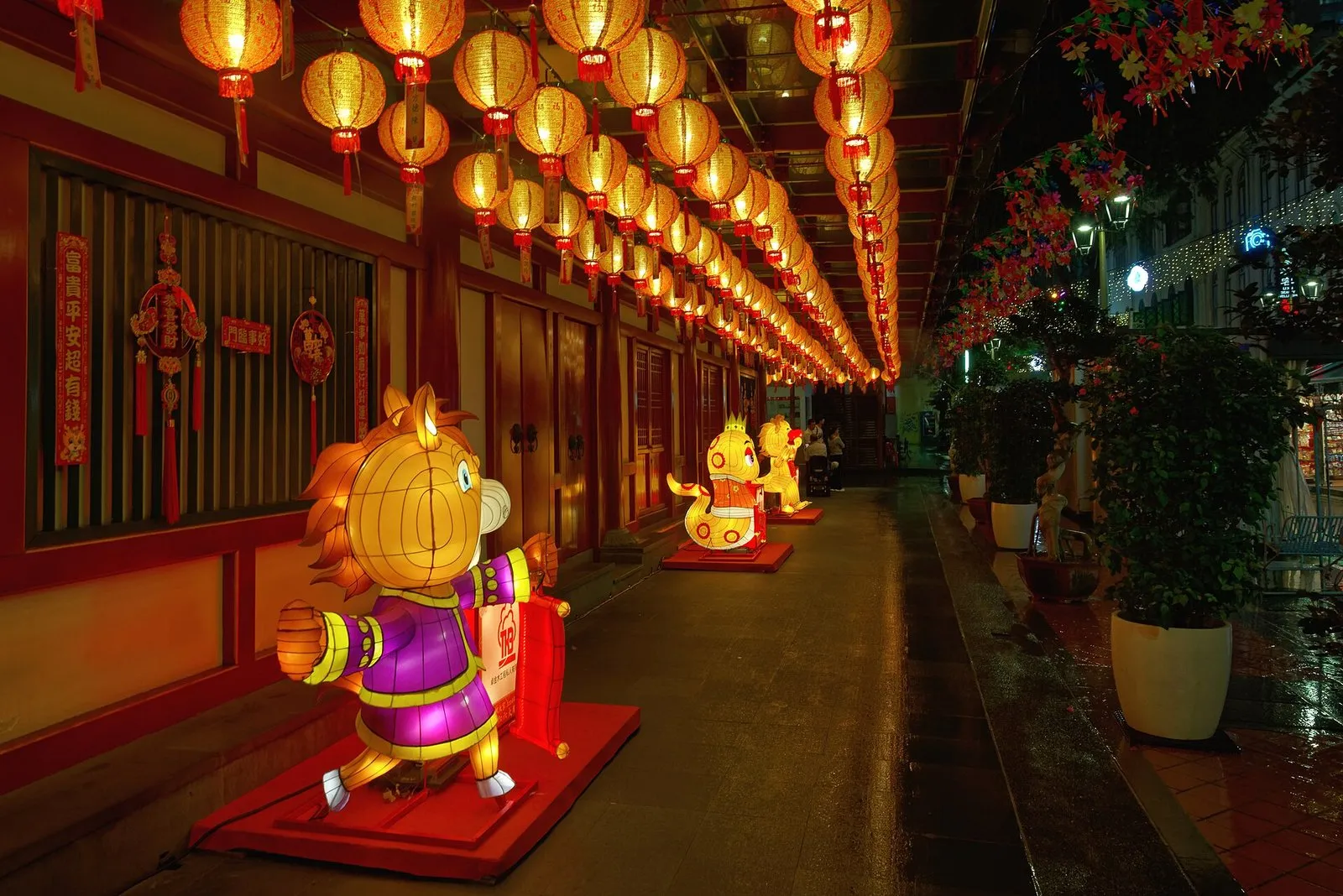
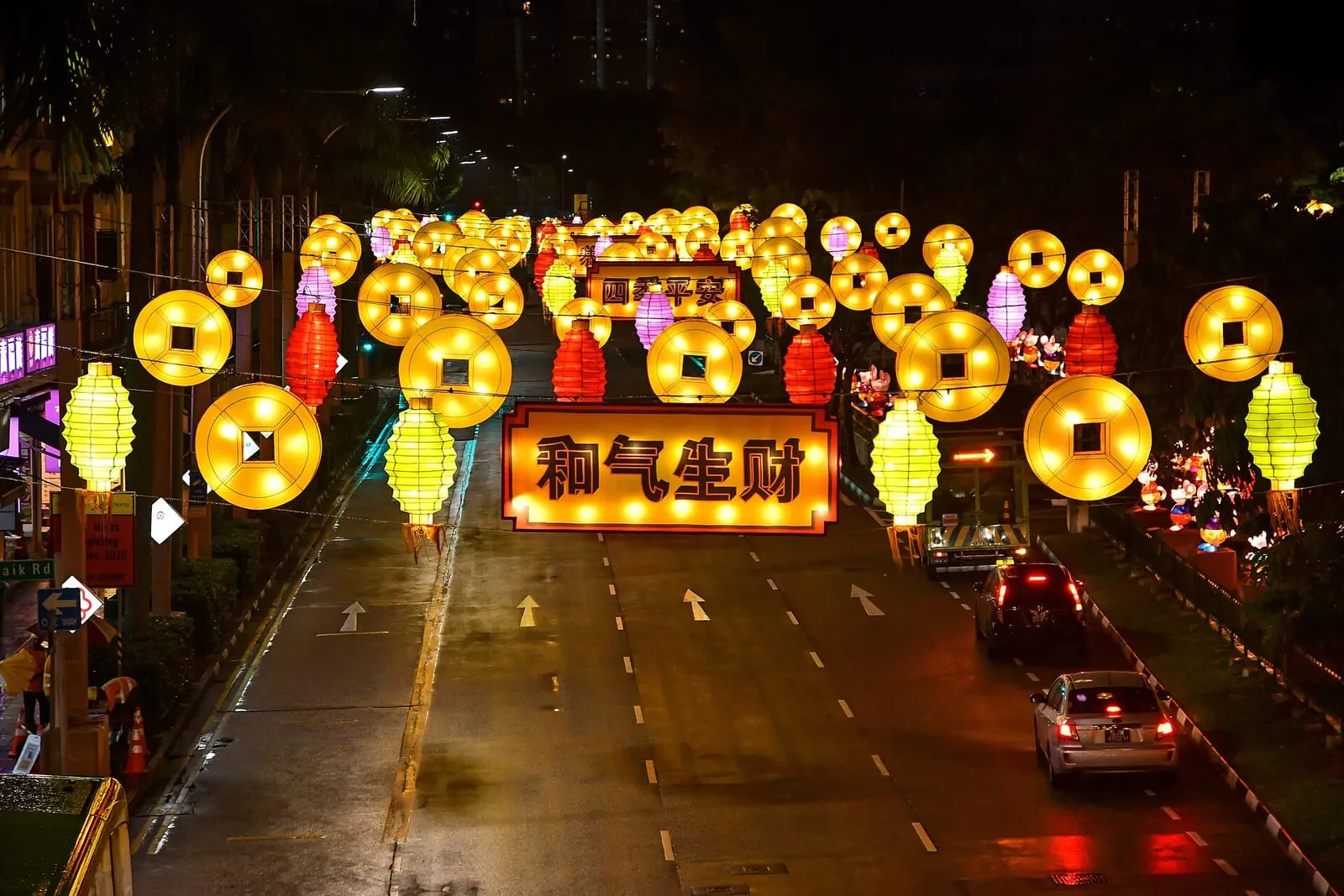
Lantern figures along a Chinatown street at Chinese New Year. Photo: Jakub Hałun, Wikimedia Commons, CC BY 4.0.
1. Chinatown: The festive epicentre
Chinatown hosts the official opening ceremony and street light-up roughly four weeks prior to New Year’s Day, running continuously until early March.
- The Street Light-Up: Giant illuminated sculptural lanterns designed in collaboration with students from the Singapore University of Technology and Design (SUTD) span the central reservations of New Bridge Road, Eu Tong Sen Street, and South Bridge Road. The centrepiece features a massive, multi-metre glowing sculpture of the incoming lunar zodiac animal.
- Festive Street Bazaars: Centered on Pagoda Street, Trengganu Street, Temple Street, and Smith Street. Hundreds of stalls sell festive red paper couplets, paper-cut decorations, mandarin orange trees, potted pussy willows, and traditional Chinese New Year cookies. Bazaars operate daily from 10:00 to 22:00, extending past midnight on New Year’s Eve.
- Lion & Dragon Dance Competitions: Acrobatic lion dance troupes perform gravity-defying leaps onto elevated steel stilts (meihua zhuang) in Kreta Ayer Square outside the Buddha Tooth Relic Temple, accompanied by thundering cymbals and drums.
2. River Hongbao at Gardens by the Bay
First staged in 1987, River Hongbao is Singapore’s largest annual Lunar New Year community carnival, held over 8 to 10 days across the outdoor grounds of Gardens by the Bay.
- Giant Lantern Displays: Dozens of colossal, handcrafted glowing silk lanterns depicting Chinese mythological gods, zodiac animals, and modern Singaporean icons line the Supertree Grove and Dragonfly Lake.
- The God of Fortune: A towering 18-metre-tall statue of the God of Fortune (Cai Shen Ye) dispenses lucky golden confetti over crowds during timed evening blessing rituals.
- Entertainment: Nightly cultural shows featuring Chinese opera, martial arts troupes, live musical performances, amusement carnival rides, and dazzling evening fireworks. Admission to River Hongbao is completely free.
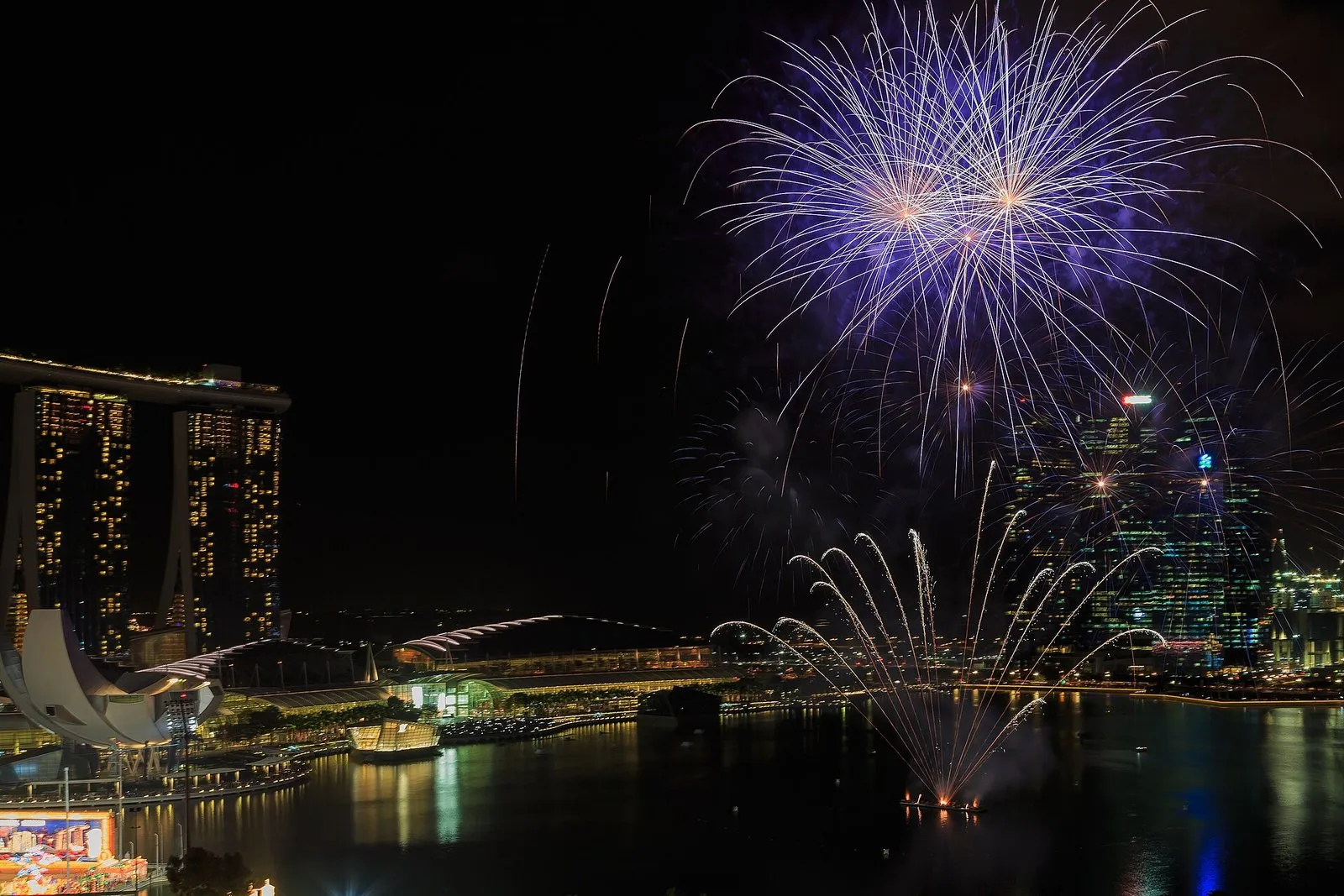
Fireworks over Marina Bay at Chinese New Year. Photo: CEphoto, Uwe Aranas, Wikimedia Commons, CC BY-SA 3.0.
3. The Chingay Parade
Held on the second weekend after Chinese New Year at the F1 Pit Building in Marina Bay, Chingay is Southeast Asia’s largest street performance and float procession.
- Featuring over 3,000 performers, dazzling multicultural dance troupes, stilt-walkers, pyrotechnics, and massive illuminated mechanical floats.
- Ticketed grandstand seating is available online through SISTIC (tickets from approx. S$28.50 to S$60), though crowds gather along the perimeter to watch the fireworks finale.
Independent festive exploring vs guided heritage tours
Navigating Chinatown’s crowded festive streets independently allows you to browse craft stalls freely. However, booking an accredited walking guide ensures you understand the deep symbolism of holiday rituals, receive guidance on auspicious foods, and bypass congested bottlenecks.
| Feature | Self-Guided Festive Exploration | Guided Cultural Walking Tour (GYG) |
|---|---|---|
| Cost | Free (pay only for street snacks) | From S$69 to S$113 per person |
| Crowd Navigation | Must navigate dense bazaar crowds independently | Guide navigates quieter heritage passages and side alleys |
| Cultural Context | Self-directed reading of festive displays | Detailed explanation of zodiac folklore, ancestor worship, and traditions |
| Food Guidance | Guessing ingredients on crowded bazaar menus | Curated tastings of seasonal festive delicacies included |
Recommended cultural walking tours
Singapore: Chinatown, Little India, Arab Street Walking Tour
From S$90 · 4.9 stars from 466 reviews · 4 hours · Cultural walk
Experience how Singapore’s different ethnic communities celebrate and interact. An expert storyteller leads you through Chinatown’s festive preparations before exploring the contrasting streets of Little India and Kampong Glam, with MRT hops and authentic food tastings included. Book on GetYourGuidead.
Singapore: Chinatown Historic Walking Tour with Lunch
From S$69 · 5.0 stars from 155 reviews · 3.5 hours · Small group with lunch
Delve deeply into the immigrant origins of Chinatown, visiting the Buddha Tooth Relic Temple, Sri Mariamman Temple, and traditional clan houses, concluding with an authentic local lunch. Book on GetYourGuidead.
Singapore: Chinatown, Little India & Kampong Glam Walk
From S$100 · 4.8 stars from 200 reviews · 3 hours · Small group
A fast-paced cultural exploration highlighting the architectural heritage, temples, and merchant bazaars across Singapore’s three historic quarters. Book on GetYourGuidead.
Essential Chinese New Year customs and foods
Understanding festive customs will enrich your holiday visit:
- The ‘Lo Hei’ (Yu Sheng) Prosperity Toss: The defining culinary ritual of Singaporean Chinese New Year. Families and colleagues gather around a giant platter of Yu Sheng—strips of raw salmon, shredded green radish, white radish, carrots, pickled ginger, crushed peanuts, toasted sesame seeds, and golden flour crisps (pok chui), dressed in plum sauce and five-spice powder. Diners stand, brandish chopsticks, and toss the ingredients high into the air while shouting auspicious New Year greetings (Bu Bu Gao Sheng, Wan Shi Ru Yi). The higher the ingredients are tossed, the greater the prosperity in the coming year.
- Bak Kwa (Barbecued Sweet Pork Jerky): Thin sheets of marinated minced or sliced pork grilled over charcoal embers until caramelised and smoky. During the weeks before Chinese New Year, Singaporeans queue for three to five hours outside legendary heritage shops such as Lim Chee Guan on New Bridge Road and Bee Cheng Hiang to purchase boxes for gift-giving.
- Mandarin Oranges in Pairs: When visiting friends or business partners, it is customary to present a pair of unblemished mandarin oranges (kam, a homonym for gold in Cantonese) with both hands as a symbol of conferring wealth. The host exchanges another pair upon your departure.
- Ang Bao (Red Packets): Red envelopes filled with crisp new currency banknotes, presented by married couples to children, unmarried relatives, and service staff to bestow health and good fortune.
Practical advice for travelling during Chinese New Year
- Dining Closures & Reopenings: The vast majority of Chinese hawker stalls at Maxwell, Chinatown Complex, and Hong Lim close from the afternoon of New Year’s Eve through the second or third day of the holiday. Plan meals during Day 1 and Day 2 at:
- South Asian eateries in Little India (Tekka Centre’s Indian stalls, Komala Vilas).
- Malay and Middle Eastern restaurants in Kampong Glam (Singapore Zam Zam, Victory).
- Hotel dining rooms and major air-conditioned shopping mall food courts (Lau Pa Sat, Marina Bay Sands, ION Orchard).
- Public Transit Operations: SMRT and SBS Transit run extended train and bus services on Chinese New Year’s Eve, with the last MRT trains departing downtown interchange stations around 01:30 to 02:00 to accommodate late-night shoppers. Standard MRT schedules apply on public holiday days.
- Major Attraction Status: Unlike some East Asian cities that completely shut down, Singapore’s headline attractions—Universal Studios Singapore, Gardens by the Bay, Singapore Zoo, the Night Safari, and the Singapore Cable Car—remain open normal operating hours throughout the holidays, though crowd volumes are significantly higher.
- Liquor Control Laws: Remember that the eve of Chinese New Year and the public holiday days are legally designated holiday periods. Outdoor public consumption of alcohol is strictly prohibited in the Liquor Control Zones of Little India and Geylang from Friday evening continuously through Monday morning.
More Singapore guides
Continue planning your trip around Singapore’s festivals and seasons:
- Best time to visit Singapore: month-by-month rainfall, monsoon periods, and public holidays.
- Chinatown Singapore guide: temples, clan houses, and street markets.
- Chinatown to Marina Bay walk: scenic walking trail linking heritage streets to the bayfront.
- Where to eat in Singapore: neighbourhood dining guide, from street hawkers to fine dining.
- Gardens by the Bay tickets: conservatory dome maintenance schedules and River Hongbao events.
- What to book before you go to Singapore: complete ticket planning and booking checklist.
Common questions
When is Chinese New Year 2027 in Singapore?
Chinese New Year 2027 falls on Saturday 6 February and Sunday 7 February 2027. Under official Ministry of Manpower gazetted regulations, because the second day falls on a Sunday, Monday 8 February 2027 is an official substitute public holiday, creating a three-day holiday weekend.
Are shops and restaurants closed during Chinese New Year in Singapore?
Many independent traditional Chinese hawker stalls and family-run shops close from the afternoon of New Year's Eve through the second or third day of the New Year (typically 3 to 4 days). However, major shopping centres, international supermarkets, convenience stores, hotel dining rooms, fast-food chains, Malay and Indian eateries, and major attractions on Sentosa and Marina Bay remain fully open.
What is the weather like during Chinese New Year in Singapore?
February is historically the driest and sunniest month of the year in Singapore, averaging just 105 mm of precipitation across 9 rain days, with daytime highs around 31.5°C and pleasant, breezy northeast winds.
Where are the best places to experience Chinese New Year festivities?
The epicentre is Chinatown, featuring illuminated zodiac light displays along New Bridge Road and festive street markets on Pagoda and Smith streets. Other major celebrations include the River Hongbao lantern festival at Gardens by the Bay and the street floats of the Chingay Parade at the F1 Pit Building.