In this guide
💡 The Short Version: Three glacial experiences dominate south Iceland, and your travel month and driving tolerance narrow the choice immediately. Sólheimajökull (2.5 hours from Reykjavik) is the easiest full-day glacier hike with crampons and waterfalls (10–11 hours round trip). Katla Ice Cave near Vík (2.5–3 hours from Reykjavik) is the only natural ice cave open year-round, reached by 4x4 Super Jeep through black volcanic sand. Vatnajökull’s crystal blue caves near Jökulsárlón (5 hours each way from Reykjavik) run winter-only (November to March) and are best paired with an overnight stay along the South Coast. Or book a tour: combine waterfalls, black sand and a guided crampon trek on GetYourGuide’s Sólheimajökull Glacier Hike, Waterfall and Black Sand Beach Tourad (from 26,500 ISK), or go underground year-round on the South Coast and Katla Ice Cave Small Group Tourad (from 35,850 ISK).
Walking across compressed glacial ice or stepping inside a glowing blue meltwater chamber requires certified mountain guides, steel crampons and up-to-the-hour safety checks — none of Iceland’s glaciers can be explored independently on foot. What confuses first-time planners is that the three headline glacier zones sit at very different distances along Route 1 and operate on different seasonal calendars.
Booking a winter-only crystal cave when visiting in July is impossible, while driving five hours each way to Jökulsárlón in a single winter day leaves barely four hours of daylight. Here is how Sólheimajökull, Katla and Vatnajökull compare on season, transit time, physical demand and verified GetYourGuide tours.
Sólheimajökull vs Katla vs Vatnajökull compared
| Glacier / Cave | Activity type | Season | Drive from Reykjavik (one way) | Typical tour length | Minimum age | Typical price (ISK) |
|---|---|---|---|---|---|---|
| Sólheimajökull | Crampon glacier hike (optional ice climb) | Year-round | 165 km (2h 15m – 2h 30m) | 10–13.5h from Reykjavik; 3h on-site | 8+ (10–12+ for climbing) | 26,500–28,300 ISK (from Reykjavik) |
| Katla Ice Cave (Kötlujökull) | Super Jeep + natural ash-and-blue ice cave | Year-round | 186 km to Vík (2h 45m – 3h) | 10–12h from Reykjavik; 3h from Vík | 6–8+ | 35,850–37,400 ISK (from Reykjavik); 26,400 ISK (from Vík) |
| Vatnajökull Crystal Cave (Jökulsárlón) | Super Jeep + translucent blue ice cavern | Winter only (mid-Oct/Nov – Mar) | 380 km (4h 45m – 5h 15m) | 2.5–3h from Jökulsárlón (overnight advised) | 6–8+ | 22,500–24,500 ISK (from Jökulsárlón) |
| Skaftafell / Falljökull (Vatnajökull) | Glacier hike + winter blue ice cave | Hike year-round; cave Nov–Mar | 325 km (4h 15m – 4h 45m) | 3–4.5h from Skaftafell | 8–10+ | 14,900–21,000 ISK (from Skaftafell) |
Note: GetYourGuide lists tours in EUR/USD; ISK equivalents above reflect standard 150 ISK/€ conversion consistent with our South Coast day trip guide.
Why Katla runs year-round while Vatnajökull caves are winter-only
The seasonal split comes down to geology and meltwater hydrology.
Vatnajökull’s crystal blue ice caves (including the famous chambers accessed from Jökulsárlón Glacier Lagoon on Breiðamerkurjökull) are carved each summer by rushing sub-glacial rivers. While temperatures remain above freezing from April to October, meltwater floods these tunnels and weakens their ceilings, making entry impossible. Only when hard autumn frosts halt the meltwater in late October or November do guides scout newly formed chambers, verify roof thickness and open routes until late March. Every winter produces a brand-new cave layout, and the ice inside is remarkably pure, compressed and translucent blue.
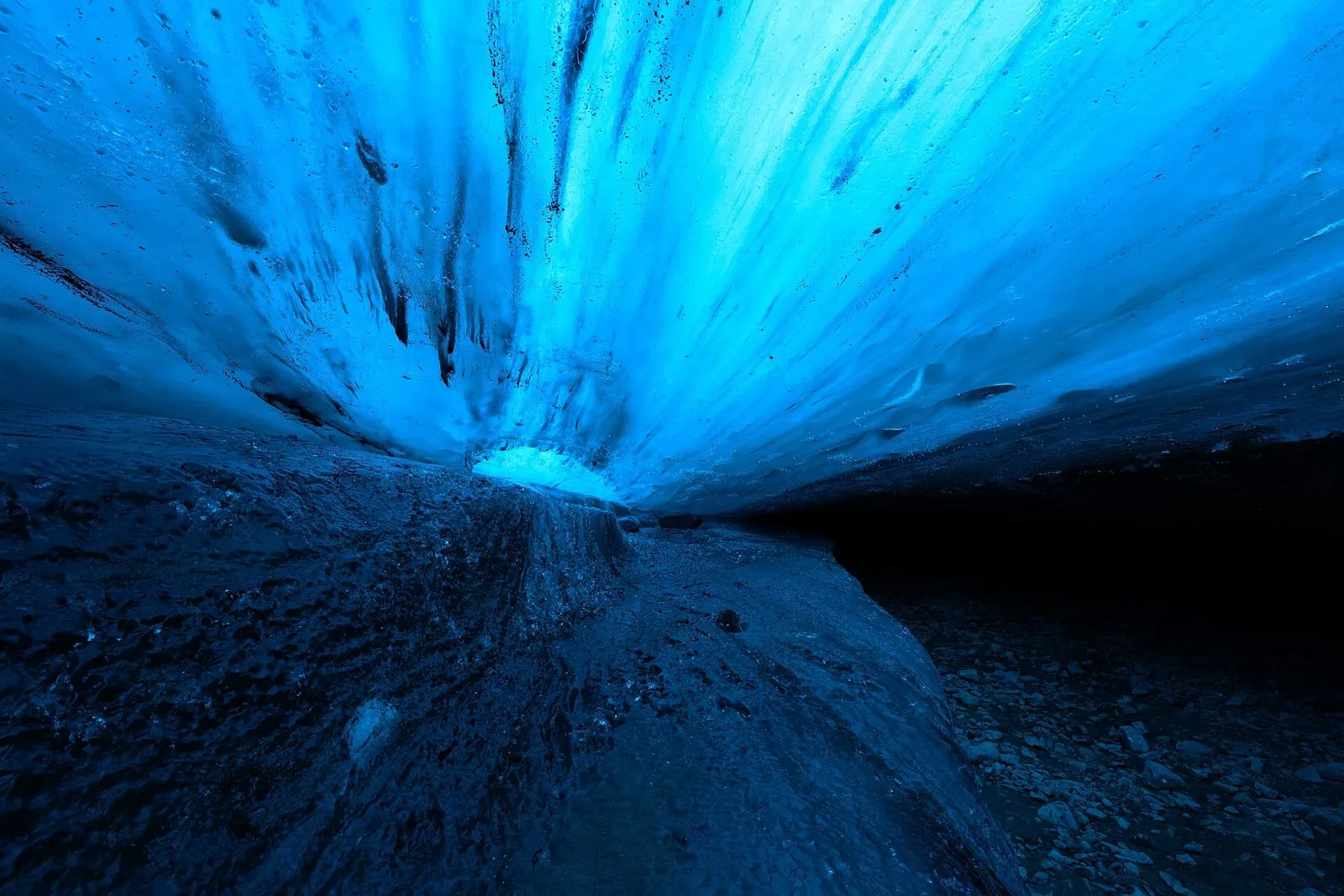 Blue ice inside a Vatnajökull cave. Photo: Eric Kilby, Wikimedia Commons, CC BY-SA 2.0.
Katla Ice Cave sits on the Kötlujökull outlet tongue of Mýrdalsjökull, directly above the restless Katla volcano. Centuries of eruptions have embedded thick, insulating strata of black basaltic tephra (volcanic ash) throughout the glacier. That dark ash layer slows surface melt and forms dramatic black-and-blue striped vaults that guides can safely maintain through June, July and August. You reach the glacier edge via a rugged 4x4 Super Jeep track across black outwash sands from Vík, followed by a short 15-to-20-minute walk in microspikes or crampons.
If you visit Iceland between April and mid-October, Katla is your only natural ice-cave option. If you visit between November and March and can spare an overnight stay along the south-east coast, Vatnajökull delivers the purest electric-blue ice walls.
Sólheimajökull: the best glacier hike from Reykjavik
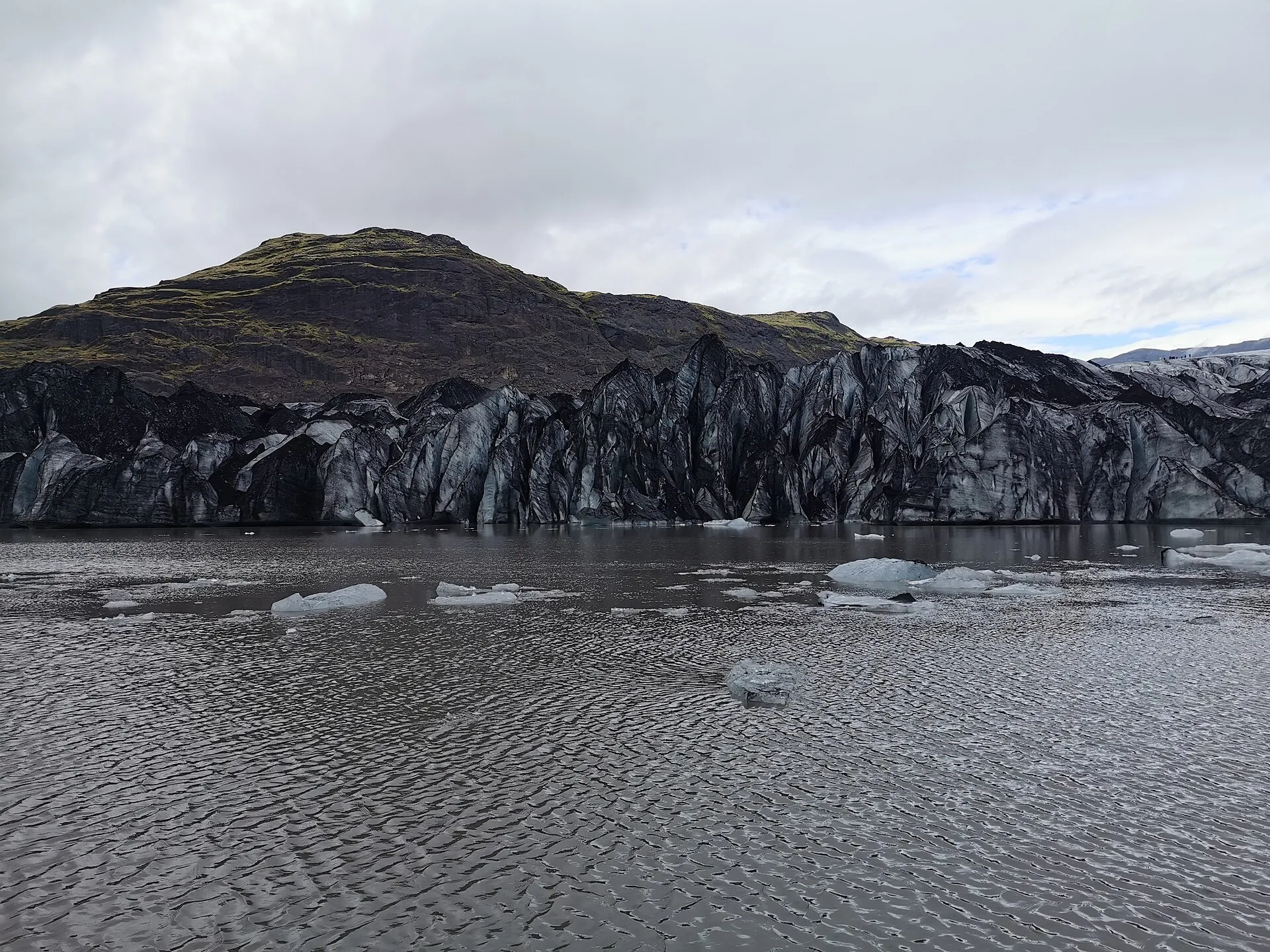
Sólheimajökull is an 8-kilometre outlet tongue of Mýrdalsjökull just 165 km east of Reykjavik — close enough to pair a 3-hour glacier session with Seljalandsfoss, Skógafoss and Reynisfjara black sand beach in a single 10-to-11-hour day trip.
Unlike an ice cave tour (which focuses on walking into a single cavern), a Sólheimajökull glacier hike puts you on top of the moving ice sheet for 1.5 to 2 hours of active trekking. Your guide fits 12-point steel crampons to your boots, issues a helmet, harness and ice axe, and leads a small group (typically 8 to 12 people per guide) up sculpted ice ridges past deep blue crevasses, vertical meltwater moulins and black ash cones.
- Difficulty: Easy to moderate. Expect 3 to 4 km of walking over uneven, sloping ice at a steady pace; no prior mountaineering experience is needed.
- Self-drive vs Reykjavik pickup: If you already have a rental car and are touring the South Coast independently, park at the Sólheimajökull lot off Route 221 (750 ISK parking via Parka.is) and join a 3-hour meet-on-site hike. Between November and March, however, icy Route 1 crosswinds and 4-to-5-hour winter daylight windows make a guided Reykjavik minibus tour far safer.
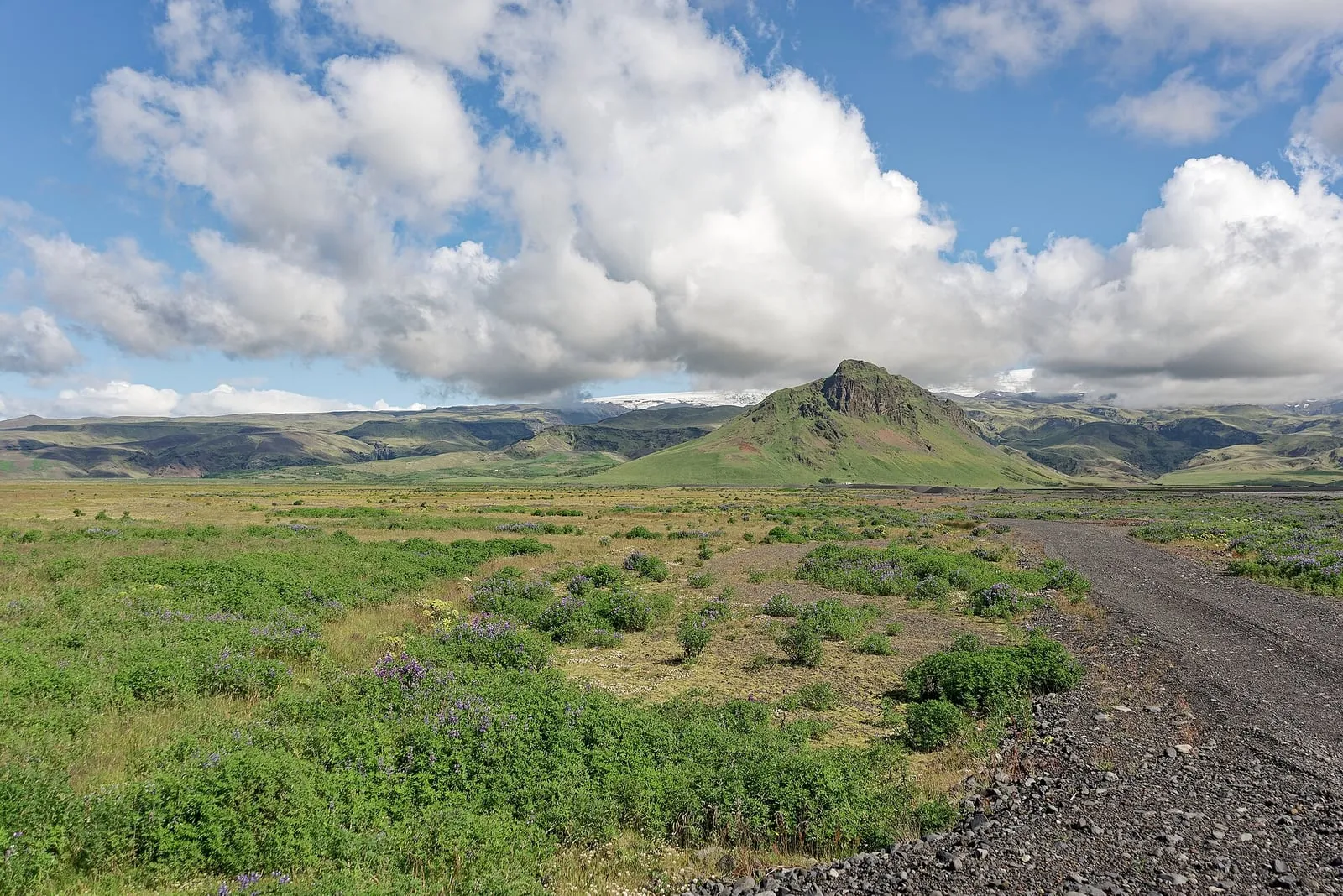 The Mýrdalsjökull glacier ice cap. Photo: Jakub Hałun, Wikimedia Commons, CC BY 4.0.
Verified GetYourGuide glacier hike and ice cave tours
Every tour below includes certified mountain guides, all technical ice gear (crampons or microspikes, helmet, harness/axe where needed) and free cancellation up to 24 hours ahead.
Reykjavik: Glacier Hike, Waterfall and Black Sand Beachad
From 26,500 ISK · 4.8 stars from 1,826 reviews · 11 hours · Reykjavik pickup · Sólheimajökull crampon hike included
The classic all-in-one South Coast glacier day trip from Reykjavik. Combines a guided Sólheimajökull glacier walk (all technical gear included) with stops at Seljalandsfoss waterfall and Reynisfjara black sand beach, avoiding 5 hours of winter highway driving.
Reykjavik: South Coast and Katla Ice Cave Small Group Tourad
From 35,850 ISK · 4.7 stars from 821 reviews · 10 hours · Year-round Katla ice cave
Pairs South Coast waterfalls with a Super Jeep ascent up Kötlujökull to walk inside the ash-striped Katla Ice Cave. Runs year-round, making it the standout choice for summer visitors who want a genuine natural ice cave from Reykjavik without driving to Jökulsárlón.
Reykjavík: Glacier Hike, Waterfalls & Black Sand Beachad
From 28,200 ISK · 4.6 stars from 133 reviews · 13.5 hours · Small group · Sólheimajökull, Seljalandsfoss, Skógafoss & Reynisfjara
A slightly longer small-group itinerary that adds Skógafoss alongside Seljalandsfoss, Reynisfjara and a full Sólheimajökull glacier hike. Good if you want every South Coast headline stop plus time on the ice in one day.
From Vik: Katla Ice Cave and Super Jeep Tourad
From 26,400 ISK · 4.6 stars from 2,668 reviews · 3 hours · Meet in Vík · Super Jeep & crampons included
Built for self-drivers already staying in or passing through Vík í Mýrdal. You park at the meeting point in town, climb into a lifted 4x4 Super Jeep for the rough highland track across the black sandur, and spend around 45 to 60 minutes exploring the Katla ice formations.
Jökulsárlón: Crystal Ice Cave Super Jeep Tourad
From 22,500 ISK · 4.2 stars from 1,779 reviews · 2.5 hours · Winter only (Nov–Mar) · Meet at Jökulsárlón
Departs directly from Jökulsárlón Glacier Lagoon car park by Super Jeep onto Vatnajökull’s Breiðamerkurjökull outlet to visit the winter crystal blue ice cave. Alternatively, self-drivers stopping 55 km west at Skaftafell can book the Skaftafell: Ice Cave Tour and Glacier Hikead (from 21,000 ISK, 4 hours) to combine a blue-ice crampon walk with a winter cave in one session.
Gear, footwear and fitness rules (what gets people turned away)
Glacier guides run strict safety checks at the base camp car park before issuing crampons. Turning up in the wrong footwear is the most common reason visitors face unexpected rental fees or refusal:
- Mandatory ankle-supporting hiking boots: Steel crampons strap tightly to rigid soles and require high ankle cuffs to prevent sprains on uneven ice. Running shoes, trainers, Converse, Uggs and smooth-soled fashion boots are never allowed on glacier hikes. Most operators rent waterproof hiking boots on site for 1,500 to 2,000 ISK (pre-select your shoe size at booking where offered).
- Waterproof outer shell (not jeans): Wear merino or synthetic base layers, a fleece mid-layer, and windproof/waterproof jacket and trousers. Denim absorbs sleet and glacial spray immediately and stays freezing cold for the rest of the day — see our packing for Iceland checklist.
- Gloves, warm hat and sunglasses: Ice reflects harsh glare even under overcast skies, and wind chill on an exposed glacier tongue drops 5°C to 10°C below the valley floor.
- Age and fitness: Glacier hikes require walking 3 to 4 km over undulating ice with gentle ascents (minimum age 8; 10–12 for ice-climbing routes). Ice cave tours involve less sustained uphill walking (minimum age 6–8), though uneven gravel and short ice slopes still require steady footing. Neither activity is suitable for wheelchair users or anyone with severe knee, ankle or cardiovascular limitations.
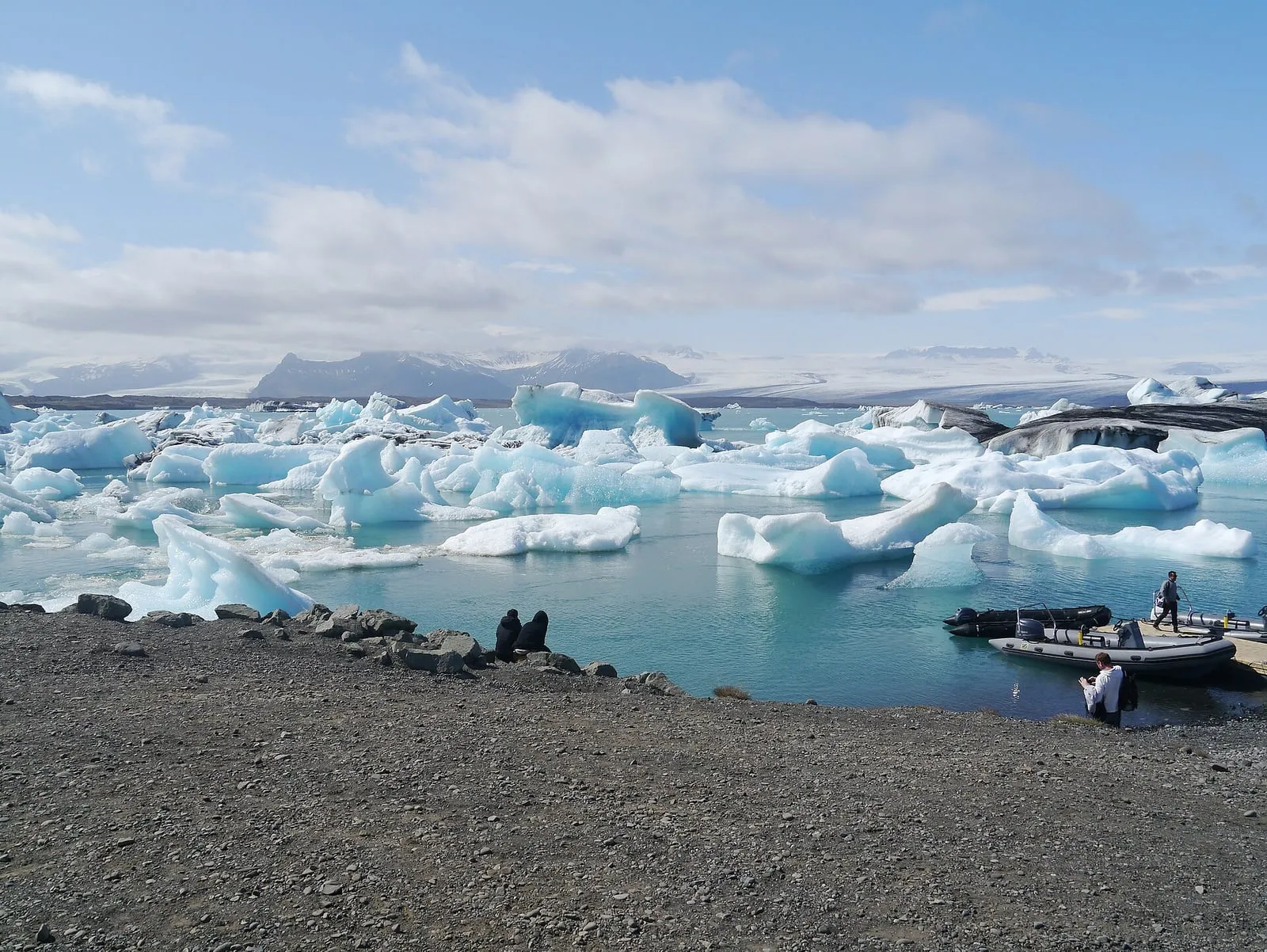 Jökulsárlón Glacier Lagoon in Iceland. Photo: Zairon, Wikimedia Commons, CC BY-SA 3.0.
Driving times and daylight planning from Reykjavik
If you are basing yourself in Reykjavik without overnight stops along the Ring Road, distance sets hard limits:
| Route from Reykjavik | Round-trip km | Pure driving time | Realistic as a Reykjavik day trip? |
|---|---|---|---|
| Reykjavik ↔ Sólheimajökull | 330 km | 4h 30m – 5h | Yes — comfortable year-round |
| Reykjavik ↔ Vík (Katla Ice Cave) | 372 km | 5h 15m – 5h 45m | Yes — full 10–12h day |
| Reykjavik ↔ Skaftafell (Vatnajökull) | 650 km | 8h 30m – 9h 30m | Too far in one day; stay overnight near Vík or Kirkjubæjarklaustur |
| Reykjavik ↔ Jökulsárlón (Crystal Cave) | 760 km | 9h 45m – 10h 30m | Overnight stay strongly recommended (especially in winter) |
In December and January, southern Iceland receives only 4 to 5 hours of daylight (roughly 10:30 to 15:30). Reykjavik glacier and Katla tours depart downtown between 07:30 and 08:30 in the dark so you reach Seljalandsfoss and the glacier right as twilight breaks. Always check Umferdin.is and Vedur.is if self-driving; winter storms along the Eyjafjallajökull foothills routinely trigger temporary Route 1 closures.
Which glacier tour should you book?
- One day from Reykjavik, any month, active adventure: Book a Sólheimajökull glacier hike + South Coast tour (t408523ad or t95292ad). You spend real time trekking in crampons on the ice sheet and still see Seljalandsfoss and Reynisfjara.
- One day from Reykjavik, summer or shoulder season, wanting an ice cave: Book the South Coast and Katla Ice Cave tour (t543542ad), or meet in Vík (t135519ad) if self-driving.
- Winter trip (Nov–Mar) with an overnight on the South Coast: Drive east to stay near Vík, Skaftafell or Höfn, and book a morning Vatnajökull Crystal Ice Cave Super Jeep tour from Jökulsárlón (t73050ad) or a combined Skaftafell glacier hike and ice cave (t166280ad).
To fit a glacier day into a wider Iceland itinerary, see our day trips from Reykjavik, 3 days in Reykjavik and best time to visit Reykjavik guides.
Common questions
Which ice cave in Iceland is open year-round?
The Katla ice cave in the Kötlujökull outlet of Mýrdalsjökull near Vík runs year-round, including throughout summer. Its thick layers of black volcanic ash insulate the ice arches enough for guided Super Jeep visits when warmer summer meltwater makes Vatnajökull's crystal caves unsafe.
When are the Vatnajökull crystal blue ice caves open?
Natural crystal blue ice caves beneath Vatnajökull (departing from Jökulsárlón Glacier Lagoon or Skaftafell) operate strictly in winter, typically from mid-October or November through late March. In spring and summer they flood and collapse.
Can you visit Vatnajökull and Jökulsárlón on a day trip from Reykjavik?
Technically yes on a 14-to-15-hour coach tour, but Jökulsárlón is 380 km (about 5 hours' pure driving each way) from Reykjavik. Most travellers either book Sólheimajökull or Katla as a 10-to-12-hour Reykjavik day trip, or stay overnight near Vík or Höfn before joining a morning Vatnajökull ice cave tour.
What gear is included on an Icelandic glacier hike or ice cave tour?
Certified guides supply steel crampons or microspikes, a climbing helmet, a harness and (for glacier hikes) an ice axe. You must bring waterproof outer layers and sturdy ankle-supporting hiking boots; operators rent boots on site for around 1,500 to 2,000 ISK if you arrive in trainers.
What is the minimum age for glacier hikes and ice caves in Iceland?
Most Sólheimajökull glacier hikes set a minimum age of 8 years old (10 to 12 for ice-climbing routes). Katla and Vatnajökull ice cave tours typically accept children from age 6 to 8, provided their feet fit the smallest available crampons (around EU size 34–36).
Can you walk onto Sólheimajökull glacier without a guide?
No. Concealed crevasses, deep vertical moulins and unstable terminal ice make unguided glacier walking hazardous. Independent drivers without a tour must stay on the gravel viewpoint trail beside the glacial lagoon.