One of 2 self-guided walks in Prague. See every walk.
In this guide
💡 The Short Version: Start on Old Town Square and finish at the Smetana Museum beside Charles Bridge: 2.2 km, about 30 minutes of walking, and most of a day with the synagogues, the cemetery and the Clementinum. The Jewish Museum is closed on Saturdays and on Jewish holidays, and the Old-New Synagogue closes about an hour before Shabbat on Fridays. One 600 CZK ticket covers the Maisel, Pinkas, Spanish and Old-New synagogues and the cemetery; be at the Spanish Synagogue when it opens at 9:00, because the museum says 11:00 to 15:00 is the busiest time. From 18 October the museum closes at 16:30. Or book a tour: a guided walk with the admission ticketsad (from £56, 2.5 hours) goes inside four synagogues and the cemetery, and a 90-minute walk of the exteriorsad is from £17.
The route
Map of the walk numbered stops in walking order
Open the whole route in Google Maps - all the stops in walking order, set to walking directions, which is the version to put on your phone.
Josefov is the old Jewish Town, and four of its synagogues and its cemetery are run by the Jewish Museum in Prague as one circuit. The order below follows the streets, not the museum’s own: any order works with the one ticket. Prices are the adult rate in Czech koruna (CZK) from each operator, at about 28.8 CZK to the pound.
| Stop | Entry (adult) | Open |
|---|---|---|
| 1. Old Town Square | Free | Always |
| 2. The Spanish Synagogue | Jewish Museum ticket, 600 CZK | Sunday to Friday 9:00 to 18:00 to 17 October, 9:00 to 16:30 from 18 October; closed Saturdays |
| 3. The Old-New Synagogue | On the Jewish Museum ticket | Sunday to Friday 9:00 to 18:00 to 17 October, 9:00 to 17:00 from 18 October; closes early on Fridays |
| 4. The Maisel Synagogue | On the Jewish Museum ticket | As the Spanish Synagogue |
| 5. Pinkas Synagogue and the Old Jewish Cemetery | On the Jewish Museum ticket | As the Spanish Synagogue |
| 6. The Rudolfinum | Gallery 200 CZK; free on the first Sunday of the month | Gallery Tuesday to Sunday 10:00 to 18:00, Thursday to 20:00, closed Mondays |
| 7. The Clementinum | Tour 380 CZK, e-tickets only | Daily 9:00 to 20:00 |
| 8. The Smetana Museum and the embankment | Museum 70 CZK; embankment free | Museum 10:00 to 17:00, closed Tuesdays |
Walk it with a guide
A guide explains the synagogues and the cemetery. Prices are GetYourGuide’s lowest “from” prices, per person.
- Prague: Jewish Quarter Walking Tour with Admission Ticketsad, by Get Prague Guide: from £56, 4.7 stars from 4,455 reviews, 2.5 hours. It meets at Maiselova 5 and goes inside the Maisel, Pinkas, Spanish and Old-New synagogues and the Old Jewish Cemetery, with the tickets included. It does not run on Saturdays or Jewish holidays.
- Prague: Jewish Quarter Ticket with optional Audio Guidead: from £39, 4.5 stars from 1,241 reviews. A guide gives you the admission ticket and a 20-minute introduction in English, and you then visit the same sites on your own.
- Prague: Old Town and Jewish Quarter Guided Walking Tourad: from £17, 4.6 stars from 3,211 reviews, 1.5 hours. It stays outside the buildings, so it runs on any day, and it ends in the Old Town by the Astronomical Clock.
Prague Jewish Quarter tickets compares the museum’s own ticket and tours with these.
1. Old Town Square
Free · the Astronomical Clock and the Old Town Hall tower are at stop 3 of the Royal Route walk
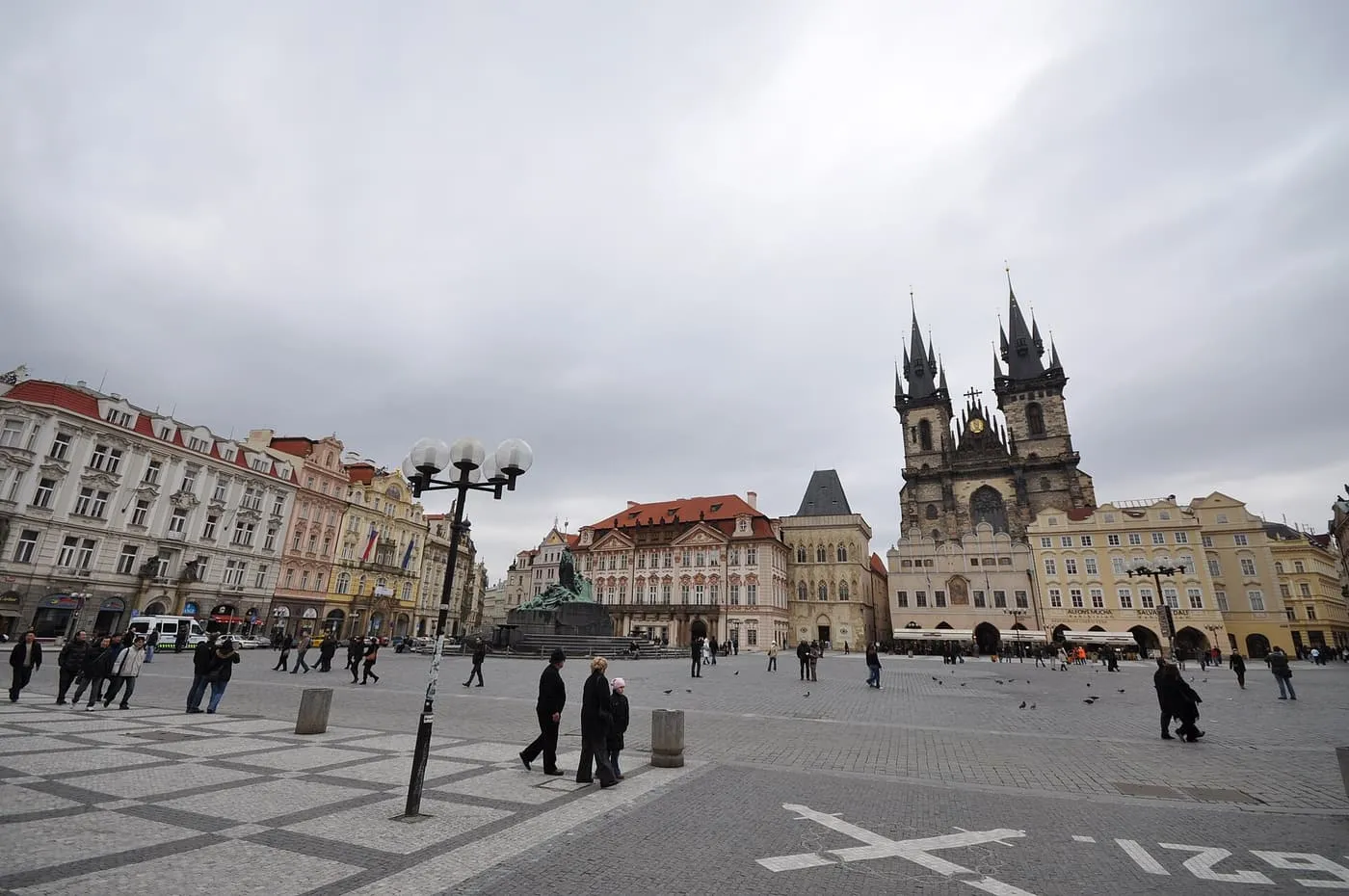
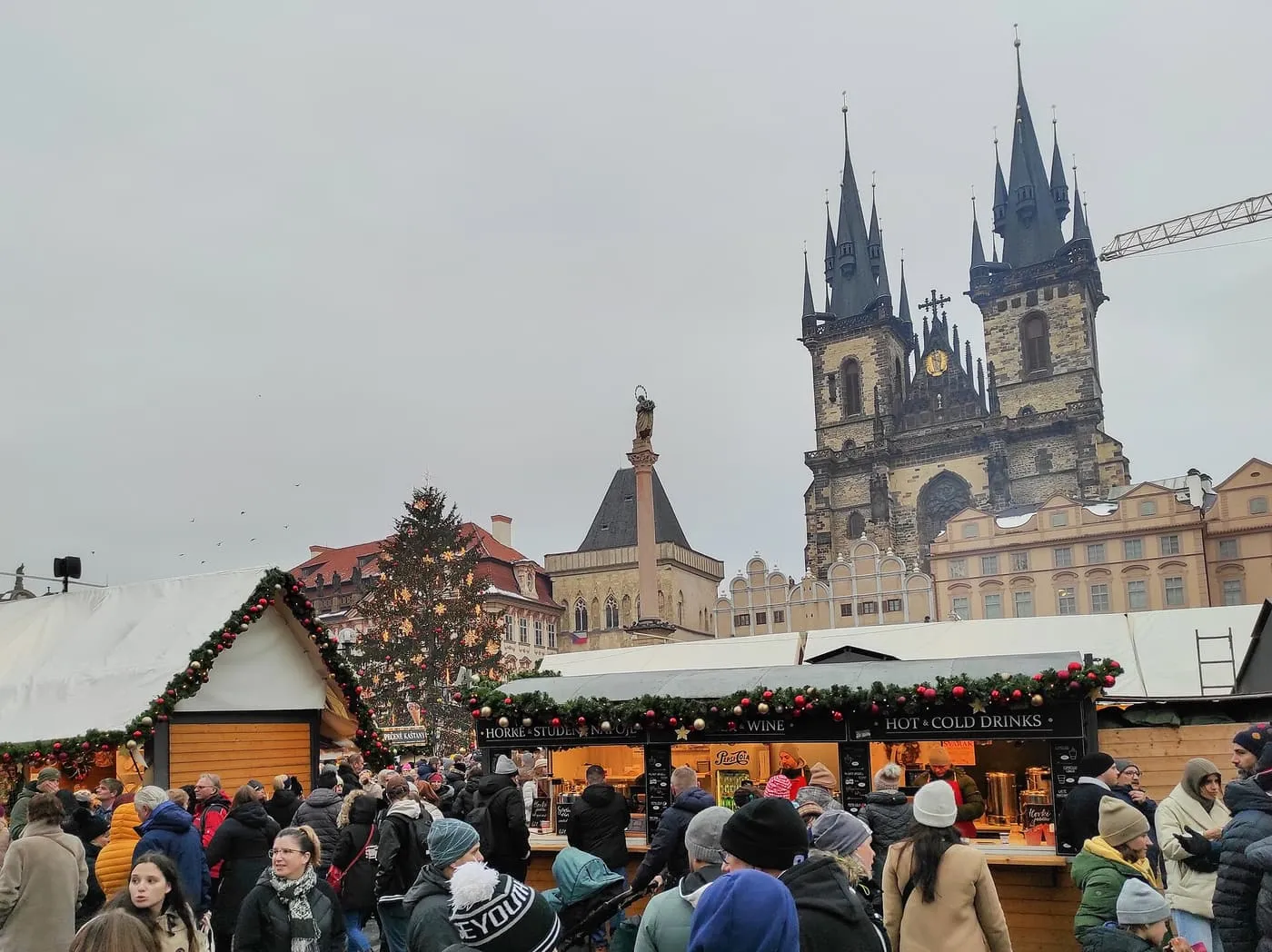
Old Town Square. Photo: Jorge Láscar, Wikimedia Commons, CC BY 2.0.
The walk starts where Prague’s Royal Route crosses the square. Walk north to Josefov, the old Jewish Town: the Spanish Synagogue is on Dušní Street, beside the Franz Kafka statue by Jaroslav Róna and the Church of the Holy Spirit.
- Metro: Staroměstská on line A is a short walk from the square; see getting there and back.
- The Jewish Museum’s Visitor Centre is at Maiselova 15, a few minutes’ walk on, and is the only place that issues the discounted and Prague Visitor Pass tickets.
2. The Spanish Synagogue
On the Jewish Museum ticket, 600 CZK (about £20.80) · Sunday to Friday 9:00 to 18:00 to 17 October, 9:00 to 16:30 from 18 October · closed Saturdays
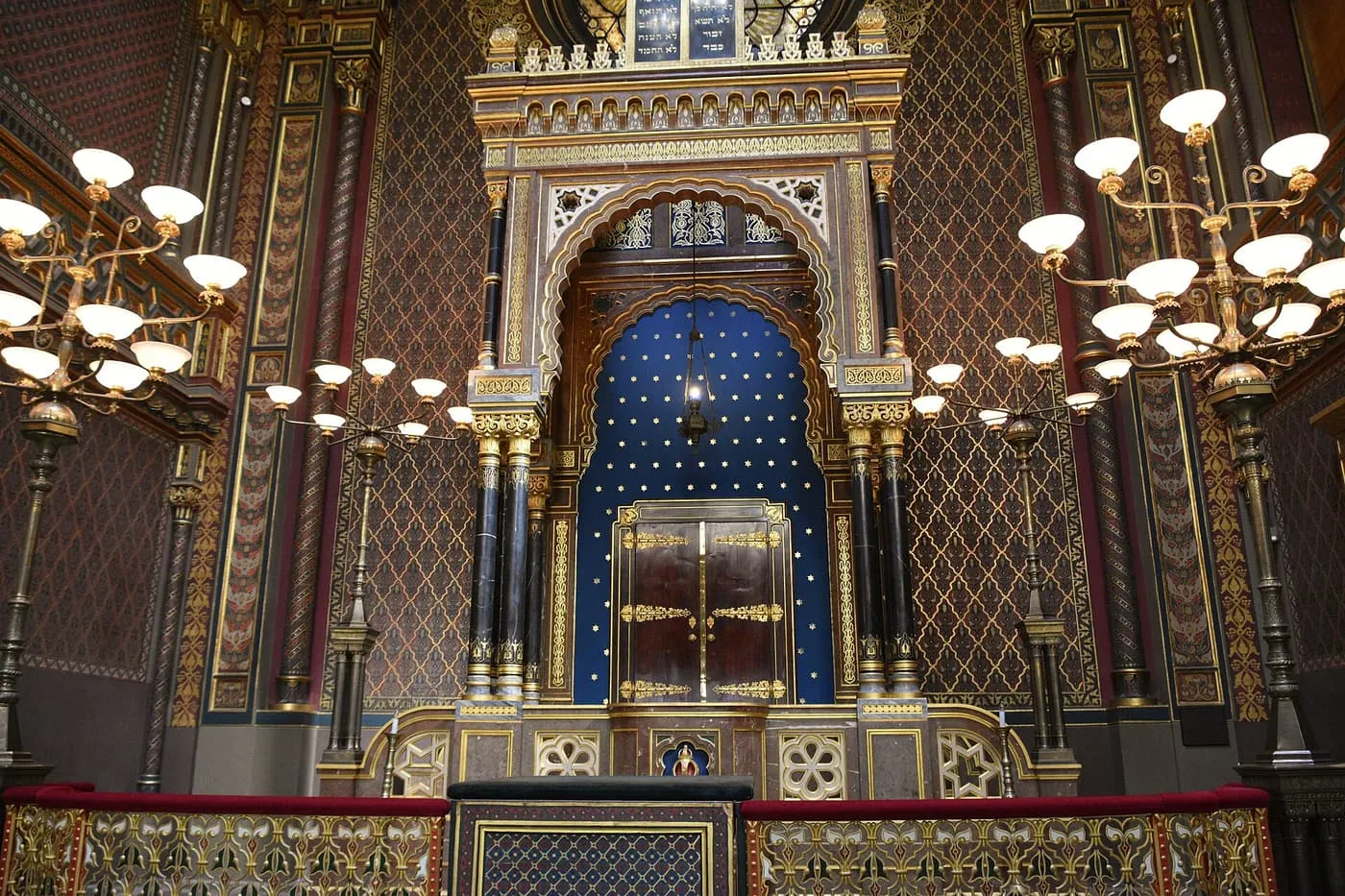
The Torah ark of the Spanish Synagogue. Photo: Richard Mortel, Wikimedia Commons, CC BY 2.0.
The most recent synagogue of the old Jewish Town, built in 1868 for the local Reform community on the site of the Old Shul, the oldest house of worship in the ghetto, which was pulled down in 1867. It takes its name from its Moorish-style decoration, inspired by the Alhambra: the gilding, stained glass and stucco arabesques were done in 1882 to 1883 by Antonín Baum and Bedřich Münzberger. It never served a Sephardic community or followed the Sephardic rite. The permanent exhibition, Jews in the Bohemian Lands, 19th-20th Centuries, covers emancipation, the Czech-Jewish and Zionist movements, the Holocaust and the post-war years, with Franz Kafka, Sigmund Freud and Gustav Mahler among its figures.
- Ticket office, shop and toilets are here, and there is a platform lift for wheelchairs.
- Concerts: the museum calls it a popular venue for chamber music, and GetYourGuide sells a classical concert in the Spanish Synagoguead from £37 (4.7 stars from 1,310 reviews).
- The rules: shoulders covered, no luggage over 30 litres and no left-luggage office. Everyone passes through a security check, and photographs are allowed without flash.
3. The Old-New Synagogue
On the Jewish Museum ticket · Sunday to Friday 9:00 to 18:00 to 17 October, 9:00 to 17:00 from 18 October · closes about an hour before Shabbat on Fridays
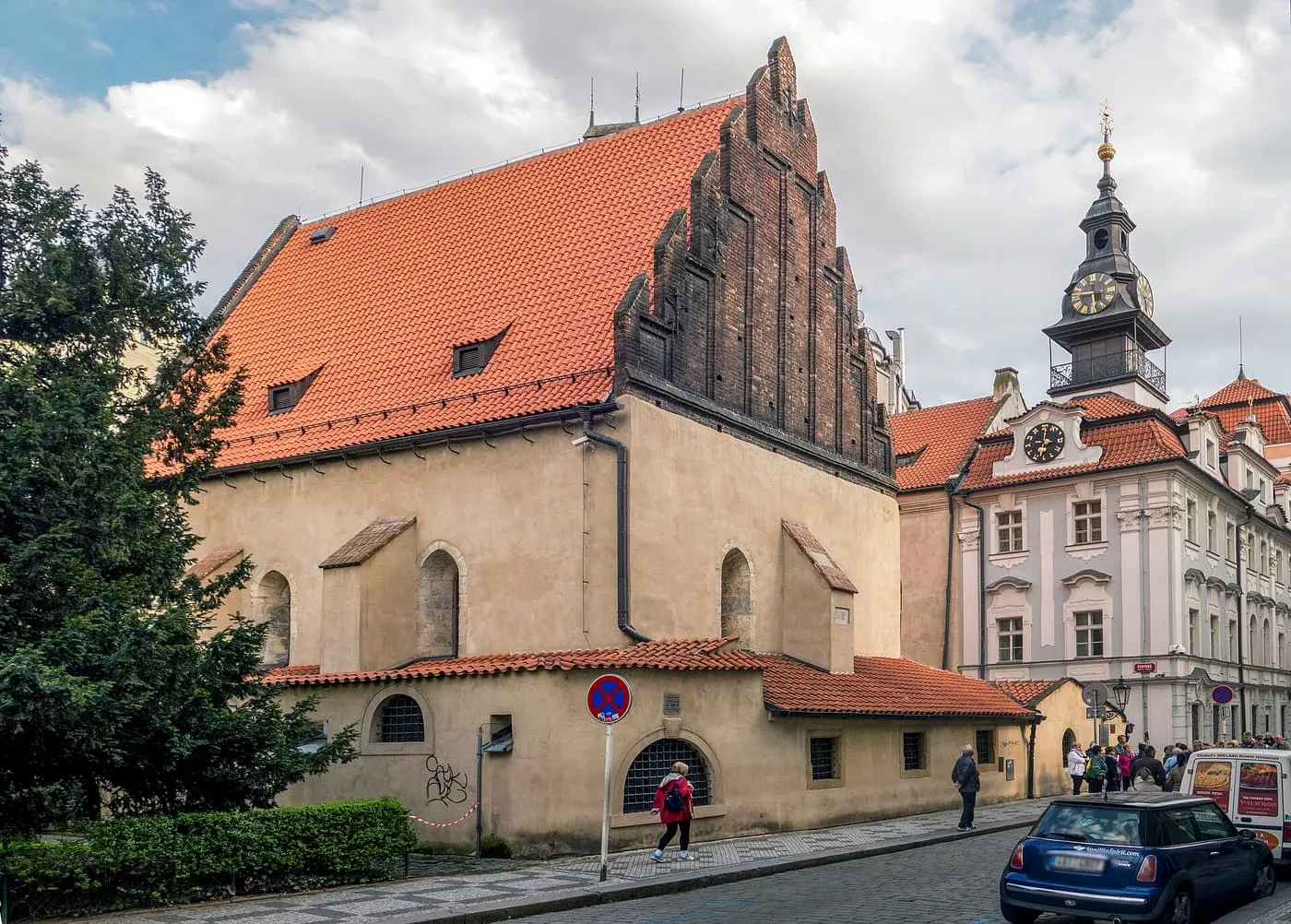
The Old-New Synagogue and the Jewish Town Hall. Photo: Jerzy Strzelecki, Wikimedia Commons, CC BY-SA 3.0.
Stonemasons from the royal workshop, who were building the Convent of St Agnes nearby, built it in the last third of the 13th century. It was first called the New or Great Shul and became the Old-New (Altneuschul) after other synagogues were founded in the late 16th century. Legend has it that its foundation stones were brought by angels from the Temple in Jerusalem, that angels’ wings turned into doves to protect it from the ghetto fires, and that the remains of the Golem lie in its attic.
- It is run by the Prague Jewish Community, not the museum, and has been part of the museum’s circuit since 1 January 2024: you can no longer buy admission to it separately.
- On a Friday, visit it first. It usually closes an hour before the start of Shabbat, and the Jewish Museum’s other sites are open to 18:00 until 17 October.
4. The Maisel Synagogue
On the Jewish Museum ticket · hours as the Spanish Synagogue
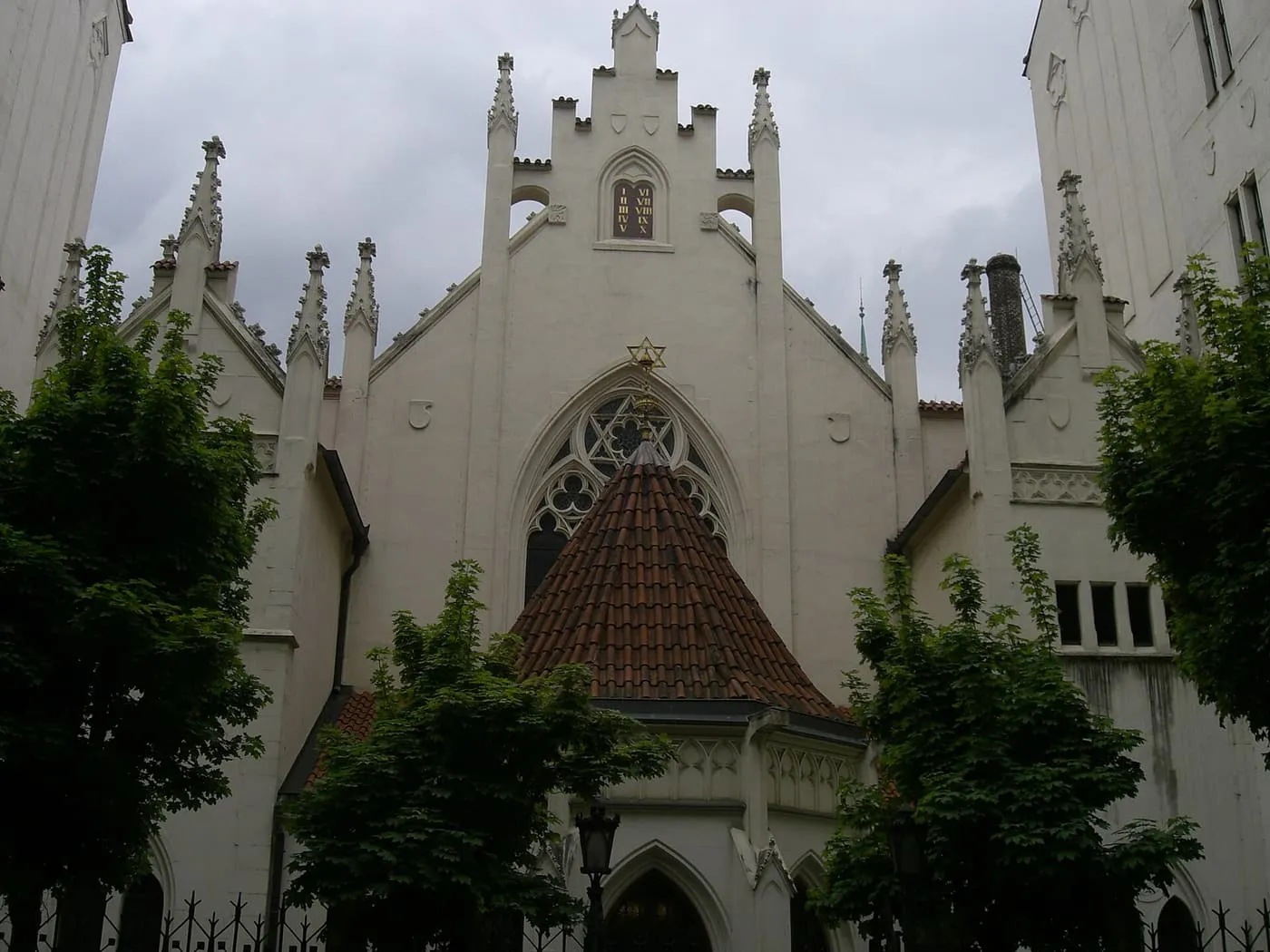
The Maisel Synagogue. Photo: Chmee2, Wikimedia Commons, CC BY-SA 3.0.
Mordecai Maisel, the mayor of the Jewish Town and one of Prague’s richest citizens under Rudolf II, paid for it, and it was built in 1590 to 1592 as the largest and grandest synagogue in the ghetto, a Renaissance hall with three naves. The first service was on Simchat Torah in 1592. It now houses the exhibition Jews in the Bohemian Lands, 10th-18th Centuries, which the museum calls the ideal starting point for a visit.
- The Visitor Centre is also on Maiselova Street, at No. 15. Tickets can also be bought at the ticket offices of the Maisel, Pinkas, Klausen and Spanish synagogues, or online.
- Which order to take: the ticket is valid for three opening days and each site can be entered once, so a visit can be split over two days.
5. Pinkas Synagogue and the Old Jewish Cemetery
On the Jewish Museum ticket · hours as the Spanish Synagogue
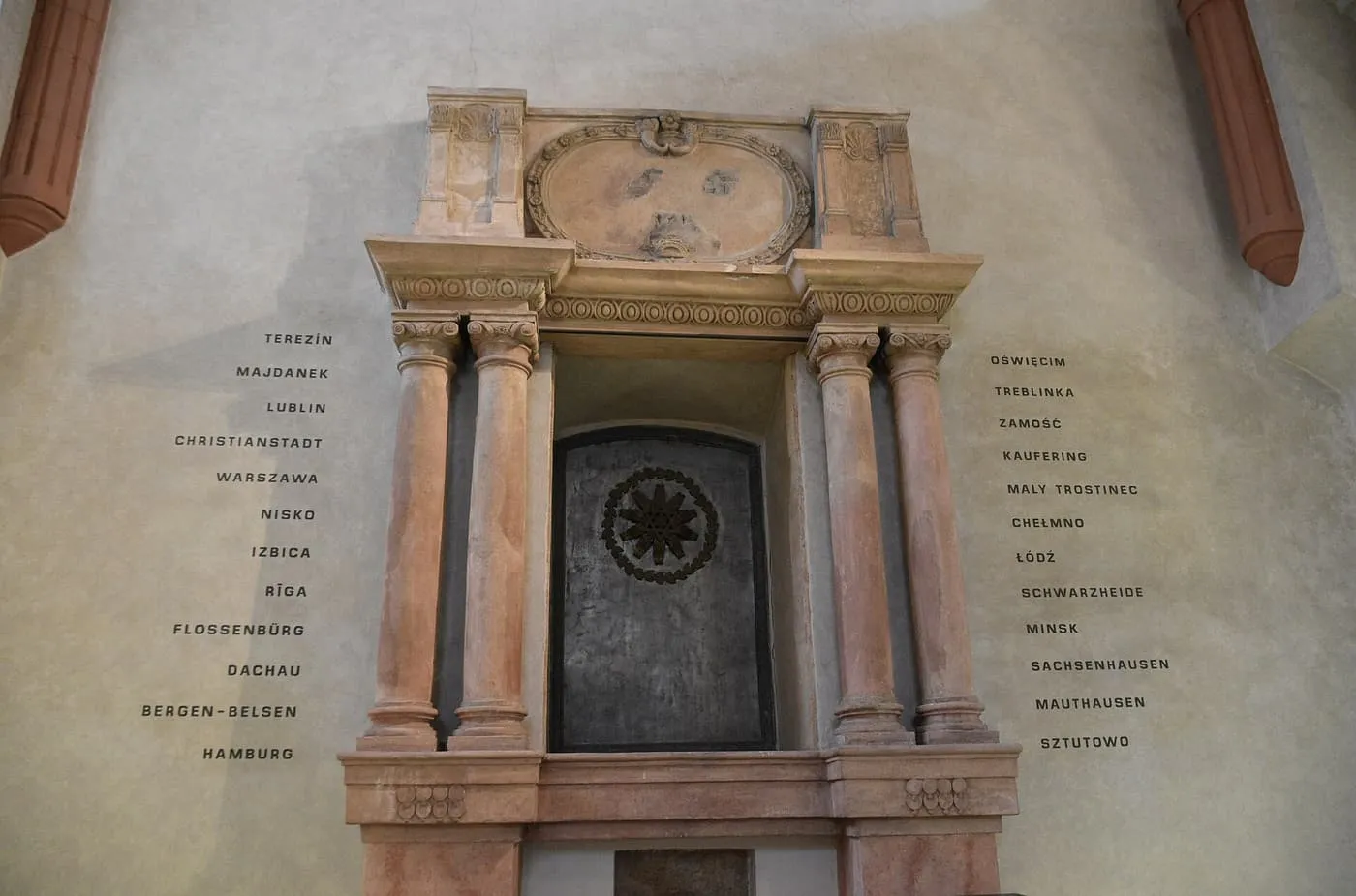
Names of camps beside the ark in the Pinkas Synagogue. Photo: Richard Mortel, Wikimedia Commons, CC BY 2.0.
The Pinkas Synagogue was built in 1535 in a late Gothic style by Aaron Meshulam Horovitz, and is the second-oldest synagogue still standing in Prague. Since 1960 it has been a memorial to the Holocaust, with the names of about 80,000 Jewish victims from Bohemia and Moravia written on its walls. It also shows drawings made by children in the Terezín ghetto.
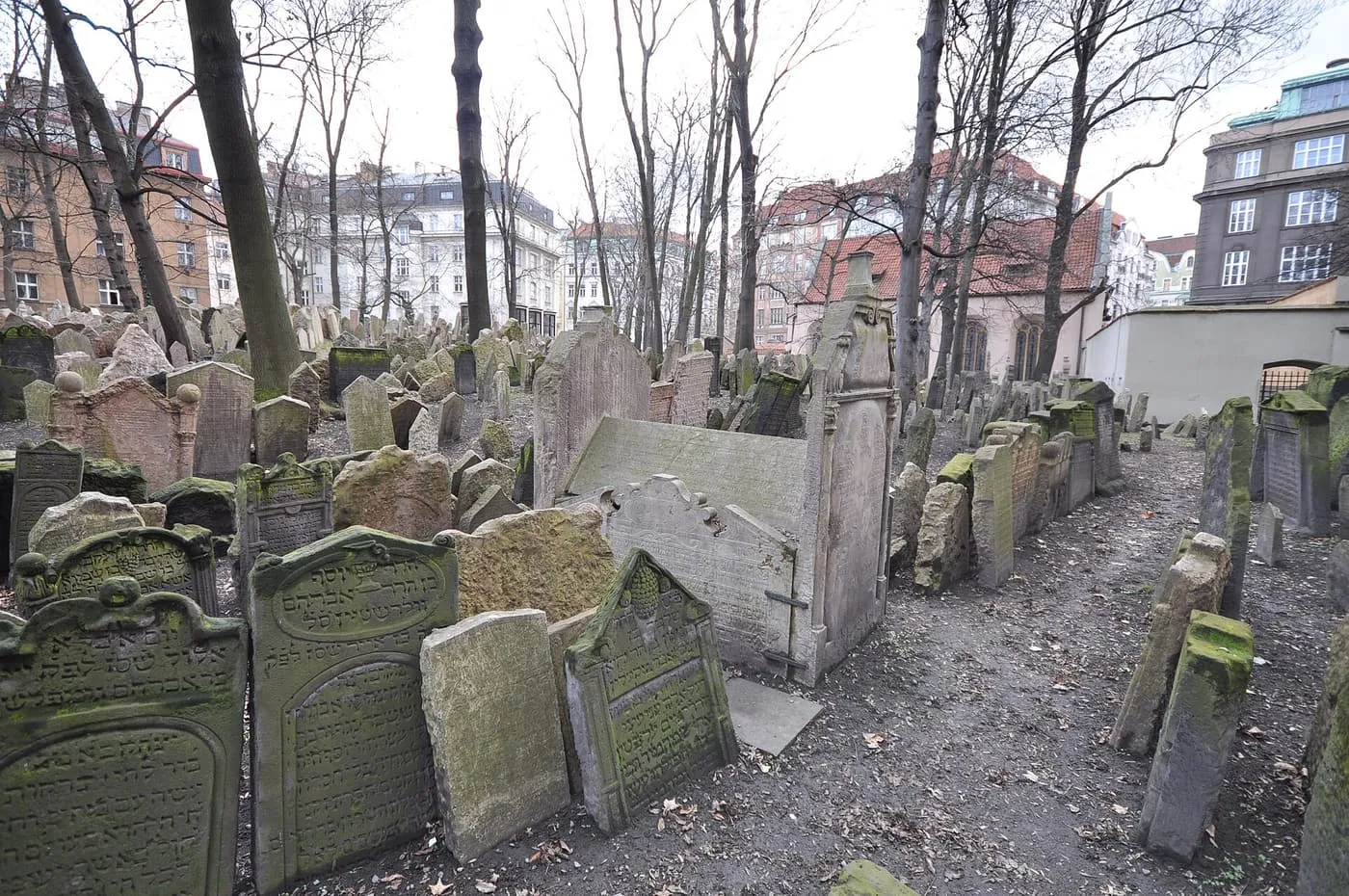
The Old Jewish Cemetery. Photo: Jorge Láscar, Wikimedia Commons, CC BY 2.0.
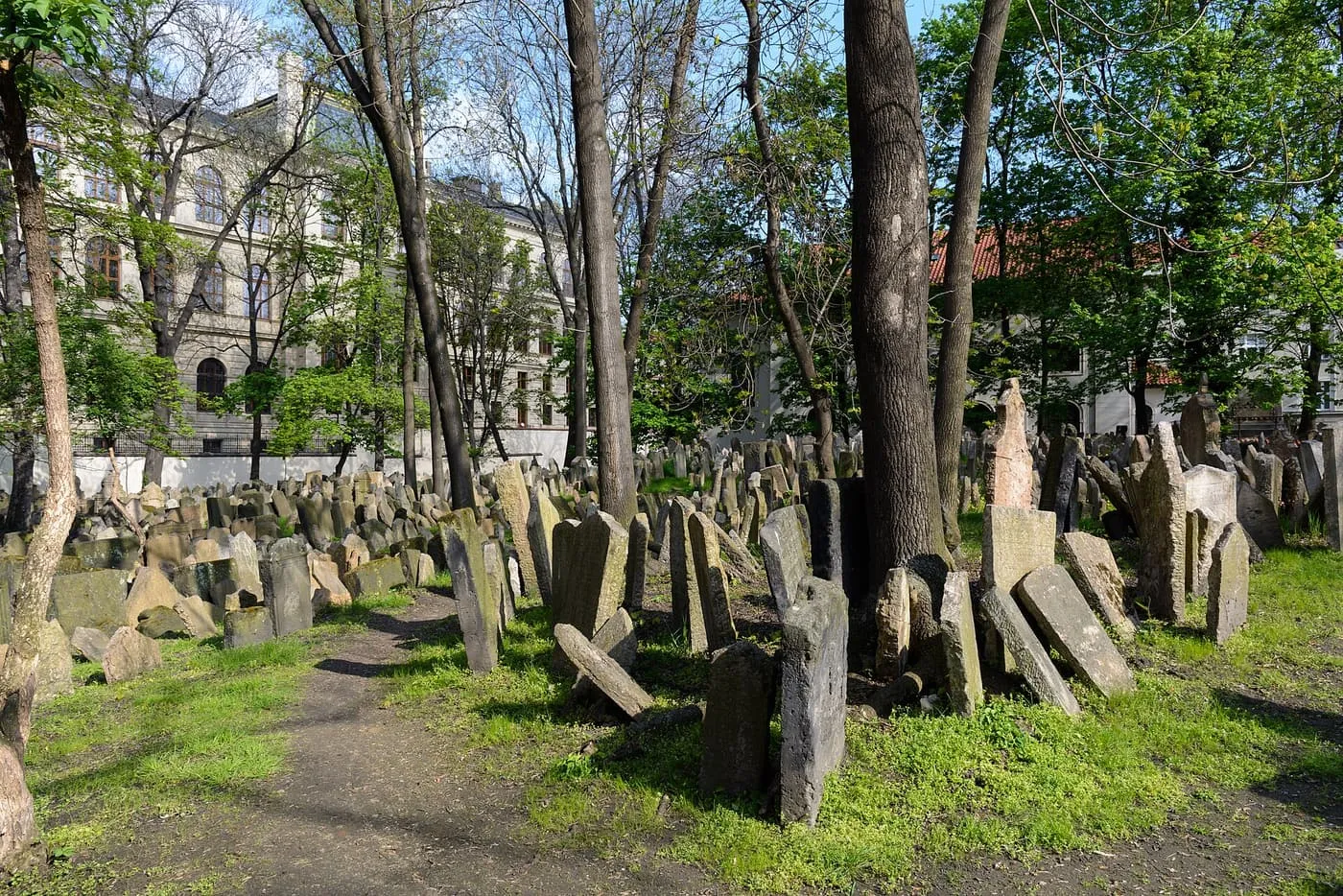
The Old Jewish Cemetery was in use from 1439 to 1787 and has more than 12,000 tombstones. There was no room to expand, and Jewish custom forbids disturbing a grave, so burials were stacked on top of earlier ones, up to ten layers deep according to some researchers. The oldest stones are dark sandstone slabs with deeply cut Hebrew inscriptions; later ones are marble with relief lettering. Symbols mark the dead: a pitcher for a Levite, scissors or a violin for a trade.
- The Klausen Synagogue, the largest preserved synagogue of the old ghetto, was built in 1694 and is the only early Baroque building in the quarter. It now holds temporary exhibitions, and access follows the museum’s programme. A reconstruction is planned, with the reopening due by 2028 at the latest.
- The Ceremonial Hall by the cemetery, built in 1906 to 1908, is closed for reconstruction.
6. The Rudolfinum
Gallery 200 CZK or more (about £6.95), 120 CZK for over-65s · Tuesday to Sunday 10:00 to 18:00, Thursday to 20:00, closed Mondays · free on the first Sunday of every month
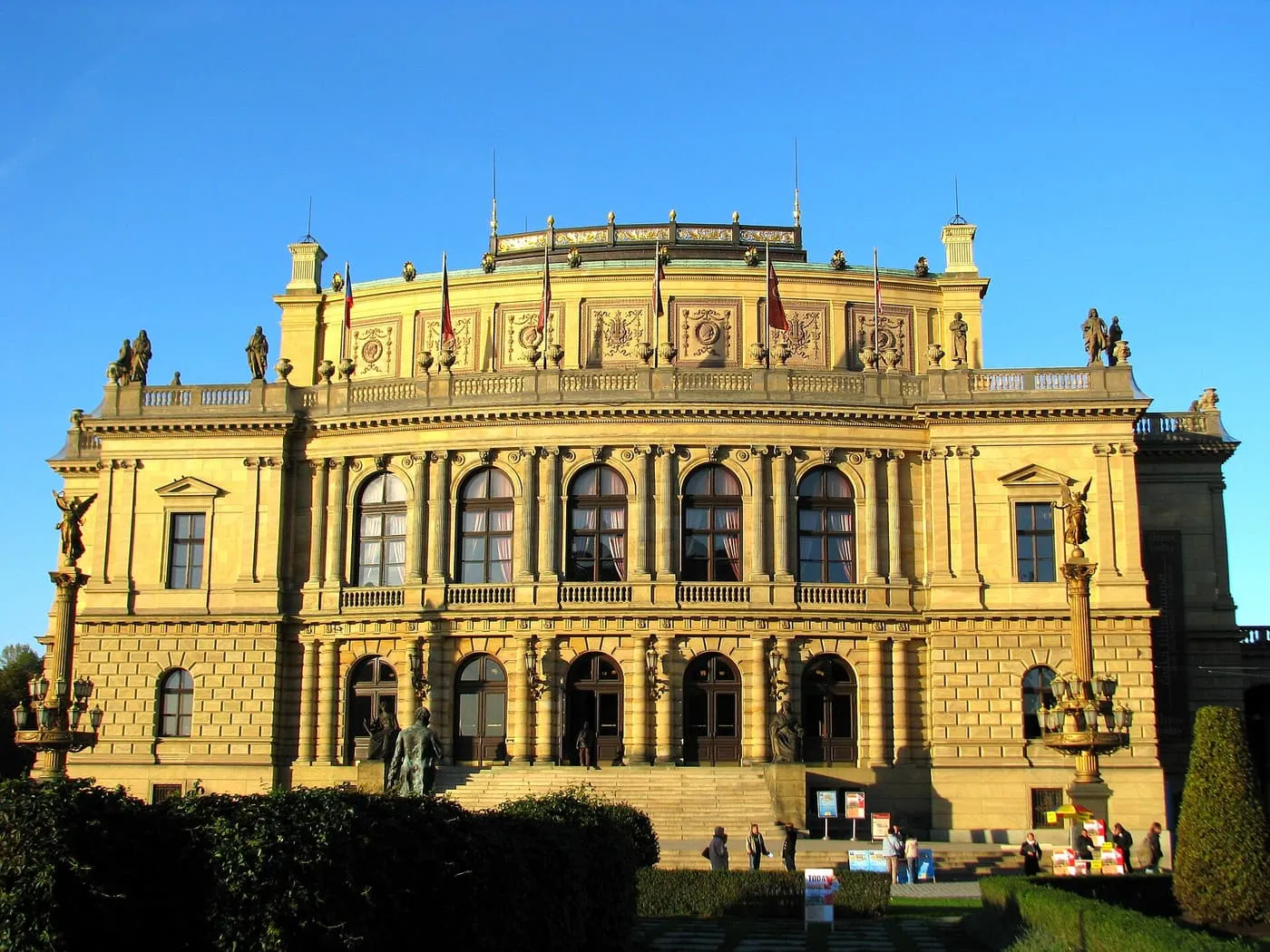
The Rudolfinum on Alšovo nábřeží. Photo: HachysCZ, Wikimedia Commons, CC BY-SA 3.0.
The Rudolfinum is the home of the Czech Philharmonic, which gave its first concert here in 1896 and has been resident since 1946. Its orchestra rehearses and plays in the Dvořák Hall and the Suk Hall, and the building also holds Galerie Rudolfinum, founded in 1994, with three or four modern-art exhibitions a year. From 1 October 2026 to 3 January 2027 it shows Crested/mâcistan by Tanya Lukin Linklater and Duane Linklater.
- The gallery: standard admission is “pay what you wish” with a minimum of 200 CZK, and the last entry is 30 minutes before closing. The first Sundays of the coming months are 1 November and 6 December 2026.
- Café Rudolfinum is open Tuesday to Sunday 10:00 to 19:00, with hours that can change with the Philharmonic’s programme. See where to eat.
- A concert: classical concerts in Prague covers the Philharmonic’s programmes in the Dvořák Hall.
7. The Clementinum
Tour 380 CZK (about £13.20), daily 9:00 to 20:00, about 45 minutes · e-tickets only
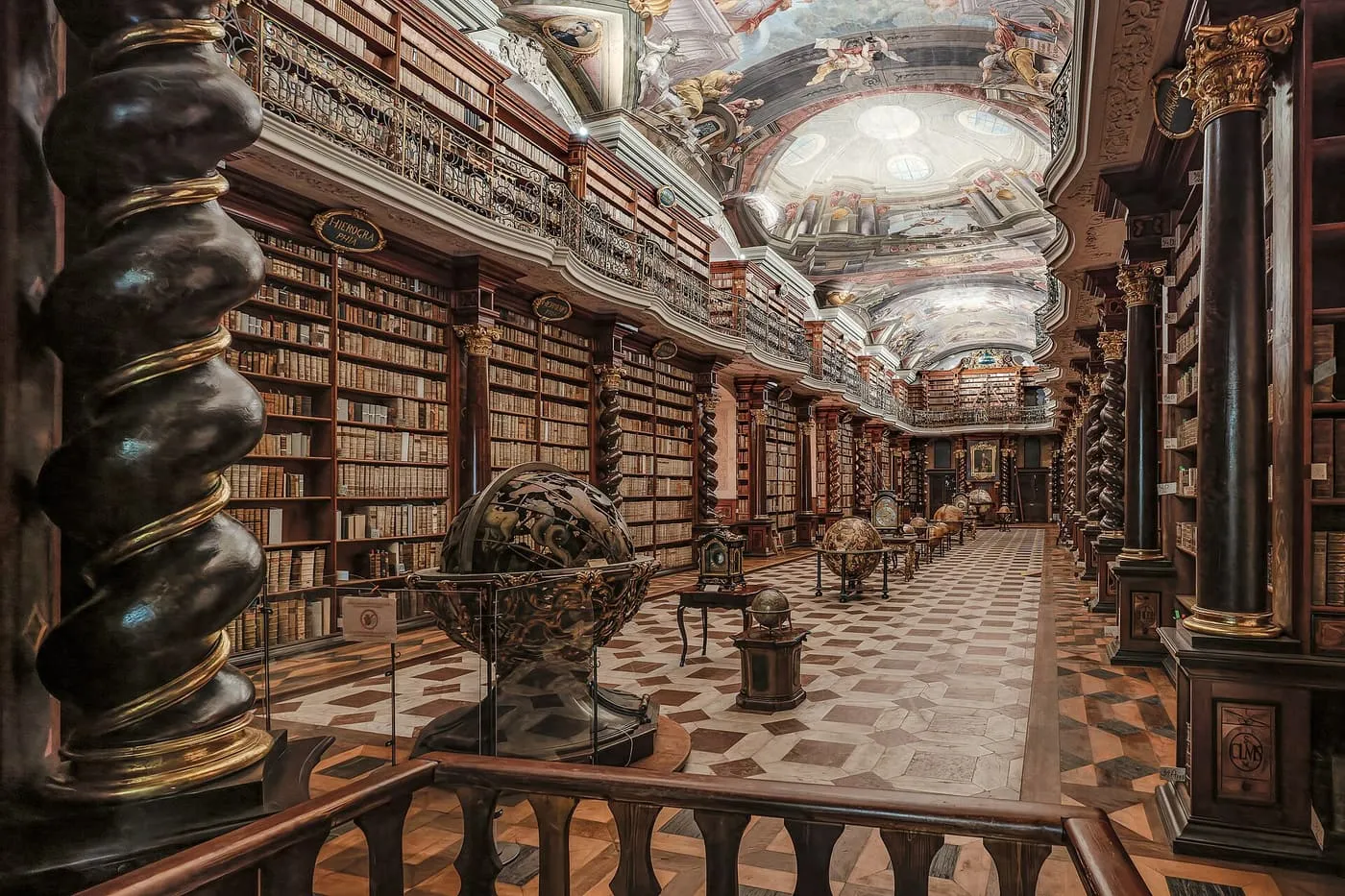
The Baroque Library Hall of the Clementinum. Photo: Skot, Wikimedia Commons, CC BY-SA 4.0.
The former Jesuit college has entrances at Mariánské náměstí 5, Karlova 1 and on Křižovnická Street, and the walk reaches it on Křižovnická. The tour goes through the Baroque Library, which you may look into but not enter, to the Meridian Hall, and ends with the climb to the gallery of the Astronomical Tower, whose weather station is the longest continuously measuring in the Czech lands.
- Tickets are e-tickets only. New ones go on sale every Monday for the following two weeks, tours are limited in capacity and Prague City Tourism does not guarantee tickets at the box office. The first two tours each morning, 9:00 in English and 9:30 in Czech, are half price.
- The Royal Route walk also passes here, on Karlova: stop 4 of the Royal Route walk.
8. The Smetana Museum and the embankment
Museum 70 CZK (about £2.45), 50 CZK reduced · daily 10:00 to 17:00, closed on Tuesdays · embankment free
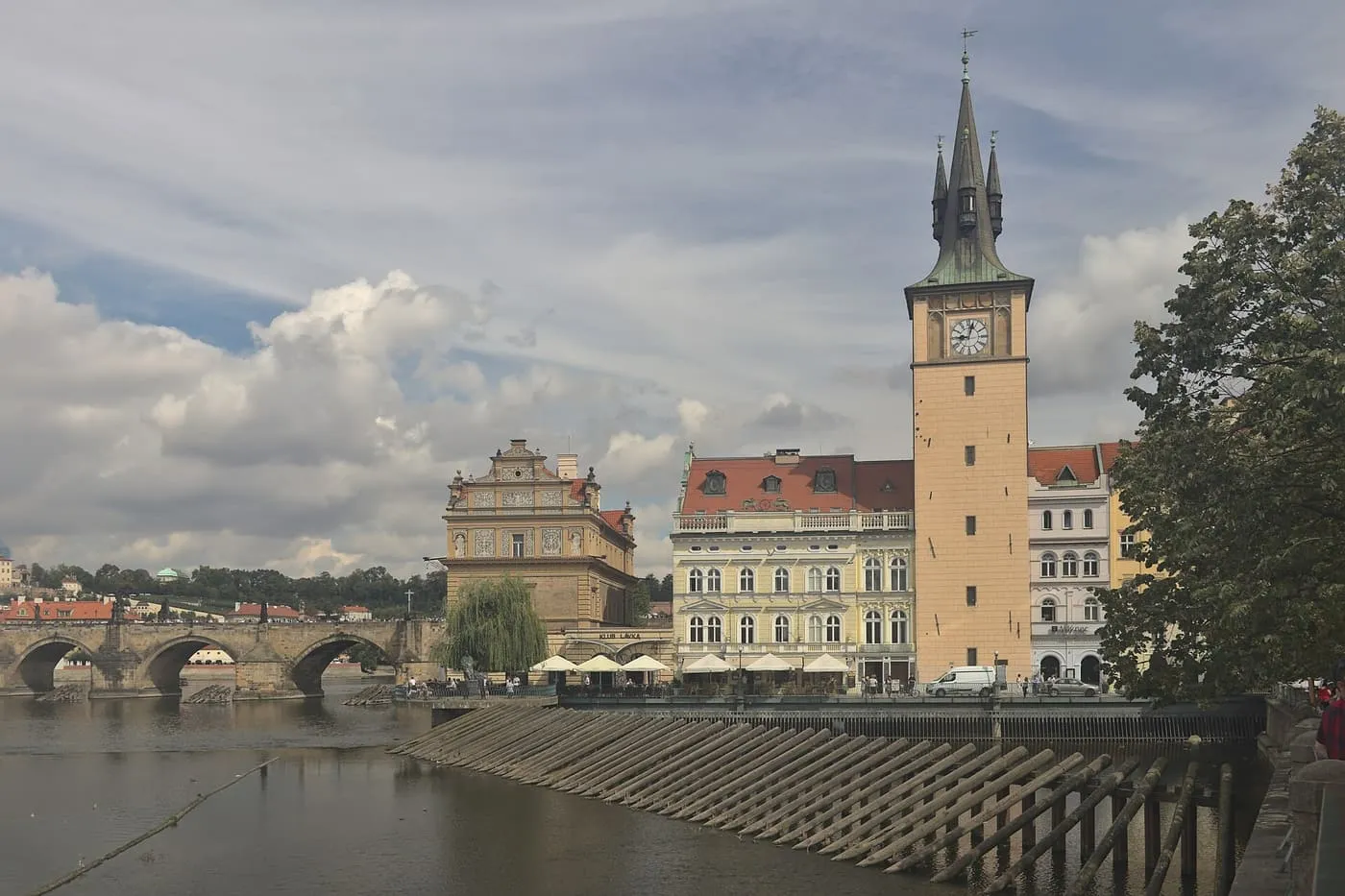
The Smetana Museum and the Vltava embankment. Photo: Paul Korecky, Wikimedia Commons, CC BY-SA 2.0.
The embankment path ends where Charles Bridge begins. The Bedřich Smetana Museum has been here since 1936, in the neo-Renaissance building of the former Old Town waterworks, built in the 1880s, with views down the river to Prague Castle. It is part of the National Museum, and the building is not wheelchair accessible.
- Tickets are sold online, valid for 30 days for one entry, or at the box office.
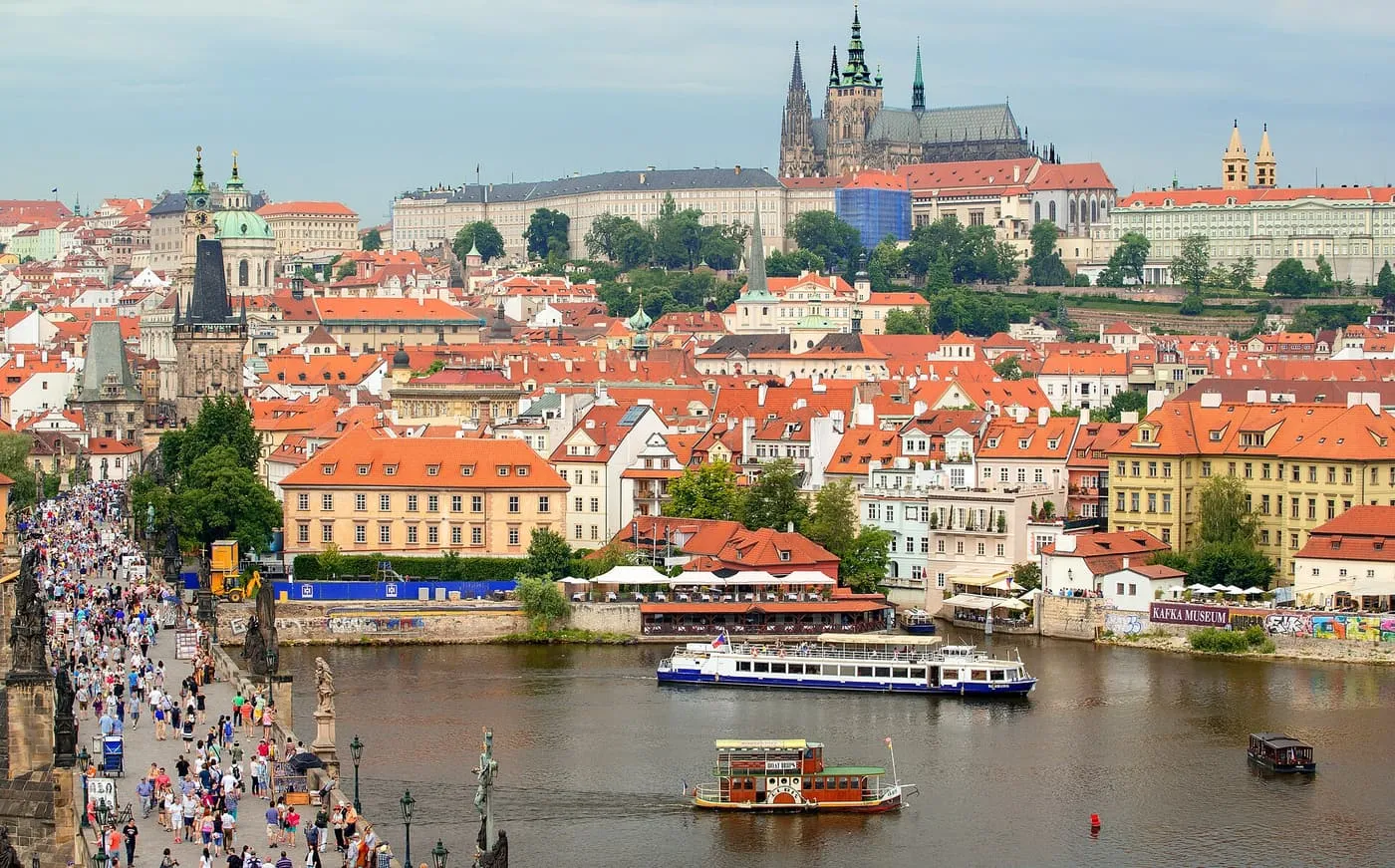
- From here the Old Town Bridge Tower, stop 5 of the Royal Route walk, is next door, and Charles Bridge leads on to the Castle.
Where to eat
Café Rudolfinum
Alšovo nábřeží 12 · Tuesday to Sunday 10:00 to 19:00, closed Mondays
The café inside the Rudolfinum, with its historic interior and a menu of coffee, desserts and savoury dishes. Its hours can change with the Philharmonic’s programme. Stop here between the cemetery and the Clementinum.
Mlýnec
Novotného lávka 5 · Monday to Friday 11:30 to 15:00 and 17:00 to 22:00, Saturday and Sunday 11:30 to 15:00 and 17:30 to 22:00 · book a table
A restaurant next to the Smetana Museum, in the Michelin Guide’s 2025 selection, with views of Charles Bridge. It serves a set lunch menu that changes weekly, 695 CZK for two courses and 795 CZK for three. It is the sit-down meal at the end of the walk. See where to eat in Prague for more.
The best day to go
| Day | What changes on the route |
|---|---|
| Monday | The Rudolfinum gallery and café are closed. The synagogues and the cemetery are open |
| Tuesday | The Smetana Museum is closed |
| Wednesday | All open |
| Thursday | All open, and the Rudolfinum gallery stays open to 20:00 |
| Friday | The Old-New Synagogue closes about an hour before Shabbat begins, so go there first |
| Saturday | Every synagogue and the cemetery are closed. The Rudolfinum, the Clementinum and the Smetana Museum are open |
| Sunday | All open, and the Rudolfinum gallery is free on the first Sunday of the month |
The timing that works, Sunday to Thursday: be at the Spanish Synagogue for 9:00 and take the Old-New, Maisel and Pinkas synagogues and the cemetery before 11:00, when the museum says the crowds begin. The circuit takes 2 to 3 hours. Have lunch at Mlýnec from 11:30, go on to the Rudolfinum gallery and take a Clementinum tour that you booked a week ahead, and reach the Smetana Museum before 17:00.
What closes:
- 18 October 2026: the Maisel, Pinkas, Klausen and Spanish synagogues and the cemetery close at 16:30 instead of 18:00, and the Old-New Synagogue at 17:00.
- Jewish holidays: the museum is closed. It lists the dates on its opening hours page.
- 24 December 2026: both the museum and the Old-New Synagogue close at 14:00, and on 1 January 2027 they open at 11:00.
- 3 January 2027: the Rudolfinum’s current exhibition ends.
What does not close: the streets of Josefov, Old Town Square, the embankment and the exteriors of every stop. A Saturday still makes a half-day: the Rudolfinum, the Clementinum and the Smetana Museum are open, and Prague’s Royal Route walk has no Saturday closures.
Getting there and back
- To the start: Old Town Square is a short walk from the Staroměstská and Můstek stops on metro line A. See Prague airport to the city centre.
- From the end: the Smetana Museum is beside Charles Bridge, and Staroměstská on line A is back along the embankment, about 600 m on foot. Prague public transport has the tickets.
- In reverse: the route also works from the Smetana Museum, but only while the synagogues are open until 18:00, which is to 17 October. From 18 October they close at 16:30, so do them first.
What to do with the rest of the day
- The Royal Route: Prague’s Royal Route walk crosses Old Town Square and passes the Clementinum, and goes on over Charles Bridge to the Castle.
- The river: Vltava river cruises leave from the piers beside the bridge.
- An evening concert: classical concerts in Prague.
- The whole trip: 3 days in Prague builds the days round the bookings, and what to book before you go to Prague has the rest of the tickets. To sleep on the route, hotels near Old Town Square lists the hotels beside it.
Common questions
How long is the Jewish Quarter walk in Prague?
2.2 km from Old Town Square to the Smetana Museum, measured along the streets: about 30 minutes of walking. The Jewish Museum says its circuit of the synagogues and the cemetery takes 2 to 3 hours, so with the Rudolfinum and the Clementinum the walk fills most of a day.
What does the Jewish Museum ticket cover?
One ticket, 600 CZK for an adult, covers the Maisel, Pinkas, Spanish and Old-New synagogues and the Old Jewish Cemetery, and the Klausen Synagogue when it has an exhibition on. It is valid for three opening days, each site can be entered once, and ticket sales end 30 minutes before closing. The Ceremonial Hall is closed for reconstruction.
Is the Jewish Quarter open on Saturdays?
No. The Jewish Museum, including the Old-New Synagogue, is closed on Saturdays and on Jewish holidays. On Fridays the Old-New Synagogue usually closes an hour before Shabbat begins. The Rudolfinum, the Clementinum and the Smetana Museum are open on Saturdays.
What do I need to book for the Jewish Quarter walk?
Nothing for the Jewish Museum, though it recommends buying tickets online, and the busiest hours are 11:00 to 15:00. The Clementinum is the one booking: its tours are e-tickets only, released every Monday for the following two weeks.
What should I wear in the synagogues?
The Jewish Museum asks visitors to wear appropriate clothes with shoulders covered. Luggage over 30 litres is not allowed, there is no left-luggage office, and everyone passes through a security check. Photographs are allowed without flash, lights or a tripod.
When do the Jewish Museum's hours change?
On 18 October 2026, when the Maisel, Pinkas, Klausen and Spanish synagogues and the cemetery move from 9:00 to 18:00 to 9:00 to 16:30. The Old-New Synagogue moves to 9:00 to 17:00. On 24 December 2026 both close at 14:00.
.jpg)