In this guide
💡 The Short Version: Visit in April to June or September to October for the mildest weather: Central Park’s normal daily highs are 62F (17C) in April, 80F (27C) in June, 76F (25C) in September and 65F (18C) in October (NOAA). January and February are cold (highs of 39F and 42F) with the most snow, but NYC Hotel Week and Restaurant Week run from 2 and 19 January to 11 February 2027. July is the hottest month at 85F (29C). Atlantic storms hit mainly from August to early November. Rain falls all year, 3.2 to 4.6 inches (81 to 117 mm) a month.
Weather month by month
These are the 1991 to 2020 climate normals from the Central Park weather station, the figures NOAA publishes for New York City (NOAA).
| Month | Daily high | Daily low | Precipitation | Snow |
|---|---|---|---|---|
| January | 39.5F (4.2C) | 27.9F (-2.3C) | 3.64 in (92 mm) | 8.8 in (22 cm) |
| February | 42.2F (5.7C) | 29.5F (-1.4C) | 3.19 in (81 mm) | 10.1 in (26 cm) |
| March | 49.9F (9.9C) | 35.8F (2.1C) | 4.29 in (109 mm) | 5.0 in (13 cm) |
| April | 61.8F (16.6C) | 45.5F (7.5C) | 4.09 in (104 mm) | 0.4 in (1 cm) |
| May | 71.4F (21.9C) | 55.0F (12.8C) | 3.96 in (101 mm) | none |
| June | 79.7F (26.5C) | 64.4F (18.0C) | 4.54 in (115 mm) | none |
| July | 84.9F (29.4C) | 70.1F (21.2C) | 4.60 in (117 mm) | none |
| August | 83.3F (28.5C) | 68.9F (20.5C) | 4.56 in (116 mm) | none |
| September | 76.2F (24.6C) | 62.3F (16.8C) | 4.31 in (109 mm) | none |
| October | 64.5F (18.1C) | 51.4F (10.8C) | 4.38 in (111 mm) | 0.1 in |
| November | 54.0F (12.2C) | 42.0F (5.6C) | 3.58 in (91 mm) | 0.5 in (1 cm) |
| December | 44.3F (6.8C) | 33.8F (1.0C) | 4.38 in (111 mm) | 4.9 in (12 cm) |
NYC Tourism summarises the seasons this way. Spring brings budding flowers, light winds and rain; summer is hot and sunny with later sunsets and cool breezes near the water; fall is chilly and crisp, so wear layers; winter is cold and sometimes snowy, with less daylight but often sunny, clear skies (NYC Tourism).

Bow Bridge, Central Park. Photo: Querent, Wikimedia Commons, CC BY 4.0.
Season by season
Winter: December to February

Bethesda Terrace in the snow. Photo: Ralph Hockens, Wikimedia Commons, CC BY-SA 4.0.
The coldest weeks, with highs of 39F to 44F (4C to 7C) and the most snow: about 24 inches (60 cm) across December to February on average. NYC Hotel Week offers 25% off the hotel’s floating retail rate on eligible rooms for stays from 2 January to 11 February 2027, at participating hotels, with reservations open to the public (NYC Tourism). NYC Restaurant Week and Broadway Week start on 19 January; Restaurant Week runs to 11 February with prix-fixe menus at hundreds of restaurants, and reservations open on 6 January at 10am ET (NYC Tourism). Christmas and New Year have their own guides: Christmas in New York and New Year’s Eve in New York.
Spring: March to May
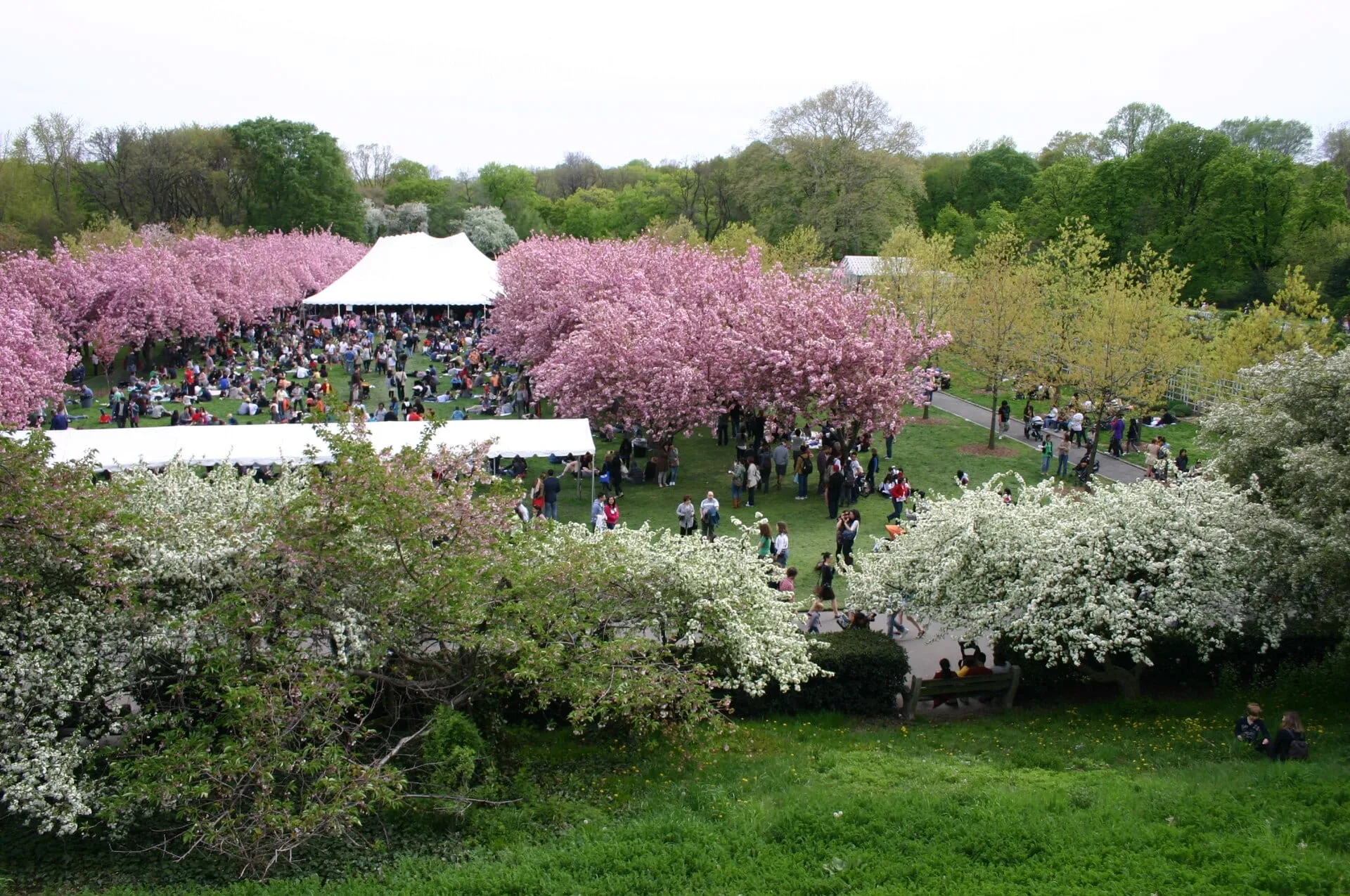
Cherry blossom at the Brooklyn Botanic Garden. Photo: Ryan Somma, Wikimedia Commons, CC BY 2.0.
Highs climb from 50F (10C) in March to 71F (22C) in May. St. Patrick’s Day Parade marches up Fifth Avenue on Wednesday 17 March 2027 (St. Patrick’s Day Parade). The Brooklyn Botanic Garden’s flowering cherries bloom from late March or early April to mid May, each tree for about a week, and the very first trees open when the daffodils do (Brooklyn Botanic Garden). Rain is as likely as in any other month, so bring a waterproof.
Summer: June to August
Highs reach 80F (27C) in June and 85F (29C) in July, and the nights stay above 64F (18C). The Tribeca Festival runs from 3 to 12 June 2027 (Tribeca). July and August are the wettest months at about 4.6 inches (116 mm) each, and the start of the Atlantic storm season. The free Staten Island Ferry and the $4 NYC Ferry run daily; see public transport. See summer in New York for free concerts and beaches.
Autumn: September to November
Highs fall from 76F (25C) in September to 54F (12C) in November, and NYC Tourism calls autumn chilly and crisp. October events include Archtober (a month of design and architecture talks and tours), Open House New York (one weekend in October, when hundreds of buildings open) and the Village Halloween Parade, and the TCS NYC Marathon is a fall tradition (NYC Tourism). The Macy’s Thanksgiving Day Parade is covered in Thanksgiving Day Parade. Atlantic storms, which hit mainly from August to early November, can disrupt flights.
The calendar at a glance
| Month | What is on |
|---|---|
| January | NYC Hotel Week from 2 January; Restaurant Week and Broadway Week from 19 January |
| February | Hotel Week and Restaurant Week to 11 February |
| March | St. Patrick’s Day Parade on Fifth Avenue, Wednesday 17 March 2027; cherry blossom begins at the Brooklyn Botanic Garden |
| April and May | Cherry blossom, late March to mid May |
| June | Tribeca Festival, 3 to 12 June 2027 |
| July and August | Hottest and wettest months; Atlantic storm season begins |
| September | Brooklyn Book Festival, for a week in late September in Downtown Brooklyn |
| October | Archtober, Open House New York, the Village Halloween Parade; the Knicks’ season runs from 20 October 2026 to 11 April 2027 |
| November | TCS NYC Marathon; the Macy’s Thanksgiving Day Parade |
| December | Christmas and New Year; Big Apple Circus on the Upper East Side from 27 November to 18 January |
Dates for 2027 are the organisers’ own where given. Hotel Week and Restaurant Week dates come from NYC Tourism and its Restaurant Week page; the Knicks and circus dates are on NYC Tourism’s autumn guide. For the big events, see Christmas in New York, New Year’s Eve in New York, Thanksgiving Day Parade and sports tickets.
Which month for what
| If you want | Go in |
|---|---|
| Walking weather | April to June, September and October |
| The lowest chance of heat | October to May |
| Cherry blossoms | Late March to mid May |
| Hotel and restaurant deals | January and early February |
| Free outdoor events | Summer; see free things to do |
| Snow | December to March; January and February are the snowiest |
| Outside the Atlantic storm season | December to July |
Packing and planning
- Layers. Normal daily lows are below freezing in January and February, and the high in March is still only 50F (10C).
- A rain jacket. Precipitation averages more than 3 inches (76 mm) in every month.
- Sun protection in June to August, when highs sit between 80F and 85F.
- Comfortable shoes. The sights are on the subway and on foot; see New York public transport.
Plan the trip
Check the dates against your hotel: see where to stay in New York and money in New York for taxes and tips. Then pick an itinerary: New York in one or two days, 3 days in New York or 5 days in New York. For the booking list before you fly, see the New York city guide.
Common questions
What is the best month to visit New York?
The weather is mildest in April to June and in September to October: Central Park's normal daily highs run from 62F (17C) in April to 80F (27C) in June, and from 76F (25C) in September to 65F (18C) in October. January and early February carry the deals: NYC Hotel Week and Restaurant Week.
What is the coldest month in New York?
January: a normal daily high of 39.5F (4.2C) and low of 27.9F (-2.3C) at Central Park, with 3.6 inches (92 mm) of precipitation and 8.8 inches (22 cm) of snow on average. February snow averages 10.1 inches (26 cm).
What is the rainiest month in New York?
July, with 4.60 inches (117 mm) in the 1991 to 2020 normals, though every month from March to December averages between 3.6 and 4.6 inches. There is no dry season.
When is hurricane season in New York?
NYC Tourism says Atlantic storms hit the city occasionally, primarily from August to early November, and that direct hits from major hurricanes such as Superstorm Sandy in 2012 are rare.
When do the cherry blossoms bloom in New York?
At the Brooklyn Botanic Garden, flowering cherries bloom from late March or early April to mid May, with each tree in flower for about a week.
When is NYC Hotel Week?
2 January to 11 February 2027: participating hotels offer 25% off their floating retail rate on eligible rooms.