In this guide
- Currency: Euro (€), adopted in 2015. Lithuanian coins carry the Vytis knight.
- Cards: Contactless cards, Apple Pay and Google Pay are accepted in shops, cafes, bars and on buses.
- ATMs: Use bank machines (Swedbank, SEB, Luminor) and always decline dynamic currency conversion.
- Sight costs: Adult tickets for the main sights run from €6 to €17. The Palace of the Grand Dukes and Gediminas Tower are free on the last Sunday of each month.
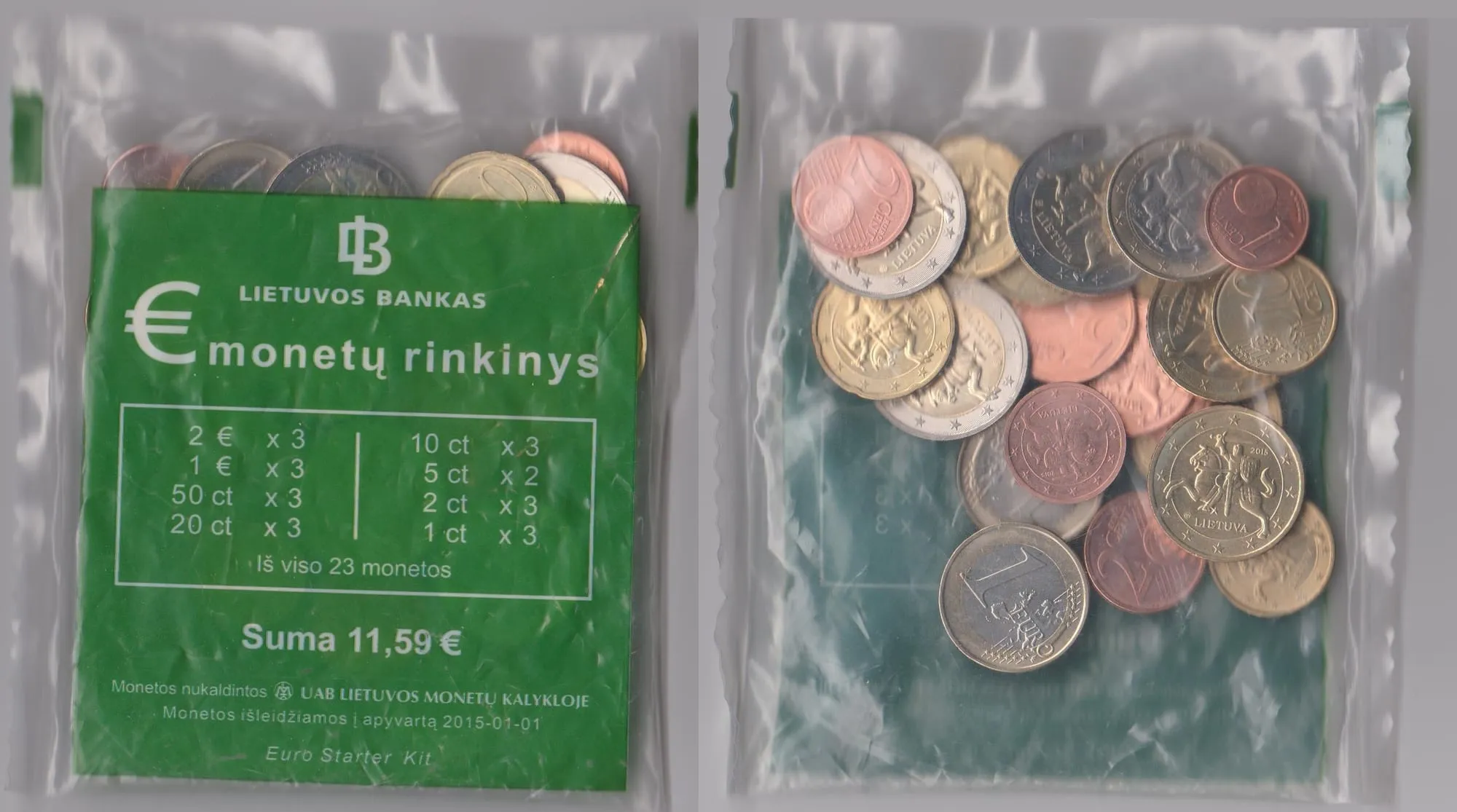
Lithuania joined the Eurozone on 1 January 2015 and replaced the litas (LTL). A contactless bank card or phone covers an espresso, a bus ticket, a stall at Halės Market or a hotel bill.
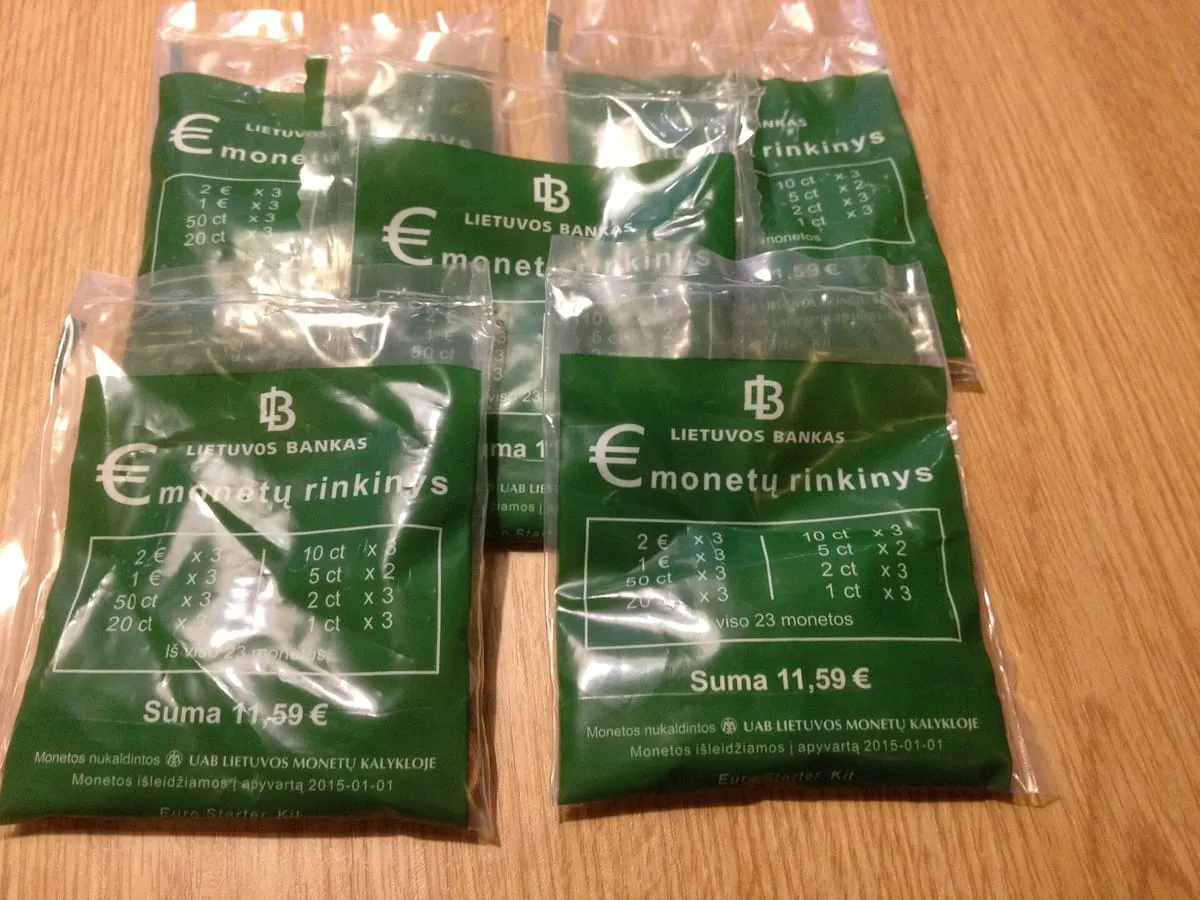 Euro starter kits. Photo: Noyescancel, Wikimedia Commons, CC BY-SA 4.0.
The Currency: Euro (€)
The Euro (€) is the sole legal tender in Lithuania.
Lithuania mints its own national reverse design across all eight circulation coins (1c, 2c, 5c, 10c, 20c, 50c, €1, and €2):
- The Vytis: Every Lithuanian coin depicts the Vytis, Lithuania’s historic state coat of arms dating back to the fourteenth-century Grand Duchy. The design shows an armoured knight on a rearing steed, brandishing an uplifted silver sword and a blue shield bearing the golden double cross of the Jagiellonian dynasty.
- Design details: Designed by sculptor Antanas Žukauskas, the 1c, 2c, and 5c coins depict the knight on a plain field; the 10c, 20c, and 50c coins add horizontal lines representing the sky; and the bimetallic €1 and €2 coins frame the knight against vertical lines.
Contactless Payments and Cash Use
You need little cash in Vilnius:
- Cards: Contactless debit and credit cards (Visa, Mastercard, Maestro) and phone wallets (Apple Pay, Google Pay, Samsung Pay) are standard.
- When cash helps: Carry a few €1 and €2 coins for church donation boxes, public toilets in train stations, and cash tips in small family-run places where the card terminal has no tipping option.
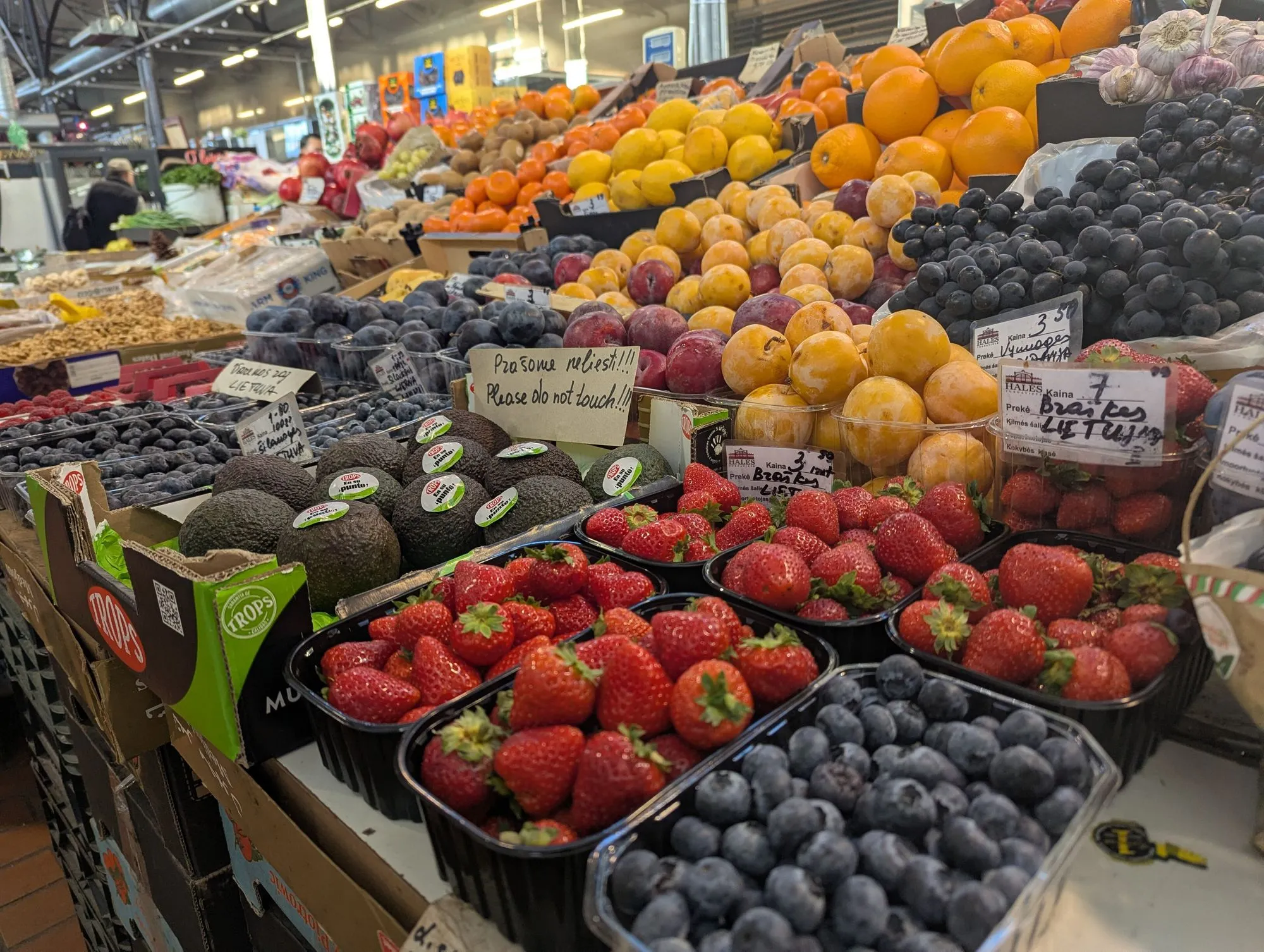 Halės Market. Photo: Sdkb, Wikimedia Commons, CC BY-SA 4.0.
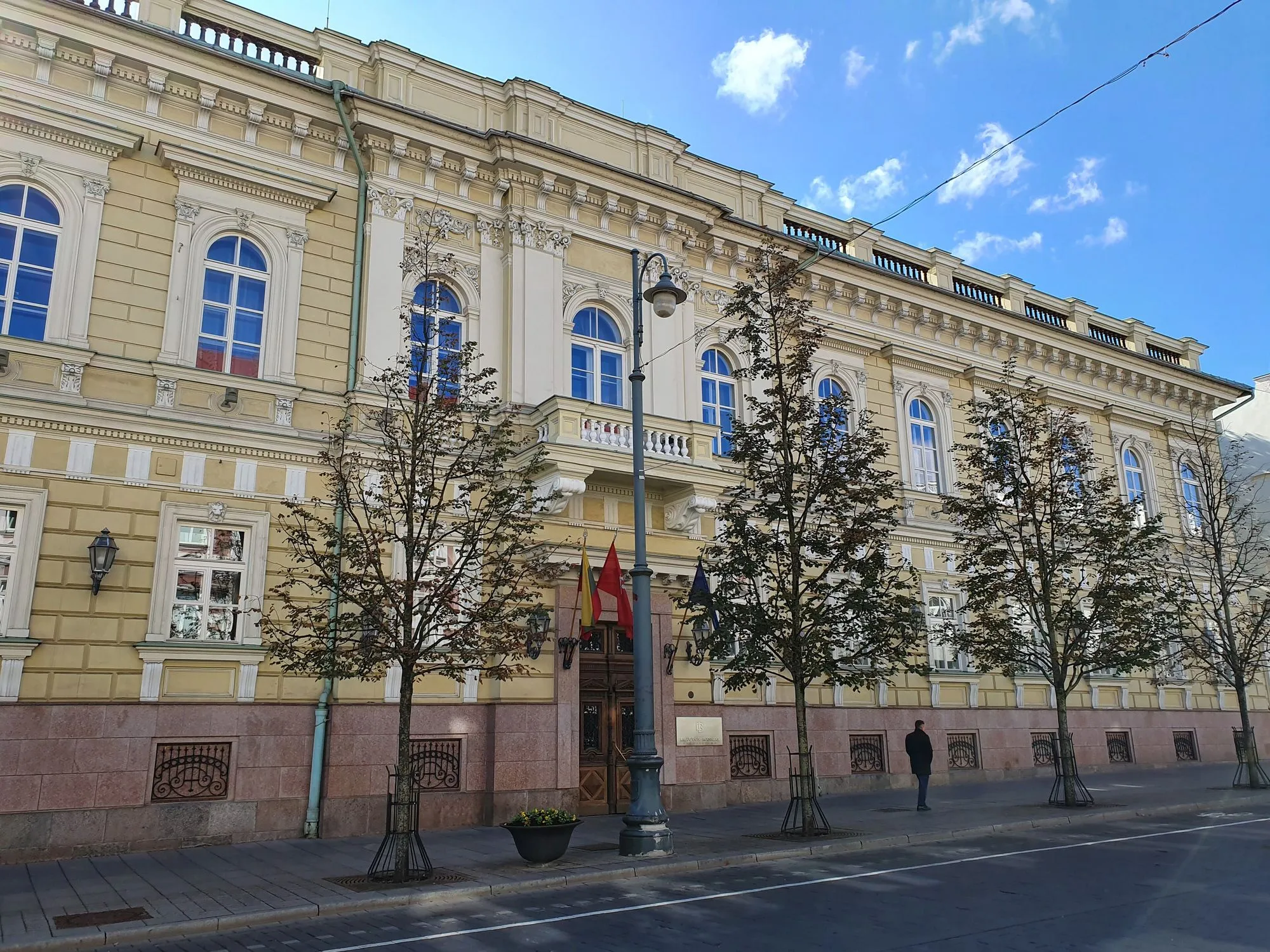 Bank of Lithuania, Gediminas Avenue. Photo: Pofka, Wikimedia Commons, CC BY-SA 4.0.
ATMs and Avoiding Currency Conversion Scams
ATMs are easy to find around Cathedral Square, Gedimino prospektas, Didžioji street, shopping centres and transport hubs.
Which ATMs to use
Withdraw cash from machines run by banks:
- Swedbank
- SEB Bankas
- Luminor
- Šiaulių bankas
The Dynamic Currency Conversion (DCC) trap
With a card from a non-euro country, the ATM or card terminal may ask:
“Would you like to be charged in your home currency or in EUR?”
Always choose EUR (“Without Conversion” or “Charge in EUR”):
- If you choose your home currency, the machine applies Dynamic Currency Conversion (DCC) at its own exchange rate, which is worse than your bank’s.
- If you choose EUR, your home bank does the conversion at its usual rate.
- Avoid Euronet ATMs: Standalone yellow-and-blue Euronet kiosks in tourist areas tend to push DCC screens and charge higher fees. Stick to bank machines.
Tipping Etiquette in Lithuania
Tipping (arbatpinigiai, literally “tea money”) is customary in Lithuania for good service, though it is never legally mandatory:
- Sit-down restaurants: Leaving a tip of 5% to 10% of the total bill is standard practice when table service is attentive and friendly.
- Paying tips by card: Many modern restaurant card terminals in Vilnius offer an interactive screen prompt where you can select 5%, 10%, 15%, or a custom amount, or simply choose “Skip / No Tip” before tapping your card. If the terminal does not support digital tips, leaving cash coins on the table or bill folder is welcomed.
- Cafes and bars: In coffee shops and craft beer pubs where you order at the counter, it is common to round up the purchase to the nearest whole euro or drop small coins into the counter tip jar.
- Taxis and rideshares: Rounding up the fare or adding a €1.00 to €2.00 tip through the Bolt app for a clean car and polite driver is standard.
- Cloakrooms and porters: Large theatres and concert halls often provide attended cloakrooms (rūbinė); leaving a €1.00 coin per coat is courteous.
Sight Prices
Adult admission at the main Vilnius sights and one regional day trip:
| Landmark / Attraction | Adult Rate | Concession | Key Details |
|---|---|---|---|
| Palace of the Grand Dukes | €17.00 | €8.50 | All 4 routes (valdovurumai.lt) |
| Gediminas Castle Tower | €8.00 | €4.00 | Roof deck included (lnm.lt) |
| Castle Hill Funicular | €3.00 return | — | €2.00 one way |
| Museum of Occupations (KGB) | €6.00 | €3.00 | Prison & cells (genocid.lt) |
| MO Modern Art Museum | €11.00 | €6.00 | Closed Tuesdays (mo.lt) |
| Vilnius Cathedral Bell Tower | €6.00 | €4.00 | Panorama view (bpmuziejus.lt) |
| Vilnius Cathedral Crypts | €6–€12 | Guided underground tour (bpmuziejus.lt) | |
| Trakai Island Castle | €14.00 | €7.00 | April to September rate (€12 and €6 from October to March) |
| Public transport, 60-minute ticket | €1.25 | €0.63 | judu.lt |
| Public transport, 30-minute ticket | €1.00 | €0.50 | judu.lt |
The Vilnius Pass
The Vilnius Pass covers entry to museums and attractions across the city for a fixed time from the first scan. It costs €39.00 for 24 hours, €53.00 for 48 hours and €64.00 for 72 hours, and is sold at govilnius.lt or in the Vilnius Pass app. Our sight pages say what it covers at each place: it includes Gediminas Tower and the KGB Museum, and takes €6 off an adult ticket at the MO Museum. It pays for itself only if you visit several paid sights in the same day or two.
Everyday Costs
- Plate of two large pork cepelinai dumplings: €7.00 to €9.50
- Bolt ride across central Vilnius: €4.00 to €7.00
Related Planning Guides
See also where to eat in Vilnius, the craft beer and bars guide, public transport fares, where to stay and the Vilnius city guide.
Common questions
What currency is used in Vilnius, Lithuania?
Lithuania uses the Euro (€), which was adopted as the official national currency on 1 January 2015, replacing the former Lithuanian litas (LTL). Lithuanian euro coins feature the Vytis—the historic armoured knight on horseback with a sword and shield—on their national reverse.
Can you pay by card everywhere in Vilnius?
Almost everywhere. Contactless Visa, Mastercard, Apple Pay and Google Pay are accepted in shops, restaurants, pubs, market stalls, taxis and on city buses and trolleybuses. Keep a few euro coins for church donation boxes and public toilets.
How much should you tip in Vilnius restaurants?
Tipping is not legally mandatory, but leaving 5% to 10% for good table service at sit-down restaurants is customary and appreciated. In cafes, bars, and casual bistros, rounding up the bill or dropping small change into the tip jar is common practice.
Which ATMs should you use in Vilnius?
Use machines run by banks such as Swedbank, SEB, Luminor or Šiaulių bankas. Always choose the 'Without Conversion' (or 'Debit in EUR') option, because Dynamic Currency Conversion (DCC) applies a poor exchange rate. Avoid freestanding Euronet ATMs.