In this guide
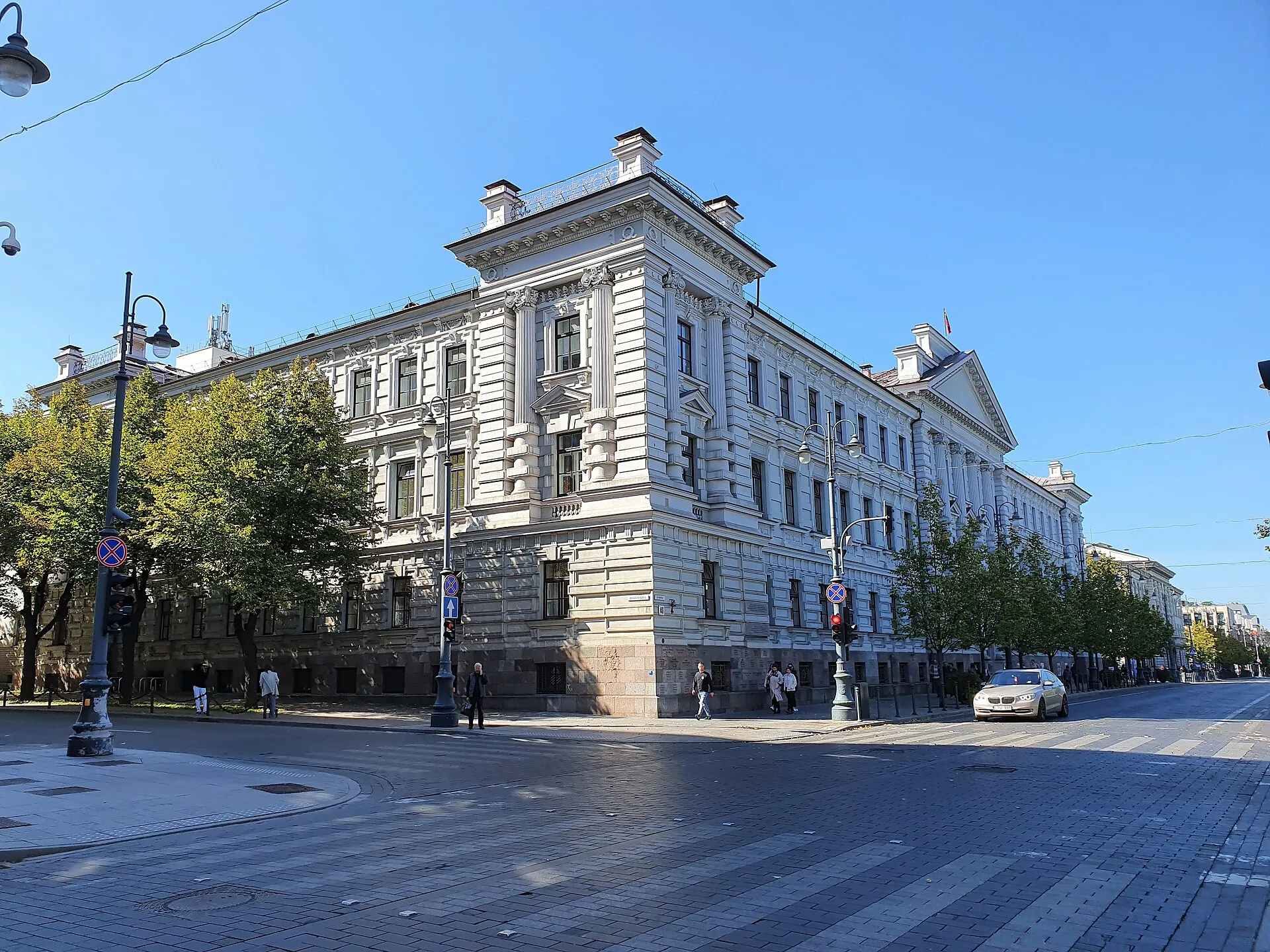
💡 The Short Version: The Museum of Occupations and Freedom Fights (Okupacijų ir laisvės kovų muziejus)—known colloquially as the KGB Museum—occupies the stone building at Aukų g. 2A that served as the Lithuanian headquarters of the Soviet secret police from 1940 to 1991. Adult admission is €6.00 and concession tickets cost €3.00 (olkm.lt). The museum is open Wednesday to Saturday 10:00 to 18:00 and Sunday 10:00 to 17:00, and is strictly closed on Mondays and Tuesdays. The authentic basement prison cells and execution chamber remain preserved as they were abandoned during the collapse of the Soviet Union. Or book a tour: Vilnius: The Way of Freedom: Behind the Walls of the KGBad (from €29, 4.8 stars from 226 reviews) is a guided walk through Soviet-era Vilnius that includes a visit to the KGB Museum.
⚠️ Closed Mondays and Tuesdays. The museum does not open on Mondays or Tuesdays under any circumstances. Sunday hours finish an hour earlier at 17:00 (last entry 16:30). If you are visiting Vilnius on a long weekend arriving Friday or Saturday, prioritise the KGB Museum for Saturday or Sunday afternoon.
Ticket prices and concessions
Tickets are purchased at the ground-floor reception desk just inside the main entrance on Aukų Street, just off Gedimino Avenue. Advance online reservations are not required for individual visitors, though queues can form during summer mornings.
| Ticket type | Price | Details |
|---|---|---|
| Adult | €6.00 | Full admission to all permanent exhibitions and basement prison |
| Concession (schoolchildren, students, pensioners) | €3.00 | Valid student ID, ISIC, ITIC, European Youth Card or Erasmus card |
| Family ticket (1 adult + 1–4 children under 12) | €9.00 | Family group discount |
| Family ticket (2 adults + 1–4 children under 12) | €15.00 | Two adults and children under 12 |
| Audio guide | €6.00 | Rental at the museum |
| Children under 7 | Free | Accompanied by an adult |
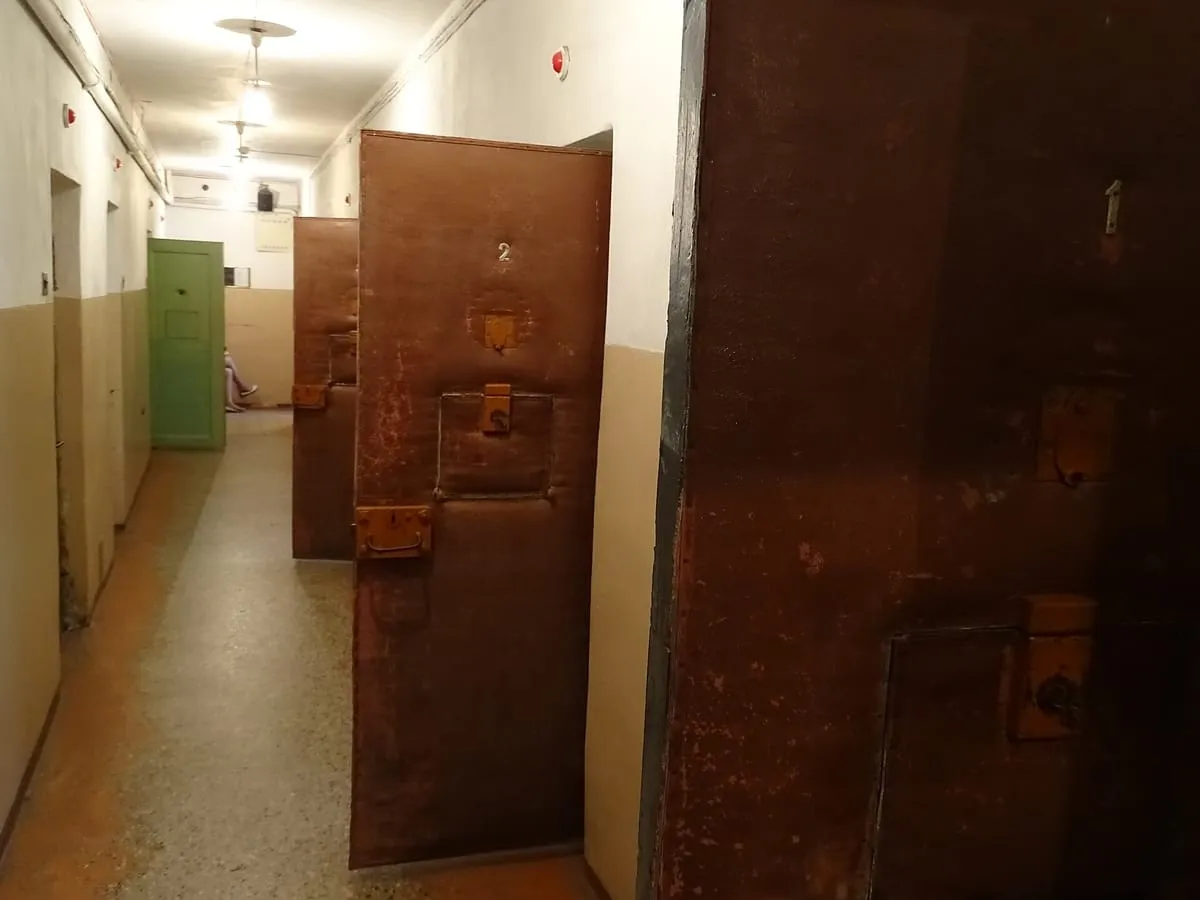
The basement corridor and cells of the former KGB prison. Photo: Adam Jones from Kelowna, BC, Canada, Wikimedia Commons, CC BY-SA 2.0.
Opening hours and visiting schedule
The museum is open five days a week and closed on Monday and Tuesday (olkm.lt):
| Day | Opening hours | Ticket desk closes |
|---|---|---|
| Monday | Closed | — |
| Tuesday | Closed | — |
| Wednesday | 10:00 to 18:00 | 17:30 |
| Thursday | 10:00 to 18:00 | 17:30 |
| Friday | 10:00 to 18:00 | 17:30 |
| Saturday | 10:00 to 18:00 | 17:30 |
| Sunday | 10:00 to 17:00 | 16:30 |
The museum is closed on statutory Lithuanian public holidays, with the specific exceptions of 16 February and 11 March. On the eve of national holidays, opening hours terminate one hour earlier. Allow approximately 2 to 2.5 hours to navigate all three levels thoroughly.
Historical background: from Tsarist court to KGB bastion
The neoclassical building was designed in 1899 by architect Mikhail Prozorov to house the provincial court of the Russian Empire. Situated facing Lukiškės Square (Lukiškių aikštė), its central urban location transformed it into the primary instrument of state control for successive occupying powers:
- The First Soviet Occupation (1940–1941): Following the annexation of Lithuania in June 1940, the Soviet NKVD seized the building, establishing internal detention cells in the cellars to organize the mass deportations of June 1941, when over 17,000 Lithuanian citizens were rounded up in cattle wagons and exiled to Siberia.
- The Nazi Occupation and the Gestapo (1941–1944): When German troops captured Vilnius in June 1941, the building became the headquarters of the Gestapo and the SD (Sicherheitsdienst). From these desks, Nazi commandants orchestrated the liquidation of the Vilnius Jewish Ghetto and the Paneriai massacres, where 70,000 Jews and 30,000 other citizens were murdered.
- The Second Soviet Occupation and the KGB (1944–1991): Following the Red Army’s return, the NKVD (later renamed the KGB in 1954) reoccupied the complex. For forty-seven years it was the KGB’s operational centre in Soviet Lithuania, used to interrogate dissidents, crush the armed partisan resistance, run electronic surveillance and enforce censorship.
The KGB hastily abandoned the building in August 1991 during the failed hardline coup in Moscow, leaving behind paper archives, listening devices, and the intact basement detention block.
Inside the museum: navigating the exhibitions
The museum is structured chronologically across three distinct levels:
Upper floors: The Partisan War and Resistance
The first and second floors present extensive documentary archives, photographs, and historical artefacts detailing 20th-century Lithuanian suffering and defiance:
- The Partisan War (1944–1953): Documents the fierce guerilla warfare fought by over 30,000 Lithuanian freedom fighters known as the Forest Brothers (Lietuvos partizanai). Dioramas recreate clandestine underground forest bunkers where partisans lived for years, publishing underground periodicals and resisting Soviet collectivisation.
- The Gulag and Mass Deportations: Charts the exile of over 130,000 Lithuanians to remote labour camps in the Arctic, Vorkuta, and Krasnoyarsk. Artifacts include handmade wooden rosaries carved from bread crusts, birch-bark letters, and quilted prison jackets.
- KGB Electronic Wiretapping: Preserves the authentic 1980s telephone eavesdropping room, filled with Soviet reel-to-reel magnetic tape recorders, listening transmitters disguised as wall sockets, and specialised cameras used to monitor foreign tourists in Vilnius hotels.
The Basement: The KGB Inner Prison (Izolyator)
A stone staircase leads down to the basement prison, the most sombre part of the museum. The cell block has fifty cells along narrow, cold concrete corridors:
- The Interrogation Cells: Bare rooms furnished with a single iron cot bolted to the stone floor, a wooden chair, and an unshaded light bulb burning continuously. Windows are shuttered with sheet metal to prevent prisoners from discerning day from night.
- The Solitary Confinement (Kartser): Tiny punishment cells where prisoners were stripped of outer clothing and subjected to sensory deprivation. One cell features a tiny circular metal perch in the centre, surrounded by ice-cold water filling the floor; exhausted prisoners who fell asleep would fall into the freezing pool.
- Padded Isolation Cell: Lined with thick quilted padding and heavy soundproof double doors, used to muffle the screams of tortured prisoners during interrogation.
- The Execution Chamber (Sušaudymo kamera): Located in the corner of the cellar, this is the room where over 1,000 condemned prisoners were executed between 1944 and the early 1960s. Prisoners were brought down the stairs, verified by a prosecutor, and shot in the back of the head. Today, a glass walkway covers the uneven floor where personal items excavated from mass graves—broken spectacles, combs, lead bullets, leather shoes, and crucifixes—are solemnly displayed.
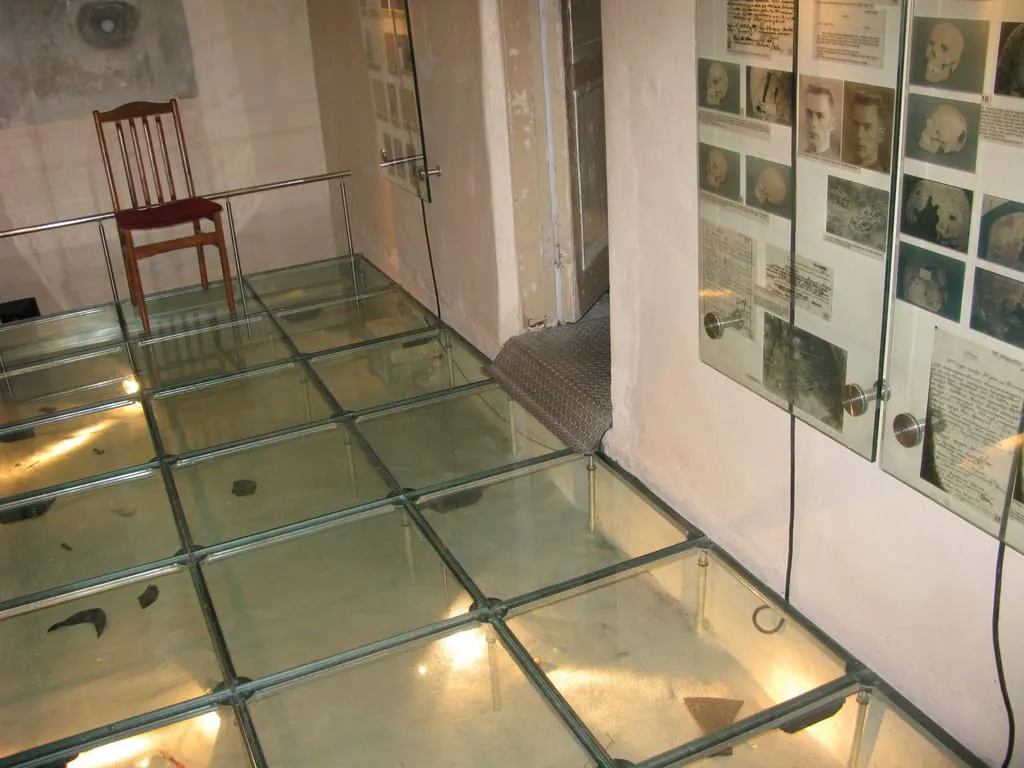
The execution chamber and memorial in the basement. Photo: Kristian Frisk, Wikimedia Commons, CC BY-SA 2.0.
Tours and guided walks
The museum holds a lot of documents, and a guide explains the stories behind the cells.
Vilnius: The Way of Freedom: Behind the Walls of the KGB
From €29 · 4.8 stars from 226 reviews · 2 hours · includes the KGB Museum
Vilnius: The Way of Freedom: Behind the Walls of the KGBad: a guided walk through Soviet-era Vilnius that includes a visit to the KGB Museum (the Museum of Occupations and Freedom Fights).
Vilnius: Inside the KGB Prison – Tour & Museum Entry
From €20 · 4.8 stars from 55 reviews · 75 minutes · museum entry included
Vilnius: Inside the KGB Prison – Tour & Museum Entryad: a guided visit to the former KGB prison covering Soviet repression, resistance and survival, with museum entry included.
Vilnius: Soviet Tour with KGB Museum and Atomic Bunker entry
From €55 · 4.7 stars from 13 reviews · 4.5 hours · KGB prison and nuclear bunker simulation
Vilnius: Soviet Tour with KGB Museum and Atomic Bunker entryad: a visit to the former KGB prison and the story of Soviet repression, finishing with an interactive nuclear bunker simulation.
Official ticket or tour: the prices side by side
| What you want | Official box office | On GetYourGuide |
|---|---|---|
| Standard self-guided museum admission | €6.00 adult / €3.00 concession | Free with the Vilnius Pass (from €39 for 24 hours) |
| Audio guide hire | €6.00 per device | — |
| Museum overview tour (foreign language) | €30.00 guide fee for a group of up to 15 + tickets | Soviet-era walking tour including the museum from €29 |
| Thematic tour (foreign language) | €20.00 guide fee for a group of up to 15 + tickets | Guided tour with ticket included from €20 |
| Combined Soviet history & bunker tour | Not offered by the museum | Soviet tour with KGB prison and bunker simulation from €55 |
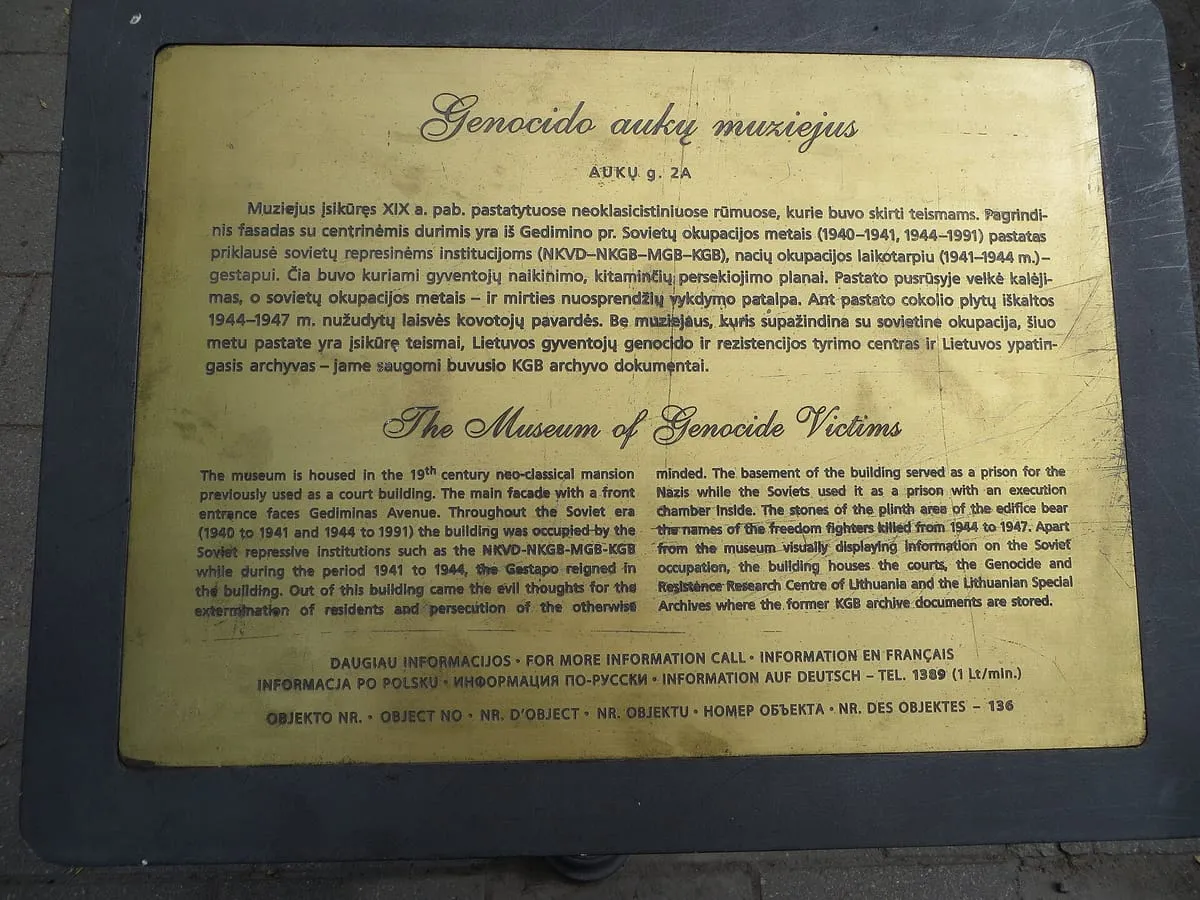
The museum plaque. Photo: Bernt Rostad from Oslo, Norway, Wikimedia Commons, CC BY 2.0.
The exterior memorial stones
Before entering or after departing the building, walk slowly along the exterior granite foundations on Gedimino Avenue and Aukų Street.
Carved directly into the rusticated limestone blocks are the names, birth years, and execution years of dozens of Lithuanian freedom fighters and partisan commanders who were interrogated and condemned within these walls. The names were engraved in the early 1990s as a permanent civic memorial. Fresh flowers, lit red vigil candles, and small wooden crosses are placed daily along the foundation ledges by local families and visiting veterans.
Directly across the street on Lukiškės Square stands the Monument to the Victims of Soviet Occupation, a black stone pyramid commemorating those deported to Siberian labour camps.
Practical visitor rules and advice
- Conduct: The museum is a memorial. Keep your voice low, especially in the basement cells and execution chamber.
- Cold: The basement prison is chilly and damp even in summer. Bring a jacket or fleece.
- Accessibility: The building is a protected historical monument. A ramp reaches the ground-floor ticket desk, but the upper floors and the basement prison are up and down steep, narrow stone staircases with no lift.
- Photography: Personal photography without flash or tripod is allowed. Filming requires prior permission from the museum (olkm.lt).
- Getting There: The museum is located at Aukų g. 2A, approximately 1.5 kilometres west of Cathedral Square along Gedimino Avenue. The nearest public transit stop is Lukiškės (served by bus lines 3G, 22, 40, 52, 73, and trolleybus lines 4, 10, 17).
What to see next
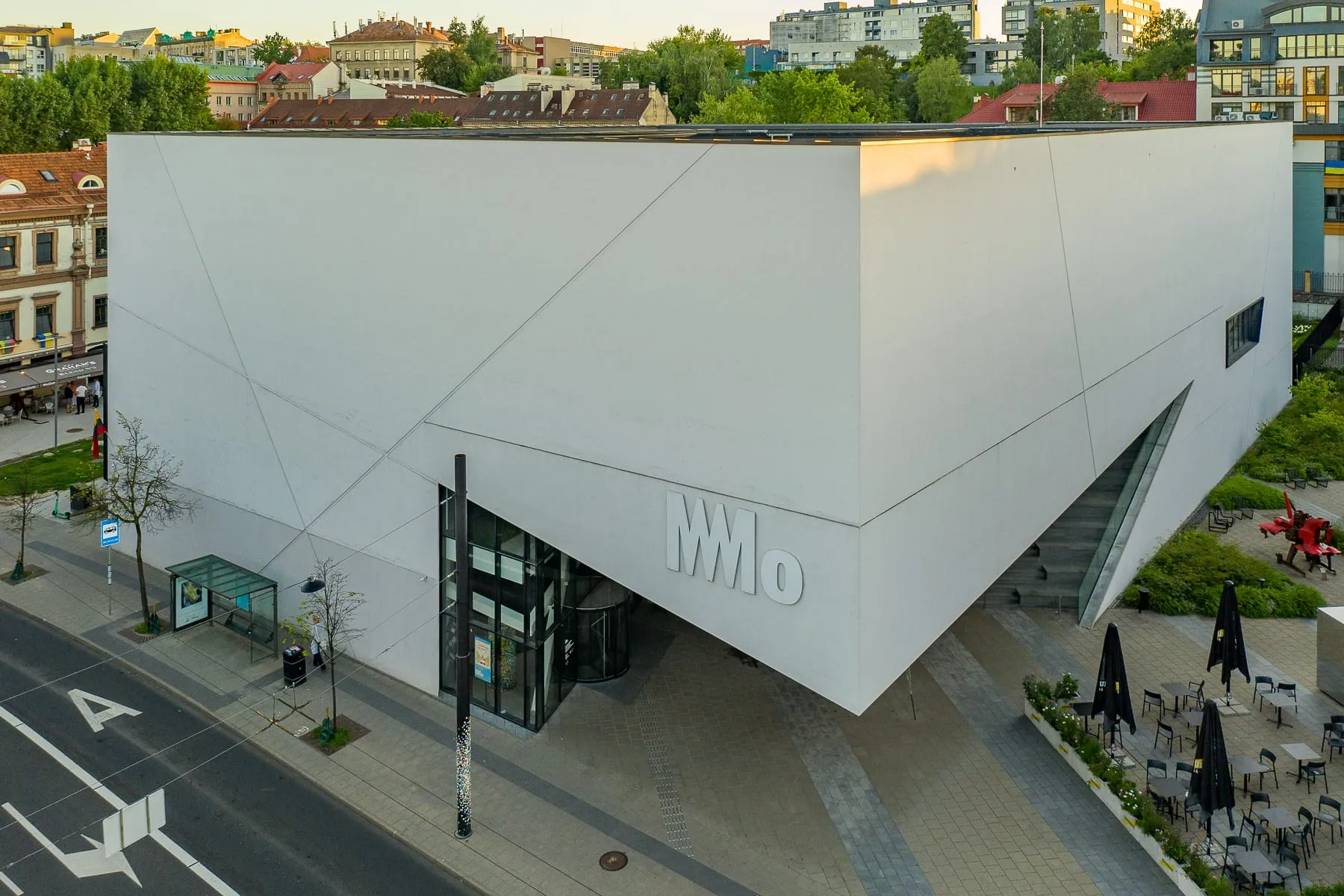
- MO Museum: A 12-minute walk south along Pylimo Street, for modern Lithuanian art.
- Vilnius Cathedral and Bell Tower: A 15-minute walk east along Gedimino Avenue to Cathedral Square.
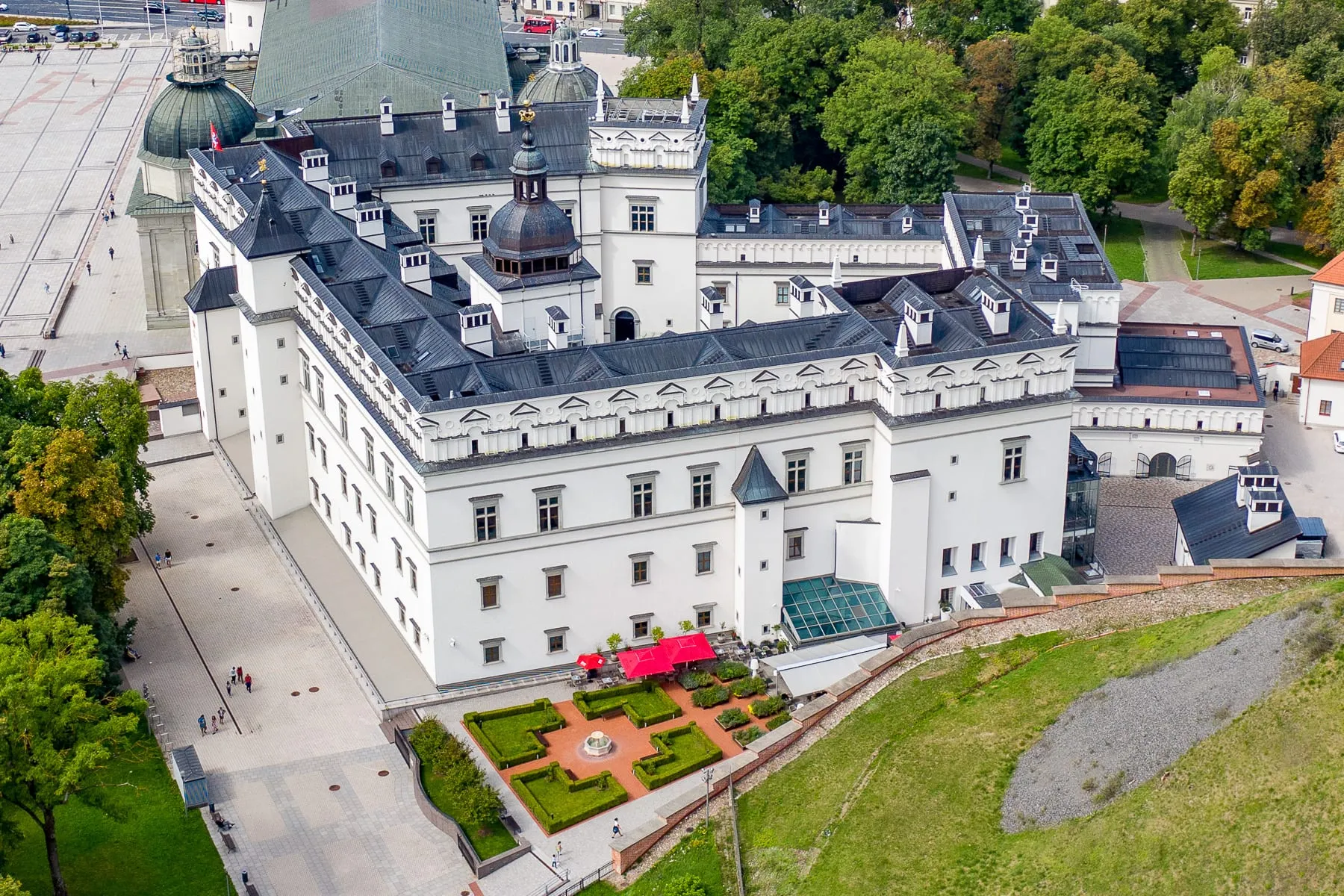
- Palace of the Grand Dukes: The rebuilt ducal palace beside the cathedral.
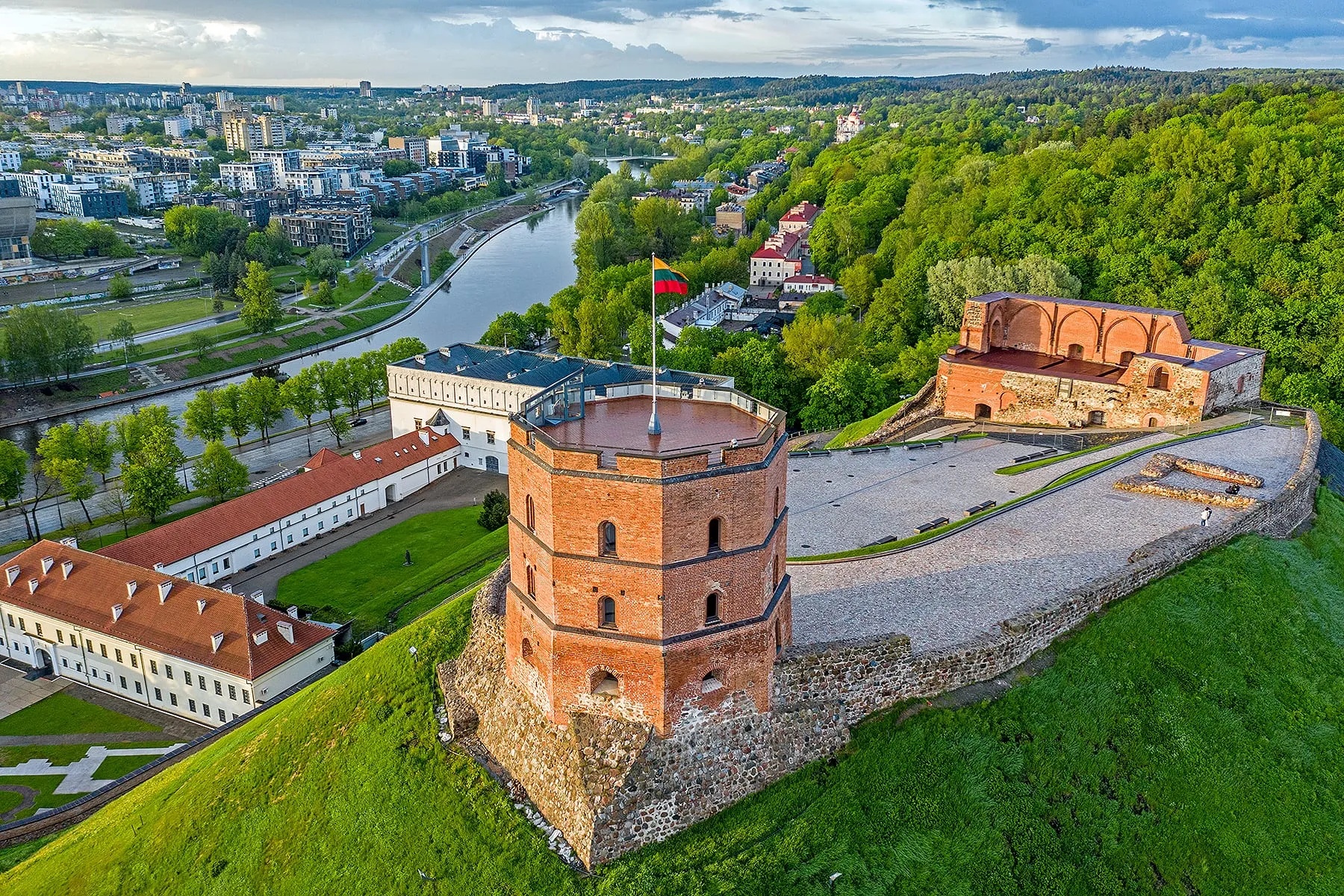
- Gediminas Tower: The hilltop viewing platform.
- Vilnius city guide: All our Vilnius guides.
Common questions
What is the official name of the KGB Museum in Vilnius?
Its official name is the Museum of Occupations and Freedom Fights (Okupacijų ir laisvės kovų muziejus). It is universally referred to as the KGB Museum because it occupies the authentic former Soviet KGB headquarters and inner basement prison.
How much are tickets for the KGB Museum in Vilnius?
Standard adult admission is €6.00 and concessions (pupils, students, and seniors) cost €3.00. Children under 7 and former political prisoners enter free. Audio guide rental costs €6.00.
What are the opening hours of the KGB Museum?
The museum is open Wednesday to Saturday from 10:00 to 18:00 and Sunday from 10:00 to 17:00. It is closed on Mondays and Tuesdays. Last entry is 30 minutes before closing.
Can you see the authentic KGB prison cells?
Yes. The basement inner prison (izolyator) remains almost exactly as the KGB officers left it in August 1991, including interrogation cells, solitary confinement cells, torture chambers, and the subterranean execution room.
Is the KGB Museum included in the Vilnius Pass?
Yes. Free admission to the Museum of Occupations and Freedom Fights is included with the official Vilnius Pass upon showing your QR code at reception.
Is the museum suitable for children?
Due to the grim reality of political persecution, torture, and executions depicted in the basement prison, the museum administration advises that visits may be distressing for children under 12.