In this guide
💡 The Short Version: Respect dress codes at religious sites: cover shoulders and knees at Hindu and Buddhist temples, remove footwear outside, and wear long sleeves and trousers at Sultan Mosque (or borrow free robes at the counter). At hawker centres, respect the choping custom: a packet of tissues on a table means it is taken. Always return your dirty trays and crockery to tray return stations after eating—it is legally enforced with fines. Stand on the left on escalators. Do not eat, drink, or sip water on MRT trains or buses (up to S$500 fine). Tipping is not customary, and outdoor public drinking is illegal between 22:30 and 07:00. Or book a tour: If you want an immersive guided walking tour explaining local multicultural etiquette, temple rituals, and hawker traditions, book a guided cultural quarters walking tourad.
⚠️ Returning hawker trays and cleaning up table litter is legally mandatory. Leaving used bowls, drink cups, chicken bones, or tissues on tables after finishing your meal is an offence under Environmental Public Health regulations. Enforcement officers issue written warnings for first offences and statutory composition fines of S$300 for subsequent violations.
Religious etiquette across faiths
Singapore is a multi-religious society where Buddhist, Taoist, Hindu, Muslim, and Christian places of worship often sit side by side on the same street. Respecting religious customs ensures a welcoming experience:
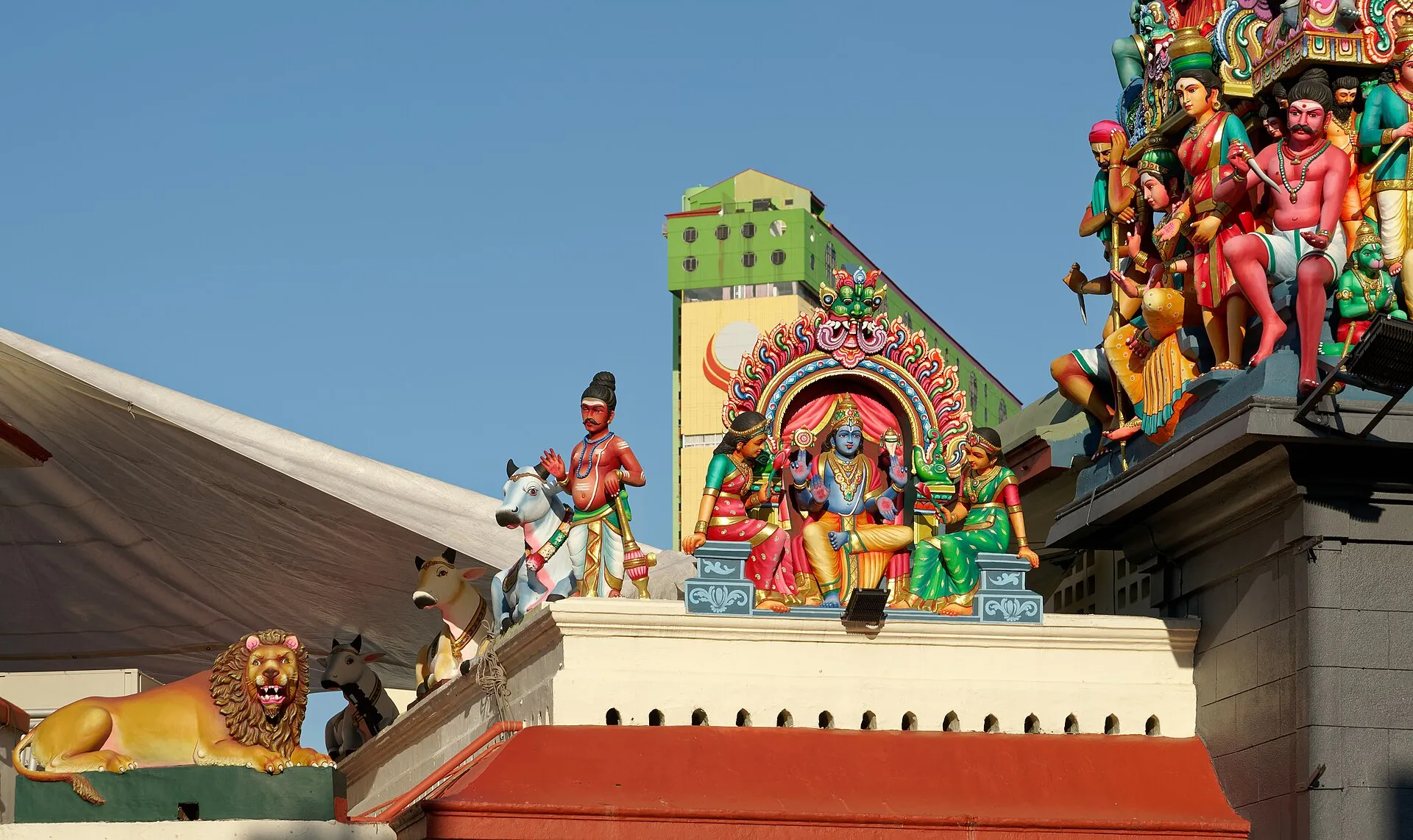
Hindu Temples (e.g. Sri Mariamman, Sri Veeramakaliamman)
- Footwear: Remove all shoes, sandals, and socks outside the temple gate and place them on the designated open wooden storage racks.
- Dress Code: Shoulders and knees must be completely covered. Tank tops, shorts, sleeveless shirts, and revealing garments are prohibited. Most temples provide complimentary wrap-around shawls and long cotton sarongs at the entrance.
- Temple Decorum: Wash your feet at the entrance tap if provided before stepping onto the temple floor. When walking through prayer halls, circumambulate shrines in a clockwise direction. Never point the soles of your feet towards the deities, priests, or other worshippers when seated on the floor; tuck your legs beneath you. Photography of the central inner sanctum (garbhagriha) is strictly prohibited.
Mosques (e.g. Sultan Mosque, Masjid Jamae)
- Dress Code: Modesty is strictly observed. Men must wear shirts with sleeves and long trousers extending below the knees. Women must cover their arms to the wrists and legs to the ankles; loose clothing is required. Sultan Mosque loans hooded robes free of charge at Gate 5 on a first-come basis.
- Footwear: Remove shoes before stepping onto carpeted or tiled entrance thresholds.
- Prayer Etiquette: Non-Muslim visitors are welcome during designated visiting hours (Sultan Mosque welcomes visitors Saturday to Thursday from 10:00 to 12:00 and 14:00 to 16:00, but is closed to non-Muslim tourists all day on Friday). Do not walk directly in front of anyone engaged in prayer. Maintain quiet voices and turn off mobile phone ringtones.
Buddhist and Taoist Temples (e.g. Buddha Tooth Relic, Thian Hock Keng)
- Dress Code: Modest attire with shoulders and knees covered. The Buddha Tooth Relic Temple prohibits bare backs, off-the-shoulder tops, mini-skirts, and shorts. Sarongs are provided at the entrance.
- Thresholds: When entering traditional Chinese temple halls, never step directly on the raised wooden door threshold (menkan); always step cleanly over it. In traditional Chinese belief, the threshold represents the neck of the house or deity, and stepping on it is considered disrespectful.
- Incense and Photography: Stand clear of devotees holding lit joss sticks. Flash photography is prohibited inside museum galleries and prayer chambers.
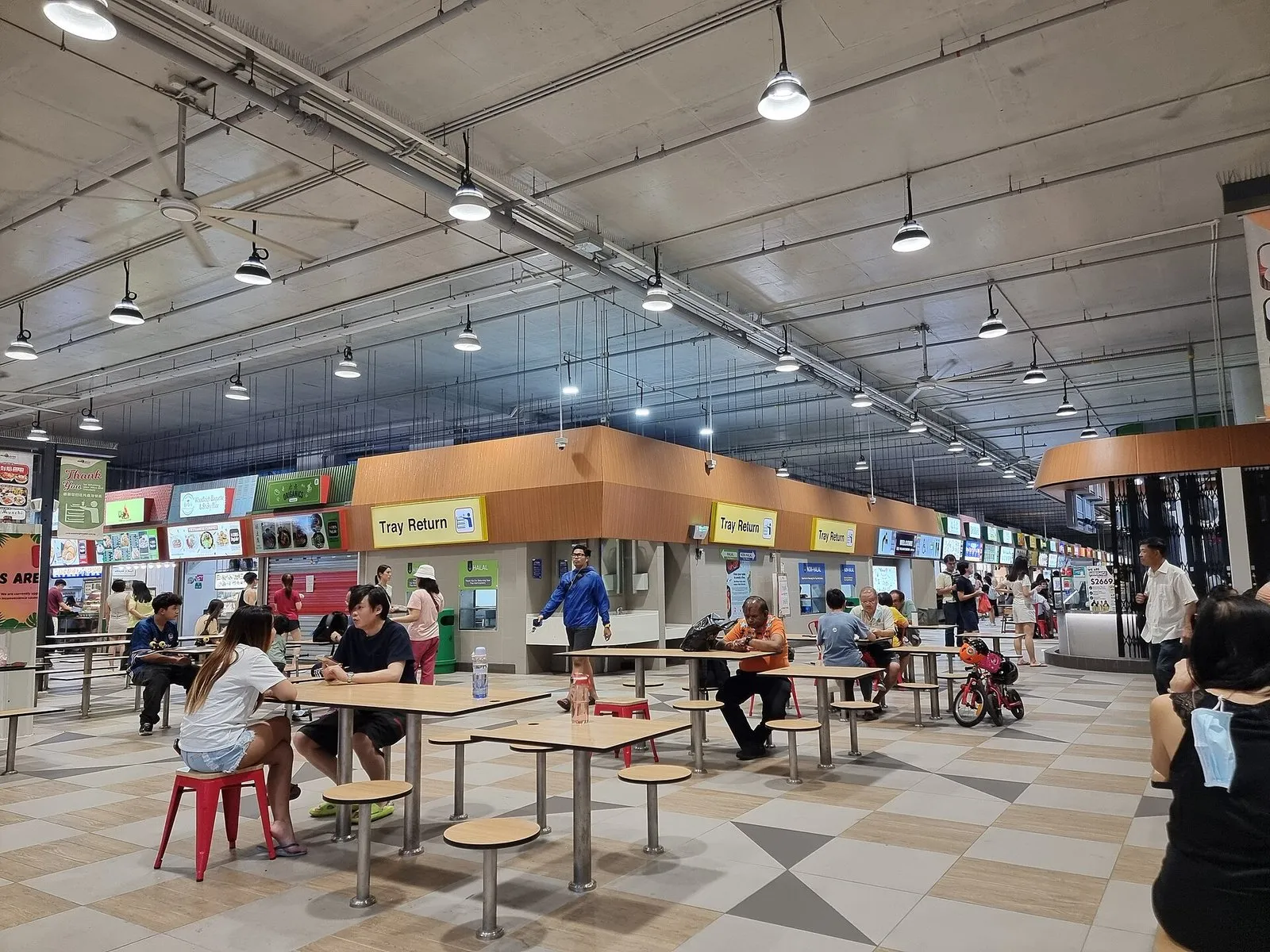
The dining hall of a hawker centre. Photo: Kbseah, Wikimedia Commons, CC BY-SA 4.0.
Dining and hawker centre etiquette
Hawker centres are the beating heart of Singapore’s social life, inscribed on the UNESCO Representative List of the Intangible Cultural Heritage of Humanity. Understanding local dining customs avoids confusion:
The “Choping” tradition
At crowded hawker centres during peak lunch (12:00–13:30) and dinner (18:30–20:00) hours, seats are scarce. Singaporeans have developed a distinct social convention known as choping (derived from the Malay word chop, meaning to stamp or mark):
- Diners reserve a table or specific chair before ordering food by placing an inexpensive personal item on the table: a small packet of tissue paper, an umbrella, a lanyard pass, or a water bottle.
- The Rule: If you see a table with a tissue pack resting on it, that table is claimed. Never sit down or move the item aside.
- Adopt the custom yourself: purchase a pocket tissue pack at a convenience store or from roaming elderly tissue sellers (S$1 for 3 packs) and “chope” your seat before joining food queues.
Mandatory tray and crockery return
Under regulations enforced by the National Environment Agency (NEA) and Singapore Food Agency (SFA), all diners in hawker centres, food courts, and coffee shops must clear their tables after dining:
- Return dirty plates, bowls, cups, cutlery, and trays to the nearest designated Tray and Crockery Return Station.
- Clear all table litter, including used paper napkins, drink cans, fruit peels, and bones.
- Halal vs Non-Halal Racks: Look closely at the return racks. Most stations provide separate shelves: a Halal rack (usually marked with green signage) for crockery from Muslim-owned stalls, and a Non-Halal rack for other crockery. Always sort your trays accordingly out of respect for Islamic dietary guidelines.
Public transport and escalator manners
Singaporeans value orderly public movement in high-density urban transit nodes:
- Escalator Etiquette: Always stand on the left side of escalators. The right side is strictly reserved for passengers walking or rushing to catch trains. Never stand in the middle or block the right lane with luggage.
- MRT Platform Boarding: Stand behind the yellow painted safety lines. Wait on either side of the platform screen doors, leaving the central doorway completely clear so arriving passengers can alight before you step aboard.
- Priority Seating: Each MRT carriage features clearly marked Reserved Seats near the doors, designated for elderly commuters, pregnant women, parents with infants, or people with mobility limitations. Surrender your seat immediately if someone in need boards.
- Strict Prohibition of Food and Drink: Consuming any food, snacks, candy, or beverages (even taking a sip of plain water from a personal bottle) inside MRT stations or on public buses is strictly forbidden under the Rapid Transit Systems Act. Violators face composition fines of up to S$500.
- No Durians: Fresh or unsealed durian fruit is strictly prohibited on MRT trains and public buses due to its pervasive, lingering aroma.
- Audio Etiquette: Commuters should wear headphones when listening to music, watching videos, or taking mobile calls. Playing speaker audio aloud is prohibited under bus and train bylaws.
Social and interpersonal norms
- Using Two Hands: When handing over or receiving items—such as business cards, credit cards, payment receipts, or gifts—use both hands with fingers pointing forward. This gesture conveys sincerity and respect across Chinese, Malay, and Indian cultures.
- Removing Shoes at Home: If invited to a private Singaporean residence, always remove your footwear outside the front door or in the foyer. Host slippers may be offered.
- Addressing Elders: It is customary and endearing in everyday casual interactions to address middle-aged or elderly taxi drivers, hawkers, and shopkeepers respectfully as “Uncle” or “Auntie” rather than “Sir” or “Madam”.
- Pointing: Avoid pointing with an outstretched index finger at people or sacred statues. In Malay culture, pointing is traditionally done using the thumb of the right hand with fingers curled inward.
- Personal Space and Voice Volume: Singaporeans value quiet public spaces. Keep your voice at a moderate level in MRT carriages, restaurants, and hotel lobbies.
Tipping and service charges
- Restaurants and Bars: Tipping is not customary in Singapore. Mid-range and fine dining establishments automatically levy a mandatory 10 per cent service charge on the bill, which is distributed among staff. You do not need to calculate or leave a tip.
- Hawker Centres and Taxis: Never tip at hawker stalls or in metered taxis; stallholders and drivers will routinely return extra change.
- Hotels: Bellhops who assist with heavy luggage may be handed a discretionary S$2 to S$5 note, but tipping is not mandatory. Tipping airport staff is strictly forbidden by Changi Airport Group.
Public conduct laws
- Public Drinking Restrictions: Under the Liquor Control Act, drinking alcohol in public outdoor spaces (such as parks, beaches, sidewalks, and residential void decks) is strictly illegal between 22:30 and 07:00 daily. In Little India and Geylang, public drinking is banned continuously all weekend.
- Vaping and Electronic Cigarettes: Totally banned. Carrying or possessing a vape pod results in confiscation and fines of up to S$2,000.
- Smoking Restrictions: Smoking is prohibited inside all enclosed public buildings, within 5 metres of bus shelters and building entrances, on public beaches, in all national parks, and along the entire pedestrian precinct of Orchard Road. Smoke only inside yellow-painted designated smoking boxes.
- For complete statutory details, consult our comprehensive guide to Singapore rules and fines.
Further travel reading
For detailed dress rules and hours for specific cultural landmarks, see our neighbourhood guides to Chinatown, Little India, and Kampong Glam. For advice on paying with cards and taxes, consult money in Singapore. For transit logistics, review the public transport guide.
Common questions
What should you wear when visiting temples and mosques in Singapore?
At Hindu and Buddhist temples, shoulders and knees must be covered, and shoes must be removed before entering Hindu compounds. At Sultan Mosque and other Islamic mosques, men must wear sleeved tops and long trousers, while women must wear loose long-sleeved garments down to the ankles. Modest robes and wraps are provided free of charge at major entrance counters.
What is the tissue packet choping custom in hawker centres?
Choping is the universally recognised Singaporean custom of reserving a table at crowded hawker centres by placing an inexpensive personal item—most commonly a small packet of tissue paper, an umbrella, or a water bottle—on the table while you queue to order food. Never sit at a table that has a tissue packet on it.
Is clearing your own tray legally required at hawker centres?
Yes. Under National Environment Agency (NEA) regulations, diners at all hawker centres, food courts, and coffee shops must return their used trays, plates, bowls, cutlery, and litter (such as used tissues and bones) to designated tray return stations. Failing to clear your table can result in a written warning for first offenders and a S$300 composition fine for repeat violations.
Do you tip taxi drivers, waiters, or hotel staff in Singapore?
No. Tipping is not part of Singaporean culture and is never expected. Full-service restaurants and hotels already include a mandatory 10 per cent service charge on the bill. At hawker centres, food courts, and in metered taxis, tipping is not customary.
What are the escalator and public transit rules in Singapore?
On escalators throughout MRT stations and shopping malls, always stand on the left side to allow passengers walking or hurrying to pass on the right. Inside MRT stations and buses, eating, drinking (including water), smoking, and playing loud audio without headphones are strictly prohibited.