In this guide
💡 The Short Version: Escadaria Selarón is free and open 24/7, though arriving early is the best way to photograph the 215 tiled steps without crowds. Ride the historic yellow Bonde de Santa Teresa tram (BRL 20 from Estação Carioca, crossing the top of the Arcos da Lapa aqueduct) up the hill, visit the free viewpoint at Parque das Ruínas, browse Largo dos Guimarães, and take an Uber out after dark. For guided context across Centro, Lapa and Santa Teresa, see the Rio de Janeiro: Lapa and Santa Teresaad tour (from BRL 435, GetYourGuide).
Escadaria Selarón: timing and what to look for
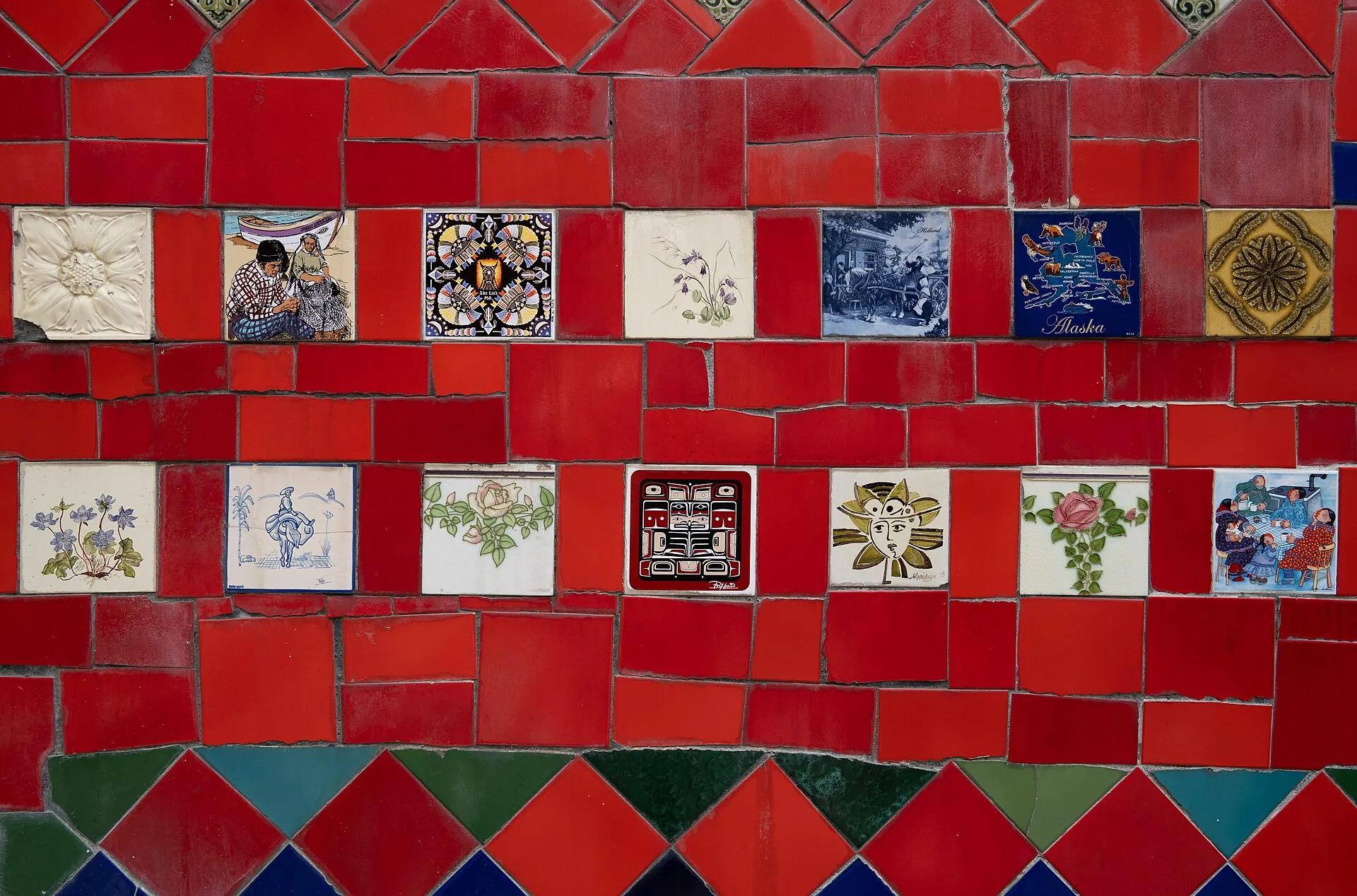
Linking Rua Joaquim Silva in Lapa with Rua Pinto Martins in Santa Teresa, Escadaria Selarón is a public staircase of 215 steps covered in ceramic tiles from many countries. Chilean-born artist Jorge Selarón lived beside the steps and began tiling the crumbling stairs in 1990, adding tiles sent by travellers until his death in 2013.
- Arrival time: Tour groups arrive through the morning, so go early for the staircase nearly empty.
- Walk past the bottom third: Most people stop in the first steps. Climb higher toward Santa Teresa to spot hand-painted tiles, football club crests and international souvenirs tucked into the side walls.
- Safety at the bottom: Keep phones gripped securely when framing photos and avoid lingering on empty side alleys after sunset.
Riding the Bonde de Santa Teresa
Opened in 1877 as a horse-drawn line and electrified in 1896, the open-sided yellow Bonde de Santa Teresa is one of the oldest operating streetcar systems in South America. Its signature moment comes soon after departure, when the tram rolls directly across the top of the 18th-century Arcos da Lapa aqueduct.
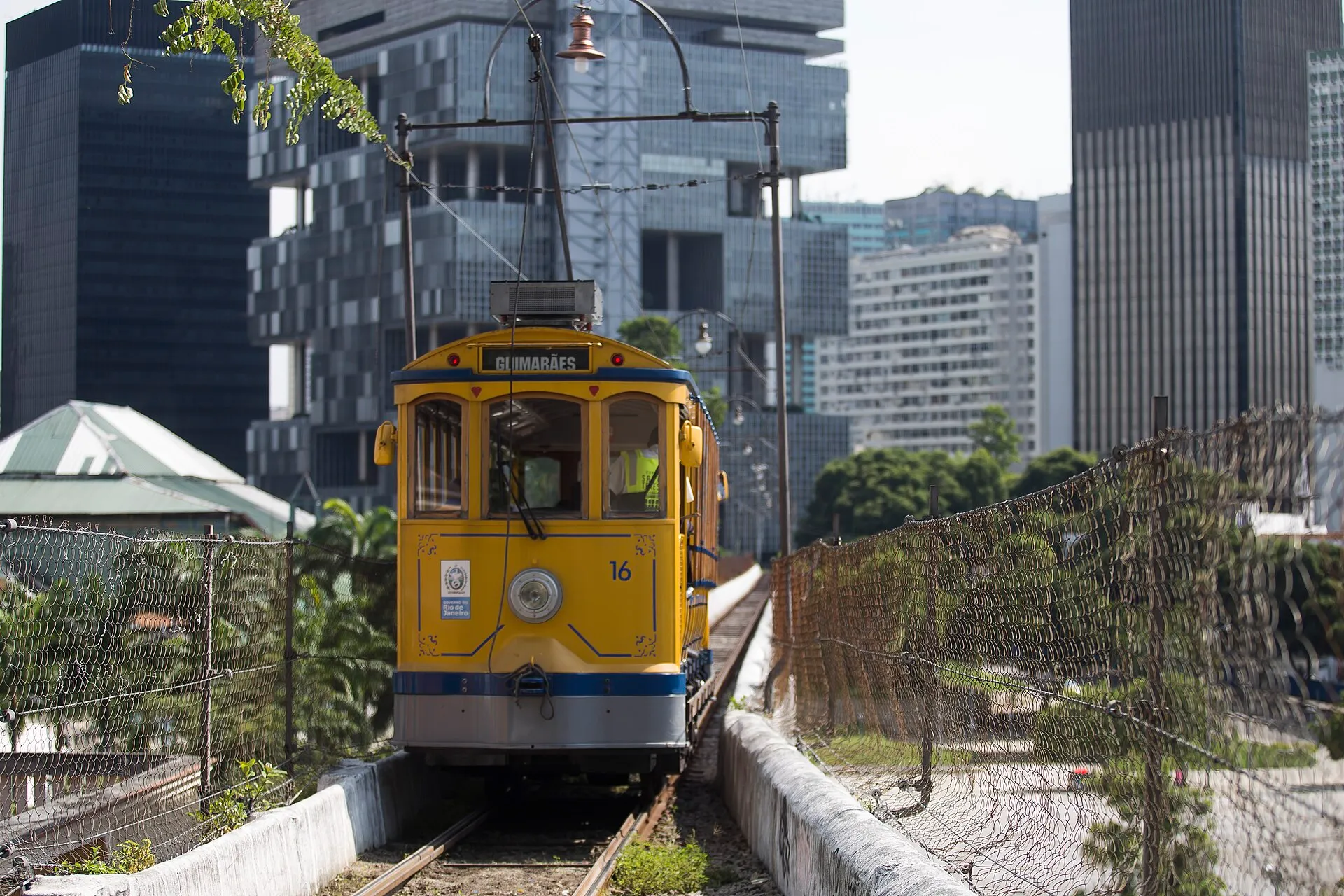
Yellow Bonde de Santa Teresa tram crossing the Lapa Aqueduct. Photo: MTur Destinos, Wikimedia Commons, Public domain.
| Detail | What to know |
|---|---|
| Departure station | Estação Carioca, Rua Lélio Gama (behind Petrobras headquarters, 4 minutes on foot from MetrôRio Carioca station) |
| Fare | BRL 20 for tourists, cash or card, sold mainly at Estação Carioca; covers the return |
| Departures | The Silvestre branch, reopened in June 2026 after almost 20 years, leaves Estação Carioca on weekdays at 10:00, 11:00, 14:00 and 15:00 |
| Key stops | Curvelo (for Parque das Ruínas), Largo dos Guimarães (main village hub) |
- Queues: Go early on a weekday, or take an Uber up to Largo dos Guimarães and ride the Bonde downhill instead.
Parque das Ruínas and Museu Chácara do Céu
Get off the Bonde at Largo do Curvelo and walk uphill along Rua Murtinho Nobre to two neighbouring cultural stops.
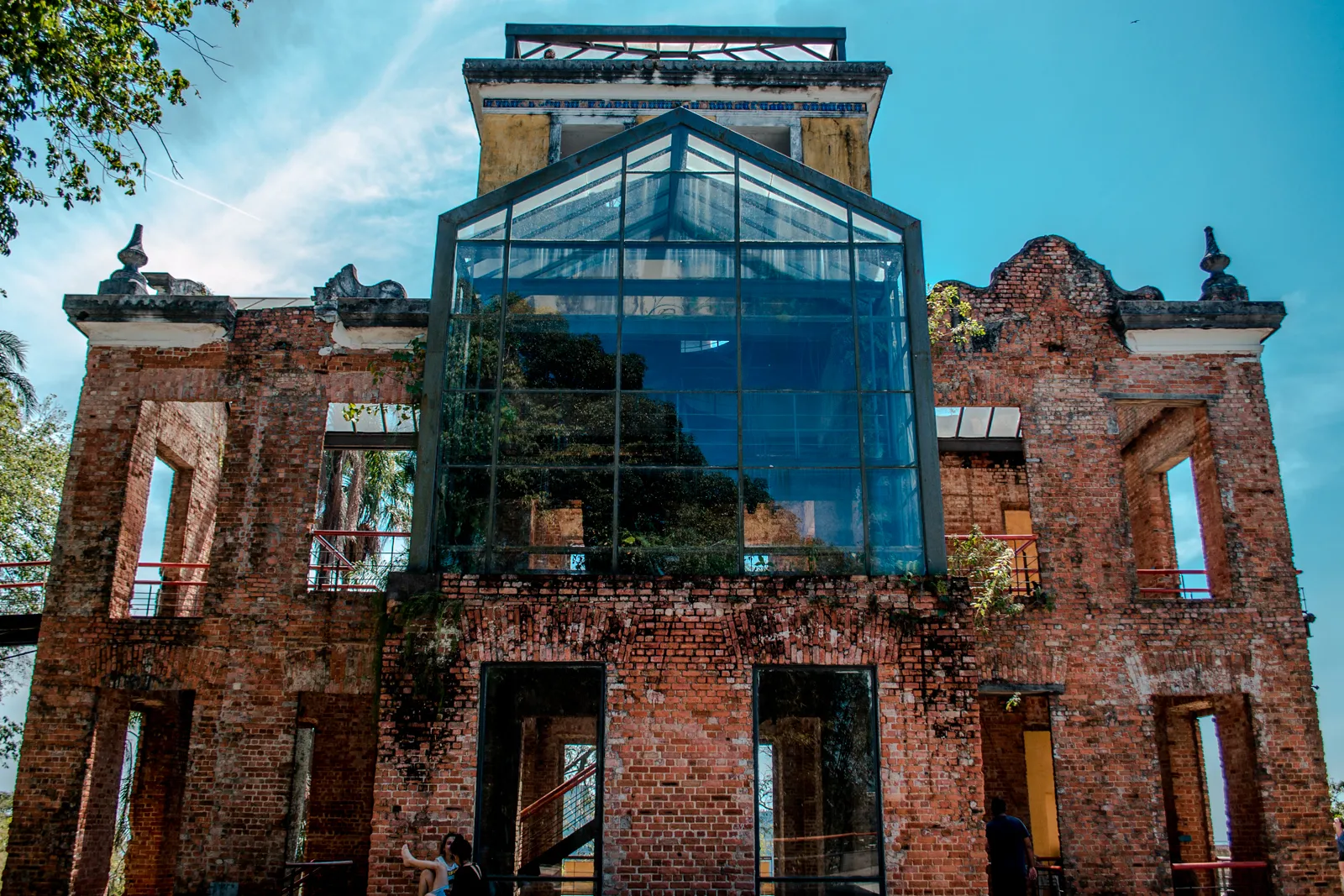
Brick walls and steel observation walkways at Parque das Ruínas. Photo: paulisson miura from Cuiabá, Brasil, Wikimedia Commons, CC BY 2.0.
Parque das Ruínas
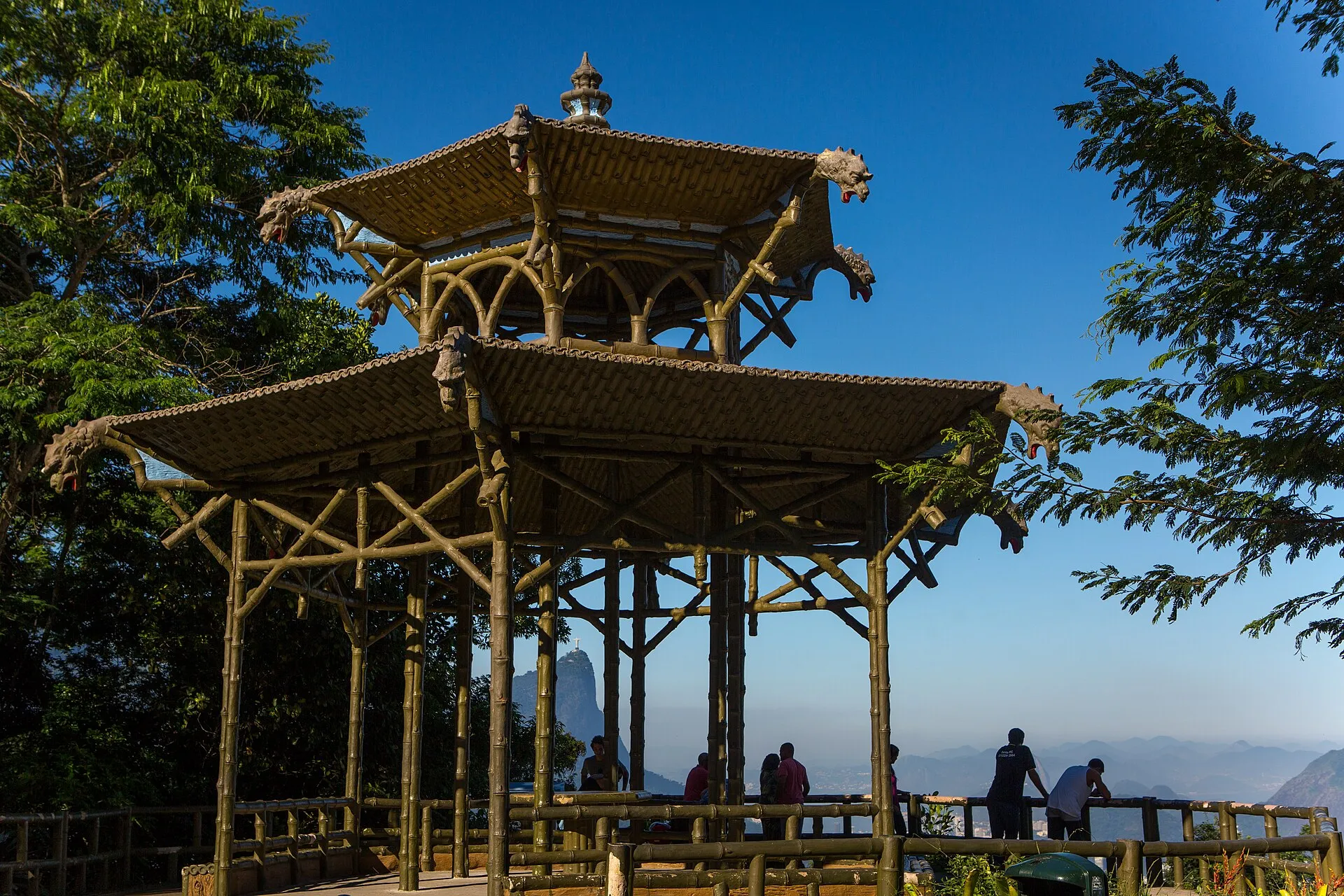
Once the mansion of the patron Laurinda Santos Lobo, who hosted Rio’s artists and modernist writers during the 1920s, the gutted brick shell was stabilised in the 1990s with steel staircases and viewing platforms. Entry is free. Climb to the rooftop deck for a panorama across Centro, Guanabara Bay, Sugarloaf Mountain and the Lapa Arches below.
Museu Chácara do Céu
Next door at Rua Murtinho Nobre 93 sits the modernist home of the collector Raymundo Ottoni de Castro Maya, displaying works by Candido Portinari, Di Cavalcanti, Henri Matisse and Joan Miró alongside 19th-century watercolours of old Rio by Jean-Baptiste Debret.
Largo dos Guimarães: studios, cafes and lunch
Continue west along cobbled Rua Almirante Alexandrino to Largo dos Guimarães, the commercial heart of Santa Teresa. Painted colonial townhouses line the tram tracks, housing independent ceramic workshops, printmakers, vintage bookshops and open-air restaurants.
- Studios and craft shops: Look for La Vereda (Brazilian regional ceramics, woodwork and jewellery from Minas Gerais and the Northeast) and small working ateliers along Rua Paschoal Carlos Magno.
- Lunch stops: Bar do Mineiro (Rua Paschoal Carlos Magno 99) is a neighbourhood fixture for feijoada (black bean and pork stew) and pastéis de feijão (crispy bean pastries). Aprazível (Rua Aprazível 62, a short Uber ride higher up the hill) has tree-shaded terrace tables with bay views and contemporary Brazilian cooking. See where to eat in Rio de Janeiro for full restaurant picks across the city.
Arcos da Lapa and Lapa nightlife safety
At the foot of Santa Teresa stands Arcos da Lapa (Aqueduto da Carioca), 42 double-tiered whitewashed stone arches built in 1750 to carry water from the Carioca River into downtown Rio before being converted into a tram viaduct in 1896. Near the arches rises the conical concrete Catedral Metropolitana de São Sebastião (free entry), whose four tall stained-glass windows flood the nave with colour.
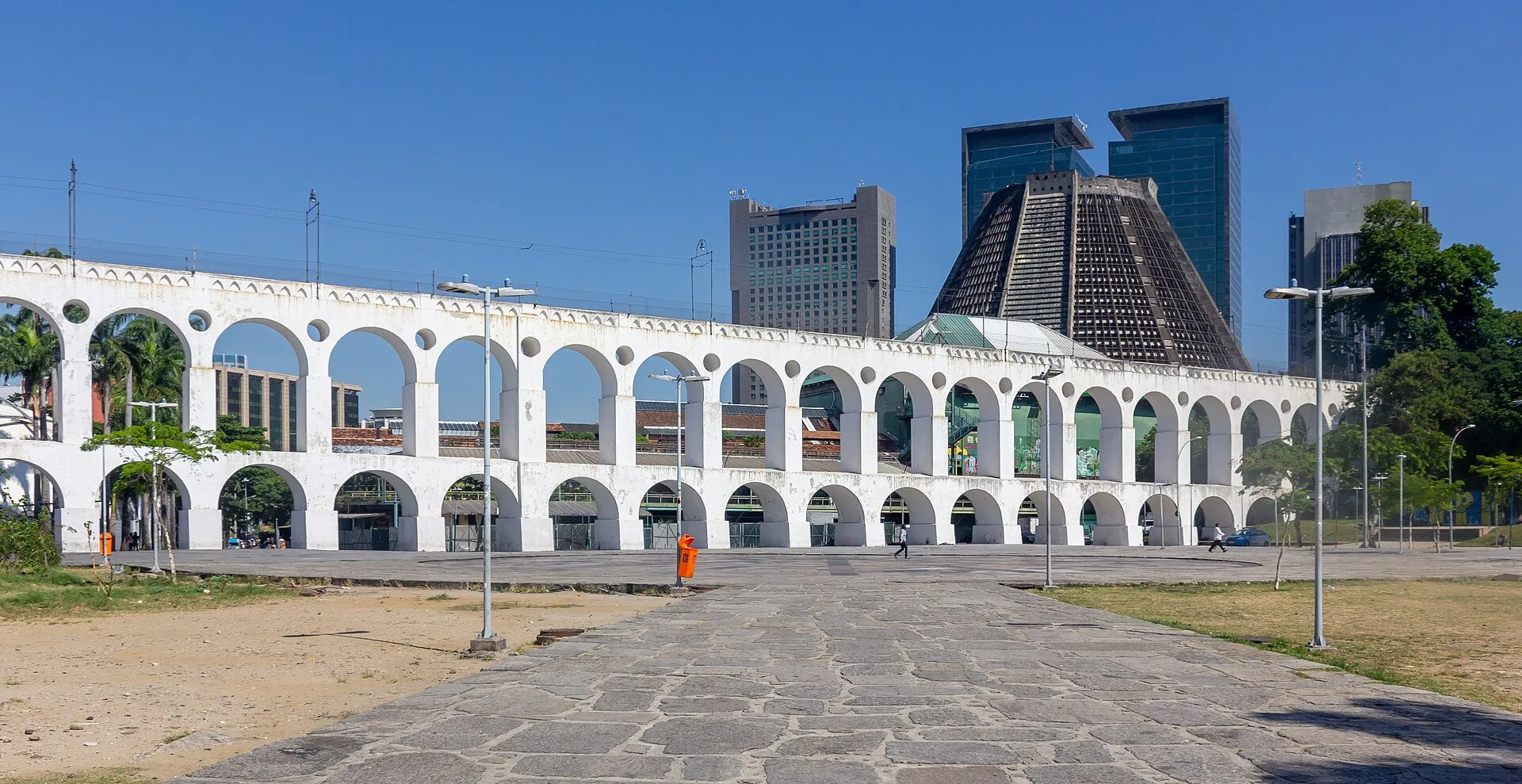
Arcos da Lapa aqueduct arches with the Metropolitan Cathedral rising behind. Photo: Photograph by Mike Peel ( www.mikepeel.net )., Wikimedia Commons, CC BY-SA 4.0.
At weekends, Lapa turns into Rio’s main samba and choro nightlife hub around Rua Mem de Sá, Avenida Gomes Freire and Rua do Lavradio. Live music venues such as Rio Scenarium (an antique-filled warehouse hosting live samba bands, open Wednesday to Saturday) and Carioca da Gema draw packed dancefloors; see Rio food tours and samba for live music nights and guided samba outings.
⚠️ Use door-to-door Uber in Lapa after dark. The UK Foreign Office names Lapa among the places in Rio where thefts and pickpocketing are most common. Take an Uber directly to your venue door and wait inside until your return ride pulls up outside (see is Rio de Janeiro safe?).
Fitting Santa Teresa into your itinerary
Santa Teresa pairs naturally with our step-by-step Centro and Santa Teresa walk or an afternoon at the Museum of Tomorrow and Porto Maravilha (a short VLT ride north of Estação Carioca). If you want a local guide for Lapa, the steps and Santa Teresa, the Rio de Janeiro: Lapa and Santa Teresaad tour runs for 6 hours from BRL 435 and has 4.8 stars from 9 reviews. For broader trip planning, see 3 days in Rio de Janeiro, 4 days in Rio de Janeiro and where to stay in Rio de Janeiro.
Common questions
Does it cost money to visit the Selarón Steps?
No. Escadaria Selarón is a public street staircase connecting Lapa and Santa Teresa. Arrive early for clear photos without queues.
How much is the Bonde de Santa Teresa yellow tram?
A tourist ticket on the Bonde de Santa Teresa costs BRL 20, sold mainly at Estação Carioca in Centro, and covers the return trip. It crosses the Arcos da Lapa aqueduct on the way up.
Is Parque das Ruínas free to enter?
Yes. Parque das Ruínas is a free viewpoint in Santa Teresa.
Is Santa Teresa safe to walk around?
The UK Foreign Office names Santa Teresa among the places in Rio where thefts and pickpocketing are most common in Rio. Keep your phone put away, stay on the main streets and use Uber after dusk.
Should I walk up or ride the tram to Santa Teresa?
Ride the Bonde tram uphill from Carioca station (or take an Uber to Parque das Ruínas) and walk downhill along the ridge to Largo dos Guimarães and down Escadaria Selarón into Lapa.