In this guide
💡 The Short Version: A guided food walk covers Icelandic dishes in one outing: delis, bistros and street stalls. Walks start at about 16,300 to 17,800 ISK, run three hours and include several tastings. Alternatively, food lovers can design their own self-guided food-hall crawl linking Hlemmur Mathöll, Pósthús Mathöll, and Grandi Mathöll across an easy 3-kilometre walking route. Beer enthusiasts will also enjoy local brewery walks commemorating the end of Iceland’s 74-year beer ban on 1 March 1989. Or book a tour: reserve your spot on the capital’s top-rated tasting circuit via GetYourGuide’s Reykjavik Guided Foodie Walking Tour with 6 Tastingsad.
For centuries, surviving in Iceland meant learning to preserve whatever meat and fish could be harvested during fleeting summer months. On a guided walk, you will sample everything from time-honoured survival rations—cured herring, smoked mountain lamb, and wind-dried haddock—to contemporary creations like langoustine flatbreads and artisanal rye bread ice cream.
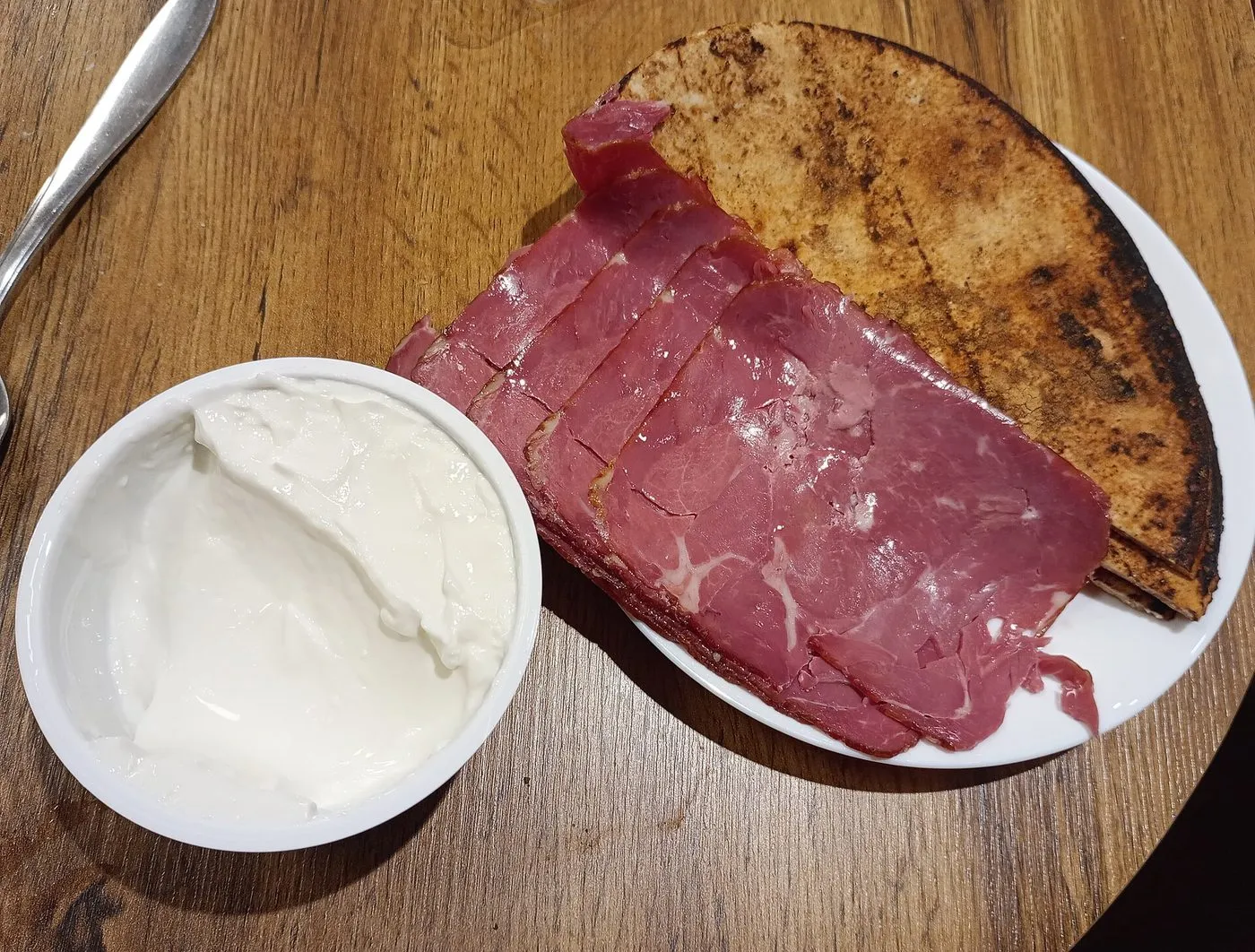 Smoked lamb on flatkaka. Photo: Bedinek, Wikimedia Commons, CC0.
Guided food tours versus self-guided food crawls
| Feature | Organised guided food tour | Self-guided food-hall crawl |
|---|---|---|
| Cost structure | Fixed ticket from about 16,300 to 17,800 ISK | Pay per dish |
| Curated variety | 6 to 8 pre-arranged dishes across 4–6 venues | Order whatever you choose across 3 municipal food halls |
| Historical narrative | In-depth storytelling on Viking settlement, sagas, and folklore | Independent self-exploration |
| Booking requirement | Mandatory advance booking; small groups | No reservations; open communal seating |
| Pace & flexibility | Structured 3 to 3.5-hour scheduled itinerary | Completely flexible timing, start and stop whenever you wish |
Tour options and bookings
Booking online secures your preferred departure time and guarantees dietary accommodations are communicated to kitchen partners in advance.
Reykjavik: Guided Foodie Walking Tour with 6 Tastingsad
From 17,800 ISK · 4.9 stars from 2,144 reviews · 3 hours · 6 food stops
The definitive, bestselling culinary walking tour of central Reykjavik. Stroll through the streets of the old town with an enthusiastic local guide, stopping at six distinct culinary venues. Highlights include rich creamy lobster soup, tender grass-fed lamb stew, homemade plokkfiskur fish stew, the well-known Bæjarins Beztu hot dog, artisan cheeses, and rye bread ice cream. Portions are generous and replace a full meal.
Reykjavik: Icelandic Food Tourad
From 17,200 ISK · 4.6 stars from 483 reviews · 3 hours · Traditional delicacies
A fascinating historical walk focusing on traditional Icelandic ingredients and cooking techniques. Learn how volcanic geothermal energy is harnessed to bake rye bread underground and heat greenhouses, while tasting cured ocean trout, smoked lamb flatbreads, and traditional pastries.
Reykjavik: Traditional & Modern Food Tour by Localsad
From 16,300 ISK · 4.9 stars from 29 reviews · 3 hours · Small group
An intimate small-group culinary walk connecting classic heritage recipes with the inventive New Nordic restaurant movement. Enjoy craft beer pairings from local microbreweries alongside artisanal seafood and gourmet lamb tastings.
Key dishes featured on culinary walks
Participants on guided walking tours generally sample a balanced cross-section of heritage dishes and modern street foods:
1. The classic Icelandic hot dog (Pylsa)
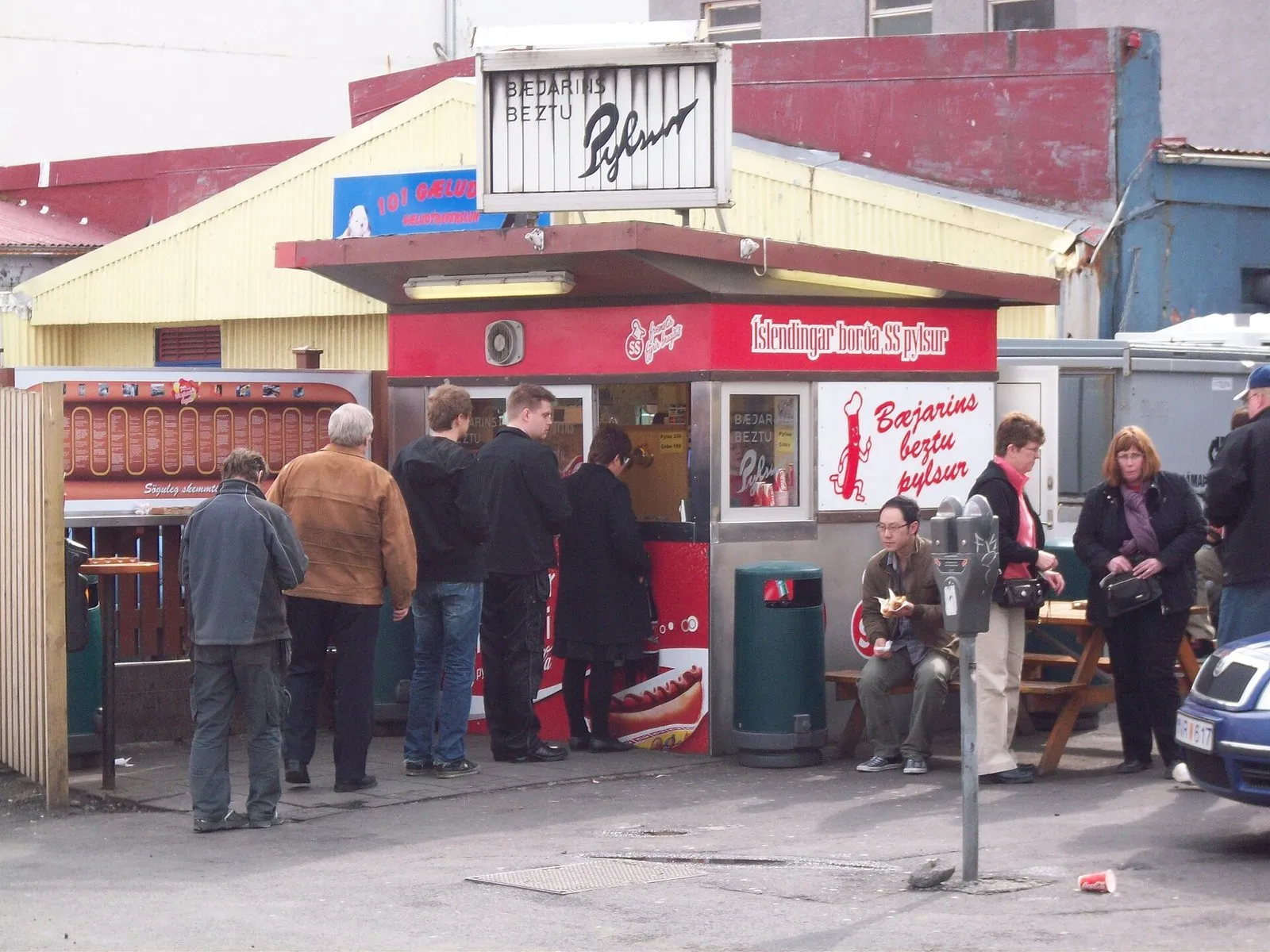
Served at the harbourside kiosk Bæjarins Beztu Pylsur, open since 1937. Made primarily from free-range lamb blended with beef and pork, it is served in a warm steamed bun ein með öllu (with sweet brown mustard, remoulade, ketchup, raw white onions, and crunchy fried onions).
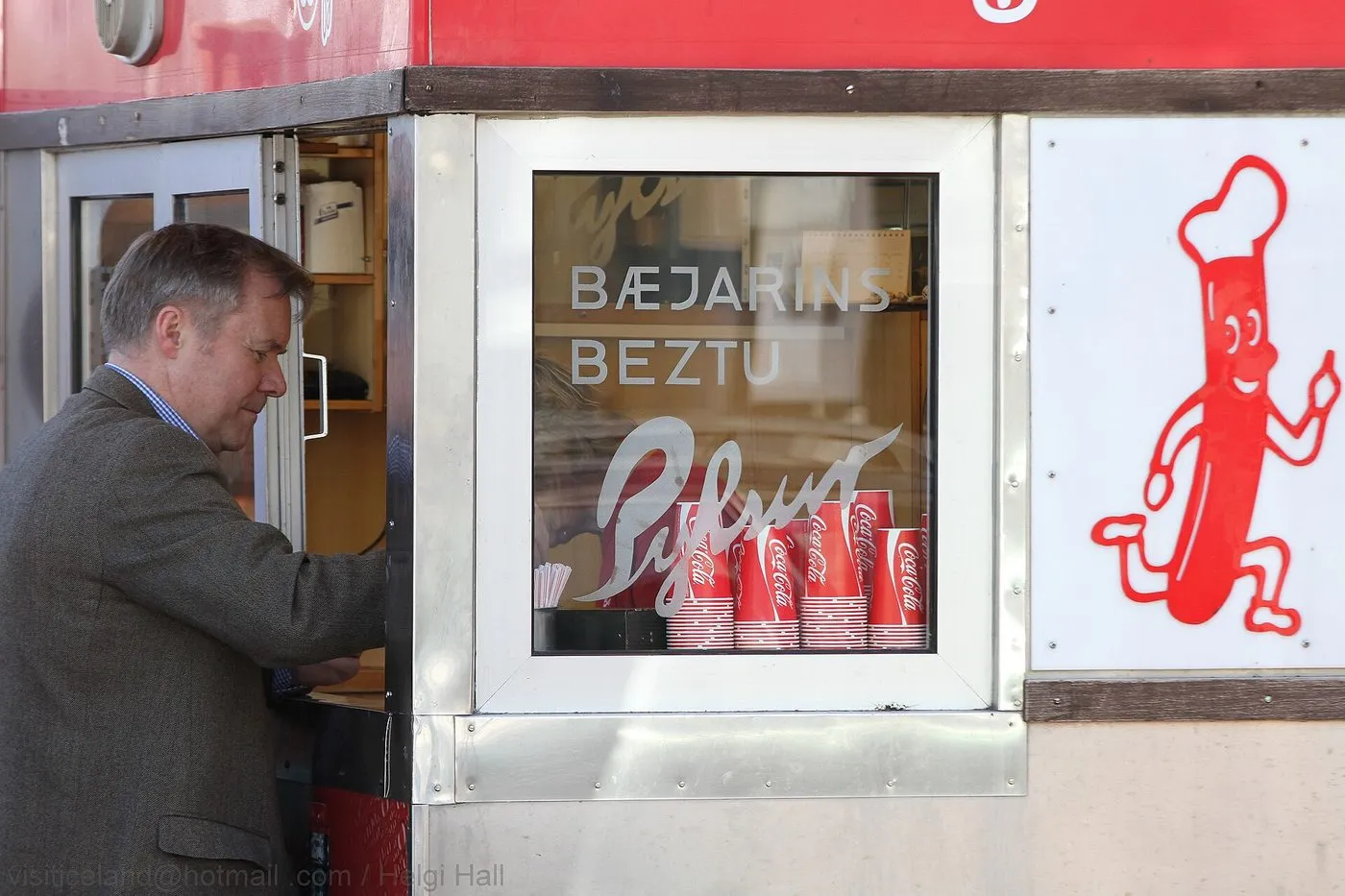 The Bæjarins Beztu Pylsur hot dog stand. Photo: Helgi Halldórsson from Reykjavík, Iceland, Wikimedia Commons, CC BY-SA 2.0.
2. Traditional meat soup (Kjötsúpa)
A fragrant, clear golden broth made by slow-simmering bone-in lamb shoulder with yellow turnips (rutabaga), potatoes, carrots, leeks, and dried wild mountain herbs. Historically eaten during autumn roundups, it remains Iceland’s premier restorative comfort food on chilly days.
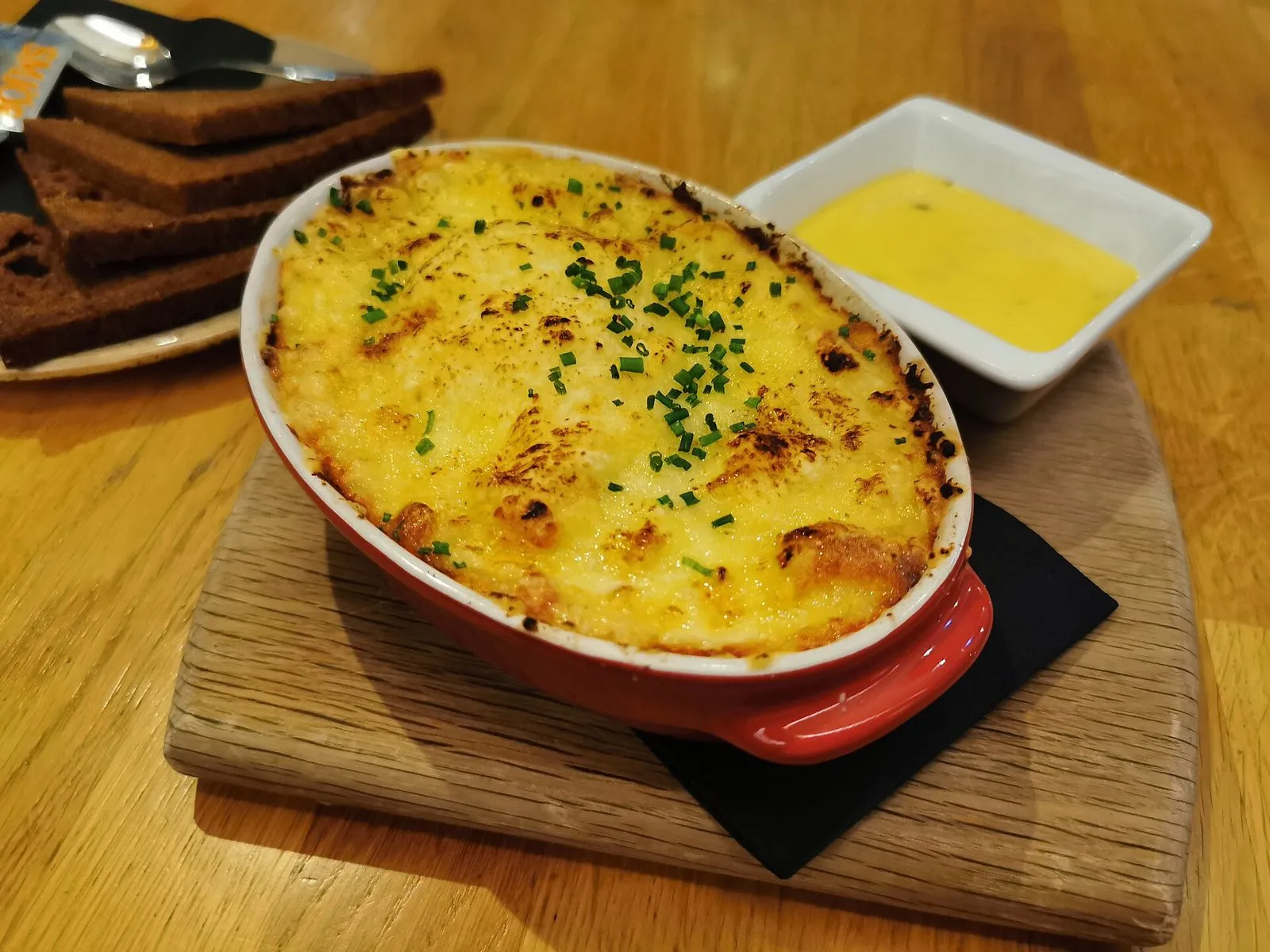
3. Gratinated fish stew (Plokkfiskur)
A comforting home-style dish created to utilize leftover boiled fish. Flaked Atlantic cod or haddock is gently folded into a silky white bechamel sauce enriched with butter, mashed potatoes, and diced white onions, topped with cheese, baked golden, and spread over sweet dark rye bread.
4. Smoked mountain lamb (Hangikjöt)
Cured lamb smoked over dried sheep dung or birch wood shavings according to ancient rural tradition. Thinly sliced and served cold atop rye bread or flatkaka (unleavened pan-fried rye flatbread) with salted butter.
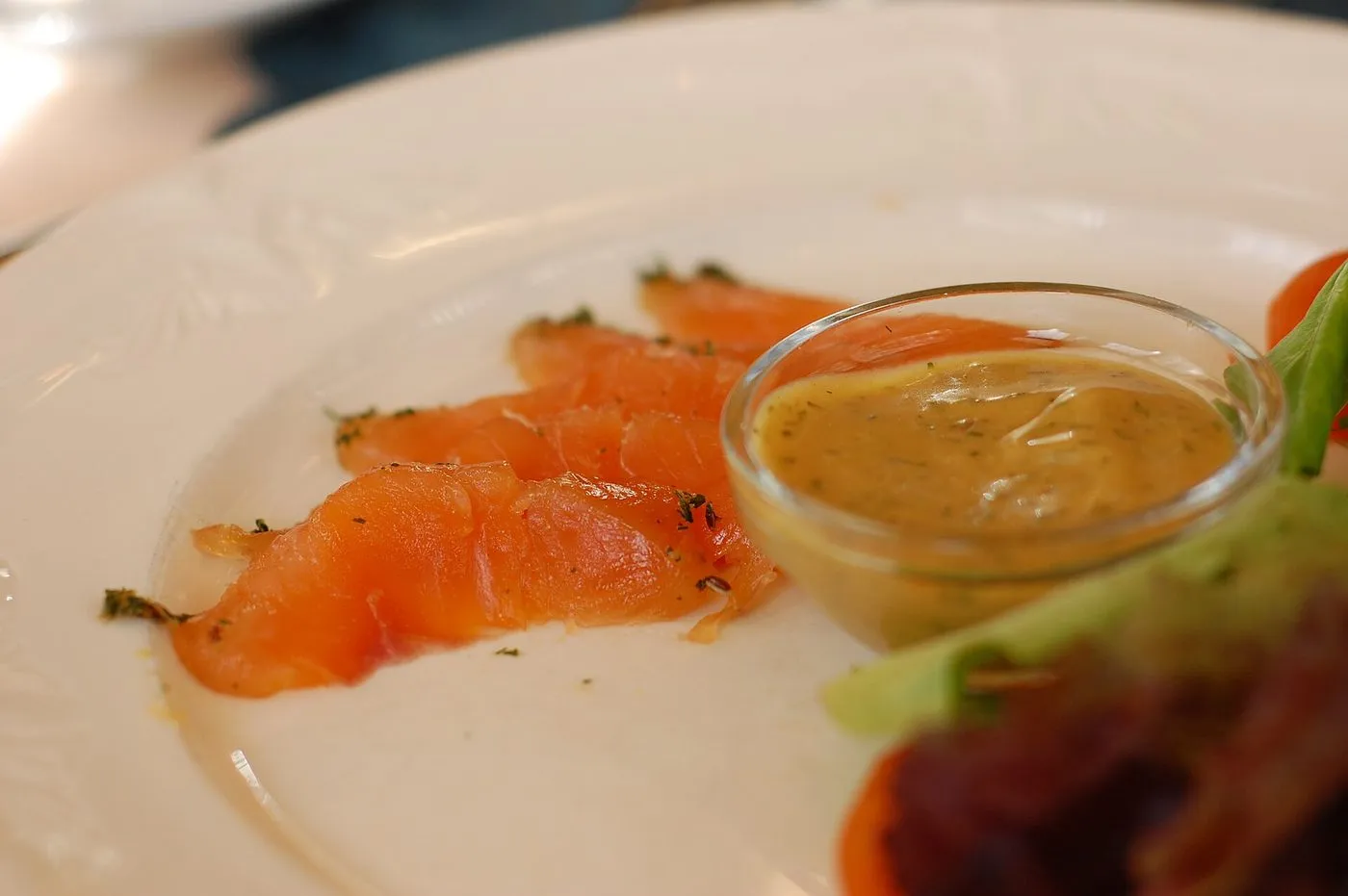 Graved trout with mustard sauce. Photo: moohaha, Wikimedia Commons, CC BY 2.0.
5. Cured salmon (Gravlax) and Arctic char
Raw Atlantic salmon or Arctic char cured for several days in a mixture of coarse sea salt, sugar, cracked black peppercorns, and fresh dill. Served thinly sliced with a sweet mustard-and-dill sauce (graflaxsósa).
6. Fermented shark (Hákarl) and Brennivín
For adventurous palates, some tours offer a small cube of fermented Greenland shark. Because the Greenland shark lacks kidneys, its flesh contains high concentrations of toxic urea and trimethylamine oxide; to make it edible, the meat is fermented underground for months and hung to dry in open-air drying sheds. Chewing the firm, ammonia-scented cube is traditionally followed immediately by a bracing shot of Brennivín (“Black Death”), Iceland’s signature 80-proof caraway-infused potato aquavit.
The bizarre history of Iceland’s beer prohibition
Beer lovers participating in local pub walks or brewery tours will invariably hear the remarkable story of Iceland’s 74-year beer ban.
In 1908, Icelandic voters approved a total prohibition on all alcoholic beverages, which took legal effect on 1 January 1915. However, the nationwide ban soon unravelled in pieces:
- In 1922, Spain refused to purchase Iceland’s primary export—salted cod (bacalao)—unless Iceland agreed to import Spanish red and white wines. The government quickly legalized wine.
- In 1935, a national referendum voted to legalise hard spirits, including schnapps, whisky, and vodka.
Remarkably, parliament kept beer containing more than 2.25% alcohol strictly illegal for another 54 years. Politicians and temperance advocates argued that because beer was cheap, palatable, and consumed in large quantities, legalizing it would encourage heavy daytime drinking among factory workers and teenagers.
The rise of Bjórlíki and Beer Day (1 March 1989)
To circumvent the ban, ingenious Icelandic pub-goers ordered bjórlíki (“beer imitation”): bartenders served a glass of legal, non-alcoholic 2.25% near-beer and poured a measured shot of pure vodka or Brennivín directly into the foam.
Finally, following heated parliamentary debates broadcast live on national television, Alþingi repealed the prohibition, legalizing full-strength beer on 1 March 1989. Today, Icelanders celebrate 1 March as Beer Day (Bjórdagurinn), filling downtown bars to toast the anniversary. The repeal sparked an explosion of top-tier craft breweries, including Borg Brugghús, Einstök, Malbygg, and RVK Brewing Company.
Designing a self-guided food-hall crawl
If you prefer an unstructured culinary evening, central Reykjavik features three exceptional food halls located along an easy 3-kilometre walking route:
Stop 1: Hlemmur Mathöll (Laugavegur 107)
Begin at the eastern end of the shopping street inside the renovated 1970s bus terminal. Order a bowl of traditional kjötsúpa lamb soup or a grass-fed lamb burger at Fjárhúsið, followed by a crisp thin-crust sourdough pizza slice at Flatey. Pair with a glass of natural wine from Kröst.
Stop 2: Pósthús Mathöll (Pósthússtræti 3–5)
Stroll 20 minutes down Laugavegur and Bankastræti to Austurvöllur square. Step inside the soaring neo-classical halls of the 1914 central post office. Grab a seat at the communal tables and order fresh Atlantic salmon nigiri from Djúsí Sushi, Korean pork belly buns from Fuku Mama, or a signature craft cocktail from the central circular bar, Drykk.
Stop 3: Grandi Mathöll (Grandagarður 16)
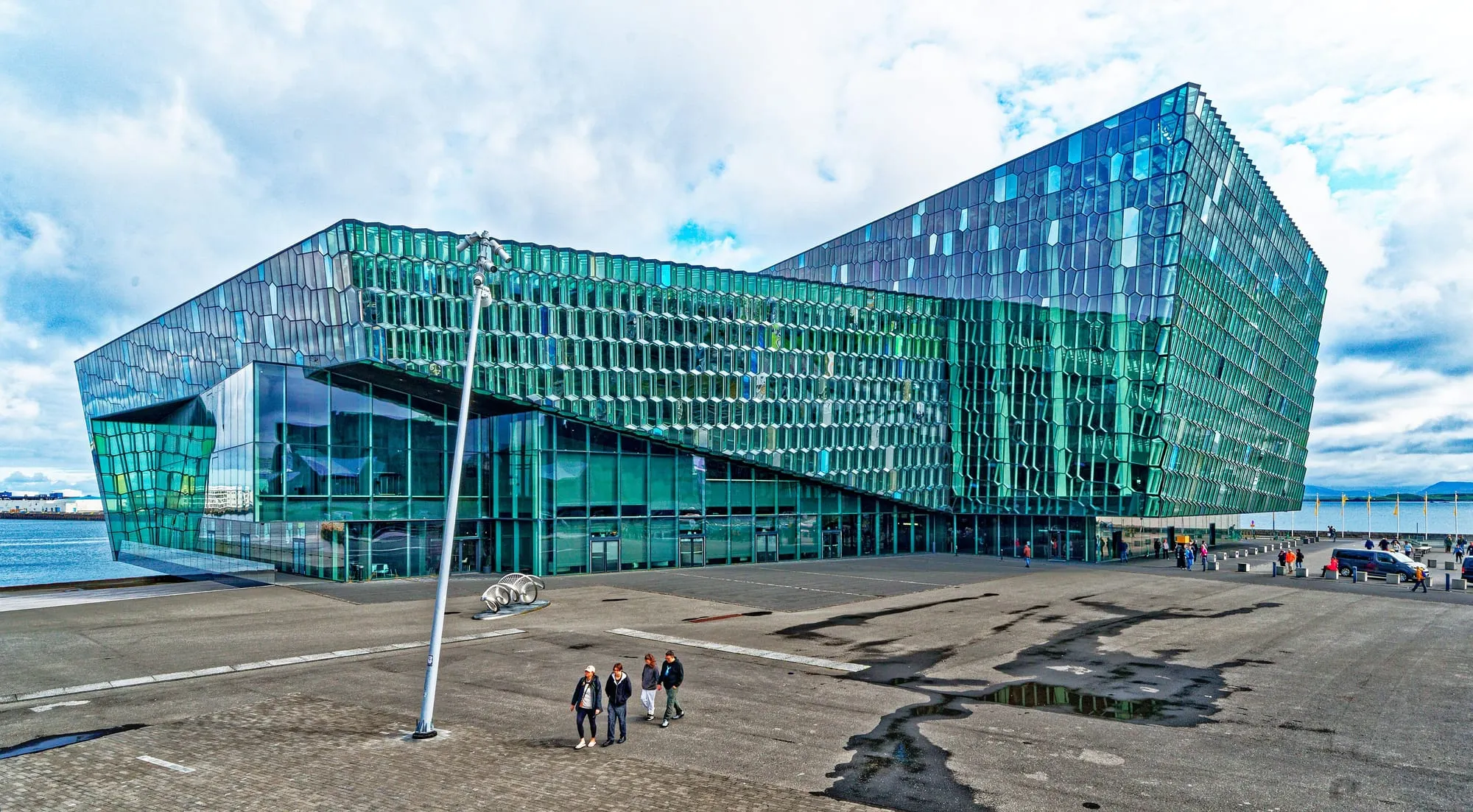
Walk 15 minutes along the harbour past Harpa Concert Hall to Grandi, the city’s historic fish-packing district. Conclude your crawl overlooking the fishing trawlers with piping-hot, beer-battered Icelandic haddock and thick chips from Frystihúsið, followed by artisanal Italian-style gelato at the adjacent Valdís ice cream parlour.
Practical tips for food tour participants
- Come Hungry: Guided tasting tours provide generous portions; avoid eating a heavy lunch prior to an afternoon departure.
- Weather Preparation: Tours proceed regardless of rain, wind, or snow. Wear a waterproof jacket, warm under-layers, and comfortable walking boots with rubber grip, as detailed in our packing for Iceland guide.
- Cashless Environment: Every food counter, kiosk, and bar accepts contactless cards, smart watches, and mobile payment apps; cash is completely unnecessary.
For further recommendations on dining establishments and evening entertainment, browse our comprehensive guide on where to eat in Reykjavik and explore the Reykjavik city guide.
Common questions
Is a guided food tour worth it in Reykjavik?
Yes. A guided walk lets you sample several Icelandic dishes at different venues in one outing, with a guide explaining the food history.
How much does a guided culinary walking tour cost in Reykjavik?
Food tours on GetYourGuide start at about 16,300 to 17,800 ISK per adult for a 3-hour walk with tastings.
Can special dietary requirements be accommodated on food tours?
Most operators can accommodate pescatarian, nut-free, and pork-free diets with advance notice upon booking. However, traditional Icelandic food tours rely heavily on dairy, lamb, and seafood, making strictly vegan or gluten-free adaptations challenging at traditional heritage stops.
What is the story behind Iceland's beer prohibition?
Iceland banned all alcohol in 1915. While Spanish wine returned in 1922 and hard spirits were legalized in 1935, full-strength beer (over 2.25% ABV) remained strictly illegal until 1 March 1989. Icelanders celebrate 1 March annually as Beer Day (Bjórdagurinn), marking the birth of modern Icelandic craft microbreweries.