In this guide
💡 The Short Version: Heading south from Mexico City takes you out of the high valley into warmer hill country, the southern route in our day trips from Mexico City guide. Cuernavaca is about 1.5 hours south via Terminal del Sur (Taxqueña) and has the sixteenth-century Palacio de Cortés and the Cuernavaca Cathedral; INAH lists the museum inside the Palacio as temporarily closed. Taxco de Alarcón (about 3 hours south) is a steep Pueblo Mágico of whitewashed alleys, silver workshops and the Baroque towers of Santa Prisca. Going by bus works well for one town at a time; seeing both in a day is easier on a guided tour. Or book a tour: the Mexico City: Full-Day Taxco and Cuernavaca Tourad (from MXN 970, 4.2 stars from 92 reviews, 12 hours) visits Cuernavaca’s historic cathedral and the silversmithing of Taxco in one booking.
Getting there: Terminal del Sur buses vs guided tour
Both destinations lie south of the capital, and coaches leave from the southern terminal at Taxqueña.
| Approach | Transit time (one way) | Departure point | Suited for |
|---|---|---|---|
| Guided combo tour (Cuernavaca + Taxco) | 12 hours for the whole tour | Set by the tour operator | Seeing both towns in 1 day without switching coaches (from MXN 970) |
| Bus to Cuernavaca only | About 1.5 hours | Terminal del Sur (Metro Line 2 to Tasqueña) | A relaxed half-day around the Palacio de Cortés, the Cathedral and Jardín Borda |
| Bus to Taxco only | About 3 hours | Terminal del Sur (Estrella de Oro) | Giving Taxco 5–6 unhurried hours, or staying overnight |
Independent bus logistics from Terminal del Sur (Taxqueña)
- Reach Terminal del Sur: Take Metro Line 2 (Blue) south to its terminus at Tasqueña (MXN 5; see public transport in Mexico City) and follow the walkway into the bus terminal, or take an Uber from central neighbourhoods.
- Choose your coach: Pullman de Morelos runs coaches to Cuernavaca. For Taxco, Estrella de Oro lists Taxco de Alarcón among its destinations.
- Avoid Friday evening and Sunday afternoon: The road between Mexico City and Cuernavaca is a weekend escape route for the capital, so midweek travel is quicker.
First stop: Cuernavaca
Cuernavaca sits at about 1,500 metres, more than 700 metres lower than Mexico City, and is nicknamed the “City of Eternal Spring”. Its historic core is compact enough to walk in about two hours.
Palacio de Cortés
Building of the Palacio de Cortés began in the 1520s, on the base of a Tlahuica pyramid. It houses the Museo Regional de los Pueblos de Morelos, whose upper loggia carries murals by Diego Rivera from around 1930 showing the conquest of Morelos and the revolution of Emiliano Zapata. INAH’s page for the museum lists it as temporarily closed in November 2026 and gives an admission price of MXN 210 for foreign visitors once it reopens. The palace’s stone exterior can still be seen from the square.
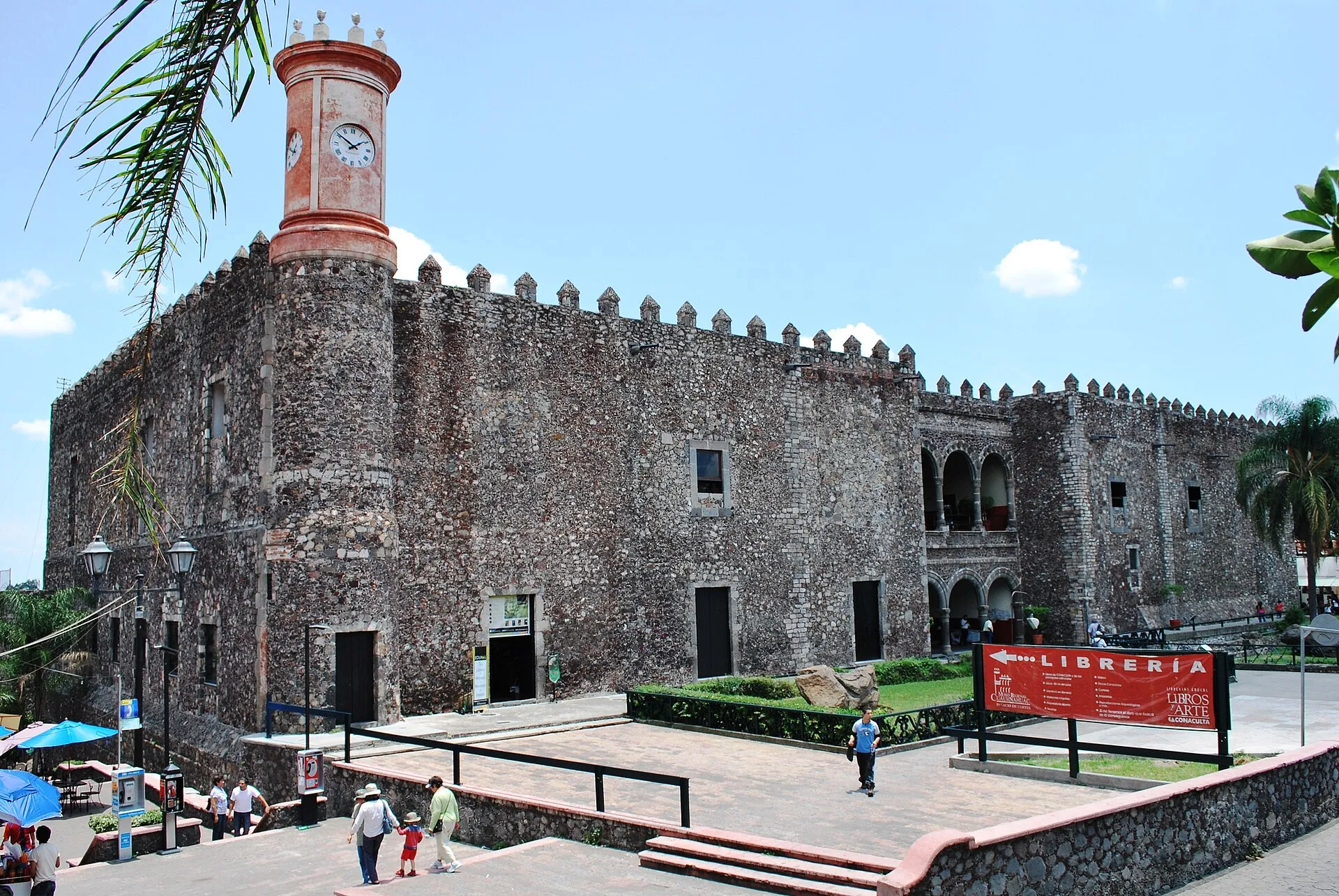
Sixteenth-century Palacio de Cortés in central Cuernavaca. Photo: Zoran Lazic, Wikimedia Commons, CC BY-SA 3.0.
Cuernavaca Cathedral and Jardín Borda
Walk to the walled monastic complex of Cuernavaca Cathedral (Catedral de la Asunción), begun by Franciscan friars in 1529. Inside, look for the wall frescoes that depict the 1597 martyrdom of San Felipe de Jesús and other missionaries in Nagasaki, Japan.
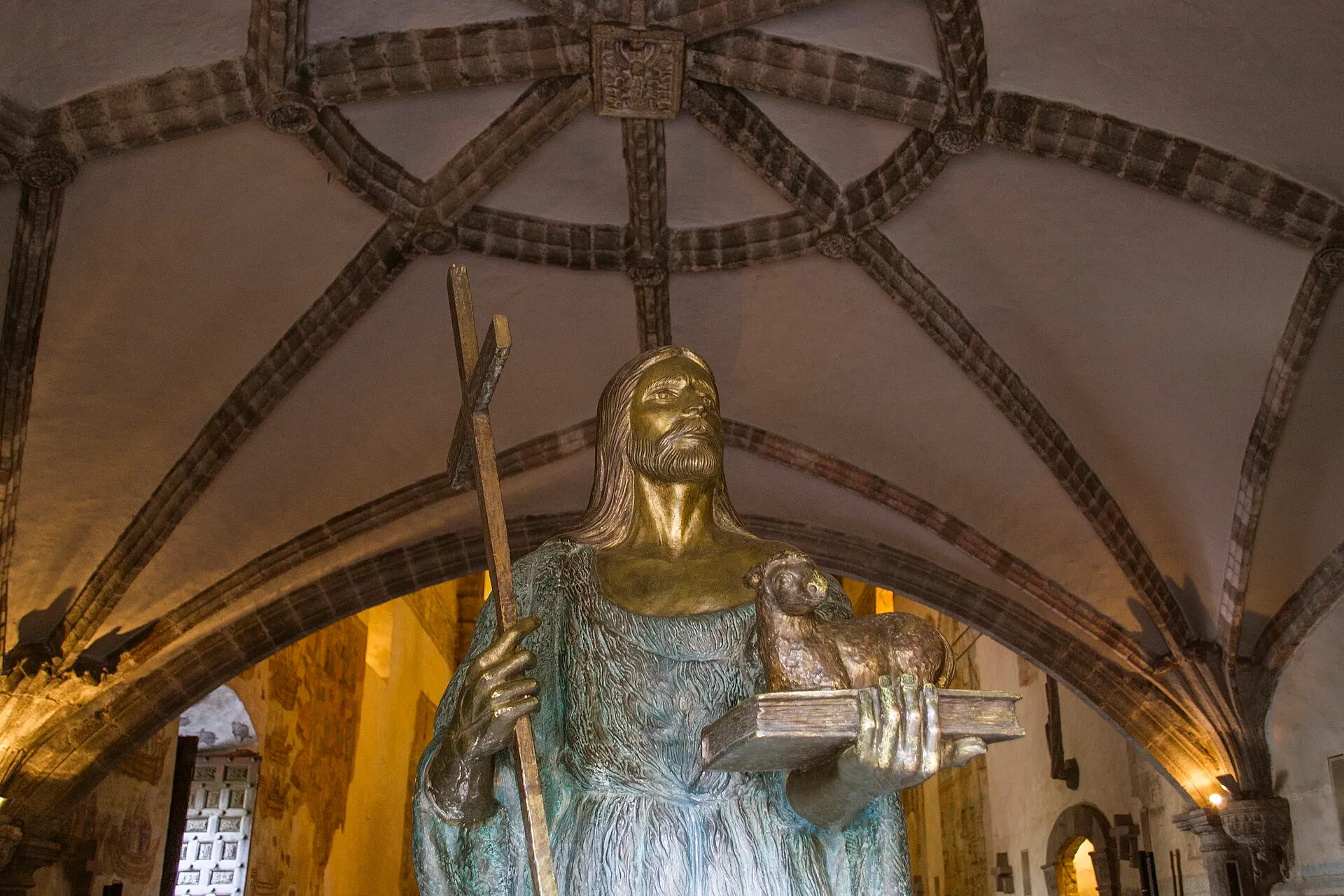
A statue under a ribbed stone vault in Cuernavaca Cathedral. Photo: Omar Alvarez, Wikimedia Commons, CC BY-SA 3.0.
A short walk away is Jardín Borda, an eighteenth-century terraced garden with fountains, begun by the family of the silver magnate José de la Borda, who also financed Taxco’s great church. It was later used as a summer retreat by Emperor Maximilian and Empress Carlota.
Main highlight: Taxco de Alarcón
Further south, in the hills of Guerrero, Taxco de Alarcón clings to a steep slope in tiers of whitewashed houses and red-tile roofs. It carries the official Pueblo Mágico designation.
Plaza Borda and Santa Prisca church
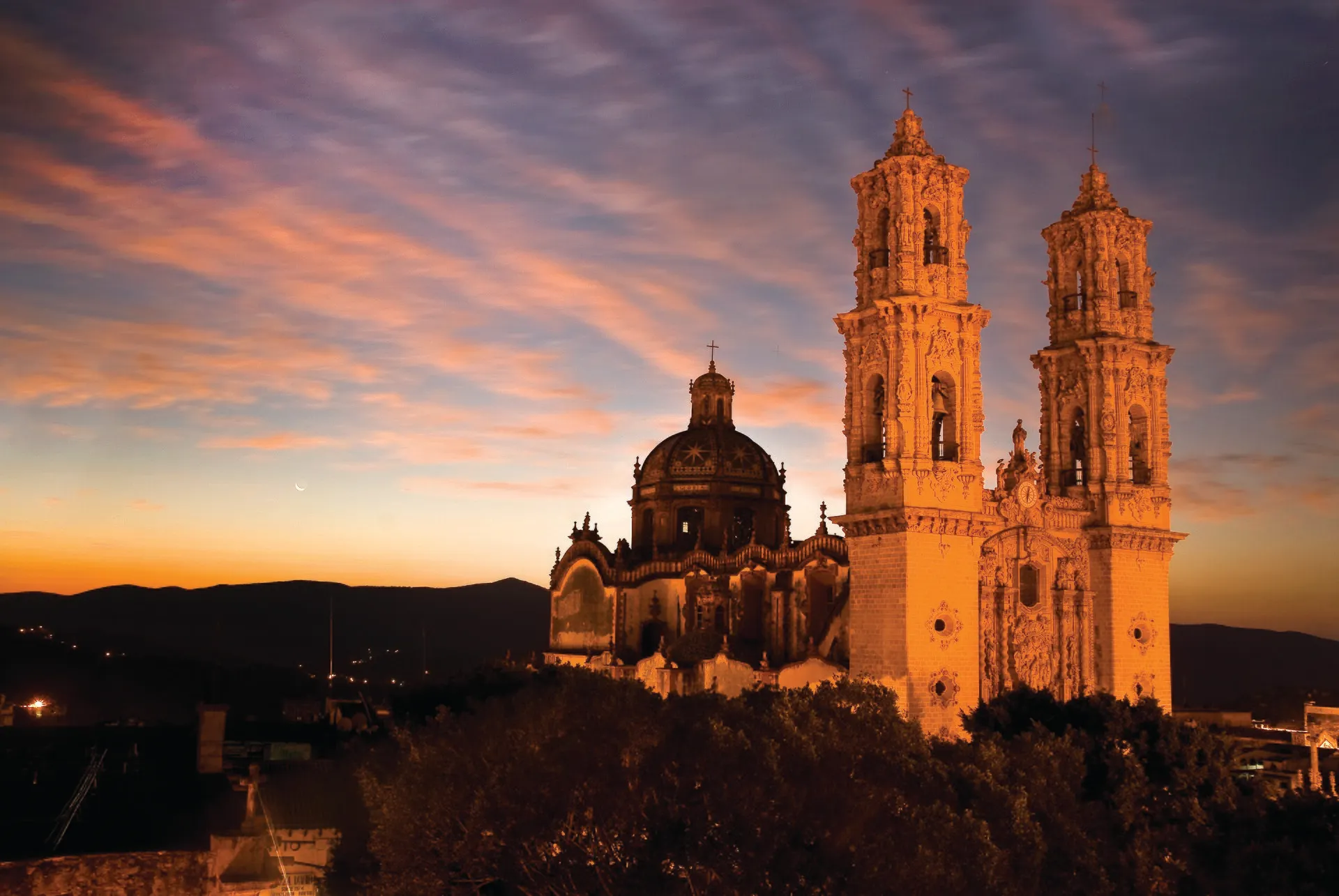
Steep alleys in central Taxco lead to Plaza Borda, a small square shaded by trees and bordered by cafés and silver shops. The Parroquia de Santa Prisca y San Sebastián rises above it, built between 1751 and 1758 with the silver fortune of José de la Borda. Its twin rose-coloured stone towers and tiled dome are one of the high points of Mexican Churrigueresque Baroque. Inside are gilded altarpieces (retablos) and paintings by Miguel Cabrera.
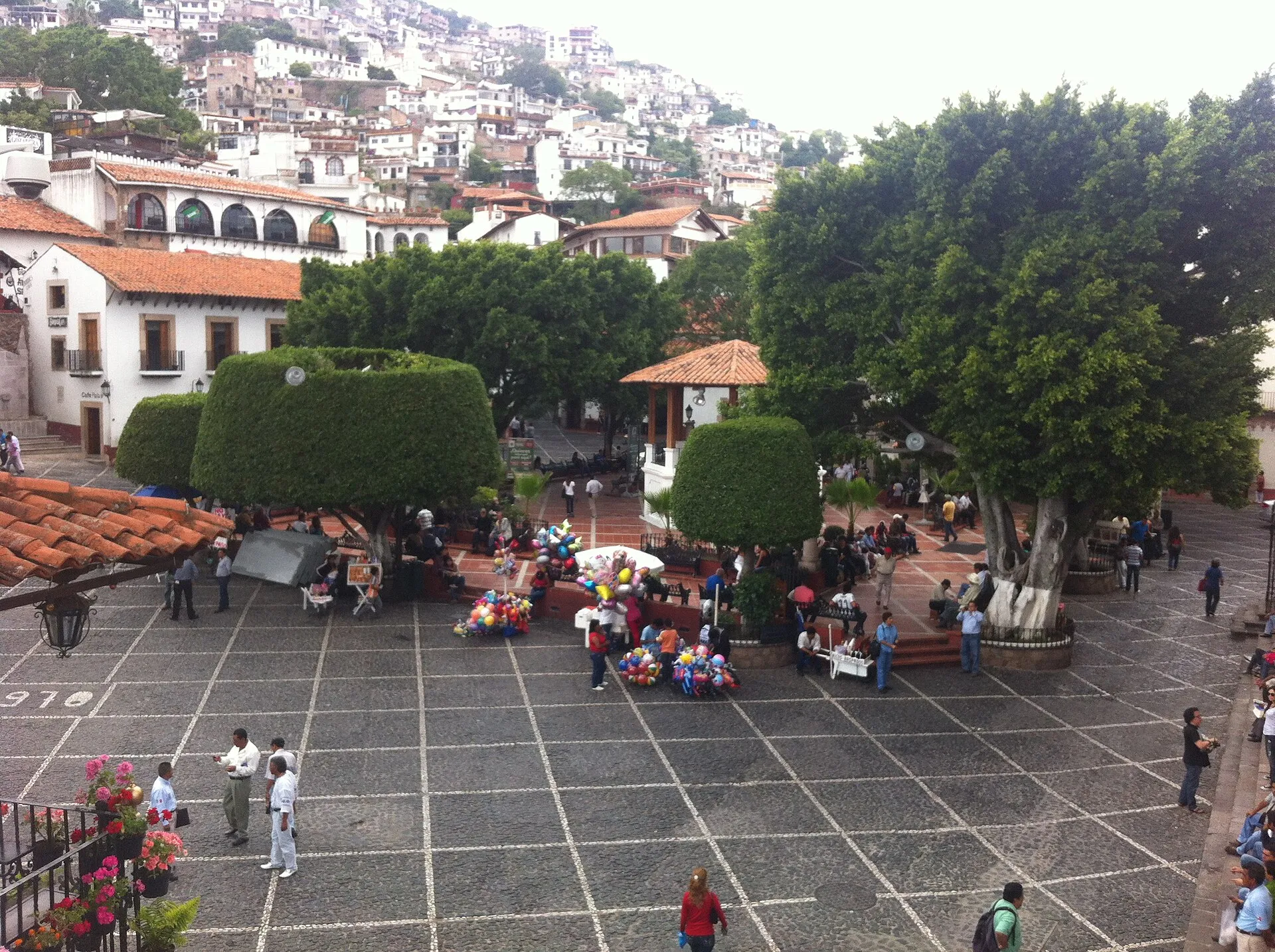
Plaza Borda and Taxco’s hillside houses. Photo: Fribae, Wikimedia Commons, CC BY-SA 3.0.
Exploring Taxco’s cobbled lanes and silver workshops
Silver mining at Taxco goes back to the sixteenth century, and the American designer William Spratling opened a silver workshop here in the 1930s. INAH runs the Museo William Spratling in town, open Tuesday to Sunday from 09:00 to 17:00, with admission of MXN 145 for foreign visitors and MXN 80 for Mexican nationals and residents.
- Shopping for silver: Look for the .925 hallmark stamped into sterling pieces, usually with the maker’s mark. Established workshops and galleries are a safer buy than unlabelled street stalls, and prices are usually worked out by weight plus a charge for the workmanship.
- Silver workshops on tours: The tour listing names Taxco’s silversmithing as one of its two themes, so expect workshop time; buying is your choice.
- Getting up and down the hills: Local combis and white Volkswagen Beetle taxis cover the uphill stretches between the lower road and Plaza Borda.
- Viewpoints and lunch: The Cristo Monumental hilltop statue looks over the town and Santa Prisca’s towers. Balconies around Plaza Borda serve regional Guerrero dishes such as green pozole.
Guided tour option
Mexico City: Full-Day Taxco and Cuernavaca Tour
From MXN 970 · 4.2 stars from 92 reviews · 12 hours
The Mexico City: Full-Day Taxco and Cuernavaca Tourad is a full-day guided tour that visits Cuernavaca’s historic cathedral and the silversmithing of the Magical Town of Taxco. It suits visitors who do not have a night to spend in Taxco.
Practical tips for Taxco and Cuernavaca
- Wear shoes with grip: Taxco’s cobbles and stairways are slippery, especially after rain. Leave smooth-soled sandals behind.
- Dress for a warmer climate: Both towns are lower and warmer than Mexico City, so bring light clothes for the sun and a layer for air-conditioned coaches.
- Carry Mexican pesos in cash: Local taxis, small cafés around Plaza Borda and market stalls work in cash (see money in Mexico City).
- Check museum days: INAH’s Museo William Spratling is open Tuesday to Sunday, and the Palacio de Cortés museum is temporarily closed, so build the day around the streets, churches and silver shops.
- Allow for the full day: The tour is listed at 12 hours; if you are building a 4-day Mexico City itinerary, plan a lighter morning the following day.
Common questions
How far are Cuernavaca and Taxco from Mexico City?
Cuernavaca is about 85 km south of Mexico City, roughly 1.5 hours by coach from Terminal del Sur (Taxqueña). Taxco de Alarcón is further south in Guerrero state, about 170 km from the capital and roughly 3 hours by road.
Should I visit Taxco and Cuernavaca by bus or on a guided tour?
If you want both towns in one day, the Full-Day Taxco and Cuernavaca Tour (from MXN 970, 12 hours) links them in a single booking. If you want only Taxco or only Cuernavaca at a slower pace, direct coaches from Terminal del Sur (Taxqueña) serve both.
What is Taxco known for?
Taxco de Alarcón is a steep hillside Pueblo Mágico known for the eighteenth-century pink-stone Santa Prisca church, whitewashed cobbled streets and its silver-working tradition.
How do you identify real silver when shopping in Taxco?
Look for the .925 sterling silver stamp, usually alongside the maker's mark, and buy from established workshops or galleries around Plaza Borda rather than unlabelled street stalls.
Is Taxco easy to walk around?
Taxco is built on a steep mountainside with narrow, uneven cobbled lanes and staircases. Wear flat shoes with good grip, and use a local taxi or combi for the uphill stretches.