In this guide
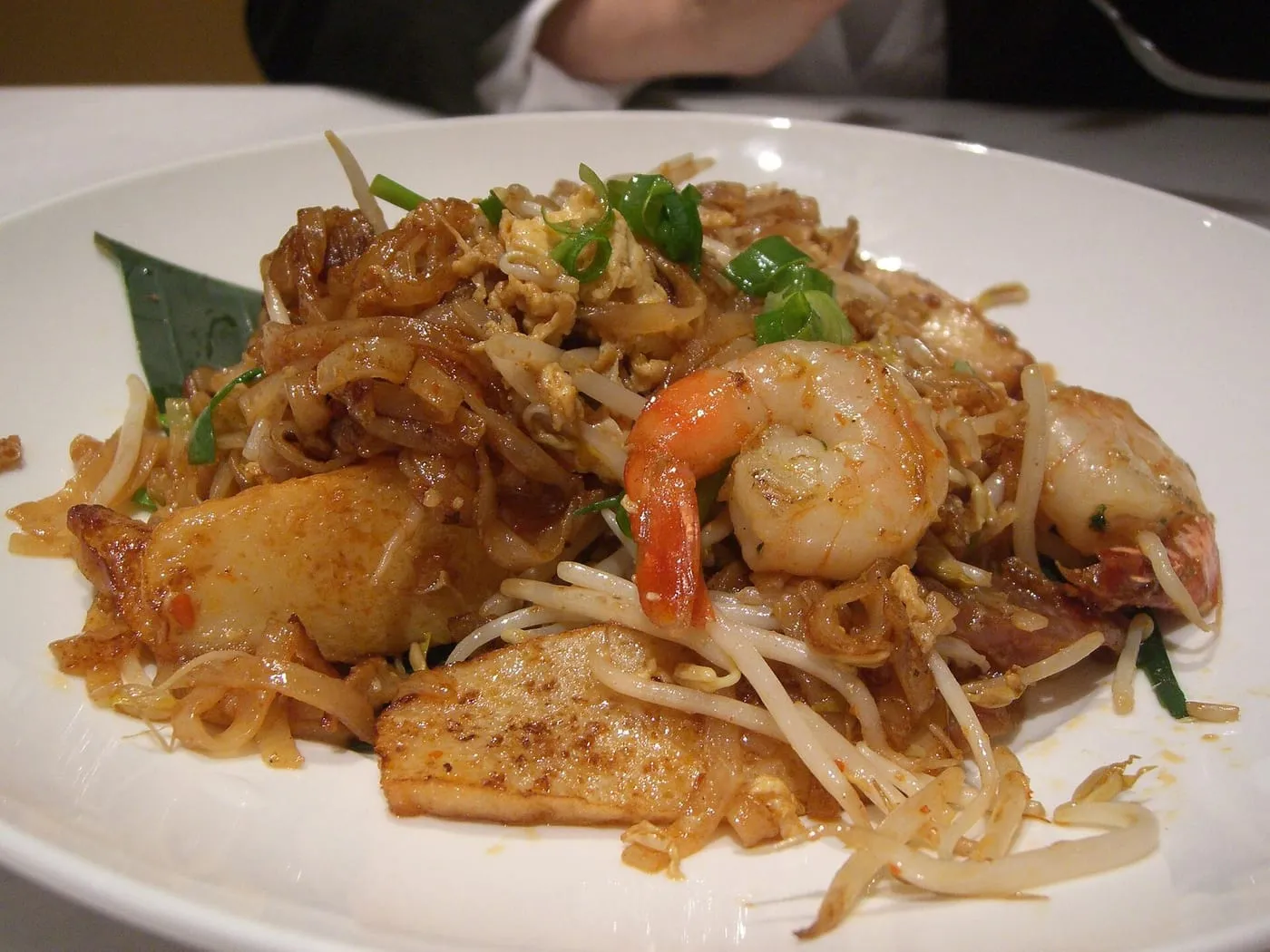
The Short Version: Kuala Lumpur’s street noodle scene is defined by two contrasting culinary styles: Curry Laksa (Curry Mee), a luxurious bowl of fragrant coconut curry broth brimming with spongy fried tofu puffs, blood cockles, aubergine, and long yard beans; and Char Kway Teow, flat rice noodles flash-fried over roaring open flames with sweet dark soya sauce, fresh prawns, Chinese sausage, crunchy beansprouts, and duck egg to achieve an unmistakable smoky aroma (wok hei). For curry laksa, head straight to Madras Lane in the narrow market alleys of Chinatown and Petaling Street or Restoran 168 in Pudu. For char kway teow, visit the famous charcoal-fired street cart in Brickfields or the heritage stall at Lot 10 Hutong in Bukit Bintang. A steaming bowl or hot plate averages between RM9 and RM16. Or book a tour: sample champion noodle bowls alongside expert commentary on the Sambal Streets food tourad (from RM 226, 4.9 stars from 2,176 reviews).
The anatomy of Kuala Lumpur Curry Laksa (Curry Mee)
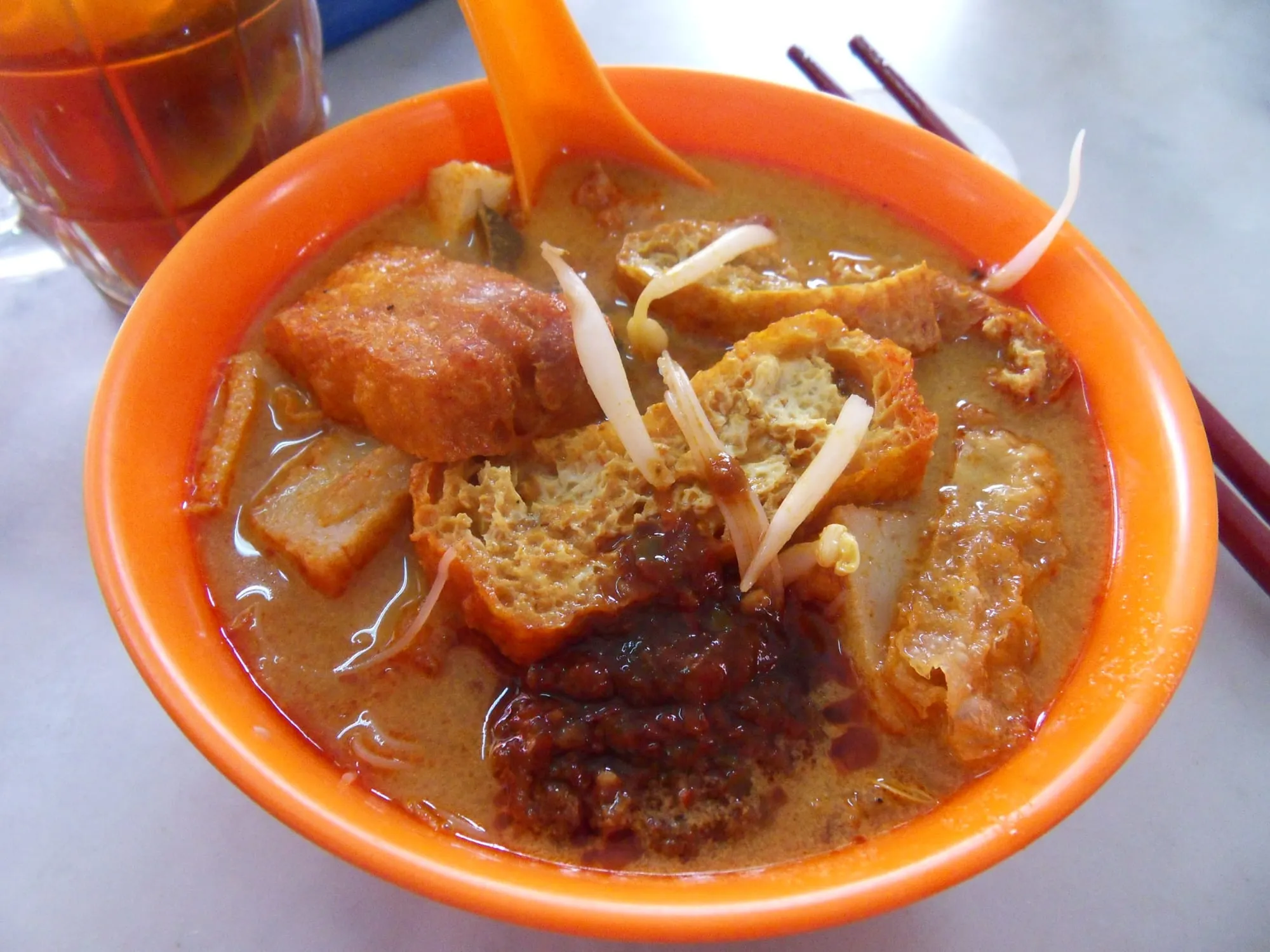
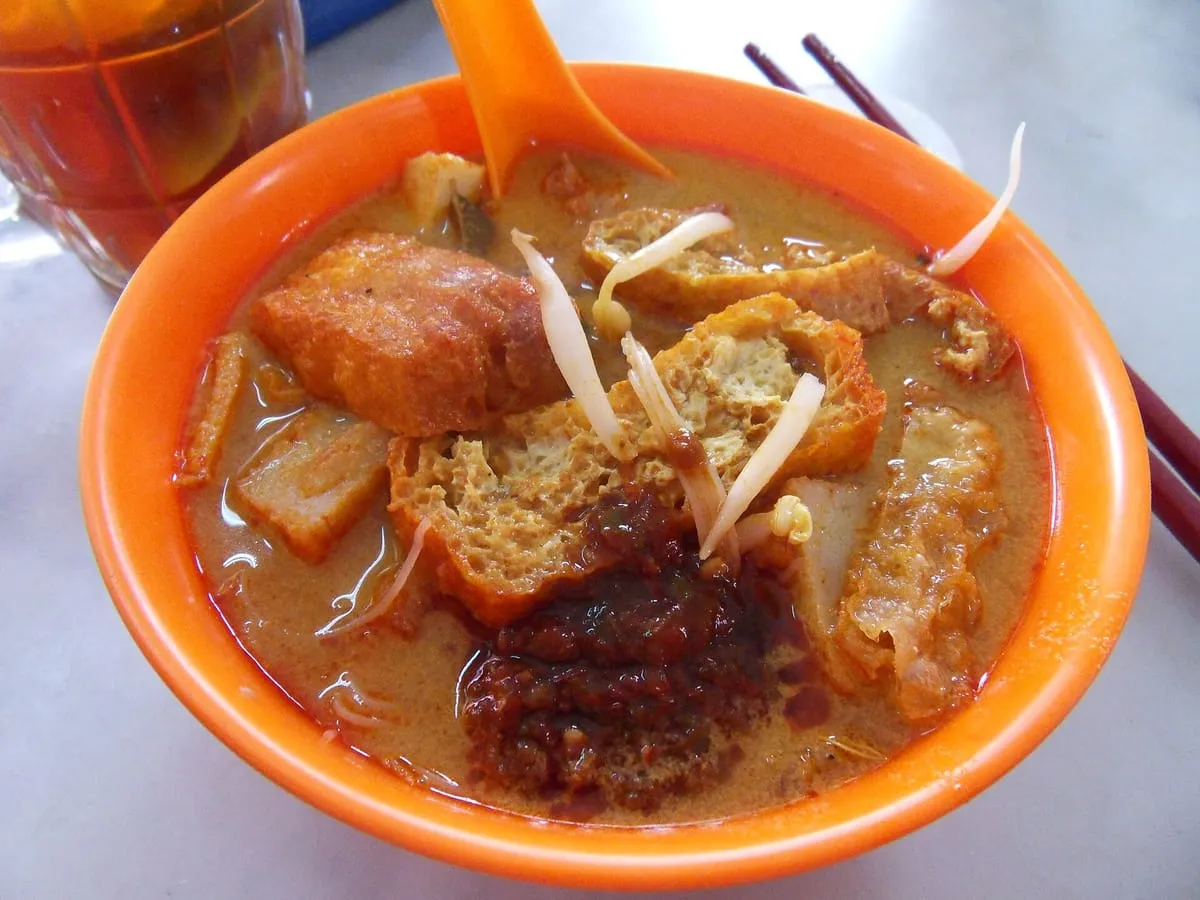
In Kuala Lumpur, ordering “curry laksa” or “curry mee” summons a steaming, bright orange-red noodle soup crowned with floating crimson chilli oil. Unlike the clear herbal broths of central China or the thin curries of South Asia, Malaysian curry mee represents a seamless marriage of Cantonese noodle culture and Southeast Asian maritime spices.
| Ingredient | Preparation & role | Culinary impact |
|---|---|---|
| Dual Noodle Mix (Mee Hoon Mee) | Yellow alkaline egg noodles tossed with fine rice vermicelli | Textural harmony combining yellow noodle chewiness with fine vermicelli soup-absorption |
| Aromatic Curry Broth | Slow-simmered chicken and prawn stock steeped in rempah and coconut santan | Rich, velvety, fragrant coconut soup with gentle heat and spiced oil droplets |
| Stuffed Tau Pok (Tofu Puffs) | Spongy deep-fried bean curd cubes sliced open | Acts as edible sponges soaking up piping-hot curry broth |
| Fresh Blood Cockles (Kerang) | Lightly blanched fresh cockles added immediately before serving | Delivers sweet, briny oceanic contrast to the rich coconut broth |
| Crispy Siew Yuk | Golden crackling roast pork belly cubes (signature at Restoran 168) | Salty, crunch-heavy indulgence elevating the soup bowl |
The soup begins with a finely ground spice paste (rempah) composed of dried chillies, shallots, garlic, galangal, fresh turmeric, bruised lemongrass stalks, belacan (shrimp paste), and toasted candlenuts. This paste is gently fried in vegetable oil until fragrant and glistening, then combined with a rich chicken and pork bone stock before being finished with freshly pressed coconut milk (santan).
Essential elements of a traditional bowl:
- The Noodle Foundation: The traditional choice is a dual blend known locally as mee hoon mee—half yellow alkaline egg noodles, half fine dried rice vermicelli. The combination ensures the vermicelli soaks up the spicy broth like a sponge, while the egg noodles provide bite and springiness.
- Tau Pok (Fried Tofu Puffs): Triangular pillows of golden fried bean curd. As they bob in the boiling broth, their honeycomb interior absorbs the soup, releasing a burst of rich coconut curry when bitten.
- Vegetables: Tender batons of stewed purple aubergine (eggplant) and snappy green yardlong beans, both pre-cooked until soft enough to absorb the spices.
- Proteins: Plump, freshly shucked blood cockles (kerang), poached shredded chicken breast, and occasionally tender sea prawns or crispy roast pork (siew yuk).
- Finishing Touch: A handful of fresh Vietnamese coriander (laksa leaves) or spearmint, with a generous spoonful of concentrated sambal paste balanced on a porcelain soup spoon resting against the rim of the bowl.
Top Curry Laksa vendors in Kuala Lumpur
Kuala Lumpur’s finest curry mee stalls have occupied the same alleyways and corner shophouses for decades.
| Vendor | Address & Location | Signature element | Operating hours | Typical price |
|---|---|---|---|---|
| Madras Lane Curry Laksa | Wet market alley off Lorong Bandar 20, Chinatown | Rich coconut broth, generous cockles, historic setting | 08:00–14:00 (Tue–Sun) | RM11 to RM14 |
| Restoran 168 Curry Mee | 21 Jalan San Peng, Pudu | Charcoal-broth curry mee topped with crackling roast pork (siew yuk) | 06:00–16:00 (Tue–Sun) | RM14 to RM18 |
| Ah Heng Curry Mee | Ground Floor, 2 Jalan Pudu | Creamy, velvety gravy with smooth poached chicken | 08:00–16:00 daily | RM12 to RM15 |
| Girl & Mummy Famous Curry Mee | Chan Sow Lin Food Court, Jalan Dua | Deep red chilli oil and tender stuffed squid | 06:30–14:00 (Mon–Sat) | RM12 to RM18 |
Madras Lane Curry Laksa (Chinatown)
Wet market aisle off Lorong Bandar 20, Chinatown · MRT/LRT Pasar Seni (4-minute walk) · Tuesday to Sunday 08:00–14:00, strictly closed Monday · Cash only · Michelin Selected
Hidden inside the covered wet market lane parallel to Petaling Street (approached through the wet poultry and vegetable stalls off Jalan Hang Lekir), Madras Lane has operated as a breakfast battlefield since the 1960s. Here, three rival elderly hawkers stand side by side behind steaming aluminium cauldrons.
The broth at Madras Lane is thick, velvety, and deeply aromatic from slow simmering. Tofu puffs swell to bursting point, floating alongside heaps of juicy blood cockles, soft aubergine slices, and crisp long beans. Grab a low stool at the shared wooden tables, order an iced Chinese barley water from the drinks hawker, and mix the fragrant red sambal paste into the noodles. The market operates strictly until early afternoon and closes on Mondays. Combine your visit with our wider guide to Chinatown and Petaling Street.
Restoran 168 (Pudu)
21 Jalan San Peng, Pudu · LRT Pudu (Ampang Line, 5-minute walk) · Tuesday to Sunday 06:00–16:00, closed Monday · Cash only
Located along Jalan San Peng in the working-class neighbourhood of Pudu, Restoran 168 is famous among local food lovers for one decadent upgrade: adding freshly roasted Chinese pork (siew yuk) to your curry noodles.
The broth here is cooked over a slow charcoal flame, yielding an earthy, smoky depth with slightly less sweetness than Chinatown versions. Before serving, the hawker crowns the steaming bowl with thick slices of roasted pork belly featuring crackling, blistered skin that stays crunchy even when dipped briefly into the bubbling red soup. A regular bowl costs approximately RM14, while an extra portion of roast pork brings the total to RM18.
Ah Heng Curry Mee (Chinatown / Pudu)
Ground Floor, 2 Jalan Pudu · MRT/LRT Pasar Seni or Plaza Rakyat (5-minute walk) · Daily 08:00–16:00 · Cash and DuitNow QR · Michelin Selected
Ah Heng occupies a bright corner shopfront at the junction of Jalan Pudu and Petaling Street. The broth is noticeably creamier with coconut milk, carrying a silky, pale-orange hue. The hawker tops each bowl with generous portions of Cantonese poached chicken—poached to tender perfection—alongside fish cakes, cockles, and plump bean curd puffs. A regular bowl costs RM12, while a large chicken thigh bowl is RM15.
The craft of Char Kway Teow: mastering the Wok Hei
If curry laksa is an exercise in slow simmering, Char Kway Teow is a theatrical display of explosive heat, speed, and timing. Originating among southern Chinese Teochew and Hokkien maritime workers, the dish translates literally as “stir-fried flat rice noodle strips”.
The secret to exceptional char kway teow lies entirely in wok hei—the “breath of the wok”. Preparing the dish demands a seasoned cast-iron wok heated over high-output gas burners or traditional wood charcoal until the metal begins to smoke.
- Wok Hei (Breath of the Wok): Char kway teow must be cooked over intense roaring gas or charcoal flames in heavy cast-iron woks, searing the noodles at high temperatures to impart smoky caramelised notes without burning.
- Dark Caramel Soya Sauce: A blend of thick dark soy sauce, light soy sauce, and fish sauce provides the signature glistening mahogany hue and deep umami sweetness.
- Duck Egg vs Chicken Egg: Premium vendors use rich duck egg, which has higher fat content and larger yolks, producing a creamier noodle coating.
- Fresh Ingredients: Plump sea prawns, crunchy beansprouts, aromatic Chinese chives, savoury lap cheong sausage slices, and tender blood cockles are tossed in rapid succession.
- Rendered Pork Lard: Traditional vendors fry with freshly rendered lard and toss in crispy golden cracklings (gu yu cha) for unmatched fragrance and crunch.
The process takes less than 90 seconds per plate:
- The cook adds rendered pork lard (chu yau) or vegetable oil to the white-hot wok along with minced garlic, fresh shelled sea prawns, and thin slices of sweet dried Chinese pork sausage (lap cheong).
- Fresh, pliable flat rice noodles (kway teow)—often mixed with a handful of yellow noodles—are dropped directly onto the searing metal.
- The cook splashes in a dark soy seasoning blend (combining dark sweet soy, light salty soy, fish sauce, and a dash of white pepper) while tossing the wok rhythmically. The soy sauce caramelises against the hot iron, enveloping the noodles in aromatic vapour.
- An egg (traditionally duck egg for richer, creamier yolks) is cracked into the centre, allowed to set partially, and scrambled through the noodles.
- In the final five seconds, fresh crunchy beansprouts, aromatic garlic chives, and plump blood cockles are tossed through the embers before the smoking mound is tipped onto a greaseproof paper-lined plate or a segment of green banana leaf.
Top Char Kway Teow spots in Kuala Lumpur
While Penang is historically considered the spiritual home of the dish, Kuala Lumpur boasts several standout stalls that match the finest northern versions.
| Stall / Restaurant | Precinct & Address | Cooking medium | Signature highlight | Typical price |
|---|---|---|---|---|
| Brickfields Charcoal CKT | Pavement stall, Jalan Thambipillay, Brickfields | Cast-iron wok over mangrove charcoal fire | Intensely smoky wok hei, fresh prawns, generous cockles | RM10 to RM12 |
| Lot 10 Hutong (Penang Famous) | LG Floor, Lot 10, Jalan Bukit Bintang | Gas burner, premium ingredients | Air-conditioned heritage dining, duck egg option | RM16 to RM22 |
| Aunty Gemuk Char Kway Teow | Restoran Jamal Mohamed, 24 Jalan SS 5A/9, Kelana Jaya | High-heat wok, pork-free | Saucy Malay-friendly CKT with giant tiger prawns | RM11 to RM17 |
Brickfields Charcoal Char Kway Teow
Pavement stall at Jalan Thambipillay, Brickfields · KL Sentral rail hub (3-minute walk from rear exit) · Monday to Saturday 11:30–20:00, closed Sunday · Cash only
Situated on a pavement corner along Jalan Thambipillay in Brickfields Little India (just 300 metres from the rear exit of KL Sentral), this unassuming roadside stall has prepared char kway teow over real charcoal embers for decades.
Using lump charcoal rather than gas produces a woody fragrance that permeates the noodles. The uncle manages the flames using an electric foot-blower to superheat the coals when each order begins. His noodles emerge slightly drier than average, with every strand lightly charred, speckled with crispy pork lard croutons, and tossed with sweet lap cheong and plump sea prawns. A regular plate costs around RM10, with a large portion featuring double egg priced at RM12.
Lot 10 Hutong (Bukit Bintang)
Lower Ground Floor, Lot 10 Shopping Centre, Jalan Bukit Bintang · Monorail/MRT Bukit Bintang · Daily 10:00–22:00 · Cards, eWallets, Cash
For travellers seeking exceptional street food without open-air humidity, the Lot 10 Hutong food hall in the basement of the Lot 10 shopping centre (connected directly to the Bukit Bintang monorail station) is an essential stop. Rather than leasing space to commercial franchises, the hall management invited celebrated multi-generational street hawkers from Penang and Kuala Lumpur to open satellite stalls.
Their Penang Char Kway Teow stall uses an authentic Penang recipe: lighter in colour than the heavy, dark-sauced KL styles, featuring wide rice noodles, fresh sea prawns, and the option to upgrade to a rich duck egg (telur itik). The noodles retain clear wok hei and are served cleanly on banana leaves for RM16 to RM22.
How to customise your noodle order
Ordering street noodles in Kuala Lumpur gives you complete control over your meal through standard local modifiers:
| Local phrase | Meaning | Application |
|---|---|---|
| “Mee Hoon Mee” | Mix of yellow noodles & thin rice vermicelli | The standard dual noodle pairing for curry laksa |
| “Mai Ham” | Without cockles (Cantonese) | Order this if you prefer your laksa without blood cockles |
| “Tambang Pedas” | Extra spicy (Malay) | Asks for an additional dollop of sambal paste |
| “Telur Itik” | Cooked with duck egg | Upgrades char kway teow to rich duck egg at street stalls |
| “Mai Touge” | No beansprouts (Cantonese) | Customises stir-fry without crunchy beansprouts |
Ideal beverage pairings
Both curry laksa and char kway teow are rich, heavily spiced dishes that call for cooling, refreshing street beverages:
- Barley Ais (Iced Barley Water, RM2.50–RM3.50): A traditional home-brewed drink made from simmered pearl barley, rock sugar, and winter melon, served chilled with soft barley grains at the bottom of the glass to cool the body.
- Kedondong Juice with Sour Plum (RM4.50–RM6.00): Freshly extracted juice from the ambarella (great hog plum) fruit, blended with green apple and garnished with a salty-sour dried preserved plum (asam boi). Its tart acidity cuts straight through rich pork lard and creamy coconut milk.
- Ipoh White Coffee (Iced, RM3.50–RM5.00): Rich, aromatic Robusta coffee beans roasted with palm oil margarine, brewed strong and sweetened with evaporated milk.
To explore these noodle joints alongside hidden street vendors with the guidance of a knowledgeable local host, browse the curated options in our guide to Kuala Lumpur food tours.
Tours and guided options
Finding the finest curry laksa and charcoal-fired char kway teow requires tracking down specific market stalls and alley shophouses. Guided food walks eliminate the guesswork and ensure you sample authentic charcoal wok hei.
Sambal Streets food tour with noodle and curry tastings
From RM 226 · 4.9 stars from 2,176 reviews · 4 hours · 15+ regional Malaysian dishes
Sambal Streets food tour with noodle and curry tastingsad: Join a guided walking tour in Kuala Lumpur and get to grips with Malaysian cuisine with the help of a local foodie. Savor more than 15 tastings and discover Malaysia’s culinary story along the way.
Chinatown and central hawker food tour with 12 tastings
From RM 231 · 5 stars from 9 reviews · 3 hours · traditional noodle masters
Chinatown and central hawker food tour with 12 tastingsad: Discover the flavours of Kuala Lumpur on our guided food tour. Explore Chinatown and the colonial district, and taste over 12 authentic dishes that reflect Malaysia’s cultural blend !
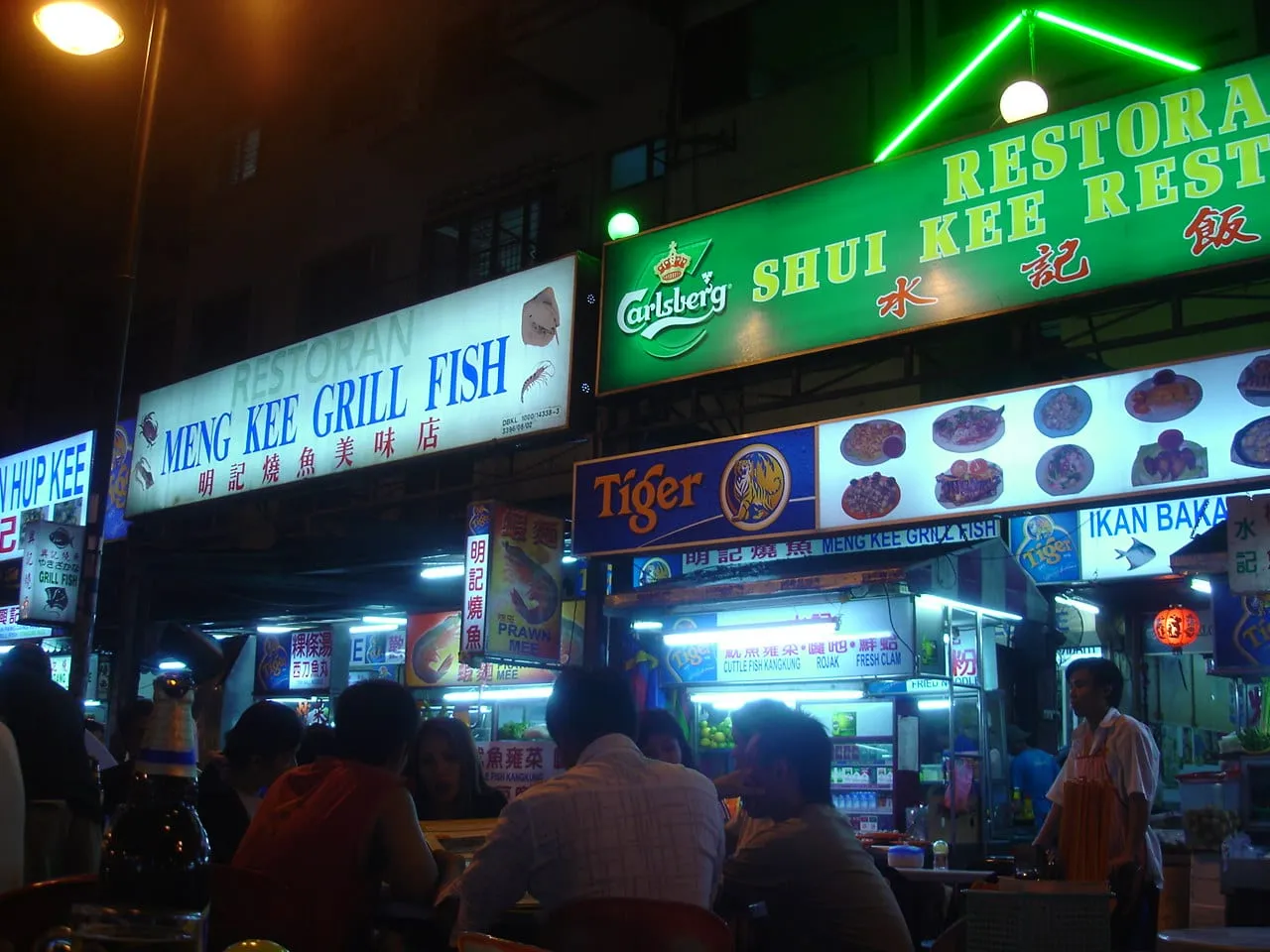
Local street food night tour with wok-fried noodles
From RM 278 · 4.6 stars from 164 reviews · 2.5 hours · evening hawker street specialities
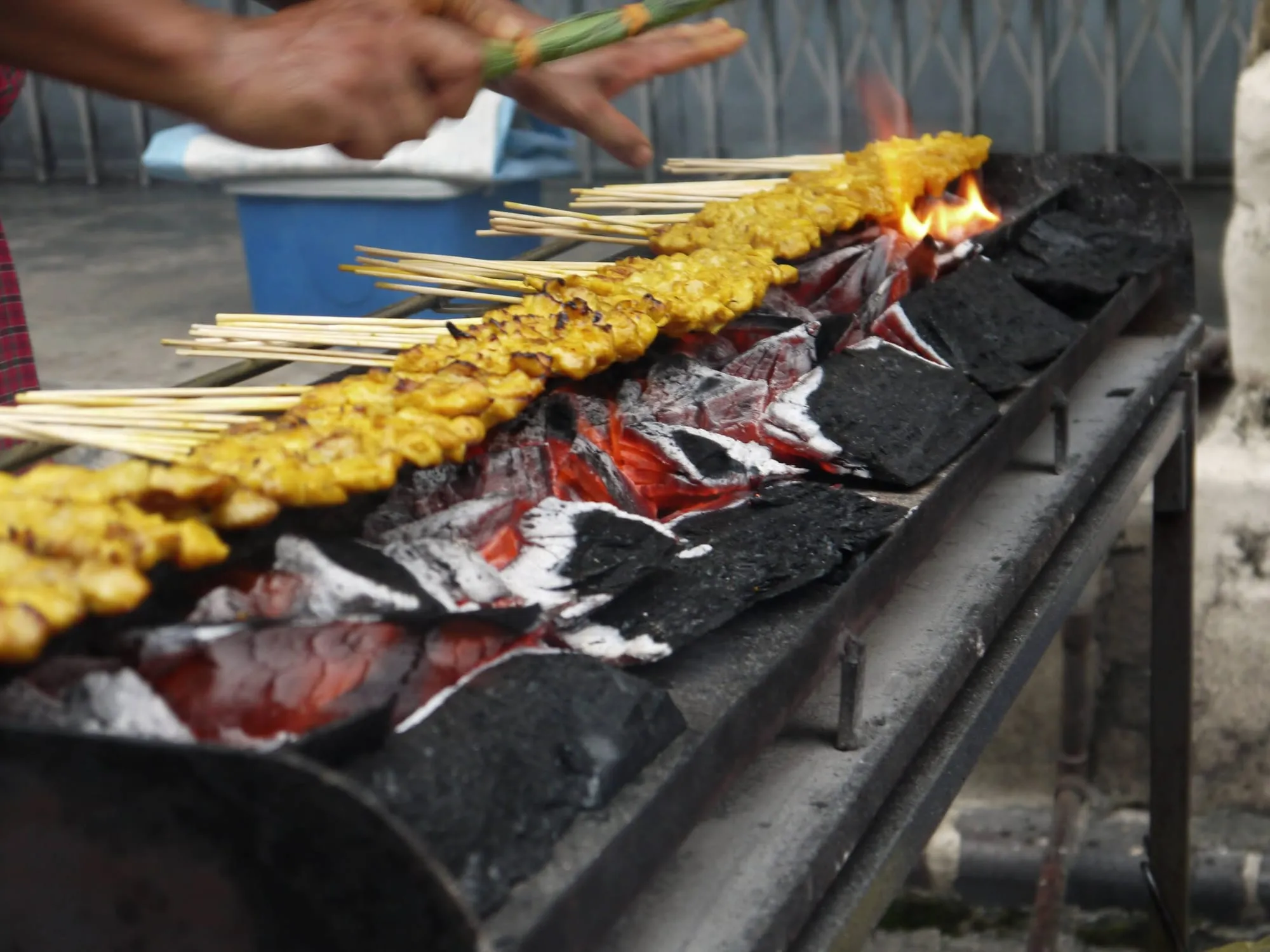
Local street food night tour with wok-fried noodlesad: Experience the street food of Malaysia on a night tour of Kuala Lumpur, and follow in the footsteps of the locals at a lively night market and more. Taste typical flavours and delicious bites, such as chicken curry puff, dim sum and satay sticks.
Common questions
What is the difference between Kuala Lumpur Curry Laksa and Penang Laksa?
Kuala Lumpur Curry Laksa (often called Curry Mee) features a rich, velvety soup base of coconut milk, chicken stock, and ground spice rempah, topped with tofu puffs, cockles, and aubergine. Penang Laksa (Asam Laksa) contains no coconut milk; its broth is sour, tangy, and fish-based, simmered with flaked mackerel, sour tamarind, lemongrass, and garnished with fresh mint, pineapple, and torch ginger flower.
What is 'wok hei' in Char Kway Teow?
Wok hei translates literally from Cantonese as 'the breath of the wok'. It refers to the complex, smoky, caramelised flavour created when flat rice noodles and sweet dark soy sauce are tossed continuously over intense heat inside a cast-iron wok, vaporising microscopic oil droplets and partially charring the edges of the noodles without burning them.
Why do vendors mix two types of noodles in Curry Laksa?
The standard noodle order in Kuala Lumpur is 'mee hoon mixed' (a combination of thick yellow wheat egg noodles and thin white rice vermicelli). The porous vermicelli absorbs the spicy coconut curry broth, while the bouncy egg noodles provide chewiness and texture in every mouthful.
Are blood cockles safe to eat in street noodles?
Blood cockles (kerang) are a traditional, briny topping in both curry laksa and char kway teow. Established hawkers scald them in boiling water or wok-fry them at intense heat. If you prefer your cockles thoroughly cooked or wish to omit them entirely, tell the vendor 'kerang masak' (cooked cockles) or 'tanpa kerang' (without cockles) when ordering.