In this guide
💡 The Short Version: Bratislava and Vienna are about 60 kilometres apart. The regional bus is the cheapest option: Slovak Lines runs roughly 21 coaches daily from €7.90 one way, taking 70 to 80 minutes to Wien Hauptbahnhof. Direct REX trains run hourly from Bratislava Hlavná stanica (56 to 65 minutes) or Bratislava-Petržalka (45 minutes) to Wien Hauptbahnhof, with return tickets sold in the ZSSK app and at the station. From late March to early November and during Advent, the Twin City Liner catamaran sails down the Danube to Vienna’s Schwedenplatz. Or book a transfer: the Bratislava - Vienna Airport: Direct & Reliable Bus Transferad is from €9 per person. Or book a tour: Slovak Lines bus transfers between Bratislava and Viennaad are from €9, and you plan the day yourself.
Both capitals were part of the Habsburg monarchy. One day covers St Stephen’s Cathedral, the Hofburg courtyards, one art museum and a coffee house before you return to Bratislava.
Transit options compared
Slovak Lines coaches start from €7.90 one way.
| Transport mode | Journey time | Departure points in Bratislava | Arrival point in Vienna |
|---|---|---|---|
| Slovak Lines / RegioJet Bus | 70 to 80 min | Nivy underground bus station (-1 floor) or Most SNP | Wien Hauptbahnhof (Wiedner Gürtel) or Vienna Airport |
| Direct Train (REX 8 from Hlavná stanica) | 56 to 65 min | Bratislava Hlavná stanica (Central Station) | Wien Hauptbahnhof (Platform level) |
| Direct Train (REX from Petržalka) | 45 min | Bratislava-Petržalka station | Wien Hauptbahnhof (Platform level) |
| Twin City Liner Catamaran | 75 min | Rázusovo nábrežie passenger port | Vienna Schwedenplatz (Donaukanal) |
| Private Taxi or Bolt | 50 to 65 min | Door-to-door hotel pick-up | Door-to-door address in Vienna |
Travelling by express coach
Coaches are the cheapest and most frequent connection between the two capitals.
Slovak Lines
Slovak Lines operates approximately 21 daily departures between central Bratislava and Vienna.
- Boarding points in Bratislava:
- Nivy Bus Station: The main departure terminal is located on floor -1 (Platform 7) of the modern Nivy shopping galleria.
- Most SNP: Coaches make a secondary pick-up stop at the bus platforms beneath the northern pylon of Most SNP, convenient for Old Town hotels.
- Hlavná stanica: Selected departures stop at platform H outside the central railway station.
- Arrival in Vienna: Coaches terminate at Wien Hauptbahnhof (Bus Terminal at Wiedner Gürtel, bay C1), with intermediate stops at Vienna International Airport (Schwechat).
- Fares & Booking: One-way fares start at €7.90 when booked in advance via the Slovak Lines mobile app or website.
RegioJet and FlixBus
The Czech carrier RegioJet (yellow coaches) and FlixBus (green coaches) also run hourly services from Nivy and Most SNP to Wien Hauptbahnhof and Erdberg (VIB). Reserve a seat online for Friday afternoons and Sunday evenings.
Travelling by direct train
Trains are not affected by motorway traffic and connect to the Vienna U-Bahn (underground) network.
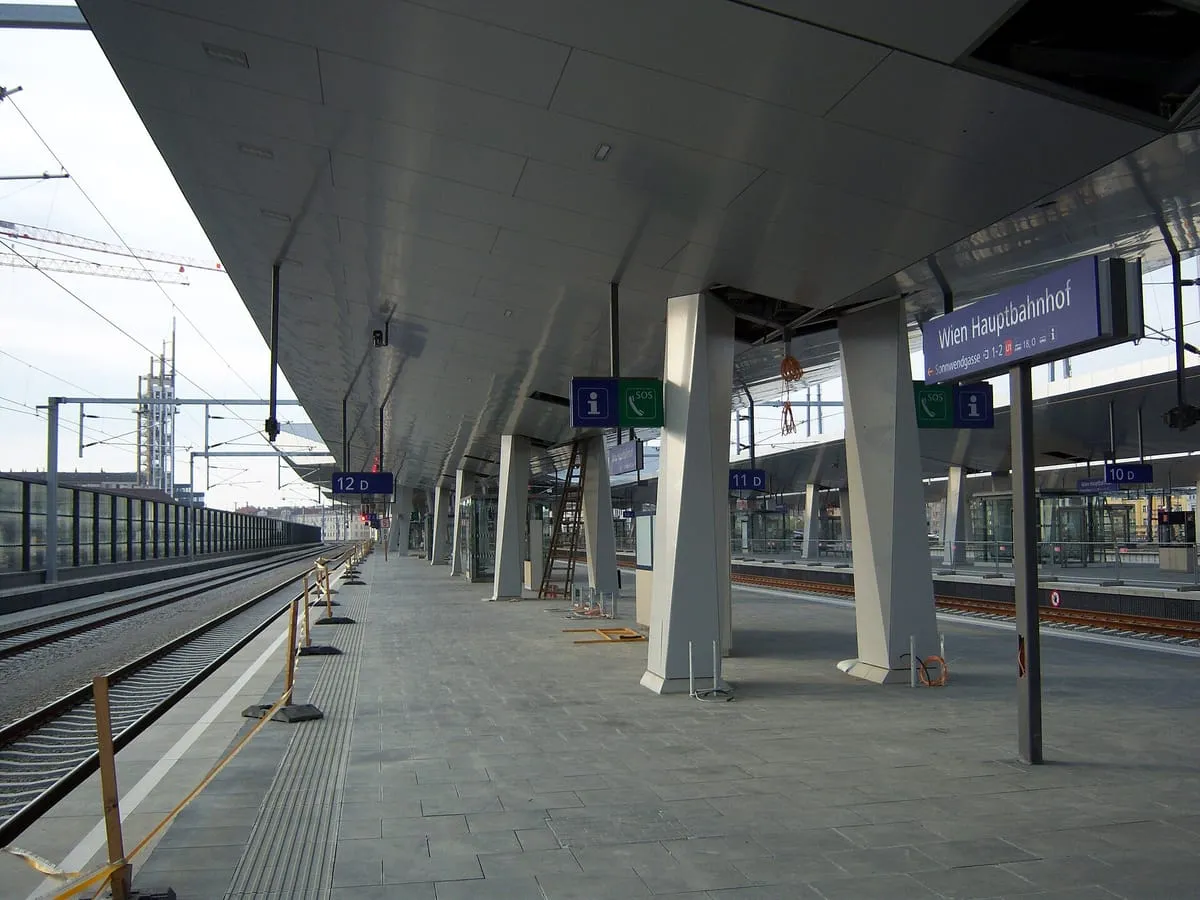 The platforms of Wien Hauptbahnhof, arriving in 56 to 65 minutes from Bratislava. Photo: My Friend, Wikimedia Commons, CC BY-SA 3.0.
Slovak Rail (ZSSK) and Austrian Federal Railways (ÖBB) operate two direct regional rail corridors:
1. From Bratislava Hlavná Stanica via Marchegg (REX 8)
Departing from Bratislava’s central railway station, Regional Express (REX 8) trains run hourly throughout the day, operating from early morning until late at night. Following the electrification and double-tracking of the Marchegg rail line, journey times between Bratislava Hlavná stanica and Wien Hauptbahnhof are 56 to 65 minutes.
2. From Bratislava-Petržalka via Kittsee
Trains departing from Bratislava-Petržalka station (located south of the Danube, accessible via bus 80, 91, or 93 from the city centre) cross the Austrian border at Kittsee, reaching Wien Hauptbahnhof in just 45 minutes.
The Europa Regional Wien Rail Ticket
When purchasing a train ticket in Slovakia, ask for the Europa Regional Wien Ticket (Euregio Wien-Ticket):
- Where to buy: In the ZSSK mobile app (Ideme vlakom), on the webshop or at station ticket counters.
- Validity: The ticket covers an open round-trip rail journey between Bratislava and Vienna on any REX regional train within its validity window.
- City transit add-on: At the ticket window, you can add an all-day Vienna city transit pass (Wiener Linien), allowing unlimited rides on Vienna’s U-Bahn, trams, and municipal buses until 01:00 the following morning.
Travelling by river: The Twin City Liner catamaran
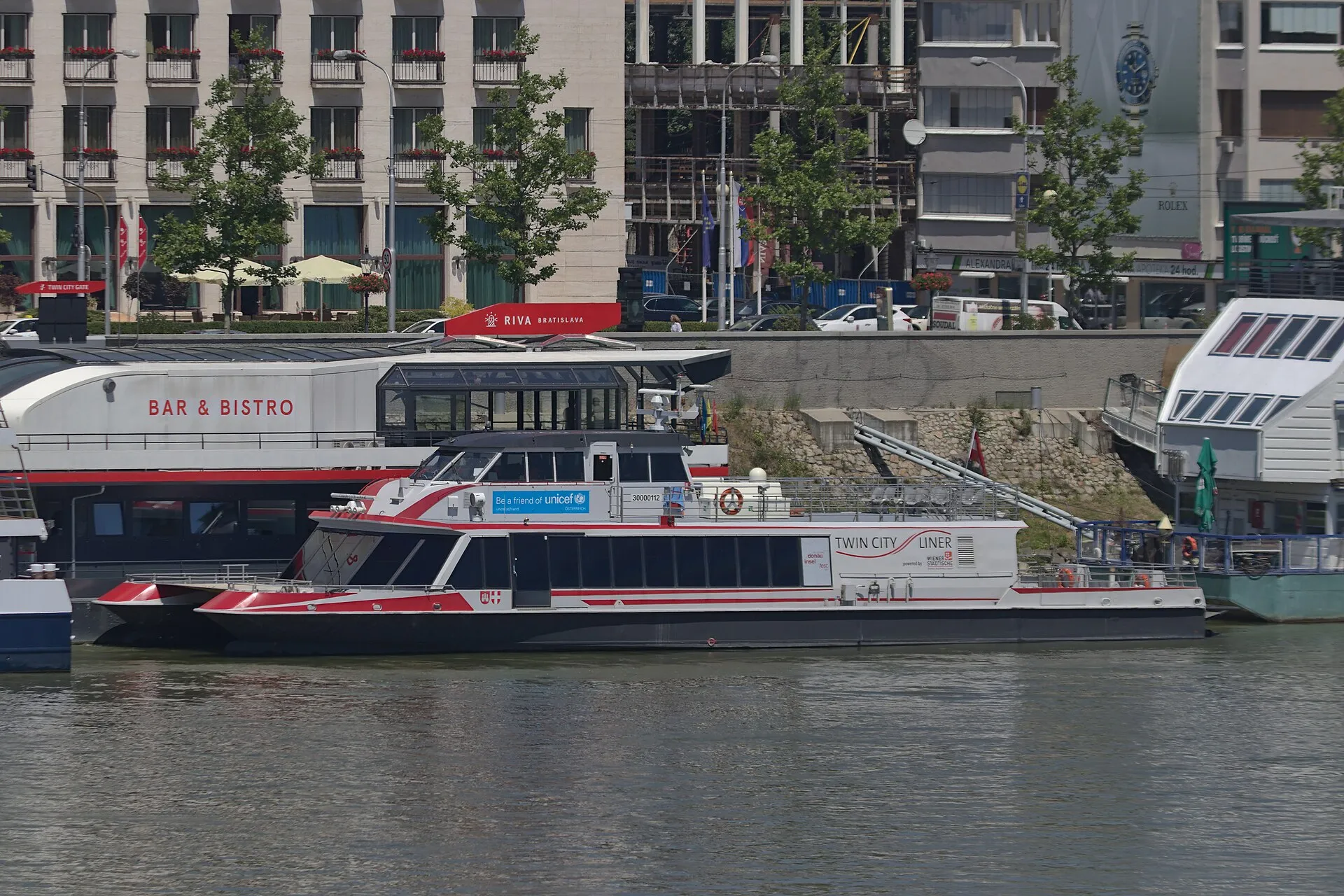
The Twin City Liner is a high-speed Norwegian-built passenger catamaran powered by waterjets, carrying up to 250 passengers along the Danube.
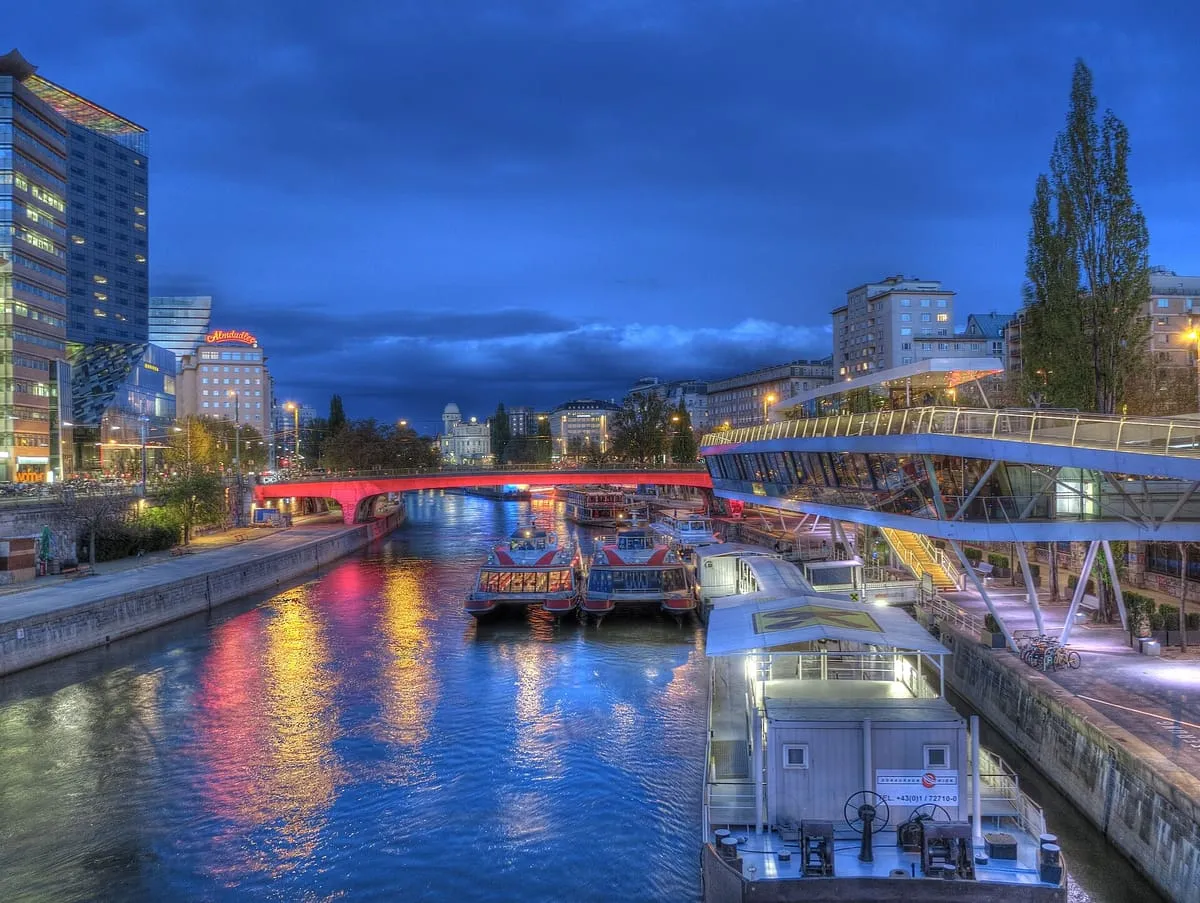 The Twin City Liner high-speed catamaran sailing on the Danube. Photo: Joadl, Wikimedia Commons, CC BY-SA 3.0 at.
The River Route and Pier Locations
- Bratislava Pier: Pontoon Humu on Rázusovo nábrežie, located directly on the Old Town waterfront between Most SNP and Old Bridge (Starý most), just a five-minute walk from St Martin’s Cathedral.
- Vienna Pier: Ship station Wien City at Schwedenplatz along the Danube Canal (Franz-Josefs-Kai). This delivers you directly into the historic centre of Vienna (District 1), with direct connections to U-Bahn lines U1 and U4.
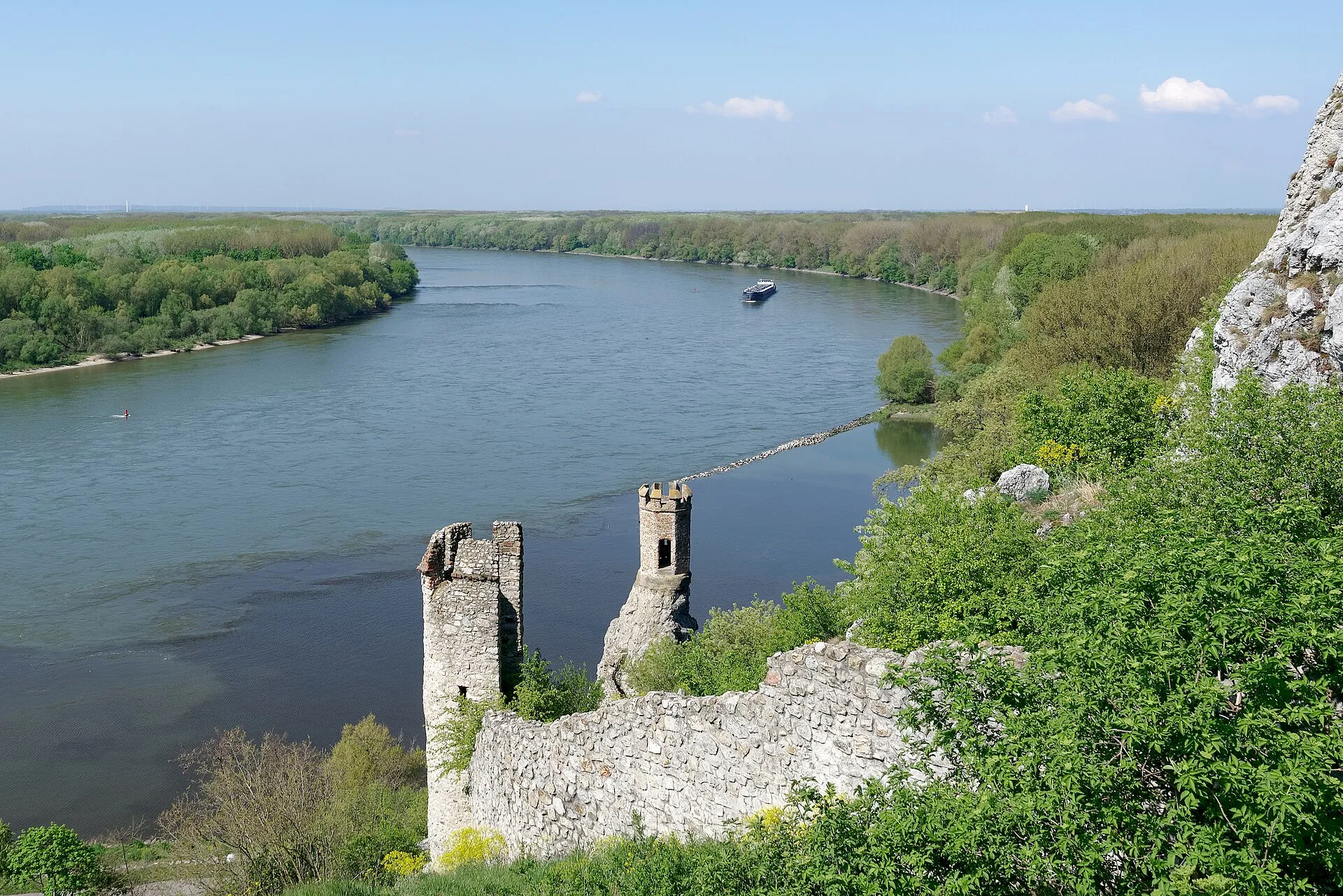
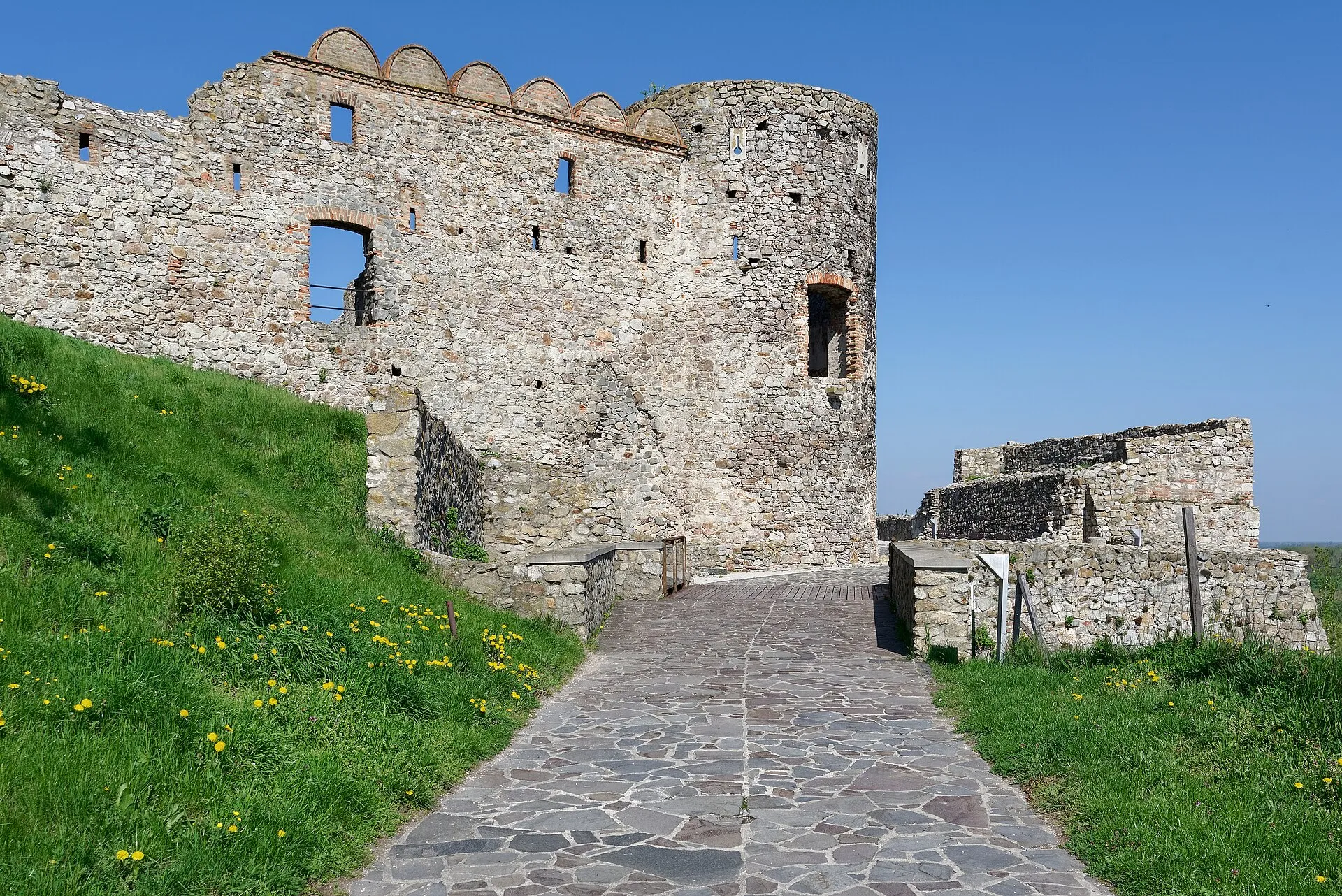
- Journey time: Approximately 75 minutes cruising at speeds up to 60 km/h, sailing past Devín Castle rock, the Austrian National Park Donau-Auen, and down the Danube Canal.
Operating Schedule and Fares
- Regular Season (late March to early November): Multiple daily departures in each direction (typically departing Vienna in the morning and returning from Bratislava in late afternoon).
- Advent Winter Season: The catamaran operates special Christmas market sailings on Fridays, Saturdays, and Sundays from late November through December (departing Vienna at 10:30, arriving Bratislava 11:45; return departs Bratislava at 16:30, arriving Vienna 18:00).
- Tickets: Fares depend on the departure time, day of the week and seating category (Main Deck or Captain’s Lounge). Book online at twincityliner.com, especially for weekend Advent trips.
One-day itinerary in central Vienna
Arriving at Wien Hauptbahnhof or Schwedenplatz around 09:30 or 10:00 gives you seven to eight hours in central Vienna.
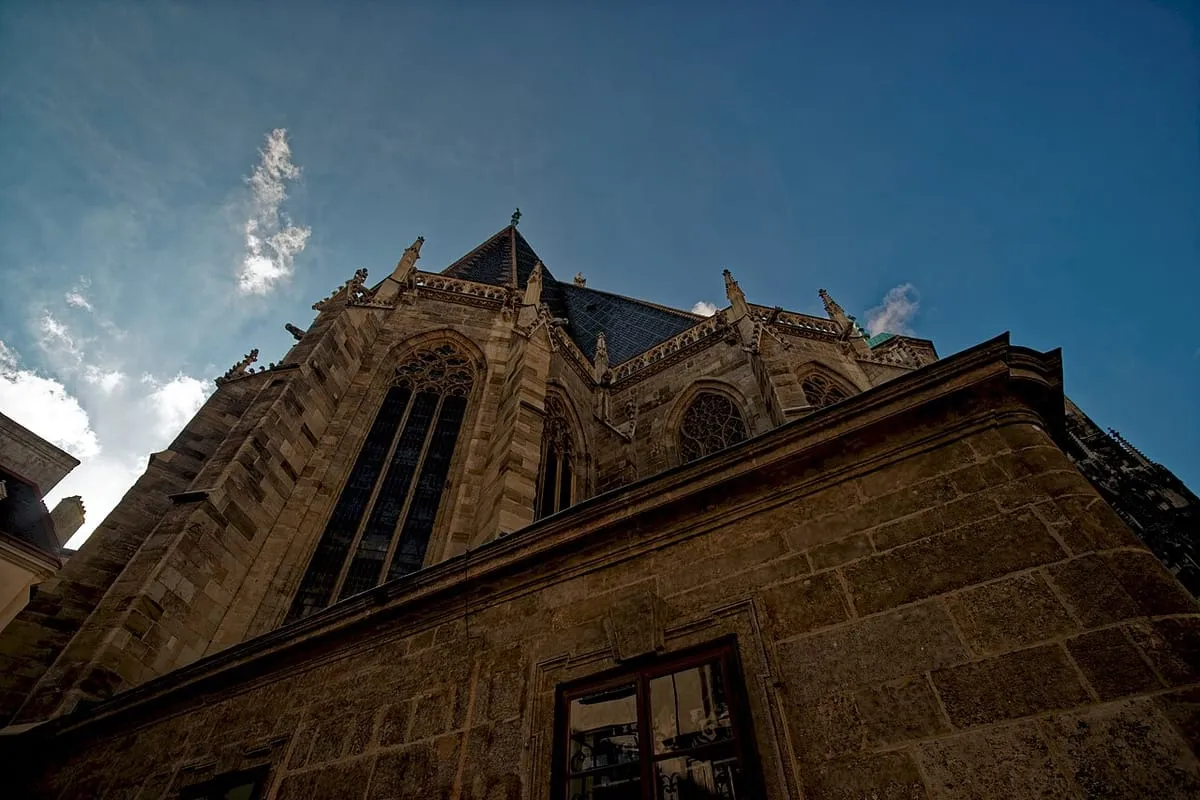 St Stephen’s Cathedral on Stephansplatz in central Vienna. Photo: Txllxt TxllxT, Wikimedia Commons, CC BY-SA 4.0.
Morning: Stephansplatz and the Graben
Take U-Bahn line U1 directly from Wien Hauptbahnhof to Stephansplatz (a 5-minute ride). The pedestrian plaza is dominated by the 136-metre South Tower and the chevron-patterned glazed roof tiles of St Stephen’s Cathedral (Stephansdom). Entry to the perimeter of the main nave is free, while self-guided audioguide tours of the choir, reliquary and catacombs are ticketed.
Walk west along the Graben, a pedestrian boulevard with the Baroque Pestsäule (Plague Column) commissioned by Emperor Leopold I in 1679. Turn onto Kohlmarkt, lined with luxury boutiques, and look in the windows of Demel, the historic imperial-and-royal (K.u.K.) confectioner.
Midday: The Hofburg Imperial Palace and Michaelerplatz
At the end of Kohlmarkt, pass through the neo-Baroque Michaelerkirche gateway into the Hofburg Palace complex. For over six centuries the Hofburg was the winter seat of the Habsburg monarchy.
The courtyards of In der Burg and Heldenplatz are free to walk through. If you wish to visit the indoor collections, purchase a combined ticket for the Sisi Museum, Imperial Apartments, and Silver Collection. Alternatively, watch the famous white Lipizzaner stallions exercising inside the historic indoor riding school of the Spanish Riding School.
Afternoon: Fine Art on the Ringstraße or Belvedere
From Heldenplatz, pass beneath the monumental Burgtor arch out onto the Ringstraße, Vienna’s grand circular boulevard commissioned by Emperor Franz Joseph I in 1857.
Depending on your artistic taste, select one major afternoon museum visit:
- Kunsthistorisches Museum (Museum of Fine Arts): On Maria-Theresien-Platz, across from its twin, the Natural History Museum. Built to house the Habsburgs’ art collections, it holds a large group of paintings by Pieter Bruegel the Elder, alongside works by Titian, Caravaggio, Vermeer and Velázquez.
- The Albertina: Next to the Hofburg, with graphic prints by Albrecht Dürer (Young Hare) and a modern art collection ranging from French Impressionism to the Russian avant-garde.
- Upper Belvedere Palace: For a Baroque palace and Gustav Klimt, take tram D from the Ringstraße to the Upper Belvedere to see Klimt’s gold-leaf The Kiss.
Late Afternoon: Classic Viennese Coffee House Culture
Viennese coffee house culture (Kaffeehaus) is recognised by UNESCO as intangible cultural heritage.
Find a marble-topped table at Café Central on Herrengasse, Café Sperl on Gumpendorfer Straße, or Café Sacher behind the Vienna State Opera. Order a Wiener Melange (espresso topped with steamed milk and velvety foam) alongside a slice of Sachertorte (dense chocolate cake with apricot jam) or warm Apfelstrudel served with whipped cream.
Tours and guided transfer options
A direct bus also runs between Bratislava and Vienna International Airport.
Bratislava - Vienna Airport: Direct & Reliable Bus Transfer
From €9 · 4.3 stars from 83 reviews · 1 hour · direct to the airport
A direct Slovak Lines bus between Bratislava and Vienna International Airport. Bratislava - Vienna Airport: Direct & Reliable Bus Transferad
Independent vs tour
A Slovak Lines transfer booked on GetYourGuide is from €9; booked direct with Slovak Lines it is from €7.90 one way. The train, catamaran and taxi options are covered above.
Practical advice for your Vienna day trip
- Passport requirement: Always carry your valid national passport or European Union national ID card. Although the border is open under the Schengen Agreement, Austrian federal police regularly board cross-border trains at Marchegg or Kittsee and pull coaches over at the border crossing for random identity checks.
- Sunday store closures: In Austria almost all shops, department stores and supermarkets are closed on Sundays. Museums, sights, restaurants and cafes open as normal.
- Currency & payments: Both Slovakia and Austria use the Euro (€). Credit and debit cards are widely accepted across Vienna, although some historic coffee houses and traditional sausage stands (Würstelstände) operate on a cash-only basis.
- Advance seat reservations: While regional REX trains do not require reservations, express coaches (Slovak Lines and RegioJet) during Sunday evening return peaks can sell out. Book your return coach departure several hours in advance via mobile apps.
What to see next
- Day Trips from Bratislava: compare excursions to Devín Castle, Danubiana, Trnava, and the wine route.
- Bratislava Airport to the City: using Vienna Airport (Schwechat) as an international flight gateway.
- 3 Days in Bratislava: fitting a Vienna excursion into your 3-day itinerary.
- Public Transport in Bratislava: connections to Central Station and Nivy bus station.
- Vienna City Guide: our guide to the Austrian capital.
Common questions
What is the quickest way to travel from Bratislava to Vienna?
The fastest option is the direct Regional Express (REX) train from Bratislava-Petržalka to Wien Hauptbahnhof, taking 45 minutes. From Bratislava Hlavná stanica (Central Station), direct REX trains via Marchegg reach Wien Hauptbahnhof in 56 to 65 minutes.
How much does a bus or train from Bratislava to Vienna cost?
Slovak Lines coaches start from €7.90 one way. Round-trip rail tickets from Slovak Rail (ZSSK) are sold in the app and at the station counter, with an option to add unlimited Vienna municipal transit for the day.
Where does the Twin City Liner catamaran dock in Vienna and Bratislava?
In Bratislava, the catamaran docks at the central passenger pontoon along Rázusovo nábrežie, five minutes' walk from St Martin's Cathedral. In Vienna, it docks directly at Schwedenplatz on the Danube Canal, right at the edge of the Innere Stadt (District 1).
Do you need a passport for a day trip from Bratislava to Vienna?
Yes. Slovakia and Austria are both in the Schengen zone with no permanent border stations, but Austrian federal police carry out spot passport and identity checks on cross-border trains, coaches and roads.