In this guide
💡 The Short Version: Located just 47 kilometres northeast of Bratislava, the historic walled town of Trnava is known as the “Slovak Rome” (Slovenský Rím) for its historic churches, university colleges and ecclesiastical palaces. Direct trains from Bratislava Hlavná stanica take 37 to 52 minutes and run on a ZSSK ticket. The centre is compact and walkable: climb the 1574 Renaissance Town Tower on Trojičné námestie, see the all-wood carved early Baroque altar inside Saint John the Baptist Cathedral, walk along the medieval brick town walls, and stop at the Synagoga Café, a restored synagogue. Or book a tour: a half-day guided trip to Trnava with return train ticketsad from €59 is sold on GetYourGuide; the train tickets are included, so you skip buying them at the station.
Trnava received the privileges of a free royal town from King Béla IV of Hungary in 1238.
Train logistics from Bratislava to Trnava
| Detail | Practical information | Recommendations |
|---|---|---|
| Departure station | Bratislava Hlavná stanica (Central Station) | Accessible via tram 1 from Old Town centre |
| Arrival station | Trnava železničná stanica | 400 metres south of the historic city walls |
| Travel time | 37 to 52 minutes (fast and regional trains) | The quickest trains make fewer stops |
| Frequency | At least hourly, with extra regional trains at peak times | First train about 04:15, last about 22:25 on weekdays (ZSSK timetable) |
| Where to buy | Station ticket counter, ZSSK app (Ideme vlakom), or zssk.sk | No seat reservation required for regional trains |
| Transit note | Trnava is outside the Bratislava city zone | Bratislava municipal tickets (IDS BK) do not cover Trnava |
From Trnava’s modernised rail terminal, exit the station building and walk straight north through the tree-lined park along Ulica Hospodárska or Radlinského. In less than six minutes, you will reach the preserved southern ramparts and the historic pedestrian core.
Why Trnava became the “Slovak Rome”
After the Ottoman Empire defeated the Hungarian royal army at the Battle of Mohács in 1526, Ottoman forces pushed north and captured the royal capital of Buda and the archiepiscopal see of Esztergom in 1543.
The Archbishop of Esztergom and his cathedral chapter fled north across the Danube into Upper Hungary (modern Slovakia) and set up their administrative base inside the walls of Trnava.
For 277 years, from 1543 until the archiepiscopal seat returned to Esztergom in 1820, Trnava was the religious, cultural and educational centre of the Kingdom of Hungary. In 1635 the Jesuit Archbishop Péter Pázmány founded Trnava University, which remained the only university in the Hungarian kingdom for more than a century until Empress Maria Theresa transferred it to Buda in 1777. Catholic and Jesuit wealth during the Counter-Reformation paid for a boom in church building, and the town is full of monasteries, seminary colleges and church spires.
Exploring the historic sights of Trnava
Trnava’s historic centre is compact and enclosed within its medieval ramparts. The main sights can be covered on foot in three to five hours.
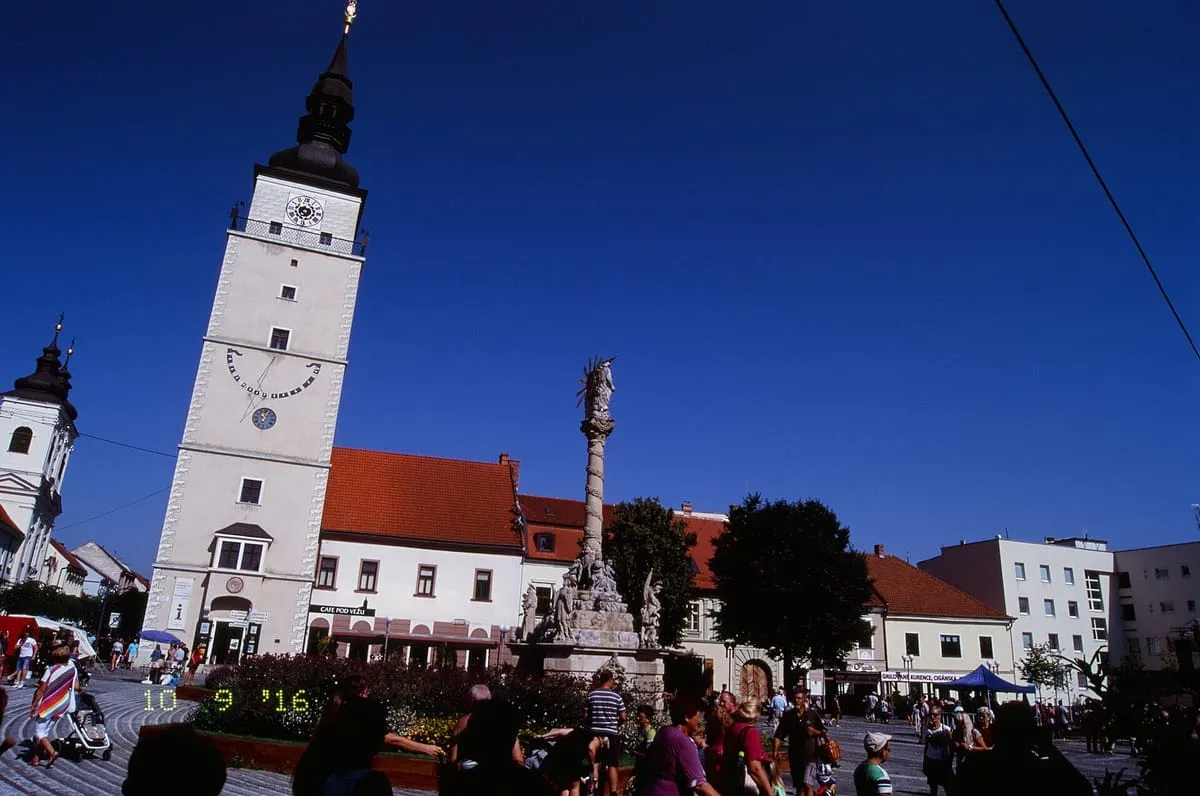 The Renaissance Town Tower overlooking Trojičné námestie in Trnava. Photo: Michal Žilinský, Wikimedia Commons, CC BY-SA 4.0.
Trojičné Námestie and the Renaissance Town Tower
The central axis of Trnava is Trojičné námestie (Trinity Square), a cobbled pedestrian plaza with a baroque Holy Trinity plague column erected in 1695.
On the corner of the square stands the Town Tower (Mestská veža), a Renaissance civic watchtower begun in May 1574 under Master Jakob. It was built after a fire and amid fears of Ottoman raids, and rises nearly 60 metres to a gilded copper dome crowned by a statue of the Virgin Mary.
- Climbing the tower: Visitors enter through the Trnava Tourism information office on the ground floor. 143 wooden steps lead through the interior levels, past the hand-wound mechanical clock made in 1729 by the clockmaker Franz Langer, which still runs on heavy stone counterweights.
- The observation gallery: At a height of 29 metres, the open-air gallery looks over Trnava’s terracotta rooftops, the twin Gothic spires of Saint Nicholas, the brick city ramparts and the Small Carpathians to the west.
- Hours & Admission: Open daily from 10:00 to 18:00 (last entry at 17:30). Admission is €4.00 for adults, €3.00 for students and seniors, and €2.00 for children.
Cathedral of Saint John the Baptist: early Baroque altar
On Univerzitné námestie (University Square), the Cathedral of Saint John the Baptist (Katedrála svätého Jána Krstiteľa) was commissioned by Palatine Nicholas Esterházy, designed by the Italian architects Antonio and Pietro Spazzo and consecrated in 1637 as the centrepiece of the Jesuit university complex.
The two-towered exterior is plain; the interior is not:
- The all-wood high altar: Completed in 1640 by the woodcarvers Balthasar Knilling and Vít Stadler, the early Baroque altarpiece is 20.3 metres high and 14.8 metres wide. It is carved entirely from native oak and linden wood, gilded, and filled with dozens of life-sized polychrome statues of Old Testament prophets, saints and angels.
- Stucco ceiling vaults: The vaults are covered in white stucco and fresco medallions by the Italian artist Giovanni Battista Rosso, made between 1639 and 1700, depicting scenes from the life of Saint John the Baptist.
The Basilica of Saint Nicholas (Dóm Svätého Mikuláša)
On Námestie svätého Mikuláša in the oldest part of the upper town, this Gothic three-nave basilica was built between 1380 and 1421 atop an earlier eleventh-century Romanesque parish church. Between 1543 and 1820, it served as the official cathedral of the exiled Archbishops of Esztergom.
The twin Gothic towers of the Basilica of Saint Nicholas in Trnava. Photo: Szombat78, Wikimedia Commons, CC0.
The basilica has twin octagonal Gothic towers, one left unfinished under a truncated timber roof. Inside are fourteenth-century Gothic ribbed vaulting, baroque side chapels and the Chapel of the Virgin Mary of Trnava.
This chapel houses a seventeenth-century painting of the Virgin Mary that is central to local lore. According to historical municipal chronicles, the image miraculously wept tears of blood in 1663 during an Ottoman siege, and again in 1708 during an outbreak of the bubonic plague, following which the pestilence abruptly ceased.
The Medieval City Fortifications
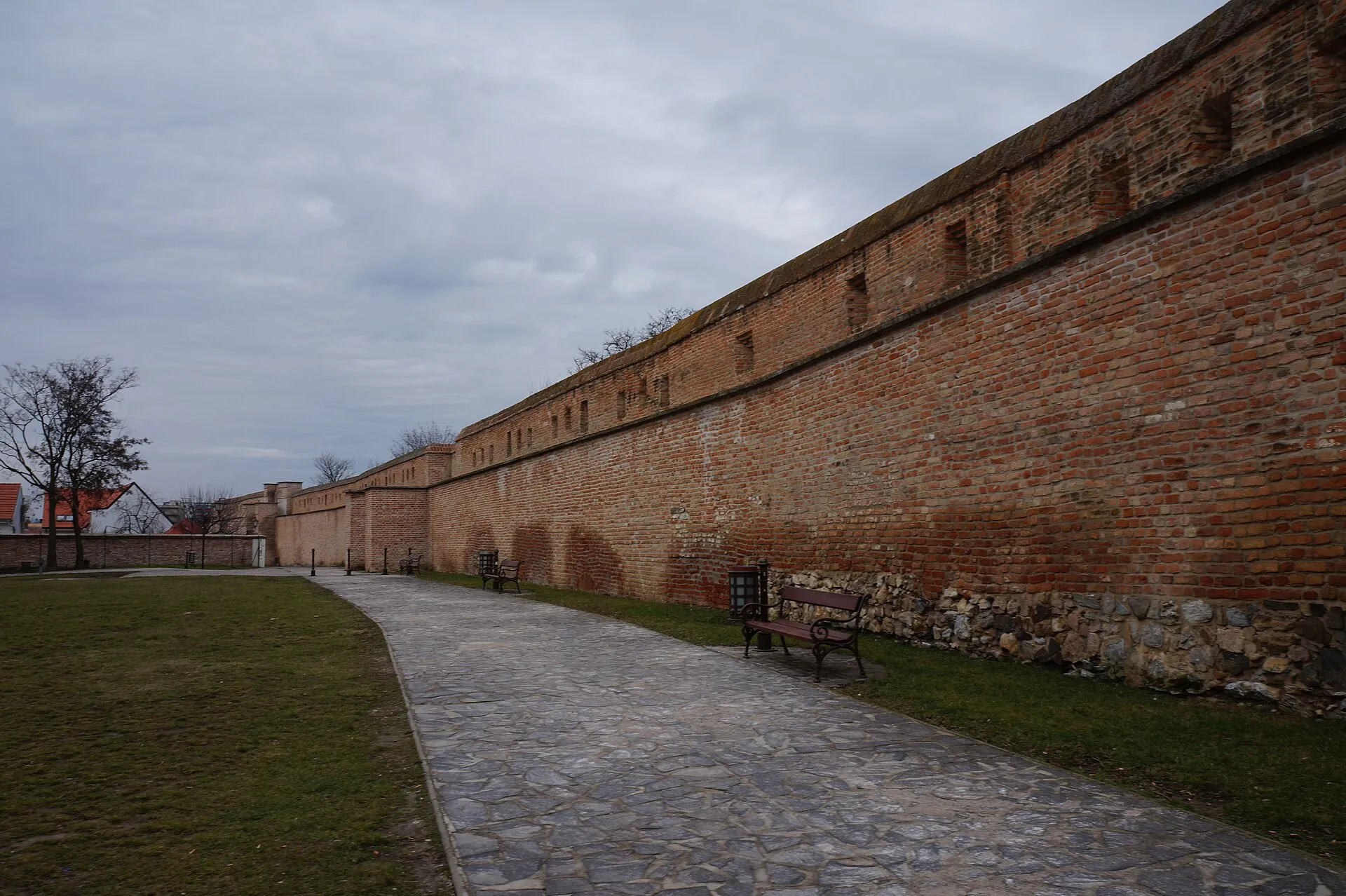
Trnava has kept most of its medieval town walls (Mestské opevnenie).
Built between the thirteenth and sixteenth centuries from red brick and quarry stone, the fortifications originally ran 2.3 kilometres, enclosing 56 hectares. Over two kilometres of wall still stand, eight to ten metres high and two metres thick. Paved promenades and gardens line the base of the ramparts, passing restored rectangular defensive towers, barbicans and water ditches. One stretch runs along the eastern perimeter near the Bernolák Gate (Bernolákova brána).
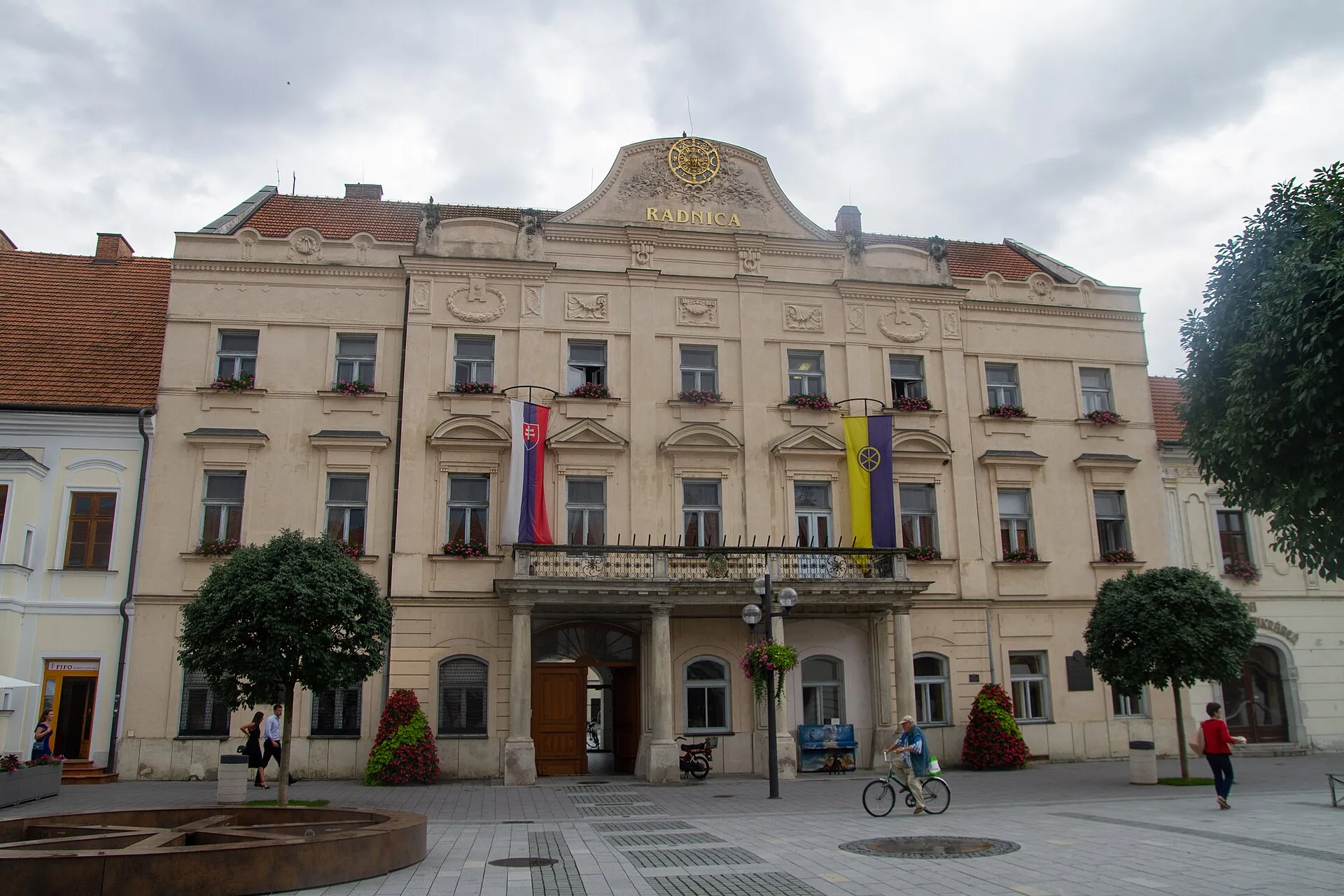
Trnava Town Hall. Photo: Maksym Kozlenko, Wikimedia Commons, CC BY-SA 4.0.
Coffee culture and the Synagoga Café
The Synagoga Café is on Haulíkova street just off the main pedestrian corridor. The Viennese architect Jakub Gartner designed the building in 1891 as an Orthodox synagogue, which served Trnava’s Jewish community until the Second World War. After decades of neglect under the communist regime it was restored, with the work completed in 2010.
In 2016 the building reopened as a café and cultural venue, and it won the title of Cultural Monument of the Year in Slovakia. Tables sit beneath the painted Moorish-revival ceilings and exposed brick, with the restored women’s gallery above, antique bookshelves and contemporary art. The café serves specialty coffee, Slovak wines, draft craft beers and cakes. It is open Monday to Thursday from 08:00 to 22:00, Friday and Saturday until 23:00, and Sunday from 09:00 to 21:00.
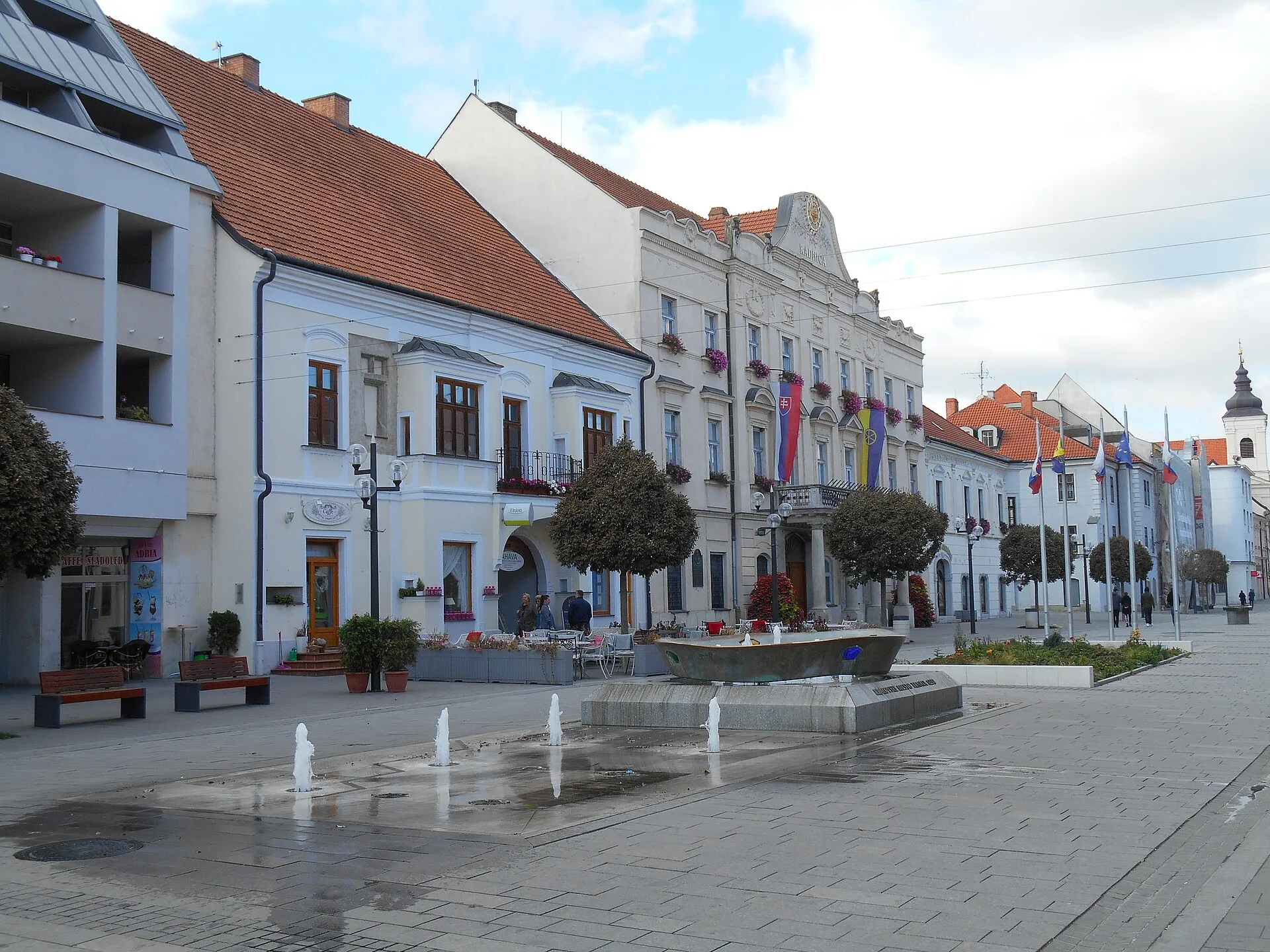
Trnava’s pedestrian street. Photo: Radovan Bahna, Wikimedia Commons, CC BY-SA 4.0.
Tours and organised excursions
The train to Trnava is simple to do independently. A guided tour adds a guide for the town’s ecclesiastical history and includes the return train tickets.
From Bratislava: Half-Day Trip to Trnava with Train Tickets
From €59 · 4.6 stars from 3 reviews · 5.5 hours · return train tickets included
A guided walking tour of Trnava, with return train tickets from Bratislava. From Bratislava: Half-Day Trip to Trnava with Train Ticketsad
DIY train trip vs guided excursion
Going independently means a ZSSK return ticket plus the €4 Town Tower, at your own pace and with your own choice of cafes. The guided excursion is from €59 per person, with the rail booking handled and a guide’s commentary.
Practical visiting tips
- Station tickets: You do not need to book your train ticket days in advance. Standard domestic fares in Slovakia are fixed by distance. Purchase your ticket at the Bratislava Hlavná stanica ticket window ten minutes before departure or use the ZSSK app (Ideme vlakom) on your phone.
- Combine with lunch: Hlavná ulica has Slovak restaurants and microbreweries, including Pivovar Sessler and Akadémia Beer & Bistro.
- Check religious services: The Cathedral of Saint John the Baptist and the Basilica of Saint Nicholas are active places of worship. They are generally open to visitors in the daytime (typically 10:00 to 12:00 and 14:00 to 17:00), but access to the altars may be restricted during Sunday morning masses or afternoon weddings.
- Footwear: The historic centre is paved with cobblestones and limestone flags, and the Town Tower has narrow wooden staircases, so wear sturdy shoes.
What to see next
- Day Trips from Bratislava: compare excursions to Devín Castle, Vienna, Danubiana, and the wine towns.
- Small Carpathians Wine Route: Svätý Jur, Pezinok and Modra, the wine towns northeast of Bratislava.
- Old Town Hall and Main Square: compare Trnava’s Town Tower with Bratislava’s municipal clock tower.
- Public Transport in Bratislava: Bratislava Hlavná stanica and regional transit.
- 3 Days in Bratislava: where a Trnava excursion fits in a third day.
Common questions
Why is Trnava called 'Little Rome' or the 'Slovak Rome'?
Trnava has a dense concentration of Gothic and Baroque churches within its medieval walls. When the Ottoman Empire captured Buda and Esztergom in 1543, the Archbishop of Esztergom moved his seat to Trnava, which became the religious and intellectual centre of the Kingdom of Hungary for nearly three centuries.
How do you get from Bratislava to Trnava by train?
Direct Regional Express (REX) and domestic passenger trains depart Bratislava Hlavná stanica (Central Station) at least once an hour on the main railway line towards Žilina, the quickest at about quarter past each hour. The rail journey takes 37 minutes on the quickest train and up to 52 on slower ones, according to the ZSSK timetable, arriving at Trnava station, a five-minute walk from the historic town walls.
How much is a train ticket from Bratislava to Trnava?
You need a ticket from the national rail operator ZSSK, sold at station ticket desks and in the ZSSK app (Ideme vlakom). Trnava is outside the Bratislava IDS BK transit tariff, so city tickets do not cover it.
What are the main sights to see in Trnava?
The Town Tower of 1574 on Trojičné námestie, the 20-metre carved wooden high altar inside the Cathedral of Saint John the Baptist, the two kilometres of surviving medieval brick walls, the twin-towered Basilica of Saint Nicholas, and coffee inside the restored nineteenth-century Synagoga Café.