In this guide
💡 The Short Version: The Small Carpathians Wine Route (Malokarpatská vínna cesta) runs along the southeastern slopes of the Small Carpathian mountains (Malé Karpaty) northeast of the capital. You can reach the terraced vineyards of Svätý Jur in 14 minutes by direct train, the winemaking town of Pezinok in 20 minutes, and the ceramics town of Modra in 45 minutes by regional bus. A bus beyond Modra reaches Červený Kameň Castle, which has vaulted wine cellars. Or book a tour: the 6.5-hour Small Carpathian wine tourad from €228 includes transport, which replaces the train and bus connections out to the wine towns.
Winemaking in the foothills above Bratislava dates back more than two thousand years to Celtic and Roman settlements. In the Middle Ages and the Renaissance the free royal towns along this corridor supplied royal courts across Central Europe, and Empress Maria Theresa granted tax exemptions and privileges to Small Carpathian vintners. Today the region has family-run taverns (viechy), small modern wineries and a Renaissance fortress, all within a day trip of the capital.
Route summary and transit overview
| Town or sight | Distance from Bratislava | Transit connection & frequency | Main attractions |
|---|---|---|---|
| Svätý Jur | 14 km northeast | Direct S50 / REX train from Hlavná stanica (every 30 min) | Medieval town core, terraced vineyards, Gothic Church of St George |
| Pezinok | 21 km northeast | Direct S50 train from Hlavná stanica (every 30 min) | Small Carpathian Museum & wine presses, Pezinok Castle park, winery cellars |
| Modra | 28 km northeast | Regional bus (lines 506/540) from Nivy terminal (every 30–60 min) | Modranská majolika pottery, Ľudovít Štúr museum, traditional wine viechy |
| Červený Kameň Castle | 35 km northeast | Regional bus line 540 from Nivy to Častá, rázcestie (€2.40) | 70 m Fugger cellars, Renaissance fortress palace, falconry grounds |
The three historic wine towns
Svätý Jur: Medieval terraces and ancient ramparts
Just 14 kilometres from Bratislava, Svätý Jur (“Saint George”) is the closest historic wine town to the capital. The town centre was declared a protected urban conservation reservation in 1990 for its intact sixteenth- and seventeenth-century Renaissance vintner houses, surrounded by fragments of Gothic town fortifications.
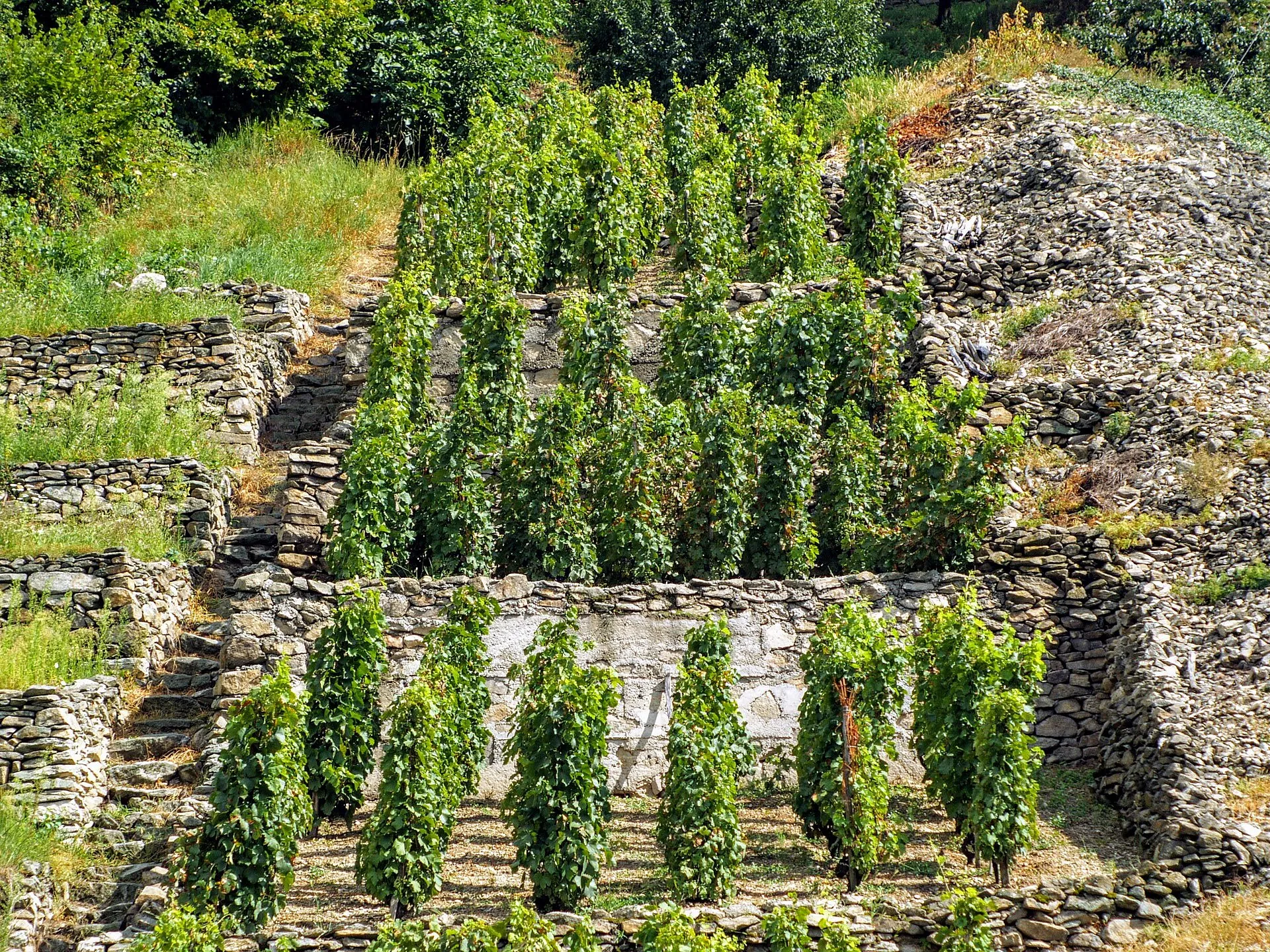
- Vineyard terraces: The slopes behind the town are lined with stone-walled dry terraces created over seven centuries. The granite-rich soils absorb heat during the day and release it to the vines at night.
- Church of Saint George: Rising above the upper edge of town on a fortified terrace, the thirteenth-century Gothic Church of Saint George features a standalone seventeenth-century wooden belfry constructed entirely without metal nails, and a carved white-sandstone Renaissance altarpiece dating from 1527.
- Biely Kameň hike: A marked hiking trail leads from the upper vineyards into the oak-forested ridge of the Small Carpathians, reaching the stone ruins of Biely Kameň (White Rock Castle), a thirteenth-century fortress abandoned in the seventeenth century following Ottoman raids.
Pezinok: The main wine town
Seven kilometres further along the rail corridor, Pezinok is the administrative and commercial centre of the Small Carpathian wine region, with about 25,000 residents.
- Small Carpathian Museum (Malokarpatské múzeum): In a restored Renaissance vintner’s manor on Main Street (Ulica M. R. Štefánika 4), the museum holds historic wooden open-beam wine presses. Exhibitions cover grape pressing, oak barrel cooperage and the regional wine trade, with optional sommelier-led tastings in the vaulted cellar.
- Pezinok Castle (Šimák Zámok): Originally a thirteenth-century water fortress surrounded by moats, the castle was converted into a Renaissance residence. It now houses a boutique hotel, an English landscape park and private wine cellars storing vintages from the surrounding estate vineyards.
- Autumn Grape Harvest (Vinobranie): If visiting during mid-September, Pezinok hosts the annual Pezinské vinobranie, a three-day harvest festival where central streets are closed to traffic and lined with wooden stalls serving freshly fermented young grape must (burčiak), roast goose, potato flatbreads (lokše), and live folk music.
Modra: Majolica pottery and national heritage
Situated 28 kilometres northeast of Bratislava at the foot of the mountains, Modra is known for two traditions: winemaking and decorative folk ceramics.
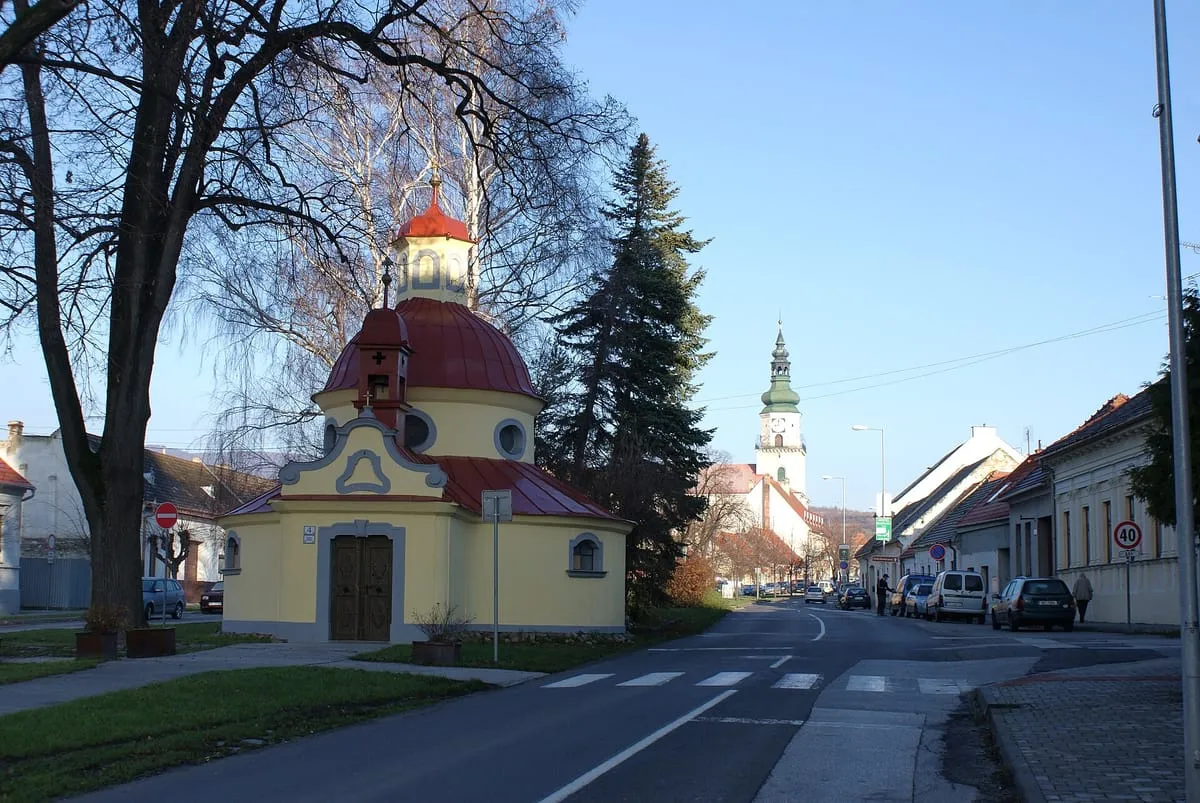 The historic main square of Modra in the Small Carpathians. Photo: Feťour, Wikimedia Commons, Public domain.
- Modra Ceramics (Modranská majolika): Modra has produced glazed majolica pottery since the sixteenth century, when Anabaptist craftsmen (Hutterites or Habáni) settled in the region, bringing advanced tin-glazed ceramic techniques. The white-glazed vessels painted with blue, yellow and green flowers became a symbol of Slovak folk art. At Slovenská ľudová majolika (Dolná 138) you can tour the working workshops, watch potters throw clay on wheels and hand-paint patterns, and buy hand-made pieces in the shop.
- Ľudovít Štúr Heritage: Modra was the last home of Ľudovít Štúr (1815–1856), the linguist, philosopher and leader of the nineteenth-century Slovak national revival who codified the modern Slovak literary language. The Museum of Ľudovít Štúr on the main square covers his life and his death in Modra.
- Town Wine Cellars (Viechy): Modra’s long, tree-shaded square is lined with traditional family-owned vintner taverns marked by a bundle of pine twigs (viecha) hung over the entrance. These establishments serve wines poured directly from wooden casks alongside cold platters of local smoked sausages, sheep cheese (oštiepok), and pickled peppers.
Červený Kameň Castle: Renaissance fortress and monumental cellars
Červený Kameň Castle (Red Stone Castle) stands on a wooded quartzite spur above the village of Častá, seven kilometres north of Modra.
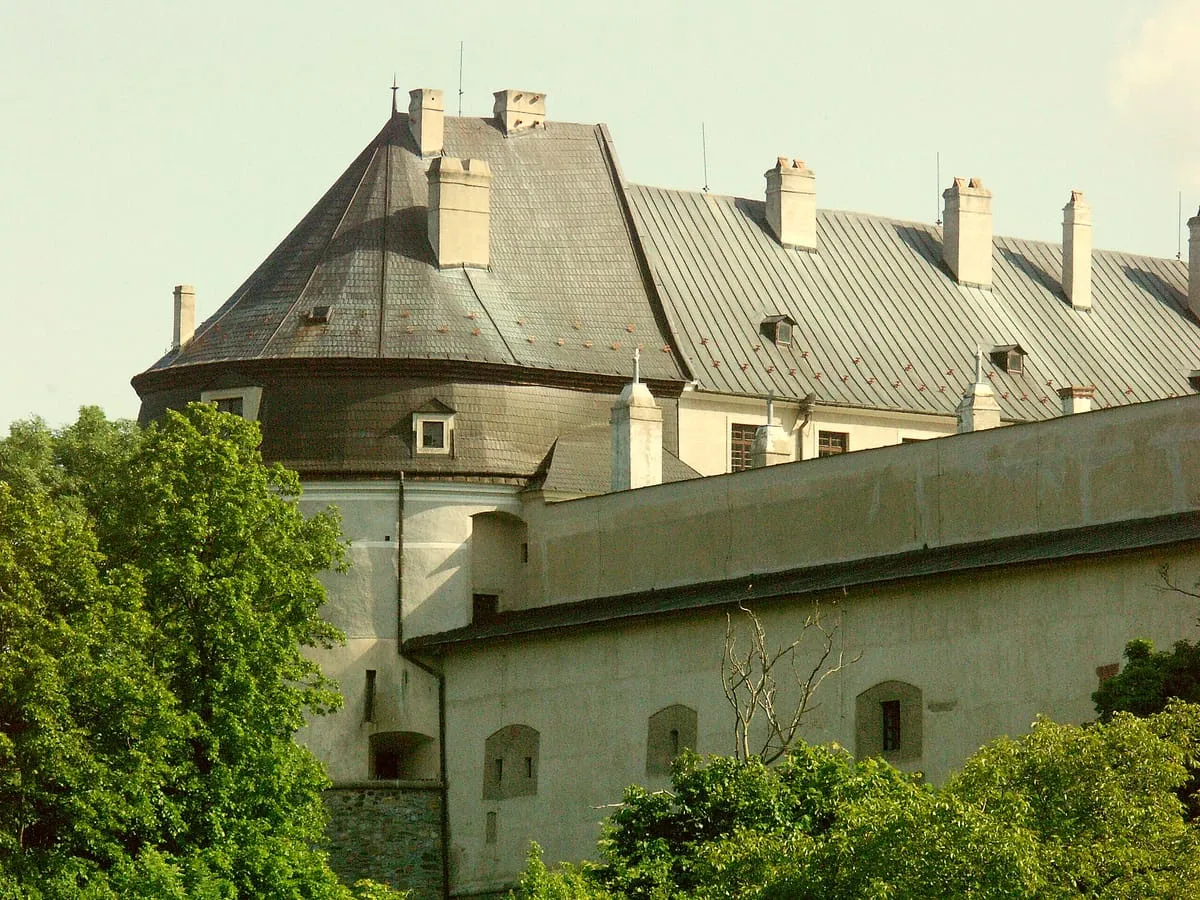 The fortress bastions and residential wings of Červený Kameň Castle. Photo: Rado Bahna, Wikimedia Commons, Public domain.
Originally established in the mid-thirteenth century by Queen Constance of Hungary, the castle was acquired in 1535 by the Fugger family of Augsburg, a banking and mining dynasty. Anton Fugger rebuilt the medieval fortress as a Renaissance stronghold designed to withstand cannon fire, with four cylindrical corner bastions.
In 1588 the fortress passed to the Hungarian noble Pálffy family, who gradually turned it into a Baroque residential palace and held the estate until 1945.
The Storage Cellars
The cellar complex, built by the Fuggers in the 1530s, is the castle’s main feature. It spans two vaulted levels beneath the courtyard and measures up to 70 metres in length and nine metres in height.
Anton Fugger originally designed the subterranean vaults as a secure European transshipment depot for copper mined in central Slovakia, the vaults were later used by the Pálffy counts to store hundreds of thousands of litres of regional wine in oak casks. The temperature remains stable year-round, between 10°C and 12°C.
Visiting Červený Kameň
- Getting there: Board Slovak Lines regional bus 540 from Bratislava’s underground Nivy bus station toward Častá. Disembark at the stop Častá, rázcestie Červený Kameň (journey time 55 minutes, fare €2.40). From the road junction, follow the signposted asphalt lane uphill through the beech forest for 1.2 kilometres (approximately 15 to 20 minutes on foot) to the castle gatehouse.
- Opening hours: Run by the Slovak National Museum (SNM), the castle is visited on guided tours; the English tours start at 11:30 and 15:30, Monday to Sunday (snm.sk).
- Admission & Tours: Guided tours of the palace state rooms and historical furnishings cost €8.00 for adults on the long tour and €7.00 on the short tour in a foreign language, with English tours at 11:30 and 15:30 daily, according to snm.sk. Special tours of the underground cellars and bastions run on summer weekends. Bratislava Card holders enter the castle museum free.
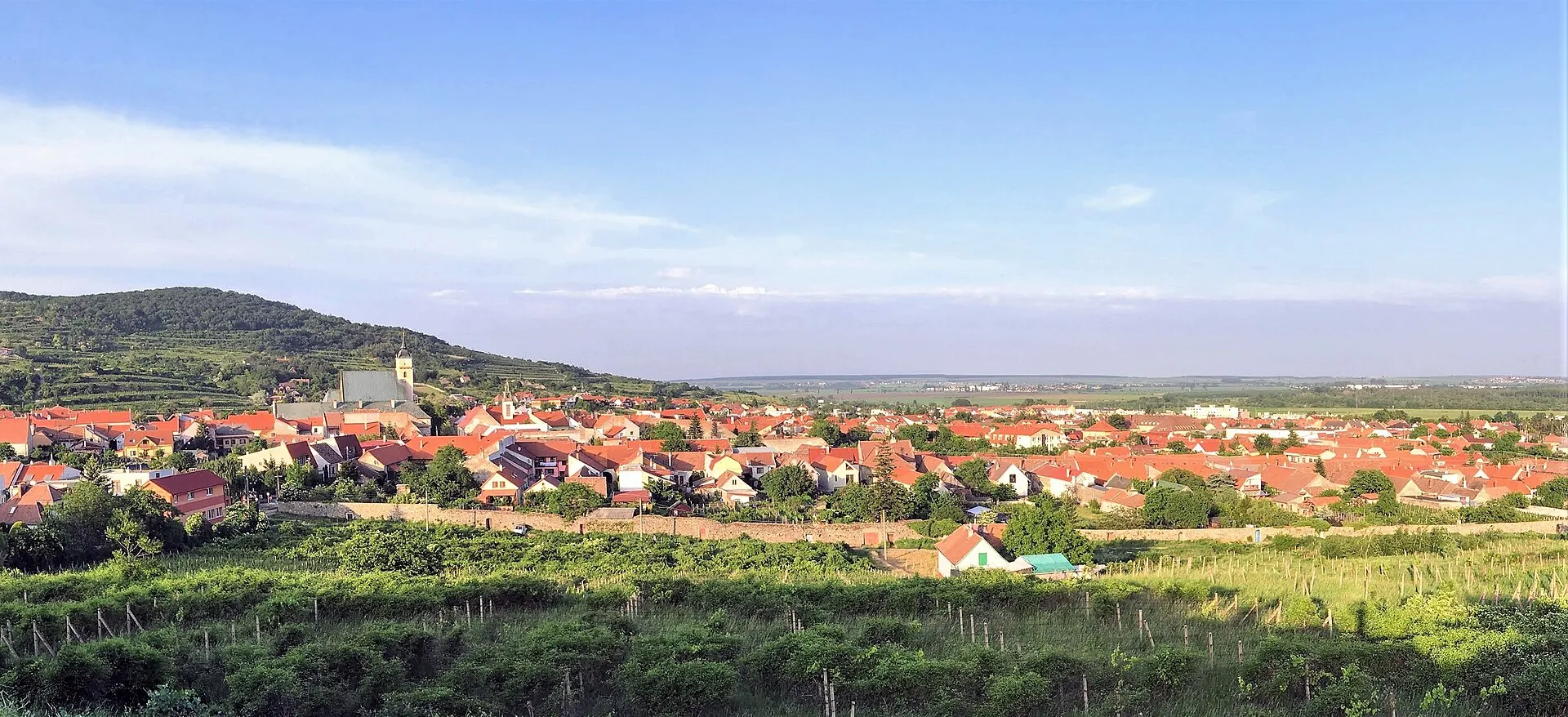
Svätý Jur. Photo: Tomáš Bartovič, Wikimedia Commons, CC BY 4.0.
Regional grape varietals and what to taste
The vineyards face south and southeast on weathered granite, shale and clay loess, warmed by air currents from the Danube. The region mainly makes fresh, aromatic, mineral white wines, alongside some reds.
White grapes
- Veltlínske zelené (Grüner Veltliner): The main white grape of the region. It makes crisp, dry wines with aromas of white pepper, green apple and almond.
- Rizling vlašský (Welschriesling): A Central European white with bright citrus fruit, meadow blossom aromas and acidity, the customary pairing for roast poultry.
- Rizling rýnsky (Rhine Riesling): Grown on higher granite slopes, it makes structured wines with peach and apricot aromas that age well.
- Devín: A Slovak crossing of Traminer and Red Veltliner (Červenošpičiak), bred in 1958. It makes aromatic, medium- to full-bodied wines with notes of nutmeg, ripe pear and honey.
Red grapes
- Frankovka modrá (Blaufränkisch): The main red of the Small Carpathians. It is grown widely in Rača (a northern suburb of Bratislava) and Modra, and in the eighteenth century Empress Maria Theresa issued a decree recognising its medicinal and restorative qualities. It makes ruby wines with flavours of dark cherry, blackberry and cinnamon, and refined tannins.
- Dunaj: A Slovak hybrid crossed from Muscat Bouschet, Oporto and Saint Laurent, created in 1958. It makes deep purple reds with dark fruit, chocolate and a velvety texture.
Tasting Slovak wine in central Bratislava
If you do not have a full day, you can taste the region’s wines in the Old Town.
Apponyi Palace (Apponyiho palác), at Radničná 1 directly behind the Old Town Hall, houses the Museum of Viticulture (Múzeum vinohradníctva) and the National Collection of Wines of the Slovak Republic (Národný salón vín SR).
Every year a panel of certified Slovak enologists and sommeliers blind-tastes hundreds of domestic wines and selects the top 100 to represent the country. In the vaulted brick cellars of the palace you can choose between two tasting programmes:
- Guided flights: A sommelier leads a flight of 2 samples (€9), 4 (€18), 8 (€36) or six premium wines (€55), according to salonvin.sk.
- 80 wines in 100 minutes (€40): A self-poured tasting across three rooms. Reservations are required via salonvin.sk.
Tours and guided wine excursions
Slovakia has a zero alcohol limit for drivers, so a small-group wine tour with return minivan transport lets you taste without driving.
Bratislava: 6.5-hour Carpathian Wine Tour and Tasting
From €228 · 4.1 stars from 7 reviews · 6 to 6.5 hours · transport included
A tour of the Small Carpathian wine region outside the city, with transport included. Bratislava: 6.5-hour Carpathian Wine Tour and Tastingad
Tour and independent transit price comparison
| Option | Transit mode | What you get |
|---|---|---|
| Independent train to Svätý Jur & Pezinok | ZSSK S50 commuter train | Your own pace, pay-per-glass tasting |
| Independent bus to Modra & Červený Kameň | Slovak Lines bus 540 + castle ticket | A full day of castle and pottery by regional bus |
| Guided Small Carpathian Wine Tour | Minivan transfer, from €228 per person | Transport, a guide and cellar tastings |
Practical advice for visiting the wine route
- Zero alcohol limit for drivers: Slovakia’s legal blood alcohol limit for drivers is 0.00‰. Travel by train, regional bus or tour.
- Weekday cellar visits: In Svätý Jur and Modra, smaller family cellars (viechy) often keep irregular hours from Monday to Thursday outside the harvest season. Midweek, go to a larger venue such as the Small Carpathian Museum in Pezinok, or contact private vintners via malokarpatskacesta.sk in advance.
- Bring cash for village cellars: Restaurants and the Apponyi Palace in Bratislava take cards, but small wine taverns in Modra and Svätý Jur are often cash only for glasses of young wine and cold meat platters.
- Combine with hiking: The ridgeline of the Small Carpathians has marked hiking trails maintained by the Slovak Hikers’ Club (KST). A 10-kilometre forest trail links the town square of Svätý Jur to Pezinok via the ruins of Biely Kameň castle, so you can walk in the morning and taste in the afternoon.
What to see next
- Bratislava Craft Beer and Wine Guide: wine bars and microbreweries in the Old Town.
- Day Trips from Bratislava: compare excursions to Devín Castle, Vienna, Danubiana, and Trnava.
- Public Transport in Bratislava: navigating regional rail lines S50 and suburban bus zones.
- Old Town Hall and Main Square: explore the Apponyi Palace Museum of Viticulture in the city centre.
- 3 Days in Bratislava: incorporating a wine route day trip into a long-weekend itinerary.
Common questions
Which towns are on the Small Carpathians wine route near Bratislava?
The three main wine towns are Svätý Jur (14 km northeast of Bratislava), Pezinok (21 km) and Modra (28 km), along the southeastern slopes of the Small Carpathian mountains. Further along the route is the village of Častá, below the Renaissance fortress of Červený Kameň.
How do you get to Svätý Jur, Pezinok, and Modra without a car?
Svätý Jur and Pezinok sit directly on the main railway line departing Bratislava Hlavná stanica (Central Station), reachable in 14 and 20 minutes respectively on frequent S50 suburban trains. Modra and Červený Kameň Castle connect via regular Slovak Lines regional buses from the underground bus terminal at Nivy (taking 45 to 55 minutes).
Can you taste Slovak wines in Bratislava without travelling to the wine towns?
Yes. The Apponyi Palace (Radničná 1), connected to the Old Town Hall complex, houses the Museum of Viticulture and the Slovak National Collection of Wines (Národný salón vín SR). Its historic brick cellars offer sommelier-led tastings of the top 100 rated Slovak wines.
What is Slovakia's legal blood alcohol driving limit?
Slovakia's limit for motorists is zero (0.00‰ blood alcohol concentration). Visitors going to wine tastings should use public rail, regional buses, or organised tours rather than driving.