In this guide
💡 The Short Version: Singapore is one of the safest cities in the world, with exceptionally low rates of violent crime, bag-snatching, or theft. Walking at night is safe across the entire island, including for solo female travellers. The greatest legal risk for foreign visitors is inadvertently breaking local statutes: e-cigarettes and vaping devices are strictly illegal and confiscated with heavy fines; public outdoor drinking is prohibited from 22:30 to 07:00; and drug trafficking carries mandatory capital punishment. Be alert to electronic store overcharging at Sim Lim Square and fake arrival card websites. Or book a tour: If you want a comfortable, guided evening orientation through illuminated nightlife quarters with river views, book a Singapore River bumboat cruisead.
⚠️ Electronic cigarettes and vapes are completely prohibited. Singapore enforces a total ban on the purchase, use, and possession of e-cigarettes, vape pods, and heated tobacco products. Customs officers scan luggage at Changi Airport and land checkpoints; carrying a vape into Singapore results in seizure, on-the-spot interrogation, and fines of up to S$2,000 under the Tobacco (Control of Advertisements and Sale) Act.
Crime statistics and government travel advice
International government travel advisories uniformly recognise Singapore as a very low-risk destination:
- UK Foreign, Commonwealth & Development Office (FCDO): Notes that violent crime and theft are exceptionally rare. Visitors should exercise standard common sense regarding passport security and unattended bags in crowded public transport interchanges.
- Government of Canada Travel Advice: Confirms that violent crime is rare, though opportunistic petty theft (such as unattended phone snatching) can occasionally occur in transit terminals. Canada notes that the Singapore legal system enforces strict laws, heavy fines, and corporal punishment (caning) for severe offences.
- US Department of State: Classifies Singapore under Level 1 (Exercise Normal Precautions), the lowest travel advisory level.
The Singapore Police Force (SPF) maintains high public visibility through neighbourhood police posts, rapid-response vehicles, and an island-wide network of over 90,000 public security cameras (PolCam).
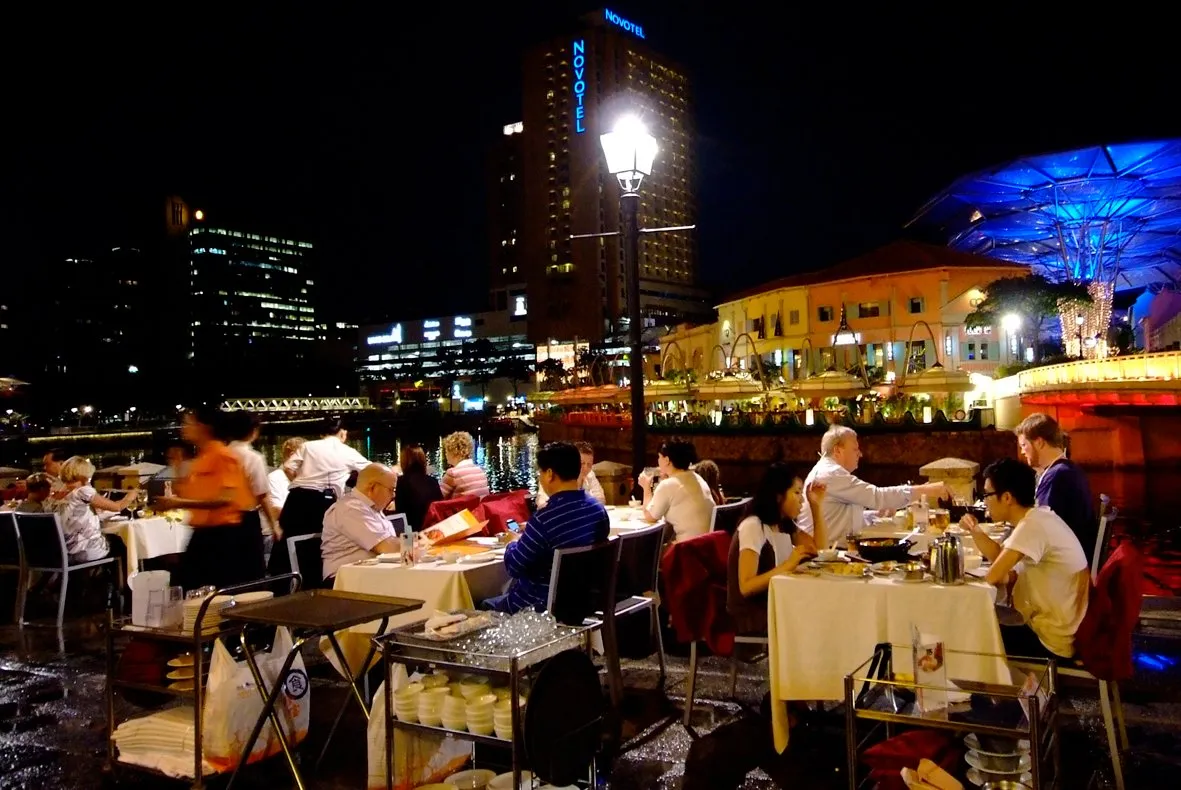
Restaurant terraces along the Singapore River at Clarke Quay at night. Photo: William Cho, Wikimedia Commons, CC BY-SA 2.0.
Emergency assistance and medical care
Singapore’s emergency services operate with exceptional efficiency, boasting average urban emergency ambulance response times under 10 minutes.
| Service | Emergency number | Non-emergency number | Notes |
|---|---|---|---|
| Police (SPF) | 999 | 1800 255 0000 | Free call from all local phones and mobile payphones |
| Fire & SCDF Emergency Ambulance | 995 | 1777 (non-emergency) | For life-threatening emergencies, severe trauma, or acute chest pain |
| Tourist Hotline (Singapore Tourism Board) | — | 1800 736 2000 | Mon–Fri business hours for visitor queries and complaints |
| Samaritans of Singapore (Crisis Helpline) | 1767 | — | 24-hour emotional support and mental health crisis line |
Public general hospitals with 24-hour Emergency Departments include:
- Singapore General Hospital (SGH): Outram Road (near Chinatown).
- National University Hospital (NUH): Lower Kent Ridge Road.
- Tan Tock Seng Hospital (TTSH): Novena (near Little India/Newton).
Foreign tourists must pay for emergency hospital medical consultations and admissions; ensure your travel insurance policy includes comprehensive overseas medical and emergency medical evacuation coverage.
Solo and female travellers
Singapore is widely regarded as one of the most comfortable destinations in Asia for solo women. Harassment, verbal catcalling, and aggressive following in public areas are virtually non-existent and strictly penalised under Singapore’s Protection from Harassment Act (POHA) and Penal Code statutes covering outraging of modesty.
- Public transport (MRT trains, LRT lines, and SBS Transit buses) is clean, monitored by onboard CCTV, and runs until around midnight.
- Taxis from ComfortDelGro, Strides Premier, and Trans-Cab, along with ride-hailing vehicles from Grab and Gojek, are GPS-tracked with driver details displayed inside the cab and in the application.
- Solo night walks through Marina Bay, Clarke Quay, the Civic District, or the Singapore Botanic Gardens are safe, though standard awareness of surroundings remains prudent.
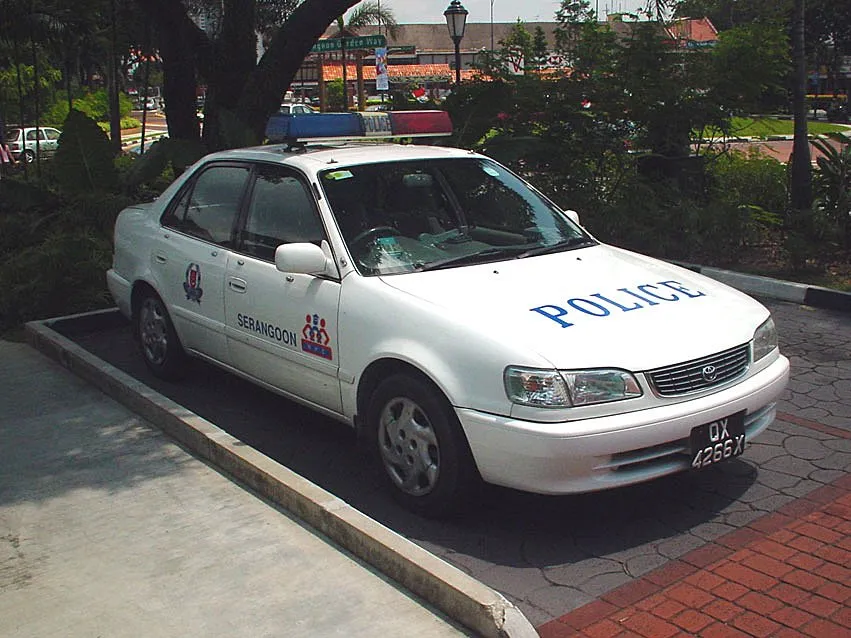
A Singapore Police Force patrol car. Photo: Wikimedia Commons contributor, CC BY-SA 2.5.
Common scams and tourist traps
While violent crime is negligible, tourists occasionally fall prey to commercial deception and digital scams:
1. Electronics overcharging at Sim Lim Square and Lucky Plaza
A small minority of independent electronics and camera shops on the upper floors of Sim Lim Square (Rochor) and Lucky Plaza (Orchard Road) employ deceptive sales tactics.
- Tactics: Advertising smartphones or cameras at prices below wholesale cost, then refusing to release the item unless the customer pays an inflated “warranty fee”, “unlocked regional fee”, or purchase add-on accessories costing several hundred dollars.
- How to protect yourself: Purchase electronics and camera gear exclusively from established nationwide retail chains with published return policies, such as Challenger, Best Denki, Harvey Norman, Courts, or the official Apple Store (Orchard Road and Marina Bay Sands).
2. Fraudulent SG Arrival Card submission portals
Deceptive third-party commercial websites mimic the official Immigration & Checkpoints Authority (ICA) portal and charge unsuspecting travellers between US$30 and US$80 to submit their entry cards.
- Fact: The electronic SG Arrival Card is 100 per cent free and must be submitted directly through the official government portal (
eservices.ica.gov.sg) or the official MyICA Mobile application. Never pay an intermediary.
3. Phishing and impersonation scams
Robocalls and text messages claiming to originate from Singapore Customs, DHL, Singtel, or the Singapore Police Force requesting urgent payments or bank transfers are common phone scams. The Singapore government never demands bank transfers or password credentials over the telephone.
Strict local laws that catch visitors out
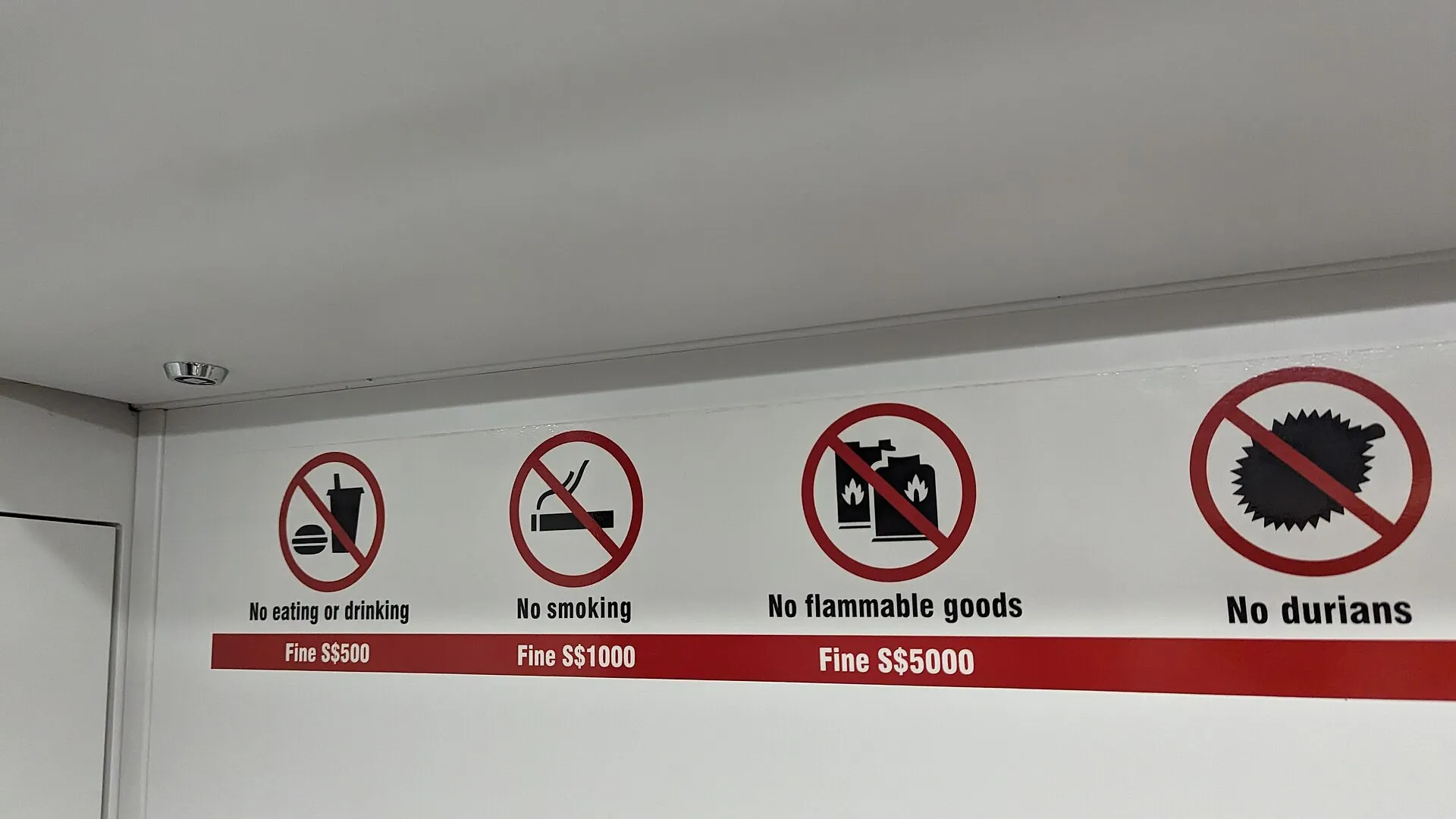
Singapore’s reputation as the “Fine City” stems from rigorous enforcement of civil order regulations. Ignorance of local legislation is not accepted as a legal defence in Singapore courts:
- Public Drinking Restrictions (Liquor Control Act): Drinking alcoholic beverages in any outdoor public space—including public parks, beaches, road pavements, and residential void decks—is illegal between 22:30 and 07:00 daily. Drinking is permitted only inside licensed bars, restaurants, hotel rooms, or private premises. In designated Liquor Control Zones (Little India and Geylang), public drinking is strictly forbidden from 07:00 Saturday to 07:00 Monday continuously. Supermarkets and convenience stores stop selling takeaway alcohol at 22:30 sharp.
- Vaping and Electronic Cigarettes: Possession, purchase, or importation of electronic vaporisers, vape juices, and related components carries fines of up to S$2,000 for possession and up to S$10,000 or imprisonment for importation.
- Chewing Gum: The commercial sale and importation of non-medicinal chewing gum has been banned since 1992. Bringing multiple packs across customs for resale or distribution is an offence under the Regulation of Imports and Exports Act.
- Littering and Spitting: Discarding litter (including cigarette butts) carries an on-the-spot court composition fine of S$300 for first-time offenders, rising to S$1,000 and mandatory Corrective Work Orders (CWO) for repeat offenders.
- Smoking in Prohibited Areas: Smoking is forbidden in all enclosed buildings, air-conditioned premises, hawker centres, bus stops, pedestrian overhead bridges, and within a 5-metre perimeter of building entrances. Smoke only within yellow-painted designated smoking boxes.
- Jaywalking: Crossing a roadway within 50 metres of a designated pedestrian crossing, zebra crossing, or overhead footbridge is illegal and subject to a S$50 fine.
- Narcotics: The Misuse of Drugs Act is among the strictest on earth. Possession of even trace amounts of illicit substances (including cannabis and CBD products) leads to mandatory incarceration; trafficking specified quantities triggers mandatory capital punishment.
For the comprehensive statutory breakdown, see our dedicated guide to Singapore rules and fines.
Health precautions: Dengue fever and tropical heat
- Dengue Fever: Dengue is an endemic viral infection transmitted by the bite of the day-biting Aedes aegypti mosquito, which thrives in warm, humid tropical environments. Peak biting activity occurs during early mornings and late afternoons before dusk. Symptoms include sudden high fever, severe retro-orbital eye headaches, and intense joint pain. Wear lightweight loose long-sleeved clothing and apply DEET- or picaridin-based insect repellent when walking in parks, nature reserves (MacRitchie Reservoir, Pulau Ubin), or heritage botanical gardens.
- Heatstroke and Dehydration: Daily temperatures in Singapore fluctuate between 30 °C and 34 °C with relative humidity regularly exceeding 80 per cent. Drink water continuously throughout the day. Tap water is safe to drink everywhere in Singapore; carry a refillable water bottle to utilise free chilled drinking fountains located in MRT stations, shopping malls, and museums.
- Transboundary Haze: During the Southwest Monsoon (typically August to October), seasonal agricultural fires in neighbouring Sumatra and Borneo can occasionally blow particulate haze across the Singapore Strait. Check live Pollutant Standards Index (PSI) updates on the National Environment Agency’s haze portal.
Next steps for travel planning
To ensure a seamless visit, check our Singapore arrival card guide for submission procedures, and read Singapore etiquette for cultural and dining norms. Explore our curated where to stay in Singapore guide for neighbourhood recommendations, and check the public transport guide for transit cards and lines.
Common questions
Is Singapore safe for solo travellers and at night?
Singapore consistently ranks among the top three safest cities globally in the Gallup Law and Order Index and Economist Intelligence Unit Safe Cities Index. Violent street crime and muggings are rare, and streets, parks, and MRT stations remain well-lit and safe for solo women and night walks at any hour.
What are the emergency numbers in Singapore?
Dial 999 for the Police, 995 for the Singapore Civil Defence Force (Fire and Emergency Medical Ambulance), and 1777 for a non-emergency ambulance. The Singapore Police Force non-emergency hotline is 1800 255 0000.
What tourist scams should visitors watch for in Singapore?
The most common scams targeting visitors are rogue electronics retailers at Sim Lim Square and Lucky Plaza overcharging on gadget warranties, third-party copycat websites charging fees for the free SG Arrival Card, and phone impersonation scams posing as immigration or police officers.
Is public drinking allowed in Singapore at night?
Under the Liquor Control Act, drinking alcohol in public outdoor areas (such as parks, streets, beaches, and housing estate void decks) is strictly illegal between 22:30 and 07:00 daily across the entire island. In designated Liquor Control Zones (Little India and Geylang), public drinking is prohibited all weekend.
Is the tap water safe to drink in Singapore?
Yes. Tap water in Singapore is thoroughly treated by PUB (Singapore's National Water Agency) and complies strictly with World Health Organization drinking water standards. It is safe to drink straight from the tap in hotels, restaurants, and public facilities.