In this guide
💡 The Short Version: Pay for transport the way each vehicle expects: board a tram at the back and pay at the front as you get off, pay on boarding on buses and green minibuses, and pay as you alight from a red minibus (Hong Kong Tourism Board). Keep voices, music and videos low in public places. Littering, spitting and smoking where it is banned each carry a HK$3,000 fixed penalty, and e-cigarettes and heated tobacco are prohibited (Hong Kong Tourism Board). Most restaurants add a 10% service charge, so no further tip is needed, and extras you did not order, such as tea or snacks, go on the bill. In busy cha chaan teng you may share a table with strangers. In a temple such as Man Mo, dress modestly and keep your voice down.
Getting around
The Hong Kong Tourism Board’s transport guide sets out how each vehicle takes payment, and it is where first-time visitors go wrong:
- Trams: get on at the back and pay at the front when you get off. Every ride costs the same flat fare, HK$3.30 for an adult (Hong Kong Tramways), by Octopus or e-payment, and cash must be the exact amount.
- Buses and green minibuses: pay on boarding, with fares based on distance. Cash must be exact change. Octopus works on all buses and all green minibuses.
- Red minibuses: these run routes that are not always fixed, and you can get on and off along the way except where prohibited. You pay as you alight, and the driver can usually change small notes. Wear the seat belt where there is one: the law requires it.
- Taxis: drivers must use the meter and you pay the exact fare it shows. Ask for a machine-printed receipt, or a handwritten one if the machine is not working. Red taxis serve most of Hong Kong, green taxis only the New Territories and blue taxis only Lantau Island.
- Noise: avoid loud conversations, music or videos in public areas. Headphones are the courteous option.
The public transport guide covers fares and the Octopus guide covers the card.
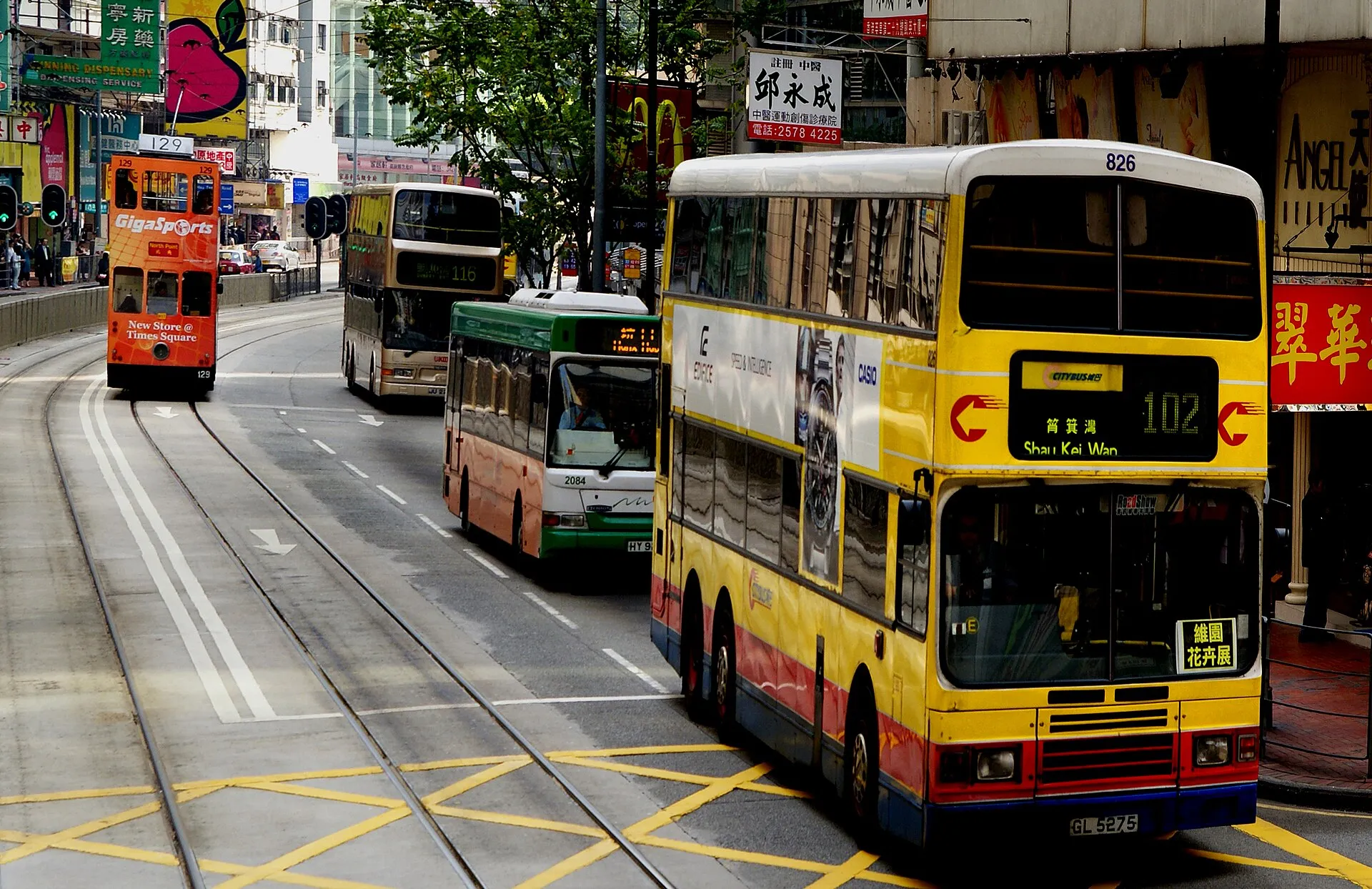
A tram and buses on a Hong Kong Island street. Photo: Bernard Spragg, Wikimedia Commons, CC0.
Rules that carry a fine
- Smoking: prohibited in buildings, dining places, public transport and some indoor and outdoor areas, including public beaches, swimming pools and escalators. The fixed penalty is HK$3,000. Importing, promoting, manufacturing, selling or possessing e-cigarettes, heated tobacco and herbal cigarettes is also prohibited (Hong Kong Tourism Board).
- Littering and spitting: a fixed penalty of HK$3,000, which the Tourism Board describes as part of Hong Kong’s strict environmental hygiene laws.
- Jaywalking: the UK Foreign Office warns of on-the-spot fines for littering, jaywalking and spitting, and asks visitors not to photograph military installations (FCDO).
- Plastic tableware: restaurants no longer provide disposable plastic tableware or takeaway containers, and licensed hotels may offer them on request for a fee, so bring a bag and a bottle rather than expecting disposables. Retailers charge at least HK$1 for each plastic shopping bag (Hong Kong Tourism Board).
At the table
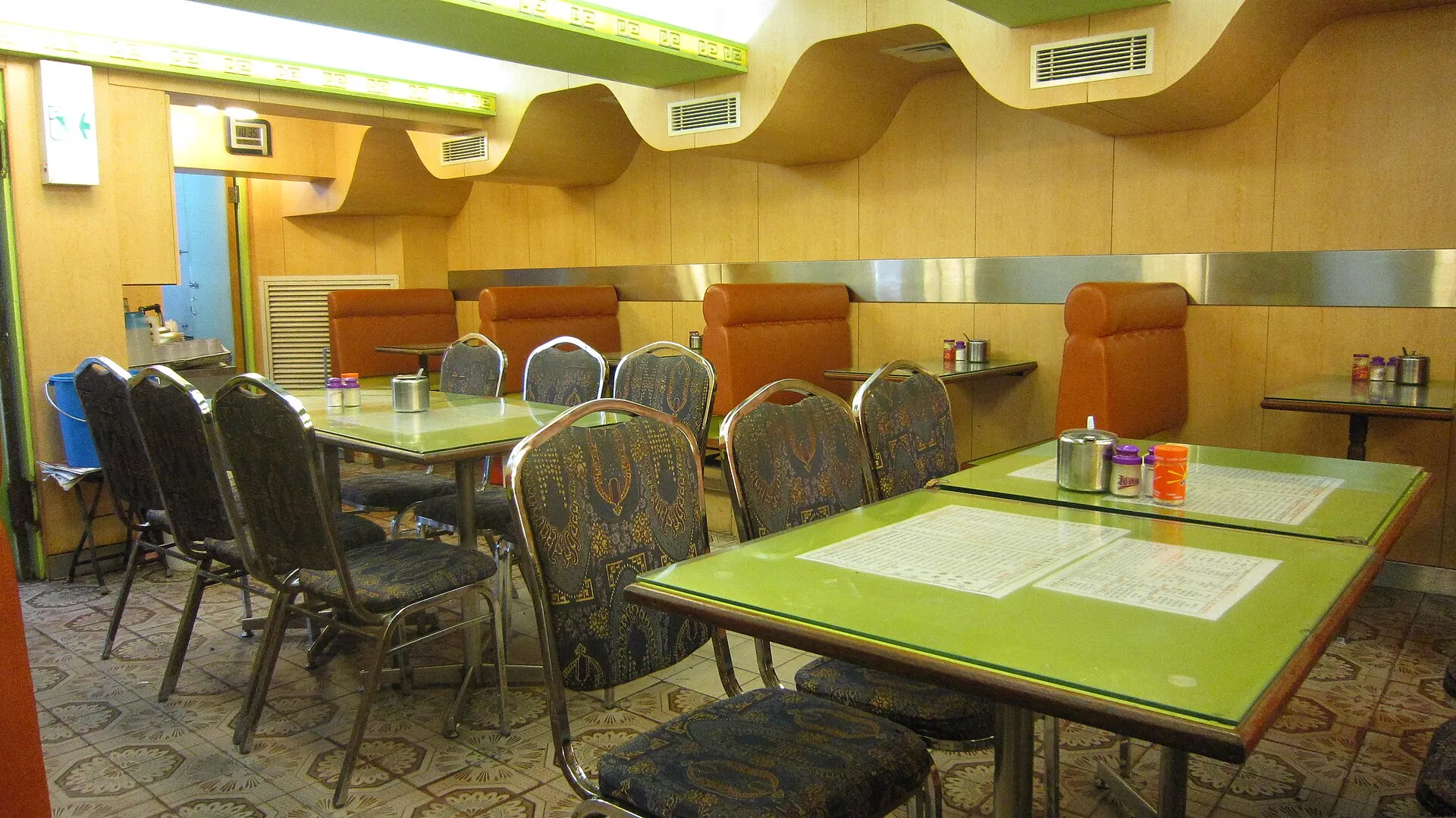
The interior of a cha chaan teng in Mong Kok. Photo: T1NH0, Wikimedia Commons, CC BY-SA 3.0.
- Service charge and extras: most restaurants add a 10% service charge, though some cafes and diners do not. Waiters may bring tea, condiments or snacks you did not ask for, and these appear on the bill (Hong Kong Tourism Board). Check the bill before adding a tip. Money in Hong Kong has the rest of the tipping picture.
- Table sharing: in busy cha chaan teng and noodle shops at lunch and dinner, a host may seat you with strangers (dap toi). Sit where you are shown, keep your bag on your lap or on a hook, and eat. Nobody expects small talk.
- Tea: when someone pours your tea, tap two fingers on the table beside your cup as a silent thank-you. To ask for hot water in a dim sum restaurant, rest the teapot lid ajar on the pot so the server sees it.
- Speed is normal: in casual cafes the order is taken quickly, food arrives fast and the bill is left on the table. It is the local rhythm, not hostility. Pay at the till on the way out.
- Language: Chinese and English are the official languages, official signs and public transport announcements are bilingual, and most menus are too. Cantonese is the main spoken language (Hong Kong Tourism Board).
The cha chaan teng guide, best dim sum and where to eat cover what to order.
Temples
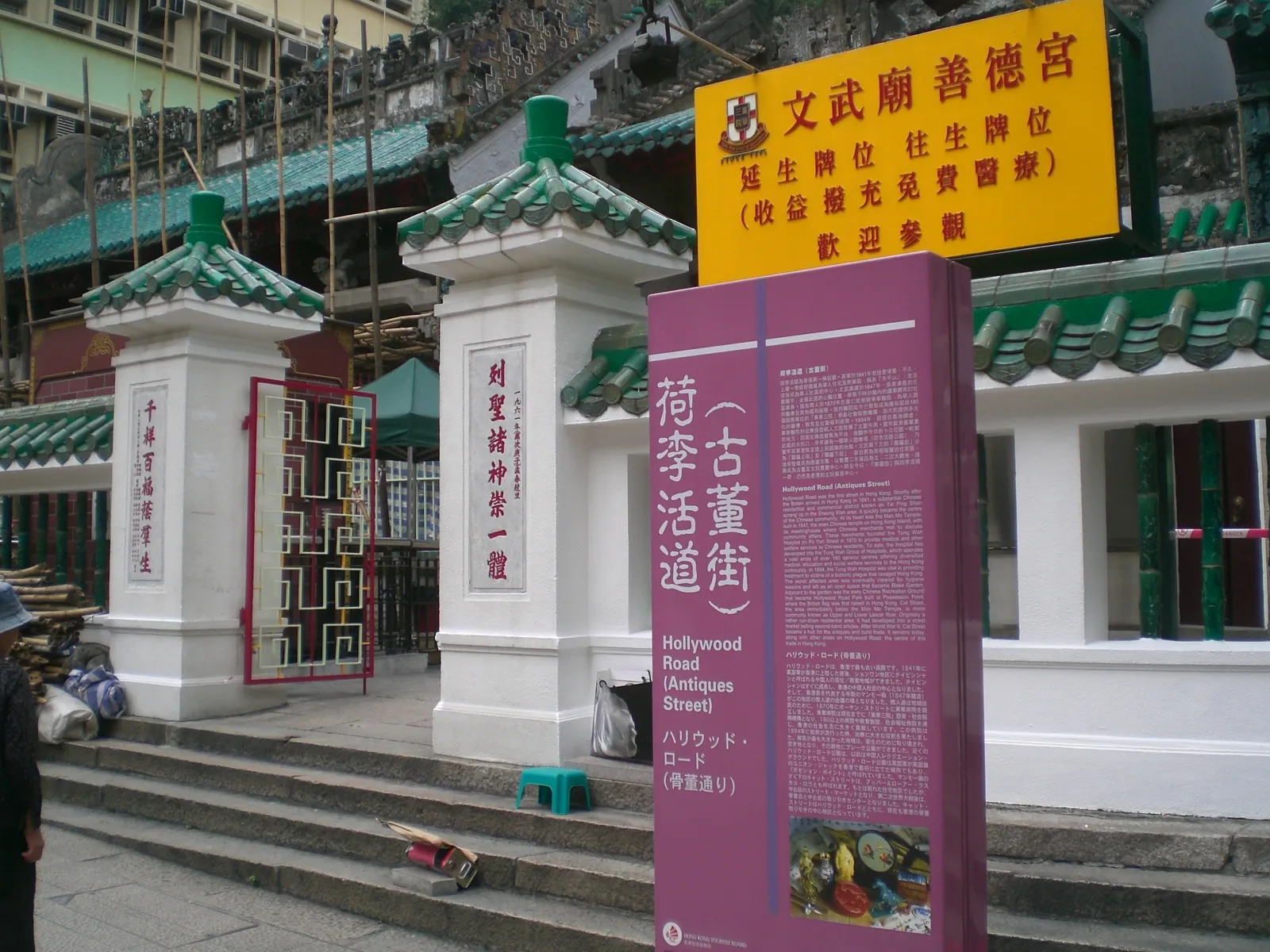
The entrance to Man Mo Temple on Hollywood Road, Sheung Wan. Photo: Arenece, Wikimedia Commons, CC BY-SA 3.0.
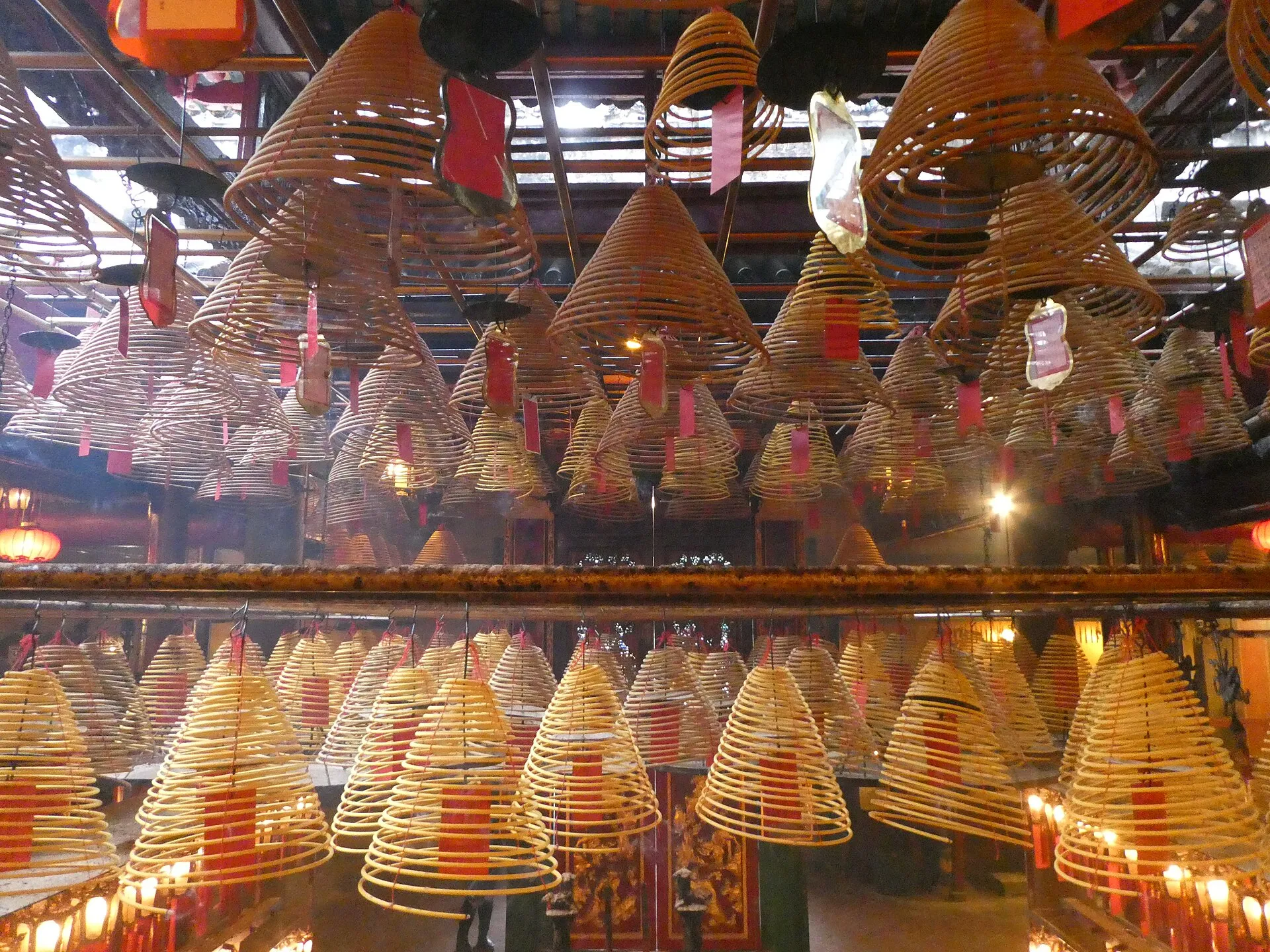
Man Mo Temple on Hollywood Road in Sheung Wan is a working temple, as is Wong Tai Sin in Kowloon. Dress modestly, speak quietly, and do not photograph worshippers without asking. The Hong Kong Tourism Board describes visitors lighting incense sticks at Wong Tai Sin Temple for blessings during Chinese New Year, and spinning the fortune pinwheel three times clockwise at Che Kung Temple in Sha Tin for good luck; follow what worshippers are doing and ask a member of staff if you are unsure. Man Mo is on the Central to Sheung Wan walk, and the temples are busiest at Chinese New Year.
Where to ask
The Tourism Board’s visitor centres at the airport and at Tsim Sha Tsui Star Ferry Pier are staffed to answer questions and give route suggestions (Hong Kong Tourism Board). For a taxi problem, note the driver’s name and licence plate from the identity card on the dashboard and call the Transport Complaints Unit on +852 2889 9999 (Hong Kong Tourism Board).
Where next
For payment methods and tipping, see money in Hong Kong and the Octopus card guide. For safety and local laws, read is Hong Kong safe, and for the overall plan, the Hong Kong travel hub.
Common questions
How do you pay on a Hong Kong tram?
Board at the back and pay at the front when you get off. The fare is a flat HK$3.30 for an adult however far you ride, by Octopus or e-payment, and cash must be the exact fare (Hong Kong Tourism Board, Hong Kong Tramways).
Is there a fine for smoking or littering in Hong Kong?
Yes. Littering or spitting carries a fixed penalty of HK$3,000, and so does smoking in a designated no-smoking area, which includes public transport, restaurants, public beaches, swimming pools and escalators (Hong Kong Tourism Board).
Do restaurants in Hong Kong add a service charge?
Most add 10%, though some cafes and diners do not. Waiters may bring tea, condiments or snacks you did not ask for, and these are added to the bill (Hong Kong Tourism Board).
What is table sharing in Hong Kong?
In busy cha chaan teng and noodle shops you may be seated at a table with strangers, known in Cantonese as dap toi. Sit where you are shown and eat; no conversation is expected.
How do you say thank you when tea is poured?
Tap two fingers on the table beside your cup. Lifting the teapot lid is the usual way to ask a server for hot water.