In this guide
💡 The Short Version: Cards and phone wallets work in many hotels, shops and restaurants, but carry some Hong Kong dollars. The Hong Kong Tourism Board lists Visa, Mastercard, American Express, Octopus, Apple Pay, Google Pay, Alipay and WeChat Pay as welcome at many places, and says merchants can refuse HK$500 and HK$1,000 notes. An Octopus card pays for transport and many small purchases. Most restaurants add a 10% service charge, so tipping is not needed on top. Sales tax does not exist on goods other than alcohol and tobacco, so there is no VAT refund to claim, but hotels add a 3% accommodation tax (Inland Revenue Department).
Currency and banknotes
The Hong Kong dollar (HK$, code HKD) is held within a band of HK$7.75 to HK$7.85 to the US dollar by the Linked Exchange Rate System, in place since 17 October 1983 (Hong Kong Monetary Authority).
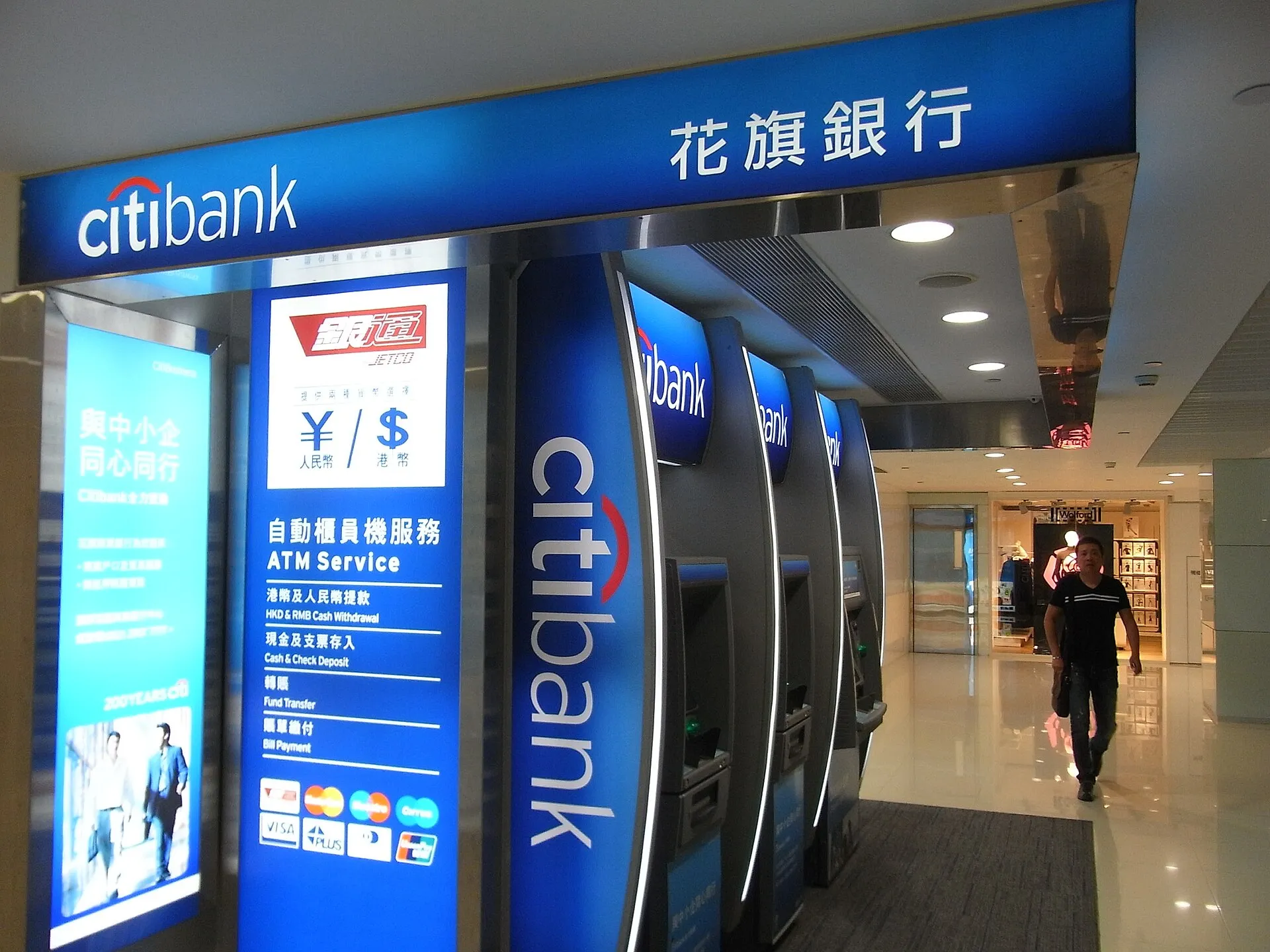
Citibank ATMs displaying the JETCO network and card logos at Harbour City, Tsim Sha Tsui. Photo: Magrealthkoo, Wikimedia Commons, CC BY-SA 3.0.
According to the HKMA:
- Notes in everyday circulation: HK$10, HK$20, HK$50, HK$100, HK$500 and HK$1,000. The HK$20 to HK$1,000 notes are issued by three note-issuing banks, HSBC, Standard Chartered (Hong Kong) and Bank of China (Hong Kong), so notes of the same value come in three designs. The Government issues the HK$10 note, as a paper note since 2002 and a polymer note since 2007; older HK$10 notes from two of the note-issuing banks remain legal tender but are no longer printed.
- Coins: the Government issues HK$10, HK$5, HK$2, HK$1, 50 cents, 20 cents and 10 cents. The bauhinia series, launched in 1993, replaced the Queen’s portrait series, which remains legal tender.
- Large notes: the Hong Kong Tourism Board says merchants can refuse HK$500 and HK$1,000 notes, even though they are legal tender. Withdraw smaller notes where you can.
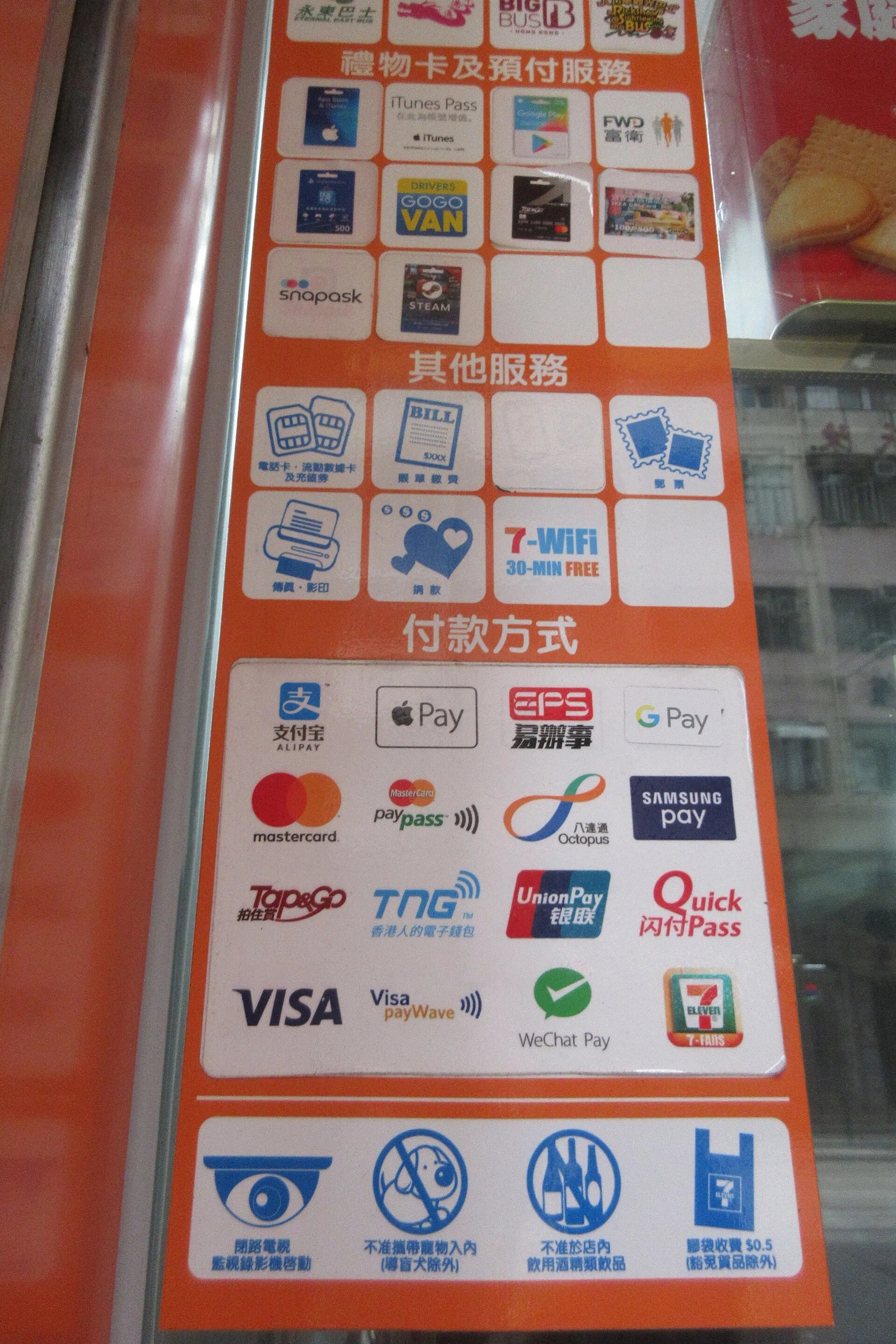
The payment methods listed on a 7-Eleven door. Photo: Shekoa Koo Chuam, Wikimedia Commons, CC BY-SA 4.0.
Paying: cards, wallets, Octopus and cash
- Cards and wallets: the Hong Kong Tourism Board says international credit cards and contactless payments are welcome at many hotels, retail shops and restaurants.
- Octopus: accepted at nearly 190,000 points across transport, dining, entertainment and shopping, according to Octopus. A Tourist Octopus card is available from HK$39 without a deposit (Hong Kong Tourism Board). The Octopus guide covers the options.
- Public transport: the Tourism Board says Octopus is accepted on all buses, all green minibuses and all trams. Kowloon Motor Bus, Long Win Bus and Citybus also take contactless credit cards and mobile payments, and trams take e-payments. Cash on buses, green minibuses and trams must be the exact fare, and red minibuses take payment as you get off, with the driver usually able to change small notes (Hong Kong Tourism Board).
- Taxis: taxis accept cash and electronic payments such as Octopus, credit cards, Alipay and WeChat Pay. From 1 April 2026 taxis must offer at least two electronic payment methods, one QR-based and one not. Check the stickers on the window. A driver need not give change for a HK$500 or HK$1,000 note (Hong Kong Tourism Board, Transport Department).
- Cash: carry small notes and coins for buses, green minibuses and trams, where cash must be exact change, and for red minibuses, which are paid for as you get off.
ATMs and changing money
ATMs in banks, malls and stations show the logos of the card networks they take. The ones in the photo above carry JETCO, Visa, Plus, Mastercard, Cirrus and UnionPay. JETCO says its network has around 3,000 ATMs with 24-hour access, and some JETCO machines also dispense foreign currency or RMB from a Hong Kong dollar account, with the rate shown on screen before you confirm (JETCO). If a machine offers to charge you in your home currency rather than HK$, decline it and be charged in HK$. Your own bank sets any foreign-card fee.
At the airport, the Airport Authority lists Global Exchange and Trip.com Currency Exchange counters on the arrivals level of Terminal 1, before the immigration hall, near the baggage reclaim belts, in the arrivals hall and, for Trip.com, near the train platform to the city (Hong Kong International Airport). Both also have counters on the departures level.
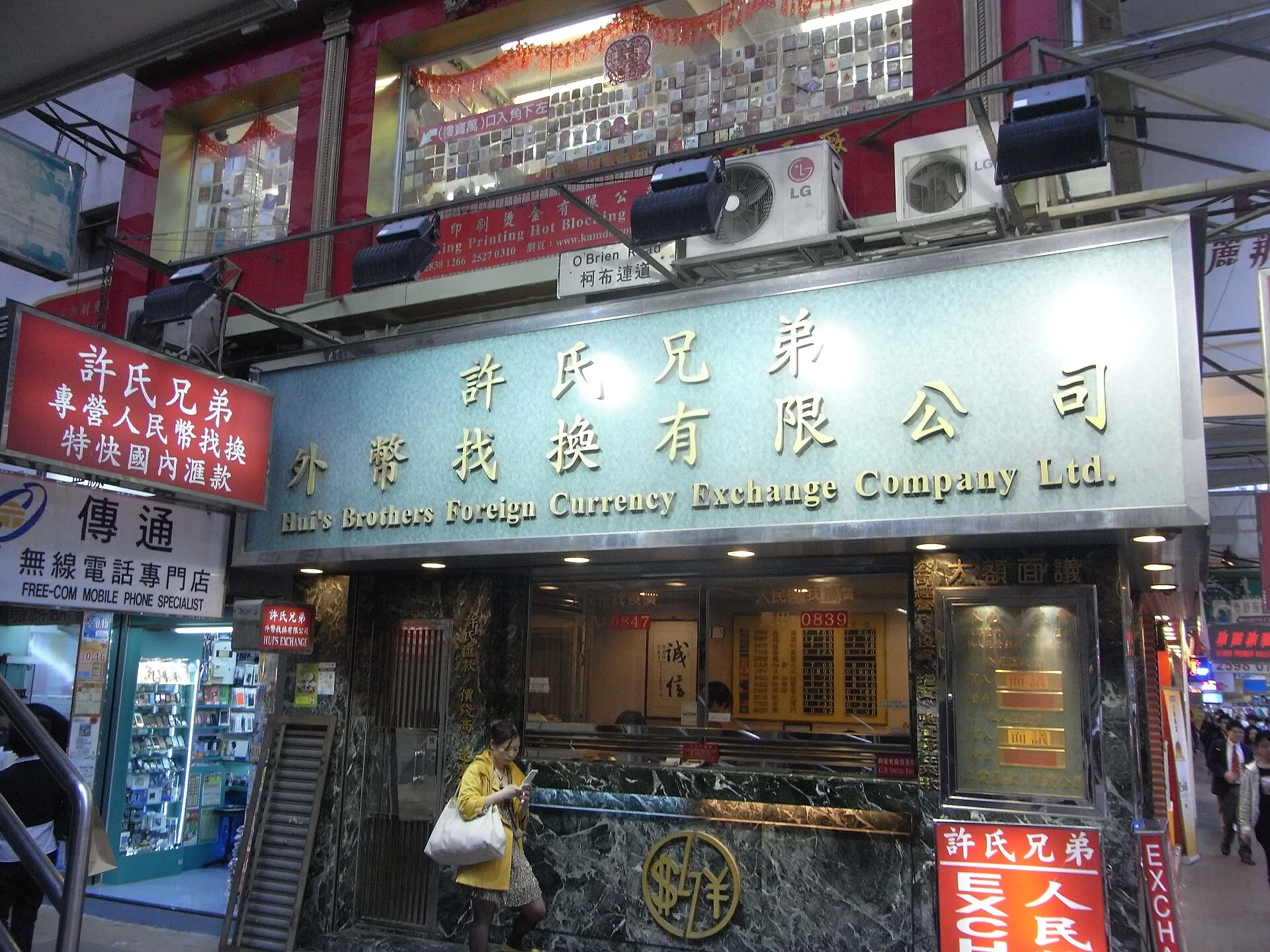
A foreign currency exchange shop on O’Brien Road, Wan Chai. Photo: Pimoes2011, Wikimedia Commons, CC BY-SA 3.0.
Tipping, service charge and tax
- Service charge: most restaurants add 10%, though some cafes and diners do not. Waiters may bring tea, condiments or snacks you did not ask for, and these are added to the bill (Hong Kong Tourism Board). Check the bill before adding a tip.
- Sales tax and VAT: none on goods other than alcohol and tobacco, so there is nothing to reclaim at the airport. Hong Kong is a free port with no customs tariff, and excise duty applies only to liquor, tobacco, hydrocarbon oil and methyl alcohol (Customs and Excise Department). Retailers must charge at least HK$1 for each plastic shopping bag.
- Hotel accommodation tax: 3% on all accommodation charges received by hotels and guesthouses from 1 January 2025. The Inland Revenue Department recommends that hotels and guesthouses show guests whether room rates include it (Inland Revenue Department). Check whether a quoted rate includes it before comparing prices.
- Air passenger departure tax: HK$200 for passengers aged 12 and over leaving by air, normally included in the air ticket. Some passengers are exempt and can claim a refund through the Civil Aviation Department (Hong Kong Tourism Board).
- Fines: littering or spitting carries a fixed penalty of HK$3,000, and so does smoking in a no-smoking area. Importing or possessing e-cigarettes and heated tobacco is prohibited.
Where next
Hong Kong etiquette covers restaurant manners and how to pay on each vehicle. Where to eat has the food, airport to city the first journey, public transport the fares, is Hong Kong safe the local laws, and the Hong Kong travel hub the rest.
Common questions
Can you pay by credit card in Hong Kong?
Often. The Hong Kong Tourism Board says American Express, Visa and Mastercard, and contactless payment such as Octopus, Apple Pay, Google Pay, Alipay and WeChat Pay, are welcome at many hotels, shops and restaurants. Carry some cash for smaller places.
Can shops refuse HK$500 and HK$1,000 notes?
Yes. The Hong Kong Tourism Board notes that merchants can refuse HK$500 and HK$1,000 notes even though they are legal tender. Taxi drivers are not obliged to give change for them either (Transport Department).
What is the Hong Kong dollar's exchange rate?
It is held within a band of HK$7.75 to HK$7.85 to the US dollar under the Linked Exchange Rate System (Hong Kong Monetary Authority).
Do you tip in Hong Kong?
Not as a rule. Most restaurants add a 10% service charge to the bill, though some cafes and diners do not (Hong Kong Tourism Board). Check the bill before adding more.
Is there sales tax or VAT in Hong Kong?
No sales tax is charged on goods except alcohol and tobacco, so there is no VAT refund to claim, and retailers must charge at least HK$1 for each plastic shopping bag. Hotels and guesthouses charge a 3% hotel accommodation tax on accommodation charges from 1 January 2025 (Inland Revenue Department).
Is there a tax when you leave Hong Kong by air?
Yes. An Air Passenger Departure Tax of HK$200 applies to passengers aged 12 and over departing by air, and some passengers are exempt (Hong Kong Tourism Board).