In this guide
💡 The Short Version: Lunar New Year’s Day 2027 is Saturday 6 February, and the government’s general holidays are 6, 8 and 9 February (GovHK). The Hong Kong Tourism Board lists the International Chinese New Year Night Parade in Tsim Sha Tsui on the first day, flower markets from a week beforehand at Victoria Park and the Prince Edward Flower Market, racing at Sha Tin Racecourse on the third day, the wishing trees at Lam Tsuen, temple visits and fireworks over the waterfront. Che Kung Temple is busiest on the second day, Sunday 7 February, and is open 8am to 6pm daily (Chinese Temples Committee).
2027 dates
From the government’s 2027 general holidays. The second day of Lunar New Year falls on a Sunday, so the fourth day is the substitute holiday.
| Day | Date | General holiday? |
|---|---|---|
| Lunar New Year’s Day (first day) | Saturday 6 February 2027 | Yes |
| Second day | Sunday 7 February 2027 | Sunday |
| Third day | Monday 8 February 2027 | Yes |
| Fourth day | Tuesday 9 February 2027 | Yes, in place of the second day |
The Tourism Board says the flower markets start a week before Lunar New Year, so from around 30 January 2027. Parade, fireworks and market details are on the Tourism Board’s Chinese New Year page.
What the Tourism Board lists
From the Hong Kong Tourism Board’s Chinese New Year page:
- International Chinese New Year Night Parade: on the first day of the holiday, with floats and performances along the streets of Tsim Sha Tsui.
- Flower markets: starting a week before Chinese New Year, at places such as Victoria Park and the Prince Edward Flower Market, with stalls selling blooms, decorations, handicrafts, snacks and games.
- Sha Tin Racecourse: an annual race meeting on the third day, with lion dances, a variety show and live music alongside the racing.
- Lam Tsuen Wishing Trees: a quiet village that draws hundreds of visitors in the new year. You write your blessings on joss paper and toss them into the trees; the Tourism Board says the higher it catches, the better.
- Wong Tai Sin Temple: visitors light incense sticks for blessings.
- Che Kung Temple: visitors spin the fortune pinwheel three times clockwise for good luck.
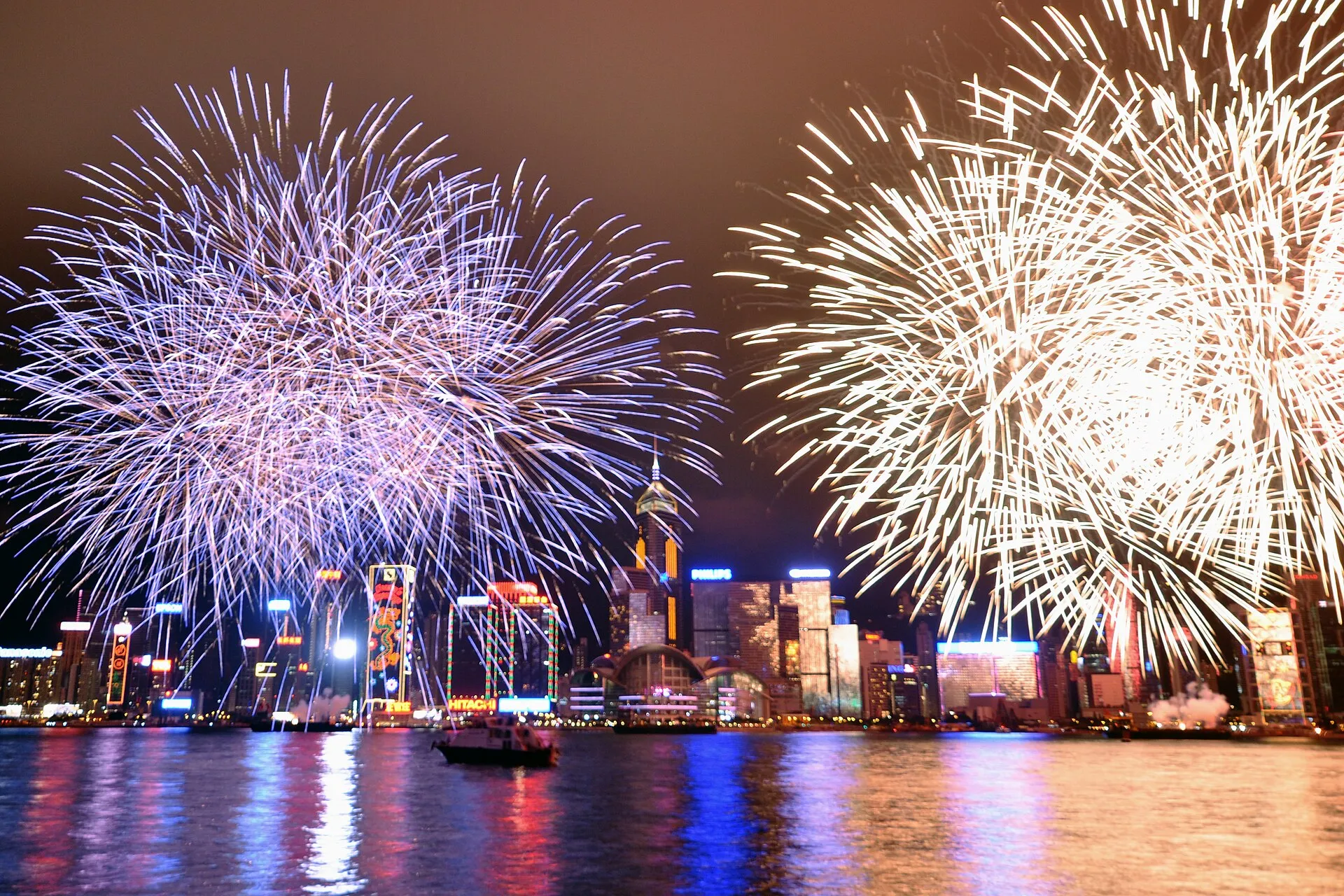
- Fireworks: crowds gather at the waterfront for fireworks over the harbour.
- Hong Kong Disneyland: festive street parties and decorations; see the Disneyland guide.
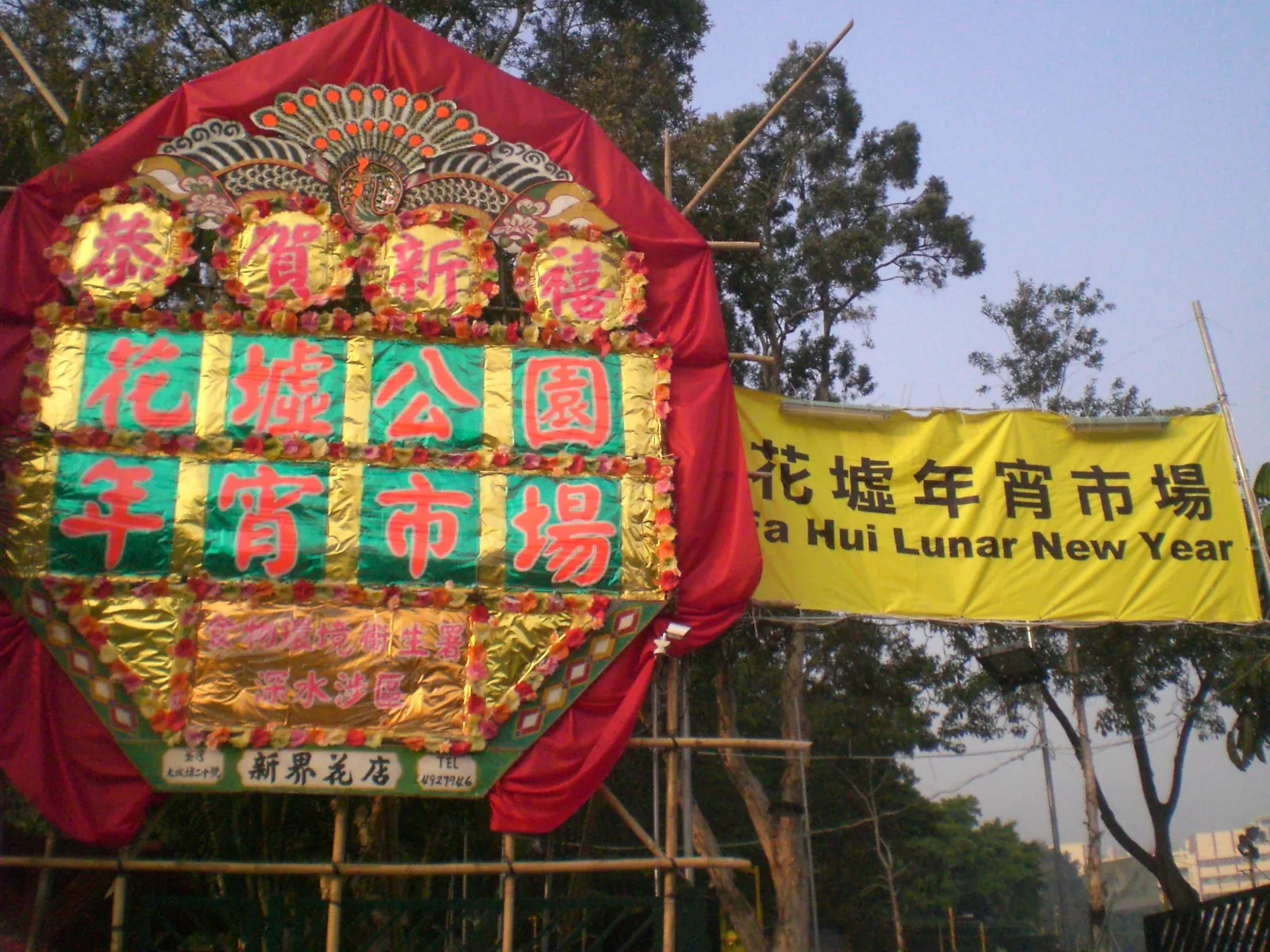
The Lunar New Year flower market sign at Fa Hui Park, Sham Shui Po. Photo: Samsboo, Wikimedia Commons, CC BY-SA 3.0.
Temples
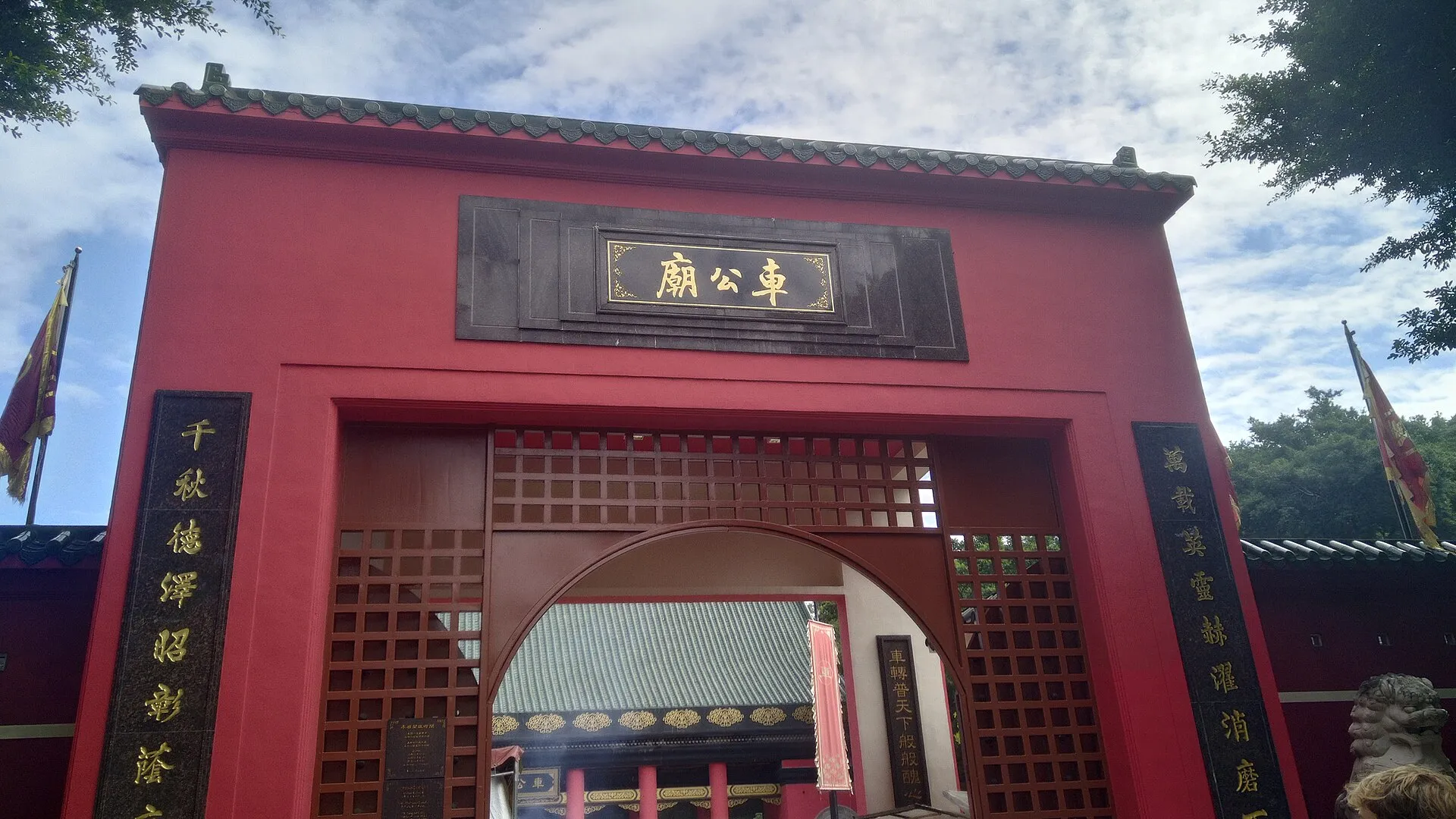
The entrance gate of Che Kung Temple, Sha Tin. Photo: Jonashtand, Wikimedia Commons, CC BY-SA 4.0.
Che Kung Temple on Che Kung Miu Road in Sha Tin is run by the Chinese Temples Committee, which gives its hours as 8am to 6pm daily. The committee says the temple honours General Che, a Song Dynasty general, and that there are four Che Kung festivals a year, the busiest on the second day of the first lunar month, which in 2027 is Sunday 7 February. Worshippers turn the fan-bladed wheel of fortune and beat the drum for good luck in the coming year. For transport the committee lists Tai Wai station, from which it is a 10-minute walk along Che Kung Miu Road, and Che Kung Temple station (Chinese Temples Committee).
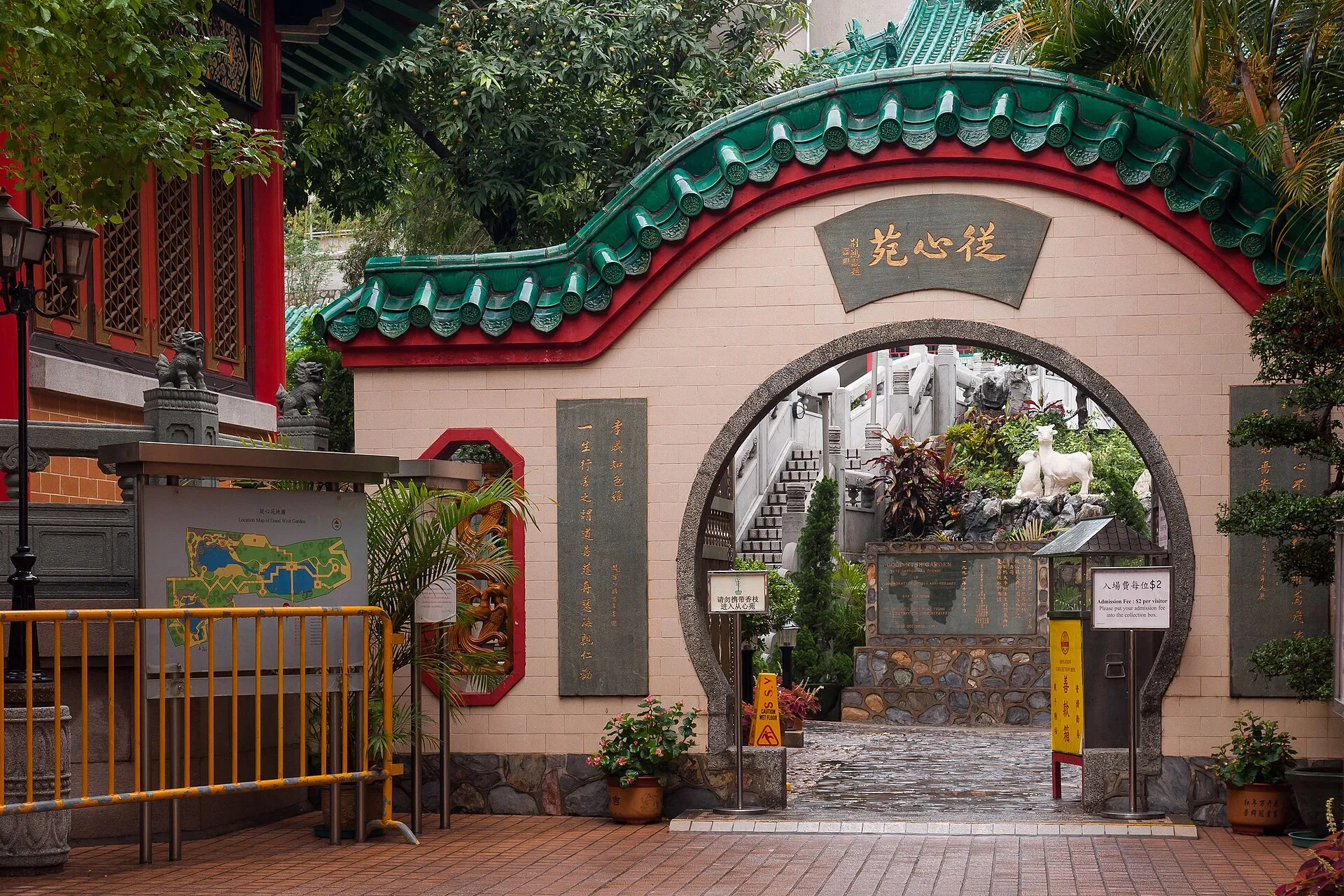
The entrance to the Good Wish Garden at Wong Tai Sin Temple. Photo: CEphoto, Uwe Aranas, Wikimedia Commons, CC BY-SA 3.0.
Wong Tai Sin Temple in Kowloon is where the Tourism Board points visitors to light incense sticks for blessings. Later in the first lunar month, on its 26th day (3 March 2027), Lin Fa Kung in Tai Hang holds the Kwun Yum Open Treasury, when the Chinese Temples Committee says thousands of worshippers queue outside; the temple is open 7:30am to 5pm daily (Chinese Temples Committee). All three are working temples: follow what worshippers around you do and keep your voice down. The etiquette guide has the rest.
Weather in February
The Observatory’s 1991 to 2020 averages for February are a mean daily maximum of 19.4 degrees Celsius and minimum of 15.3, 38.9 mm of rain on 8.0 days, 79% relative humidity and 101.7 hours of sunshine, with fog on 1.10 days (Hong Kong Observatory). Bring a layer for evenings by the harbour. The weather guide has the month-by-month table.
Tours
The Tourism Board’s programme is free to watch, and no tour is needed for the parade, the flower markets or the temples. One GetYourGuide product is built around the festival.
Hong Kong: Chinese New Year Tour with Parade Show and Dinner
From HK$1,480 · 3.6 stars from 11 reviews · 7 hours
Chinese New Year Tour with Parade Show and Dinnerad: a seven-hour tour that GetYourGuide describes as a parade in Hong Kong, a wish at the Wishing Tree and a Chinese set dinner, with hotel pickup available. It suits visitors who want transport and a seat for the evening arranged for them.
Getting there and staying
For a waterfront walk on the Kowloon side, see the walk from Tsim Sha Tsui to West Kowloon. For getting around, see public transport and the Octopus guide. For where to base yourself, read where to stay and hotels in Tsim Sha Tsui and Central. Weather in February is covered in best time to visit. The Mid-Autumn Festival guide covers the other big festival.
Common questions
When is Chinese New Year in Hong Kong in 2027?
Lunar New Year's Day is Saturday 6 February 2027. The government's general holidays are Saturday 6 February, Monday 8 February (the third day) and Tuesday 9 February, which stands in for the second day because it falls on a Sunday (GovHK).
What are the main Chinese New Year events in Hong Kong?
The Hong Kong Tourism Board lists the International Chinese New Year Night Parade in Tsim Sha Tsui on the first day, flower markets from a week beforehand, horse racing at Sha Tin on the third day, the wishing trees at Lam Tsuen, temple visits to Wong Tai Sin and Che Kung, and fireworks over the harbour.
Where are the Chinese New Year flower markets?
The Tourism Board names Victoria Park in Causeway Bay and the Prince Edward Flower Market, starting a week before the new year.
What do people do at Che Kung Temple?
The Tourism Board says visitors spin the fortune pinwheel three times clockwise for good luck. The Chinese Temples Committee, which runs the temple, says the busiest day is the second day of the first lunar month, when worshippers turn the fan-bladed wheel of fortune and beat the drum. The temple is open 8am to 6pm daily.
What is the greeting at Chinese New Year in Hong Kong?
Kung hei fat choy, Cantonese for wishing you prosperity.