In this guide
💡 The Short Version: Bratislava has low violent crime and no dangerous quarters. The historic pedestrian streets are well lit and covered by municipal CCTV. Pickpocketing occurs in dense crowds around Main Square, at the central railway station and on busy trams. Drinking alcohol in public streets is banned outside licensed terraces, and visitors must carry their physical passport or EU national identity card at all times. Emergency numbers: 112 for all emergencies, 155 for ambulance, 158 for State Police, and 159 for City Police. Or book a tour: the Old Town and Castle Walking Tourad is sold on GetYourGuide from €2.10 per person.
The risks are small, whether you are in the Old Town after dark, on the wooded paths below Slavín or travelling with young children. The local rules below are the ones that cost visitors money.
Safety profile at a glance
Risks, rules and contact numbers.
| Safety topic | Status & risk level | Recommendations & regulations |
|---|---|---|
| Violent Crime | Very Low | Violent offences against foreign visitors are rare |
| Petty Theft & Pickpocketing | Moderate in crowds | Watch belongings on tram lines 1 and 3, at Central Station and at Christmas markets |
| Solo Female Travel | High Safety | Well-lit streets and people about; standard situational awareness applies |
| Night Walking | Safe | Old Town, Danube riverfront, and Eurovea promenades are well-lit and safe at night |
| Public Drinking | Strictly Prohibited | Fines apply for open alcohol containers on streets; permitted only on licensed terraces |
| Quiet Hours (nočný kľud) | 22:00 to 06:00 | Legal quiet hours enforced citywide; noise complaints handled by City Police |
| Universal Emergency | 112 | Multilingual dispatch for police, fire, and ambulance services |
| Municipal Police | 159 | Enforces public order, illegal parking, noise violations, and lost property |
Crime rates and neighbourhoods
The Numbeo Safety Index scores Bratislava above 70 out of 100.
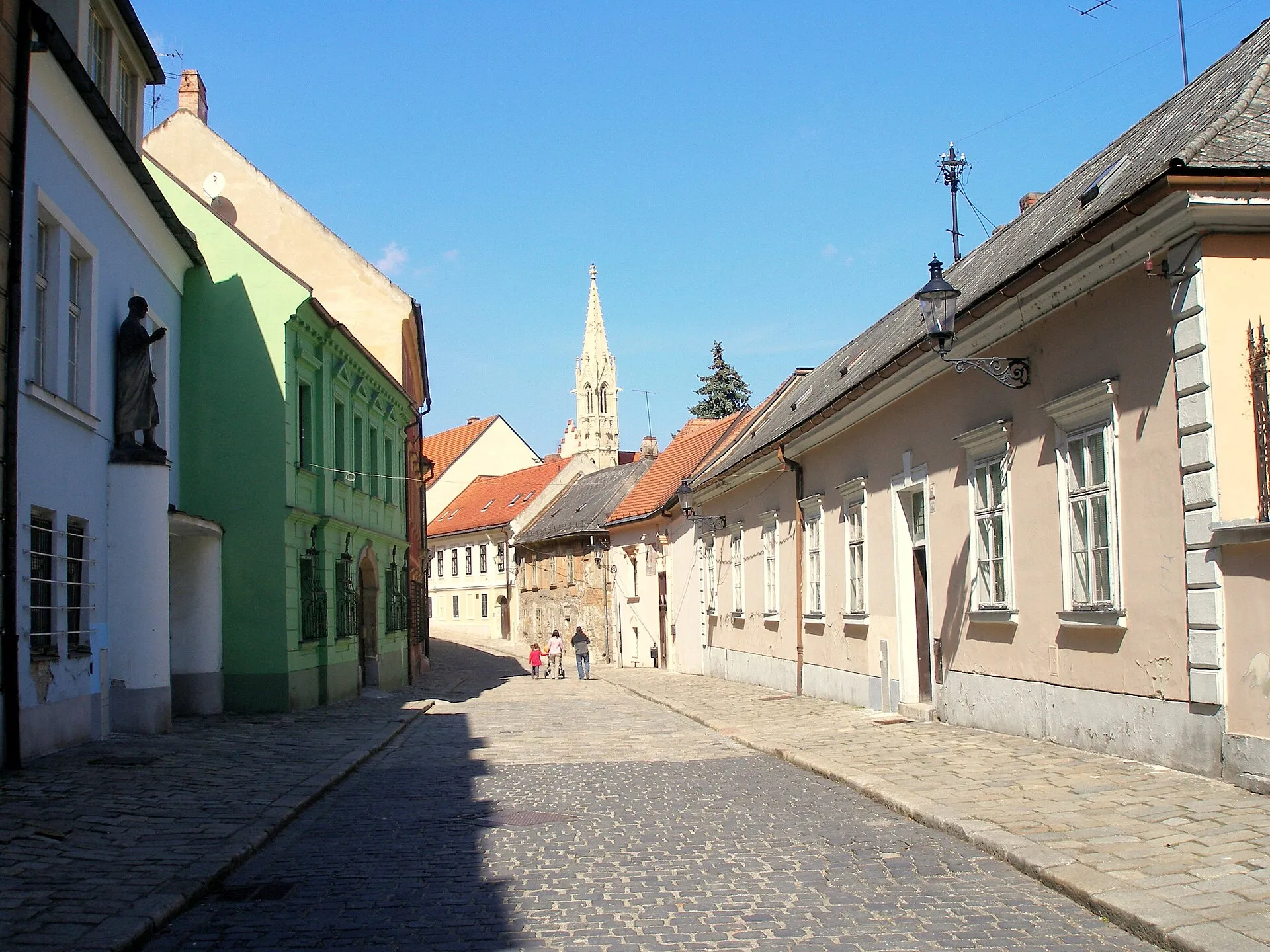
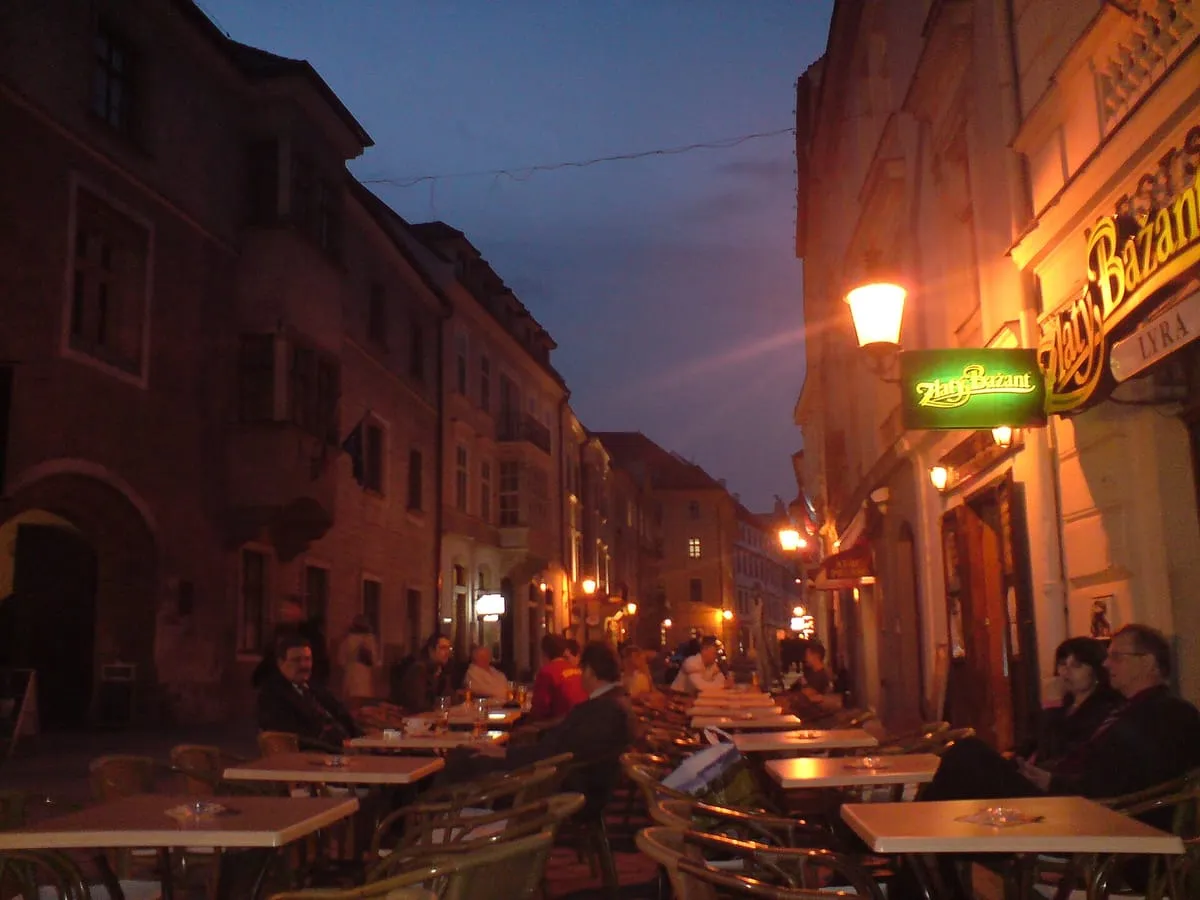 Ventúrska street warmly lit by street lanterns at dusk. Photo: Wizzard, Wikimedia Commons, Public domain.
Neighbourhoods
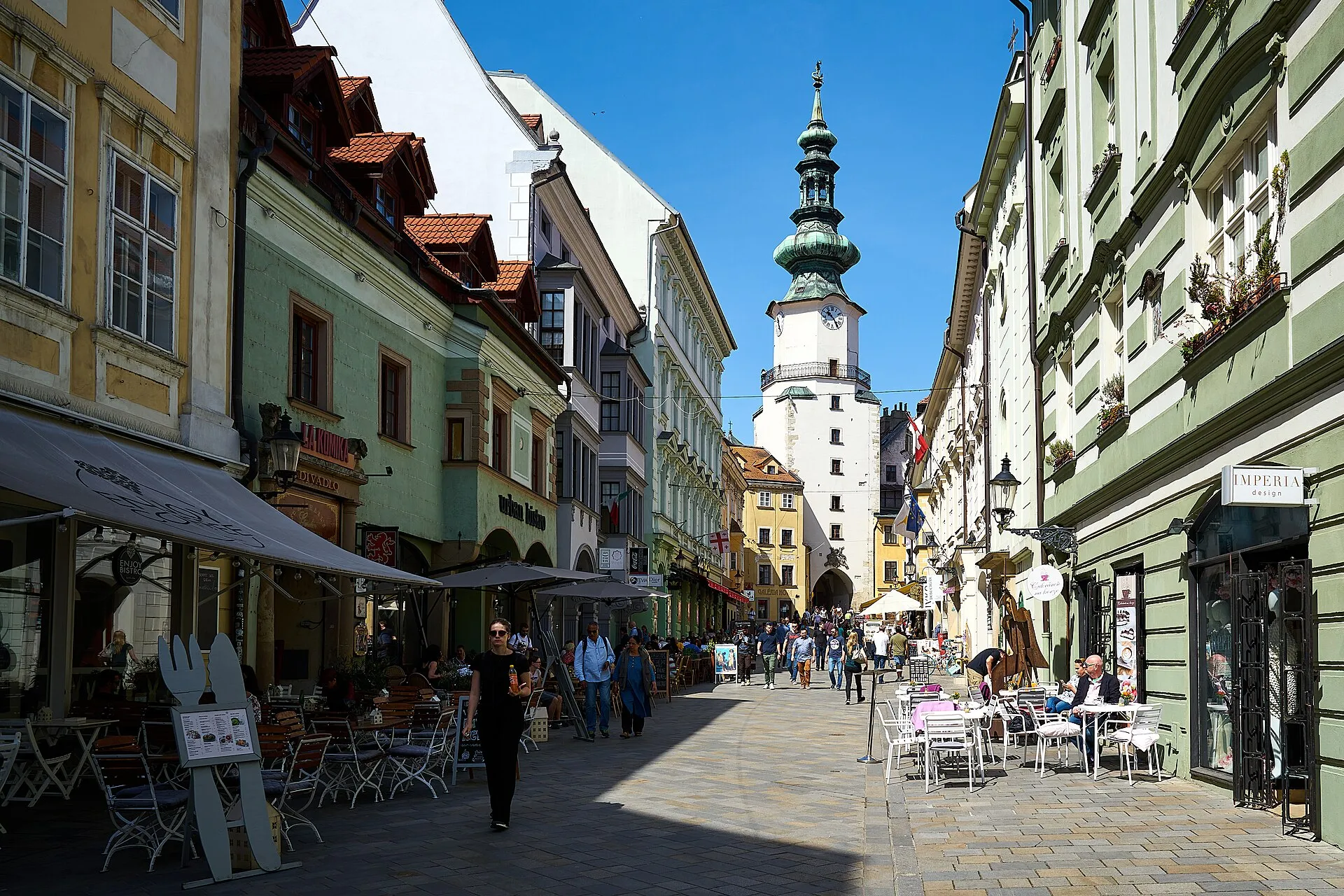
- Staré Mesto (Historic Old Town): The historic centre is pedestrianised, lit by heritage lanterns and under 24-hour video surveillance by the municipal police. Families, couples and solo travellers walk the main lanes (Michalská, Ventúrska, Panská and Laurinská) late into the evening.
- Danube Waterfront & Eurovea: The riverside promenades along Dvořákovo nábrežie and Rázusovo nábrežie, and down to Eurovea, have joggers, cyclists and diners until late.
- Palisády & Castle Hill: The residential quarters around Bratislava Castle and the embassies along Palisády and Mišíkova streets are quiet at all hours.
- Petržalka: Petržalka is known for its socialist-era concrete panel housing blocks (paneláky), but it is a green residential district with low crime. The riverside zone around Sad Janka Kráľa is busy and safe through the day.
Where to take more care
- Bratislava Hlavná Stanica (Central Railway Station): The station hall and forecourt can attract panhandlers and loiterers, particularly late in the evening. Keep your luggage close and ignore offers of “cheap taxis” or room rentals.
- Obchodná Street: Running northeast from Michael’s Gate, Obchodná is the street for nightlife, youth bars and fast food. On Friday and Saturday nights between midnight and 04:00, large groups of drunk revellers gather here. Physical fights are uncommon, but arguments happen. The City Police have a police station on Obchodná (number 29).
Petty theft and pickpocketing prevention
Pickpocketing is the main crime that affects visitors. Thieves work in crowded bottlenecks:
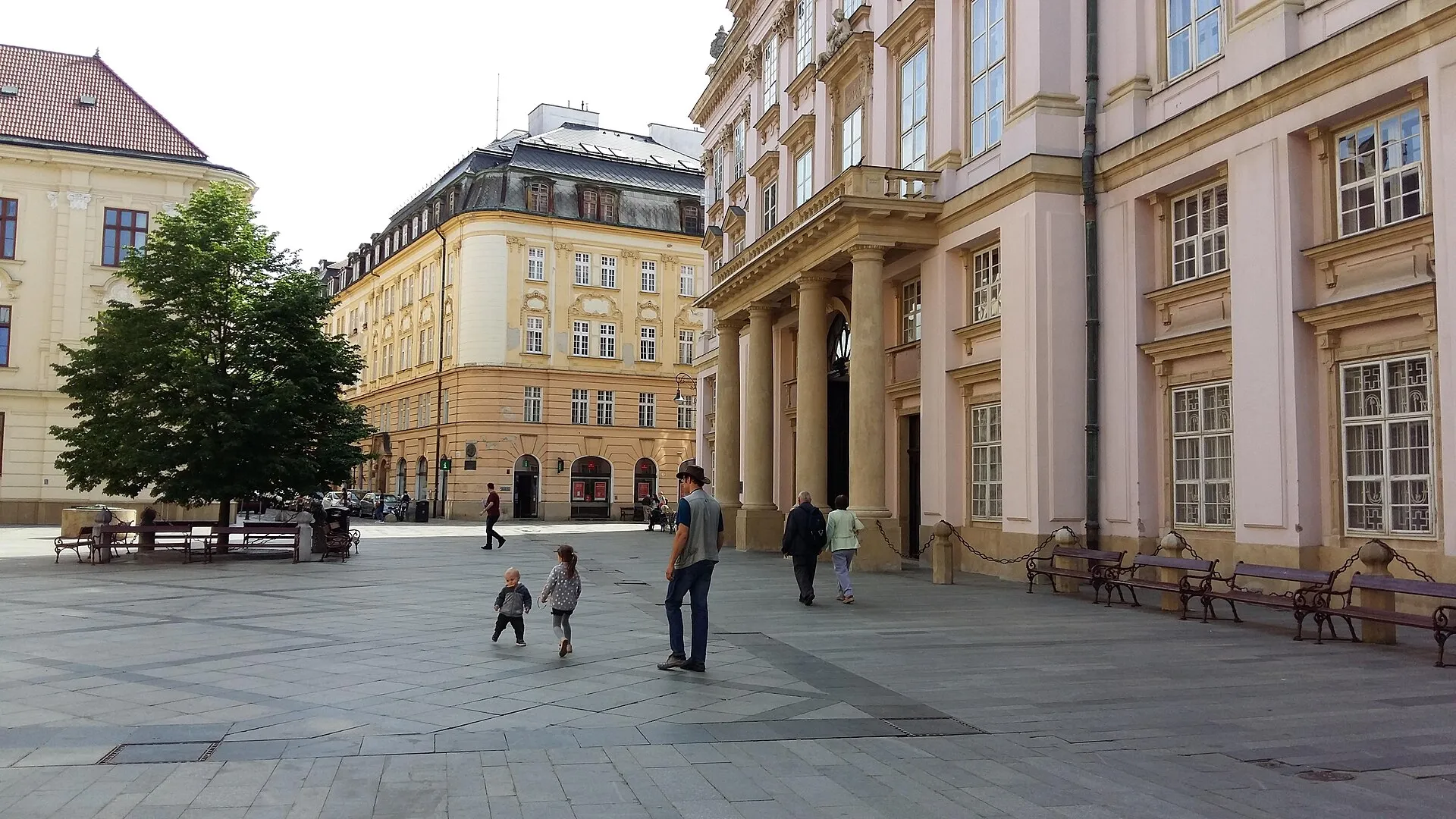
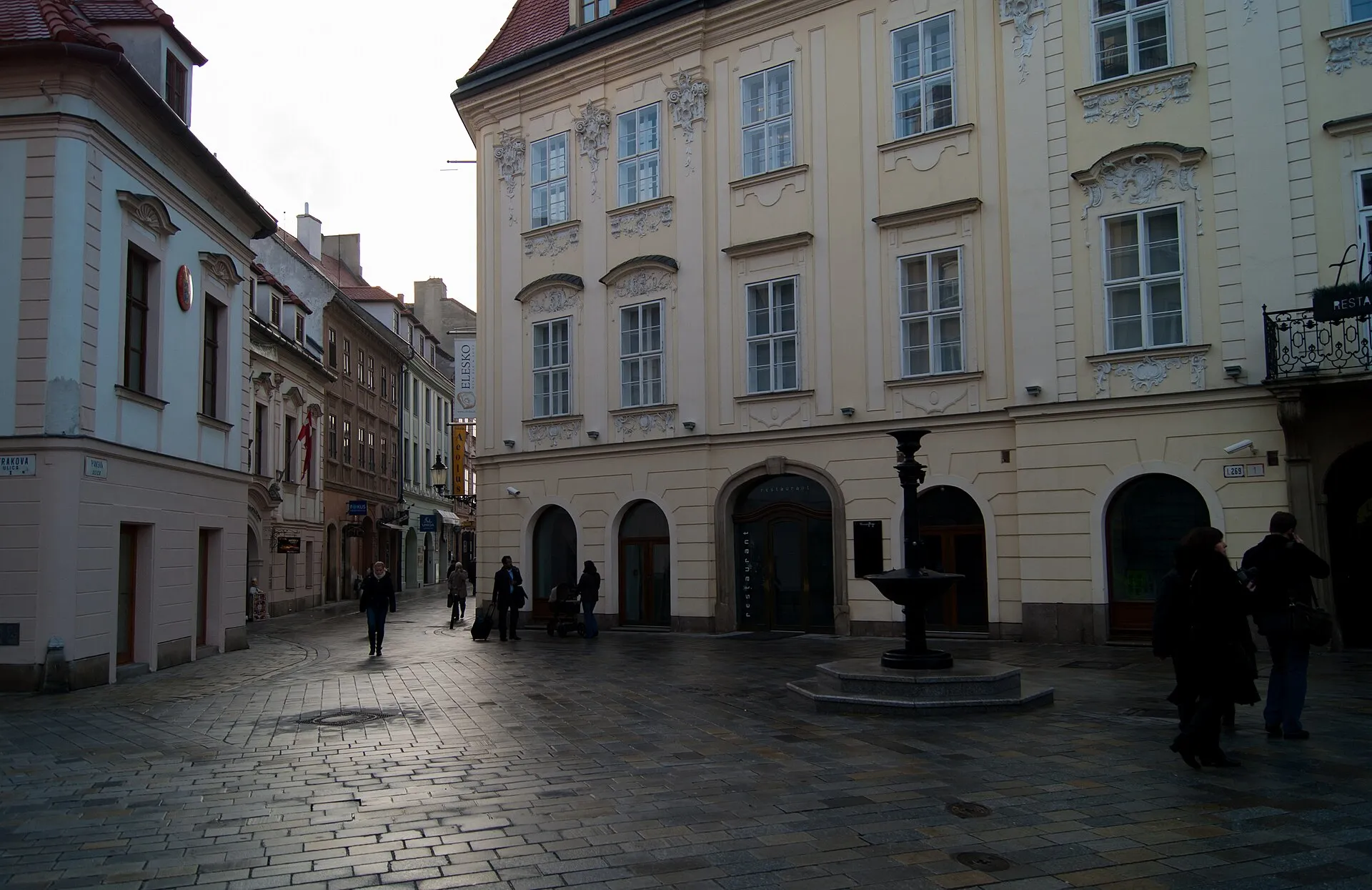
Primate’s Square. Photo: Radosław Botev & Sylwia Botev, Wikimedia Commons, CC BY 3.0 pl. Marked patrol vehicle of the Bratislava municipal police. Photo: Ing. Martin Baran, Wikimedia Commons, CC BY 3.0.
- Statue photo crowds: People crowd round Čumil (the manhole worker) at the junction of Panská and Rybárska brána, or Schöne Náci, and thieves brush against distracted tourists. Keep your handbag zipped and in front of you.
- Trams and buses: Pickpockets sometimes board crowded trams, particularly line 1 from Central Station and line 3 through Račianske mýto, in the weekday rush hours. Do not keep your phone or wallet in outer jacket pockets or rear trouser pockets.
- Outdoor cafe tables: On the terraces (letné terasy) on Main Square or Hviezdoslavovo námestie, do not leave your phone, sunglasses or wallet at the edge of the table, and do not hang your bag on the back of a chair facing the walkway.
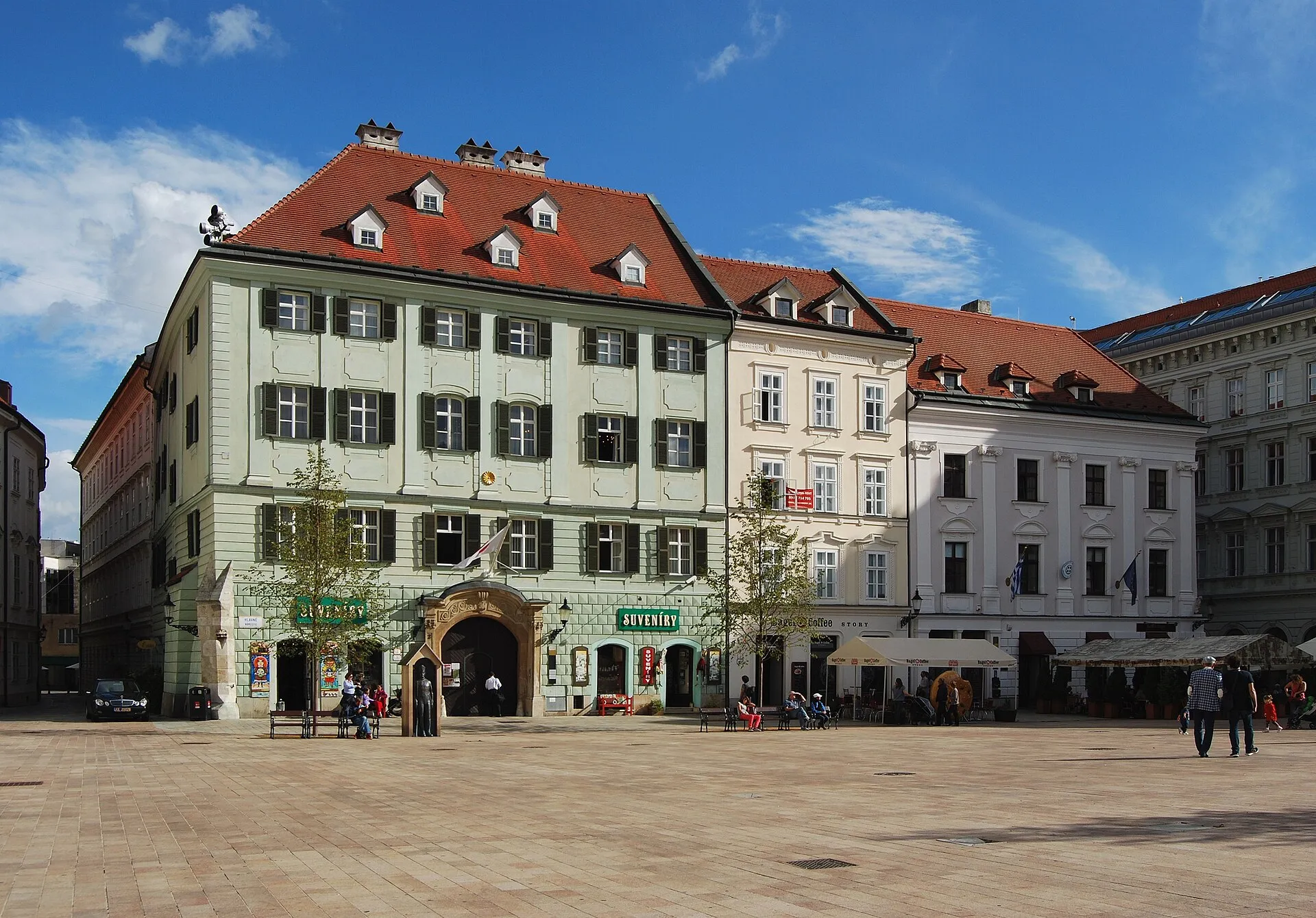
Main Square. Photo: Felix König, Wikimedia Commons, CC BY 3.0.
Local laws and regulations to know
Four rules carry fines or worse for visitors:
1. No drinking in public
Drinking alcohol in open public spaces in the city centre is illegal.
- Do not walk down the street with an open beer bottle, can or plastic cup of wine.
- Drink on licensed outdoor terraces (letné terasy) of restaurants, bars and pubs, or inside authorised seasonal festival perimeters such as the Christmas markets on Main Square or harvest festivals.
- Drinking is also banned in public parks (including Sad Janka Kráľa), on public transit platforms, in bus shelters, and within 100 metres of schools, playgrounds, churches and medical centres.
- Municipal police officers (Mestská polícia) patrol the Old Town and issue on-the-spot fines.
2. Quiet hours (Nočný Kľud)
Quiet hours run 22:00 to 06:00 daily. Keep noise down in residential streets, courtyards and rental apartments after 22:00. Loud music or shouting from balconies can lead neighbours to call the police and a noise fine.
3. Carry photo ID
Foreign citizens must carry valid physical photo identification at all times.
- EU/EEA and Swiss citizens carry their national identity card or passport.
- Non-EU citizens (including British, American, Canadian and Australian travellers) carry their physical passport. A photocopy or phone photo is not accepted by State Police or immigration officers.
4. No alcohol when driving
If you rent a car for the Small Carpathians or beyond, Slovakia’s limit for drivers is 0.00‰: any alcohol in your blood is an offence, punished with fines, loss of your licence or arrest.
Tourist scams and nightlife traps
Scams are minor. Three to watch for:
- Street taxis: Hailing an unbranded taxi in the street or outside the central railway station can mean an inflated fare. Insist that the driver switches on the taximeter, or use Bolt, Uber or Hopin on your phone.
- Nightclub and hostess traps: Solo male travellers on Obchodná or Michalská late at night should avoid strangers inviting them into basement clubs or strip venues, which can present bills for “hostess drinks” running into hundreds of euros. Stick to pubs and bars like those in our food and drink guides.
- Fake petition solicitors: Groups with clipboards sometimes claim to collect donations or signatures for deaf or disabled charities near Michael’s Gate or St Martin’s Cathedral. The petition is a distraction while an accomplice tries to pick your pockets. Walk past and decline to sign.
Emergency numbers and medical care
Operators on the central dispatch lines speak English, Slovak and German.
Emergency telephone contacts
| Service | Direct number | Coverage & purpose |
|---|---|---|
| Integrated Emergency System | 112 | Universal free emergency line across the European Union; dispatches police, ambulance, or fire |
| Medical Emergency / Ambulance | 155 | Direct line to the national ambulance service (Záchranná zdravotná služba) |
| State Police (Policajný zbor) | 158 | National police force; investigates crimes, traffic accidents, and theft reports |
| City Police (Mestská polícia) | 159 | Municipal police; handles public order, street disturbances, lost property, and parking towing |
| Fire and Rescue (Hasiči) | 150 | National fire, structural rescue, and hazardous materials response |
Medical Facilities and Pharmacies
- Hospitals: In the event of a medical emergency, University Hospital Bratislava (Univerzitná nemocnica Bratislava) operates a central facility in Staré Mesto at Mickiewiczova 13, with another major trauma facility in Ružinov at Ružinovská 6. Doctors in central emergency departments generally speak conversational English.
- Health Insurance: Citizens of the EU, EEA, and Switzerland can access medically necessary state healthcare using their European Health Insurance Card (EHIC). UK citizens can use their UK Global Health Insurance Card (GHIC). Travellers from outside Europe must hold private travel and health insurance.
- Pharmacies (Lekáreň): Pharmacies are marked by an illuminated green cross. Standard urban pharmacies open from 07:30 or 08:00 to 18:00 on weekdays.
- 24-Hour Emergency Pharmacy: If you require urgent medication outside normal business hours, Bratislava operates a dedicated 24/7 emergency pharmacy: Univerzitná lekáreň, located at Ružinovská 12 in the Ružinov Polyclinic complex (accessible via tram 9).
Tours and guided safety walks
A guided walk gives solo travellers and first-time visitors an orientation to the city with a local guide.
Bratislava: Old Town and Castle Walking Tour
From €2.10 · 4.7 stars from 929 reviews · 165 minutes · Old Town and castle
A guided walking tour of Bratislava’s Old Town and castle area. Bratislava: Old Town and Castle Walking Tourad
Tour and independent exploration comparison
| Sightseeing format | Safety & security | Cost per person | Suits |
|---|---|---|---|
| Self-guided exploration | Safe at all hours with standard city awareness | Free (€0.00) | Couples and budget travellers |
| Guided small-group walk | A guide who knows the route, plus group company | From €2.10 | Solo travellers, first-time visitors, history fans |
What to see next
- Money in Bratislava: ATM exchange scams and tipping.
- Public Transport in Bratislava: how to avoid fines from ticket inspectors.
- Where to Stay in Bratislava: central neighbourhoods compared.
- Where to Eat in Bratislava: traditional restaurants and historic cellars.
- Bratislava Craft Beer and Wine: brewpubs, wine cellars and taverns.
Common questions
Is Bratislava safe for tourists and solo travellers?
Yes. Violent street crime against visitors is rare and there are no 'no-go' neighbourhoods. The historic centre of Staré Mesto is well lit, covered by municipal CCTV and patrolled by city police day and night.
Are pickpockets a problem in Bratislava?
Pickpocketing can happen in dense tourist crowds, notably around Main Square, at the Christmas market, at the Central Railway Station (Hlavná stanica) and on crowded trams such as lines 1 and 3. Keep wallets in front pockets and do not leave smartphones on outdoor restaurant tables.
Can you drink alcohol on the street in Bratislava?
No. A city ordinance bans drinking alcohol in public streets and squares in the city centre. You can drink on licensed outdoor pub terraces (letné terasy) or inside designated festival zones. Drinking on public transport, in parks or near churches and schools brings on-the-spot police fines.
What are the emergency telephone numbers in Slovakia?
Dial 112 for the integrated European emergency service (operators speak English, German, and Slovak). For specific services, dial 155 for medical emergencies and ambulance, 158 for the State Police, 159 for the Municipal Police, and 150 for the Fire Service.