In this guide
💡 The Short Version: The Danubiana Meulensteen Art Museum is a modern art museum on an artificial peninsula in the Danube reservoir near the Hungarian border. It takes 34 minutes on municipal bus 90 from the Nové SND stop behind Eurovea. Danubiana is open Tuesday to Sunday from 10:00 to 18:00 (closed Mondays), and admission costs €12.00 for adults (€6.00 for students and seniors). The grounds hold an outdoor sculpture park with works by Magdalena Abakanowicz, El Lissitzky and Jozef Jankovič, and there is an indoor gallery hall and a walkable green roof over the river floodplains. Or book a tour: buy museum tickets at the museum desk; a Danube panorama cruisead from €20 shows the river side of the city on the same day.
The museum is twenty kilometres south of central Bratislava at the Čunovo waterworks, and the city bus reaches it. The building is designed to suggest a Roman galley ploughing through the Danube current, with water on three sides.
Key facts and visiting summary
| Detail | Official information | Notes for visitors |
|---|---|---|
| Location | Čunovo waterworks peninsula, 851 10 Bratislava-Čunovo | 20 km south of the city centre near the Slovak-Hungarian border |
| Public transit | Municipal bus line 90 from Nové SND | 34 minutes journey time; terminates at Danubiana |
| Transit fare | €1.09 contactless tap / €1.20 paper ticket each way | Included in standard IDS BK Zone 100+101 transit tickets |
| Adult admission | €12.00 (danubiana.sk) | Card and cash accepted at reception desk |
| Concessions | €6.00 for students and seniors (over 62) | Proof of status or student card required |
| Family ticket | €25.00 (2 adults + 2 students) | Valid for parents with dependent children |
| Opening hours | Tuesday to Sunday: 10:00–18:00 | Closed all day Monday; last entry at 17:30 |
| Key features | Indoor galleries, sculpture park, walkable roof, Art Café | A full visit takes 2 to 3 hours |
Getting to Danubiana from Bratislava
Bus 90 is the simplest way to reach the peninsula.
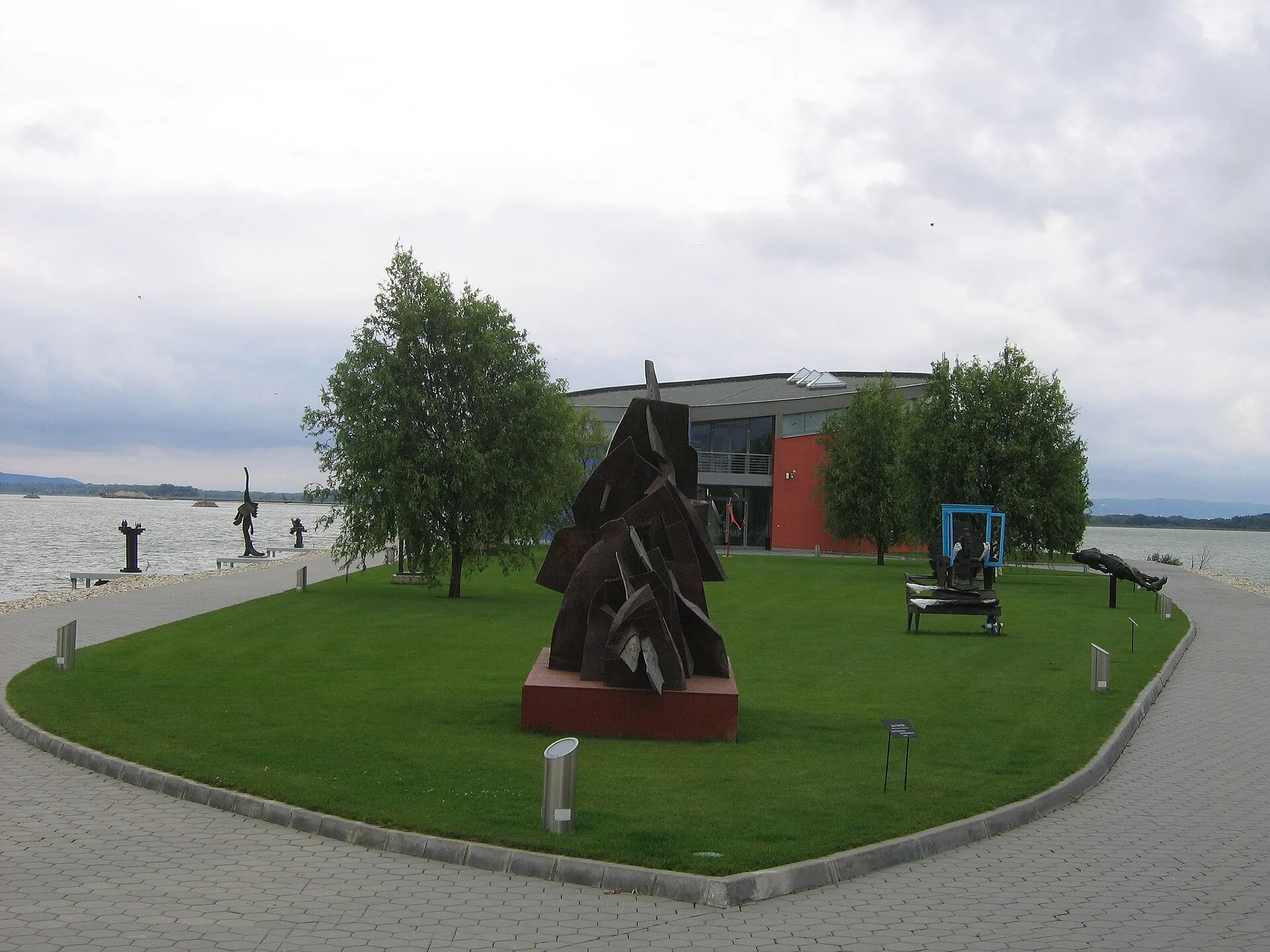
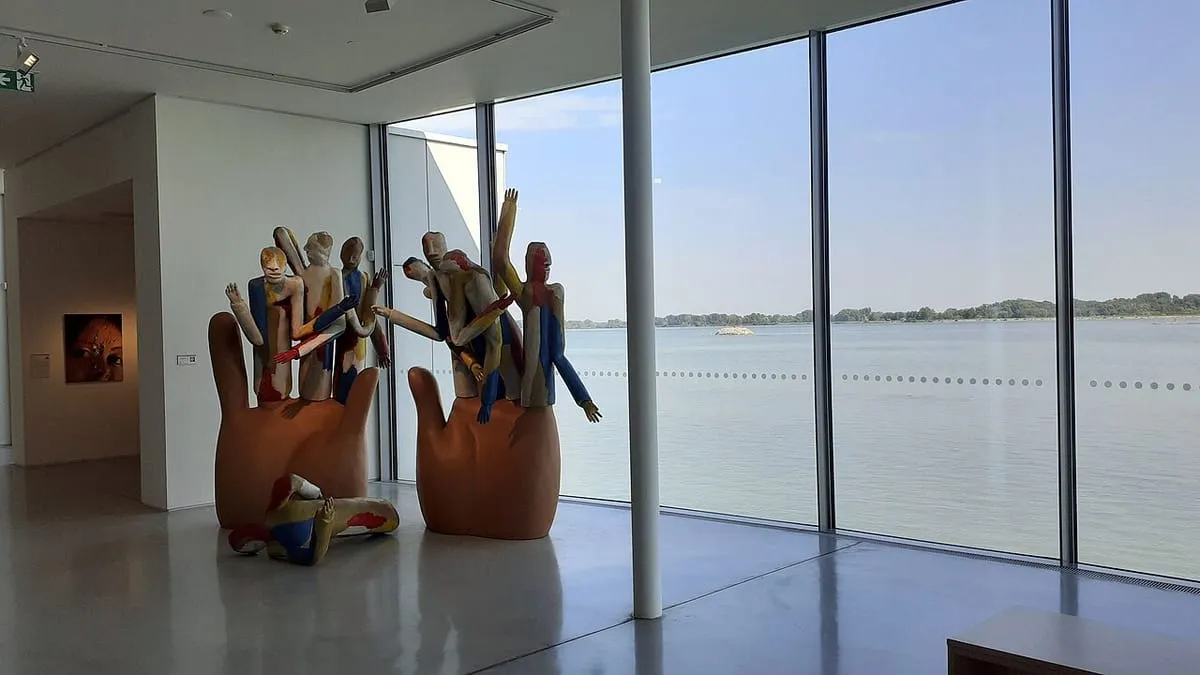 Modern bronze sculpture in the waterside park at Danubiana. Photo: Miroslava Fišerová, Wikimedia Commons, CC BY-SA 4.0.
Taking Municipal Bus Line 90
Bus 90 is run by the city transport company Dopravný podnik Bratislava (DPB).
- Departure stop: Buses leave from the Nové SND stop on Olejkárska street, behind the glass building of the new Slovak National Theatre and next to the Eurovea shopping centre.
- Tickets: The Nové SND stop has no ticket machine, so you cannot buy a ticket before boarding. Tap your contactless card or phone on the yellow reader inside the bus doors as you board. A tap charges €1.09 for 30 minutes across Zones 100 and 101. You can also buy a digital ticket in the IDS BK mobile app, or a 24-hour city pass in advance at an Old Town tram stop.
- Route: The bus runs through the southern boroughs of Petržalka, Rusovce and Čunovo, then along the narrow peninsula road across the reservoir. It takes 34 minutes from Nové SND to the terminus at Danubiana.
- The stop: Danubiana is at the end of the peninsula road. A paved footpath leads 150 metres through trees from the bus shelter to the ticket reception.
- Return journey: The return bus leaves from the shelter where you arrived. Service is hourly through the day, every 30 minutes on peak summer weekends. Photograph the posted return timetable when you arrive so you can plan your visit around it.
Summer passenger boats on the Danube
From May to early October passenger boats run from the central passenger terminal (Osobný prístav) at Fajnorovo nábrežie in Bratislava to Danubiana.
The downstream trip takes about 50 minutes, through the Danube channel and the locks of the Čunovo water management facility, and docks at the museum’s own jetty. Return departures leave three hours ashore for the galleries and sculpture park before the boat sails back upstream.
By bicycle or car
The Danube Cycle Path (EuroVelo 6) runs along the flood defence dykes on the southern bank from Petržalka to Čunovo. The 22-kilometre route is flat, away from traffic, and takes 60 to 75 minutes at a relaxed pace. There are bike racks at the museum entrance.
Drivers can take route 2 south towards Rusovce and Čunovo, following signs for Vodné dielo Čunovo and Danubiana. The car park outside the entrance gates is free for ticketed visitors.
Museum tickets and opening hours
Admission tariffs are set officially by the Danubiana Meulensteen Art Museum.
| Ticket category | Box office price | Verification required |
|---|---|---|
| Standard Adult | €12.00 | None |
| Senior (62+) | €6.00 | National identity card or passport |
| Student | €6.00 | Valid ISIC or university student card |
| Child (under 6) | Free (€0.00) | Accompanied by ticketed adult |
| Family Ticket | €25.00 | 2 adults and 2 students |
| Disabled Visitor (ŤZP) | Free (€0.00) | Disability card / proof of status |
| Danubiana Club Members | Free (€0.00) | Annual membership card |
The museum operates Tuesday to Sunday from 10:00 to 18:00, with last ticket sales and admissions at 17:30. Danubiana is closed on all Mondays, as well as on 1 January, 24–25 December, and Easter Monday.
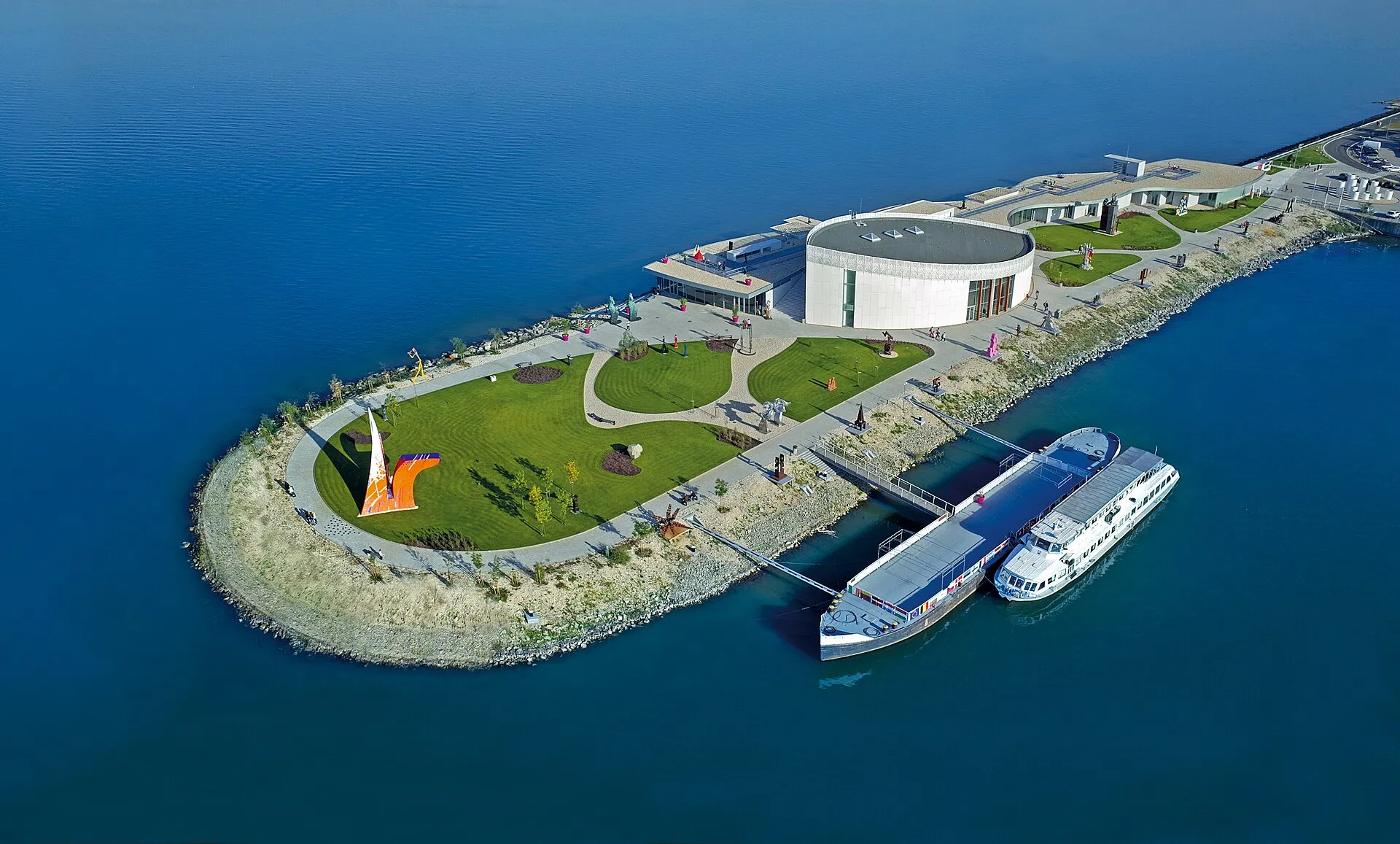
Danubiana from the air. Photo: Lenislava, Wikimedia Commons, CC BY-SA 4.0.
Architecture and the founders’ vision
The museum was set up by the Dutch industrialist and art collector Gerard Meulensteen of Eindhoven and the Slovak art gallerist Vincent Polakovič.
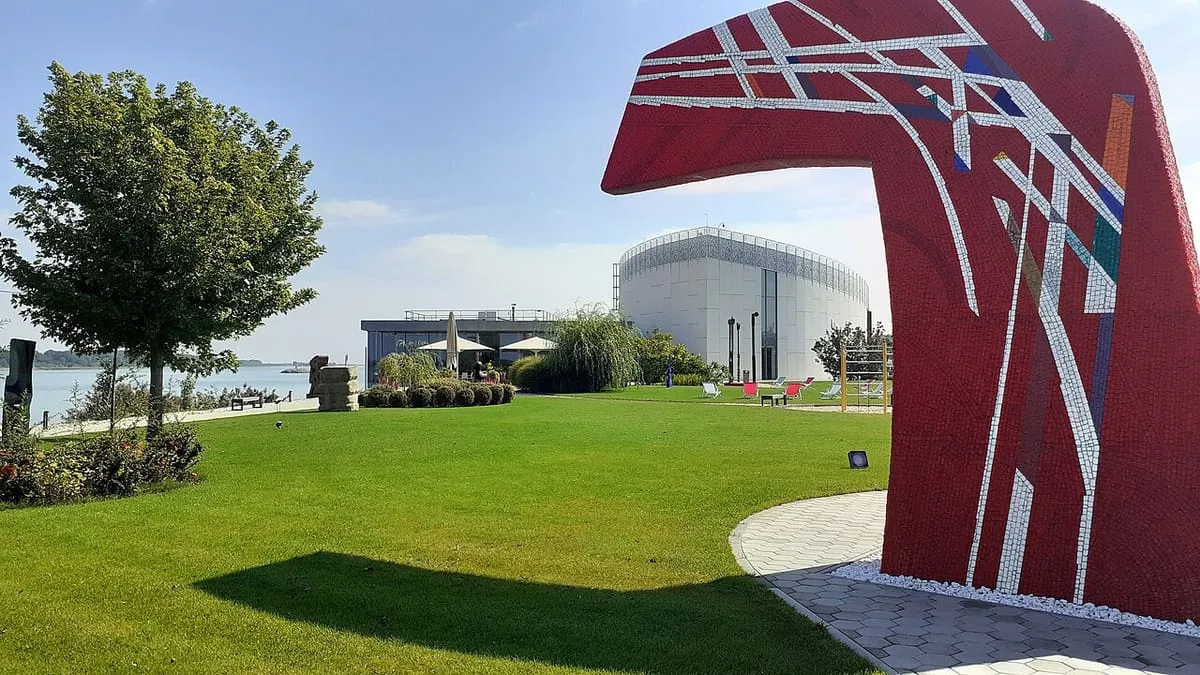 The ship-shaped building of Danubiana on its Danube peninsula. Photo: Miroslava Fišerová, Wikimedia Commons, CC BY-SA 4.0.
In the late 1990s Polakovič wanted a permanent space for contemporary Central European art alongside international masters. Meulensteen liked the peninsula created during construction of the Gabčíkovo dam and provided the initial funding. The original pavilion, designed by the Slovak architect Peter Žalman, opened in September 2000. Its curved lines and raised prow are meant to suggest a vessel anchored in the river.
In 2014 the museum completed an expansion designed by Atelier 008 (architects Ján Kukuľa and Jozef Danák). It added curving galleries, floor-to-ceiling glass walls facing the river, an auditorium, an art library and a larger Art Shop.
Exploring the collections and sculpture park
A visit takes two to three hours, split between the galleries, the outdoor grounds and the roof.
The indoor galleries
The ground floor and upper halls hold a changing programme of large temporary exhibitions of twentieth- and twenty-first-century art. Past shows have included Joan Miró, Karel Appel, Sam Francis, Magdalena Abakanowicz and Günther Uecker, and retrospectives of Slovak and Czech painters and sculptors such as Rudolf Sikora, Milan Dobeš and Endre Nemes.
The central hall gets daylight through ceiling lightwells, and glass bays along the western facade put the Danube directly beyond the paintings.
The sculpture park
A landscaped park runs to the water’s edge on three sides of the peninsula.
Works in the outdoor grounds include:
- Jozef Jankovič: Levice a pravice (“Left and Right”), a figurative bronze by the Slovak sculptor.
- Magdalena Abakanowicz: The Polish artist is known for monumental figurative bronzes about crowds and post-war resilience.
- Jim Dine: The American pop-art artist is represented by large cast bronzes.
- Arman (Armand Fernandez): The French-American artist is known for bronze accumulation sculptures.
- Hans van de Bovenkamp & Karel Appel: Dutch modernists, reflecting the museum’s Dutch-Slovak founding.
Walking trails wind between the lawns, with river tugboats, gravel barges and Danube waterbirds passing beyond the sculptures.
The walkable green roof
A wide stone ramp leads from the sculpture park to the green roof terrace on the 2014 extension. The platform has views over the river:
- To the north are the distant skyline of Bratislava, the Kamzík TV tower and the foothills of the Small Carpathians.
- To the south and east the view opens across the Gabčíkovo water reservoir and the Danube flood forests into northern Hungary.
- In late afternoon the setting sun reflects across the water.
The Art Café
The Art Café is inside the museum, with a sheltered terrace cantilevered over the water. It serves espresso, Slovak wines, craft beers and cakes.
Tours and Danube experiences
Danubiana is easy to do independently by bus. Back in the centre, a river cruise shows the city from the water.
Bratislava: Panorama Cruise on the Danube River
From €20 · 4 stars from 842 reviews · 45 minutes · Danube cruise
A sightseeing cruise on the Danube past the city’s bridges and historic architecture. Bratislava: Panorama Cruise on the Danube Riverad
Independent visit and river cruise compared
| Option | Transport mode | Cost per person | Total time |
|---|---|---|---|
| Independent Bus 90 Visit | DPB Bus 90 (€1.09 tap each way) + €12 entry | €14.18 | 3 to 4 hours |
| Danube Panorama Cruise | 45-minute central city river cruise | From €20.00 | 1 hour |
Practical visiting tips
- Check the weather: The sculpture park and roof terrace are outdoors, so look at the forecast before you set out.
- Monday closure: Danubiana is closed on Mondays, and the gates stay locked. Do not travel out to the peninsula on a Monday.
- No ticket machine at Nové SND: Activate a digital ticket in the IDS BK app, or tap your contactless card on the yellow reader as soon as you step on bus 90. Inspectors check tickets on the routes towards Rusovce and Čunovo.
- Eurovea: Bus 90 starts and ends at Nové SND, so you can follow the trip with lunch or a walk along the Eurovea Danube promenade.
What to see next
- Day Trips from Bratislava: Devín Castle, Vienna, Trnava and the wine towns compared.
- Slovak National Gallery: the national art collection in the city centre.
- Public Transport in Bratislava: bus fares, contactless payment and zones.
- 3 Days in Bratislava: fitting Danubiana into a long weekend.
- Bratislava City Hub: all Bratislava guides.
Common questions
How do you get to Danubiana from central Bratislava?
Board municipal bus line 90 from the Nové SND bus stop (located directly behind the new Slovak National Theatre and Eurovea shopping centre). The ride takes 34 minutes to the Danubiana terminus, stopping three minutes' walk from the museum doors. Return buses depart from the same turning circle.
How much are tickets to Danubiana Meulensteen Art Museum?
According to the official tariff at danubiana.sk, standard adult entry costs €12.00. Students and seniors over 62 pay €6.00, a family ticket (two adults and two students) costs €25.00, and children under six enter free.
When is Danubiana open?
Tuesday to Sunday from 10:00 to 18:00, with last admission at 17:30. The museum and grounds are closed on Mondays year-round.
Can you reach Danubiana by boat?
From May to early October, passenger boats run weekend return services from Bratislava's central passenger port (Fajnorovo nábrežie) to the private pontoon at Danubiana.