In this guide
💡 The Short Version: Zurich is one of Europe’s safest cities. Violent street crime against visitors is exceptionally rare, public transport runs cleanly late into the night, and solo travellers walk comfortably across the Old Town, Seefeld, Enge, and Zurich West after dark. Your only real urban risks are opportunistic pickpocketing in crowded transit hubs (Zürich HB and busy trams) and late-night rowdiness along Langstrasse (Kreis 4). Outside the city, Alpine weather and high-altitude exposure on day trips to Jungfraujoch or Titlis require far more preparation than city street crime.
⚠️ Memorise Switzerland’s emergency numbers and carry Alpine insurance. Dial 117 (Police), 118 (Fire), 144 (Ambulance), or 112 (EU-wide emergency). Even if you hold a valid GHIC or EHIC card, it does not cover mountain helicopter rescue (REGA 1414) or medical repatriation.
Crime reality: what actually happens in Zurich
Swiss Federal Statistical Office data consistently places Zurich near the bottom of European cities for violent crime, mugging, and street harassment. Police (Stadtpolizei Zürich) maintain a calm, visible presence around Zürich HB, Bellevue, and major events, and trams and S-Bahn trains are monitored by CCTV.
Where visitors do occasionally lose valuables is non-violent opportunistic theft:
- Zürich HB & ShopVille: Crowded rush-hour escalators, airport-train luggage racks, and the underground shopping concourse attract pickpockets looking for unzipped backpacks or phones left on café tables.
- Busy tourist trams (Lines 4, 10, 11): Keep wallets and passports in zipped front pockets or cross-body bags when boarding at Zürich HB, Paradeplatz, and Bellevue.
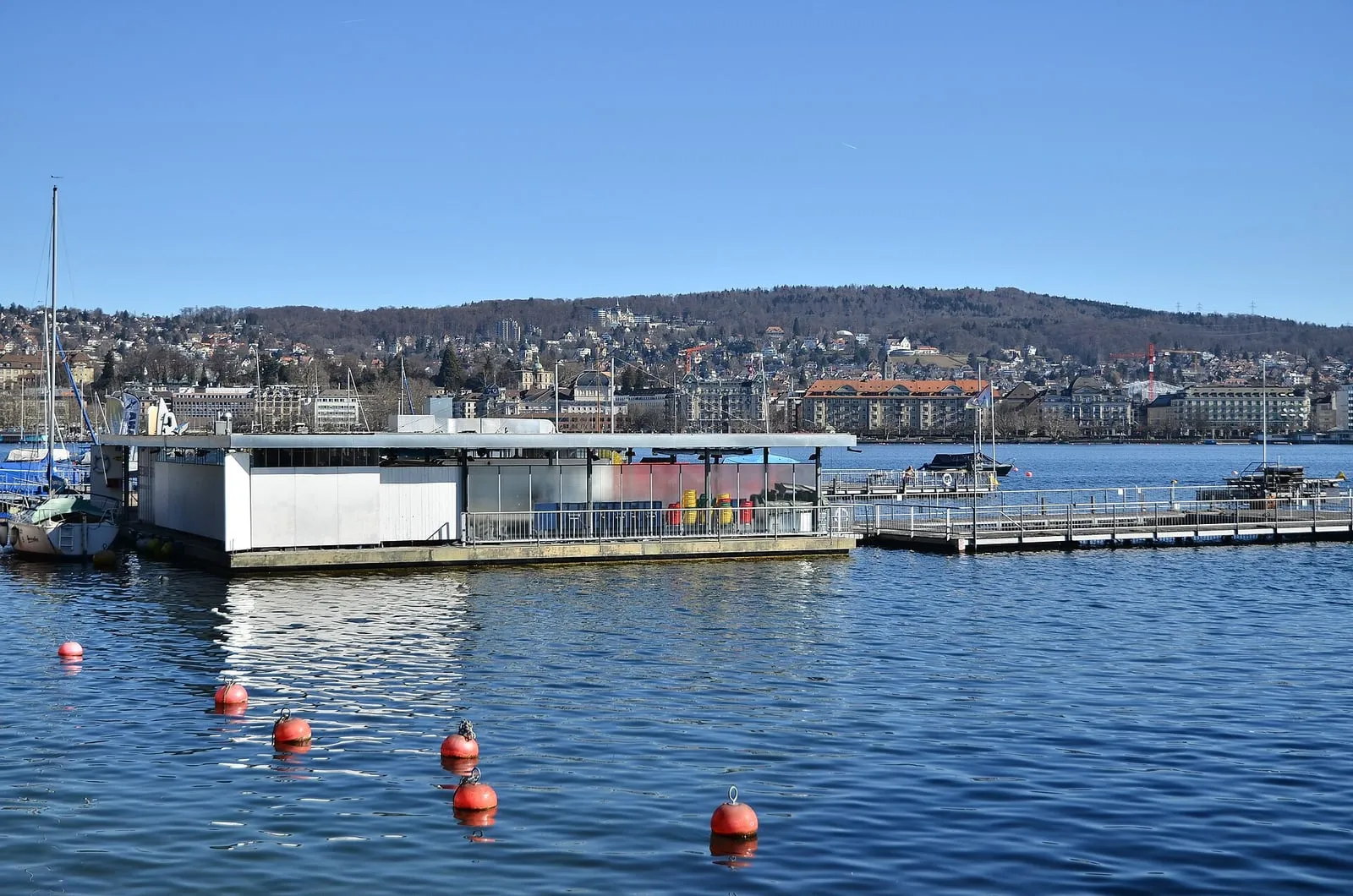
- Summer lakeside Badis: Never leave phones, cards, or passports unattended on your towel while swimming at Seebad Enge or Oberer Letten; use the on-site lockers (bring a CHF 1 or CHF 2 coin or small padlock).
- Major street festivals: Pickpocketing spikes sharply during Street Parade (August) and crowded Saturday evenings at Wienachtsdorf Christmas market (December).
Neighbourhood-by-neighbourhood safety
| District | Daytime Feel | After-Dark Feel | Practical Notes |
|---|---|---|---|
| Altstadt / Niederdorf (Kreis 1) | Calm, pedestrianised, busy with visitors | Well-lit, lively dining until 23:00 | Safe for solo walkers; standard bar-district awareness late on weekends |
| Bahnhofstrasse, Enge & Seefeld | Upscale, quiet, residential/business | Very quiet and well-lit | Among the safest hotel bases in the city; see where to stay in Zurich |
| Zürich HB Perimeter | High foot traffic, commuters & travellers | Busy until 01:00; occasional panhandlers | Watch bags on luggage racks and at outdoor seating near Bahnhofquai |
| Zurich West (Kreis 5 / Hardbrücke) | Creative offices, Im Viadukt, cafés | Lively restaurants, clubs & bars | Safe and well-served by Tram 4 and S-Bahn |
| Langstrasse (Kreis 4) | Trendy bakeries, street food, diverse shops | Rowdy bars, clubs, late-night drinking | Stick to main lit streets after midnight; ignore street drug offers and watch pockets |
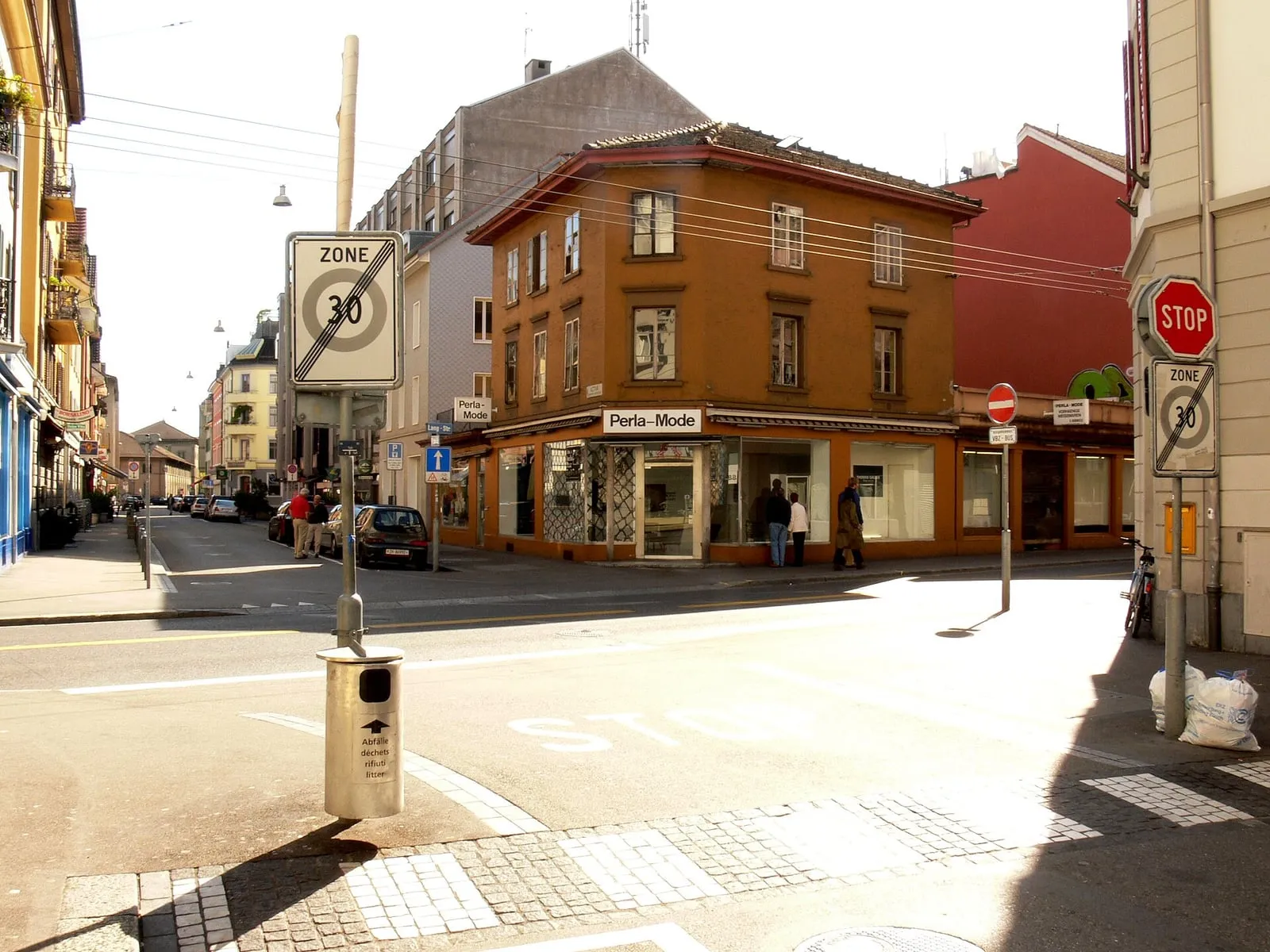 Langstrasse in Zurich’s Kreis 4. Photo: thomas stein, Wikimedia Commons, CC BY-SA 2.0.
Emergency numbers and medical care in Switzerland
English is widely spoken by Swiss emergency dispatchers, police officers, hospital staff, and pharmacists.
| Service | Number | When to Call |
|---|---|---|
| Police (Polizei) | 117 | Theft in progress, assault, urgent public safety |
| Fire (Feuerwehr) | 118 | Fire or hazardous spill |
| Ambulance (Sanität) | 144 | Medical emergency |
| Pan-European Emergency | 112 | Works from any mobile phone (even without SIM/roaming) |
| REGA Air Rescue | 1414 | Alpine mountain accident or serious hiking injury |
| Ärztefon (Canton Zurich) | 0800 33 66 55 | 24/7 free helpline for non-emergency doctors, dentists & on-duty pharmacies |
Pharmacies & walk-in clinics
- Bellevue Apotheke (Theaterstrasse 14, right on Bellevueplatz) is open 365 days a year from 07:00 until midnight, and offers an emergency night window after 24:00.
- Permanence Hauptbahnhof (inside Zürich HB, ShopVille) is a walk-in medical clinic open daily 07:00–21:00 for minor injuries, infections, and prescriptions without an appointment.
Healthcare, GHIC/EHIC, and travel insurance
- UK GHIC and EU EHIC cards: Valid in Switzerland for medically necessary state-provided treatment on the same basis as Swiss residents. Note that Swiss statutory healthcare involves patient co-payments (a fixed deductible plus a percentage share), so you may still receive a modest bill.
- US, Canadian, Australian, and New Zealand visitors: No reciprocal state health agreement exists; emergency room visits and hospital stays in Switzerland are among the most expensive in the world.
- Mountain & winter cover: Never rely on GHIC/EHIC for Alpine excursions — helicopter evacuations by REGA routinely cost CHF 3,000 to CHF 8,000+. Ensure your travel insurance explicitly includes high-altitude excursions and winter sports if sledging or skiing.
Drinking water: Zurich’s 1,200 free fountains
Zurich maintains over 1,200 public stone and cast-iron fountains (Brunnen) fed continuously by spring water and rigorously filtered Lake Zurich water — the exact same high-grade water piped into homes.
- Drinking rule: Every fountain is completely safe to drink from unless a plaque explicitly states “Kein Trinkwasser” (Not drinking water).
- Hygiene etiquette: Drink or fill your bottle from the running spout, never from the basin below (the lower trough is for dogs and cooling hands).
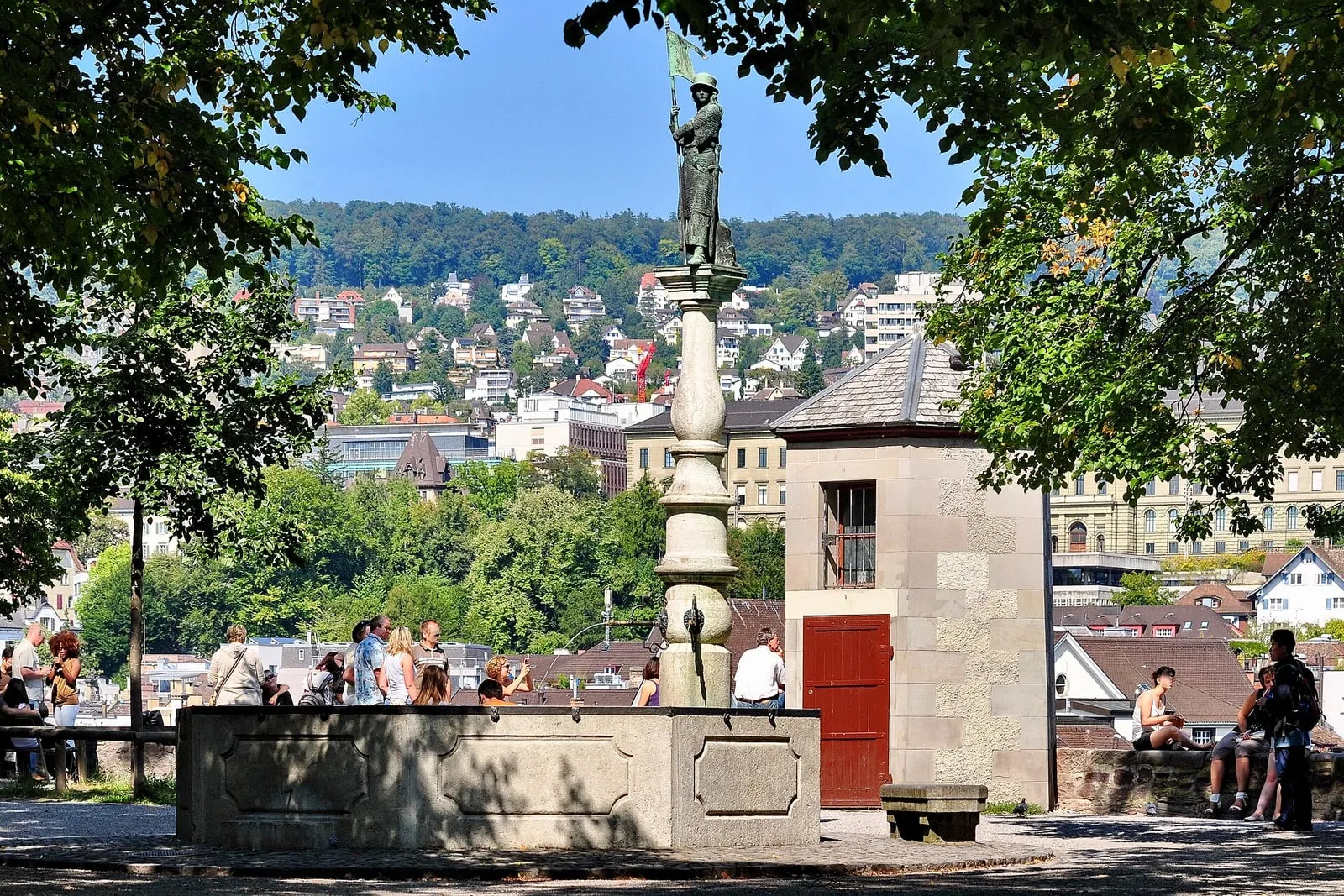 A public drinking fountain in central Zurich. Photo: Roland zh, Wikimedia Commons, CC BY-SA 3.0.
Tram, cycling, and pedestrian safety
Zurich’s biggest day-to-day physical hazard for distracted visitors is stepping into a tram lane.
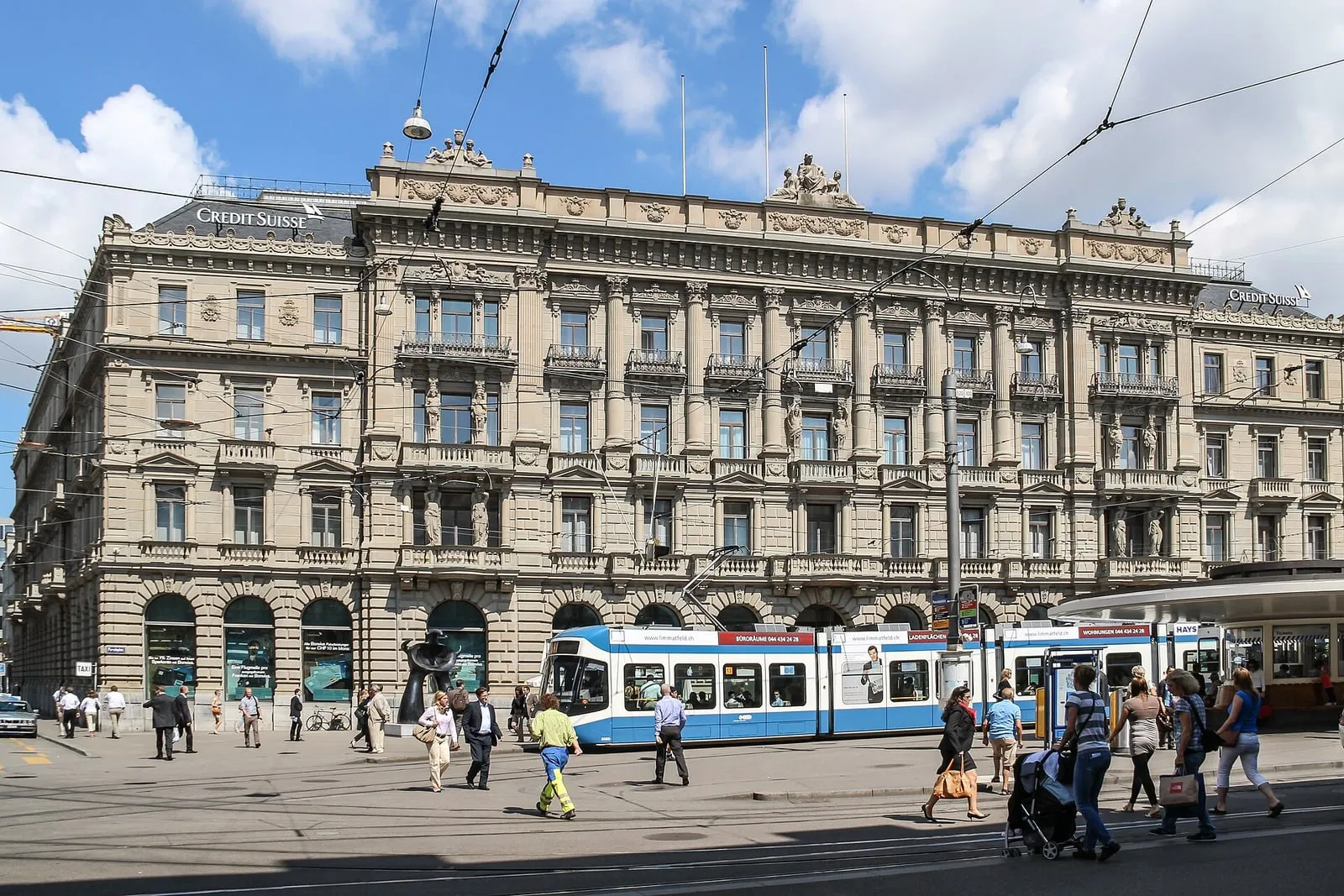
- Trams always have right of way: Modern VBZ Flexity trams glide almost silently on steel rails and weigh over 40 tonnes. Always look both ways before crossing tram tracks on Bahnhofstrasse, Paradeplatz, and Bellevue, even when pedestrian lights look clear.
- Marked zebra crossings (Fussgängerstreifen): Drivers must stop for pedestrians waiting to cross yellow-striped crossings, and almost all do — still make eye contact before stepping out, especially around fast-moving e-bikes.
- River swimming safety (summer): The Limmat flows briskly through Oberer Letten and Unterer Letten. Only swim inside the marked public Badi zones, never jump from bridges where prohibited, and exit before the clearly signed downstream barriers.
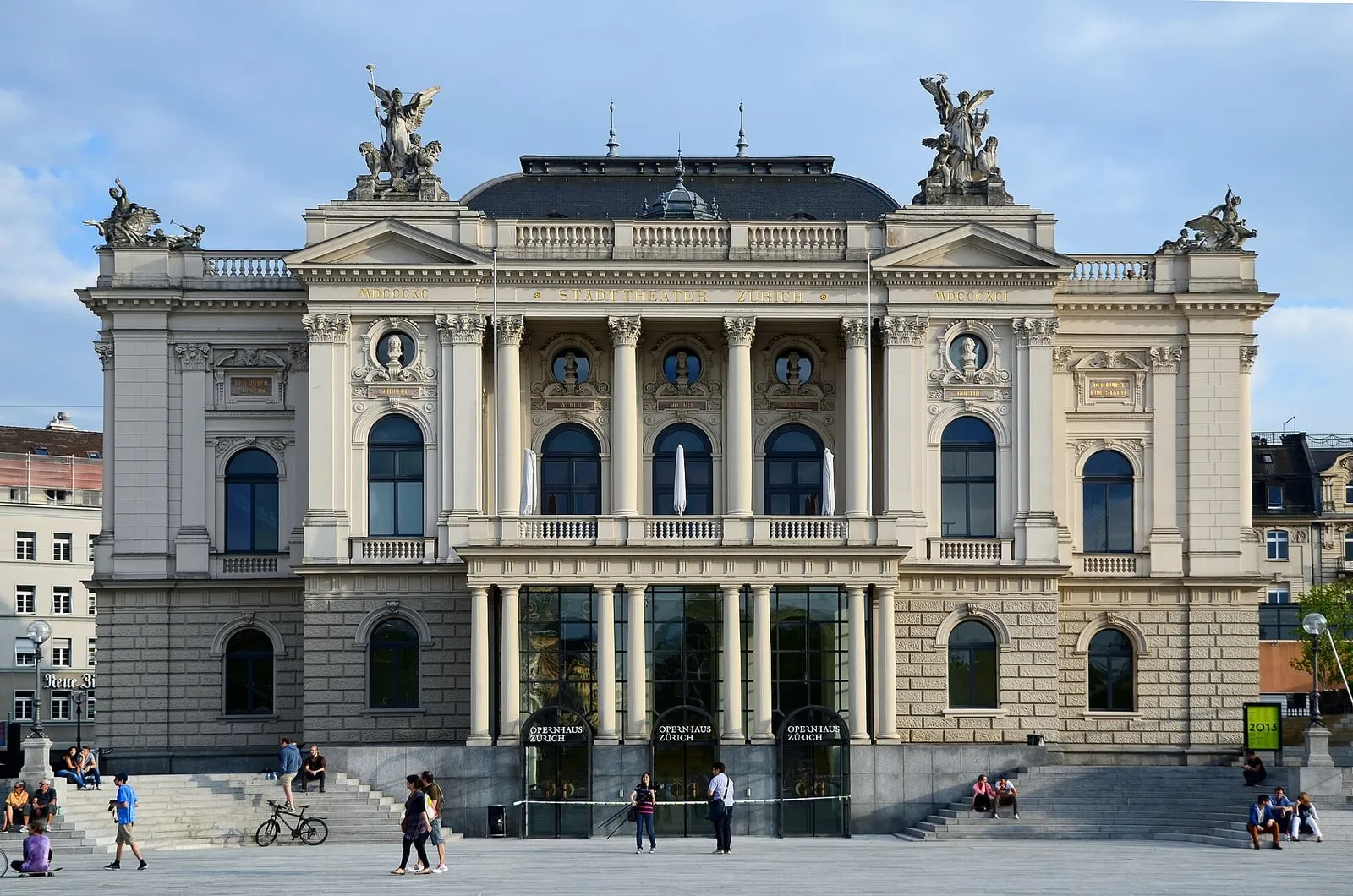 Sechseläutenplatz and the Zurich Opera House. Photo: Roland zh, Wikimedia Commons, CC BY-SA 3.0.
Alpine day-trip and mountain safety
Many Zurich visitors head straight from 24°C summer sunshine at Bürkliplatz up to 3,020 metres on Mount Titlis or 3,454 metres at Jungfraujoch. Four practical precautions prevent miserable or dangerous outings:
- Expect sub-zero summit temperatures year-round: Even in July and August, Jungfraujoch and Titlis frequently sit between -2°C and +4°C with biting wind chill. Pack a windproof shell, warm fleece, and closed-toe shoes with grip — trainers with smooth soles slip immediately on packed glacier snow.
- Protect against intense UV radiation: UV reflection off snow above 3,000 metres causes sunburn and snow glare in under 30 minutes. Bring sunglasses and SPF 30+ sunscreen.
- Pace yourself at high altitude: Going from 408 metres (Zurich) to 3,454 metres (Jungfraujoch) in a few hours can trigger mild shortness of breath, dizziness, or headaches. Drink plenty of water, walk slowly up stairs inside the Sphinx Observatory, and avoid heavy alcohol at the summit.
- Stick to marked hiking trails: On ridge walks such as Uetliberg to Felsenegg or around Grindelwald, yellow Swiss trail signs indicate easy walking paths, while red-and-white signs denote steeper Alpine mountain trails requiring proper hiking boots. Download the free SwissTopo app for offline trails and always check MeteoSwiss forecasts for sudden afternoon summer thunderstorms.
Next steps
- Choose a calm, well-connected hotel base in where to stay in Zurich.
- Check seasonal weather and mountain maintenance schedules in best time to visit Zurich.
- Review currency, card, and city-tax rules in money in Zurich.
Common questions
Is Zurich safe to walk around at night, including for solo travellers?
Yes. Zurich consistently ranks among Europe's safest cities for violent crime, and central districts (Altstadt, Bahnhofstrasse, Enge, Seefeld, Wiedikon, and Zurich West) are well-lit, busy, and safe after dark for solo travellers of all genders.
Are there any areas to be cautious in Zurich?
Langstrasse in Kreis 4 is Zurich's nightlife and former red-light strip. By day it is an ordinary dining and café street; late on Friday and Saturday nights it gets rowdy with heavy drinking and occasional opportunistic pickpocketing or street-level drug dealing. Stick to standard big-city awareness there and inside Zürich HB concourses.
What are the emergency phone numbers in Switzerland?
Dial 117 for Police, 118 for Fire, 144 for Ambulance, 1414 for REGA Alpine Air Rescue, or 112 for the pan-European emergency desk (English spoken on all lines). For non-emergency medical advice in Canton Zurich, call Ärztefon on 0800 33 66 55.
Can you drink the tap water and public fountain water in Zurich?
Yes. Zurich's tap water and over 1,200 public drinking fountains deliver strictly tested spring and lake-filtered water. Every public fountain is safe to drink from unless explicitly labelled 'Kein Trinkwasser' (Not drinking water).
Does the UK GHIC or EU EHIC work in Switzerland?
Yes. Switzerland honours valid UK GHIC and EU EHIC cards for medically necessary state-provided emergency treatment on the same terms as residents (which still involves Swiss statutory co-payments). However, GHIC/EHIC never covers mountain helicopter rescue (REGA), ski-piste evacuation, or medical repatriation — dedicated travel insurance with Alpine cover is essential.
What safety risks should I watch for on Alpine day trips from Zurich?
Rapid weather changes, cold summit temperatures even in July (below 0°C at Jungfraujoch and Mount Titlis), UV sunburn off snow, and mild altitude effects above 3,000 metres. Wear layered waterproofs, sturdy footwear, sunglasses, and check live summit webcams before setting out.