In this guide
💡 The Short Version: Zurich runs on the Swiss franc (CHF), not the euro, and is nearly 100% contactless-card friendly. Avoid paying in EUR cash (shops set their own exchange rates and return change in CHF) and always select CHF when a card machine or ATM offers to charge you in your home currency. Tipping is optional (service is included by law; rounding up 5–10% at sit-down restaurants is polite). Budget CHF 3.50 per adult per night for the Zurich hotel City Tax, and use Migros, Coop, and free public water fountains to keep daily food costs down.
⚠️ Watch your mobile roaming bill too. Because Switzerland is not in the European Union, many European mobile data plans exclude Switzerland and bill steep out-of-bundle rates the moment your phone connects at Zurich Airport. Check your carrier’s Switzerland roaming terms before landing.
Swiss francs (CHF) vs euros (EUR)
Switzerland sits inside the Schengen Area but outside the EU and the Eurozone. The sole legal currency is the Swiss franc (CHF), subdivided into 100 Rappen (centimes).
- Banknotes: CHF 10, 20, 50, 100, 200, and 1,000 (the current ninth series consists of vertical polymer-core notes). Avoid carrying CHF 200 notes for small purchases; cafés and kiosks prefer CHF 10, 20, or 50.
- Coins: 5, 10, 20, and 50 Rappen, plus CHF 1, CHF 2, and the heavy CHF 5 coin (Fünfliber).
- Why you should avoid paying in EUR: Major chains such as Migros, Coop, SBB counters, and tourist-zone cafés often display prices in both CHF and EUR and accept euro notes. However, they apply their own in-store conversion rate, reject euro coins, and return all change in CHF. Paying directly with a zero-foreign-transaction-fee card in CHF avoids the shop markup.
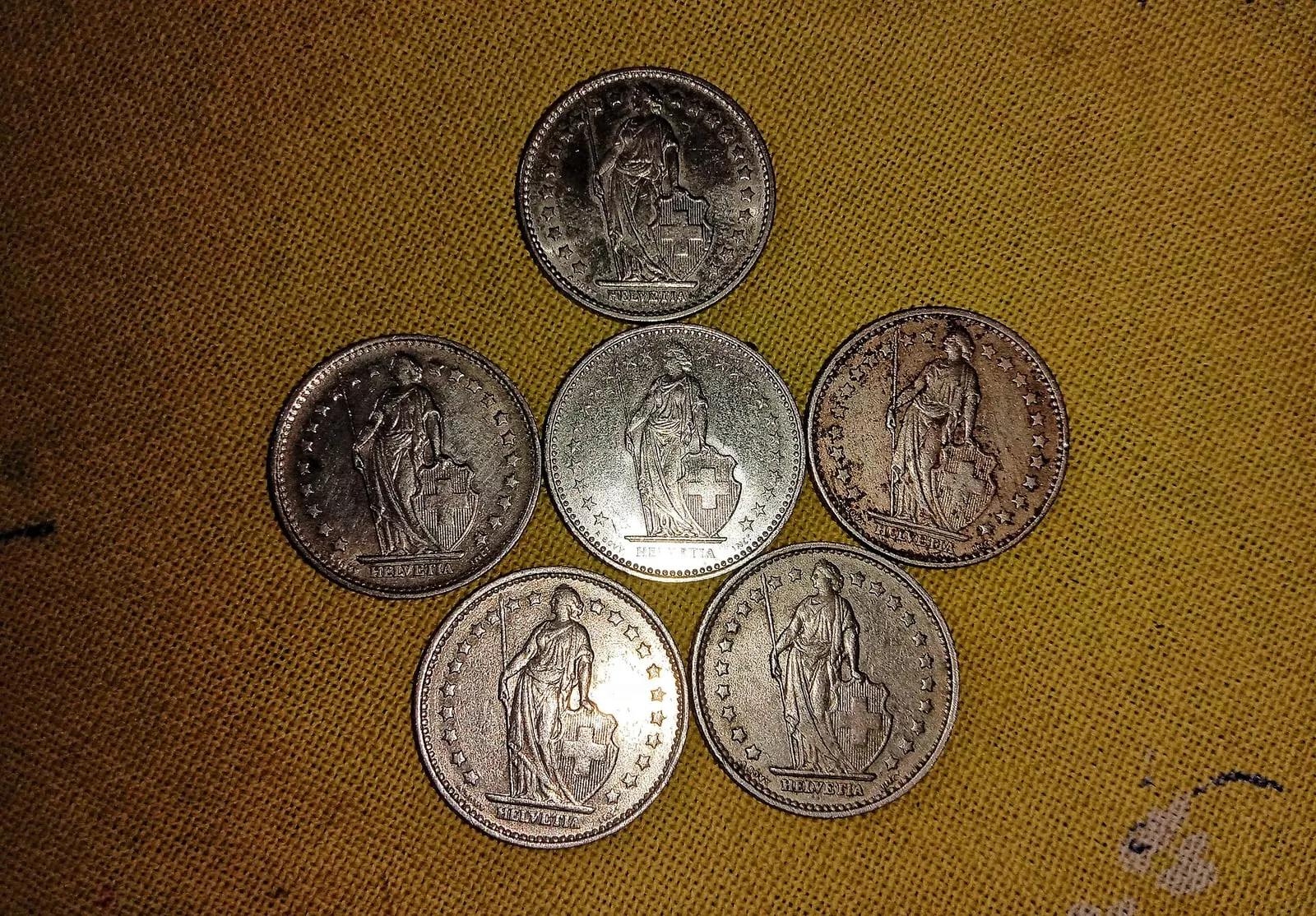 Swiss franc banknotes and coins. Photo: Billjones94, Wikimedia Commons, CC BY-SA 4.0.
Contactless cards, ATMs, and the Dynamic Currency Conversion trap
Card acceptance
Visa, Mastercard, Apple Pay, and Google Pay are accepted almost universally across Zurich — including tram ticket machines, the SBB Mobile app, bakeries, street bratwurst kiosks (like Sternen Grill), museum desks, and taxis. American Express works at hotels, major chains, and upscale restaurants, though smaller cafés and independent stalls in Kreis 4 and 5 often accept only Visa and Mastercard.
Always decline Dynamic Currency Conversion (DCC)
When you tap or insert a non-Swiss card at a terminal or ATM, the screen will frequently offer two buttons:
- Pay in CHF (Local Currency) — ALWAYS choose this. Your own bank or card provider converts the amount at near-interbank rates (0% markup on travel-friendly cards like Wise, Revolut, Monzo, Starling, or zero-FX credit cards).
- Pay in GBP / USD / EUR / AUD (Guaranteed Rate) — ALWAYS decline this. This is Dynamic Currency Conversion, which embeds a hidden 4% to 8% markup directly into the terminal’s exchange rate.
ATM rules if you do want cash
If you need CHF 40–50 in pocket cash, withdraw from a bank-branded ATM (UBS, Zürcher Kantonalbank / ZKB, or PostFinance) rather than standalone commercial ATMs (such as Euronet) in tourist alleys or at the airport, which add higher fixed withdrawal fees and aggressive DCC prompts.
Tipping rules in Zurich
By Swiss federal law, service charges and VAT (8.1% standard / 2.6% food & takeaway) are already built into every printed menu price, café board, and taxi meter. Waitstaff in Zurich earn full salaried wages rather than sub-minimum tipped wages.
| Setting | Expected Tip | How to Do It |
|---|---|---|
| Sit-down restaurant (good service) | 5% to 10% (or round up to nearest CHF 5–10) | Tell the server the total figure (e.g., “Make it 85” on a CHF 79 bill) before they type it into the card reader |
| Cafés, bars, casual lunch counters | Round up CHF 1–2 (optional) | Leaving small change or rounding CHF 18.50 to CHF 20 is normal |
| Takeaway, bakeries, self-service | CHF 0 | No tip expected |
| Taxis | Round up to nearest CHF 2–5 | Optional; meter includes luggage and service |
| Hotel housekeeping / porters | CHF 2–5 | Optional courtesy for luggage help or multi-night stays |
Never feel pressured if a card terminal in a tourist-heavy Old Town restaurant presents a 10% / 15% / 20% tip screen — selecting No Tip or entering a modest rounded figure is completely normal in Switzerland.
Zurich City Tax (hotel accommodation surcharge)
Zurich has no statutory cantonal tourist tax, but participating Zurich hotels and holiday apartments collect a City Tax of CHF 3.50 per adult per night under a regional hospitality association scheme supporting Zurich Tourism.
- Exemptions: Children under 16 do not pay the City Tax.
- How it is billed: Online booking sites usually list the City Tax separately (“local taxes payable at property”). Expect to pay CHF 3.50 × adults × nights by card at check-in or check-out.
Realistic Zurich prices: supermarket vs casual vs sit-down
Zurich consistently ranks among Europe’s most expensive cities for dining out, but supermarket and bakery prices are far closer to neighbouring countries than most visitors expect.
| Item | Supermarket / Takeaway (CHF) | Casual Café / Bistrot (CHF) | Sit-Down Restaurant (CHF) |
|---|---|---|---|
| Espresso / Flat White | CHF 2.50–3.50 (bakery/kiosk) | CHF 5.00–6.50 | CHF 5.50–7.00 |
| Breakfast (croissant + coffee) | CHF 5.50–7.50 | CHF 12–16 | CHF 22–32 (hotel buffet) |
| Lunch main | CHF 8–13 (Migros/Coop hot counter) | CHF 18–26 (pasta, burger, bowl) | CHF 28–38 (Tagesmenu lunch special) |
| St. Galler Bratwurst + roll | CHF 8.50 (Sternen Grill / street) | CHF 15–18 | CHF 22–26 (with Rösti) |
| Traditional Cheese Fondue (per person) | CHF 10–14 (supermarket kit) | — | CHF 28–36 |
| Zürcher Geschnetzeltes (veal & Rösti) | — | — | CHF 38–48 |
| 0.5L Local Beer / Glass of Swiss Wine | CHF 2.50–4.00 (Coop/Denner*) | CHF 7.50–9.50 | CHF 8.50–12.00 |
| Water (0.5L) | CHF 0 (1,200 city fountains) | CHF 4.50–6.00 (tap carafe often CHF 2–5) | CHF 6.00–9.00 (bottled) |
*Note: Migros supermarkets do not sell alcohol or tobacco by company charter; buy beer and wine at Coop, Denner, Aldi, or Lidl.
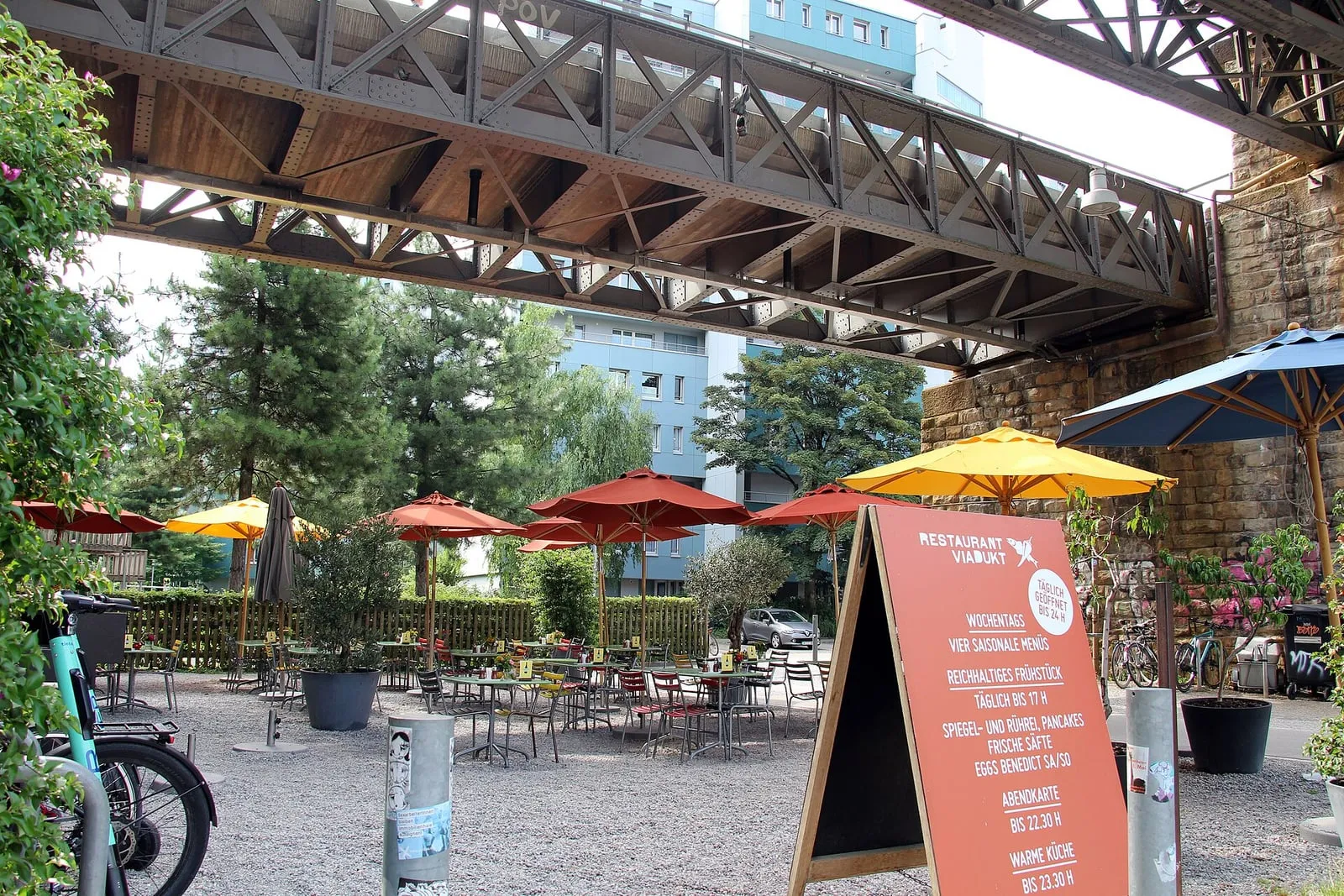 Markthalle Im Viadukt in Kreis 5. Photo: Fred Romero from Paris, France, Wikimedia Commons, CC BY 2.0.
Six practical ways to cut your Zurich spend by 30–40%
- Carry a refillable water bottle: Zurich has over 1,200 public fountains delivering cold, tested Alpine spring and lake-filtered drinking water. Every fountain without a “Kein Trinkwasser” sign is safe to drink from, saving CHF 10–15 per person per day.
- Eat your main hot meal at lunch (Tagesmenu): Many Zurich restaurants serve a fixed weekday lunch plate (main + soup or salad) between 11:30 and 14:00 for CHF 22 to CHF 28, whereas the exact same dining room charges CHF 40–55 for mains at dinner.
- Use Migros Restaurant & Coop Restaurant: Both supermarket chains run clean, bright self-service canteens (including directly on Bahnhofstrasse and inside Zürich HB) serving hot Swiss dishes, salad bars, and pasta for CHF 14 to CHF 20.
- Hit Kunsthaus Zürich on Wednesdays: Permanent collection entry drops from CHF 24 to CHF 0 every Wednesday.
- Buy ZVV 24-hour passes instead of single rides: Two single Zone 110 rides cost the exact same as a full 24-hour pass (CHF 9.40, rising to CHF 9.60 on 13 December 2026).
- Avoid Sunday convenience-store markups: Buy snacks, fruit, and drinks at standard supermarkets on Saturday, or use the full-size Migros/Coop inside Zürich HB ShopVille on Sundays (regular supermarket pricing, open until 21:00–22:00).
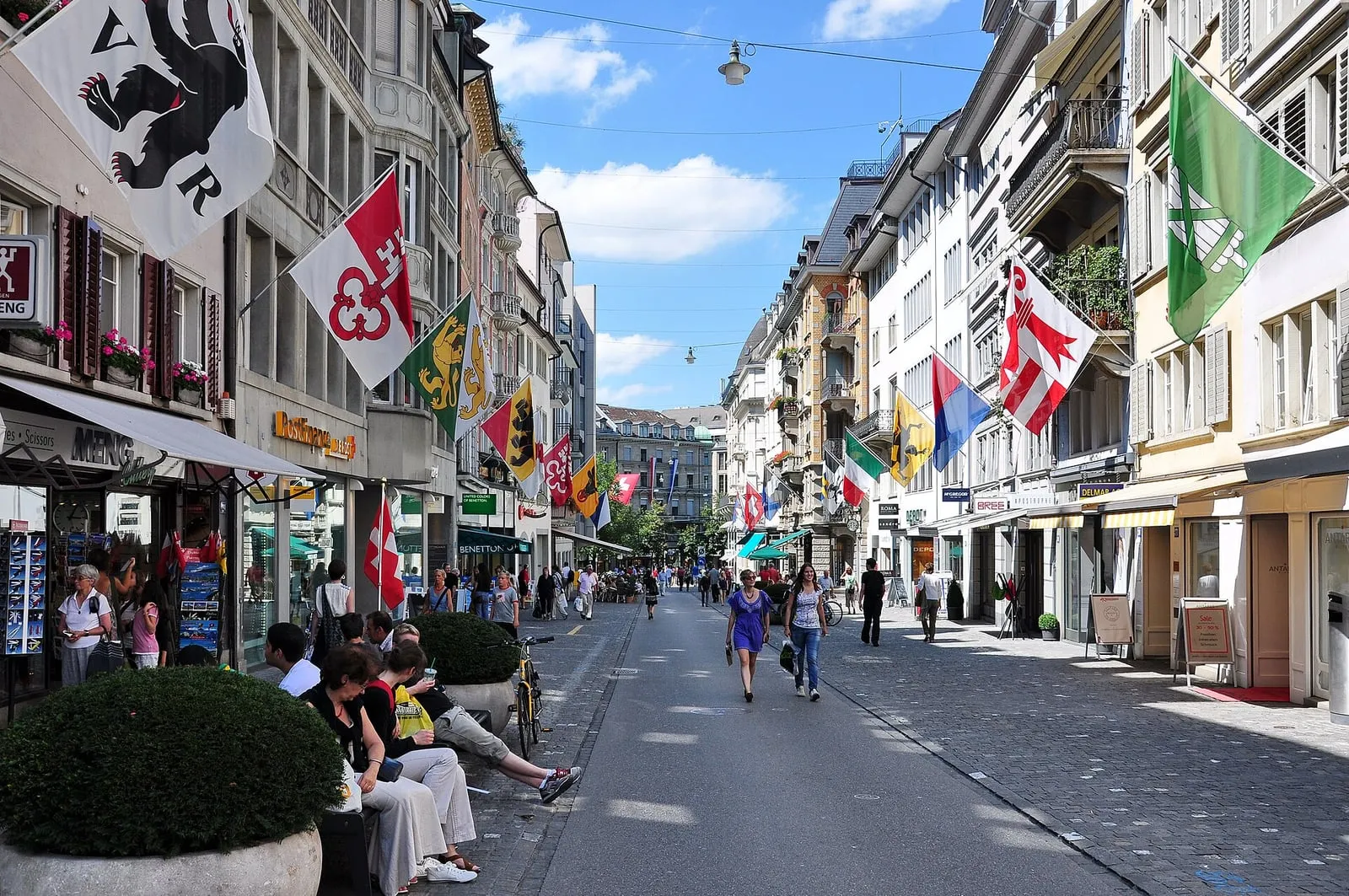 Bahnhofstrasse in central Zurich. Photo: Roland zh, Wikimedia Commons, CC BY-SA 3.0.
VAT refunds for non-Swiss residents (Tax-Free Shopping)
Visitors residing outside Switzerland can reclaim 8.1% Swiss VAT on single-receipt retail purchases of CHF 300 or more (excluding hotels, restaurants, and services) from participating shops displaying a Global Blue or Planet Tax Free sign. Ask for the Tax-Free form at checkout, present the unused goods and receipts to Swiss Customs at Zurich Airport before checking your luggage (or airside for hand baggage), and expect a net refund of roughly 5–6% after operator fees.
Next steps
- Plan affordable eating spots in where to eat in Zurich and Zurich food tours and fondue.
- Compare city and rail pass savings in Is the Zürich Card worth it? and Swiss Travel Pass vs Half Fare Card.
Common questions
Does Zurich accept euros (EUR)?
Switzerland's official currency is the Swiss franc (CHF). Some large supermarkets (Migros, Coop), railway kiosks, and tourist shops accept euro banknotes, but they set their own in-store exchange rates, refuse euro coins, and give change only in CHF. Pay in CHF by card.
Do I need cash in Zurich?
Almost never. Contactless Visa, Mastercard, Apple Pay, and Google Pay are accepted everywhere from high-end restaurants to bakeries, street bratwurst stands, and ZVV ticket machines. Keep CHF 20 to CHF 40 in coins or small notes only if you plan to use traditional coin-operated lockers or rural Alpine honesty boxes.
How much should you tip in Zurich?
Service charges and VAT are legally included in all Swiss restaurant, café, and taxi prices. Tipping is never mandatory. For good table service, locals round up to the nearest CHF 2 to CHF 5 on casual bills or add 5% to 10% on full sit-down dinners — tell the server the total amount you want charged before tapping your card.
How much is the Zurich City Tax?
Participating Zurich hotels and holiday apartments collect a City Tax of CHF 3.50 per adult per night under a regional hospitality association scheme supporting Zurich Tourism. Children under 16 are exempt. Most booking platforms exclude this tax from the upfront rate and collect it at the hotel front desk.
What is Dynamic Currency Conversion (DCC) and how do I avoid it?
When paying with a foreign card or using an ATM in Zurich, the terminal may ask whether you want to be charged in CHF or in your home currency. Always choose CHF. Accepting your home currency lets the terminal operator set an inflated exchange rate that typically adds 4% to 8% to the bill.
How much should I budget per day for food in Zurich?
A budget traveller using Migros or Coop supermarkets, bakeries, and takeaway stands spends CHF 30 to CHF 45 per day. A mid-range visitor eating one café lunch and one sit-down Swiss dinner spends CHF 80 to CHF 120 per day. Drinking from Zurich's 1,200 free fountains saves CHF 10 to CHF 15 daily on bottled water.