In this guide
💡 The Short Version: June and September are the best all-round months for Zurich: warm weather (20–24°C), clear Alpine visibility, open lakefront Badis, and full mountain-railway timetables. July and August bring peak lake swimming and Street Parade (Saturday 14 August 2027), alongside the highest hotel rates and summer thunderstorms. Late November through 23 December delivers Zurich’s Christmas markets and winter fondue season. Avoid April and November if your main goal is riding Alpine cable cars, as major peaks schedule two-to-three-week maintenance shutdowns in both months.
⚠️ Check Alpine lift maintenance before booking April or November flights. Every spring (usually mid-to-late April) and autumn (typically early-to-mid November), mountain railways and cableways across Central Switzerland and the Bernese Oberland shut down for annual safety inspections. Mount Titlis, Mount Pilatus’s cogwheel railway (closed November–May), and Grindelwald First all have fixed maintenance windows.
Zurich weather & seasonal snapshot (month by month)
| Month | Avg High / Low (°C) | Rainy Days | Crowds & Hotel Prices | Best For / Watch-Outs |
|---|---|---|---|---|
| January | 3°C / -2°C | 10 | Low (except WEF week mid-Jan) | Snow day trips (Titlis, Flumserberg); cold & foggy (Hochnebel) in the city |
| February | 5°C / -1°C | 9 | Low | Quiet museums, winter fondue, lower hotel prices |
| March | 10°C / 2°C | 10 | Low–Moderate | Early spring light, low-crowd Old Town walks; high Alps still snowy |
| April | 14°C / 5°C | 11 | Moderate | Sechseläuten (19 April 2027); watch for Alpine cable-car maintenance closures |
| May | 19°C / 9°C | 12 | Moderate–High | Badis open mid-May; Pilatus Golden Round Trip resumes mid-May; lush green valleys |
| June | 22°C / 13°C | 12 | High | Long daylight (sunset ~21:25), warm lake, all Alpine passes open |
| July | 25°C / 15°C | 11 | Peak | Prime lake swimming (22–24°C water), outdoor bars; occasional afternoon storms |
| August | 24°C / 14°C | 11 | Peak | Swiss National Day (1 Aug), Street Parade (14 Aug 2027), open-air cinemas |
| September | 20°C / 11°C | 9 | Moderate–High | Crisp air, clearest Alpine views, grape harvest (Weinlese), Knabenschiessen fair |
| October | 14°C / 7°C | 9 | Moderate | Golden autumn foliage along Lake Zurich & Uetliberg; Pilatus cogwheel ends late Oct |
| November | 8°C / 2°C | 10 | Low (rises late Nov) | Lowest hotel prices early Nov; Alpine lift shutdowns; Christmas markets open late Nov |
| December | 4°C / -1°C | 11 | High (weekends) | Wienachtsdorf & HB Christmas markets, Lucy lights on Bahnhofstrasse, fondue trams |
Spring (March to May): Sechseläuten and shoulder-season caveats
Spring brings café tables back onto Limmatquai and blooms across the lakeside Arboretum, though weather swings quickly between 18°C sunshine and chilly rain showers.
- Sechseläuten (16–19 April 2027): Zurich’s signature spring guild festival culminates on Monday 19 April 2027, when costumed guild members march through the city to Sechseläutenplatz and ignite a massive wooden pyre topped with the Böögg — a cotton-wool snowman stuffed with fireworks. Local folklore holds that the faster the Böögg’s head explodes, the warmer the coming summer will be. Expect afternoon tram diversions across Kreis 1 and packed hotels over that weekend.
- Alpine planning warning: Mid-to-late April is the changeover between ski season and summer hiking. High-altitude trains like Jungfraujoch operate 365 days a year, but mid-mountain gondolas and Mount Pilatus’s cogwheel railway do not reopen until mid-May.
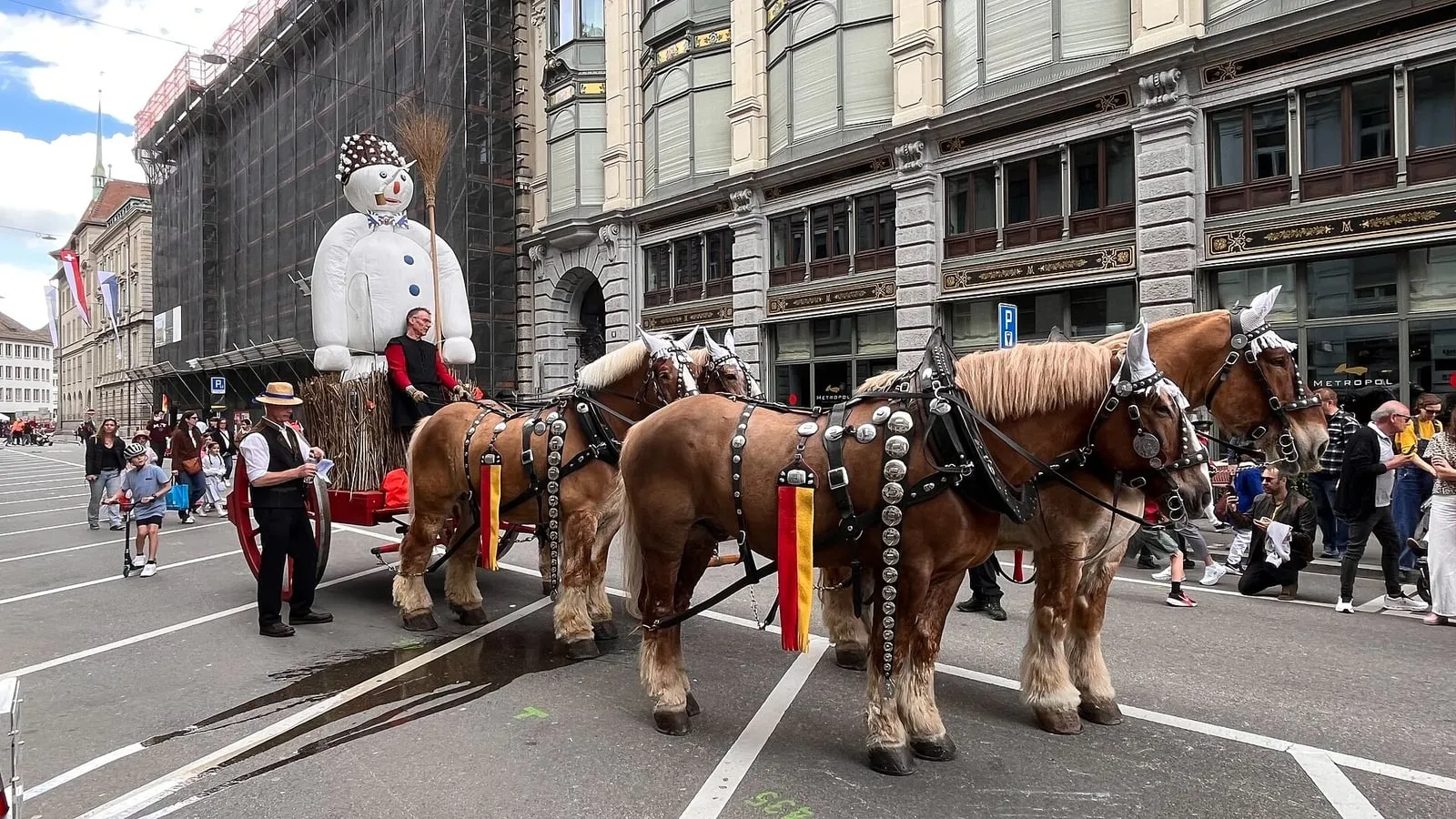 The Böögg paraded through Zurich during Sechseläuten. Photo: Albinfo, Wikimedia Commons, CC BY-SA 4.0.
Summer (June to August): Badi culture and Street Parade
Summer transforms Zurich from a buttoned-up financial hub into an outdoor lakefront city.
Lake and river swimming (Badis)
From mid-May through mid-September, locals spend lunch breaks and evenings at Zurich’s wooden Badis (public swimming enclosures):
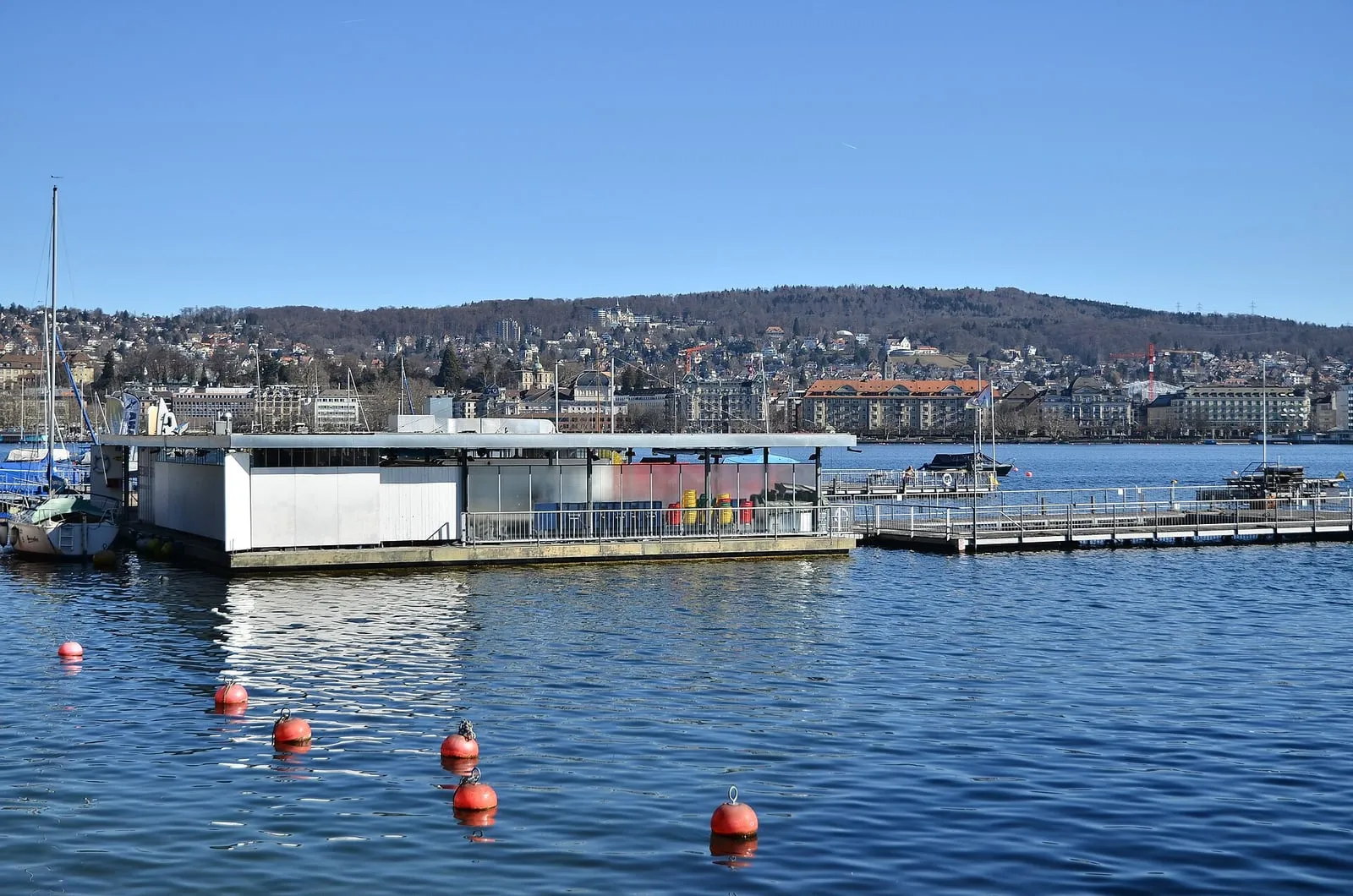
- Seebad Enge: Floating wooden decks directly on Lake Zurich with Alpine views, a café, and evening live music (entry ~CHF 8).
- Flussbad Oberer Letten & Unterer Letten: Free riverside swimming channels along the fast-flowing, crystal-clear Limmat just north of Zürich HB, with jumping platforms and volleyball courts.
- Frauenbad am Stadthausquai: Historic 1888 Art Nouveau timber bathhouse on the Limmat — women-only swimming by day, open to everyone as the Barfussbar (barefoot bar) after 20:00.
Major summer dates
- Swiss National Day (1 August): Lantern processions, alpine horn concerts, and fireworks across the lakefront (many shops close for the public holiday).
- Zurich Street Parade (Saturday 14 August 2027): One of Europe’s largest open-air electronic music parades, drawing up to one million revellers along the 2-kilometre lakeside route from Utoquai to Hafendamm Enge. Book hotels months ahead if attending — or pick another weekend if you want a peaceful lakefront stroll.
Autumn (September to November): clear peaks, wine harvest, and fog
September and early October are prized by seasoned Switzerland travellers for dry, stable weather and the clearest visibility across the Bernese and Glarus Alps.
- Autumn wine harvest (Weinlese): Vineyards along the sunny right bank of Lake Zurich (the Goldküste around Meilen and Stäfa) and the Zurich Wine Country (Zürcher Weinland near Schaffhausen) harvest Pinot Noir and Räuschling grapes in September and October. Look for fresh Sauser (partially fermented sweet grape must) at farmers’ markets on Bürkliplatz (Tuesdays and Fridays) and Helvetiaplatz.
- Knabenschiessen (second weekend of September): Zurich’s three-day autumn folk festival and funfair at Albisgüetli, with Monday afternoon treated as a half-day local holiday.
- November inversion fog (Hochnebel): By late October and November, thick low stratus cloud frequently traps central Zurich in grey chill around 4–7°C while Uetliberg (871m) and the Alps sit in bright sunshine directly above the cloud deck. Always check the Uetliberg webcam before writing off a foggy November morning.
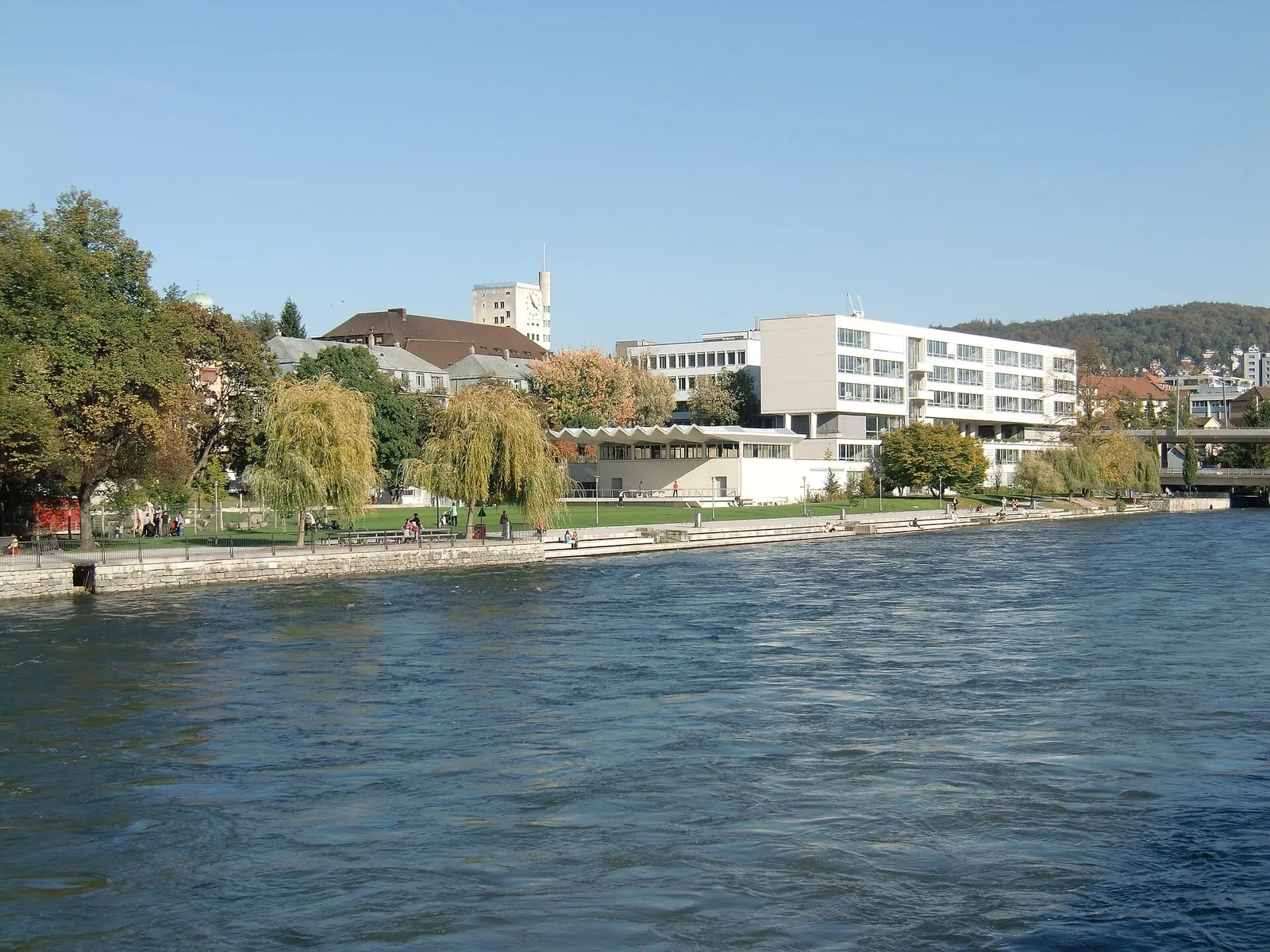 Autumn trees along the Limmat in Zurich. Photo: Marco Zanoli, Wikimedia Commons, CC BY-SA 3.0.
Winter (Late November to February): Christmas markets and ski trains
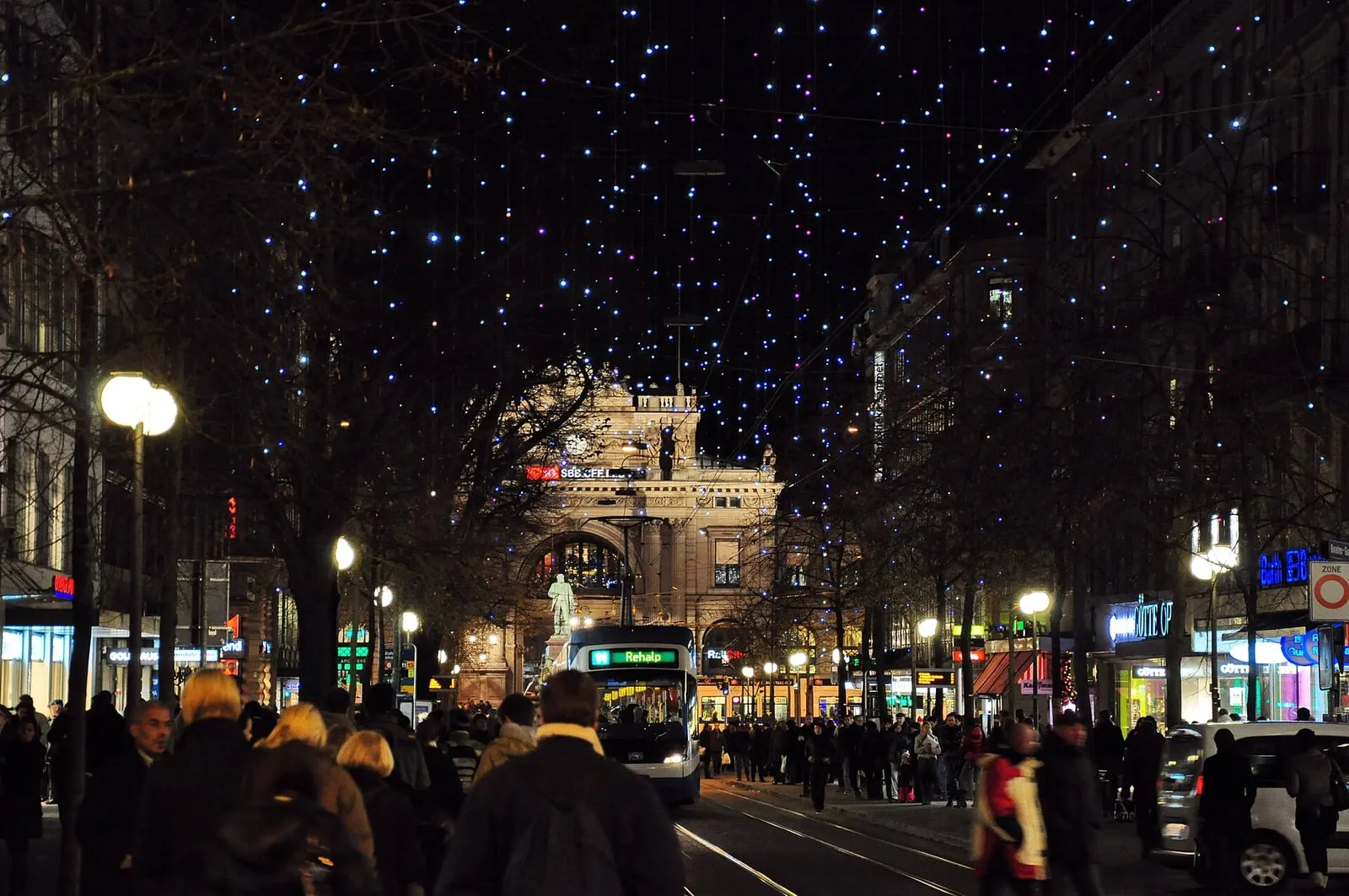
Zurich comes back to life in late November when Lucy — the sparkling LED light canopy stretching the length of Bahnhofstrasse — switches on alongside the city’s Christmas markets (typically running from around 20 November to 23 December).
- Wienachtsdorf (Sechseläutenplatz): Over 100 wooden chalets in front of the Zurich Opera House selling raclette, fondue, glühwein, and crafts.
- Christkindlimarkt (Zürich HB): One of Europe’s largest indoor Christmas markets under the vaulted roof of the main railway hall — ideal on wet or freezing evenings.
- Singing Christmas Tree (Werdmühleplatz): Local choirs perform daily from a tiered vertical podium shaped like a Christmas tree.
- Post-Christmas quiet (January–February): Once the markets pack up on 24 December, Zurich settles into a quiet winter pace with lower hotel prices (except during the World Economic Forum week in mid-January, when Davos overflow pushes Zurich rates up). S-Bahn and SBB snow trains still reach ski and sledging slopes at Flumserberg (65 min) and Engelberg/Titlis (1h 50m) directly. For full seasonal details, read Zurich Christmas markets and winter.
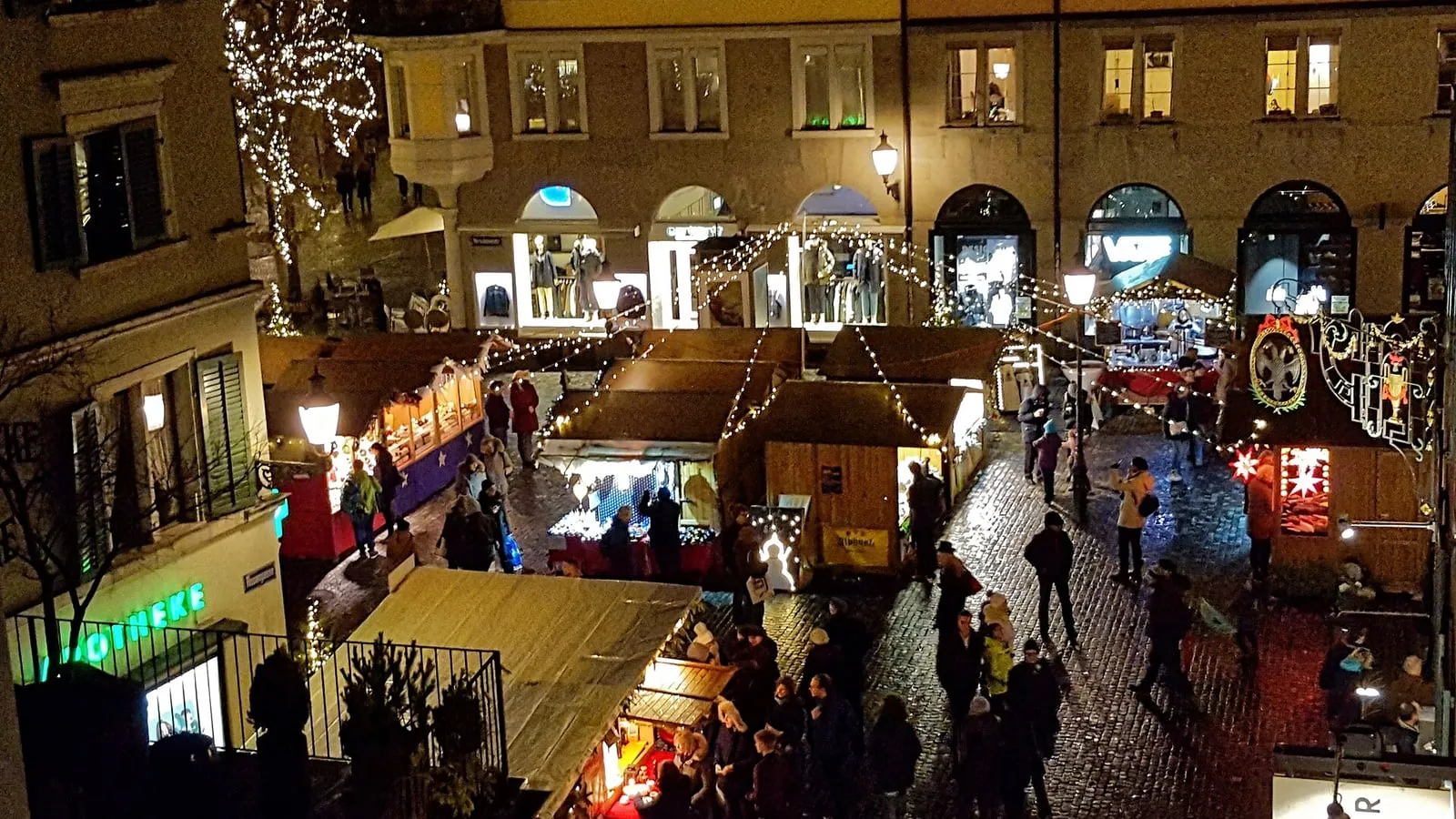 Christmas market stalls in central Zurich. Photo: Burkhard Mücke, Wikimedia Commons, CC BY-SA 4.0.
Quick seasonal recommendation
-
Best overall balance (weather + Alps + crowds): June or September.
-
Best for swimming, late sunsets, and lakeside bars: July or August.
-
Best for festive atmosphere and fondue: Late November to 23 December.
-
Best for lowest hotel prices: February, March, or early November (provided you check Alpine lift schedules first).
-
Next steps: Plan your seasonal itinerary in 3 days in Zurich or compare weather-resilient excursions in day trips from Zurich.
Common questions
What is the best overall month to visit Zurich?
June and September offer the strongest combination of warm, clear days (20–24°C), fully open Alpine cable cars and mountain trails, open Lake Zurich bathing decks (Badis), and slightly lower hotel rates than peak July–August.
When do Swiss Alpine cable cars close for maintenance?
Major mountain lifts around Lucerne and the Bernese Oberland schedule mandatory biannual maintenance windows in April (often mid-to-late April after winter skiing) and November (typically early-to-mid November before winter ski season). Mount Pilatus's cogwheel railway also closes from mid-November until May.
When are Sechseläuten and Street Parade in Zurich in 2027?
Sechseläuten 2027 runs from 16 to 19 April 2027, with the guild parade and burning of the Böögg snowman on Monday 19 April 2027. Zurich Street Parade 2027 takes place on Saturday 14 August 2027 along the Lake Zurich basin.
When is Lake Zurich warm enough for swimming?
Zurich's public lakefront and riverside Badis (bathing enclosures) open from mid-May to mid-September. Lake Zurich water temperatures reach 20°C to 24°C from late June through August, making summer lake swimming a core part of city life.
Is Zurich worth visiting in winter?
Yes — especially from late November to 23 December for the Christmas markets (Wienachtsdorf at Sechseläutenplatz and the Singing Christmas Tree at Werdmühleplatz), fondue trams, and snowy day trips to Mount Titlis or Jungfraujoch. January and February are cold and often grey in the city, but offer prime ski-train access to Flumserberg and Engelberg.
Which months are cheapest for hotels in Zurich?
January, February, March, and November typically bring the lowest hotel rates (outside major business conferences or the Art Basel / WEF Davos spillover week in January). July, August (especially Street Parade weekend), and December Christmas-market weekends command peak prices.