In this guide
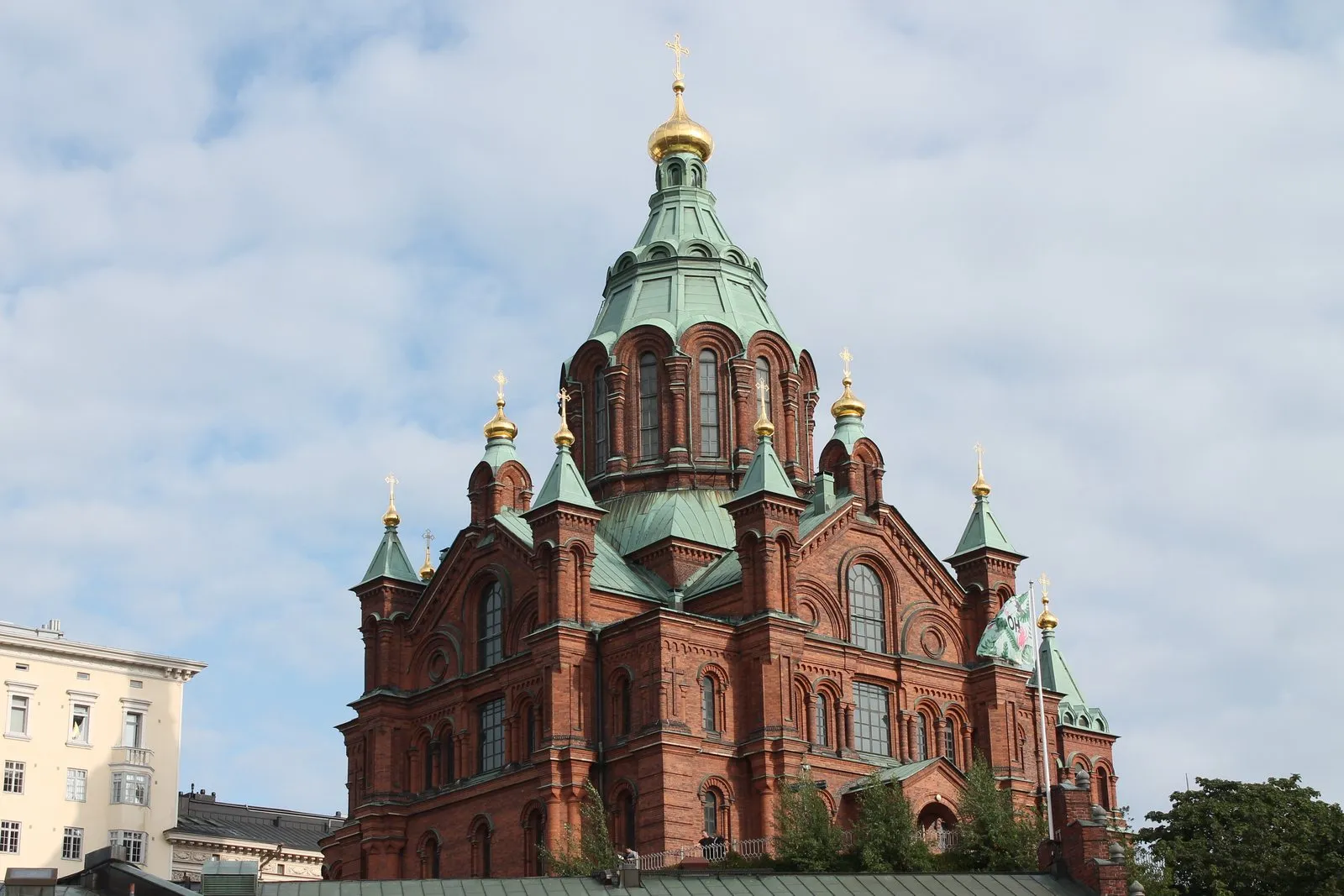
💡 The Short Version: Uspenski Cathedral (Uspenskin katedraali) stands on the granite promontory of Katajanokka, just east of Market Square. It was consecrated in 1868, when Finland was an autonomous Grand Duchy of the Russian Empire. Its red brick, thirteen gilded onion domes and gilded iconostasis contrast with the plain neoclassical Helsinki Cathedral. Adult admission is €5 (hos.fi; under-18s free), and it is closed to visitors on Mondays. Allow 30 to 45 minutes for the interior and the Kozelshchyna icon, then walk through Katajanokka’s Art Nouveau streets. Or book a tour: a skip-the-line Uspenski Cathedral and Old Town tourad from €158 runs 2 to 3 hours and covers the cathedral’s Russian imperial roots.
⚠️ Closed Mondays, and Sunday mornings. Uspenski is an active church and the seat of the Orthodox Diocese of Helsinki. It is closed to visitors every Monday, and on Sundays visitors are admitted only from 13:00 to 16:00, after the morning Divine Liturgy. Wedding closures are posted weekly on the Helsinki Orthodox Parish portal.
Origins
The cathedral is dedicated to the Dormition of the Mother of God (Uspenie in Old Church Slavonic), the death and assumption of the Virgin Mary. After Tsar Alexander I made Helsinki the capital of the Grand Duchy of Finland in 1812, the small Orthodox congregation worshipped in the modest Holy Trinity Church in Kruununhaka. By the mid-19th century the civil servants, Russian garrisons and Baltic merchants needed a grander cathedral.
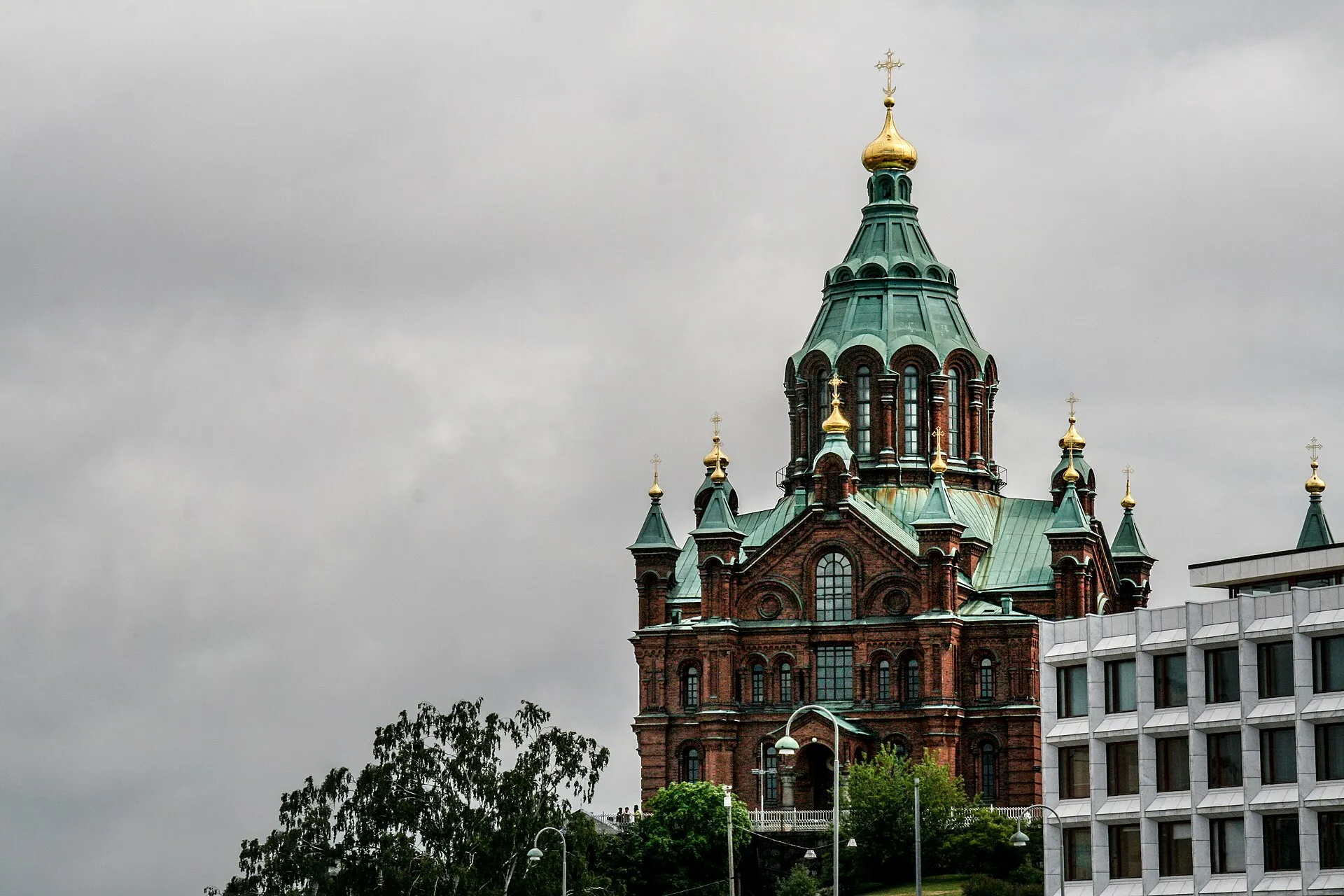
Uspenski Cathedral, Katajanokka. Photo: Esa Riutta, Wikimedia Commons, CC BY-SA 4.0.
In 1859 the Holy Synod commissioned the Saint Petersburg architect Aleksei Gornostayev, an early exponent of the Russian-Byzantine revival style. He designed a red-brick cross-in-square church influenced by 16th-century northern Russian architecture, a deliberate break from the classical style of Senate Square.
After Gornostayev died in 1862, the architect Ivan Varnek supervised construction, which relied on public subscription:
- Imperial patronage: Tsar Alexander II gave 20,000 roubles from his private funds and chose the hilltop site.
- Bomarsund bricks: Around 700,000 red clay bricks came from the ruins of Bomarsund fortress on the Åland Islands, which Anglo-French naval forces demolished in August 1854 during the Crimean War.
- Consecration: The cathedral was consecrated on 25 October 1868, nine years after the first drawings.
Today it is the main church of the Orthodox Church of Finland, an autonomous church within the Ecumenical Patriarchate of Constantinople.
What to see inside the cathedral
Inside are candlelight, dark icon panels, the scent of incense and beeswax, and gold on the vaulted ceilings.
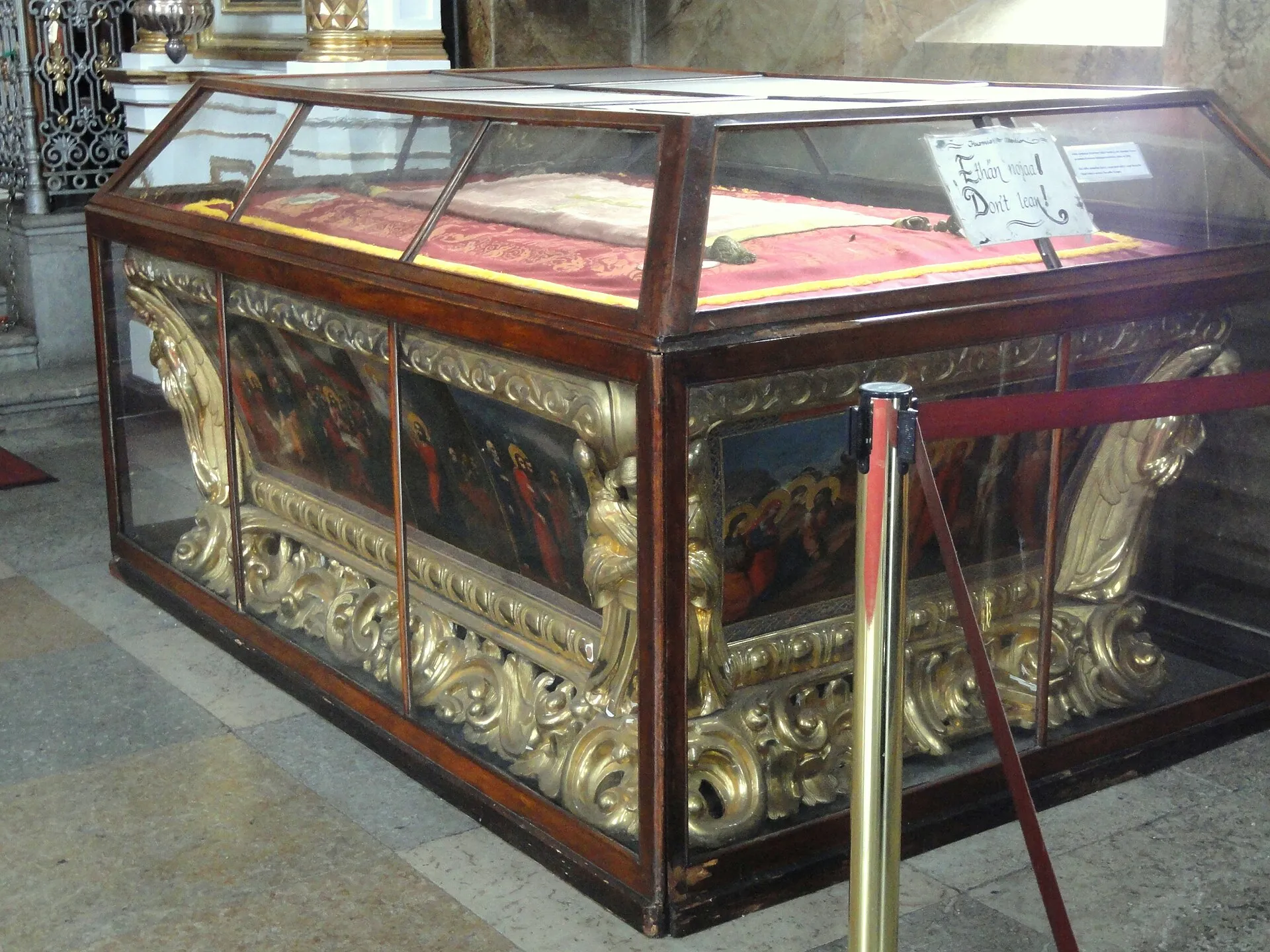
Iconostasis, Uspenski Cathedral. Photo: Daderot, Wikimedia Commons, CC0.
The central dome and granite columns
Orthodox churches keep the floor open so the whole congregation can stand together before the altar. The vault of Uspenski rests on four monolithic pillars of Finnish red rapakivi granite, polished smooth. The central dome rises 33 metres. Its inner surface is painted ultramarine, studded with gold stars and centred on the Holy Spirit as a dove.
The two-tiered iconostasis
The gilded iconostasis (icon screen) between the nave and the sanctuary was made by the Saint Petersburg academician Pavel Shiltsov. It combines classical structure with Russian floral woodcarving:
- Lower tier: Either side of the central Royal Doors (tsarskie vrata) are full-length icons of Christ Pantocrator on the right and the Mother of God with the Infant Christ on the left, beside Saint Nicholas of Myra and the Dormition of the Virgin.
- Upper tier: The twelve Great Feasts of the Orthodox calendar, painted in oils.
- The Royal Doors: Carved gilded lime-wood doors that only clergy pass through during services, showing the Annunciation and the four Evangelists, Matthew, Mark, Luke and John.
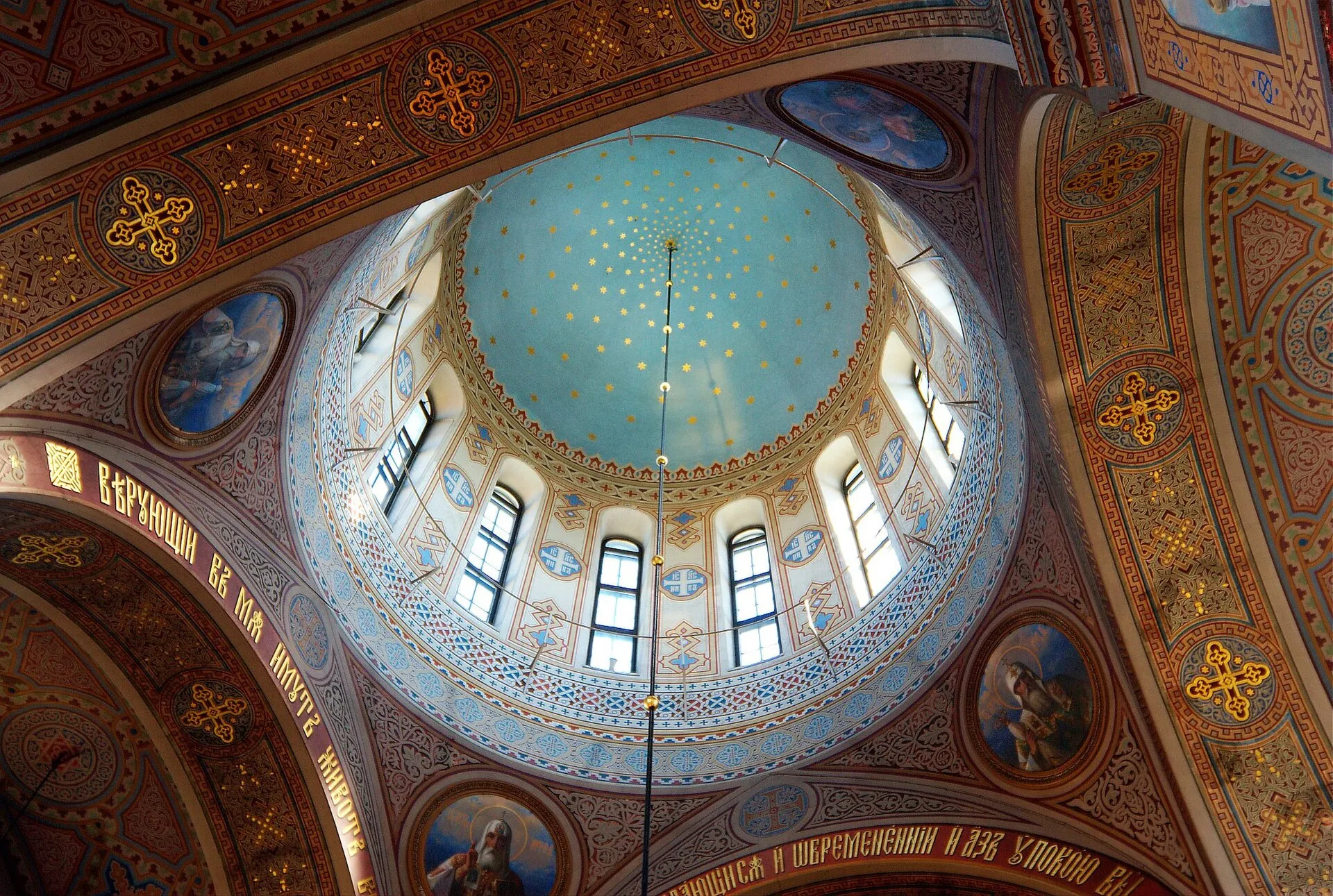
Nave, Uspenski Cathedral. Photo: Andreas Hünnebeck, Wikimedia Commons, CC BY 3.0.
The Kozelshchyna icon of the Mother of God
On the right side of the nave hangs the Kozelshchyna Icon of the Mother of God (Kozelštšanin Jumalanäidin ikoni).
This 19th-century panel is a replica of an 18th-century miracle-working icon from Poltava in Ukraine. It was presented in 1904 to the parish in Vyborg (Viipuri). In the Winter War of 1939–1940, Finnish Orthodox priests took it west from Vyborg alongside the refugees, bringing it to Helsinki.
Since then:
- The theft: In June 2010 thieves broke into the cathedral in daylight and took the icon with gold votive crosses and jewelled chains left by pilgrims.
- The recovery: After a seven-month cross-border investigation, the convicted thief revealed that he had wrapped the icon in plastic and buried it in frozen ground in the forest outside Turku.
- Return: In February 2011 conservators dug up the package; the panel had suffered little moisture damage. After cleaning at the Valamo Monastery conservation workshop, the icon returned to Uspenski in procession on 21 August 2011. Its feast day is 21 February.
Tickets and opening hours
Unlike Helsinki Cathedral, which asks for a contribution only in summer, Uspenski charges admission all year toward the upkeep of the brickwork and artwork.
Admission pricing
| Ticket Category | Price | Notes |
|---|---|---|
| Standard Adult (18+) | €5 | Payable by debit/credit card or cash at the welcome desk. |
| Youth & Children (0–17) | Free | Must be accompanied by an adult. |
| Helsinki Card holders | Free | Included with valid Helsinki Card City / Region. |
| Parishioners & worshippers | Free | Free access during scheduled liturgical services. |
Tickets can be purchased directly at the narthex ticket counter or through the parish web store.
Standard opening hours
| Day of the Week | Summer Schedule (May to August) | Winter Schedule (September to April) |
|---|---|---|
| Monday | Closed to visitors | Closed to visitors |
| Tuesday – Friday | 10:00 – 18:00 | 09:30 – 16:00 |
| Saturday | 10:00 – 15:00 | 10:00 – 15:00 |
| Sunday | 13:00 – 16:00 | 13:00 – 16:00 |
Services come first. The cathedral is a house of prayer. Sightseeing is not permitted during weddings, funerals, Saturday evening vigils (from 17:00) or Sunday morning Divine Liturgies (09:00 to 12:00). Cover shoulders and knees, men remove hats, and keep your voice low. Handheld photography without flash is allowed; tripods are not.
Getting there and walking Katajanokka
Uspenski is at Kanavakatu 1, at the western entrance of the Katajanokka peninsula (Skatudden in Swedish).
Getting there
- On foot: From Market Square (Kauppatori), cross the footbridge over the Kanavaranta canal and walk up the paved granite ramp through Tove Jansson Park (Tove Janssonin puisto) to the cathedral gates, 7 to 10 minutes. From Central Railway Station along Aleksanterinkatu it is 15 to 18 minutes.
- By tram: Trams 4 and 5 run from Mannerheimintie and Central Station to Ritarihuone or Tove Janssonin puisto, below the cathedral promontory. A Zone AB single ticket is valid for 80 minutes on all trams, buses and the metro.
- Accessibility: The cathedral stands on a granite knoll, and the main path has an inclined cobbled ramp and shallow stone stairs. Wheelchair access is through a side portal; ring the buzzer near the south gate for the ramp.
Exploring Katajanokka
- Kanavaranta warehouses: At the foot of the cathedral hill, 19th-century red-brick storehouses now hold cafes and restaurants such as Shelter and Nokka.
- Jugendstil streets: The eastern half of Katajanokka was built between 1895 and 1910 in the National Romantic and Art Nouveau (Jugendstil) style. Walk Luotsikatu, Vyökatu and Kauppiaankatu for stone carvings of bears, owls and pine cones, asymmetric turrets and wrought-iron balconies.
- Icebreakers: From May to November Finland’s polar icebreakers (Polaris, Voima, Urho and Kontio) are moored along Katajanokanlaituri, with yellow and blue hulls towering over the harbour.
- Allas Sea Pool: Across the harbour basin near Market Square, with heated freshwater pools and a Baltic seawater basin; see the Helsinki saunas guide.
Combining Uspenski with other sights
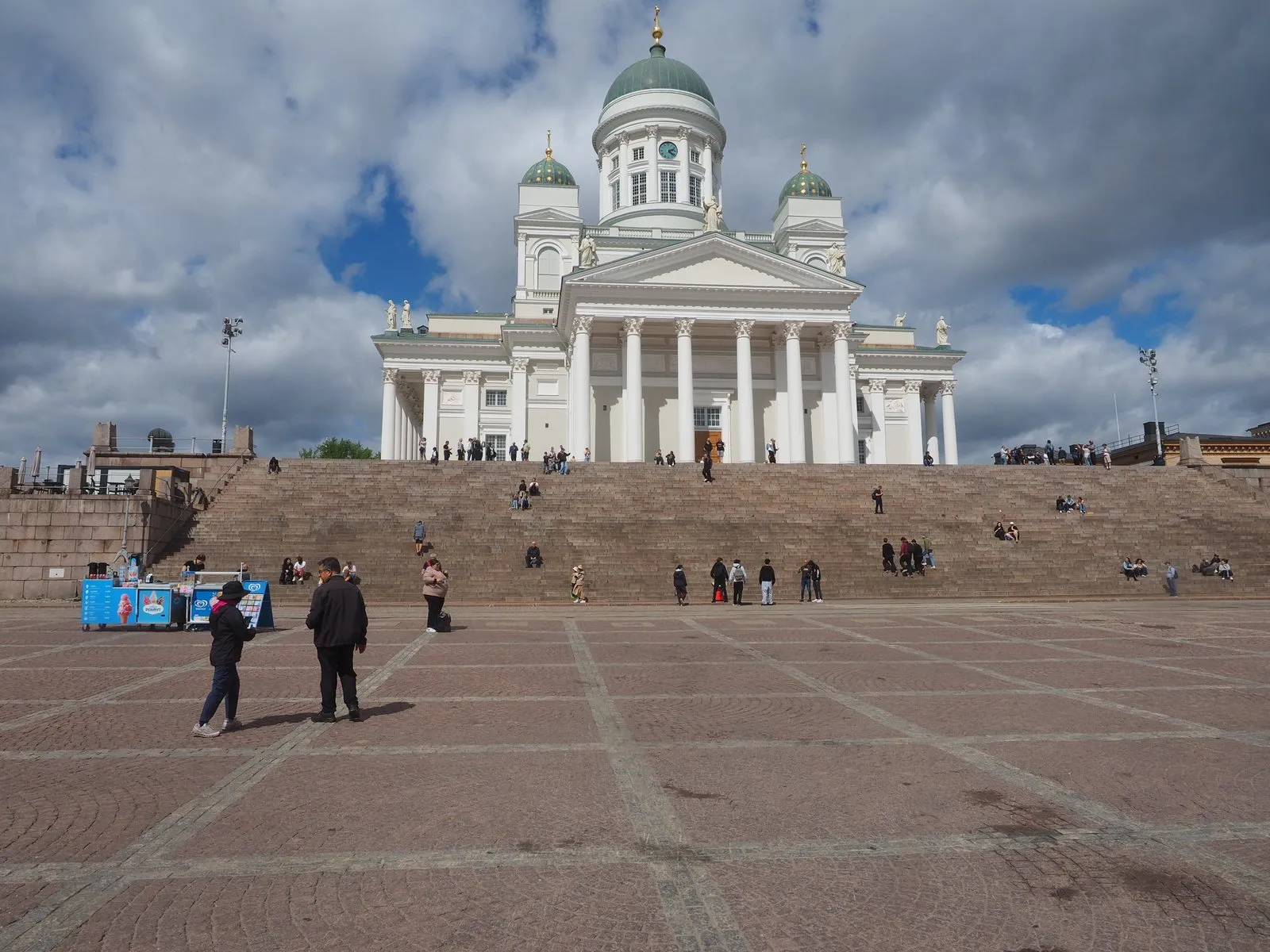
- Helsinki Cathedral and Senate Square: 600 metres west along Pohjoisesplanadi; compare Gornostayev’s red brick with Engel’s neoclassical Lutheran cathedral in the Helsinki Cathedral and Senate Square guide.
- Suomenlinna: The HSL ferry leaves Market Square every 15 to 20 minutes, a 5-minute walk from Uspenski; see the Suomenlinna ferry guide.
- Temppeliaukio Rock Church: Tram 4 runs west from Katajanokka to Töölö; see the Temppeliaukio Rock Church guide.
- Free sights: Free things to do in Helsinki.
Common questions
How much does it cost to enter Uspenski Cathedral?
Adult admission is €5 (hos.fi); under-18s enter free. Buy at the entrance counter by cash or card, or online through the Helsinki Orthodox Parish portal.
What are the opening hours for Uspenski Cathedral?
Closed every Monday. From May to August: Tuesday to Friday 10:00 to 18:00, Saturday 10:00 to 15:00, Sunday 13:00 to 16:00. From September to April: Tuesday to Friday 09:30 to 16:00, Saturday 10:00 to 15:00, Sunday 13:00 to 16:00. Sightseeing pauses during services.
What architectural style is Uspenski Cathedral?
Russian-Byzantine revival, designed by the Russian academician Aleksei Gornostayev and consecrated in October 1868. It has 13 gilded onion domes, green metal roof pinnacles and a central dome 33 metres high.
Where did the red bricks of Uspenski Cathedral come from?
About 700,000 red clay bricks came from the Bomarsund fortress on the Åland Islands, which Anglo-French forces bombarded and demolished in 1854 during the Crimean War.
How do you reach Uspenski Cathedral from Helsinki city centre?
The cathedral is at Kanavakatu 1 on a rocky promontory in Katajanokka, a 7-minute walk east from Market Square (Kauppatori) over the pedestrian bridge across Kanavaranta. Trams 4 and 5 stop below the cliff at Ritarihuone or Tove Janssonin puisto.