In this guide
💡 The Short Version: The Ateneum Art Museum (Ateneumin taidemuseo), facing Rautatientori square beside Helsinki Central Station, is part of the Finnish National Gallery. Its collection of more than 43,000 works runs from the 18th century to the post-war years and includes Finnish Golden Age paintings by Akseli Gallen-Kallela, Helene Schjerfbeck and Hugo Simberg, plus Vincent van Gogh and Paul Gauguin. Adult tickets cost €23.00 at the counter or €21.00 online, under-18s enter free, and the museum is closed on Mondays. Wednesday and Thursday offer late-night opening until 20:00. Or book a tour: the Helsinki Cardad from €62 covers entry to the Ateneum, Amos Rex, Kiasma and Temppeliaukio Church with public transport in the city area, and a private art, design and architecture walkad from €158 is the guided route.
⚠️ Closed Mondays. The Ateneum is closed every Monday. It stays open until 20:00 on Wednesdays and Thursdays.
The building
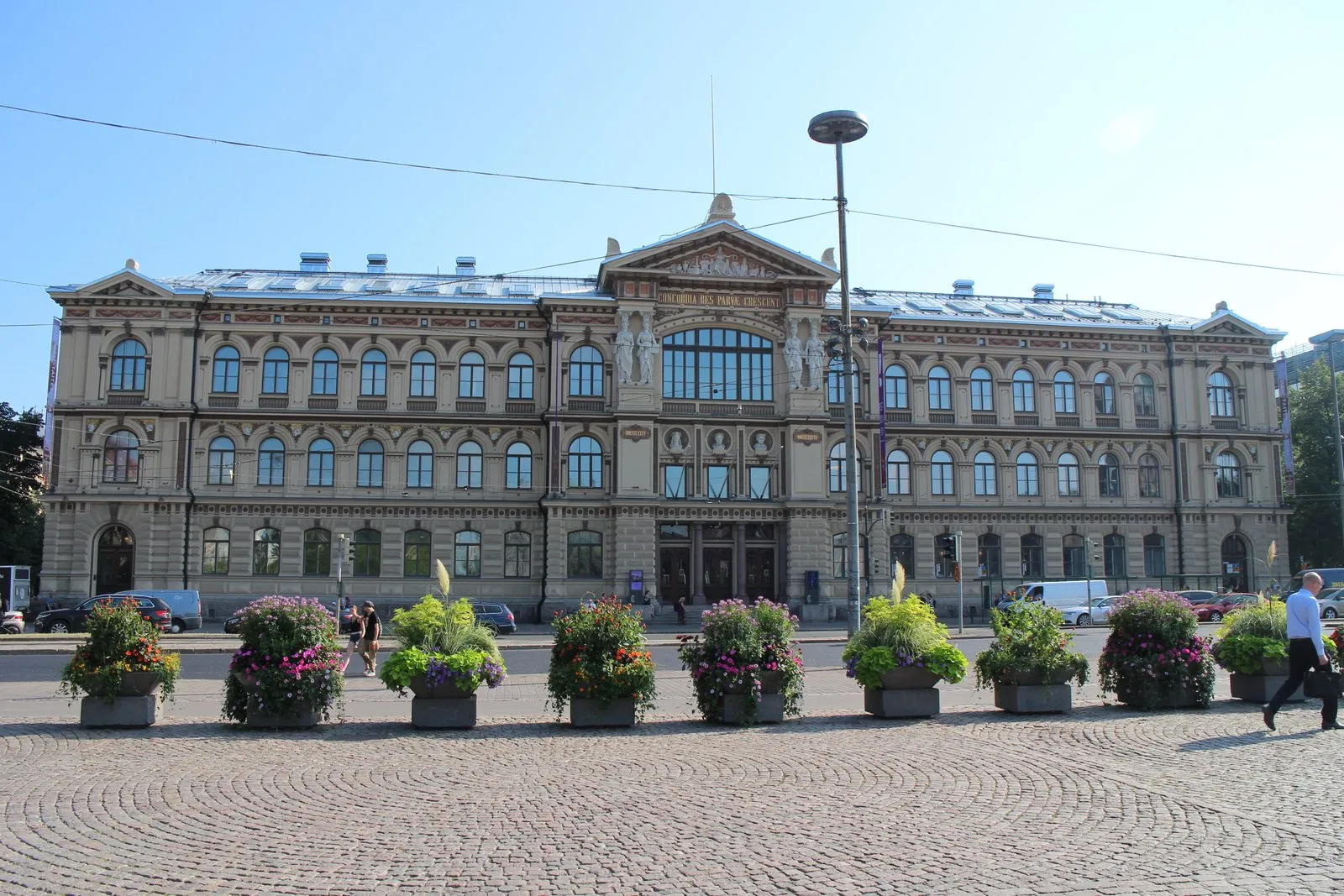
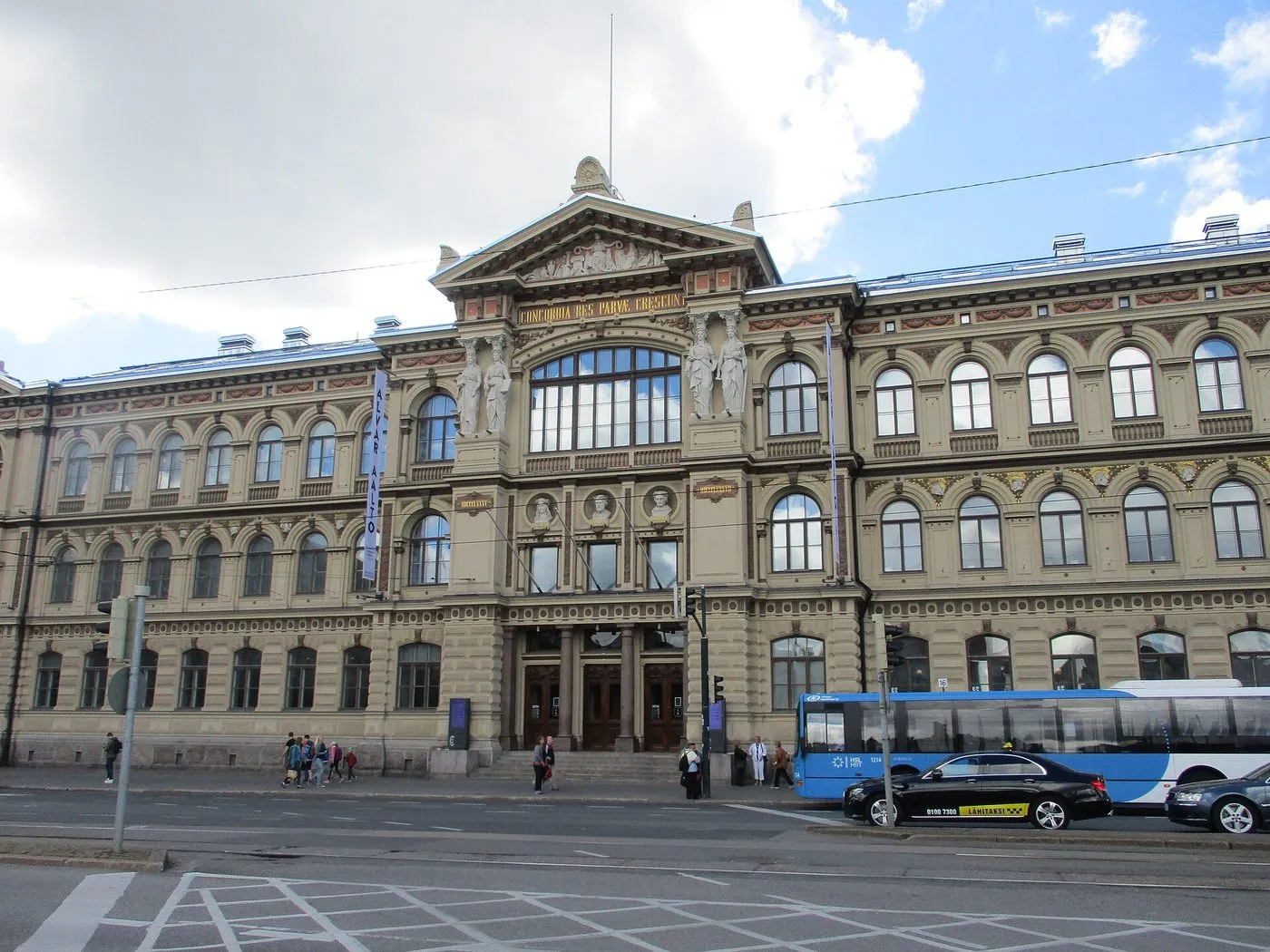
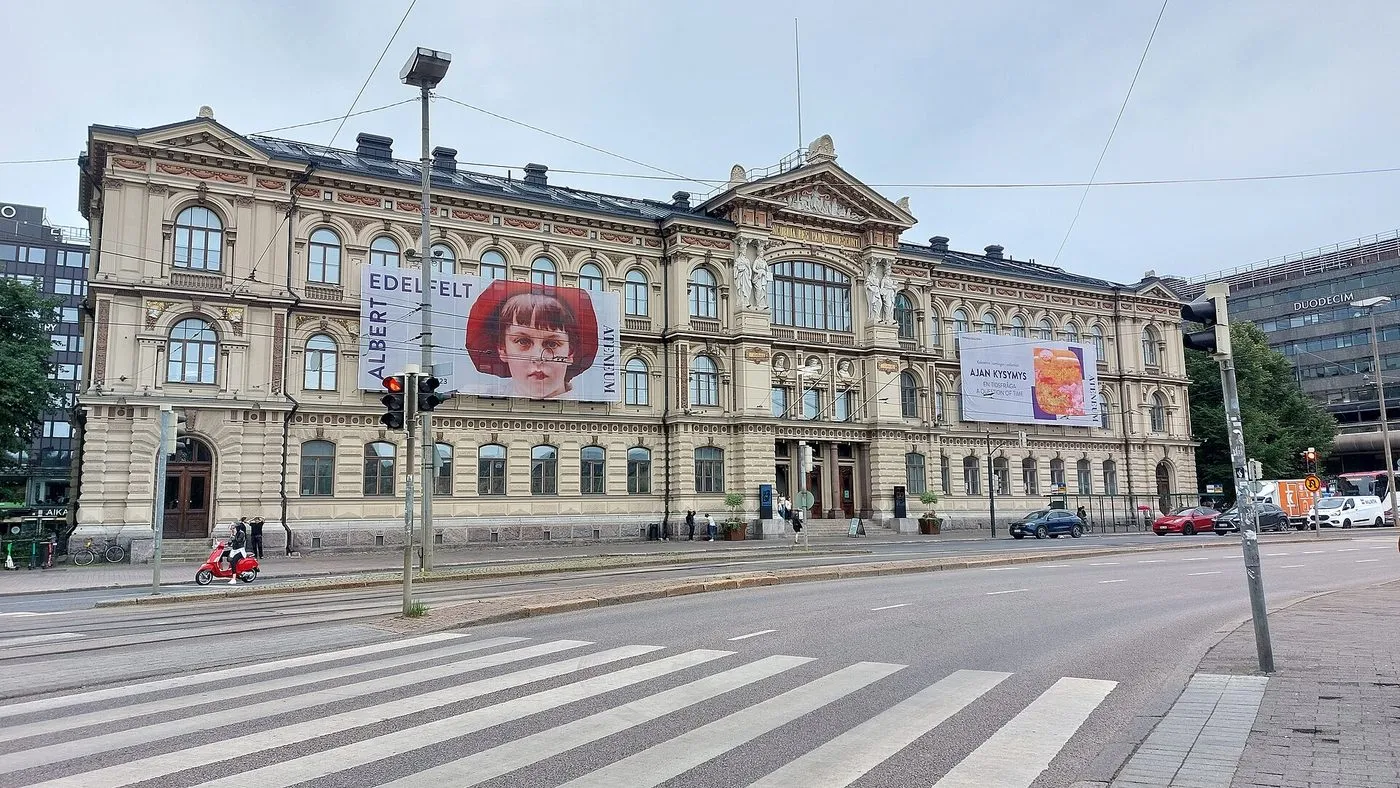
The Ateneum was completed in 1887 and opened in October 1888. Finnish architect Theodor Höijer designed the Neo-Renaissance building to house both the Finnish Art Society (Suomen Taideyhdistys, founded in 1846) and the Drawing School of the Finnish Society of Crafts and Design.
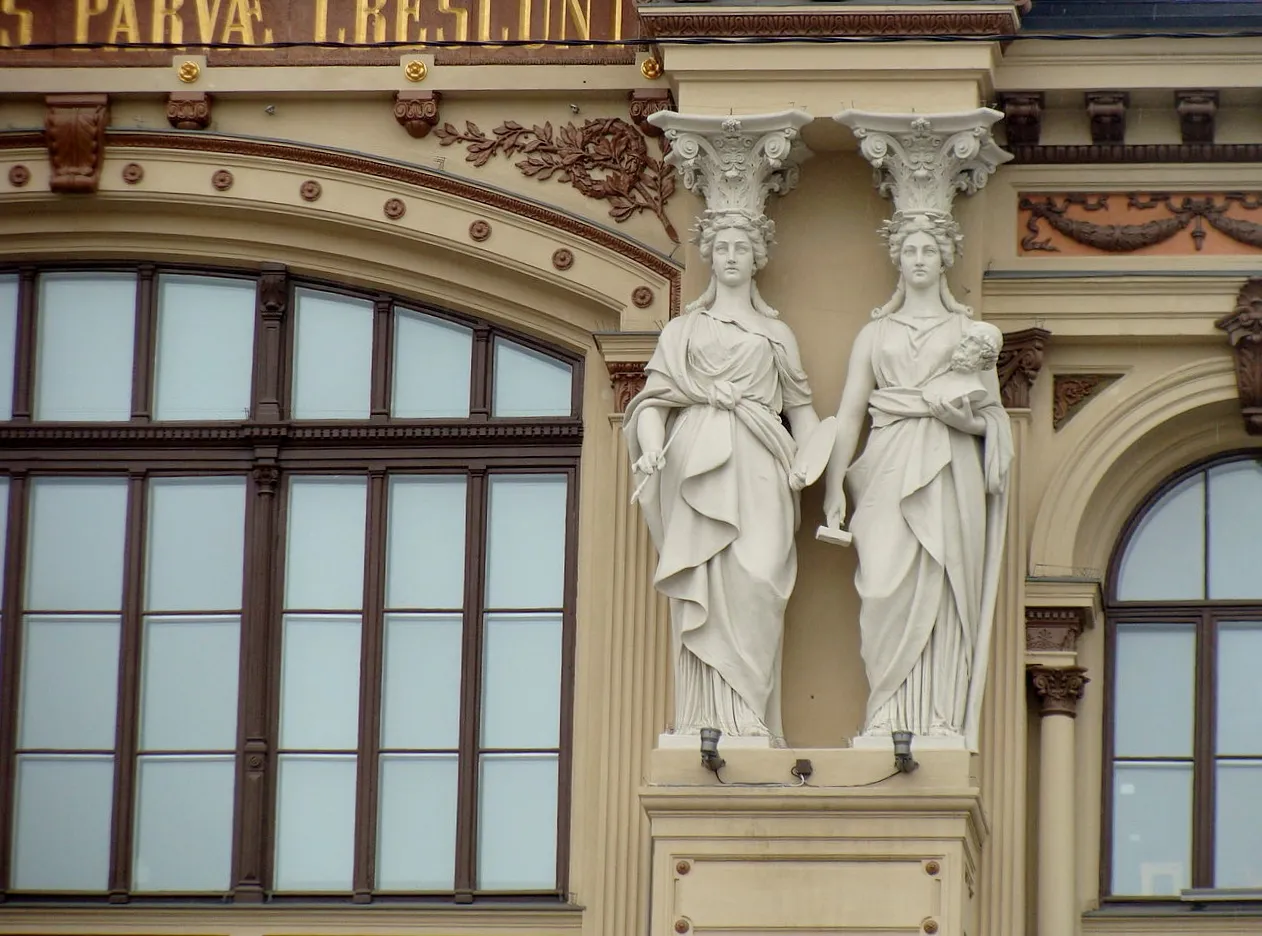
Architectural reliefs and classical allegorical statues embellish the Neo-Renaissance facade facing Kaivokatu. Photo: Paasikivi, Wikimedia Commons, CC BY-SA 3.0.
On the exterior:
- Facade sculptures: Carl Eneas Sjöstrand and Ville Vallgren made the busts of classical masters, including Phidias, Raphael and Bramante.
- Latin motto: Golden letters above the second-floor windows read Concordia res parvae crescunt (“Through harmony small things grow”).
- Allegories: Female statues flanking the pediment represent Architecture, Painting, Sculpture and Geometry.
Inside, a central staircase leads from the vestibule to the second-floor galleries.
The grand staircase and airy skylit galleries within the Ateneum Art Museum. Photo: Finnish National Gallery, Wikimedia Commons, CC BY 2.0.
Cards and guided walks
Helsinki Card City
From €62 · 4.5 stars from 421 reviews · 24, 48 or 72 hours
Helsinki Card City: Museums, Tours, Public Transport AB Zonesad covers many museums and sights, including the Ateneum, Amos Rex, Kiasma and Temppeliaukio Church, plus tours and public transport in the city area.
Helsinki Card Region
From €64 · 4.6 stars from 230 reviews
Helsinki Card Region: Attractions, Tours & Airport Accessad adds the airport train to free entry to attractions such as Amos Rex and the Ateneum, free tours and unlimited public transport.
Private art, design and architecture walk
From €158 · no reviews yet · 2 hours · private guide
Helsinki Art, Design & Architecture Private Guided Tourad walks past modernist landmarks, chapels and Art Nouveau buildings.
The Finnish Golden Age: mythology, nature, and identity
The core of the collection is the Golden Age of Finnish Art (1880–1910). Finnish painters trained in Paris brought naturalism, impressionism and symbolism home and applied them to northern landscapes and the national epic poem, the Kalevala.
Masterworks from the Golden Age of Finnish Art displayed in the second-floor permanent galleries. Photo: Finnish National Gallery, Wikimedia Commons, CC BY 2.0.
Akseli Gallen-Kallela and the Kalevala epic
Akseli Gallen-Kallela (1865–1931) painted scenes from the folk poetry that Elias Lönnrot collected into the Kalevala:
- The Aino Myth (Aino-taru, 1891): A triptych of the maiden Aino, who drowns herself in a lake rather than marry the old sage Väinämöinen, framed by art-nouveau floral borders.
- Lemminkäinen’s Mother (Lemminkäisen äiti, 1897): A tempera of a mother beside her son’s body on the bank of the river of Tuonela, the underworld, waiting for a bee to bring honey that will revive him.
- Joukahainen’s Revenge (Joukahaisen kosto, 1899): A scene of mythological vengeance.
Helene Schjerfbeck: from naturalism to modern minimalism
Helene Schjerfbeck (1862–1946) moved from naturalism to near-abstraction:
- The Convalescent (Toipilas, 1888): Painted in St Ives, Cornwall: a young girl holding a green twig in a glass of water.
- The self-portraits: The Ateneum owns a sequence spanning six decades, from academic realism in the 1880s to stripped-down, skull-like images of her own ageing face from the Second World War.
Hugo Simberg: symbolism and northern melancholy
Hugo Simberg (1873–1917) painted symbolist scenes with fairy-tale and darkly humorous touches:
- The Wounded Angel (Haavoittunut enkeli, 1903): Voted Finland’s “national painting” in a public poll. Two boys carry a blindfolded, winged angel on a stretcher across the Eläintarha parkland towards Helsinki’s Deaconess Institute.
- The Garden of Death (Kuoleman puutarha, 1896): A watercolour of skeletons tending potted plants and flowers, death as a gardener rather than a reaper.
Eero Järnefelt and Pekka Halonen: landscape and peasant reality
- Under the Yoke / Burning the Brushwood (Raatajat rahanalaiset / Kaski, 1893): By Eero Järnefelt: slash-and-burn farming in Savo, with a soot-faced peasant girl looking out from the burning forest.
- Pekka Halonen: Painted snow-laden pine forests and frozen lakes in midwinter light.
International masterworks
The Ateneum also holds European art:
- Vincent van Gogh, Street in Auvers-sur-Oise (1890): Painted in the last weeks of Van Gogh’s life; the Ateneum acquired it in 1903.
- Paul Gauguin: Landscape from Brittany and carved wood reliefs.
- Paul Cézanne and Auguste Rodin: Paintings by Cézanne and bronze studies by Rodin.
- Edvard Munch: Lithographs and paintings.
Ticket prices and opening hours
Admission tariffs
| Category | Online Price | Desk Price | Notes |
|---|---|---|---|
| Standard Adult | €21.00 | €23.00 | Save €2.00 by booking online via the Finnish National Gallery webshop. |
| Concessions (Students, Pensioners, 65+) | €13.00 | €13.00 | Valid ID or student card required. |
| Youth & Children (0–17) | Free | Free | Ticket must still be scanned at the gate. |
| Helsinki Card holders | Free | Free | Show physical card or digital QR code at the desk. |
| Museum Card (Museokortti) | Free | Free | Accepted across 360+ Finnish museums. |
Admission gives complete access to both the permanent collection and temporary special exhibitions.
Operating hours
| Day of the Week | Hours | Notes |
|---|---|---|
| Monday | Closed | Museum closed year-round. |
| Tuesday | 10:00 – 18:00 | Daytime hours. |
| Wednesday | 10:00 – 20:00 | Late evening opening. |
| Thursday | 10:00 – 20:00 | Late evening opening. |
| Friday | 10:00 – 18:00 | Daytime hours. |
| Saturday | 10:00 – 17:00 | Weekend hours. |
| Sunday | 10:00 – 17:00 | Weekend hours. |
Note: Ticket sales end 30 minutes before closing time. Galleries are cleared 15 minutes before the museum doors lock.
Practical visitor tips: facilities, dining, and accessibility
- Ateneum Bistro: Located on the ground floor facing Kaivokatu, this cafe-restaurant serves Nordic lunches, a daily soup with rye bread and korvapuusti cinnamon buns during museum hours.
- Museum Shop: Art prints, exhibition catalogues, postcards of Gallen-Kallela and Schjerfbeck, and Finnish glassware and textiles.
- Cloakroom & lockers: Free automated lockers (operated with numeric PINs) and open coat racks are located on the basement level. Large backpacks and umbrellas must be deposited before entering the galleries.
- Accessibility: The main entrance on Kaivokatu features outdoor stone steps. Step-free level access and an elevator entrance are located on the pedestrian alleyway at Ateneuminkuja. Wheelchairs, rollators, and baby strollers can be borrowed free of charge from the entrance staff. Accessible restrooms are located on both the basement and ground levels.
- Getting there: The museum is located at Kaivokatu 2, directly opposite Helsinki Central Railway Station (Rautatieasema). Trams 1, 2, 3, 4, 6, 7, and 9 stop outside. The nearest metro station is Rautatientori (100 metres away).
Planning your museum route in central Helsinki
- Helsinki Central Station: Eliel Saarinen’s Art Nouveau station, with granite lantern-bearing statues at the entrance; see the Helsinki public transport guide.
- Oodi Central Library: 400 metres north along Töölönlahti park; see the Oodi guide.
- Contemporary art: Kiasma (designed by Steven Holl) and Amos Rex, whose underground galleries sit beneath rooftop domes, are a short walk away.
- Passes: If you plan to visit the Ateneum, Temppeliaukio Rock Church and Suomenlinna within 24 to 48 hours, see whether the Helsinki Card is worth it.
Common questions
How much are tickets to the Ateneum Art Museum?
Standard adult admission is €23.00 at the museum ticket desk and €21.00 when purchased online in advance. Concession tickets for students, pensioners, and unemployed visitors cost €13.00. Children and youths under 18 years old enter free. Holders of the Helsinki Card or the Finnish Museum Card (Museokortti) receive free admission.
Do you need to book Ateneum tickets in advance?
Advance booking is not strictly mandatory, as tickets are sold at the door using cards or cash. However, booking online in advance saves €2.00 per adult ticket and lets you bypass ticket counter queues during popular weekend exhibitions.
When is the Ateneum Art Museum closed?
The Ateneum is closed to visitors every Monday year-round, as well as on Finnish Independence Day (6 December), Christmas Eve (24 December), Christmas Day (25 December), and New Year's Day (1 January). It stays open late until 20:00 on Wednesdays and Thursdays.
Which paintings should you see in the Ateneum?
The collection showcases the Golden Age of Finnish Art (1880–1910), including Akseli Gallen-Kallela's Aino Myth triptych, Hugo Simberg's The Wounded Angel and The Garden of Death, Helene Schjerfbeck's The Convalescent and self-portraits, and Eero Järnefelt's Under the Yoke. International highlights include Vincent van Gogh's Street in Auvers-sur-Oise (1890).
Is the Ateneum included in the Helsinki Card?
Yes. Admission to the Ateneum is included free of charge with both the Helsinki Card City (Zone AB transit included) and the Helsinki Card Region.