In this guide
💡 The Short Version: Seurasaari Open-Air Museum (Seurasaaren ulkomuseo) is on an island off western Helsinki and shows traditional Finnish timber buildings. The ethnologist Axel Olai Heikel founded it in 1909. It has 89 timber buildings moved from across Finland, including log farmsteads, windmills, storehouses, smoke saunas and a 1685 wooden church. The wooded island park is free at any hour all year. The building interiors are open from 15 May to 15 September only (daily 11:00 to 17:00), with tickets at the kiosk and online. Allow 2 to 3 hours for the buildings and the pine-forest shore walks. Or book a tour: a 5½-hour city highlights and Seurasaari day tourad from €110 combines Helsinki’s sights with the island in one booking.
⚠️ Interiors are closed from 16 September to 14 May. In that period you can still cross the footbridge for the forest, shore and wildlife, but the buildings are locked.
How the museum began
Around 1900, brick, concrete and sawn timber were replacing traditional timber building across the Finnish countryside. Inspired by Artur Hazelius’s Skansen in Stockholm, the ethnologist Axel Olai Heikel set out to preserve rural buildings that were disappearing.
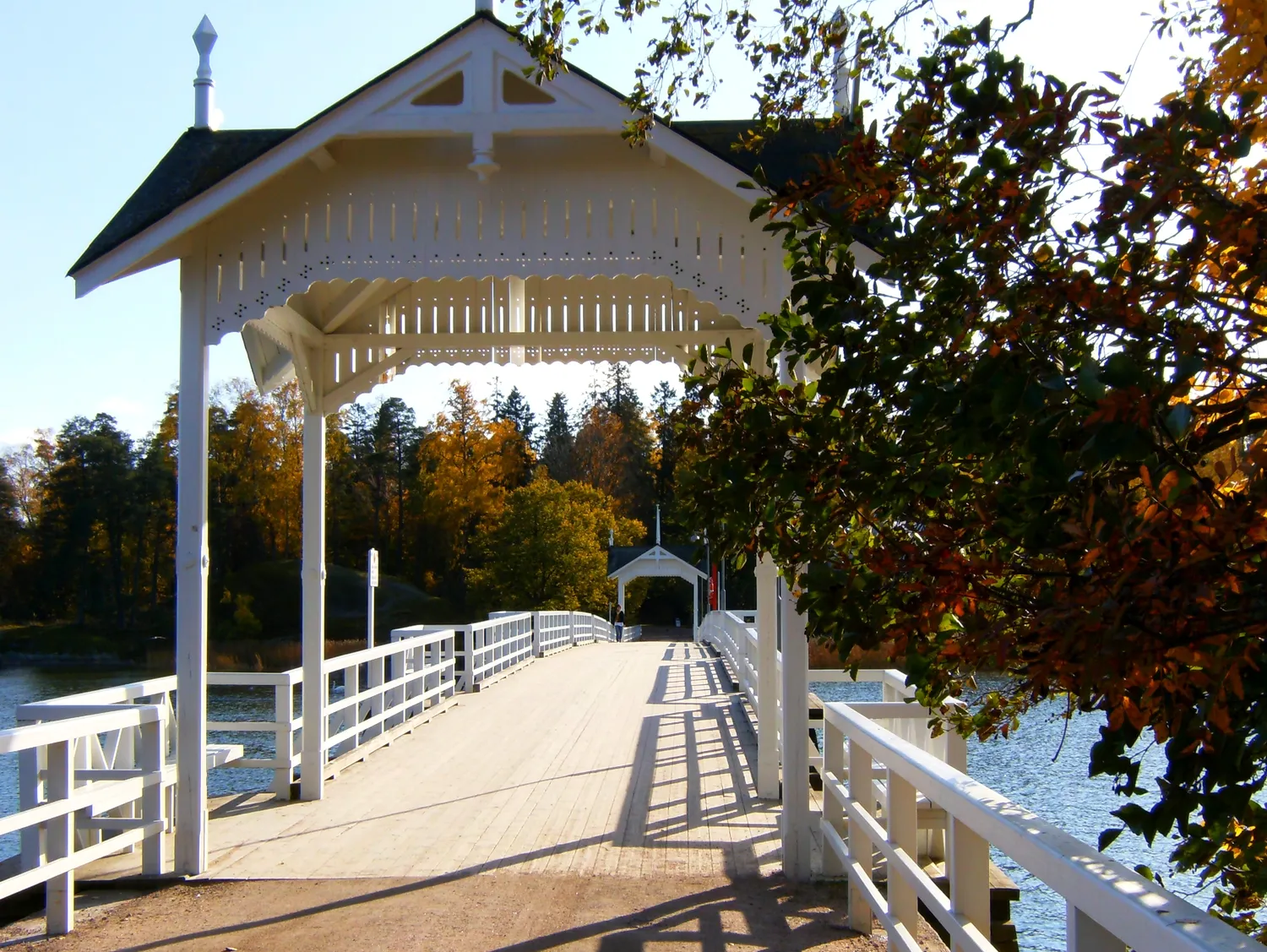
Footbridge to Seurasaari from Meilahti. Photo: DreferComm, Wikimedia Commons, CC BY-SA 3.0.
In 1909 Heikel won permission to build an open-air museum on Seurasaari, an uninhabited island used as a public park since the late 19th century.
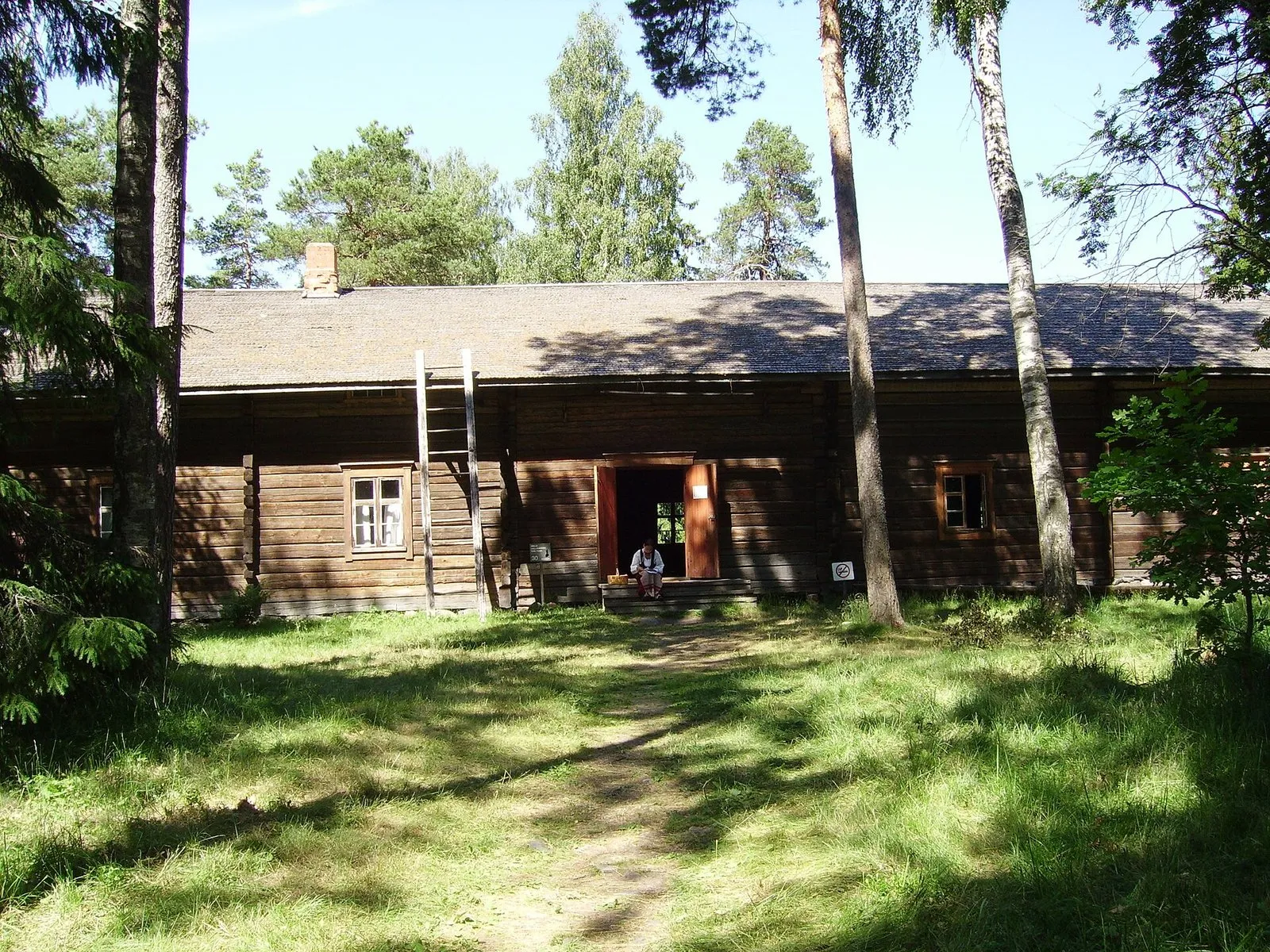
The founding building was the Niemelä tenant farm (Niemelän torppa), taken apart log by log in Konginkangas in Central Finland and rebuilt on the rocky shore. Over the following decades the National Museum of Finland gathered 89 buildings showing building styles from Ostrobothnia, Karelia, Savonia and the southwestern archipelago.
A day tour that includes Seurasaari
City highlights and Seurasaari
From €110 · 5 stars from 2 reviews · 5½ hours
Helsinki: City Highlights and Seurasaari Day Tourad covers Helsinki’s highlights and Seurasaari, the island nicknamed Squirrel Island, in one day.
Key buildings and sights on the island
The buildings show how peasants, tenant farmers, craftsmen and country clergy lived from the late 17th to the early 20th century.
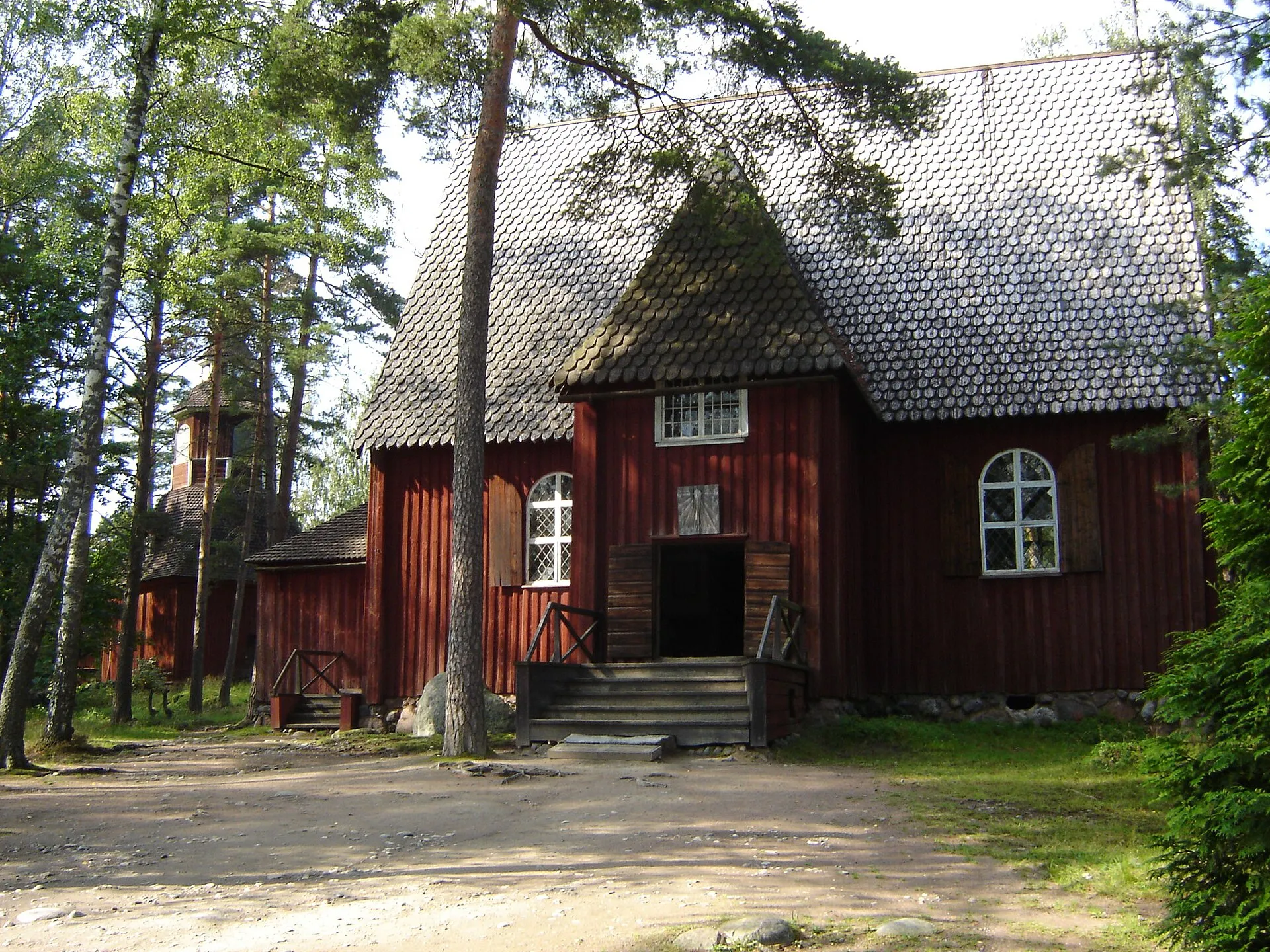
Karuna Church (1685). Photo: BishkekRocks, Wikimedia Commons, CC BY-SA 3.0.
Karuna wooden church (1685)
Karuna Church (Karunan kirkko) was built in 1685 in the southwestern parish of Karuna by the local nobleman Arvid Horn. It was moved to Seurasaari in 1912 to save it from demolition after a new stone church was built in its home village:
- Structure: Timber frame with a steep shingle roof that sheds heavy snow.
- Interior: The original carved pulpit, painted gallery railings, brass chandeliers and box pews, where parishioners sat by social rank.
- Services: The church is still consecrated and hosts summer weddings, with services on weekend afternoons.
The Antti farmstead (closed courtyard)
The Antti Farmstead (Antin talo) comes from Säkylä in Satakunta, western Finland, and shows the closed courtyard plan (umpipiha).
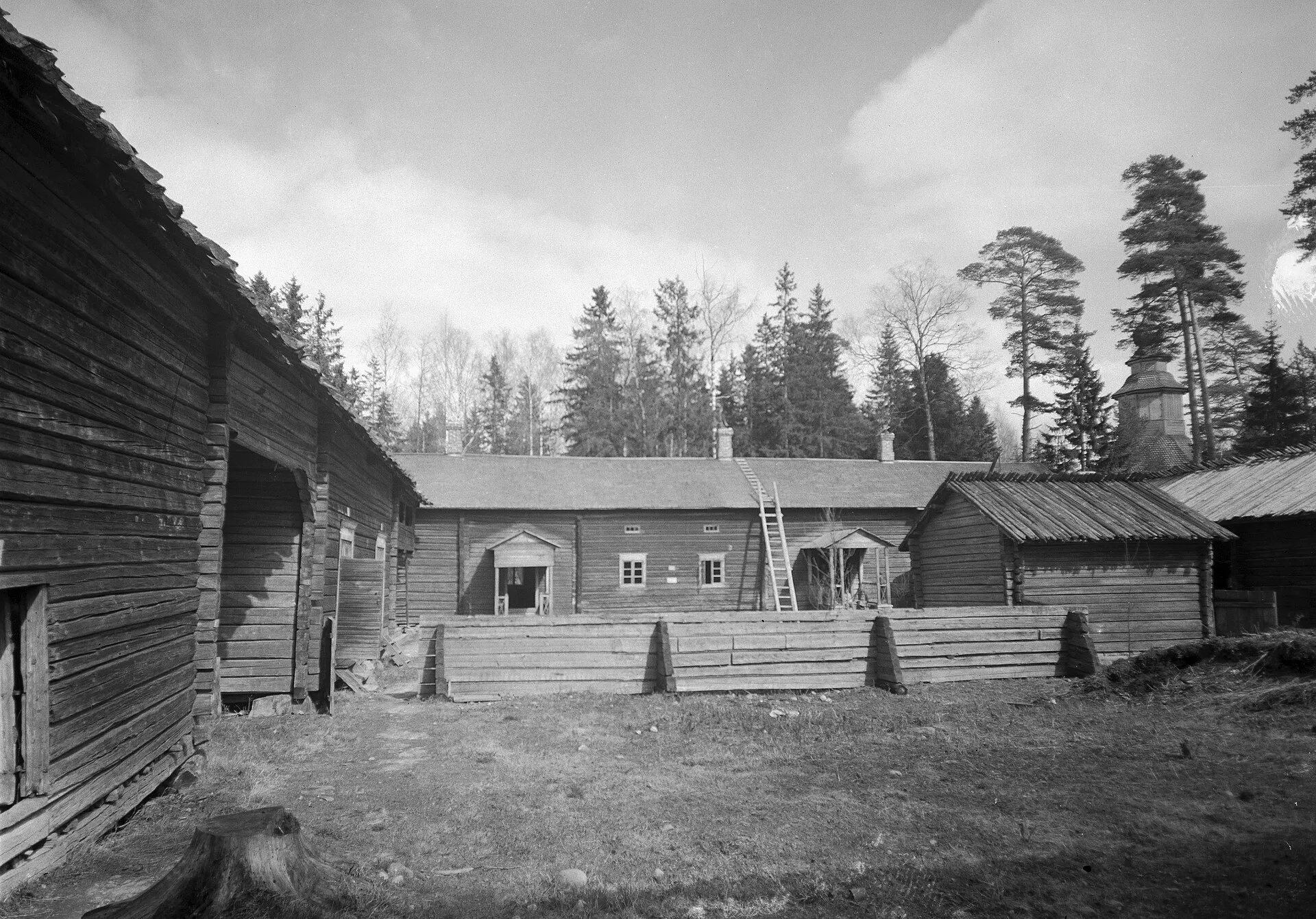
Antti farmstead courtyard. Photo: Eino Nikkilä / Museovirasto, Wikimedia Commons, CC BY 4.0.
- Layout: The buildings join edge to edge around a rectangular yard, which shut family and livestock off from winter storms and from wolves and bears.
- Living quarters (tupa): The main room has a whitewashed stone baking oven that heated the house in winter. Benches along the walls doubled as bunks, and cradles hung from the rafters.
- The shed cafe: The old cart shed (Antin Kaffeliiteri) serves filter coffee, cardamom buns and ice cream during museum hours.
Niemelä tenant farm and the smoke sauna
The Niemelä Tenant Farm shows the frugal life of landless crofters in central Finland:
- Thirteen log cabins: Instead of one house, the farm has small buildings for cooking, sleeping, sheep and grain.
- The smoke sauna (savusauna): It has no chimney. The stone stove (kiuas) was fired for hours until the room filled with smoke; once it was ventilated, bathers went in.
The church boats (kirkkoveneet)
The church boats near the northern cove are hand-hewn wooden rowing boats from the lake districts of Häme and Savo. They are up to 17 metres long with 8 to 15 pairs of oars, and carried 40 to 60 villagers across the lakes to Sunday parish services.
The island park: wildlife and swimming
- The white footbridge: A 200-metre white wooden footbridge, built in 1892, is the way onto the island. Vehicles are not allowed.
- Wildlife: Red squirrels (oravat) that approach walkers on park benches, blue hares and grazing barnacle geese. Do not feed the squirrels human food.
- Swimming: A public beach with shallow sandy water and changing booths is on the western shore. A historic bathing establishment at the southern tip is a naturist beach, with separate sections for men and women on weekdays and mixed bathing at weekends.
- Midsummer bonfire (Juhannuskokko): Seurasaari hosts Helsinki’s main Midsummer celebration on the Friday closest to 24 June, with folk dancers, musicians and large bonfires on rock platforms in the bay.
Tickets, opening hours, and practicalities
Admission details
| Category | Admission | Details |
|---|---|---|
| Island park and grounds | Free | Open 24/7 all year. |
| Museum buildings, adults | Ticket at the kiosk or kansallismuseo.fi | Open 15 May to 15 September. |
| Children and youths (0–17) | Free | Children under 7 must be accompanied by an adult. |
| Museum Card and Helsinki Card | Free | Show the card at the ticket kiosk. |
Tickets are sold at the bridgehead kiosk, in the Iisalmi Parsonage museum shop, or via the official webshop.
Operating schedule
- Museum Buildings & Exhibitions: Open 15 May to 15 September annually. Daily from 11:00 to 17:00.
- Guided Tours: Daily public tours in English run from mid-June through August at 15:00, meeting at the Iisalmi Parsonage (included in museum admission).
- Winter Season (16 September to 14 May): Historic interiors are shuttered. The island park, footbridge, forest walking trails, and seaside paths remain open for walking, running, and snowshoeing with free public access.
Getting there and nearby connections
- By HSL bus: Bus 24 runs from Kamppi bus terminal or Lasipalatsi on Mannerheimintie every 15 to 20 minutes and terminates at the Seurasaari bridgehead. The journey takes about 20 minutes on a Zone AB ticket.
- By city bike: Helsinki City Bikes has rental stations at the mainland end of the bridge from April to October.
- Tamminiemi: 400 metres north of the bridge is Tamminiemi, the official residence of President Urho Kekkonen. It is now a museum on Cold War diplomacy, with Kekkonen’s presidential sauna.
- Sibelius Monument: Two kilometres east along the Meilahti and Töölö shore are the Sibelius Monument and Park and the waterfront Cafe Regatta.
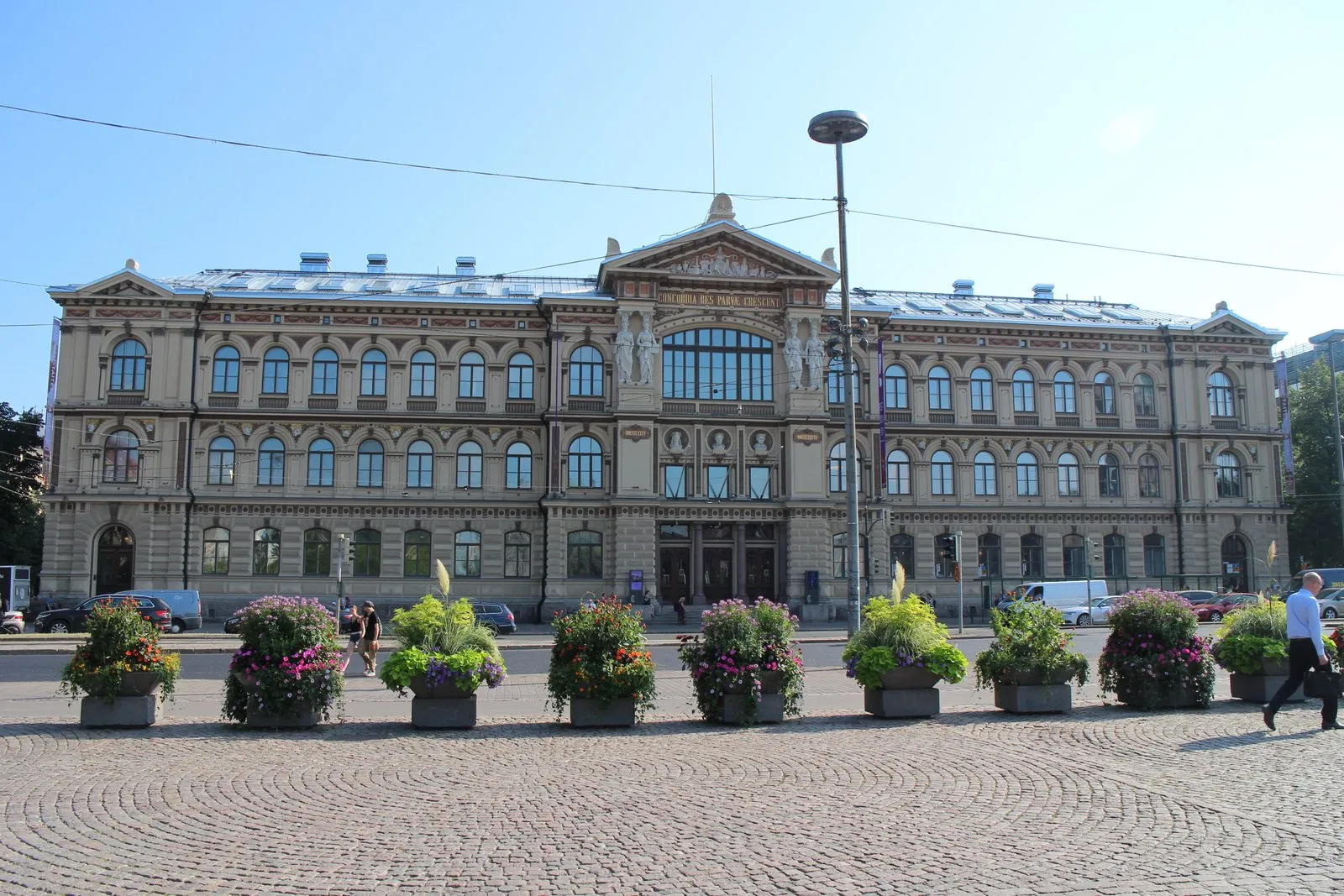
- Passes: If you also plan the Ateneum and Suomenlinna, see whether the Helsinki Card is worth it.
Common questions
Is Seurasaari island free to visit?
Yes. Seurasaari is a public park run by the City of Helsinki, and the footbridge to it is open free at any hour all year. You only pay to enter the museum farmsteads, church and exhibition interiors in the summer season.
How much are tickets to enter the historic museum buildings?
Adult tickets are sold at the kiosk and online at kansallismuseo.fi. Admission is included with the Finnish Museum Card (Museokortti) and the Helsinki Card.
When are the Seurasaari museum buildings open?
From 15 May to 15 September, daily from 11:00 to 17:00. From mid-September to mid-May the interiors are closed, but the island park, trails and sea views stay open.
How do you get to Seurasaari from central Helsinki?
Take HSL bus 24 from Kamppi or Lasipalatsi to the Seurasaari terminus at the bridgehead, a 20-minute ride on a Zone AB ticket. In summer, cycling from Töölö along the coastal cycle trail takes 20 to 25 minutes.
Are guided tours included with the museum ticket?
Yes. In June to August there are 45-minute guided tours in English, included in the ticket price, leaving from outside the Iisalmi Parsonage. At other times you can use the free Reveel digital mobile guide, which covers more than 30 buildings.