In this guide
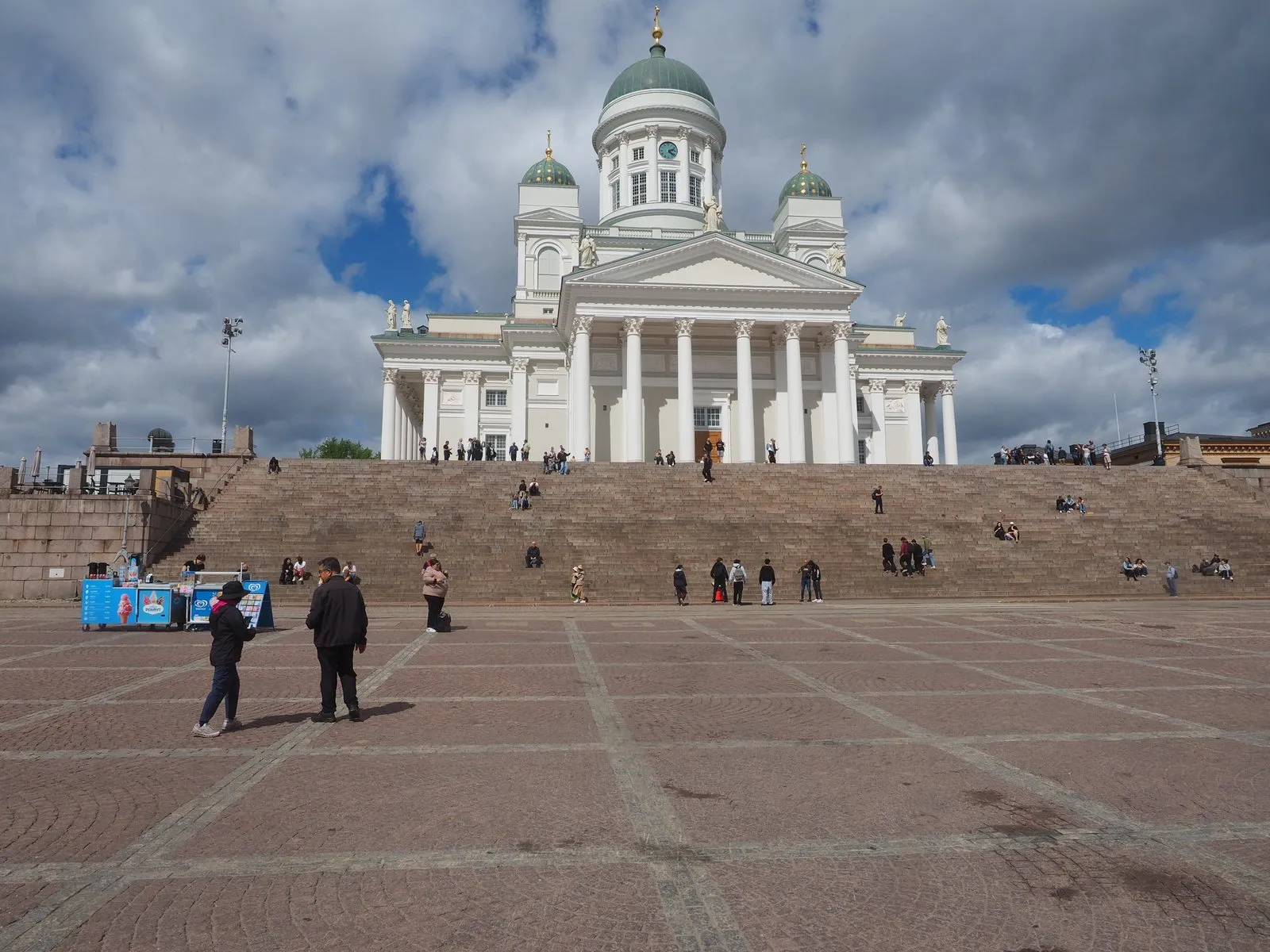
💡 The Short Version: Helsinki has low violent crime. In Reader’s Digest’s “Lost Wallet Test”, 11 of 12 deliberately dropped wallets were returned intact in Helsinki. The main risks for visitors are environmental: black ice and slush in winter, falling roof snow during thaws and ticks on coastal islands in summer. The emergency number is 112 (the 112 Suomi app sends your GPS location). For non-emergency health advice, phone the Medical Helpline on 116 117. Or book a tour: a 2-hour walking tour with Helsinki Cathedral and the marketad from €40 visits Senate Square, Helsinki Cathedral, Market Square and Uspenski Cathedral with a guide.
⚠️ Winter ice is the main hazard. Between November and late March, freeze-thaw cycles coat the granite paving with invisible black ice, which Finns call pääkallokeli (“skull weather”). Wear boots with deep rubber treads or buy slip-on shoe spikes (liukuesteet) at any supermarket or pharmacy.
Crime and scams
Finnish police patrol car. Photo: MKFI, Wikimedia Commons, Public domain.
Violent crime vs petty theft
- Violent crime: Rare, and seldom aimed at tourists. Random assaults and muggings are unusual in the central districts.
- Pickpocketing: Occasional theft in summer at crowded spots such as Market Square (Kauppatori), the ferry quays and on crowded trams (lines 2 and 4). Zip your daypack and keep your phone off cafe tables.
- Lost property: If you leave a camera, wallet or jacket in a cafe, library or tram, ask the staff or visit the Police Lost and Found Office (Poliisin löytötavaratoimisto) at Pasilanraitio 11 in Pasila.
Where to take care at night
There are no no-go areas, but between 01:00 and 04:30 on weekend mornings, when clubs and bars close:
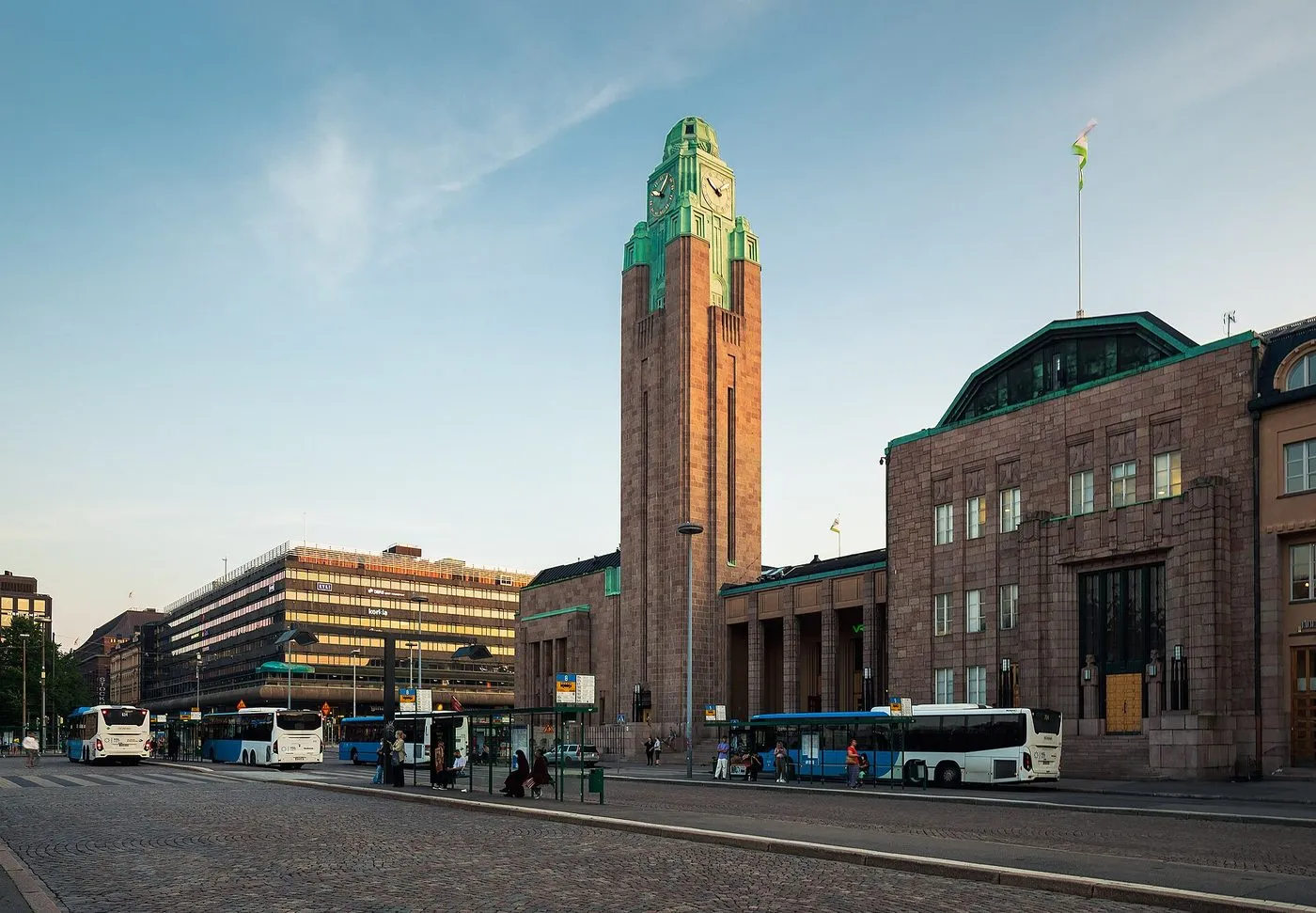
- Central Railway Station square (Rautatientori): Drunk crowds and youth groups on Friday and Saturday nights. They are loud but rarely aggressive towards bystanders.
- Kaisaniemi Park (Kaisaniemenpuisto): East of Central Station, with poorly lit corners. After midnight, use the lit streets along Unioninkatu or Kaisaniemenkatu.
- Vaasankatu in Kallio: Kallio’s nightlife and pub street, lively and sometimes boisterous at weekends.
Solo female and LGBTQ+ travel safety
Solo female travel
Helsinki is a safe city for solo female travellers:
- Public spaces: Women can walk alone through the centre and ride the metro, trams and night buses late at night; persistent harassment is not typical.
- Night transit: If you feel uncomfortable on a night bus or tram, sit near the driver at the front.
- Eating alone: Dining alone in restaurants or reading in cafes is normal.
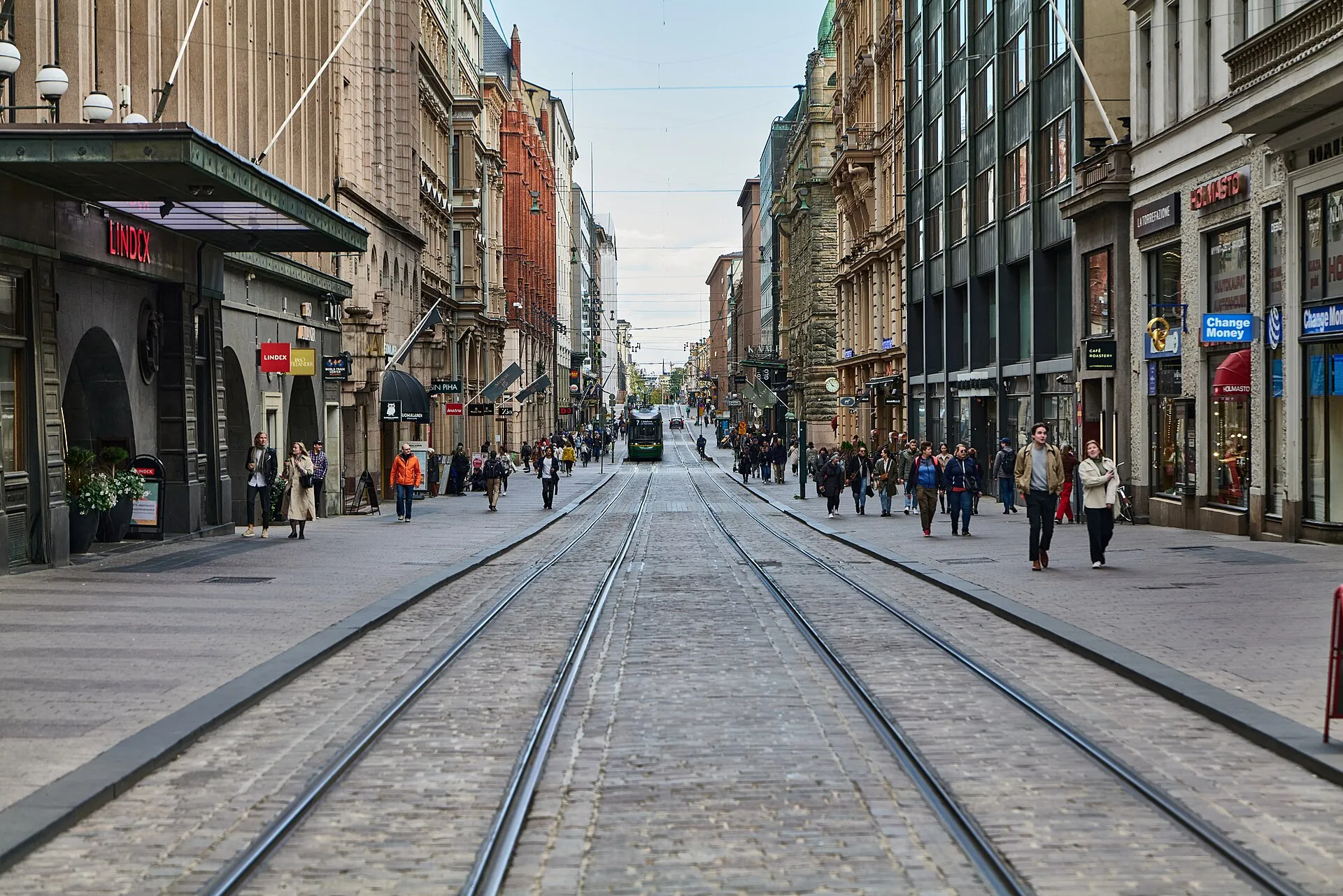
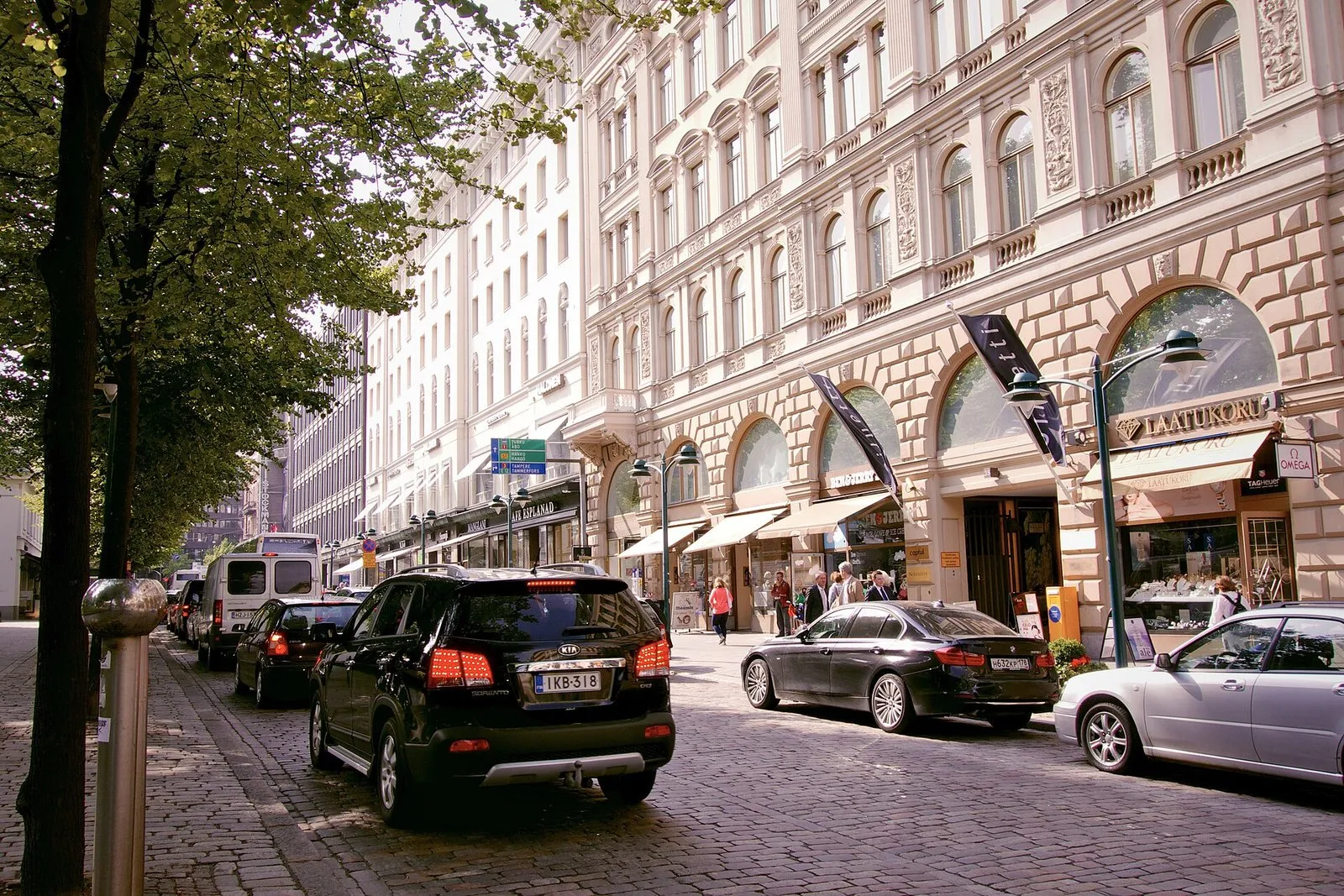
Aleksanterinkatu. Photo: Leonhard Lenz, Wikimedia Commons, CC0.
LGBTQ+ safety
Finland has legal protections for LGBTQ+ people:
- Same-sex marriage and adoption have been legal since 2017, and a new gender-recognition law was passed in 2023.
- Discrimination based on sexual orientation or gender identity is prohibited under Finnish law.
- Helsinki Pride is held in the final week of June.
- Same-sex couples holding hands in central public spaces should not expect hostility.
Winter conditions and black ice
Pääkallokeli (“skull weather”)
From late November to March the temperature swings around 0°C:
- How it forms: Snow falls by day, melts slightly and refreezes overnight into a clear sheet of black ice on the granite pavements.
- Footwear: Dress shoes, heeled boots and flat sneakers have no grip on frozen granite. Pack winter boots with soft rubber soles and deep lugs.
- Ice cleats (liukuesteet): Rubber harnesses with steel studs that slip over your boots, sold at supermarkets (Prisma, K-Citymarket), pharmacies and department stores.
- The penguin walk: Keep your weight over your front foot, take short flat-footed steps and keep your hands out of your pockets for balance.
Falling roof ice and snow (kattolumi)
During thaws, snow and icicles fall from the steep roofs of 19th-century apartment buildings:
- Barriers: Owners must cordon off pavements below melting eaves with tape, ribbons or wooden barricades.
- Do not walk past a barrier: Step into the street around it, and look up on older streets such as Bulevardi or Aleksanterinkatu during a thaw.
Summer outdoor hazards: ticks and wildlife
Ticks (punkit)
From May to September ticks live in tall grass, coastal juniper scrub and woodland across southern Finland, including on islands such as Seurasaari, Vallisaari, and in Nuuksio National Park:
- Diseases: Ticks can transmit Lyme borreliosis (a bacterial infection treatable with antibiotics) and Tick-Borne Encephalitis (TBE, a viral infection).
- Prevention: In meadows and undergrowth, wear long trousers tucked into socks, use insect repellent and stay on wide gravel trails.
- Check yourself: After an afternoon on an island or in the forest, check behind the knees, around the waistband and behind the ears. Remove a tick with fine-tipped tweezers, pulling straight up.
The adder (kyy)
Finland’s only venomous snake is the European adder, which has a dark zigzag along its back:
- It basks on warm granite rocks and forest paths near the coast.
- It is timid and moves away when it feels footsteps.
- If bitten, stay calm, keep still and phone 112. Pharmacies sell a Kyypakkaus kit containing hydrocortisone tablets for the swelling.
Tap water, food safety, and public health
- Tap water: Helsinki’s tap water comes from Lake Päijänne in Central Finland through the 120 km Päijänne Water Tunnel. It is safe to drink; bring a reusable bottle and fill it from any tap.
Healthcare, pharmacies, and emergency protocols
| Service | Contact Number | Operating Hours | Purpose |
|---|---|---|---|
| Emergency Services (Police, Ambulance, Fire) | 112 | 24 Hours / 365 Days | Life-threatening emergencies, serious accidents, active crime. |
| Medical Helpline (Päivystysapu) | 116 117 | 24 Hours / 365 Days | Free non-emergency health advice and hospital urgent-care triage. |
| Poison Information Centre (Myrkytystietokeskus) | 0800 147 111 | 24 Hours / 365 Days | Free guidance on accidental poisonings, bites, or toxic plant exposure. |
| Yliopiston Apteekki (24h pharmacy) | 0300 20200 | Open 24/7 every day | Pharmacy at Mannerheimintie 96. |
The 112 Suomi mobile app
Download the free 112 Suomi app before you arrive. When you call through it, your phone’s GPS coordinates go straight to the emergency dispatcher, which helps if you are lost on a trail in Nuuksio or on an island without street signs.
What to explore next
- Dressing for the cold: Helsinki in winter and Christmas.
- Getting around: the Helsinki public transport guide.
- Where to base yourself: Where to stay in Helsinki.
Common questions
Is Helsinki safe to walk around at night?
Yes. Violent crime against visitors is rare, and central streets and well-lit residential areas are safe at night. Keep valuables secure and avoid drunken crowds around the central railway square late on weekend nights.
What is the emergency telephone number in Finland?
Dial 112 for police, ambulance or fire. The call is free from any mobile phone. The official 112 Suomi smartphone app sends your GPS location to the dispatcher when you call.
What is the non-emergency medical number in Helsinki?
Call 116 117 for the Medical Helpline (Päivystysapu), run by the HUS hospital district. Nurses give free advice, assess symptoms and direct you to the nearest urgent care clinic when local health centres are closed.
Can you drink the tap water in Helsinki?
Yes. It comes from Lake Päijänne through a 120-kilometre underground rock tunnel. Carry a refillable bottle.
What is the greatest physical hazard for tourists in Helsinki?
Slipping on ice in winter and early spring (known locally as pääkallokeli or 'skull weather'). Wear boots with deep rubber treads or slip-on traction cleats (liukuesteet), and take short flat-footed steps.