In this guide
💡 The Short Version: Pick Dubrovnik to walk the City Walls, 1,940 m round a walled Old Town whose Baroque Stradun was rebuilt after the 1667 earthquake, and to see Game of Thrones filming locations. Pick Split for a Roman emperor’s palace that is still a town, with houses, bars and the cathedral inside its walls and no entry fee, plus ferries to Brač, Hvar and Vis and the sandy city beach at Bačvice. Both use the euro. Or book a tour: the Dubrovnik City Walls Early Morning or Sunset Walking Tourad is from €25, and the Diocletian’s Palace and Split Old Town small-group tourad from €15 (GetYourGuide).
⚠️ The Dubrovnik walls ticket is one entry, and the price depends on the date. It is €40 an adult for visit dates in November 2026 and €20 in December, the walls are open 09:00 to 15:00 in winter, and you cannot re-enter once you leave (City Walls ticket shop). Split’s palace streets and Peristyle are public and free day and night; only the cellars, cathedral and museums charge.
The cities side by side
Prices are the operators’ adult rates in euros.
| Split | Dubrovnik | Deciding factor | |
|---|---|---|---|
| Main sight | Diocletian’s Palace: streets free; cellars €10 | City Walls, Fort Lovrjenac included: €40 November 2026, €20 December | Split’s palace is a public street; Dubrovnik’s walls need a ticket |
| Airport to centre | Platanus shuttle €10, about 30 minutes; city bus 37 €2.00 in the app | Platanus shuttle €10, about 30 minutes to Ploče Gate | The shuttles cost the same (Split, Dubrovnik) |
| City beach | Bačvice, sand, 10 minutes’ walk east of the ferry terminal | Banje, pebbles, just east of Ploče Gate | Bačvice is sandy and shallow; much of Banje is paid loungers |
| Islands | Ferries and catamarans to Brač, Hvar, Vis and Šolta | Lokrum boat €30 return with entry; Krilo catamaran to Mljet | Split is the ferry hub for the central Dalmatian islands |
| Tourist tax, a person a night | €2.65 April to September 2026, €1.86 the rest of the year | €2.65 April to September 2026, €1.85 the rest of the year | Set by each county; the summer rate is the same |
| Viewpoint | Marjan Forest Park, free, on foot or bus 12 | Mount Srđ: cable car €30 return, closed 1 December to 31 March | Marjan is a walk from the Riva; Srđ is a ride or a steep climb |
History: a palace town and a walled republic
Diocletian’s Palace was built between 295 and 305 for the emperor’s retirement (Split City Museum). Over the centuries people moved inside its walls: his mausoleum became the Cathedral of St Domnius, and Gothic and Venetian houses were built into the Roman arcades. Washing hangs between the columns and cafés sit under the Corinthian capitals of the Peristyle.
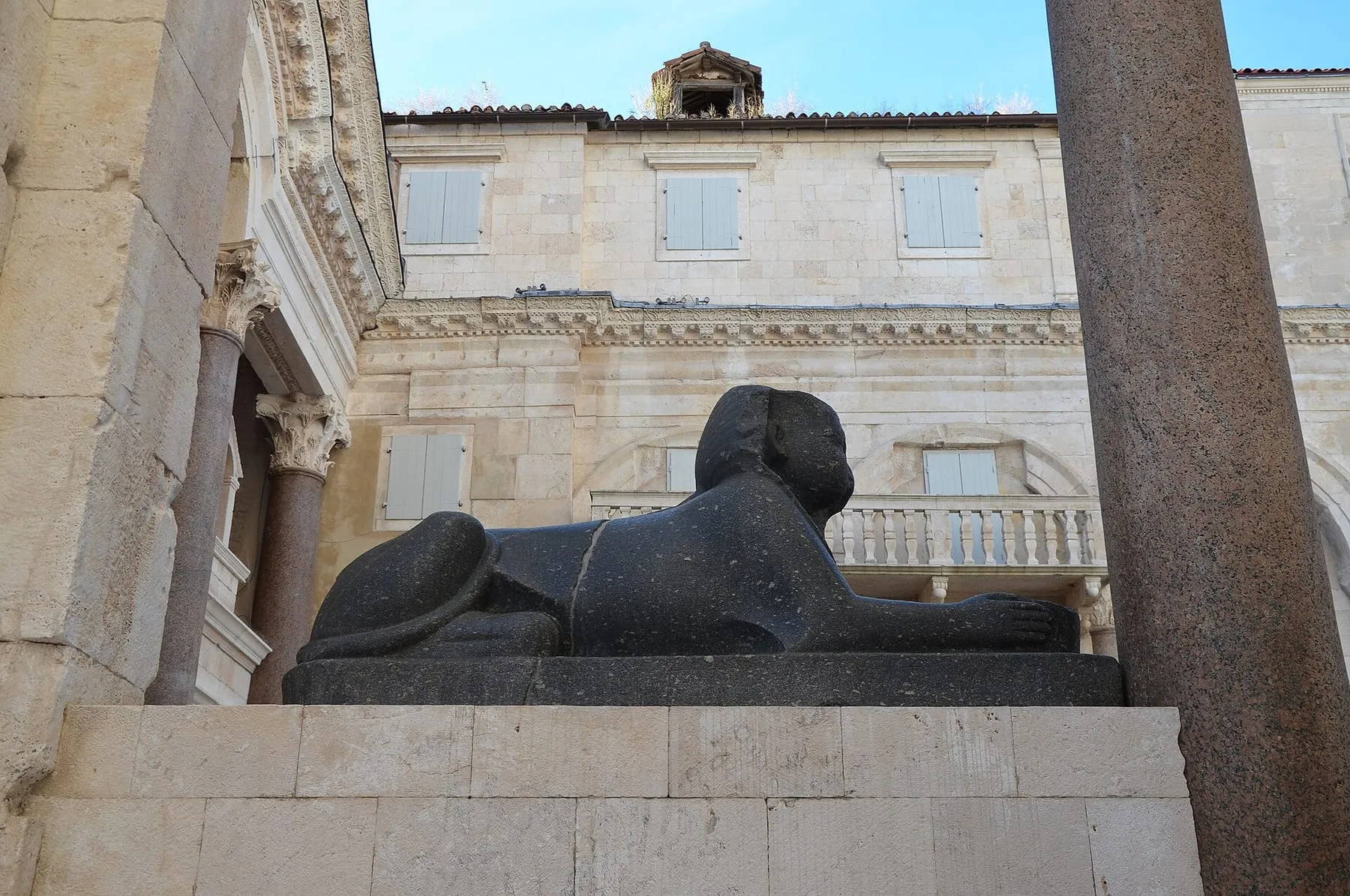 The Peristyle, Split. Photo: Carole Raddato, Wikimedia Commons, CC BY-SA 2.0.
Dubrovnik was the merchant Republic of Ragusa. Its Old Town is enclosed by walls 1,940 m long and up to 25 m high in places, with sixteen towers. The pedestrian Stradun (Placa) runs from the Franciscan Monastery to the clock tower, lined with matching stone houses built after the 1667 earthquake.
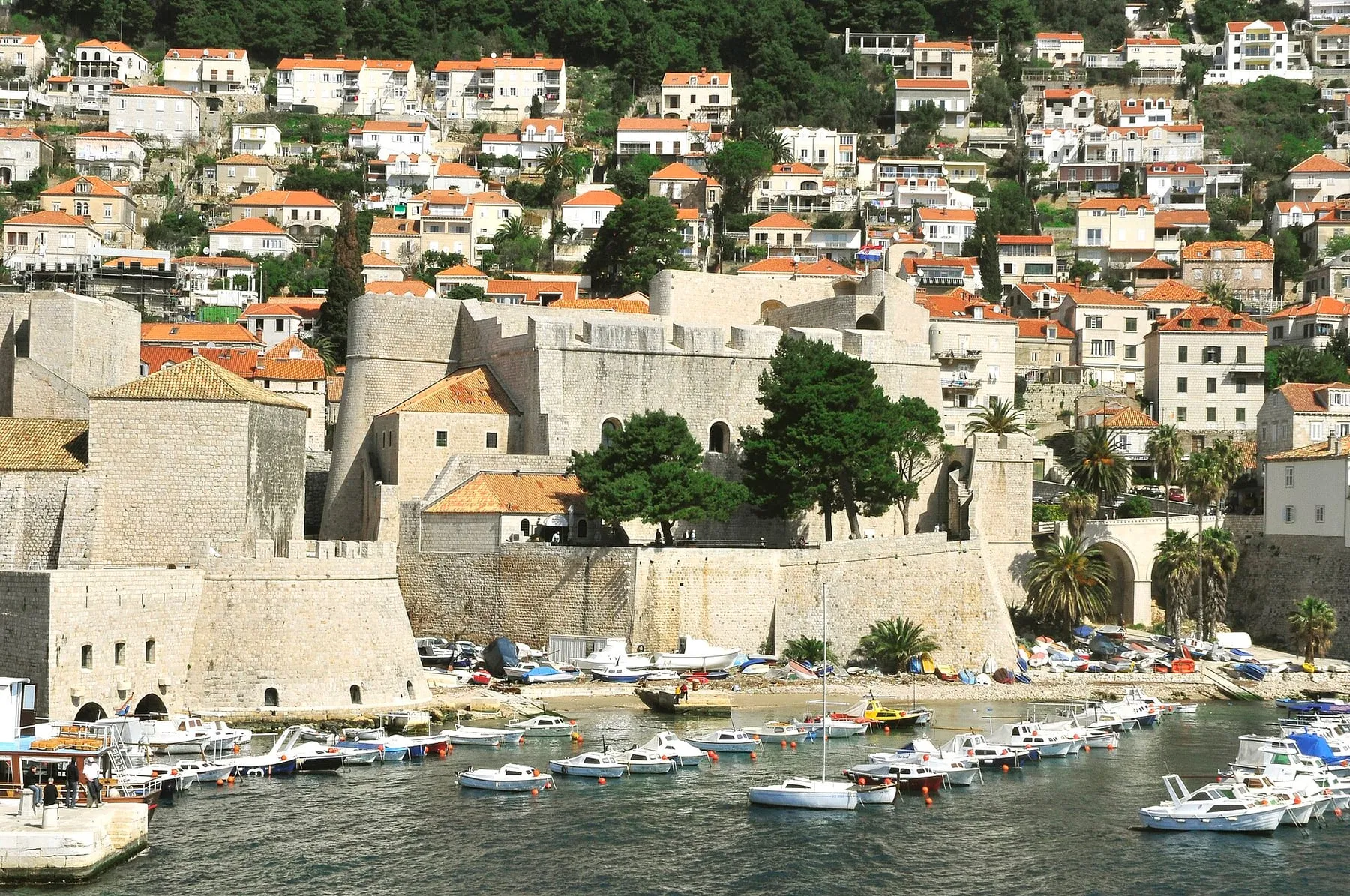 Old Harbour and Revelin Fortress, Dubrovnik. Photo: Carole Raddato, Wikimedia Commons, CC BY-SA 2.0.
Beaches and islands
- In Split: Bačvice is a shallow sandy bay a 10-minute walk east of the ferry terminal, where locals play picigin, keeping a small ball in the air in waist-deep water. West of the centre, the pine-covered Marjan peninsula has pebble coves at Kašjuni and Bene, on city bus 12 from Sv. Frane on the west Riva (€1.50 in the app). From the harbour, the Jadrolinija car ferry reaches Supetar on Brač in 50 minutes for €6.50, Krilo’s catamaran reaches Hvar Town in 50 minutes for €25, and ferries run to Vis (Split day trips).
- In Dubrovnik: Banje sits just east of Ploče Gate, a pebble beach facing the walls, much of it taken by paid loungers. The usual day out is Lokrum, a wooded nature reserve reached by boat from the Old City Port: €30 covers the return crossing and entry (Lokrum). Further out, the Krilo catamaran reaches Mljet, an island with a national park (Dubrovnik day trips).
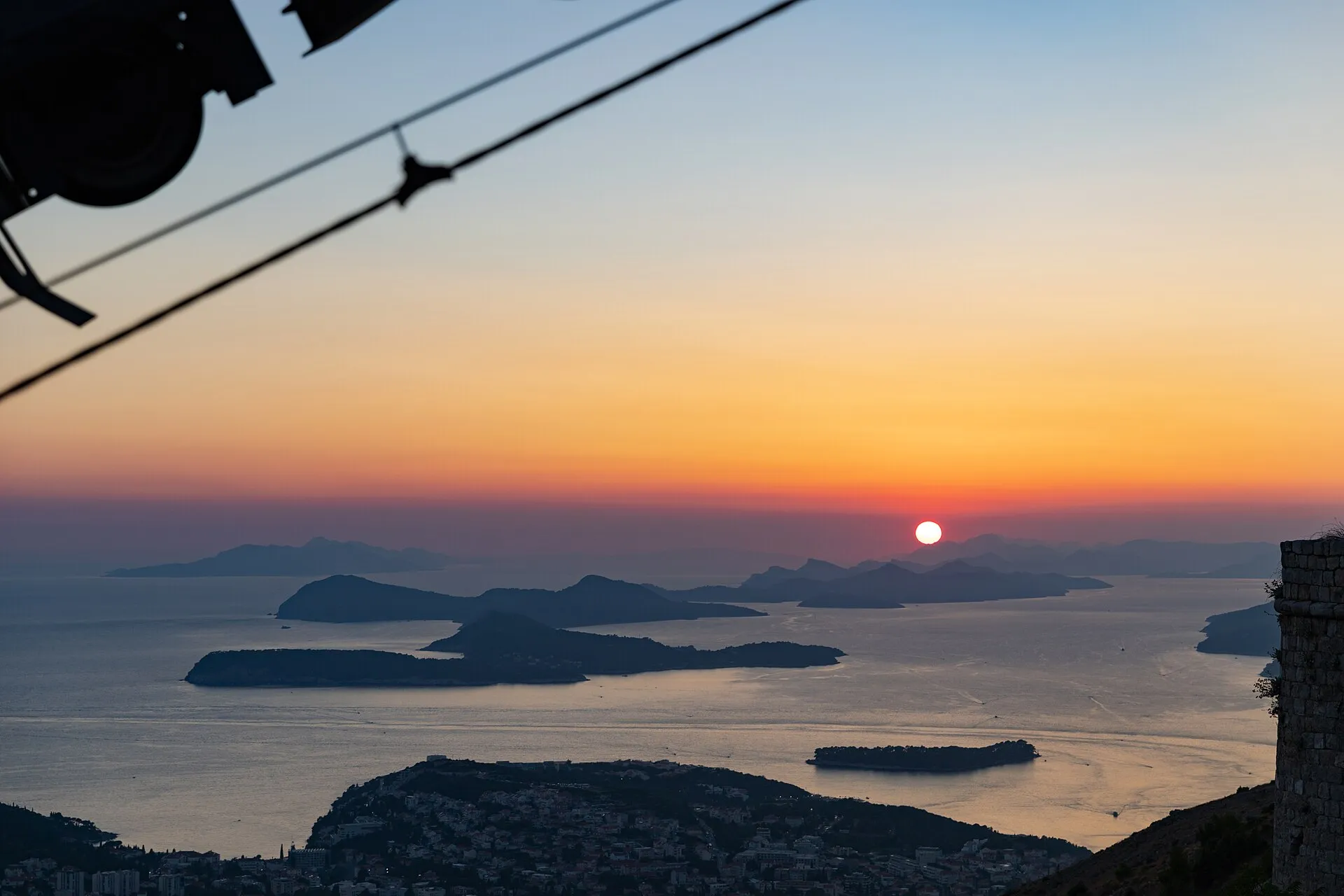 Dubrovnik from the City Walls. Photo: Bernard Gagnon, Wikimedia Commons, CC BY-SA 3.0.
Dining and nightlife
- In Split: taverns (konobas) in Varoš serve Dalmatian peka, meat or octopus slow-cooked under an iron bell, and grilled fish. The Riva and squares inside the palace such as Voćni trg fill with outdoor bar terraces in the evening (where to eat in Split).
- In Dubrovnik: restaurants inside the walls, on Prijeko and Gundulićeva poljana, charge more than those outside. Buža is a bar on the rocks outside the sea walls, reached through an opening in the wall (where to eat in Dubrovnik).
How to travel between them
| Option | When | Journey | Fare |
|---|---|---|---|
| Krilo catamaran | Daily, 1 April to 31 October 2026 | Split 08:00 to Dubrovnik (Gruž) 12:40, calling at Milna (Brač), Hvar, Korčula and Pomena (Mljet); back from Dubrovnik at 15:30 | €50 one way (Krilo) |
| FlixBus coach | All year | Along the coast road | See FlixBus |
Which city suits whom?
- Island hoppers: Split, with ferries and catamarans to Brač, Hvar, Vis and Šolta from one harbour.
- A first walk round a walled town: Dubrovnik, for the walls, Fort Lovrjenac and the Stradun.
- Walkers: Split, for the trails across Marjan and day trips to the Krka National Park waterfalls.
- Game of Thrones fans: Dubrovnik, where the Old Town and Fort Lovrjenac stood in for King’s Landing (Game of Thrones in Dubrovnik).
Where to stay
- In Split: inside Diocletian’s Palace to be in the middle of it, in Varoš for quieter stone lanes, or near Bačvice for the beach. See where to stay in Split.
- In Dubrovnik: inside the Old Town (expect steep stone stairs), or in Ploče or Lapad for sea views and beach hotels. See where to stay in Dubrovnik.
Common questions
Is Split or Dubrovnik better for a first visit to Croatia?
Our judgement: Split if you want island ferries to Brač, Hvar and Vis and a Roman palace you can walk through free, day or night. Dubrovnik if you want to walk the 1,940 m of city walls and see the Old Town rebuilt after the 1667 earthquake.
Which city is more expensive, Split or Dubrovnik?
Dubrovnik's sights cost more: the City Walls are €40 for a November 2026 visit date and €20 in December, the cable car €30 return and the Lokrum boat and entry €30. Split's palace streets and Peristyle are free, and the cellars are €10. The tourist tax is €2.65 a person a night in both cities from 1 April to 30 September 2026.
How do you travel between Split and Dubrovnik?
From 1 April to 31 October 2026 the Krilo catamaran leaves Split at 08:00 and reaches Dubrovnik (Gruž) at 12:40, calling at Milna on Brač, Hvar, Korčula and Pomena on Mljet; the fare is €50. FlixBus runs coaches between the two cities all year.