One of 2 self-guided walks in Rome. See every walk.
In this guide
💡 The Short Version: Start at Piazza Mattei, 200 m from Largo di Torre Argentina, and finish on the Gianicolo terrace: 3.1 km, about 45 minutes of walking, the last 1.2 km uphill, and most of a day with the stops. Walk it on a weekday morning. The Jewish Museum and the Great Synagogue are closed on Saturdays, Santa Cecilia shuts from 12:30 to 16:30, and the Gianicolo cannon fires at noon: start at 8:30 on a Friday, when the museum opens at 9:00, and you reach the terrace for it. Or book a tour: the Trastevere and Roman Ghetto guided walkad (from £42.42, 2 hours) covers the same two districts with a guide.
The route
Map of the walk numbered stops in walking order
Open the whole route in Google Maps - all the stops in walking order, set to walking directions, which is the version to put on your phone.
The route starts in the old Ghetto, crosses the Tiber by way of the island and climbs through Trastevere to the Gianicolo, the ridge on the river’s west bank. Prices are the adult rate in euros from each operator.
| Stop | Entry (adult) | Open |
|---|---|---|
| 1. Piazza Mattei | Free | Always |
| 2. The Portico d’Ottavia | Free to see from the street | Always |
| 3. The Great Synagogue and the Jewish Museum | €12 | Friday 9:00 to 14:00; Sunday to Thursday from 10:00, to 17:00 until 26 October 2026; closed Saturdays |
| 4. Tiber Island | Free | San Bartolomeo Monday to Saturday 9:30 to 13:30 and 15:30 to 17:30 |
| 5. Santa Cecilia in Trastevere | Basilica; fresco and excavations at set hours | Monday to Saturday 10:00 to 12:30 and 16:30 to 18:30 |
| 6. Santa Maria in Trastevere | Free | Outside services |
| Detour: Villa Farnesina | €12 | Monday to Saturday 9:00 to 14:00; closed Sundays |
| 7. The Fontana dell’Acqua Paola | Free | Always |
| 8. The Gianicolo terrace | Free | Always; the cannon at noon |
Walk it with a guide
A guide gives the history of the Ghetto and the stories of Trastevere, and the first two tours below cover both districts. Prices are GetYourGuide’s lowest “from” prices, per person.
- Rome: Trastevere and Roman Ghetto Guided Walking Tourad: from £42.42, 4.6 stars from 129 reviews, 2 hours. The guide waits by the main fountain of the square where the tour starts.
- Rome: Trastevere and Jewish Ghetto Street Food Walking Tourad, by Rosy Smart City Tours: from £38.25, 4.8 stars from 172 reviews, 2 to 2.5 hours, with express, small-group and private options and street food on the way.
- Rome: Underground Trastevere Guided Walking Tourad, by Touriks: from £54.40, 4.8 stars from 98 reviews, 2 hours. It stays in Trastevere, goes into historic underground passages with ancient frescoes, and meets at Piazza Giuseppe Gioachino Belli.
1. Piazza Mattei and the Turtle Fountain
Free · open always · 200 m from Largo di Torre Argentina
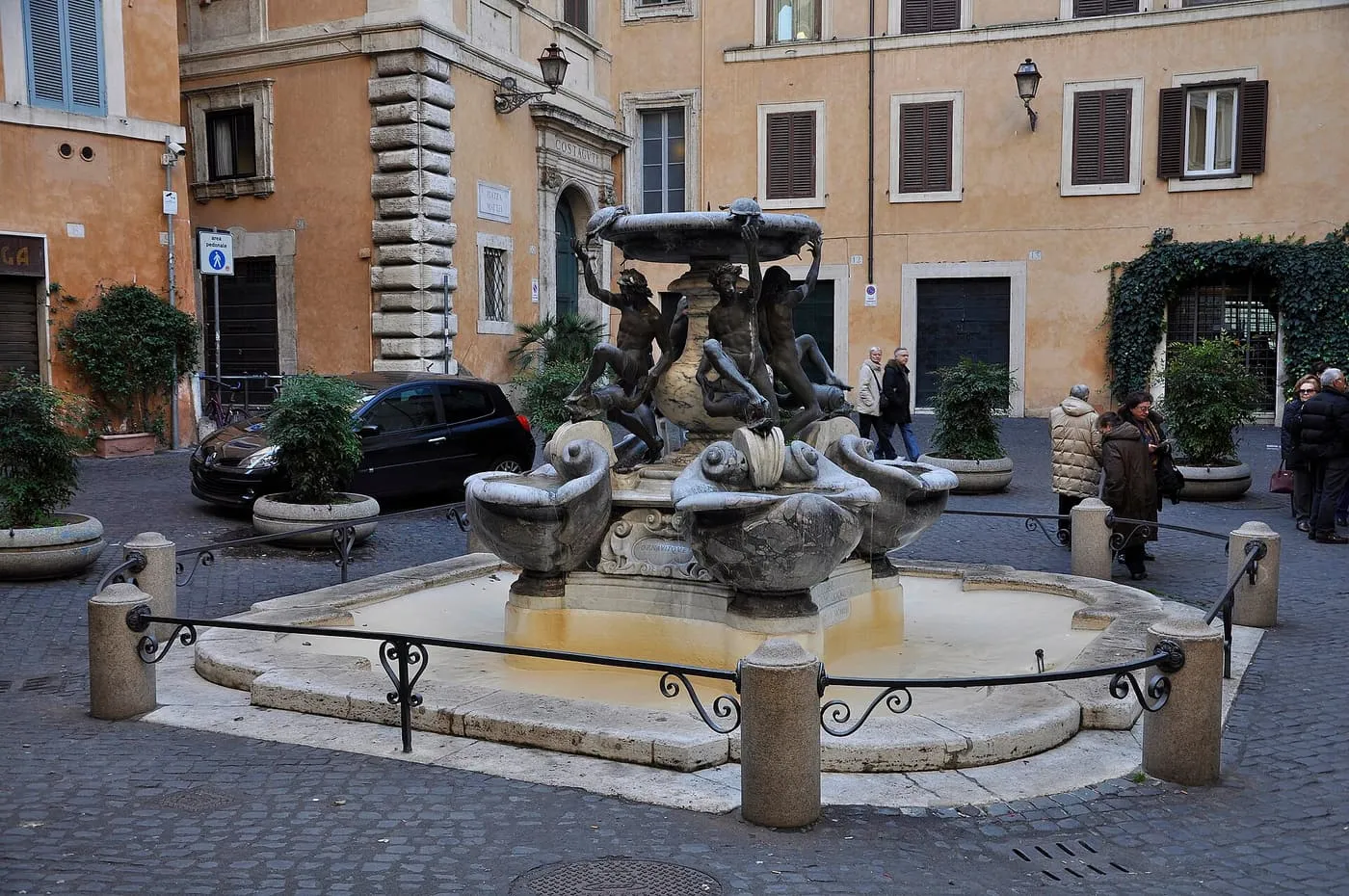
The Turtle Fountain in Piazza Mattei. Photo: Paul Hermans, Wikimedia Commons, CC BY-SA 3.0.
The small square is 200 m from Largo di Torre Argentina, where the historic centre walk ends, and is the quiet edge of the old Ghetto. Four bronze youths stand on the Turtle Fountain, which was finished in 1588 and has turtles on the rim of its upper basin that were added in the 17th century.
- The Ghetto: Pope Paul IV ordered the Jews of Rome into a walled quarter in 1555. It was abolished in 1870, when Rome joined the Kingdom of Italy.
- Via della Reginella, the lane that leaves the south side of the square, is one of the few streets that survive from the old Ghetto. It comes out on the Via del Portico d’Ottavia.
2. The Portico d’Ottavia
Free to see from the street, open always · the Via del Portico d’Ottavia is the main street of the Ghetto
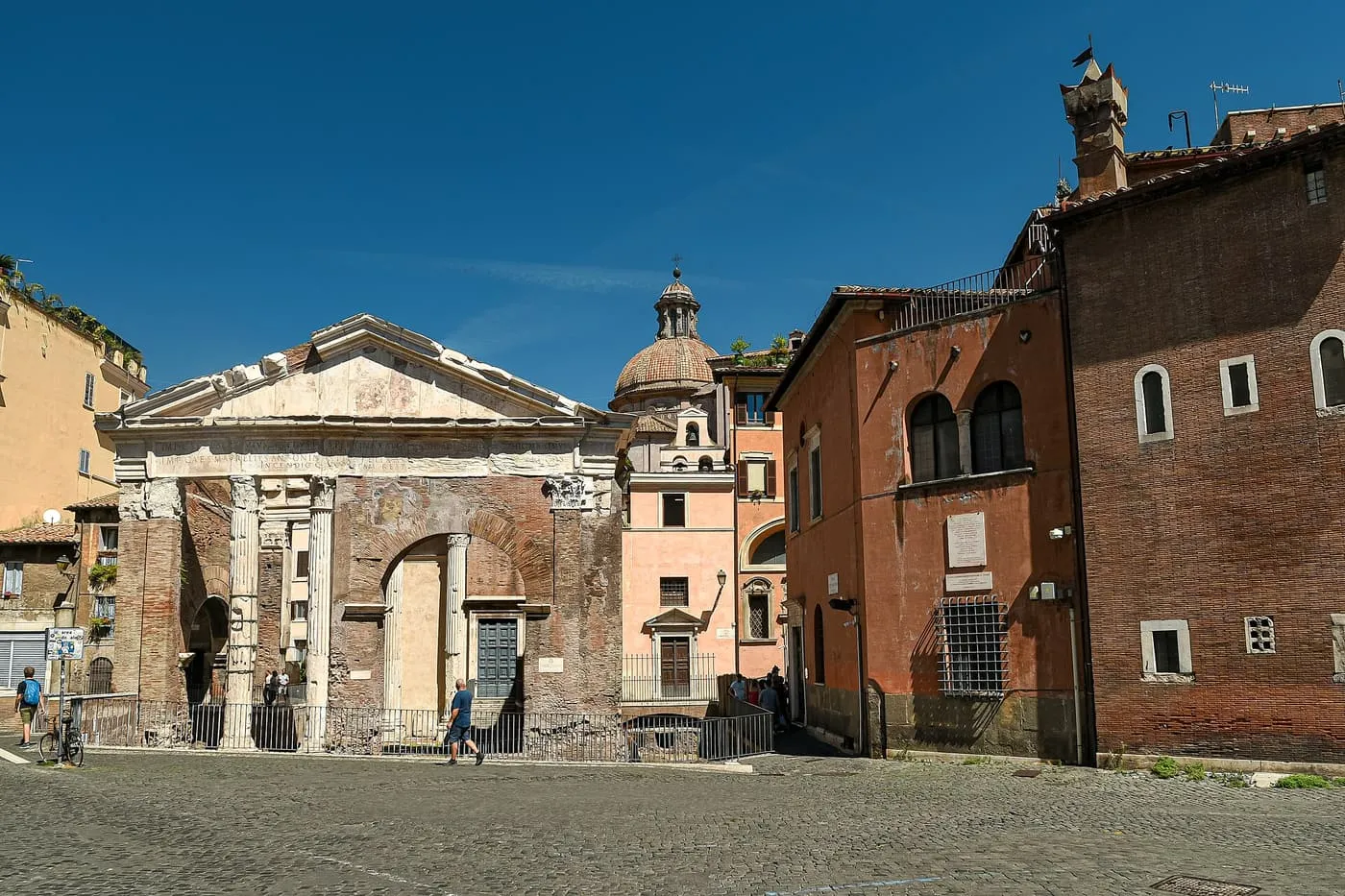
The Portico d’Ottavia. Photo: Jorge Franganillo, Wikimedia Commons, CC BY 2.0.
A colonnaded entrance to a Roman temple precinct, first built in 146 BC and rebuilt by Augustus, who dedicated it to his sister Octavia. In the Middle Ages a church, Sant’Angelo in Pescheria, was built into the ruin and named for the fish market that stood among the columns. The Teatro di Marcello, begun by Julius Caesar and finished by Augustus, stands a few steps away.
- The square beside it is named Largo 16 Ottobre 1943, for the day German troops rounded up more than a thousand of Rome’s Jews.
- The street has Roman-Jewish restaurants and bakeries. See where to eat.
3. The Great Synagogue and the Jewish Museum
€12 for the museum and the synagogue, plus a service fee if you book online · Friday 9:00 to 14:00 · Sunday to Thursday from 10:00 · closed on Saturdays and on Jewish holidays
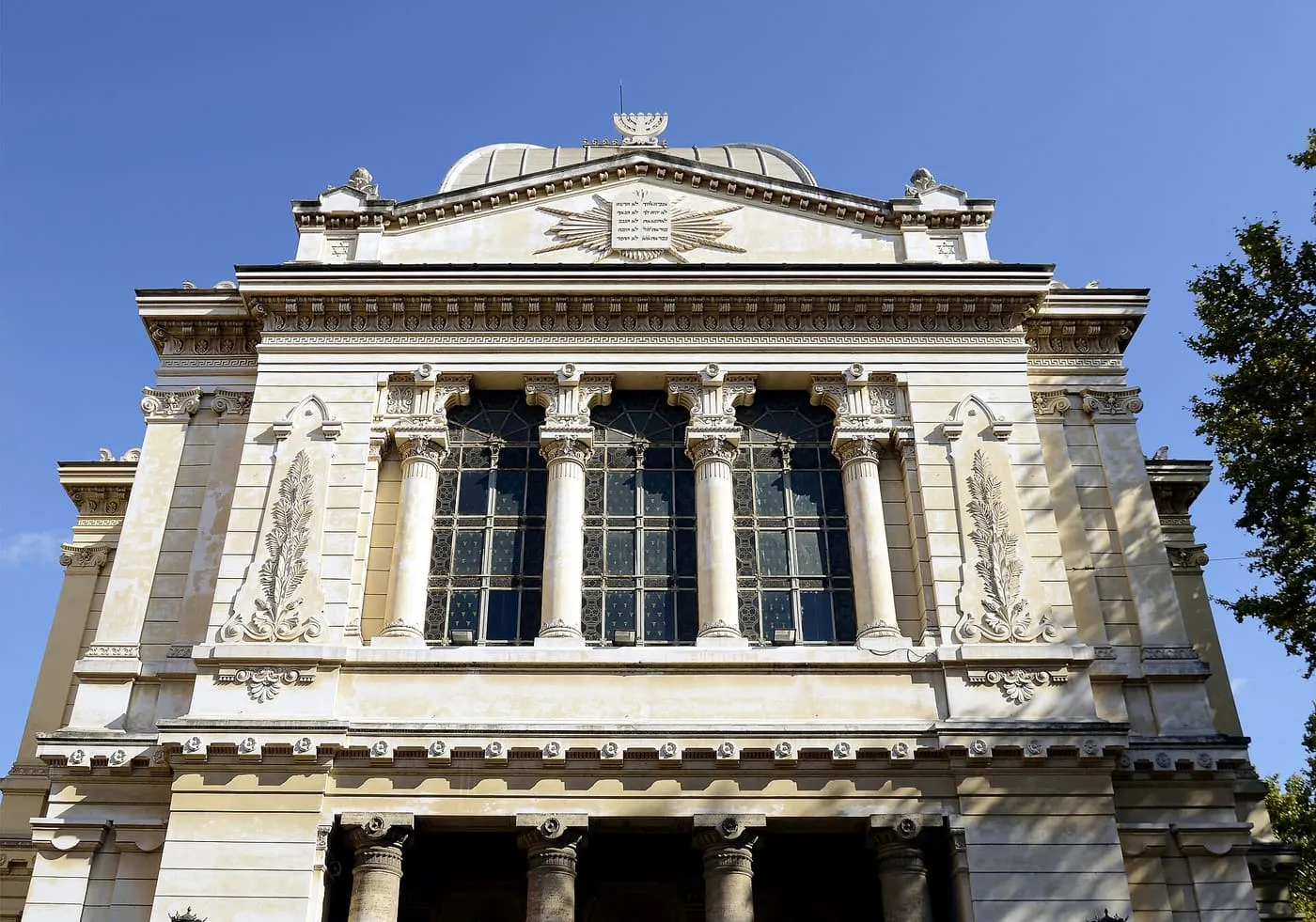
The Great Synagogue of Rome. Photo: Livioandronico2013, Wikimedia Commons, CC BY-SA 4.0.
The Tempio Maggiore stands on the river side of the old Ghetto. Once the Jews of Rome gained full civil rights in 1870, the community chose to build the most imposing synagogue in the city in the same quarter, and it was opened in 1904. The Jewish Museum of Rome occupies the same complex.
- Hours: Sunday to Thursday 10:00 to 17:00 (last entry 16:15) until 26 October 2026, 10:00 to 16:30 (last entry 15:45) from 27 October to 9 November, and 10:00 to 16:00 (last entry 15:15) from 10 November to 11 January. Fridays are 9:00 to 14:00 (last entry 13:15) in all three periods.
- Closed on Saturdays and during Jewish holidays; the museum publishes its closing days for the year.
- The ticket includes the museum, with a free audio guide in seven languages that you play through a QR code on your own phone. Book on the museum’s booking site.
- Guided visits of the museum and the synagogues are booked online at least five days ahead.
4. Tiber Island
Free · San Bartolomeo all’Isola: Monday to Saturday 9:30 to 13:30 and 15:30 to 17:30, Sunday 9:30 to 13:00 and 15:30 to 17:30
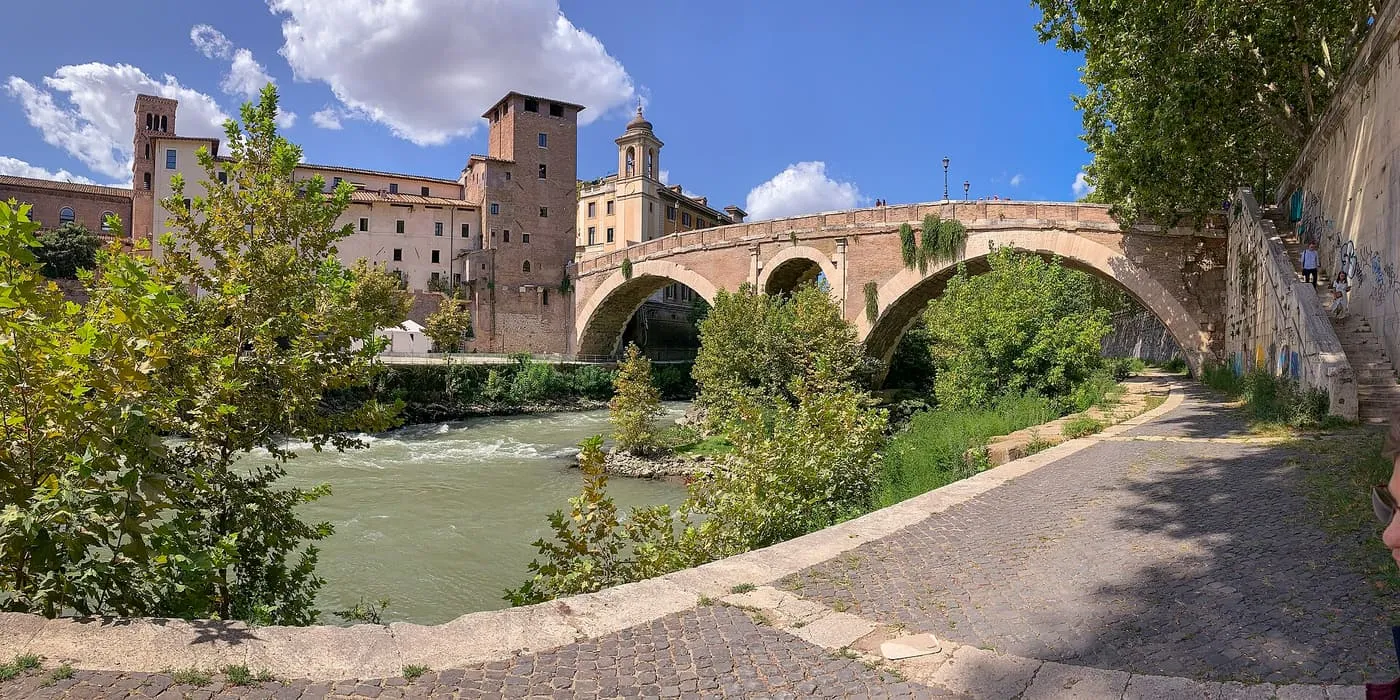
Ponte Fabricio and Tiber Island. Photo: Nicholas Hartmann, Wikimedia Commons, CC BY-SA 4.0.
Walk down from the synagogue to Ponte Fabricio, built in 62 BC and still in use, and cross to the island, a boat-shaped bank in the river with a temple of Aesculapius, the god of healing, in antiquity and a hospital today. The church of San Bartolomeo all’Isola stands in the square in the middle, and holds relics of the apostle Bartholomew. A second bridge, Ponte Cestio, takes you across to Trastevere.
- San Bartolomeo is shut in the middle of the day, from 13:30 to 15:30 on weekdays and Saturdays.
5. Santa Cecilia in Trastevere
Basilica free · Monday to Saturday 10:00 to 12:30 and 16:30 to 18:30 · Sundays and holidays 11:30 to 12:30 and 16:30 to 18:00 · closed between 12:30 and 16:30
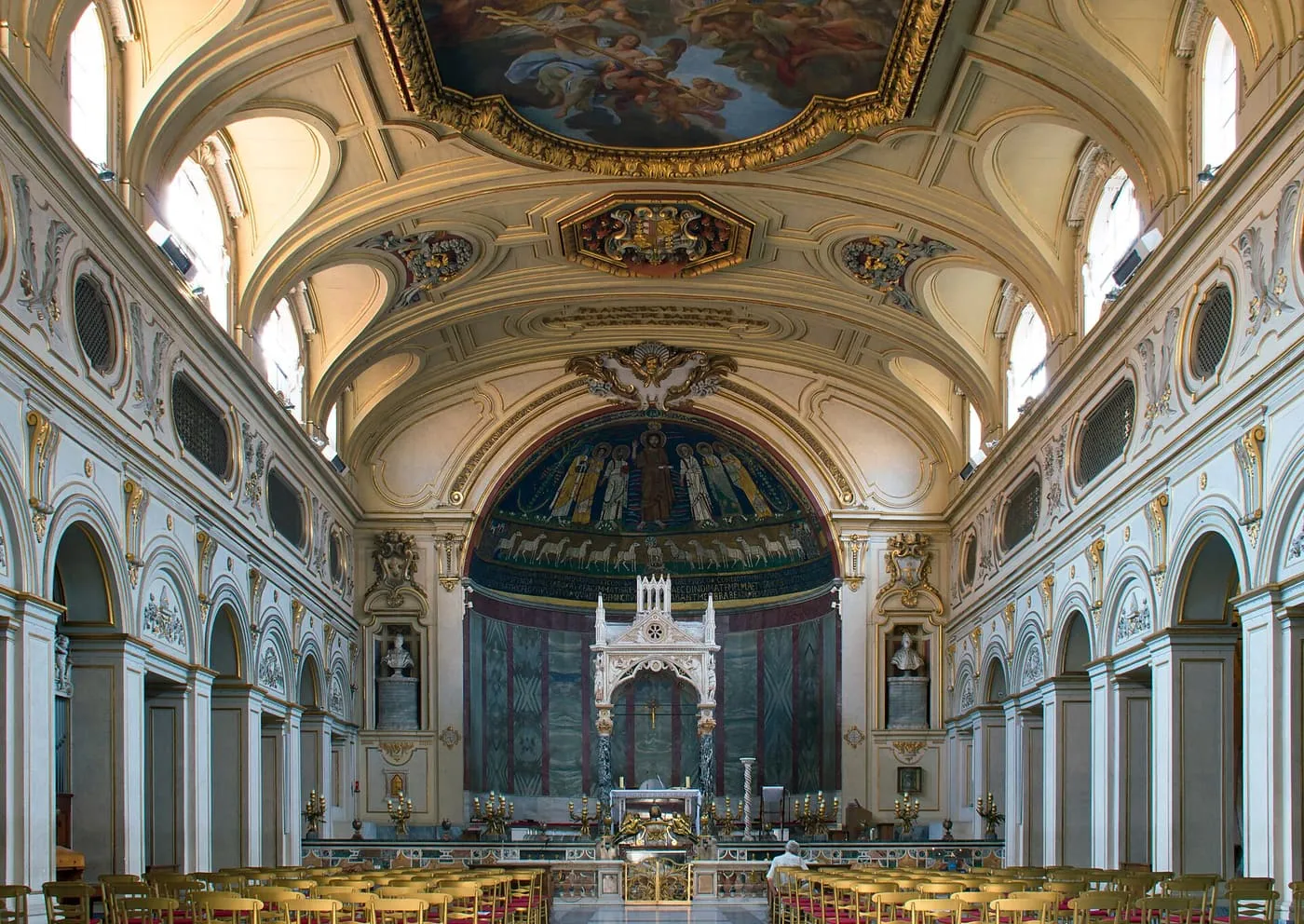
The nave and apse of Santa Cecilia in Trastevere. Photo: Livioandronico2013, Wikimedia Commons, CC BY-SA 4.0.
From Ponte Cestio, follow the Via Anicia to the church of Saint Cecilia, the patron of music, who is said to have been martyred in the 3rd century in a house on this spot. A Benedictine convent runs the basilica.
- The Last Judgement by Pietro Cavallini, the 13th-century fresco, is in the nuns’ choir and is shown on weekdays and Saturdays from 10:00 to 12:30, and on Sundays and holidays from 11:30 to 12:30.
- The excavations under the church, the remains of Roman houses, are visited in the same hours as the basilica.
- Time it: the church shuts for the middle of the day, so arrive before 12:30 or after 16:30.
6. Santa Maria in Trastevere
Free · open to visitors outside services
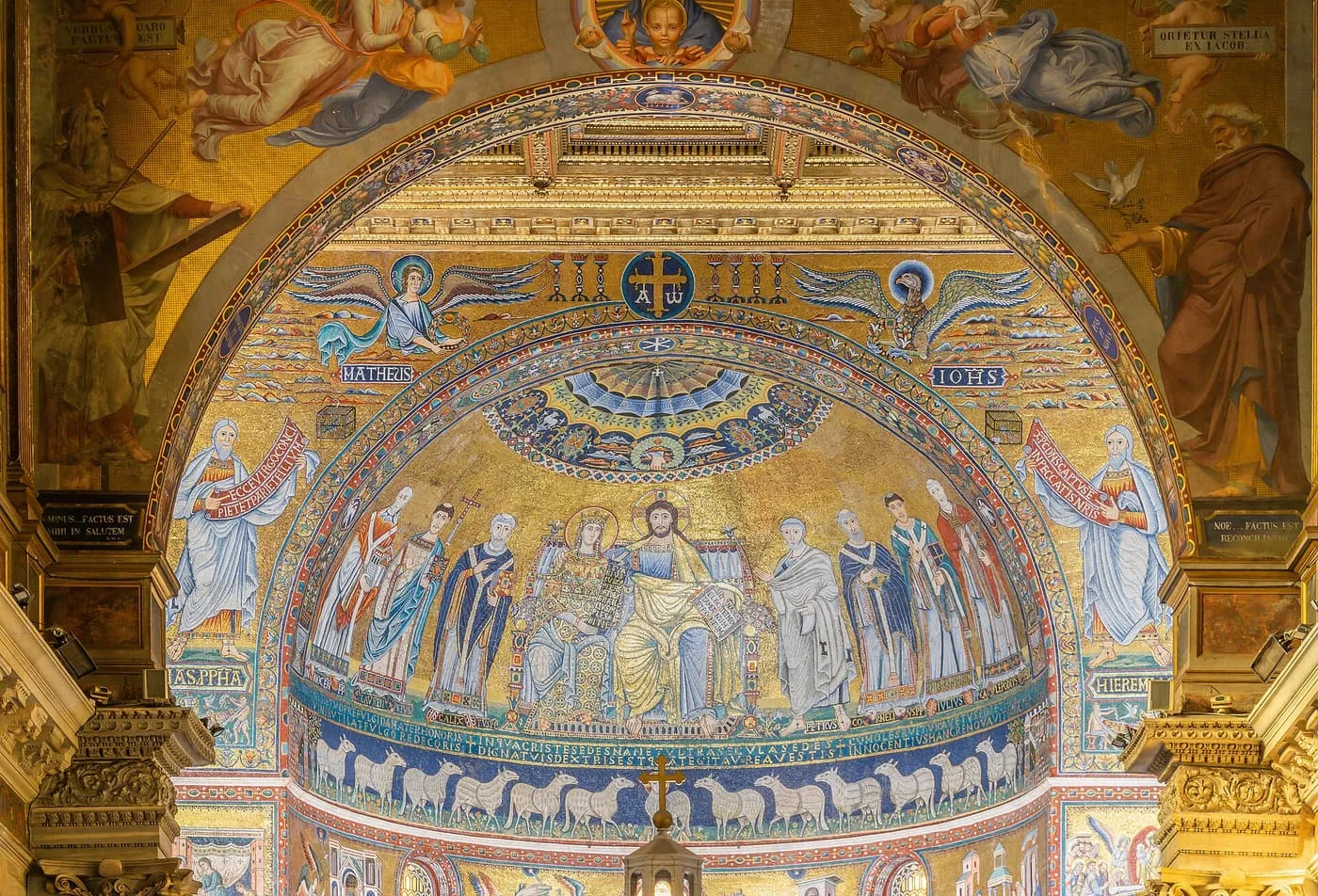
The apse mosaics of Santa Maria in Trastevere. Photo: Krzysztof Golik, Wikimedia Commons, CC BY-SA 4.0.
The route runs on by the Via dei Genovesi and the Via della Lungaretta to the square of Santa Maria in Trastevere, with a fountain in the middle and the church at one end. The mosaics in the apse were made around 1140, after the death of Pope Innocent II, whom they show holding a model of the church, and the scenes of the Virgin’s life below were added by Pietro Cavallini in 1291.
- The square is the heart of Trastevere, with cafés round the fountain.
Detour: Villa Farnesina
€12 · Monday to Saturday 9:00 to 14:00, last entry 13:15 · closed on Sundays, open 9:00 to 17:00 on the second Sunday of the month
Skip this unless you are here before 14:00: it adds about 560 m. The villa on the Via della Lungara, reached by the Via della Scala from the square, was built in the early 16th century for the banker Agostino Chigi and holds Raphael’s fresco of Galatea and the Loggia of Cupid and Psyche. Book ahead on the villa’s site.
- Second Sundays: 11 October, 8 November and 13 December 2026, when it stays open until 17:00 (last entry 16:15).
7. The Fontana dell’Acqua Paola
Free · open always
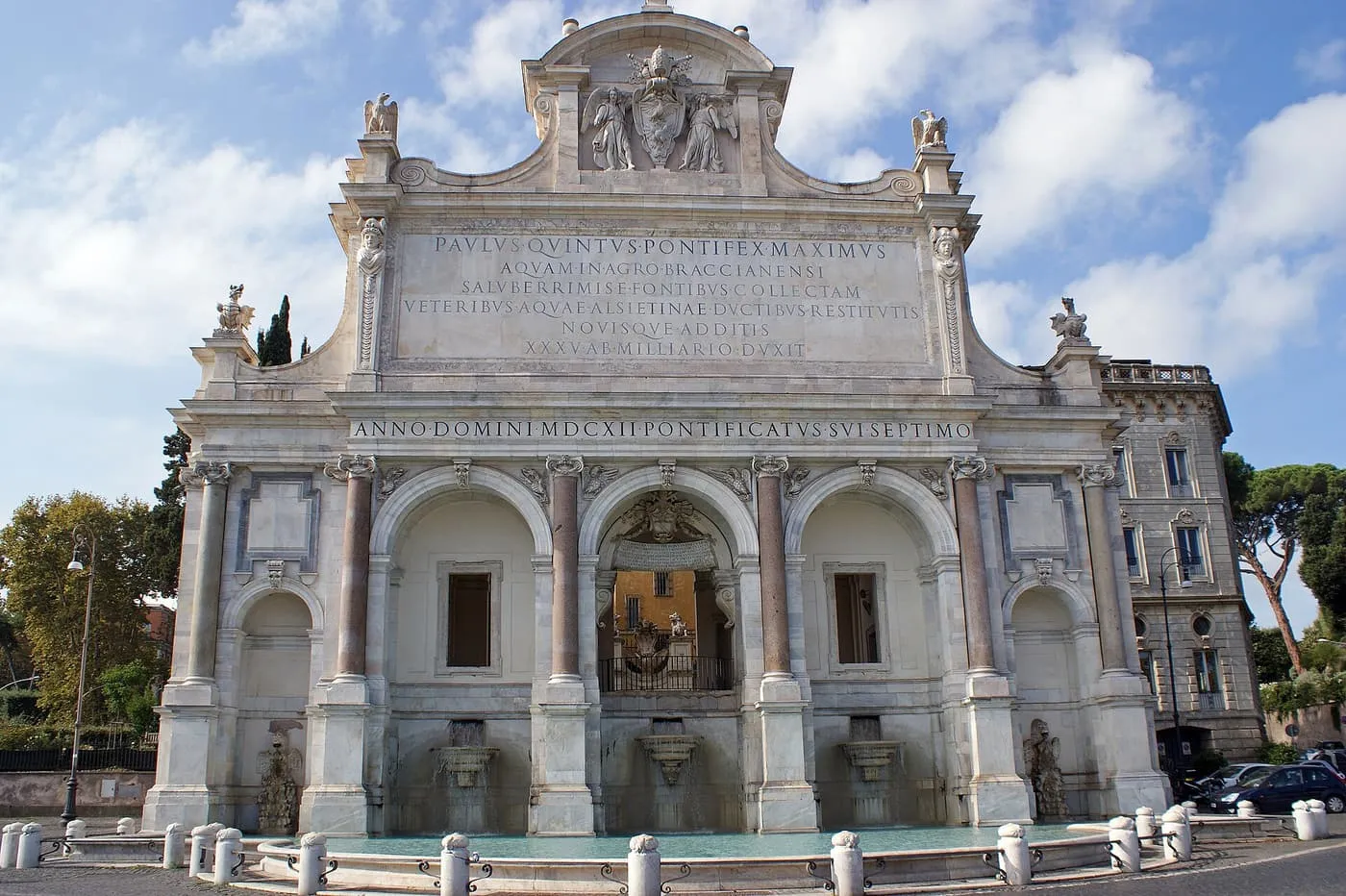
The Fontana dell’Acqua Paola. Photo: Randi Hausken, Wikimedia Commons, CC BY-SA 2.0.
From the square, the Via della Paglia and the Via di Porta San Pancrazio climb to the Fontanone, the “big fountain”, built in 1612 for Pope Paul V. Its inscription records that he brought the water from the Bracciano area, 35 miles away, along an ancient aqueduct that he restored. From the basin the Passeggiata del Gianicolo leads on to the terrace.
8. The Gianicolo terrace
Free · open always · the cannon fires at noon, every day
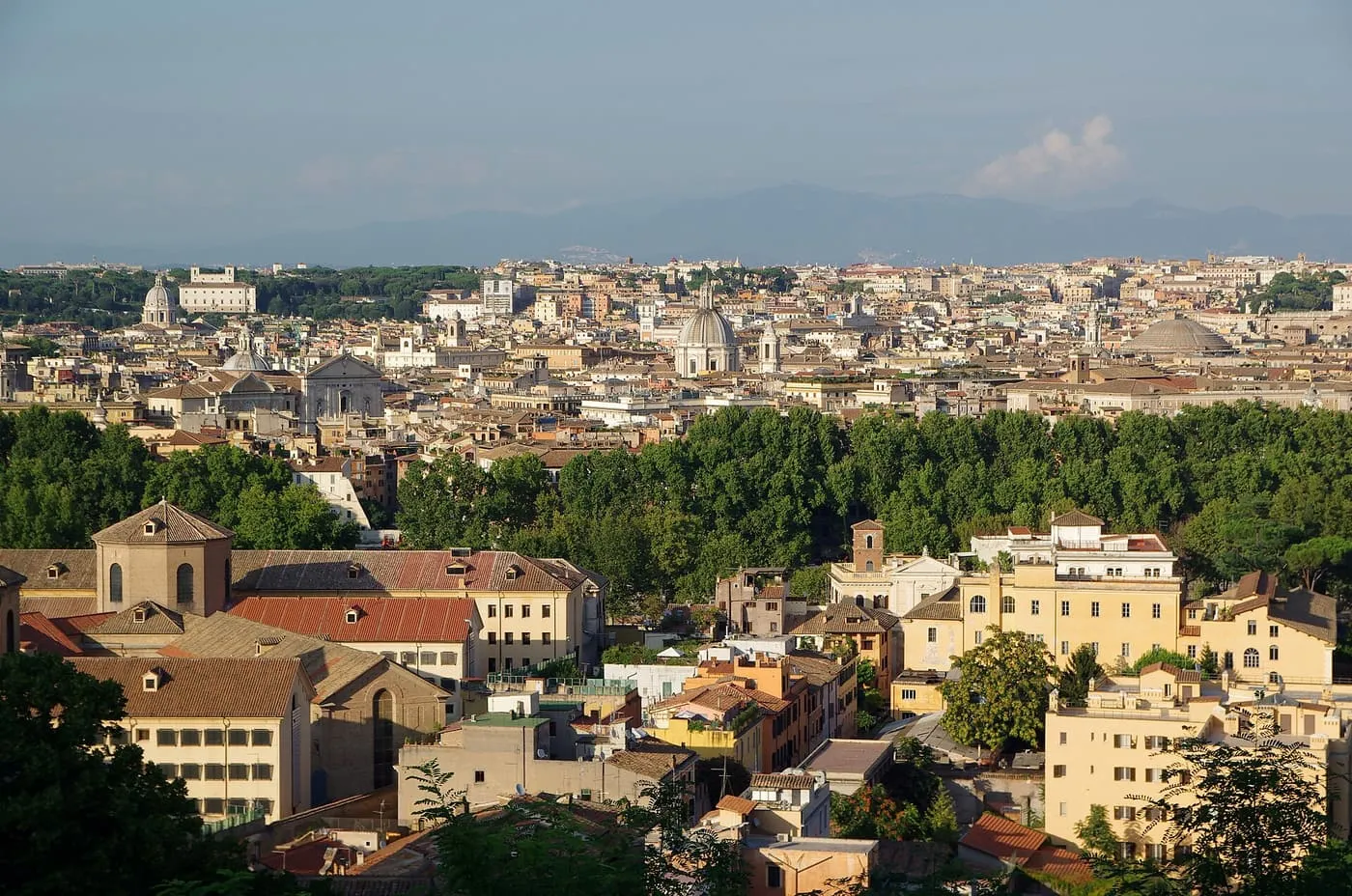
Rome from the Gianicolo. Photo: Jakub Hałun, Wikimedia Commons, CC BY-SA 4.0.
The terrace under the equestrian monument to Giuseppe Garibaldi, by Emilio Gallori, looks across the roofs of the old centre. The Gianicolo is on the west bank, outside the seven hills of ancient Rome. A blank cannon shot is fired from beneath the monument at noon every day, a custom that Pope Pius IX started on 1 December 1847 so that the church bells of Rome could keep one time.
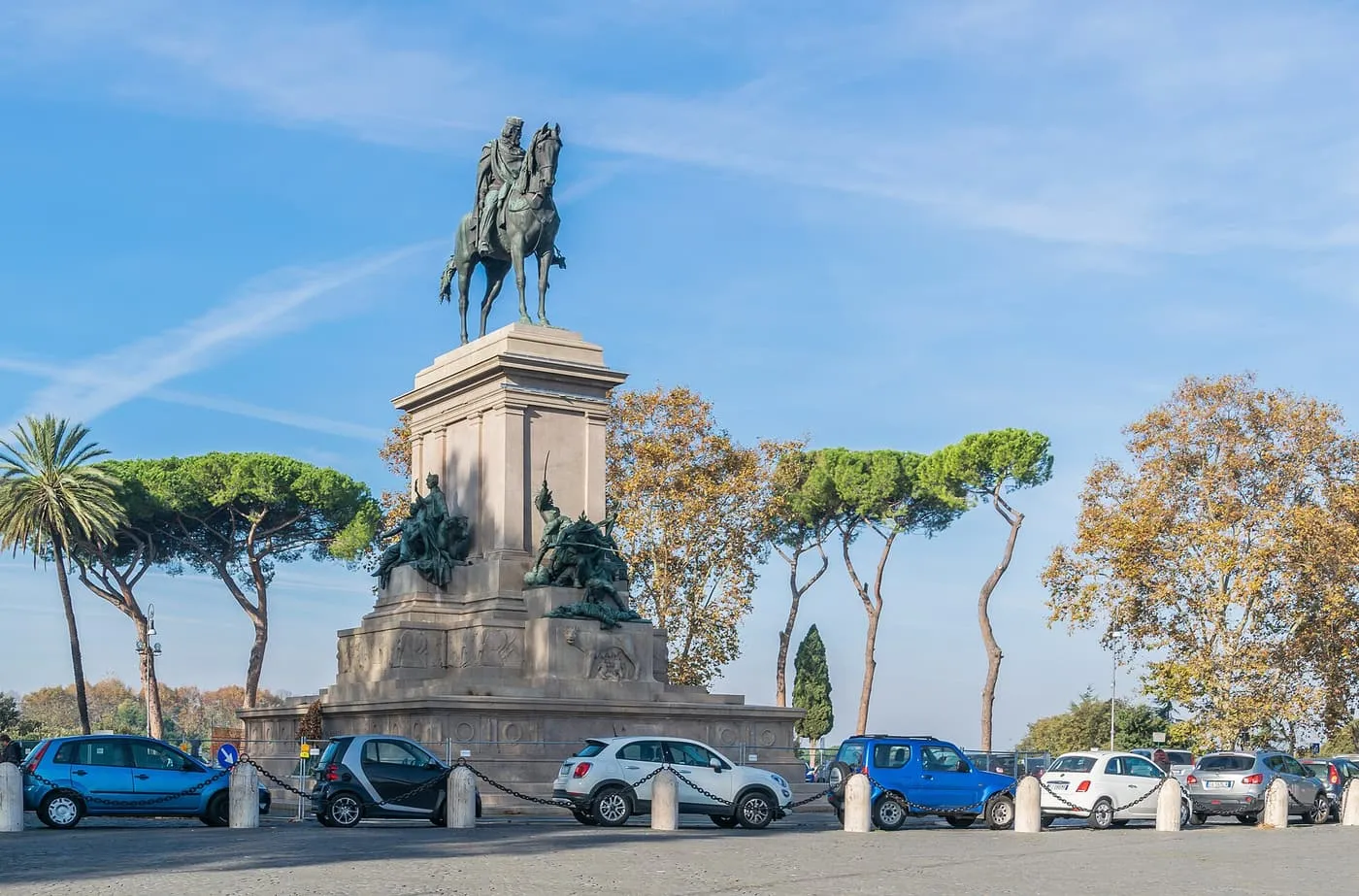
The Garibaldi monument on the Gianicolo. Photo: Krzysztof Golik, Wikimedia Commons, CC BY-SA 4.0.
- The cannon: a Second World War howitzer, charged with a kilogram of gunpowder, has been used since 1991. Be on the terrace before noon.
- Down: the Passeggiata and the steps of the Via del Mattonato lead down to Piazza Trilussa and Ponte Sisto, about 850 m. See Getting there and back.
Where to eat
Nonna Betta
Via del Portico d’Ottavia 16 · closed on Tuesdays · book online
A kosher-style restaurant in the Ghetto, cooking Roman-Jewish dishes handed down in the family, with two separate menus, meat on one and fish and cheese on the other. Order the carciofo alla giudia, a whole artichoke fried flat until the leaves are crisp. Stop here after stop 3.
Da Enzo al 29
Via dei Vascellari 29, Trastevere · no bookings
A tiny trattoria with chequered tablecloths and a handful of tables outside, named by 13 sources in the where to eat in Rome ranking. Order the carbonara, the meatballs and the artichokes, and arrive at least 30 minutes before it opens, because it takes no reservations.
Checco er Carettiere
Via Benedetta 10, Trastevere · open daily 12:00 to 15:00 and 19:00 to 24:00 · book online
On the way back down from the Gianicolo, a trattoria for the traditional carbonara, the amatriciana and artichokes. It stays open until midnight.
The best day to go
| Day | What changes on the route |
|---|---|
| Monday to Thursday | All open. The Jewish Museum opens at 10:00 and the Villa Farnesina at 9:00 |
| Friday | The Jewish Museum opens at 9:00 and closes at 14:00, the Villa Farnesina closes at 14:00. The best day to reach the terrace at noon |
| Saturday | The Jewish Museum and the Great Synagogue are closed. Santa Cecilia and the Villa Farnesina are open |
| Sunday | The Villa Farnesina is closed, except on 11 October, 8 November and 13 December 2026. Santa Cecilia opens at 11:30. The Jewish Museum opens at 10:00 |
The timing that works: leave Piazza Mattei at 8:30 on a Friday. The Jewish Museum and the synagogue open at 9:00, you can be at Santa Cecilia when it opens at 10:00, in Santa Maria in Trastevere by 11:00, and on the terrace before noon for the cannon. From Sunday to Thursday the museum opens at 10:00, which puts you on the terrace after the cannon: choose the museum or the cannon, and see the other on another day.
What closes:
- 27 October 2026: the Jewish Museum moves to winter hours, closing at 16:30, and from 10 November at 16:00.
- Saturdays and Jewish holidays: the Jewish Museum is shut.
- 12:30 to 16:30 daily: Santa Cecilia is shut.
- Sundays: the Villa Farnesina is shut, apart from the second Sunday of the month.
What does not close: the streets and squares, the Portico d’Ottavia, Tiber Island, the Fontanone and the Gianicolo terrace. A Saturday still makes a good walk: the Ghetto and the island are as they are, and Santa Cecilia, the Villa Farnesina and the terrace are open. Only the museum and the synagogue are missing.
Getting there and back
- To the start: Piazza Mattei is 200 m from Largo di Torre Argentina, where buses stop and tram 8 starts. The ticket choices, including tapping a bank card, are in Rome public transport.
- From the end: walk down. The Passeggiata and the Via del Mattonato lead to Piazza Trilussa and Ponte Sisto, about 850 m or 10 minutes, and Ponte Sisto leads across the river to Campo de’ Fiori. Tram 8 runs along Viale di Trastevere to Largo di Torre Argentina.
- In reverse: the route works down from the Gianicolo too, but you reach Santa Cecilia and the Jewish Museum late in the day, after the noon cannon.
What to do with the rest of the day
- The historic centre: the historic centre walk runs from Piazza del Popolo to Largo di Torre Argentina, 200 m from the start of this one.
- Food: Rome food tours compares the street-food walks through the Ghetto and Trastevere.
- The whole trip: Rome in one or two days and 3 days in Rome build the days round the bookings, and what to book before you go to Rome has the rest of the tickets. To sleep in the area, where to stay in Rome compares the districts, Trastevere among them.
Common questions
How long is the walk through the Jewish Ghetto and Trastevere?
3.1 km from Piazza Mattei to the Gianicolo terrace, measured along the streets: about 45 minutes of walking, with the last 1.2 km uphill. With the Jewish Museum, two churches and a lunch it takes most of a day.
Can you visit the Great Synagogue of Rome?
Yes, with a ticket for the Jewish Museum of Rome, which covers the museum and the synagogue: €12, plus a service fee if you book online. The museum is closed on Saturdays and on Jewish holidays, and opens at 9:00 on Fridays and 10:00 on Sundays to Thursdays.
What time does the Gianicolo cannon fire?
At noon every day, a blank shot from beneath the Garibaldi monument on the terrace. The custom began in 1847 and the present howitzer has been in use since 1991.
Is the Ghetto and Trastevere walk free?
The streets, the squares, Tiber Island, the Fontanone and the Gianicolo cost nothing, and so does the church of Santa Maria in Trastevere. The Jewish Museum and the Great Synagogue are €12 and the Villa Farnesina, a detour, is €12.
Which day is best for the Ghetto and Trastevere walk?
Friday morning, or a weekday morning from 10:00. The Jewish Museum is closed on Saturdays, Santa Cecilia shuts from 12:30 to 16:30, the Villa Farnesina closes at 14:00 and all day on Sundays, and the Gianicolo cannon fires at noon.
How do you get back from the Gianicolo?
On foot: the way down by the Passeggiata del Gianicolo and the Via del Mattonato to Piazza Trilussa is about 850 m and takes 10 minutes, and Ponte Sisto there leads across the river to Campo de' Fiori. Tram 8 runs along Viale di Trastevere to Largo di Torre Argentina.