In this guide
💡 The Short Version: Foreign visitor tickets to Wat Arun (The Temple of Dawn) are bought at the ticket kiosk by the river pier. Wat Arun stands on the Thonburi (west) bank of the Chao Phraya River and is reached by the cross-river ferry from Tha Tien Pier (beside Wat Pho). Visitors can climb the lower terraces of the central prang, covered in Chinese porcelain mosaics. For photography, the best view is at sunset from the rooftop bars on the opposite east bank. Or book a tour: the five-hour guided tour of the Grand Palace, Wat Pho and Wat Arunad (from ฿750, 4.8 stars from 6,053 reviews) takes a group of up to ten and crosses the river by boat.
Tickets
| Ticket category | Price |
|---|---|
| Foreign adult visitor | Paid at the ticket kiosk by the pier |
| Thai citizen | Free |
- Timing your visit: arriving early avoids the midday heat and the tour groups arriving from the Grand Palace. The late-afternoon light brings out the colours of the ceramic mosaics.
Tours that include Wat Arun
The temple ticket is bought at the kiosk whichever way you arrive. A tour adds a guide or a view from the water. All of these are sold on GetYourGuide.
Small group, Wat Arun with the palace and Wat Pho
From ฿750 · 4.8 stars from 6,053 reviews · 5 hours · groups of up to 10
Bangkok: Grand Palace, Wat Pho and Wat Arun Guided Tourad: an English-speaking guide takes a group of no more than ten round the three temples, with a boat ride. It meets outside Golden Place at Tha Chang pier and ends at Tha Tien pier. The listing says the entrance fees are bought at the official counters on the day.
Half-day guided walk
From ฿700 · 4.8 stars from 467 reviews · 4 hours · walking
Bangkok: Half-Day Guided Tour of the Grand Palace, Wat Pho & Wat Arunad: a licensed English-speaking guide, a bottle of water and the ferry across the river, starting at the palace gate. Entry fees are not included; the listing puts them at 500 THB for the palace, 300 THB for Wat Pho and 200 THB for Wat Arun.
Long-tail boat on the canals
From ฿585 · 4.5 stars from 5,673 reviews · 1 to 2 hours · boat
Bangkok Long-tail Boat Canal Tour Wat Arun & Big Buddha Viewsad: a two-hour ride in a Thai long-tail boat through the canals on the Thonburi side, with views of Wat Arun. It is a boat tour, so it does not include entry to the temple.
Canal tour ending beside Wat Arun
From ฿508 · 4.5 stars from 393 reviews · 2 hours · boat
Bangkok: Canal Long-Tail Boat Tour: Wat Paknam & Local Lifead: a long-tail boat tour of the historic canals that stops at the Big Buddha at Wat Paknam and finishes beside Wat Arun on the Chao Phraya.
Official ticket or tour: the prices side by side
Official prices from the Grand Palace and Wat Pho; Wat Arun’s ticket is paid at its kiosk. The GetYourGuide column is the “from” price in baht.
| What you want | Official | On GetYourGuide |
|---|---|---|
| Wat Arun on its own, no guide | The ticket kiosk by the pier, plus the ferry fare in cash | |
| Wat Arun with a guide, the palace and Wat Pho | 500 THB (palace) and 300 THB (Wat Pho), plus the Wat Arun kiosk ticket | From ฿750 for the group tour, entry fees extra |
| Wat Arun from the water | From ฿585 for a long-tail boat tour, no temple entry |
For the temple alone, the kiosk is the better buy: no tour is needed to cross on the ferry or climb the terraces. A boat tour is the way to see the temple from the river without crossing on the ferry.
The porcelain prang: architecture and history
Wat Arun Ratchawararam Ratchawaramahawihan dates back to the Ayutthaya period, when it was known as Wat Makok. When King Taksin established his new capital at Thonburi in 1768 after the fall of Ayutthaya, he arrived at the temple at daybreak and renamed it the Temple of Dawn (Wat Chaeng). It briefly housed the sacred Emerald Buddha before King Rama I moved the capital across the river to Bangkok.
- The central prang: In the early 19th century, King Rama II and King Rama III redesigned the temple into its present Khmer-style monument, raising the central tower (prang) to its present height. The spire represents Mount Meru, the cosmic centre of the universe in Hindu and Buddhist cosmology.
- Chinese porcelain mosaics: The exterior walls are decorated with fragments of multi-coloured Chinese porcelain, ceramic tableware shards and seashells. Merchant ships trading rice from Siam to China used discarded glazed porcelain bowls, cups and pottery as ballast on the return journey. King Rama III collected these ceramics and had royal artisans break them into petals and tiles to make floral patterns.
- Steep exterior stairs: Four steep stairways lead up the sides of the central prang to the lower terrace and second-level gallery. Metal handrails provide support, but steps are narrow and steep; stairs can be slippery in afternoon rain. The topmost stairway to the highest terrace is closed to visitors.
- Kinnari and yaksha figures: Flanking the base of the tower are guardian figures: giant demons (yaksha) and bird-human hybrids (kinnari) supporting the upper tiers.
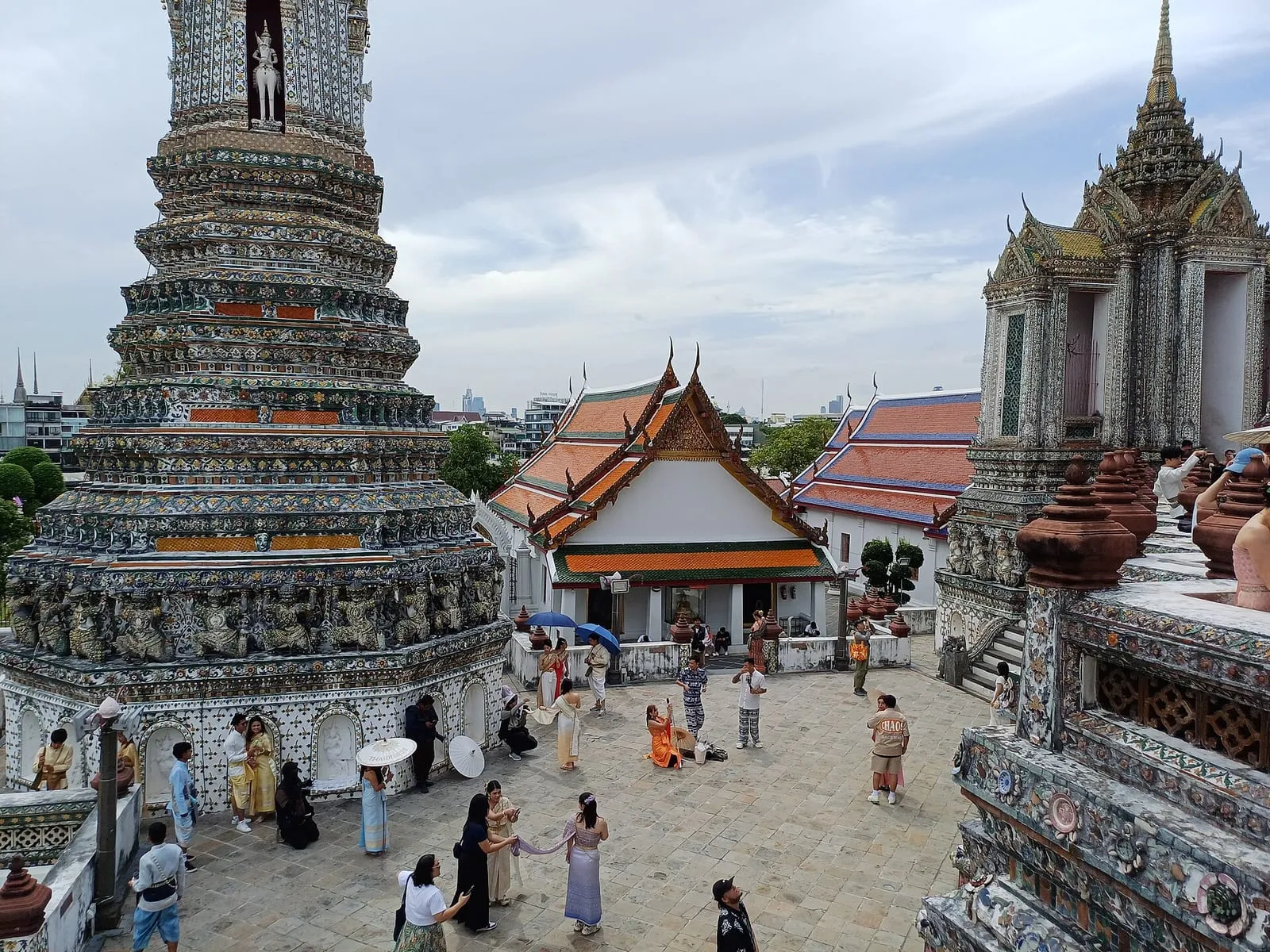
A corner prang and the terrace at Wat Arun. Photo: Radosław Botev, Wikimedia Commons, CC BY 3.0 PL.
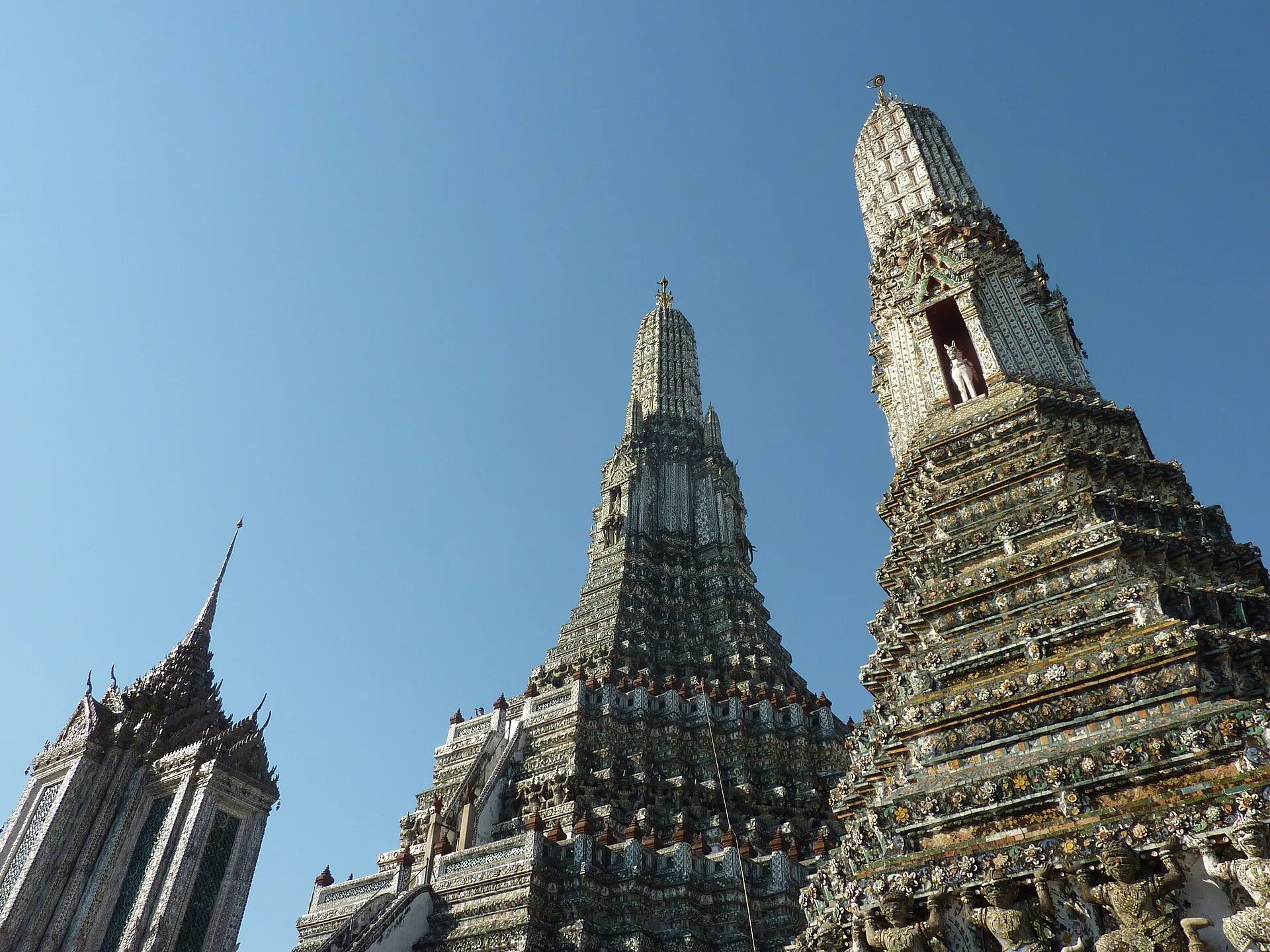
Wat Arun’s prangs from the terrace. Photo: Photo Dharma, Wikimedia Commons, CC BY 2.0.
The Tha Tien cross-river ferry
Wat Arun sits on the Thonburi (west) bank of the river, opposite Wat Pho and the Grand Palace on the Rattanakosin (east) bank.
The fastest and most common way to arrive is the dedicated cross-river passenger ferry:
- Walk to Tha Tien Pier on the east bank, west of Wat Pho.
- Look for the separate gangway marked “Cross-River Ferry to Wat Arun” (separate from the Chao Phraya Express commuter boat queue).
- Pay the fare in cash at the entry turnstile.
- Board the passenger ferry. The crossing takes a few minutes and boats run back and forth continuously.
- The boat docks at Wat Arun pier, a short walk from the ticket entrance.
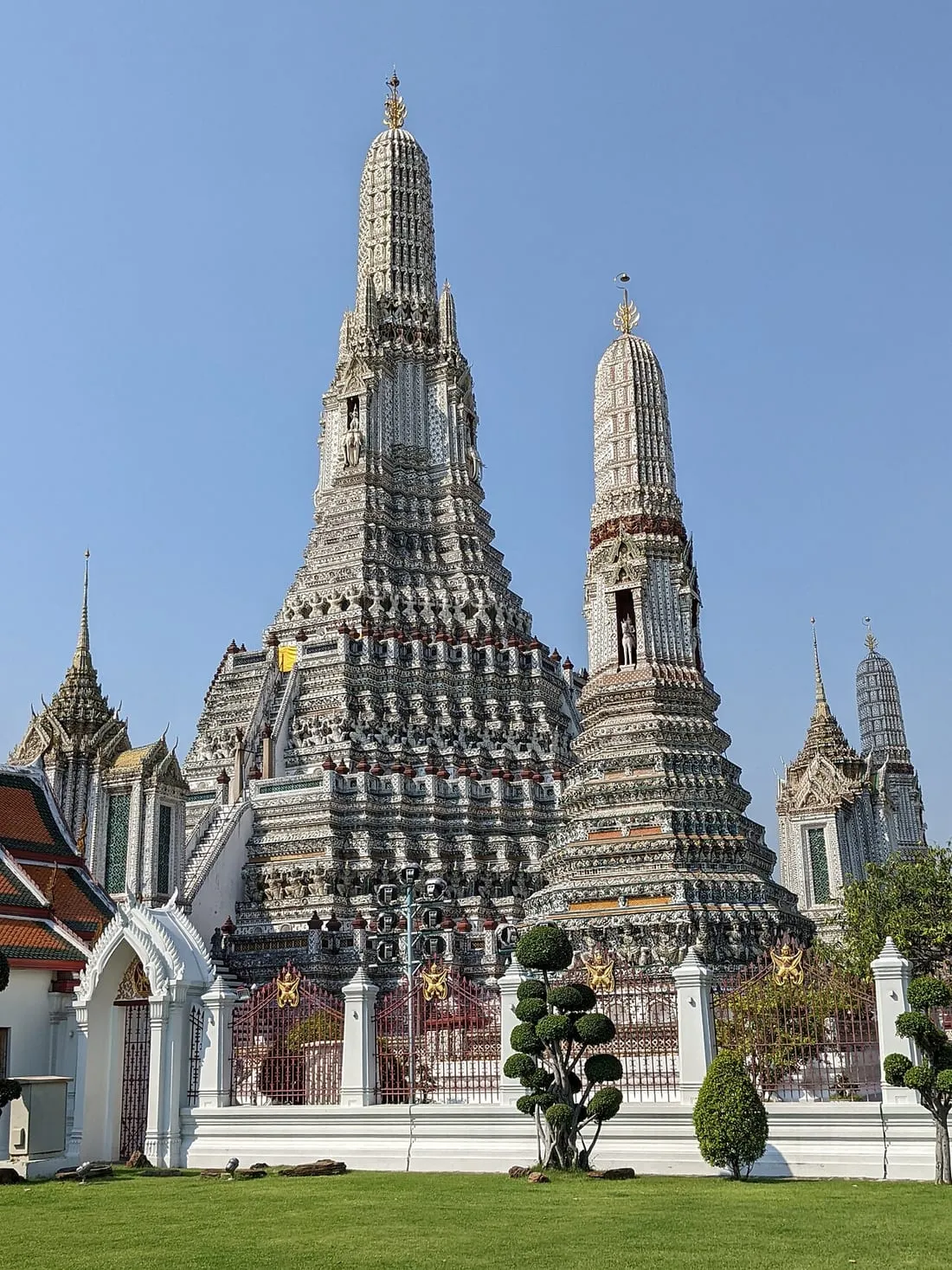
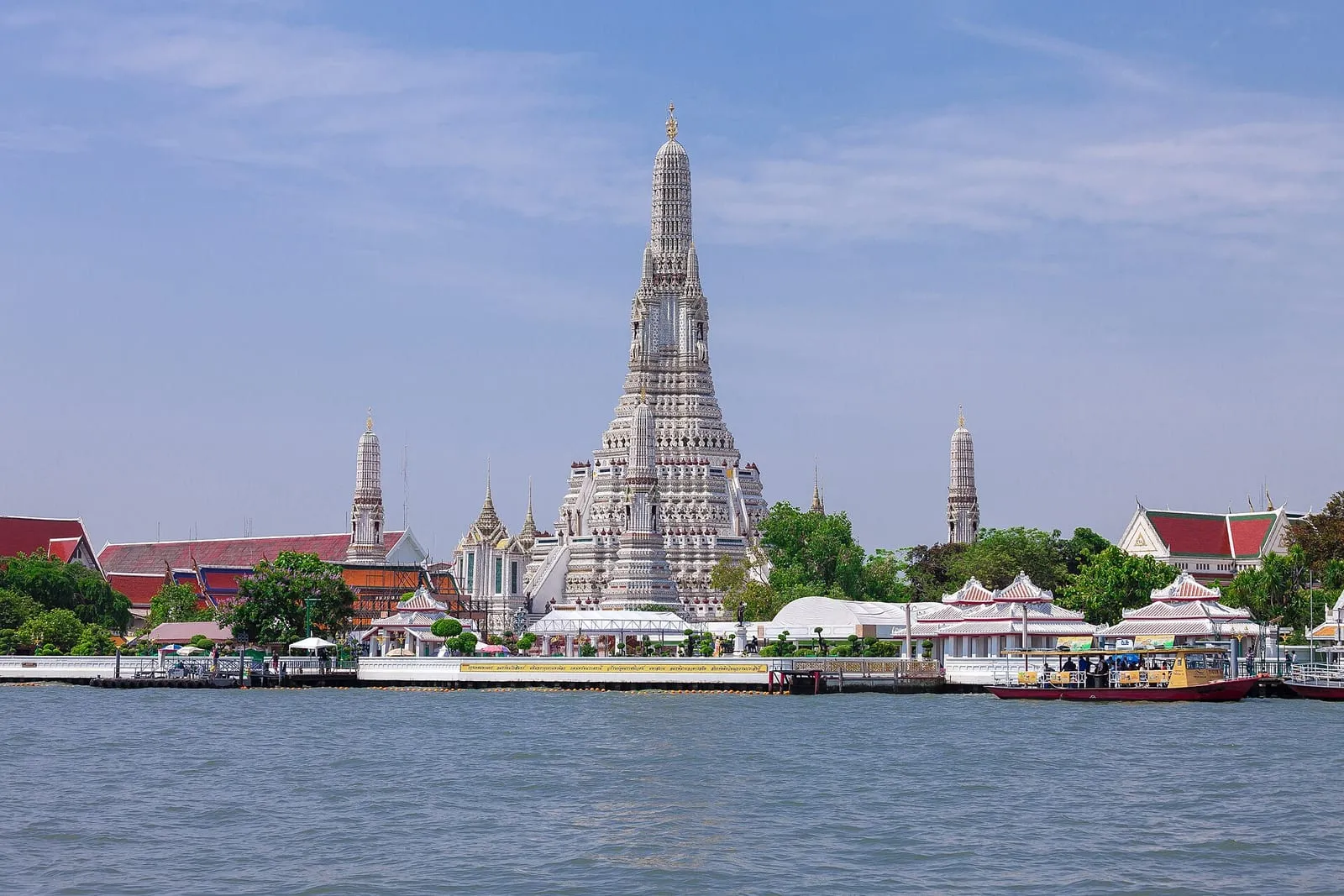
Wat Arun’s prangs from the pier. Photo: Jpatokal, Wikimedia Commons, CC BY-SA 4.0.
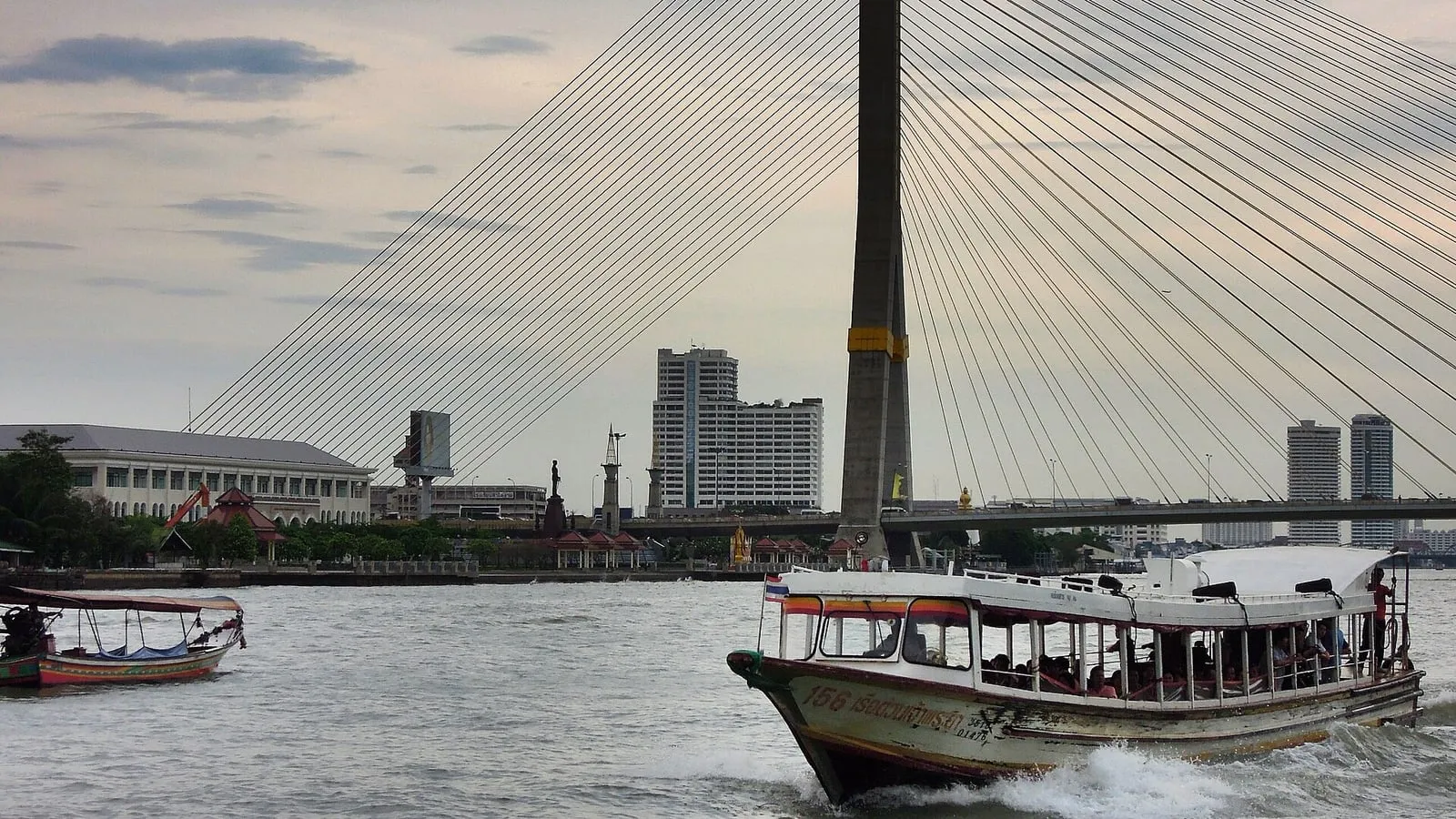
The Chao Phraya Tourist Boat (Blue Flag) also stops at Wat Arun pier, connecting to Sathorn Central Pier (BTS Saphan Taksin) and Iconsiam.
East bank sunset viewpoints
Despite being named after the god of the dawn (Aruna), the temple is best photographed at dusk. Wat Arun stands on the west bank facing east, so from the east bank the evening sun sets directly behind the central prang. After dark, floodlights light the tower and reflect gold across the water.
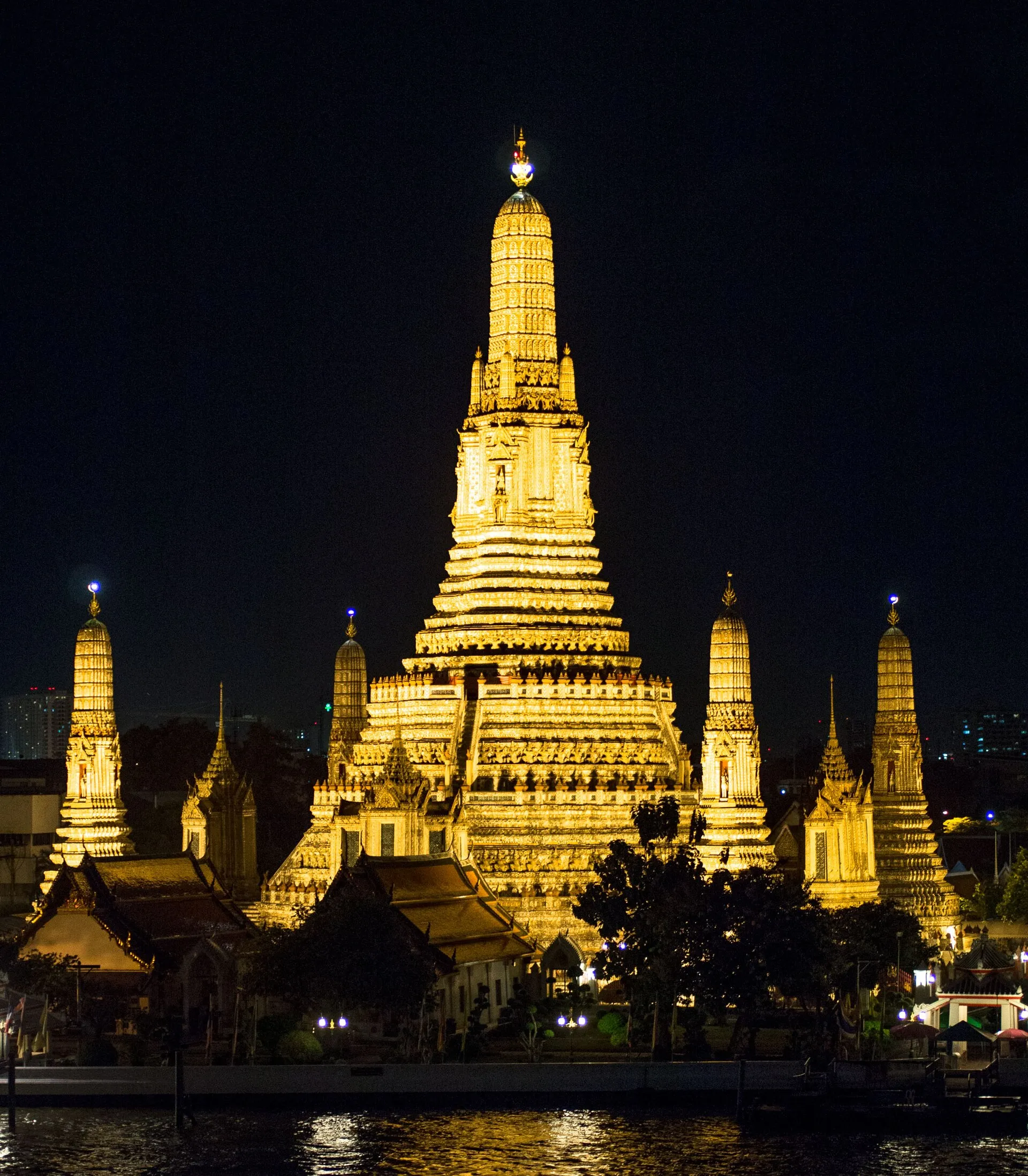
Wat Arun at night from a rooftop bar across the river. Photo: Takeaway, Wikimedia Commons, CC BY-SA 3.0.
Where to watch the sunset over Wat Arun
The viewpoints sit along Maharaj Road on the east bank at Tha Tien:
- Tha Tien Public Pier: The riverside boardwalk next to the ferry terminal has free open views across the water. Photographers arrive 45 minutes before sunset with tripods.
- Sala Rattanakosin Rooftop Bar: Directly opposite the main prang; the fifth-floor open terrace serves cocktails and Thai appetisers.
- The Deck by Arun Residence: A four-storey riverside bistro and bar with open-air decks facing the temple spire.
- View Arun Restaurant & Bar: A rooftop lounge with sunset drinks opposite the illuminated stupas.
- Booking tip: Reserve rooftop tables 3 to 7 days ahead for dates between November and February, as prime sunset slots fill quickly.
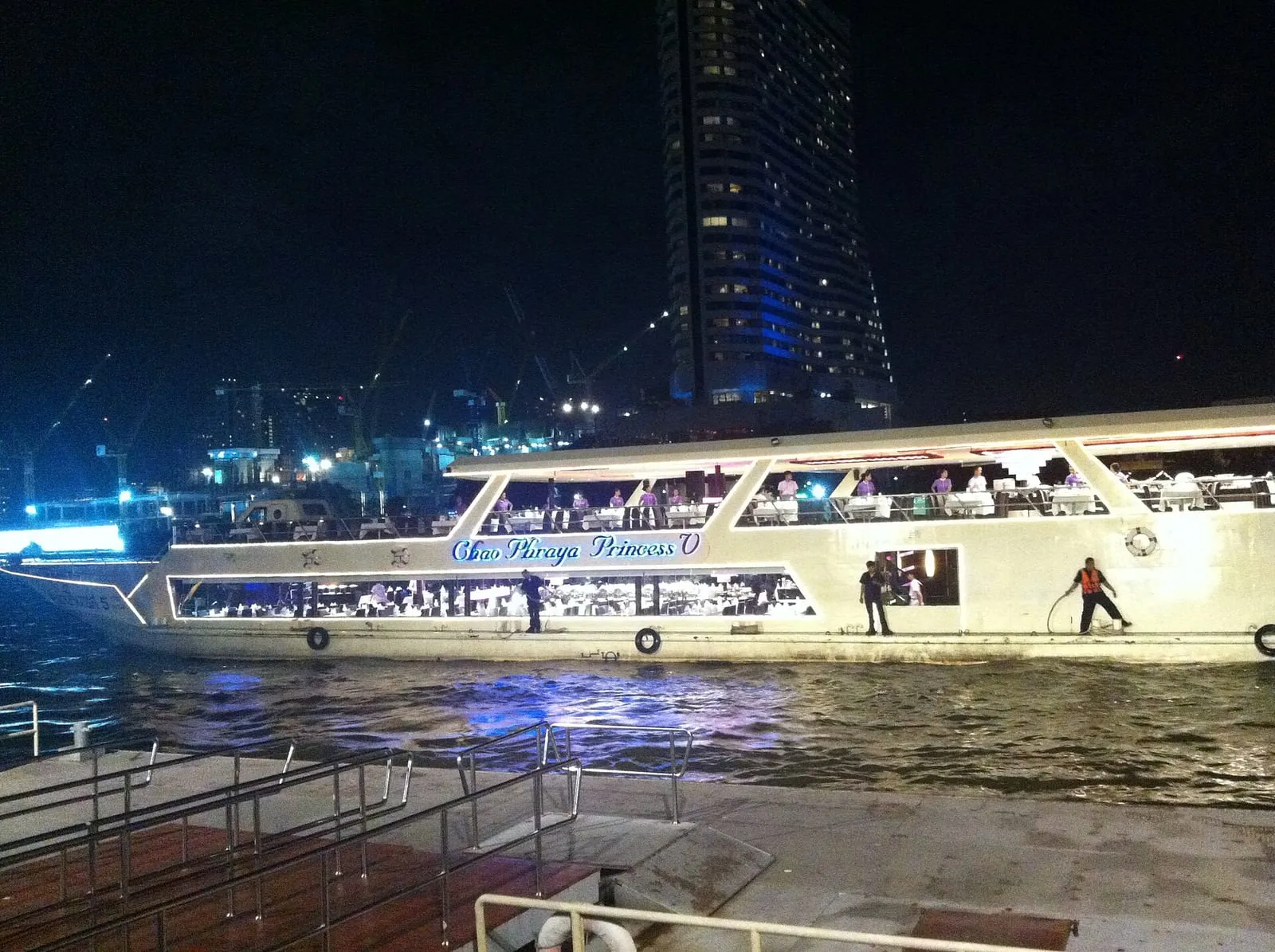
For the same view from the water in the evening, see Chao Phraya dinner cruises. For route details across the city transit network, see our Bangkok public transport guide. Continue your temple exploration at Wat Pho tickets and Grand Palace tickets, or on the Rattanakosin old city walk. Waterfront lodging recommendations are in hotels on the Chao Phraya River and where to stay in Bangkok. For complete city sightseeing schedules, consult the Bangkok travel guide.
Dress and behaviour rules for temples are in Bangkok etiquette.
Common questions
How do I buy a ticket to Wat Arun?
Foreign visitors buy a ticket at the ticket kiosk by the river pier. Thai citizens enter free.
How do you get to Wat Arun from Wat Pho?
Walk west through Tha Tien market to Tha Tien Pier. A dedicated cross-river ferry runs between Tha Tien and Wat Arun pier; pay in cash at the turnstile.
Can you climb to the top of Wat Arun?
Visitors can climb the steep exterior stairs to the lower terraces. The upper stairs are roped off.
Where is the best place to view the sunset over Wat Arun?
The most famous sunset views are from across the river on the east bank at Tha Tien. Rooftop bars and restaurants along Maharaj Road, including Sala Rattanakosin, The Deck by Arun Residence and View Arun, look straight at the temple as the sun sets behind it.
Is a Wat Arun tour worth booking?
Only if you want a guide or a boat. The temple ticket is bought at the kiosk by the pier either way. The group tours that include Wat Arun start at 750 THB on GetYourGuide, and a long-tail boat tour of the canals with views of the temple starts at 585 THB.