In this guide
💡 The Short Version: High-profile Bangkok sights that cost nothing to enter include Lumphini Park (home to large Asian water monitor lizards), Benjakitti Forest Park (elevated wetlands boardwalks with skyline views), the Bangkok Art & Culture Centre (BACC) (contemporary art exhibitions, free entry, open Tuesday to Sunday and closed Mondays), Erawan Shrine (open-air Brahma shrine with traditional Thai dance offerings at Ratchaprasong), Pak Khlong Talat (wholesale flower market on the river), and wandering the heritage alleyways and street art of Chinatown (Yaowarat) and Talat Noi. Or book a tour: the two-hour heritage walk past the Giant Swing, Loha Prasat and the Golden Mountad (from ฿990, 4.4 stars from 5 reviews) puts a guide on the old-town temples; the walking is free, so you are paying for the commentary.
What costs nothing in Bangkok
While major royal monuments such as the Grand Palace charge admission fees, Bangkok offers extensive free public spaces, contemporary galleries, open shrines, and heritage quarters.
| Attraction | Nearest transit | Operating hours | Notes |
|---|---|---|---|
| Lumphini Park | MRT Silom or BTS Sala Daeng | Daytime | Central park; large Asian water monitor lizards |
| Benjakitti Forest Park | MRT Queen Sirikit Centre or BTS Asok | Daytime | Restored wetland park; elevated timber boardwalks and sunset views over the Sukhumvit skyline |
| Bangkok Art & Culture Centre (BACC) | BTS National Stadium (Exit 3) | Tue–Sun 10:00 to 20:00 | Closed Mondays; spiral multi-tier gallery hosting rotating contemporary Thai and international exhibitions |
| Erawan Shrine | BTS Chit Lom (Exit 2) | Daytime | Open-air four-faced Brahma shrine; free to observe traditional dancers and garland ceremonies |
| Pak Khlong Talat (Flower Market) | MRT Sanam Chai (Exit 4) | Daytime and night | Riverfront wholesale floral market |
| Chinatown (Yaowarat) & Talat Noi | MRT Wat Mangkon or Hua Lamphong | Always accessible | Labyrinth of alleys, historic Chinese shophouses, sacred shrines, and warehouse street art murals |
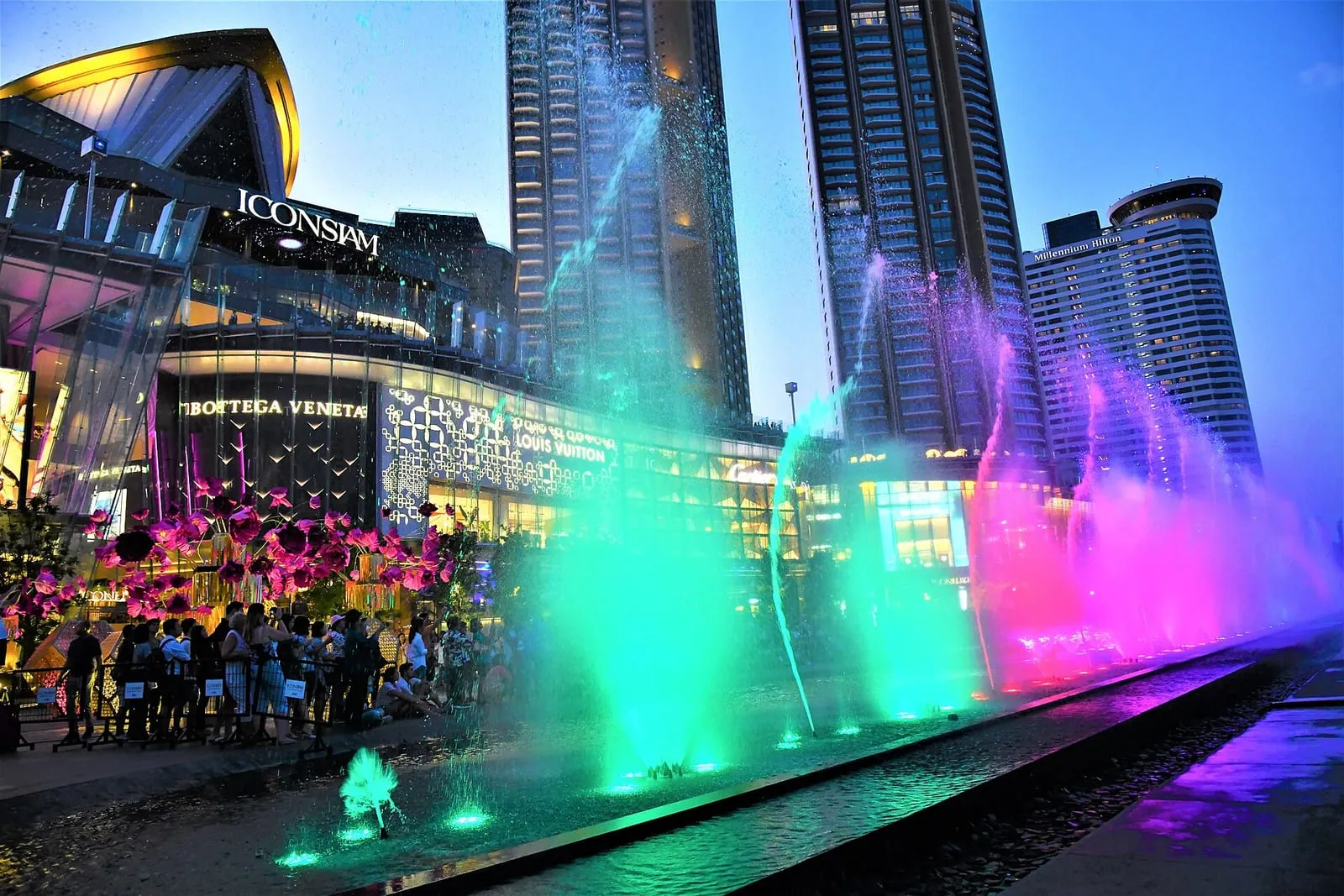
| SookSiam at Iconsiam | BTS Charoen Nakhon or Sathorn boat | Daytime and evening | Ground floor indoor recreation of a floating market with stalls from 77 Thai provinces |
| Chao Phraya public river walks | River piers (Tha Tien, Phra Athit) | Daylight to midnight | Riverside promenades looking towards illuminated river stupas and bridges |
Public parks and urban nature
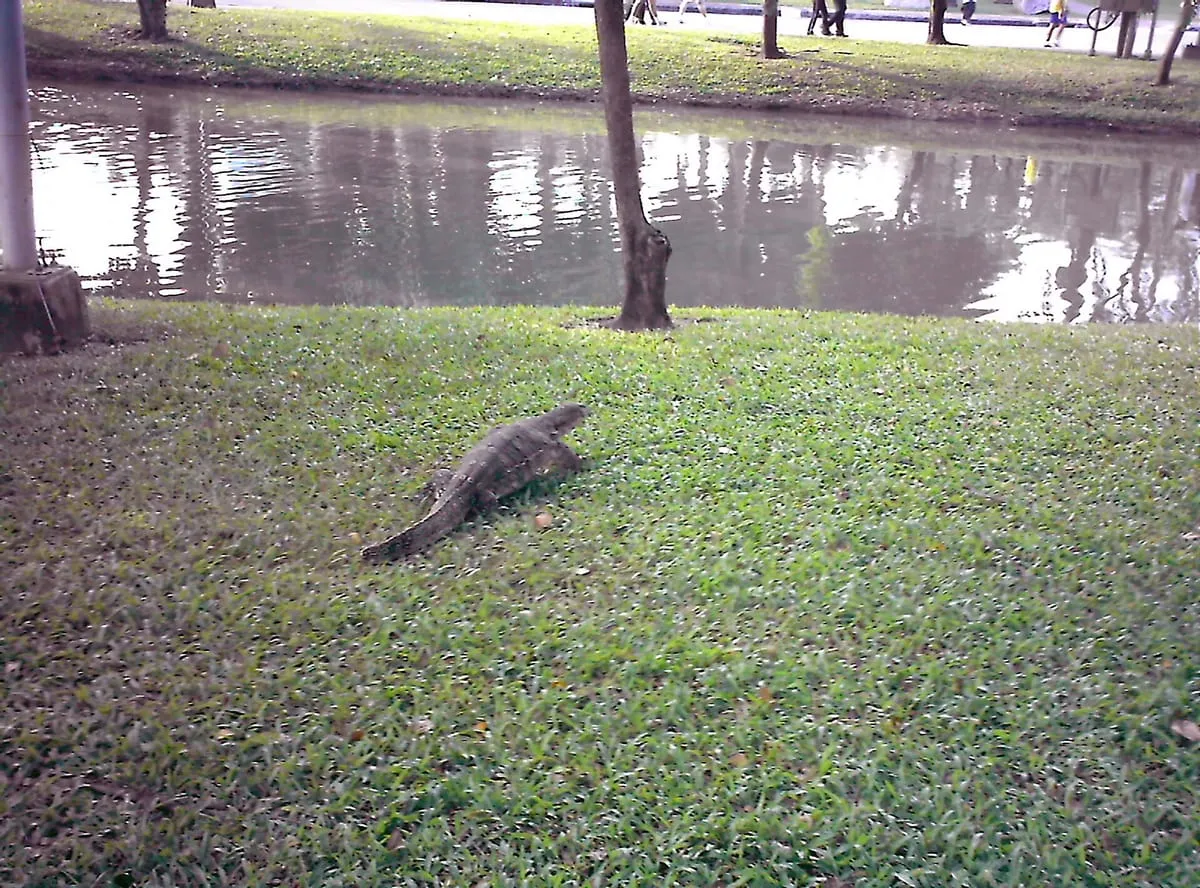
Bangkok’s green spaces provide shaded respite from urban road traffic and high daytime humidity.
Lumphini Park
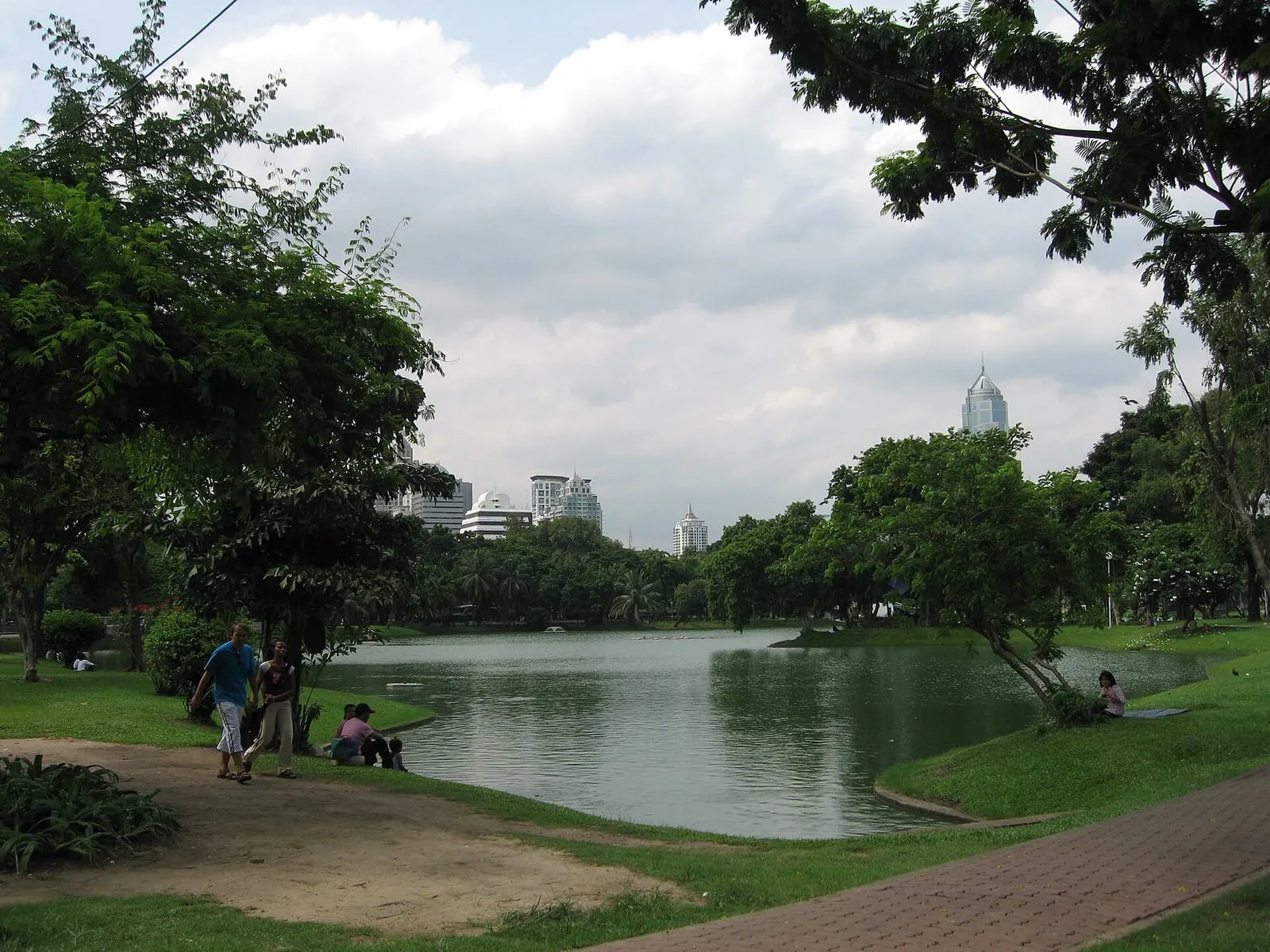
Established in the 1920s by King Rama VI on former royal property, Lumphini Park is Bangkok’s oldest public park, covering 142 acres in the Pathum Wan district.
- Admission: Free.
- Getting there: MRT Blue Line to Silom station (Exit 1) or Lumphini station (Exit 3); BTS Silom Line to Sala Daeng station.
- Asian water monitor lizards: Dozens of wild Asian water monitors (Varanus salvator) inhabit the park’s central artificial lake and canal banks. Growing up to two metres in length, these reptiles swim freely and bask on the grass. They are accustomed to humans but should be observed from a respectful distance of several metres.
- Community culture: At 08:00 and 18:00 daily, the park public address system broadcasts the Thai National Anthem; runners, walkers, and cyclists stop in their tracks and stand to attention until the music concludes. Immediately after the 18:00 anthem, a popular free outdoor aerobics session led by an instructor takes place on the paved square near the King Rama VI monument.
- Facilities: Paved perimeter running tracks (2.5 km loop), outdoor fitness equipment, shaded playgrounds, and paddle boats available for rent on the lake for a small fee.
Benjakitti Forest Park
Located in Khlong Toei on land previously occupied by the Thailand Tobacco Monopoly, Benjakitti Forest Park underwent a major ecological expansion to create a 180-acre urban wetland and flood mitigation basin.
- Admission: Free.
- Getting there: MRT Blue Line to Queen Sirikit National Convention Centre station (Exit 3), or walk 10 minutes south from BTS Asok / MRT Sukhumvit.
- Skywalk boardwalks: Over five kilometres of elevated, barrier-free timber boardwalks weave through rehabilitated wetlands, mangrove retention ponds, and mature rain trees. The boardwalks look over the Sukhumvit and Asok towers across the water.
- Sunset viewing: The western edge of the central lake looks across the water to the office towers at dusk.
- The Green Mile: An elevated, paved pedestrian and cycling bridge known as the Green Mile connects Benjakitti Forest Park directly to Lumphini Park, allowing walkers to move between both green reserves without descending to busy road level.
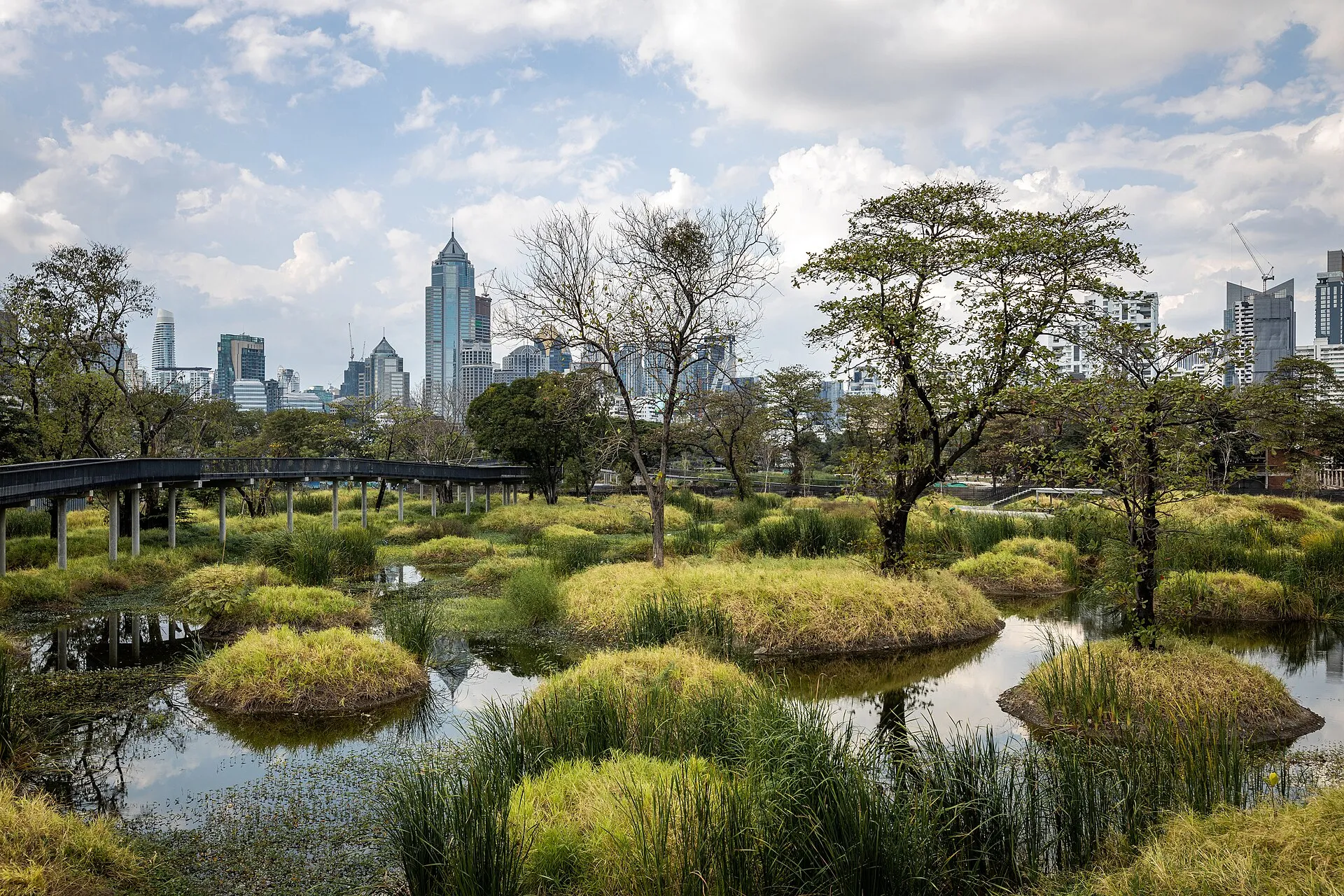
Benjakitti Forest Park. Photo: Supanut Arunoprayote, Wikimedia Commons, CC BY 4.0.
Art and cultural spaces
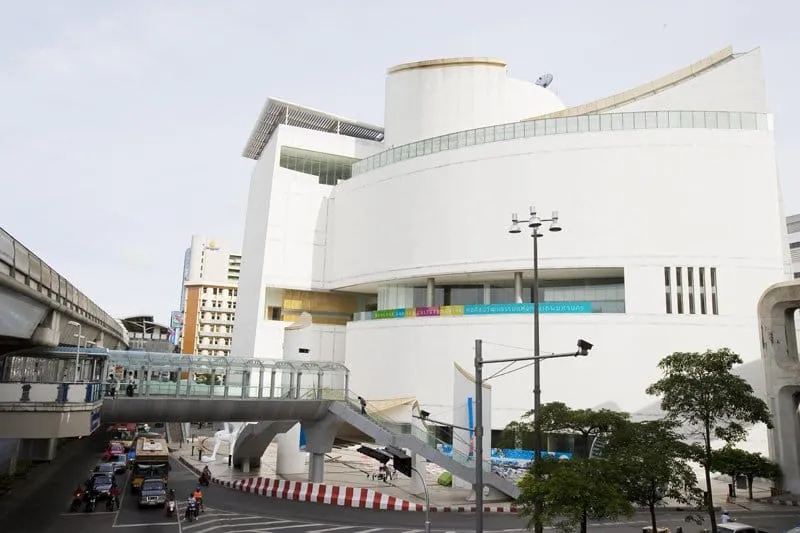
Bangkok maintains several civic exhibition halls and public shrines where visitors can engage with Thai heritage without purchasing tickets.
Bangkok Art & Culture Centre (BACC)
Located at the Pathumwan intersection opposite MBK Center and Siam Discovery, the BACC serves as the focal point for Bangkok’s contemporary arts community.
- Admission: Free access to all main galleries and public exhibitions.
- Opening hours: Tuesday to Sunday from 10:00 to 20:00 (closed Mondays).
- Getting there: BTS Sukhumvit Line to National Stadium station (Exit 3); a covered pedestrian skywalk connects directly into the third floor of the centre.
- What to see: The nine-storey building centres on a spiralling white atrium. Levels 7, 8, and 9 house spacious, temperature-controlled exhibition galleries showcasing rotating shows of contemporary Southeast Asian painting, multimedia installations, sculpture, and documentary photography.
- Shops and cafes: Lower levels contain independent craft boutiques, design studios, artisan coffee counters, and the BACC art bookshop.
Erawan Shrine (Thao Maha Phrom)
Perched on the corner of the busy Ratchaprasong intersection outside the Grand Hyatt Erawan hotel, this open-air Hindu-Buddhist shrine was erected in 1956 to ward off bad fortune during the construction of the original government-owned hotel.
- Admission: Free to enter the courtyard and observe.
- Getting there: BTS Skytrain to Chit Lom station (Exit 2) or Siam station, followed by a short walk along the elevated skywalk.
- The deity: The shrine enshrines a gilded statue of Phra Phrom, the Thai representation of the Hindu creation god Brahma, possessing four faces looking in the cardinal directions to grant blessing for career, relationships, wealth, and health.
- Traditional dance offerings: Visitors and pilgrims gather throughout the day to light incense and present yellow marigold garlands (phuang malai). Donors who have had prayers answered frequently pay a troupe of classically trained Thai dancers (lakhon chatri) in golden headpieces and silk brocade to dance to live gamelan music as a gesture of thanks.
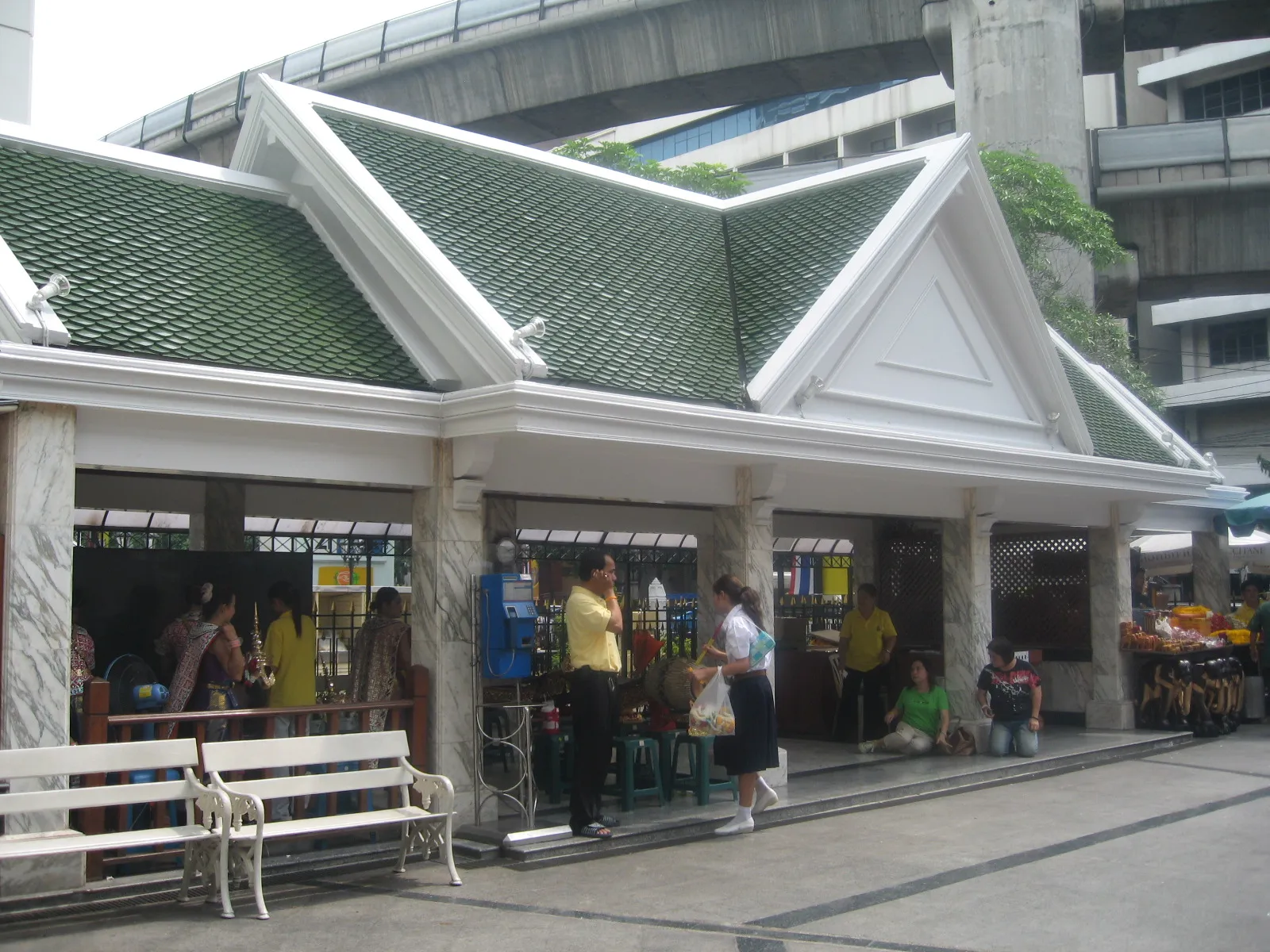
Erawan Shrine. Photo: Terence Ong, Wikimedia Commons, CC BY 2.5.
Markets and historic quarters
Walking through Bangkok’s historic neighbourhoods costs nothing and offers a direct perspective on the city’s trade and daily life.
Pak Khlong Talat (Wholesale Flower Market)
Positioned beside the Memorial Bridge on the Chao Phraya River, Pak Khlong Talat is Thailand’s central wholesale distribution hub for fresh flowers and agricultural produce.
- Admission: Free.
- Getting there: MRT Blue Line to Sanam Chai station (Exit 4), which brings you directly to the entrance of the market sheds.
- What to see: Millions of freshly harvested orchids, lotus buds, white jasmine and orange marigolds stacked in mountains along narrow aisles. Floor staff rapidly assemble devotional flower garlands used across the city’s shrines and taxi rear-view mirrors.
- Best timing: the wholesale trade peaks in the small hours, when lorries arrive from farming provinces to unload newly cut blossoms.
Chinatown (Yaowarat) and Talat Noi alleyways
Bangkok’s historic Chinese district holds centuries of merchant heritage along its winding pedestrian lanes (sois).
- Yaowarat Road: Walk along the main thoroughfare to see towering vertical neon signs, gold merchant shops, and street food carts operating over charcoal grills.
- Talat Noi street art: Southwest of Yaowarat, the Talat Noi neighbourhood borders the Chao Phraya River. This heritage enclave is famous for its narrow residential lanes filled with automotive spare-parts scrap yards, traditional ancestral shrines (such as the Rong Kueak Shrine), and colourful street art murals painted on the walls of weathered 19th-century brick shophouses.
- Soi Wanit 1 (Sampeng Lane): A covered, pedestrian-only wholesale trading alley stretching for over one kilometre, crammed with stalls selling haberdashery, textiles, stationery, and toys.
To follow a mapped walking route through these alleys and street art walls, see the self-guided Chinatown and Talat Noi walk. To explore the area’s evening culinary stands with a local guide, see Bangkok food tours.
SookSiam at Iconsiam
While Iconsiam is an upscale commercial development, its ground floor accommodates SookSiam, an indoor public market designed as an air-conditioned tribute to traditional Thai market culture.
- Admission: Free.
- Getting there: Reached by the free shuttle boat from Sathorn Pier or via BTS Charoen Nakhon.
- What to see: Stalls representing traditional wooden houses and floating boats set along indoor canals, representing food specialities, wood carvings, and textiles from Thailand’s 77 provinces. It provides a comfortable, shaded environment to watch craftspeople at work.
For a side-by-side analysis of Bangkok’s prime retail developments, see the Iconsiam vs Siam Paragon guide. For paid monuments and temple ticketing details, read things to do in Bangkok and Grand Palace tickets. To plan your stay over three days, see 3 days in Bangkok. If travelling as a family, explore Bangkok with kids.
Common questions
What are the best free sights to visit in Bangkok?
The top free attractions include Lumphini Park, Benjakitti Forest Park, the Bangkok Art & Culture Centre (BACC), Erawan Shrine, Pak Khlong Talat 24-hour flower market, and exploring the street art and alleyways of Chinatown and Talat Noi.
Is Lumphini Park free to visit in Bangkok?
Yes. Lumphini Park is free to enter. Highlights include spotting Asian water monitor lizards around the lake and listening to the 08:00 and 18:00 national anthem broadcasts.
Does the Bangkok Art & Culture Centre (BACC) charge admission?
No. Admission to the Bangkok Art & Culture Centre is free. The centre is open Tuesday to Sunday from 10:00 to 20:00 (closed Mondays) and features multi-storey contemporary art galleries, photography exhibitions and independent design shops.
Can you visit Erawan Shrine without paying?
Yes. Erawan Shrine on Ratchaprasong intersection is open-air and free to enter. Visitors can watch worshippers offer flower garlands and observe classical Thai dancers hired to perform alongside traditional musicians.