In this guide
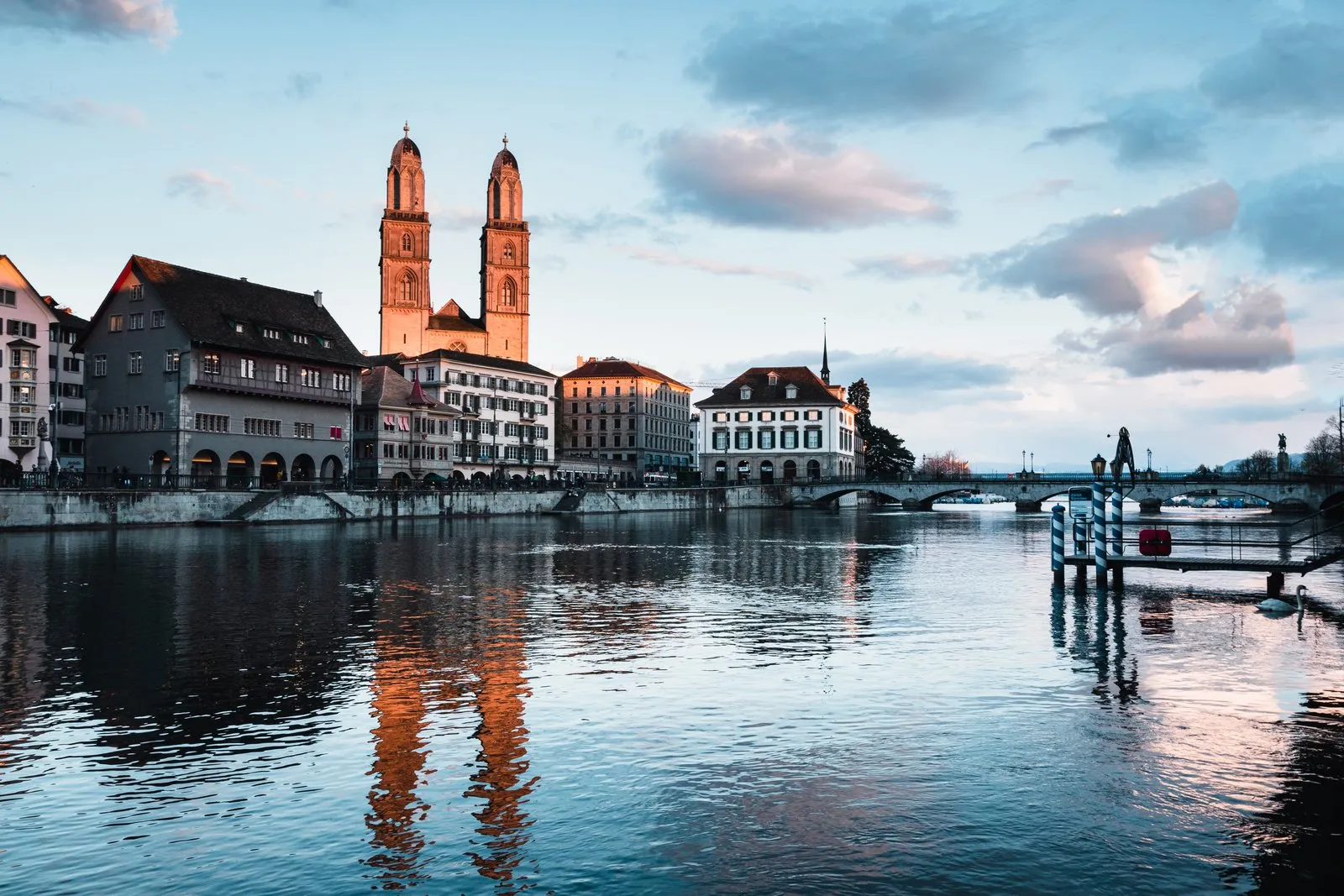
💡 The Short Version: Zurich’s three historic Old Town churches face each other across the Limmat within a 5-minute walk. Grossmünster’s Romanesque nave is free to enter, while climbing its 187-step Karlsturm costs CHF 5 (free with the Zürich Card). Across the Münsterbrücke, Fraumünster charges CHF 5 for adults (free under 16 and students) to see Marc Chagall’s five stained-glass choir windows, Augusto Giacometti’s rose window and the underground crypt. Buy the CHF 8 combined ticket on site for both, which also knocks CHF 5 off Kunsthaus Zürich. St Peter’s Church—crowned by Europe’s largest church clock face (8.7 metres)—is free. Or book a tour: join the 2-hour Stories of the Old Town walking tourad or the Zurich City Essential Walking Tour with Polybahnad to connect the churches with Zurich’s Reformation and guildhouse history.
⚠️ Sunday morning closures apply to all three churches. Do not plan a Sunday 10:00 church circuit: morning worship closes the interiors to sightseers until 12:00 at Fraumünster and 12:30 at the Grossmünster Karlsturm. Tickets are sold on site only (card, cash or TWINT)—there is no online booking system.
Ticket prices, combined ticket and Kunsthaus discount
All church admission fees are modest by Swiss standards and sold at the entrance desks on arrival.
| Sight / Ticket | Adult (CHF) | Children / Students | Zürich Card | Notes |
|---|---|---|---|---|
| Grossmünster nave & crypt | Free | Free | Free | Donations welcome; Sigmar Polke & Giacometti windows inside |
| Grossmünster Karlsturm tower | CHF 5 | CHF 2 (ages 6–16 & students) | Free | 187 steps, no lift; on-site tickets only |
| Fraumünster & Crypt Museum | CHF 5 | Free (ages 0–16 & students) | Standard CHF 5 | Includes Chagall choir windows, Giacometti window & audio guide |
| Combined Ticket (Karlsturm + Fraumünster) | CHF 8 | CHF 2 | — | Saves CHF 2; buy at either church desk |
| St Peter’s Church nave | Free | Free | Free | Tower closed to visitors; exterior clock face free to view |
The Kunsthaus Zürich bonus: Keep your paper ticket from Fraumünster, the Karlsturm or the CHF 8 combined ticket. Presenting it at Kunsthaus Zürich (a 5-minute uphill walk from Grossmünster) gives you CHF 5 off permanent collection admission—meaning the CHF 5 Fraumünster entry effectively pays for itself if you visit the art museum afterwards (on any day except free Wednesdays).
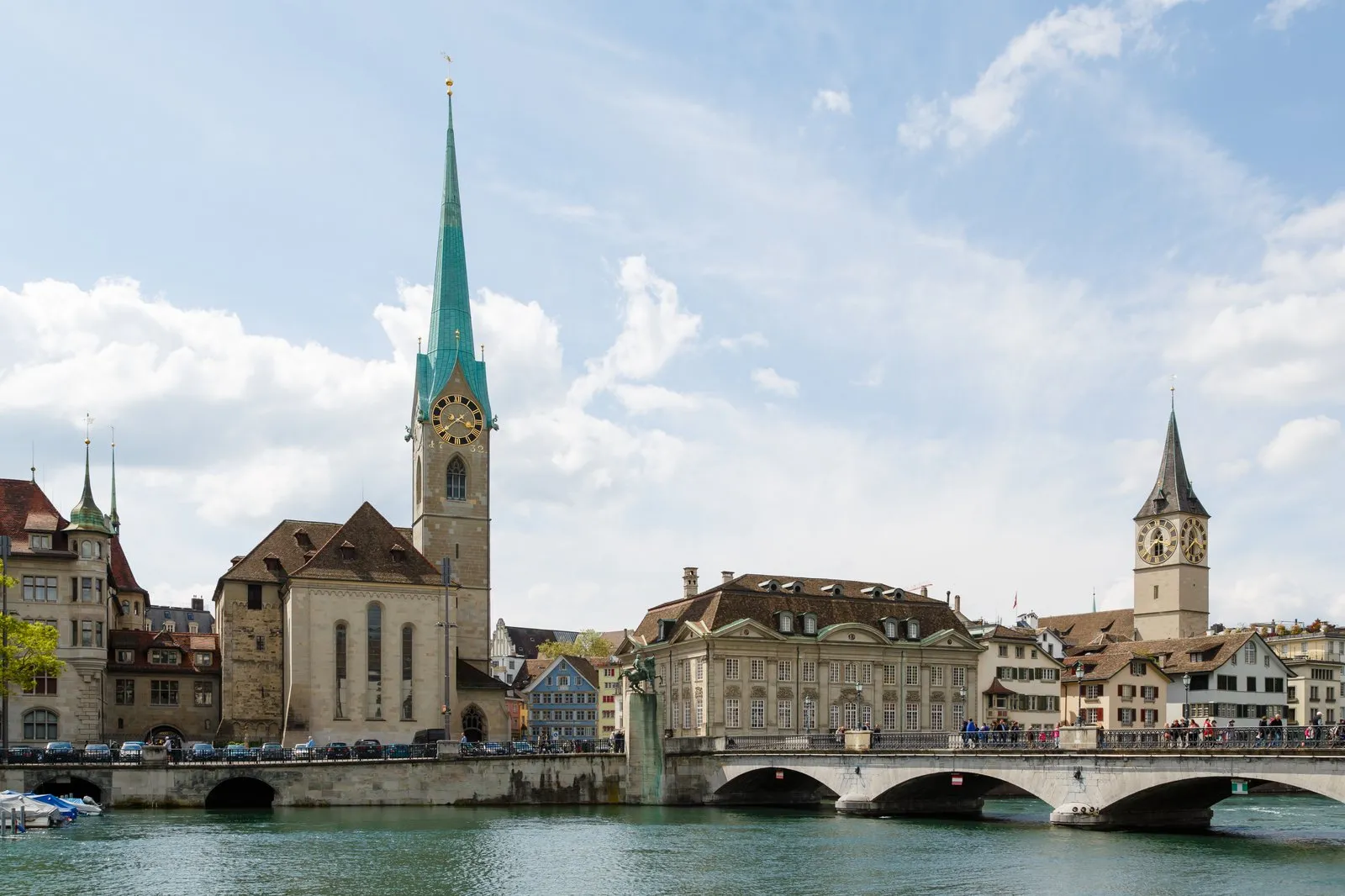 Fraumünster beside the Münsterbrücke. Photo: CEphoto, Uwe Aranas, Wikimedia Commons, CC BY-SA 3.0.
Guided Old Town walking tours
Walking between the three churches takes ten minutes on your own, though a historian guide brings out the fierce 16th-century Reformation clashes, guild rivalries and legends of Charlemagne and saints Felix and Regula that shaped the Altstadt.
Stories of the Old Town: Discover Zurich’s Historic Center
From CHF 13 · 4.6 stars from 1,220 reviews · 2 hours · guided walking tour
The Stories of the Old Town walking tourad departs from Zurich HB Tourist Information and winds through Bahnhofstrasse, Lindenhof, St Peter’s, Fraumünster, Münsterbrücke, Grossmünster and Niederdorf. It is the best-value structured introduction to Zurich’s medieval core (note that interior tower climbs or Fraumünster entry are best done independently right after the walk).
Zurich City Essential Walking Tour with Polybahn
From CHF 75 · 5 hours · walking tour with Polybahn
The Zurich City Essential Walking Tour with Polybahnad pairs the Old Town church circuit with a ride on the historic red Polybahn funicular up to the ETH Polyterrasse viewpoint for sweeping views back down over Grossmünster’s twin towers.
1. Grossmünster: Reformation nave, stained glass and the Karlsturm climb
Standing on the east bank of the Limmat, Grossmünster (built largely between 1100 and 1220) is where Huldrych Zwingli launched the Swiss-German Reformation in 1519. Zwingli stripped the church of altars, statues and organs so attention focused purely on scripture—which explains why the pale sandstone interior feels austere compared with Catholic cathedrals elsewhere in Europe.
What to see inside the nave (free)
- Sigmar Polke’s agate windows (2009): On the ground level of the nave, seven tall windows crafted from paper-thin slices of natural Brazilian agate glow in deep reds, ochres and blues, paired with five figurative biblical glass panels nearer the chancel.
- Augusto Giacometti’s choir windows (1933): Three bold, jewel-toned Expressionist stained-glass windows framing the east end behind the altar.
- The Romanesque Crypt: Descend the steps beneath the choir to see the original weathered 15th-century seated sandstone statue of Charlemagne (a replica sits high on the exterior south tower) and faded medieval frescoes depicting Zurich’s patron saints Felix and Regula.
- The Cloister (Kreuzgang): Accessible off the south side, a peaceful medieval arcade restored in the 19th century with carved Romanesque capitals.
Climbing the Karlsturm (187 steps, CHF 5)
Buy your ticket at the small desk just inside the main entrance, then climb 187 steps up the south tower: the lower section is a spiral stone stair, transitioning into steeper timber staircases past the bell chamber before emerging onto the four-sided covered viewing gallery.
- The view: From 50 metres above the river, you look straight down onto the Limmat, Münsterbrücke, Fraumünster’s slender green spire, St Peter’s clock face, the terracotta roofs of Niederdorf, Lake Zurich and—on crisp mornings—the snow-capped Glarus Alps.
- Practical warning: The upper timber stairs are narrow and steep with two-way foot traffic, so avoid wearing bulky backpacks. There is no lift.
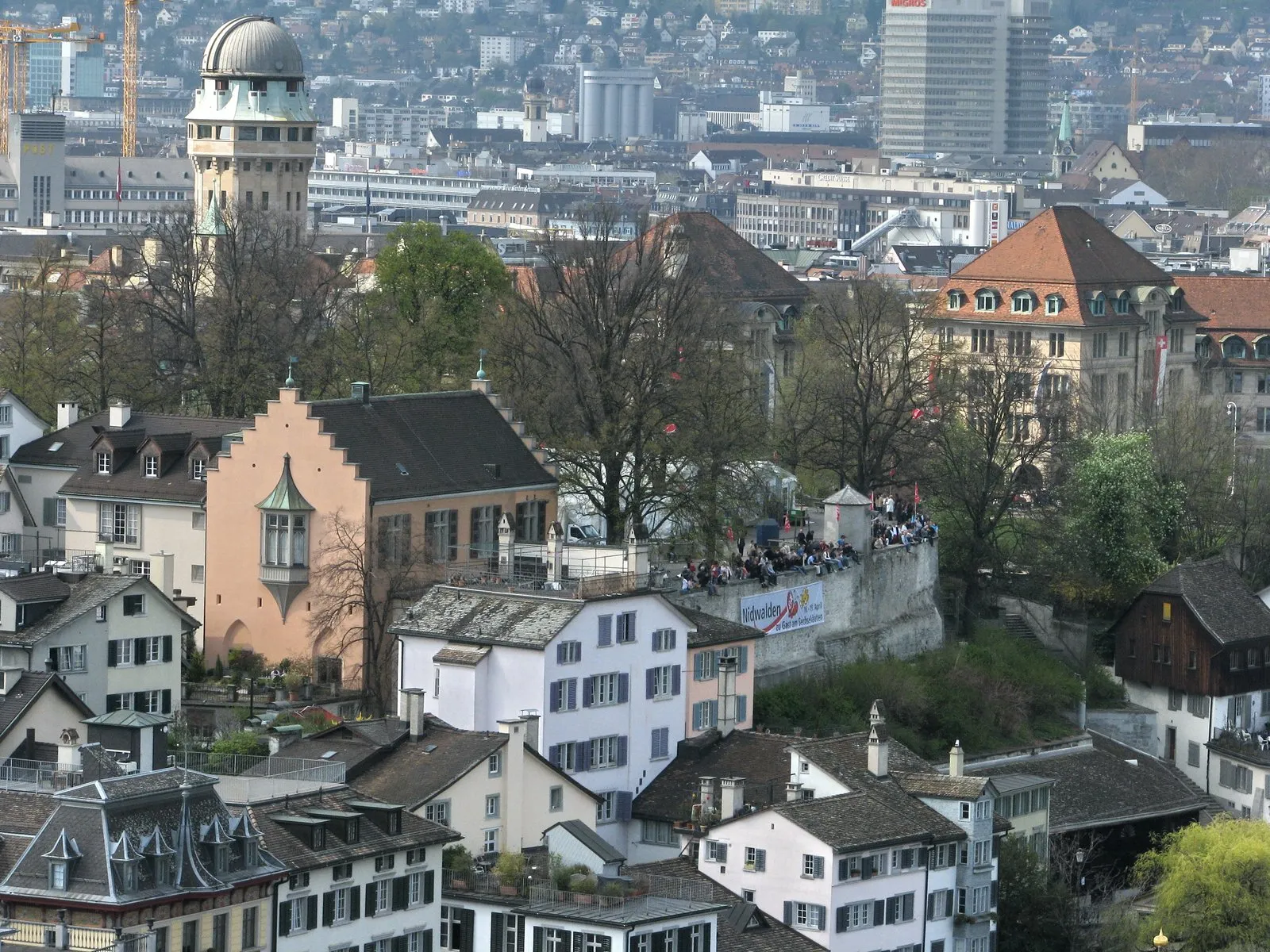 Old Town rooftops and Lindenhof terrace from Grossmünster. Photo: Roland zh, Wikimedia Commons, CC BY-SA 3.0.
2. Fraumünster: Marc Chagall’s windows and the Crypt Museum
Cross the Münsterbrücke directly west of Grossmünster onto Münsterhof square to reach Fraumünster, founded in 853 by King Louis the German as an aristocratic Benedictine convent whose abbesses effectively ruled Zurich for centuries.
Marc Chagall’s five choir windows (1970)
In 1967, at the age of 80, Marc Chagall accepted a commission to design five towering, narrow stained-glass windows (each nearly 10 metres high) for Fraumünster’s slender Gothic choir. Completed in 1970, each panel is anchored in a single dominant colour:
- Prophets (red): Elijah ascending in a fiery chariot and Jeremiah.
- Jacob (blue): Jacob’s dream of the ladder and wrestling the angel.
- Christ (green, central panel): Scenes from the life and crucifixion of Christ.
- Zion (yellow): An angel trumpeting the arrival of the New Jerusalem.
- Law (blue): Moses receiving the tablets of the Law.
Chagall returned in 1978, aged 91, to create the south transept rose window (Creation). Opposite it in the north transept glows Augusto Giacometti’s 1945 rose window (Heavenly Paradise), creating a striking dialogue between two 20th-century masters inside an 800-year-old church.
Best light and photography rules at Fraumünster
- Best time for light: Because Chagall’s five choir windows face east, morning light between 10:00 and 12:30 makes the reds, blues and yellows blaze across the stone floor.
- Photography rules: Personal, non-commercial photos are allowed without flash and without tripods. Respect the silence of the nave; audio guides are available via smartphone/handset included in the CHF 5 fee.
- Crypt Museum: Included in your CHF 5 ticket, descend beneath the choir to inspect the excavated foundations of the original 9th-century abbey church, medieval relics and a clear display on the abbesses’ political power before the Reformation.
3. St Peter’s Church: Europe’s largest clock face
Walk two minutes north from Fraumünster up the cobbled lane of St.-Peter-Hofstatt (lined with pastel townhouses and a quiet fountain) to reach St Peter’s Church, Zurich’s oldest parish church (founded before 857).
- The giant clock face: Measuring 8.7 metres in diameter, St Peter’s clock dial is the largest church clock face in Europe—the gilded minute hand alone stretches nearly four metres long. Historically, the tower served as Zurich’s municipal fire watch until 1911.
- Inside the nave (free): Step inside to see the bright, Baroque-renovated nave (completed in 1706), oak choir stalls and crystal chandeliers—a vivid contrast to Grossmünster’s stark Romanesque stonework.
- Best photo angles: The clock face is too high to frame cleanly from directly underneath the tower. Shoot it from the east bank on Limmatquai, from the Grossmünster Karlsturm, or from the edge of Lindenhof terrace two minutes north.
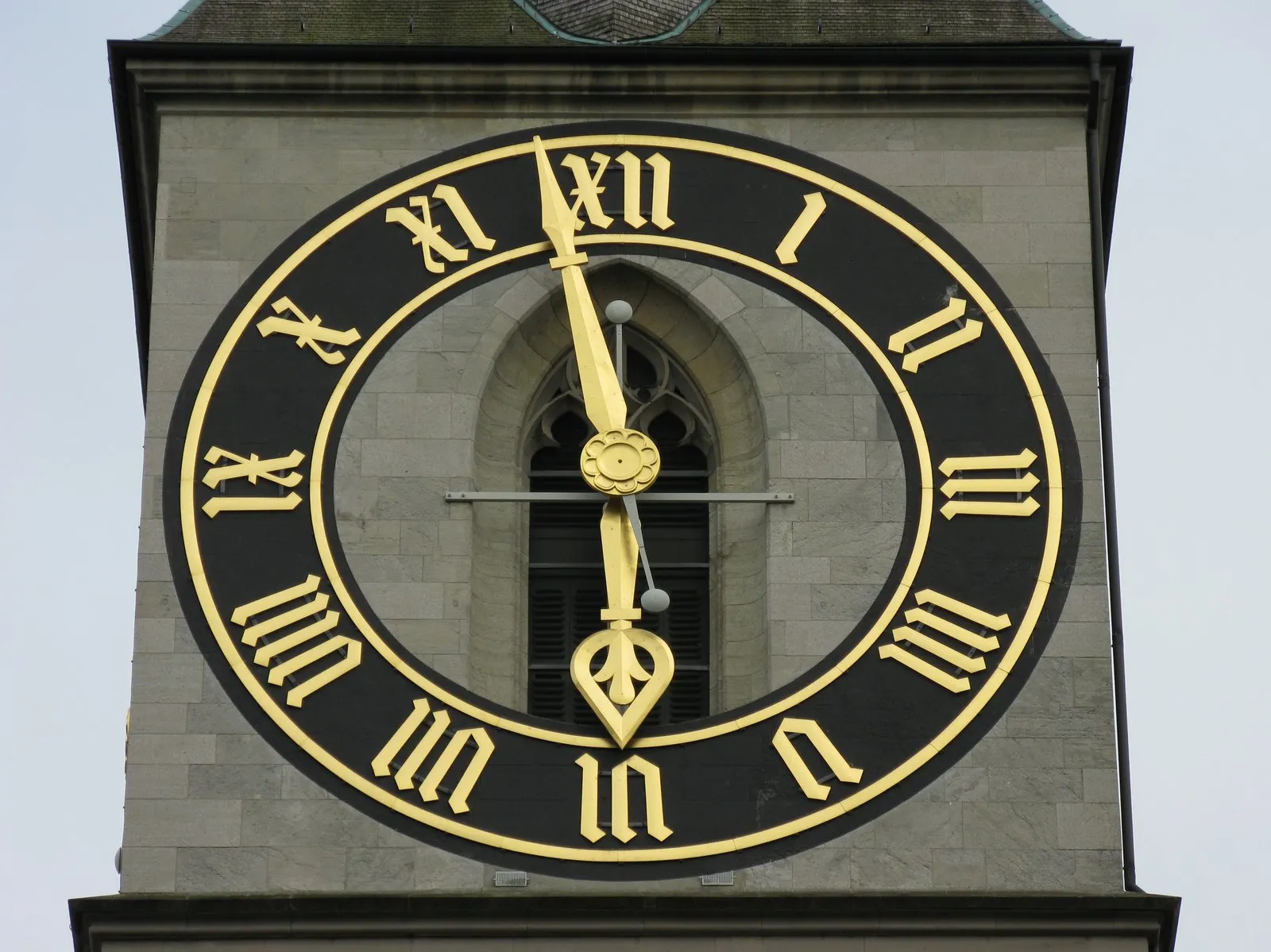 The clock face on St Peter’s Church. Photo: Jochen Teufel, Wikimedia Commons, CC BY-SA 3.0.
Opening hours at a glance (summer vs winter)
| Church | Summer (1 Mar – 31 Oct) | Winter (1 Nov – end Feb) | Sunday hours |
|---|---|---|---|
| Grossmünster nave | Mon–Sat 10:00 – 18:00 | Mon–Sat 10:00 – 17:00 | Sun 12:30 – 18:00 (17:00 winter) |
| Grossmünster Karlsturm | Mon–Sat 10:00 – 18:00 (last climb 17:30) | Mon–Sat 10:00 – 17:00 (last climb 16:30) | Sun 12:30 – 18:00 (17:00 winter) |
| Fraumünster & Crypt | Mon–Sat 10:00 – 18:00 (last entry 17:45) | Mon–Sat 10:00 – 17:00 (last entry 16:45) | Sun 12:00 – 18:00 (17:00 winter) |
| St Peter’s Church | Mon–Fri 08:00 – 18:00, Sat 10:00 – 16:00 | Mon–Fri 08:00 – 18:00, Sat 10:00 – 16:00 | Sun 11:00 – 17:00 (after service) |
Occasional concerts, weddings or civic ceremonies close the naves for 1 to 2 hours without long advance notice.
Putting the three churches into a 90-minute loop
Start at Fraumünster at 10:00 to catch the morning sun pouring through Chagall’s east-facing choir windows (buy the CHF 8 combined ticket here). Stroll two minutes north to St Peter’s and up to Lindenhof for elevated views across the Limmat, then cross the Münsterbrücke to enter Grossmünster and climb the Karlsturm. From Grossmünster’s doors, you are five minutes from Kunsthaus Zürich (where your church ticket knocks CHF 5 off entry) or two minutes from historic guildhouse dining on Münsterhof—see our where to eat in Zurich and Old Town and Uetliberg walk guides.
Common questions
How much does it cost to visit Grossmünster and Fraumünster?
Entering the Grossmünster nave is free, while climbing its Karlsturm tower costs CHF 5 for adults (CHF 2 for children 6–16 and students; free with the Zürich Card). Fraumünster charges CHF 5 for adults (free for under-16s and students). A combined ticket covering both the Karlsturm and Fraumünster costs CHF 8 for adults.
How many steps is the Grossmünster Karlsturm tower climb?
There are 187 steps up the narrow stone and wooden staircase of the south tower (Karlsturm) to the open viewing gallery. There is no lift, and the upper stairs are steep and tight.
Can you take photos of the Chagall windows inside Fraumünster?
Yes, personal non-commercial photography is permitted without flash or tripods. Commercial photography is prohibited due to Marc Chagall copyright protections, and all photography stops during church services.
Are Grossmünster and Fraumünster open on Sundays?
Both churches hold morning Reformed services on Sundays, so tourist sightseeing opens later: Fraumünster opens to visitors at 12:00 on Sundays and Grossmünster's Karlsturm opens at 12:30.
Does a Grossmünster or Fraumünster ticket give a discount at Kunsthaus Zürich?
Yes. Showing your paid CHF 5 Fraumünster ticket, CHF 5 Karlsturm ticket or CHF 8 combined ticket at Kunsthaus Zürich gives you CHF 5 off permanent collection admission.
Can you climb St Peter's Church tower to see Europe's largest clock face?
No. St Peter's Church nave is free to enter during opening hours, but its bell tower is not open to the public. The 8.7-metre clock face is best photographed from the outside at St.-Peter-Hofstatt, Lindenhof or across the Limmat from Grossmünster.