In this guide
💡 The Short Version: You do not need to buy a transit card to ride Toronto’s TTC subways, streetcars and buses. Tap an Interac debit or credit card, Apple Pay or Google Pay on the PRESTO reader for a flat CAD 3.30 adult fare, which includes a 2-hour transfer. Children 12 and under ride free, and after 47 paid fares in a calendar month further TTC rides that month are free. Transfers between GO Transit and the TTC are covered by Ontario’s One Fare Program.
⚠️ Always tap the exact same card or device. Your 2-hour transfer, One Fare credit and monthly fare cap are linked to the card or device you tap. A physical card and the same card in a mobile wallet count as different payment methods, so you can be charged twice.
TTC fares, passes and payment options
Toronto’s local network is run by the Toronto Transit Commission (TTC): subway, light rail, streetcars (trams) and buses. One flat fare covers a ride on any of them, however far you go.
| Fare type | Cost (CAD) | 2-hour transfer? | Who it suits |
|---|---|---|---|
| Debit, credit or mobile wallet | CAD 3.30 | Yes | Adult visitors |
| PRESTO card (adult) | CAD 3.30 (plus CAD 4 for the card) | Yes | Visitors who want a dedicated transit card |
| PRESTO card (youth 13 to 19 / senior 65+) | CAD 2.35 / CAD 2.25 | Yes | Teens and seniors; the fare type is set in person at Shoppers Drug Mart or a customer service outlet |
| Cash (exact change) | CAD 3.35 | No; a paper transfer covers one continuous one-way trip | Buses and streetcars when you have no card |
| PRESTO day pass (ticket) | CAD 13.50 | Yes | Five or more paid fares in a day |
| Children (12 and under) | Free | Not needed | Each rider aged 13 and over taps their own card |
Monthly fare cap and PRESTO Tickets
Long-stay visitors who tap the same PRESTO card, debit or credit card or mobile wallet every time benefit from the TTC’s monthly fare cap. After 47 paid fares in a calendar month (47 x CAD 3.30 is CAD 155.10), the rest of that month’s TTC rides are free, and the count resets on the first of the month. You still have to tap on every ride, because the tap is your proof of payment. If you want the CAD 13.50 day pass, or a one-ride (CAD 3.35) or two-ride (CAD 6.70) ticket, buy a PRESTO Ticket from a Fare Vending Machine at any subway station. Tickets do not count towards the fare cap.
The TTC subway: Lines 1, 2 and 4
The subway forms the north-south and east-west spine of downtown sightseeing, and it runs until about 01:30, when the Blue Night buses take over. Line 5 Eglinton and Line 6 Finch West are separate light rail lines that start outside the downtown core.
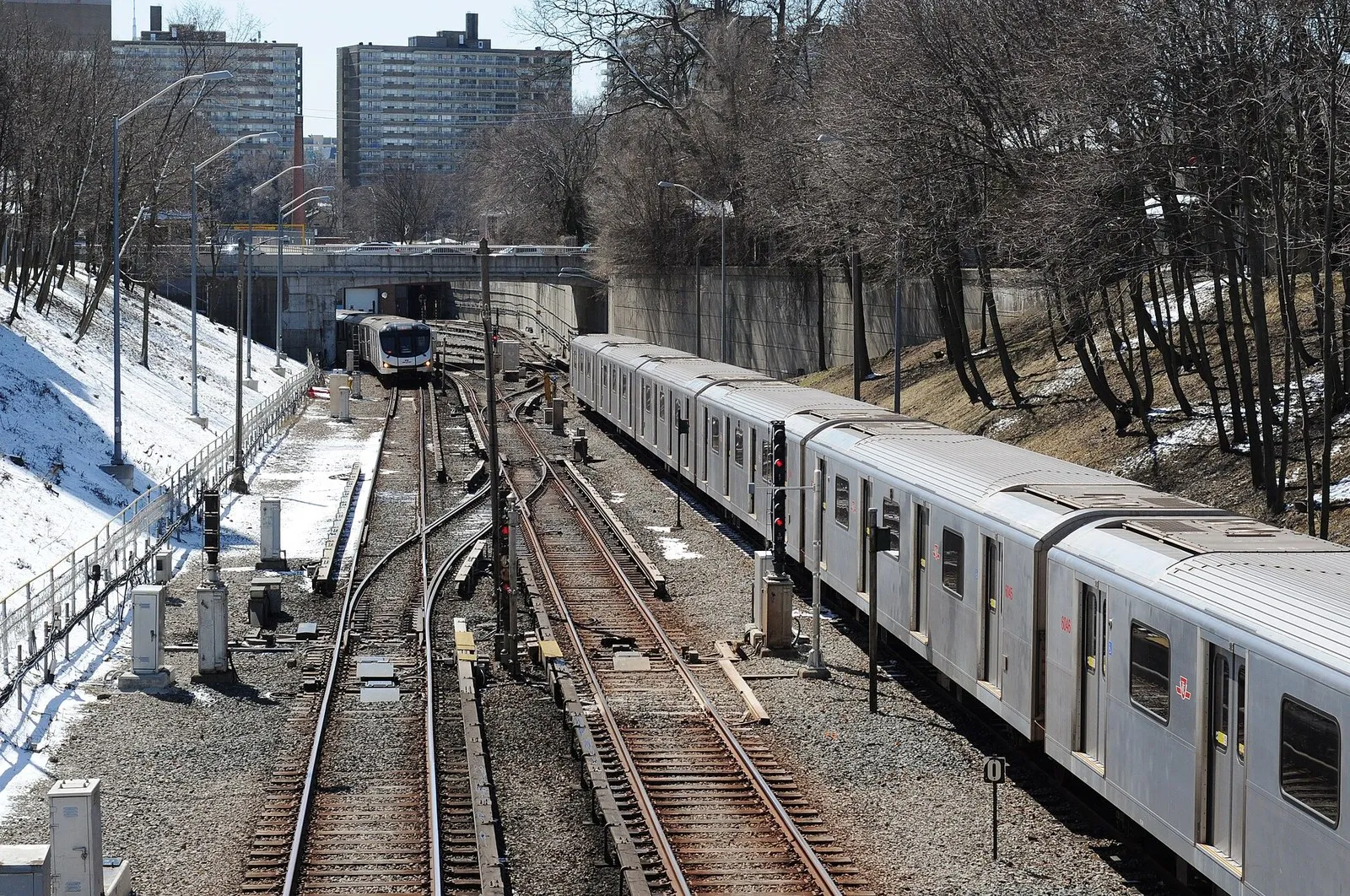 TTC subway trains on open track. Photo: Milan Suvajac, Wikimedia Commons, CC BY-SA 4.0.
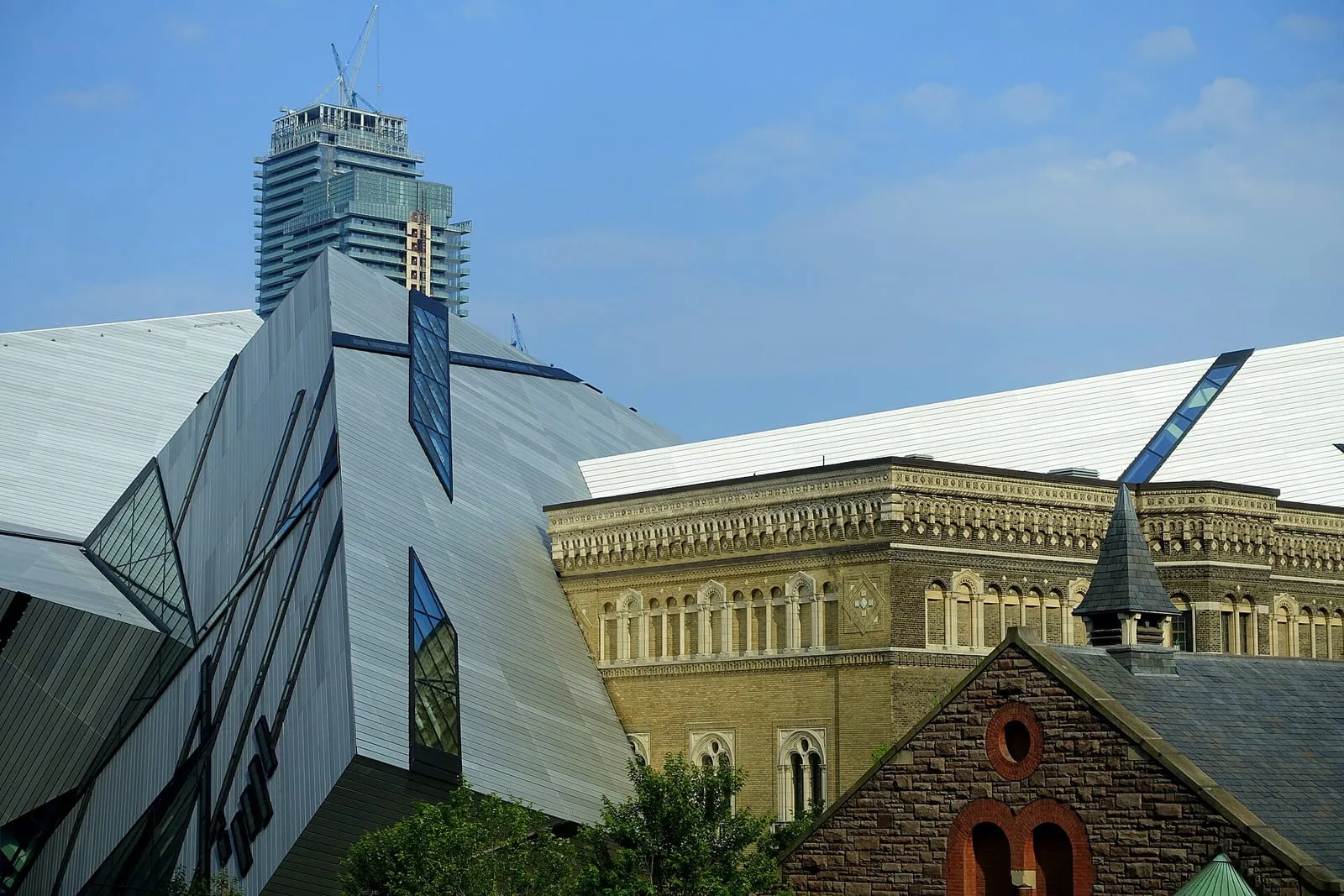
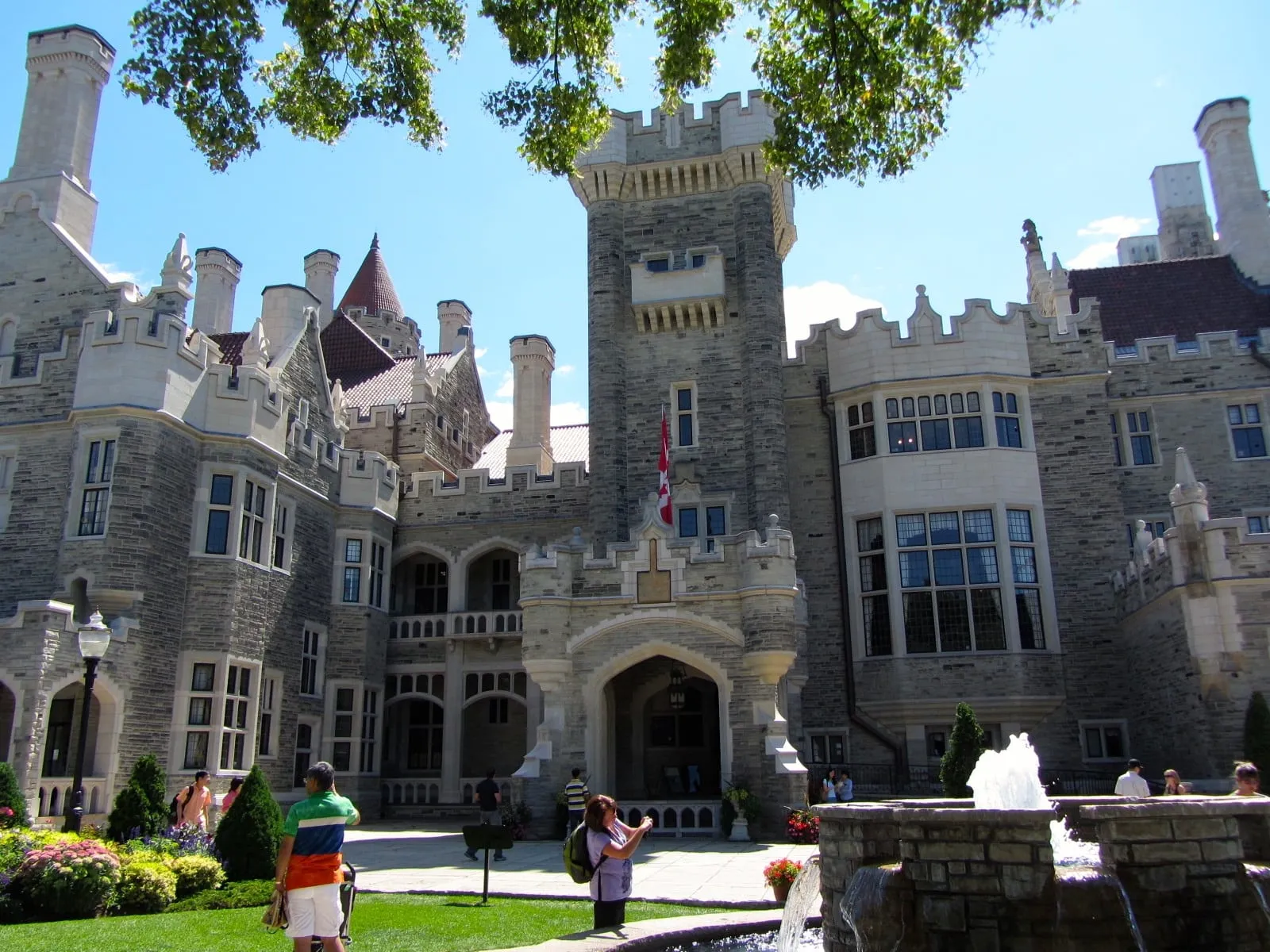
- Line 1 (Yonge-University, yellow): Shaped like a “U” anchored at Union Station on the waterfront. The eastern arm runs north under Yonge Street (King, Queen, Dundas/Eaton Centre, Bloor-Yonge); the western arm runs north under University Avenue (St. Andrew, Osgoode, St. Patrick for the Art Gallery of Ontario, Queen’s Park, Museum for the Royal Ontario Museum, St. George and Dupont for Casa Loma).
- Line 2 (Bloor-Danforth, green): Runs straight east-west under Bloor Street and Danforth Avenue. Key visitor stops include Spadina (north edge of Annex/Chinatown), St. George and Bay (Yorkville), Bloor-Yonge (interchange with Line 1), High Park, Keele and Kipling (west terminus for the 900 Airport Express bus).
- Line 4 (Sheppard, purple): A short suburban line in the north that short-stay visitors rarely need.
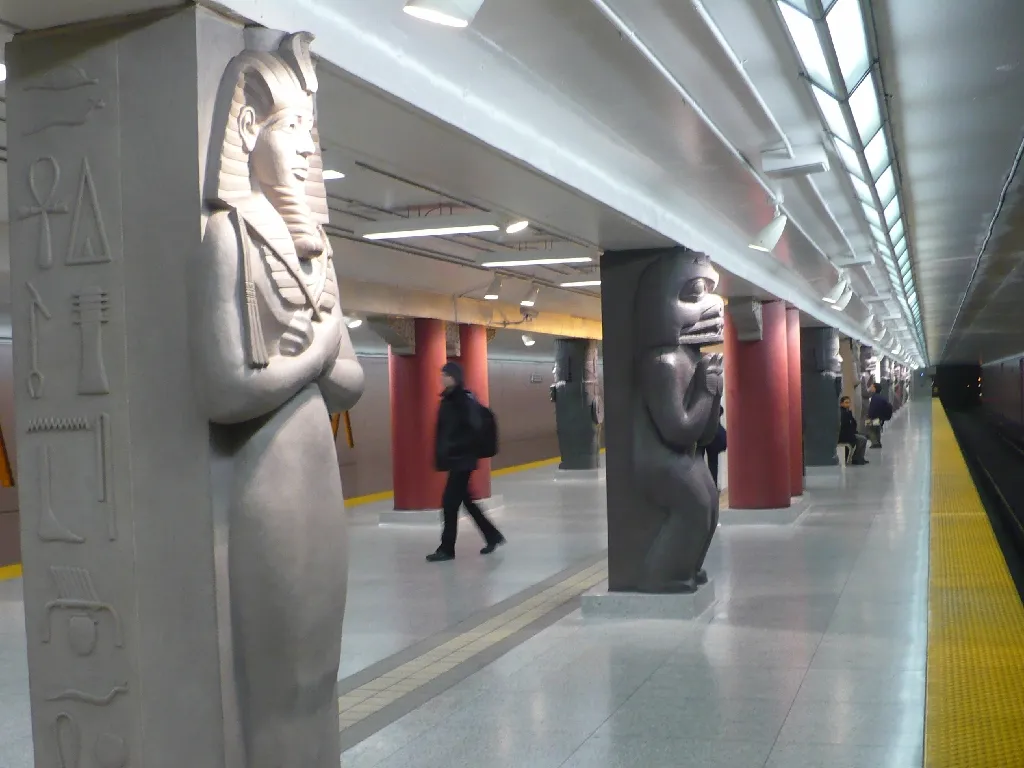 Museum Station, Line 1. Photo: Secondarywaltz, Wikimedia Commons, Public domain.
Check for subway closures before a weekend outing. The TTC closes short sections of Line 1 or Line 2 for maintenance on some weekends and replaces trains with shuttle buses. The service advisories page on ttc.ca lists them.
Streetcars: how downtown surface transit works
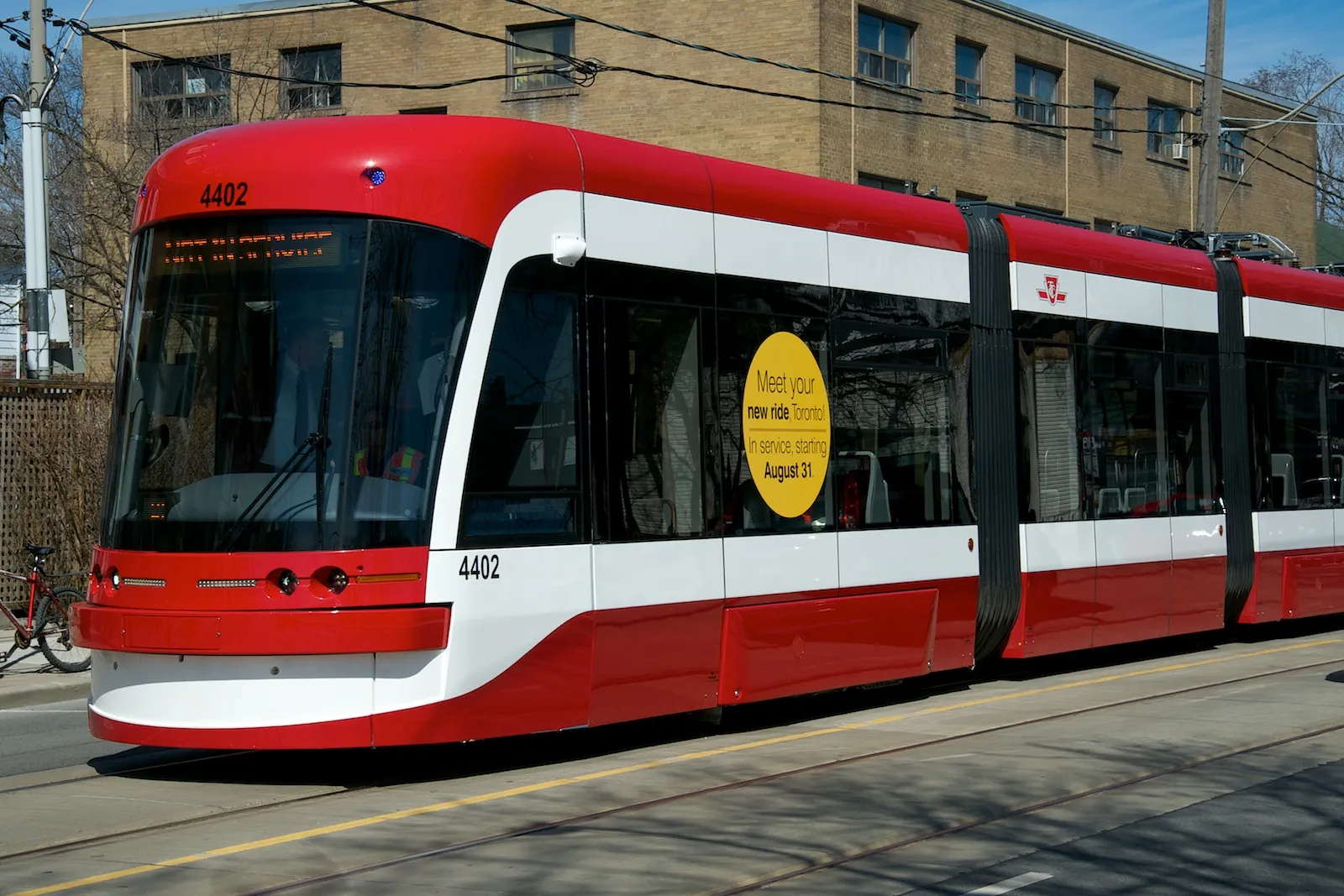
Toronto’s red-and-white Flexity low-floor streetcars run along the downtown avenues. Most share the road with traffic, except on Spadina Avenue, St Clair Avenue and Queens Quay, where they have their own lane, so expect slower trips at rush hour.
Key visitor streetcar routes
- 501 Queen: East-west along Queen Street through Eaton Centre, Osgoode Hall, Queen Street West, Trinity Bellwoods Park and Parkdale.
- 504 King: Runs along King Street’s transit priority corridor from the Entertainment District and Financial District east past St Lawrence Market towards the Distillery Historic District.
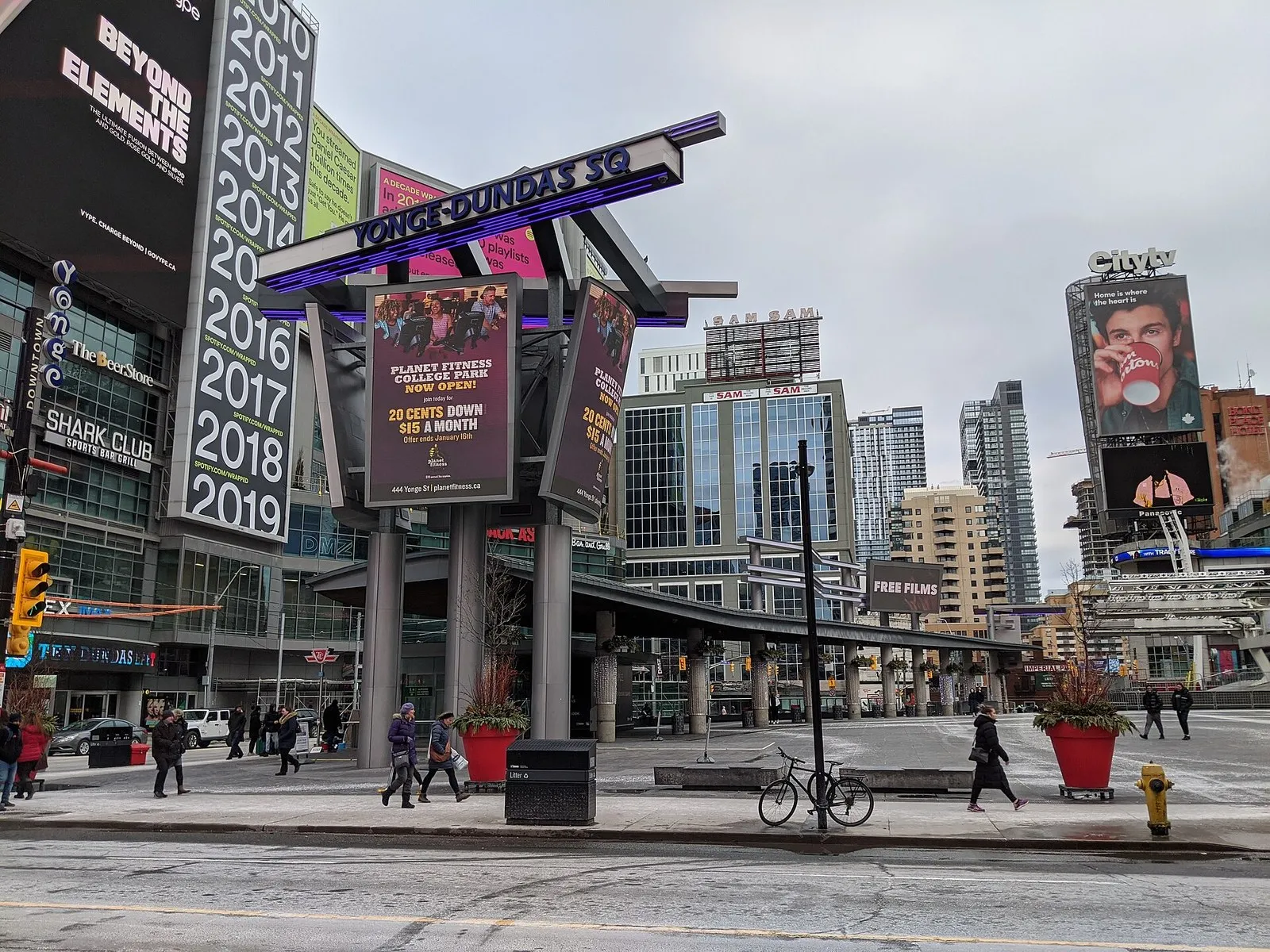
- 505 Dundas: Connects Yonge-Dundas Square, the Art Gallery of Ontario (AGO) and Chinatown.
- 506 Carlton: Runs along College Street past Queen’s Park into Little Italy.
- 509 Harbourfront: Dedicated waterfront lane from Union Station past Jack Layton Ferry Terminal, Harbourfront Centre and Bathurst Street, where the walk to the Billy Bishop Airport ferry starts, on to Exhibition Place.
- 510 Spadina: Dedicated centre lane from Union Station north through Chinatown and beside Kensington Market to Spadina Station (Line 1/2).
Boarding and fare inspection rules
Board through any door on a streetcar and tap your PRESTO card, debit or credit card or phone on the reader beside the doors. You do not tap off on the TTC. Inspectors make spot checks in stations and on vehicles, and you show the same card or device you tapped; travelling without paying risks a fine of up to CAD 425. Even after you reach the monthly cap you must keep tapping, because the tap is your proof of payment.
Buses and Blue Night overnight service
From about 01:30 until the subway reopens, the Blue Night Network takes over on most major routes. Its routes are numbered in the 300s and carry white and blue route lozenges, and service runs every 30 minutes or better, seven days a week. Overnight lines include 320 Yonge, 300 Bloor-Danforth and 301 Queen.
GO Transit and the One Fare Program
GO Transit runs regional green-and-white double-decker commuter trains and buses radiating out from Union Station across Greater Toronto and southern Ontario, including trains seven days a week to Niagara Falls for the Niagara day trip.
- Tap on and tap off: Unlike the flat-fare TTC, GO Transit charges by distance. Tap your PRESTO card, debit or credit card on the platform reader before boarding and again when you get off. The CAD 10 GO weekend pass is a separate option for Saturdays, Sundays and statutory holidays: you buy it online in advance, it works on a smartphone only and it cannot be loaded onto PRESTO.
- One Fare Program: When you pay with a PRESTO card or a debit or credit card, you pay once when connecting between GO Transit and the TTC. If you start on the TTC and move to GO within two hours of your first tap, the TTC fare is refunded and you get free transfers for up to three hours from your first tap onto GO. If you start on GO, the TTC transfer is free within the transfer window. Tap the same card each time. The programme does not apply to cash or PRESTO Tickets.
- UP Express is separate. Its tickets are not valid on the TTC or GO, and TTC and GO tickets are not valid on UP Express, so tap off the train before you transfer. The airports guide has its fares.
Bike Share Toronto, walking and Uber
Central Toronto is laid out on a grid, and Union Station, Old Town, Chinatown and Queen West are close enough to walk between.
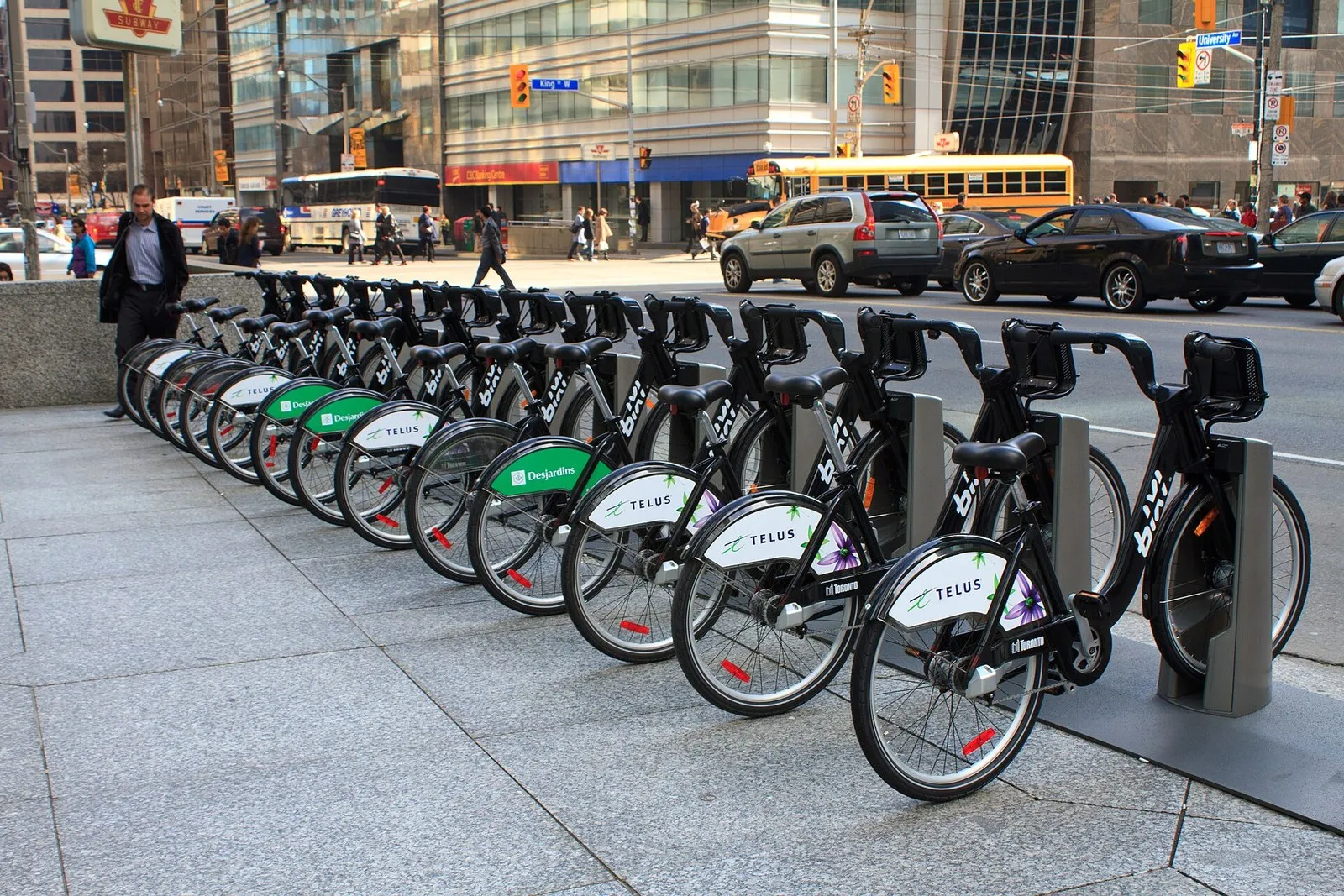 Bike Share Toronto docking station at King Street West and University Avenue. Photo: Gary J. Wood, Wikimedia Commons, CC BY-SA 2.0.
- Bike Share Toronto: Docking stations are spread across downtown, along Harbourfront, where the Martin Goodman Trail follows the lakefront, and in the Distillery District. The Bike Share Toronto app lists the current pay-as-you-go and day pass prices.
- Uber, Lyft and taxis: Available across downtown. In heavy rain or at rush hour the subway usually beats road traffic.
Plan your arrival from the airport in Pearson and Billy Bishop airports to city, check late-night transit awareness in is Toronto safe?, and put these routes to work in 3 days in Toronto.
Common questions
How much does a TTC subway or streetcar ride cost in Toronto?
A single adult TTC fare costs CAD 3.30 when you tap a PRESTO card or an Interac debit or credit card, including cards in Apple Pay or Google Pay. Paying with exact cash costs CAD 3.35 and does not include the 2-hour transfer.
Do I need to buy a PRESTO card as a visitor to Toronto?
No for adult visitors. Debit and credit cards and mobile wallets charge the same CAD 3.30 adult fare as a PRESTO card, include the same 2-hour transfer, count toward the monthly fare cap and qualify for Ontario's One Fare Program with GO Transit. Youth (13 to 19) and senior (65+) fares are available only on a PRESTO card set to that fare type.
How does the TTC 2-hour transfer work?
When you pay with a PRESTO card or a debit or credit card, any transfer made within two hours of your first tap is not charged another fare. Tap the same card or device every time you enter a subway station or board a bus or streetcar.
Is the TTC Day Pass worth buying?
The PRESTO day pass costs CAD 13.50, which is just over four single fares of CAD 3.30. Because each paid tap already includes a 2-hour transfer, most visitors pay for two or three fares a day, so paying per tap works out cheaper.
Do children ride the TTC for free?
Yes. Children aged 12 and under ride TTC subways, streetcars and buses free, and they also ride the UP Express airport train free.