In this guide
💡 The Short Version: Visitors move freely around Toronto’s main sightseeing areas, which stay busy well into the evening. The practical points to know before you arrive are the downtown blocks east of Yonge Street where street-level homelessness and mental health crises are most visible, the usual petty-crime precautions in crowds, and ice and wind from December to March. For official advice, read the UK Foreign Office’s Canada travel advice and the US State Department’s Canada travel advisory.
⚠️ Emergency numbers. Dial 911 for immediate police, fire or medical emergencies. Dial 311 for City of Toronto help, or 811 for Health811, Ontario’s nurse advice line.
How safe is Toronto overall?
The UK Foreign Office’s advice for Canada is to protect yourself from petty crime: do not leave bags unattended, keep valuables and your passport somewhere safe and carry a copy of your passport. Solo travellers, families and first-time visitors walk between Union Station, the CN Tower, St. Lawrence Market, the Royal Ontario Museum, Kensington Market and Queen Street West.
Like other large North American cities, downtown Toronto has visible homelessness and drug use in several east-side blocks. Knowing where they are helps you choose routes and hotels.
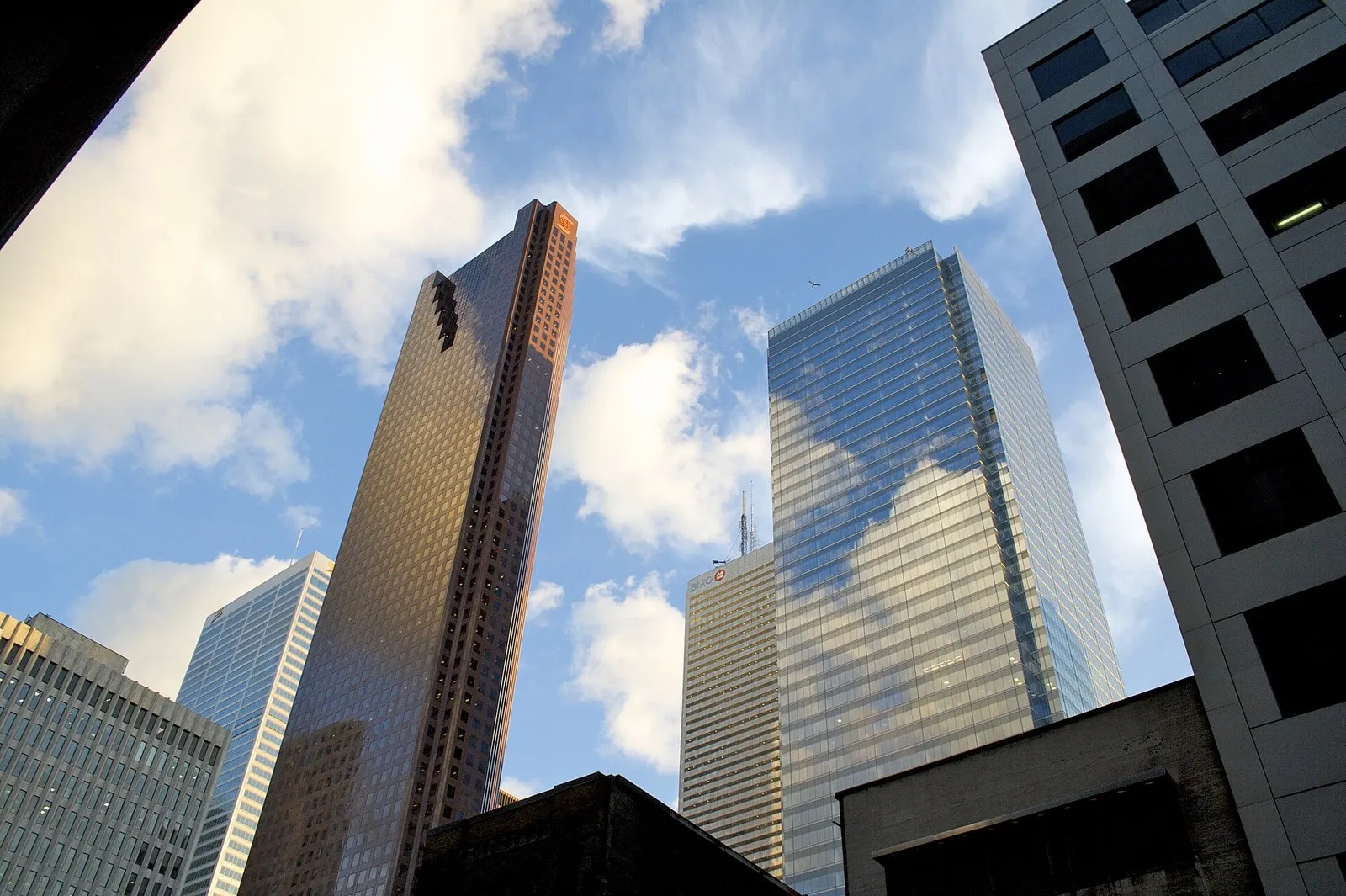
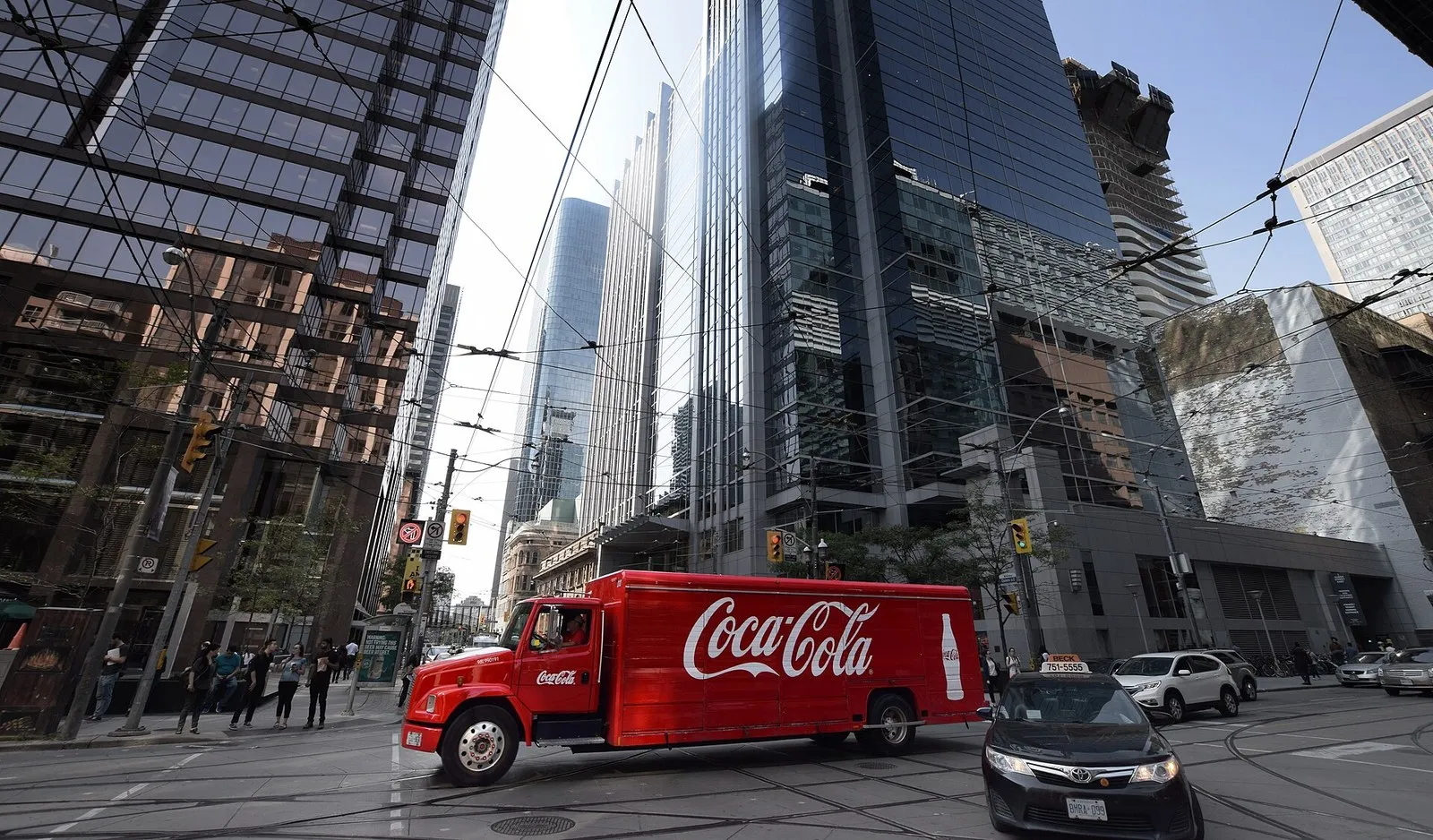 Downtown Toronto. Photo: Mark, Wikimedia Commons, CC BY 2.0.
Neighbourhood realities: where to be aware
Most visitor neighbourhoods are straightforward. Keep an extra layer of awareness in these blocks, especially after dark:
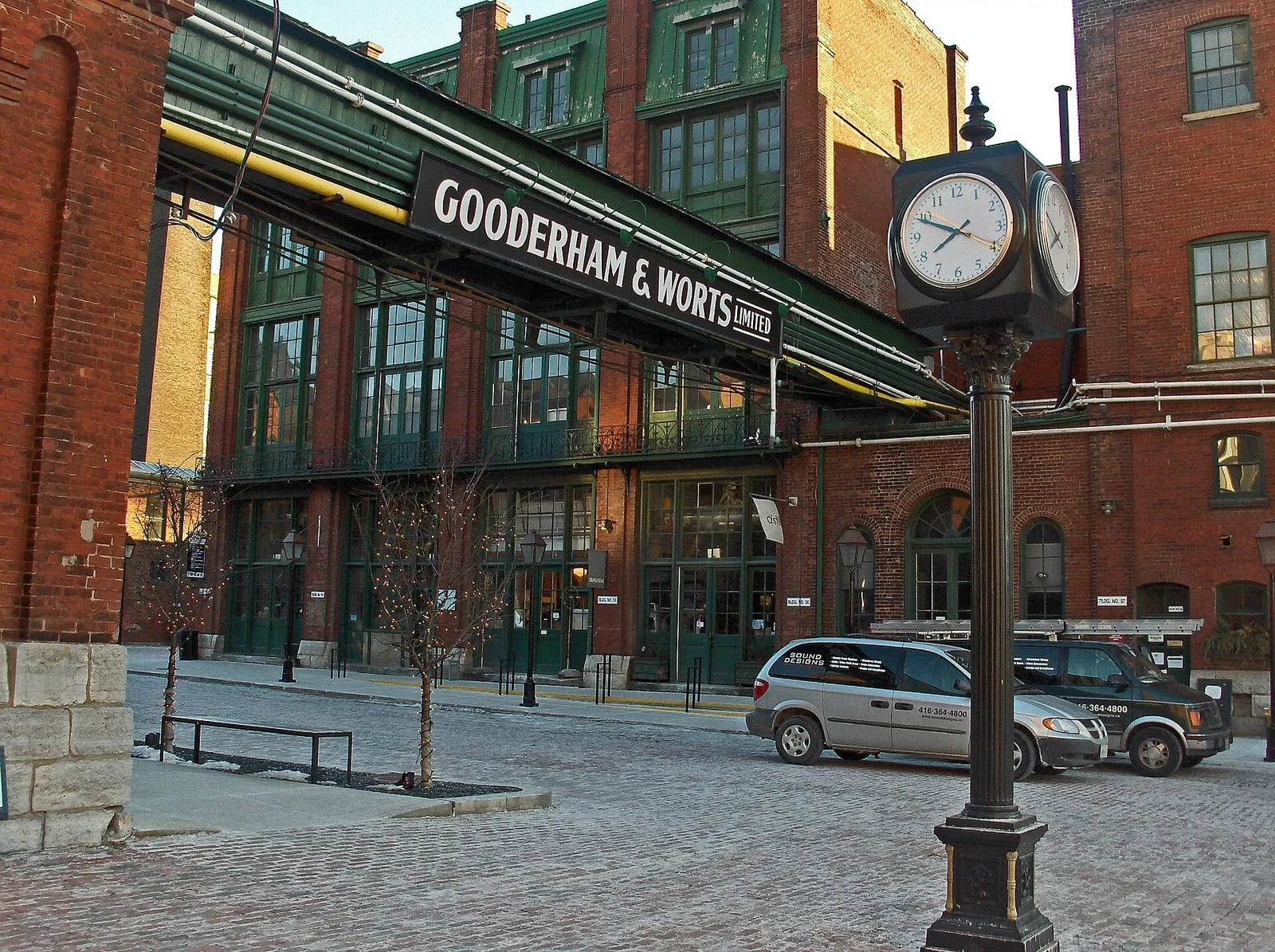
- Moss Park and the Sherbourne corridor (Queen St E and Sherbourne St, Dundas St E and Sherbourne St, and Allan Gardens at Carlton St): Shelters and support services are concentrated here, and you will see open substance use and people in acute distress. Walking between downtown and the Distillery Historic District, use Front Street East, King Street East or The Esplanade instead of Sherbourne Street.
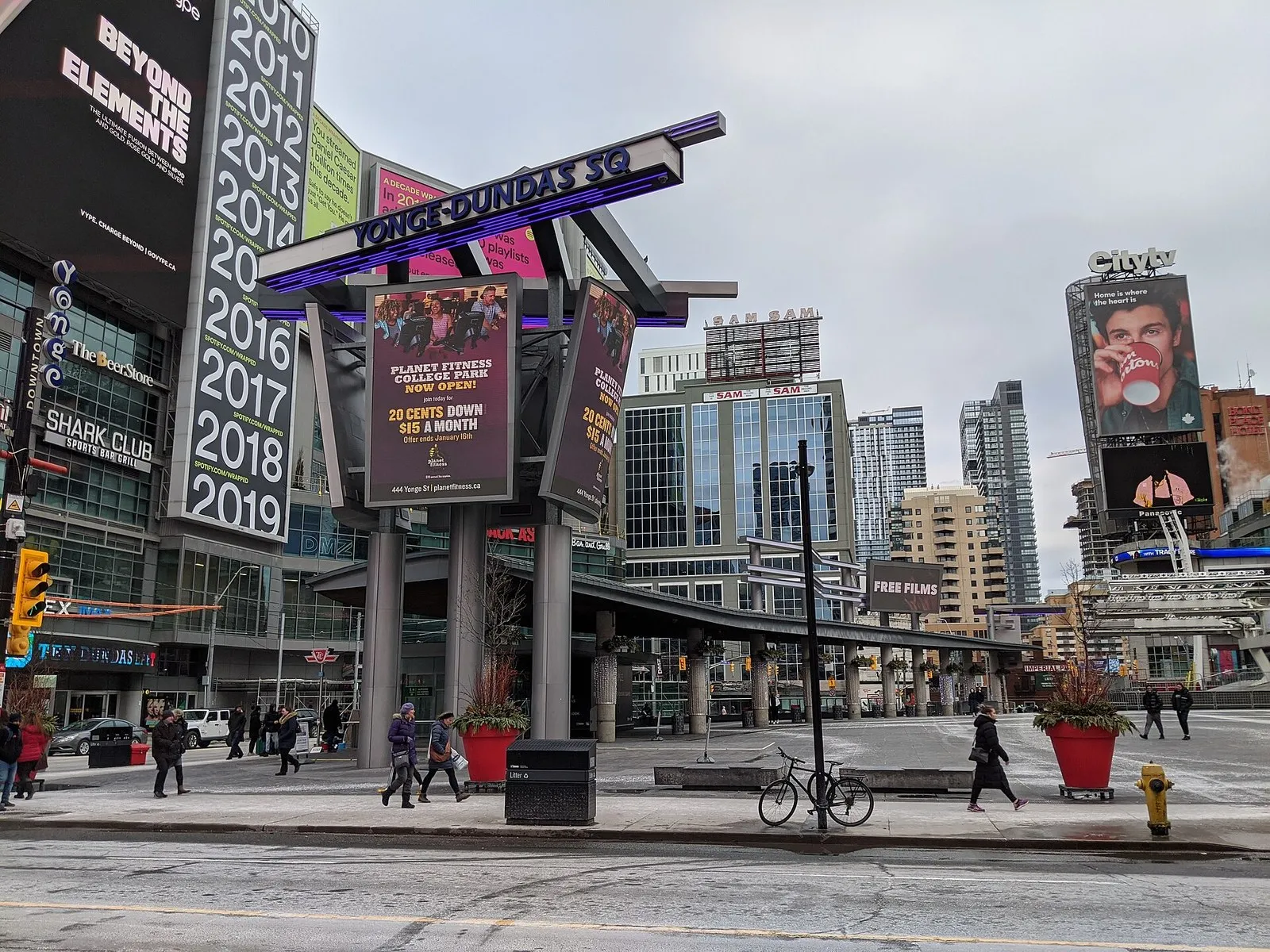
- Yonge Street between Dundas and Wellesley at night: The area around Sankofa Square (the former Yonge-Dundas Square) and the Toronto Eaton Centre is busy by day. Late at night, stay on the main street and keep phones out of sight near transit entrances.
- Financial District streets in the evening: Bay Street and Adelaide Street empty out once offices close.
For hotel areas that stay lively into the evening (Waterfront, Entertainment District, King West, Old Town and Yorkville), see where to stay in Toronto.
TTC subway, streetcar and night transit safety
The TTC has safety features on every subway platform and vehicle. See Toronto public transport for fares and routes.
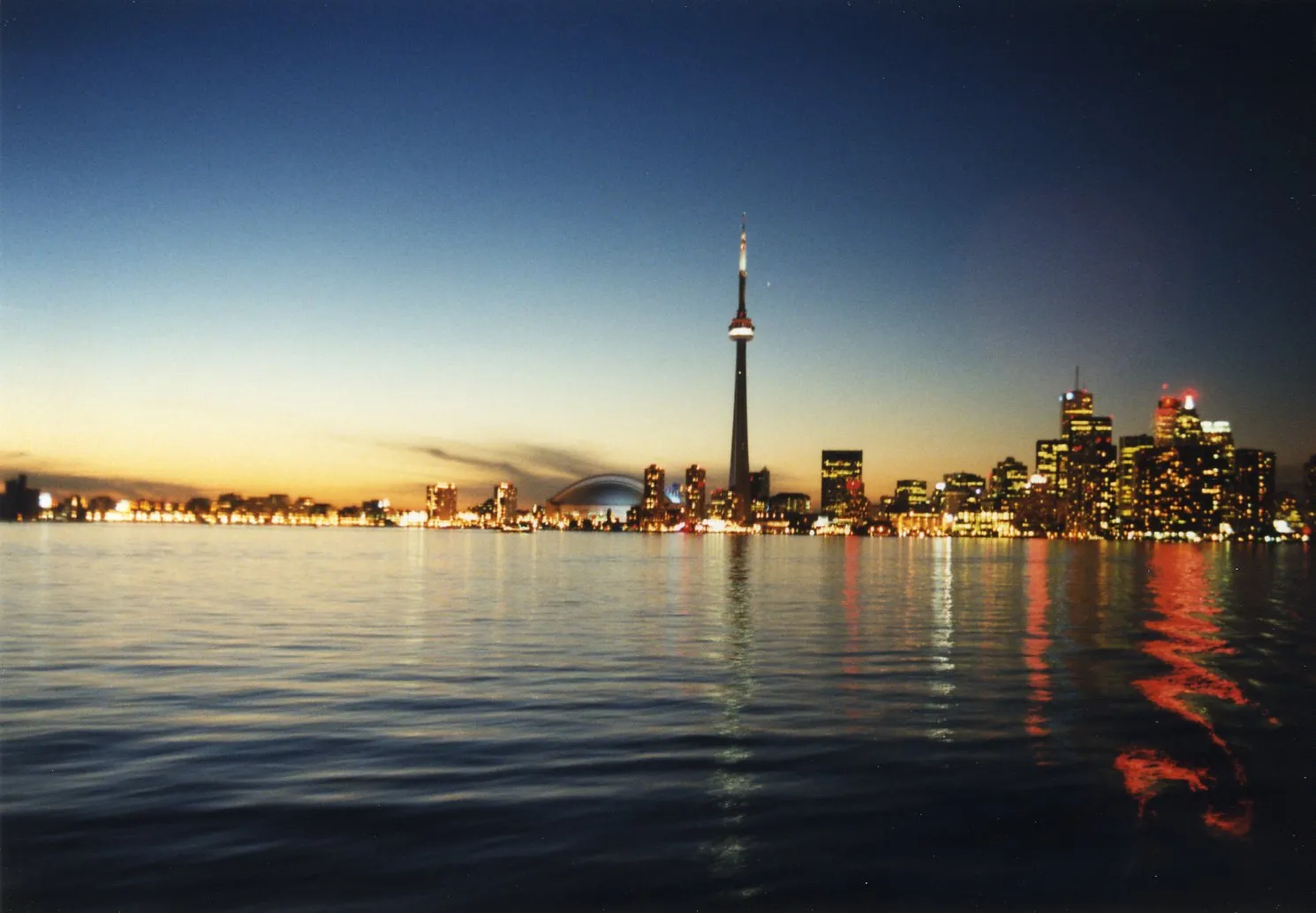 Toronto skyline at dusk. Photo: Gruffi, Wikimedia Commons, CC BY-SA 2.5.
- Designated Waiting Areas (DWAs): Every subway platform has one, with a Passenger Assistance Intercom to a TTC employee, benches, enhanced lighting and CCTV that the station’s Customer Service Agent can see. Wait there when you are alone late at night.
- Emergency Alarm: Press the yellow alarm above the window or near the doors of a subway train if you feel unsafe. It alerts the operator, and Transit Control notifies 911.
- SafeTTC app: The free TTC app lets you report an issue discreetly to Transit Control.
- Request Stop Program: Between 9 p.m. and 5 a.m., any customer travelling alone by bus can ask the operator to stop between regular stops, closer to where they are going. It does not apply on streetcars.
- Blue Night Network: Overnight service runs on most major routes from about 01:30 until the subway starts, every 30 minutes or better, on 300-series routes.
Pickpocketing, scams and nightlife
- Pickpocketing: Keep phones and wallets in zipped front pockets or crossbody bags worn in front in crowded TTC cars, the Toronto Eaton Centre, Yonge-Dundas Square and at festivals such as Caribana and Pride.
- Nightlife and bars: King Street West, Ossington Avenue and Queen Street West have lively weekend bar scenes. Ontario’s legal drinking age is 19, so carry photo ID.
- Cannabis: Recreational cannabis is legal for adults in Canada, with rules that vary by province. You must not take it across the Canadian border in either direction without the permit the Government of Canada requires.
Weather, waterfront and traffic safety
For visitors, weather and traffic are more common hazards than crime:
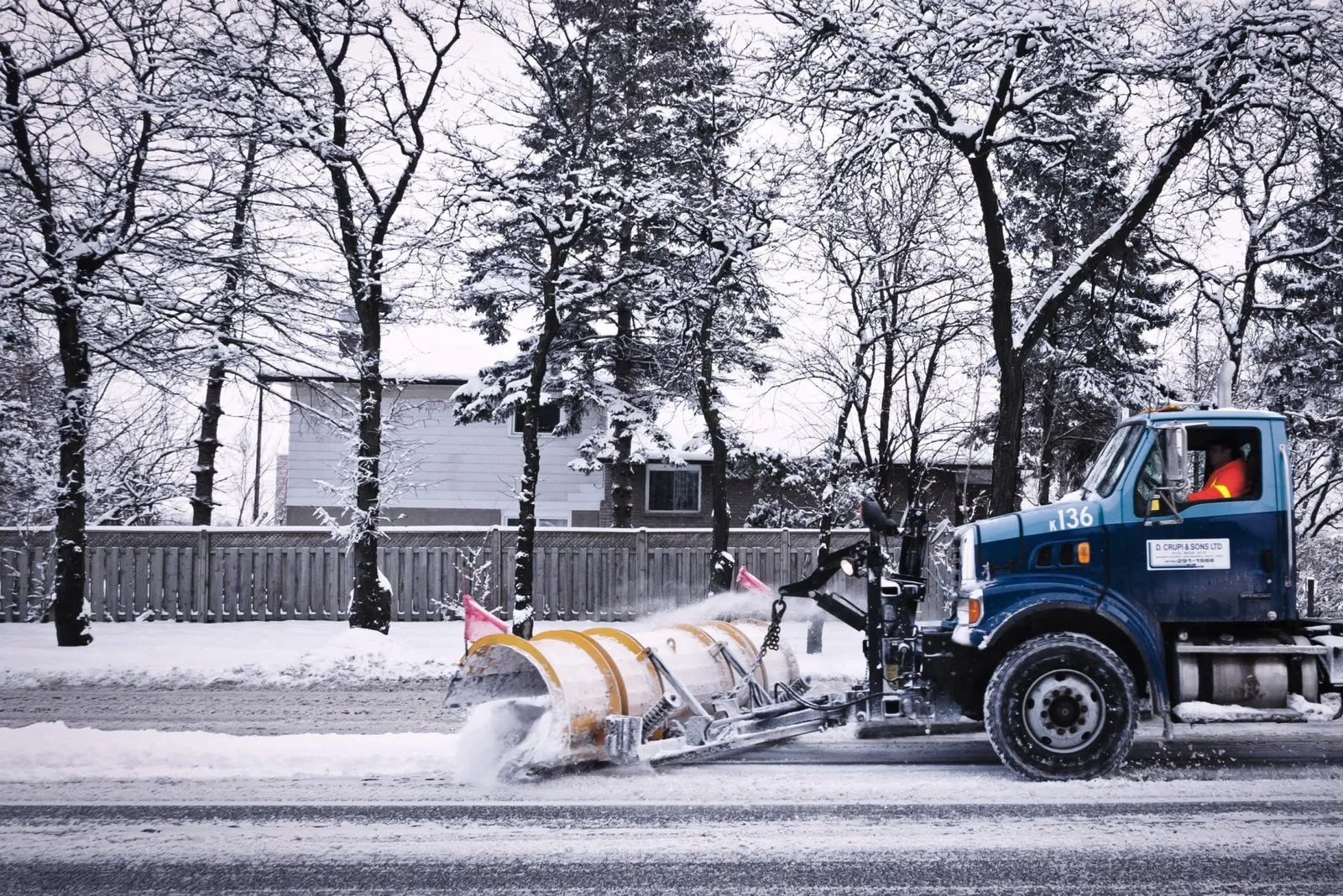 Winter snow clearing. Photo: Benson Kua, Wikimedia Commons, CC BY-SA 2.0.
- Winter ice and wind (December to March): Freeze-thaw cycles leave ice on shaded pavements. Pack waterproof boots with a gripping sole, warm gloves, a windproof coat and a toque (beanie). The 30 km underground PATH network downtown keeps walks indoors; see best time to visit Toronto.
- Streetcar tracks: Drivers must stop at least 2 metres behind a streetcar when its doors are open and its lights are flashing, so look both ways before stepping down. If you ride a bike, cross the steel rails at a sharp angle so your front tyre does not catch in the groove.
- Swimming at the Toronto Islands: On beaches such as Ward’s, Centre and Hanlan’s Point, obey lifeguard flags and check the City of Toronto’s beach water-quality postings before you swim. See the Toronto Islands and ferry guide.
Healthcare, pharmacies and practical help
- Travel medical insurance: Ontario’s public health insurance covers residents, not visitors. Carry travel medical insurance before you fly, because emergency treatment is billed to you.
- Pharmacies: Shoppers Drug Mart and Rexall branches cover downtown. Ontario pharmacists can assess and prescribe treatment for some minor ailments.
- Hospitals downtown: Toronto General Hospital (200 Elizabeth St), St. Michael’s Hospital (30 Bond St) and Mount Sinai Hospital (600 University Ave) have emergency departments within a short ride of downtown hotels.
Pair this overview with money in Toronto, Pearson and Billy Bishop airports to city and 3 days in Toronto to plan your trip.
Common questions
Is Toronto safe for tourists and solo travellers?
Visitors move freely between the main sightseeing areas, including the Waterfront, Old Town, the Distillery District, the Financial District, Yorkville, Queen West, Kensington Market and the Islands. The usual advice applies: keep bags and valuables secure and be aware of your surroundings in crowds and after dark. The UK Foreign Office and the US State Department both publish current Canada travel advice.
Which areas of downtown Toronto need more awareness at night?
The blocks around Moss Park (Queen St E and Sherbourne St), Dundas St E and Sherbourne St, and Allan Gardens (Carlton St and Sherbourne St) have shelters and support services, and you will see people in distress there. Walking between downtown and the Distillery District, Front Street East, King Street East and The Esplanade are alternatives.
Is the TTC subway safe at night?
Every subway platform has a Designated Waiting Area with a Passenger Assistance Intercom, benches, enhanced lighting and CCTV that the station's Customer Service Agent can see. Inside a train, the yellow Emergency Alarm above the window or by the doors alerts the operator, and the SafeTTC app reports problems to Transit Control.
What is the emergency phone number in Toronto?
Dial 911 for police, fire or ambulance. For non-emergency Toronto Police matters, call 416-808-2222. Dial 311 for City of Toronto services and 811 for Health811, Ontario's nurse advice line.
What winter safety precautions do Toronto visitors need?
Between December and March, ice on pavements and wind off Lake Ontario are the common hazards. Wear waterproof boots with a gripping sole, gloves and a windproof coat, and use the underground PATH network downtown when it is very cold.