In this guide
💡 The Short Version: The currency is the euro. Cards and phones work almost everywhere, trams included, but street parking meters take cash only and Visit Tallinn advises carrying a little for markets and very small businesses. There is no tourist tax on hotel stays. A tip of about 10% is common for exceptional service and not compulsory. Visitors who live outside the EU can claim back VAT on purchases over €38.
⚠️ Choose euros when a terminal offers your home currency. If an ATM or card machine asks whether to charge you in your home currency or in EUR, choose EUR. Letting the terminal convert gives you its own, less favourable rate.
The euro in Estonia
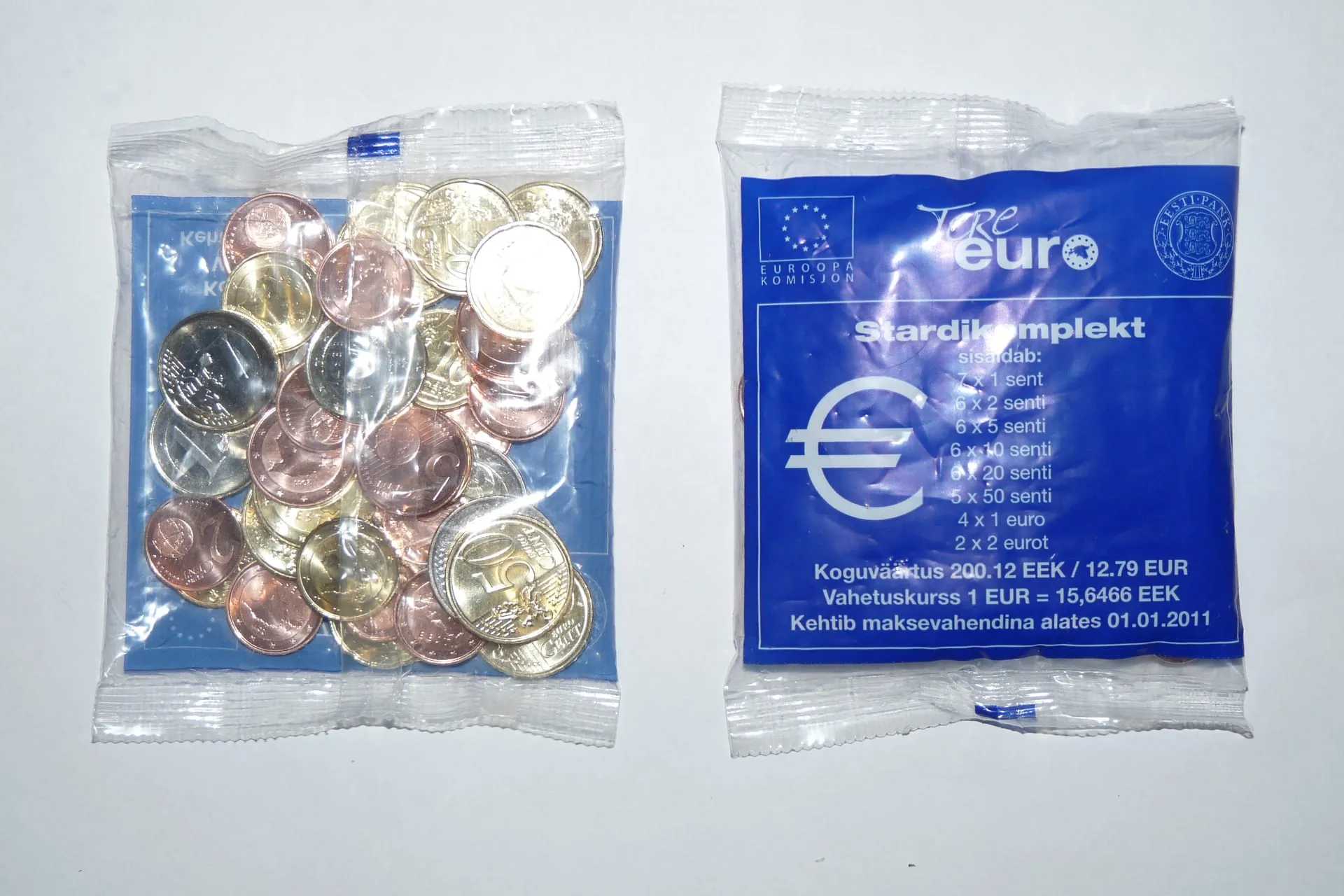
Estonia adopted the euro on 1 January 2011. The coins run from 1 cent to €2, eight in all, and every one carries the same design: the outline of Estonia and the word Eesti. The starter bag of coins in the photo at the top held €12.79, the equivalent of 200.12 kroons at 15.6466 kroons to the euro.
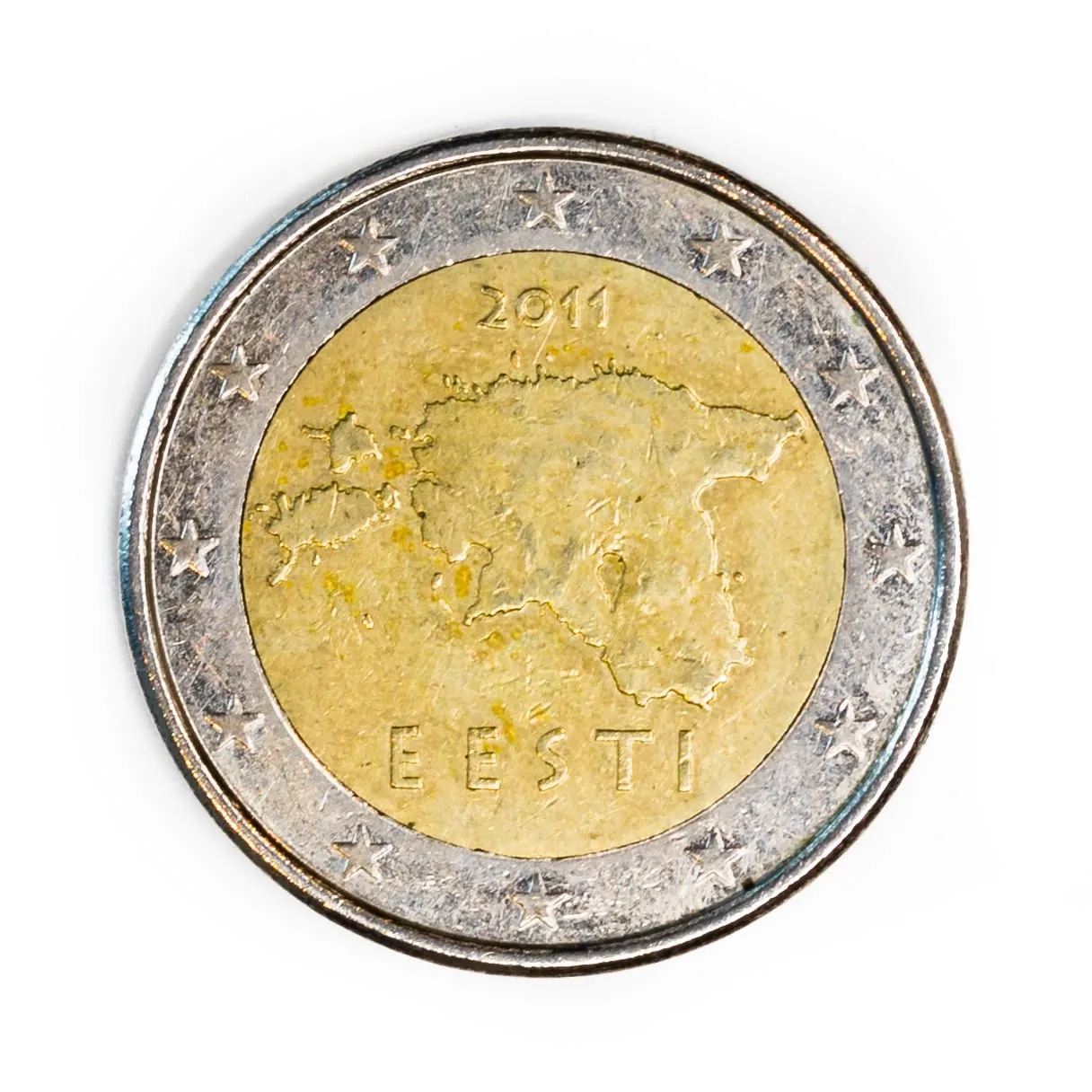
Estonian 2 euro coin. Photo: Ximonic (Simo Räsänen), Wikimedia Commons, CC BY-SA 3.0.
Paying for transport
Drivers do not sell tickets and you cannot pay for a ticket in cash. Tap a contactless bank card on the validator at the front door, buy a QR ticket in the pilet.ee app, or use a ticket machine at the airport, bus station, ferry terminals A and D, the cruise terminal, the Viru Centre bus terminal or the Tallinn Tourist Information Centre. The machines take cards only. The fares are in public transport in Tallinn.
Cards and cash
Hotels, shops and restaurants widely accept Visa and Mastercard, and contactless payments and mobile wallets such as Apple Pay and Google Pay are commonly used. On trams and buses you tap a contactless bank card on the validator; see public transport in Tallinn.
Cash still has a few uses:
- Street parking meters accept only cash, though the Pargi.ee app takes Visa and Mastercard.
- Markets and very small businesses, such as the stalls at Balti Jaama Turg, are where Visit Tallinn suggests keeping some notes.
- Foreign currency can be exchanged only at specialised exchange offices, and they charge service fees.

Balti Jaama Turg. Photo: Jorge Franganillo, Wikimedia Commons, CC BY 2.0.
Parking
Parking on the streets of the Old Town, downtown and the city centre generally costs money. The Pargi.ee app takes Visa and Mastercard debit cards and works in eight languages, including English, which makes it the way for a visitor with a hire car to pay.
Tipping
Tipping is not compulsory in Tallinn. If the service or the food is exceptionally good, about 10% of the bill is common.
Tourist tax
There is no tourist tax on accommodation in Estonia or Tallinn, so the rate you book is the rate you pay. Local authorities cannot introduce a tax without a change in national law. For hotels, see where to stay in Tallinn.
What things cost
Adult prices at the operators’ own ticket offices, in euros.
| What | Price |
|---|---|
| One-hour tram, bus or trolleybus ticket | €2 |
| Day ticket on public transport | €5.50 |
| Seaplane Harbour | €22 |
| TV Tower | €18 online, €19 at the door |
| Kumu | €16 |
| Fat Margaret | €16 |
| Kiek in de Kök | €16 |
| Kadriorg Art Museum | €15 |
| Niguliste Museum | €15 |
| Great Guild Hall | €14 |
| Tallinn Card | €45 for 24 hours, €65 for 48, €78 for 72 |
Every branch of the Art Museum of Estonia (Kumu, Kadriorg, Mikkel, Niguliste and Adamson-Eric) charges €3 on the last Wednesday of the month. The Tallinn Card pays only on museum-heavy days, and the Old Town streets and viewpoints cost nothing; see free things to do in Tallinn.
Tax-free shopping
If you live outside the European Union, including in the UK, the US, Canada or Australia, you can claim back the VAT on goods you take out of the EU. The rate in Estonia is 24%. Residents of EU countries cannot claim.
- Ask the shop for a tax-free receipt. The shop issues one when the price of the goods, including VAT, is over €38.
- Keep the goods in unopened packaging and unused.
- Show the goods, the receipt and your ID to customs when you leave Estonia or another EU country, no later than the last day of the third month after the month you bought them. A purchase on 20 January must leave the EU by 30 April.
- Then take the stamped receipt to the shop’s refund point or the refund company named on it.
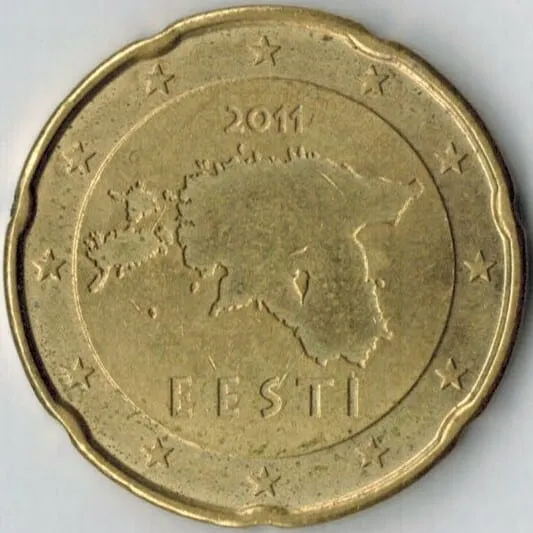
Estonian 20 cent coin. Photo: Pachy184Derm, Wikimedia Commons, CC BY-SA 4.0.
Alcohol
Shops in Tallinn may sell alcohol only between 10:00 and 22:00, and drinking alcohol in public places is prohibited. For where to drink, see Tallinn craft beer and bars and where to eat in Tallinn.
Plan the rest
Arriving by air, Tallinn Airport to the city covers the fares from the terminal. Is Tallinn safe covers card skimming and taxi rates.
Common questions
What currency is used in Tallinn?
The euro (€). Hotels, shops and restaurants widely accept Visa and Mastercard, and contactless payments and mobile wallets such as Apple Pay and Google Pay are commonly used.
Do I need cash in Tallinn?
Rarely. Card payments are preferred in most places, but Visit Tallinn advises carrying a small amount of cash for markets and very small businesses. Street parking meters accept cash only.
How much should I tip in Tallinn?
Tipping is not compulsory. If the service or food is exceptionally good, about 10% of the bill is common.
Does Tallinn charge a tourist tax on hotels?
No. Estonia has no tourist tax on accommodation, and local authorities cannot introduce one without a change in national law.
Can I claim VAT back on shopping in Estonia?
Yes, if you live outside the European Union. Ask the shop for a tax-free receipt, which it issues when the purchase, including VAT, is over €38. Present the goods and receipt to customs when you leave the EU, no later than the last day of the third month after the month of purchase.