In this guide
💡 The Short Version: Kadriorg Palace (Kadrioru loss) was begun by Peter the Great in 1718 as a baroque summer residence. Since 2000 it has housed the Kadriorg Art Museum, the largest collection of old Western European and Russian art in Estonia. An adult ticket is €15 (free with the Tallinn Card), and the museum is closed on Mondays. The surrounding Kadriorg Park, about 70 hectares, is free. Trams 1 and 3 run from the Old Town. Or book a tour: a 2-hour bike tour of the sights outside the Old Townad includes Kadriorg Park and palace.
⚠️ Closed Mondays. The Kadriorg Art Museum and the Mikkel Museum are closed every Monday all year. The Japanese Garden in the park is generally closed in winter.
An imperial retreat on the Baltic
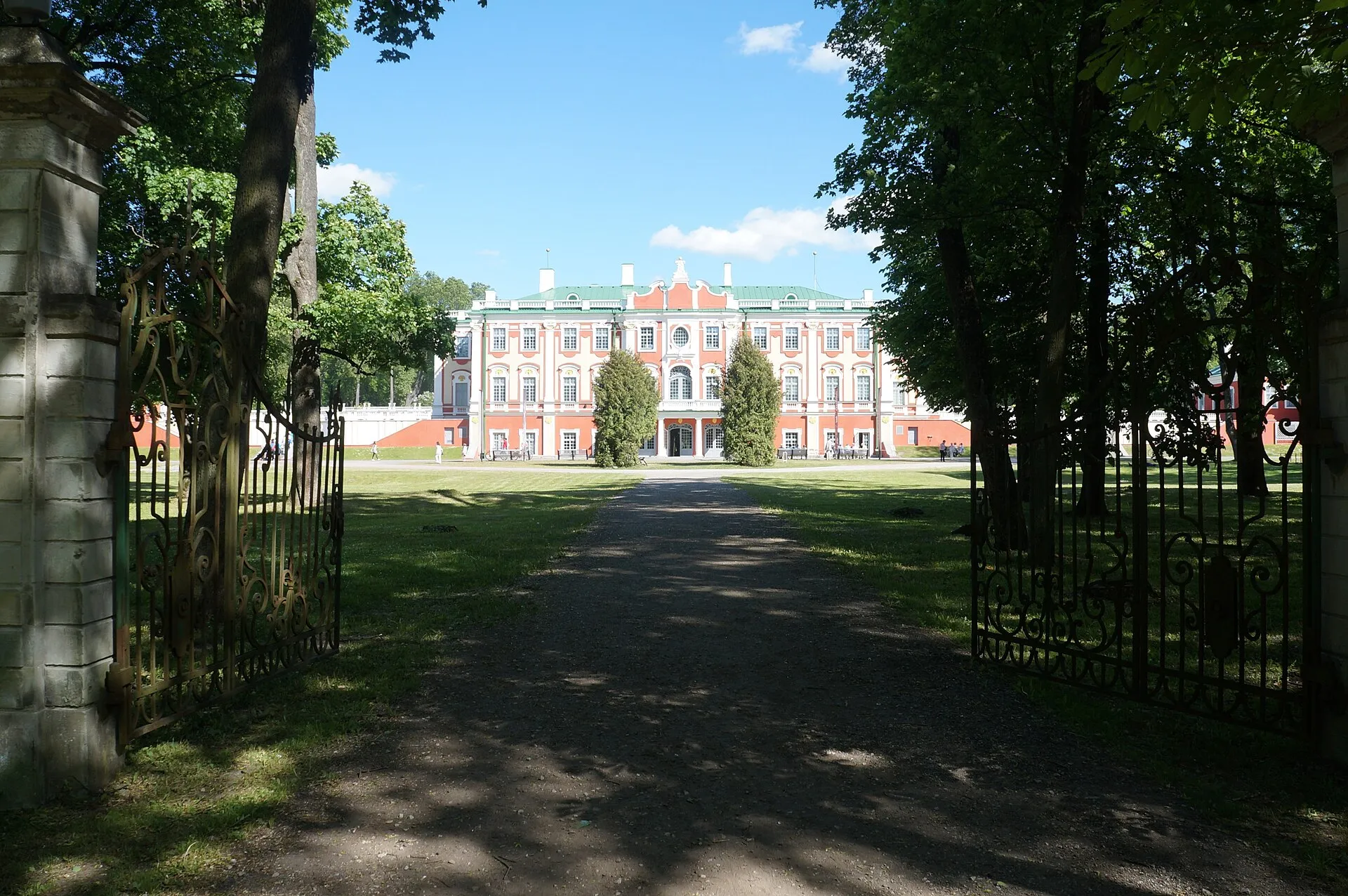
Peter the Great began the palace in 1718, before the Great Northern War had even ended, and named the palace and park Kadriorg (Catharinenthal in German, “Catherine’s valley”) after his wife Catherine I. The Italian architect Nicola Michetti designed it, with the Venetian stucco master Antonio Quadri and Salomon Zeltrecht from Sweden among the other craftsmen. After Peter died in 1725 interest in the palace faded, and it was fitted out again for visits by the Empresses Elizabeth in 1746 and Catherine II in 1764.
In the 1930s the palace was the residence of the Estonian head of state. After serving as the main building of the Art Museum of Estonia in the 1920s and again from 1946 to 1991, it reopened in 2000 as the Kadriorg Art Museum (Kadrioru kunstimuuseum).
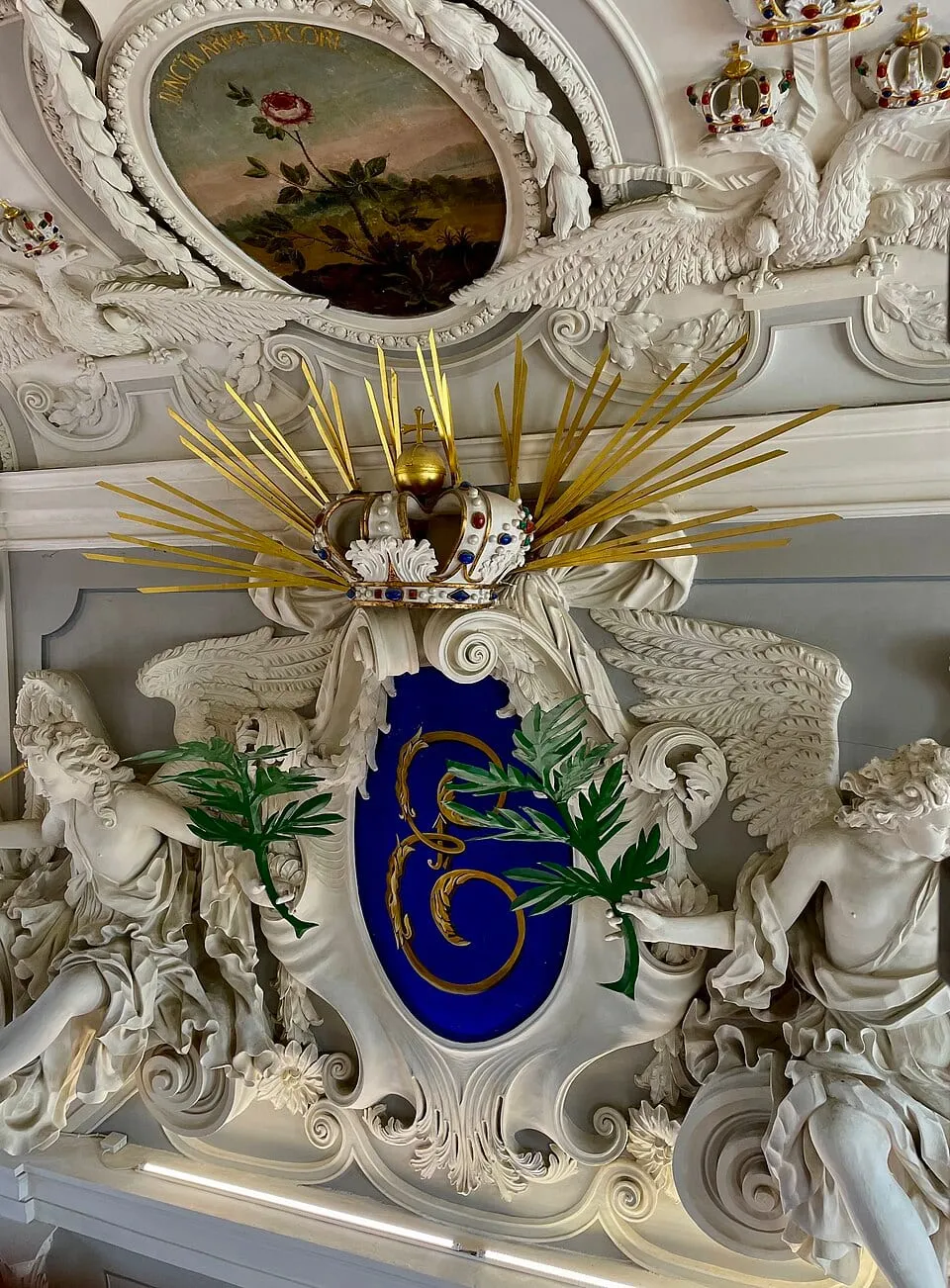
Stucco ornament, Kadriorg Palace. Photo: SamuelMMäkimaa, Wikimedia Commons, CC BY-SA 4.0.
Tickets and opening hours
Tickets can be bought at the museum counter or in the Art Museum of Estonia’s web shop. A ticket is valid for one visit to one museum, and combined tickets are valid for one visit to each museum within a year, on different days if you like.
| Ticket | Scope | Adult | Concession | Family |
|---|---|---|---|---|
| Kadriorg Art Museum | The palace | €15 | €10 | €30 |
| Mikkel Museum | Private collections | €10 | €7 | €20 |
| Kadriorg + Mikkel | Two museums | €20 | €12 | €40 |
| Kumu + Kadriorg + Mikkel | Three museums | €28 | €20 | €56 |
| Tallinn Card | All Art Museum of Estonia branches | Free | Free | Free |
| Kadriorg Park | The grounds | Free | Free | Free |
- Concessions: students, seniors aged 65 and over, conscripts, and holders of ISIC, ITIC or European Youth Cards. Bring proof.
- Children: free up to age 8.
- 3-Euro Wednesdays: on the last Wednesday of each month, entry is €3 per person and €6 for a family, sold at the ticket office.
- Opening hours:
- Tuesday, Thursday to Sunday: 10:00 to 18:00
- Wednesday: 10:00 to 20:00
- Monday: closed
Tours worth paying for
A guide covers more ground than the palace on its own. The bike tour is the cheaper option, and the small-group tour adds Pirita.
2-hour bike tour of Tallinn’s top sights and seaside promenade
From €31 · 4.9 stars from 539 reviews · 2 hours · small group
The Tallinn: 2-Hour Bike Tour of Top Sights & Seaside Promenadead starts from the City Bike office on Vene street in the Old Town and rides mainly on cycle paths and quiet roads. It covers Kadriorg park and palace, the seaside promenade, the Olympic Centre and the World War II memorial, and it runs in winter on spiked tyres.
Old Town and Kadriorg district guided tour
From €127 · 4 hours · small group, up to 7
The Tallinn Classic: Old Town and Kadriorg District Guided Tourad starts with a walk through the Old Town, then goes by bus to Kadriorg and on to the Pirita beach area, with the convent ruins, the TV tower and the Song Festival Grounds. Pick-up is from the Tourist Information Centre, and lunch and transport are included.
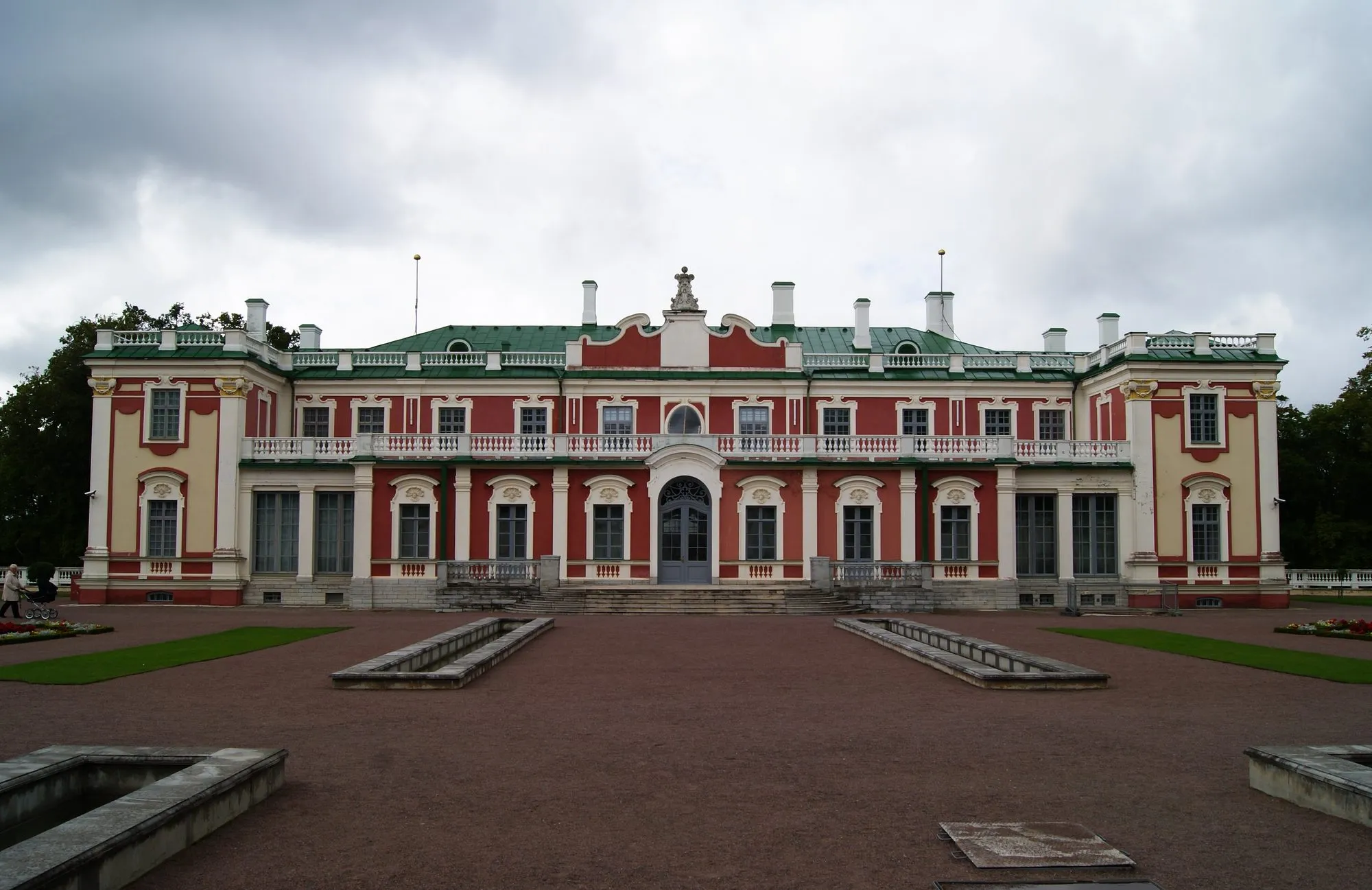
Kadriorg Palace, garden front. Photo: Guillaume Speurt, Wikimedia Commons, CC BY-SA 2.0.
Inside Kadriorg Palace
The palace’s main hall is one of the most ornate examples of baroque interior decoration in Estonia and northern Europe. The building itself is the most important exhibit: the main hall and facade date from Peter’s time, the stairs and room layout from the 19th century, and the neo-baroque banquet hall and oak-furnished rooms from the 1930s.
The permanent exhibition shows foreign art from the 16th to the 20th century, arranged by national school. The two largest are Netherlandish and Russian:
- Netherlandish painting: mainly 17th-century work, including two panels from the studio of Pieter Breughel the Younger, a still life by Clara Peeters and a painting in the manner of Hieronymus Bosch.
- German portraits: a Cranach workshop portrait of John Frederick the Magnanimous, from about 1550, and portraits by Anton Graff.
- Applied art and sculpture: Western European and Russian pieces from the 18th to the 20th century.
An audio guide is available in English, Estonian, Russian and Italian.
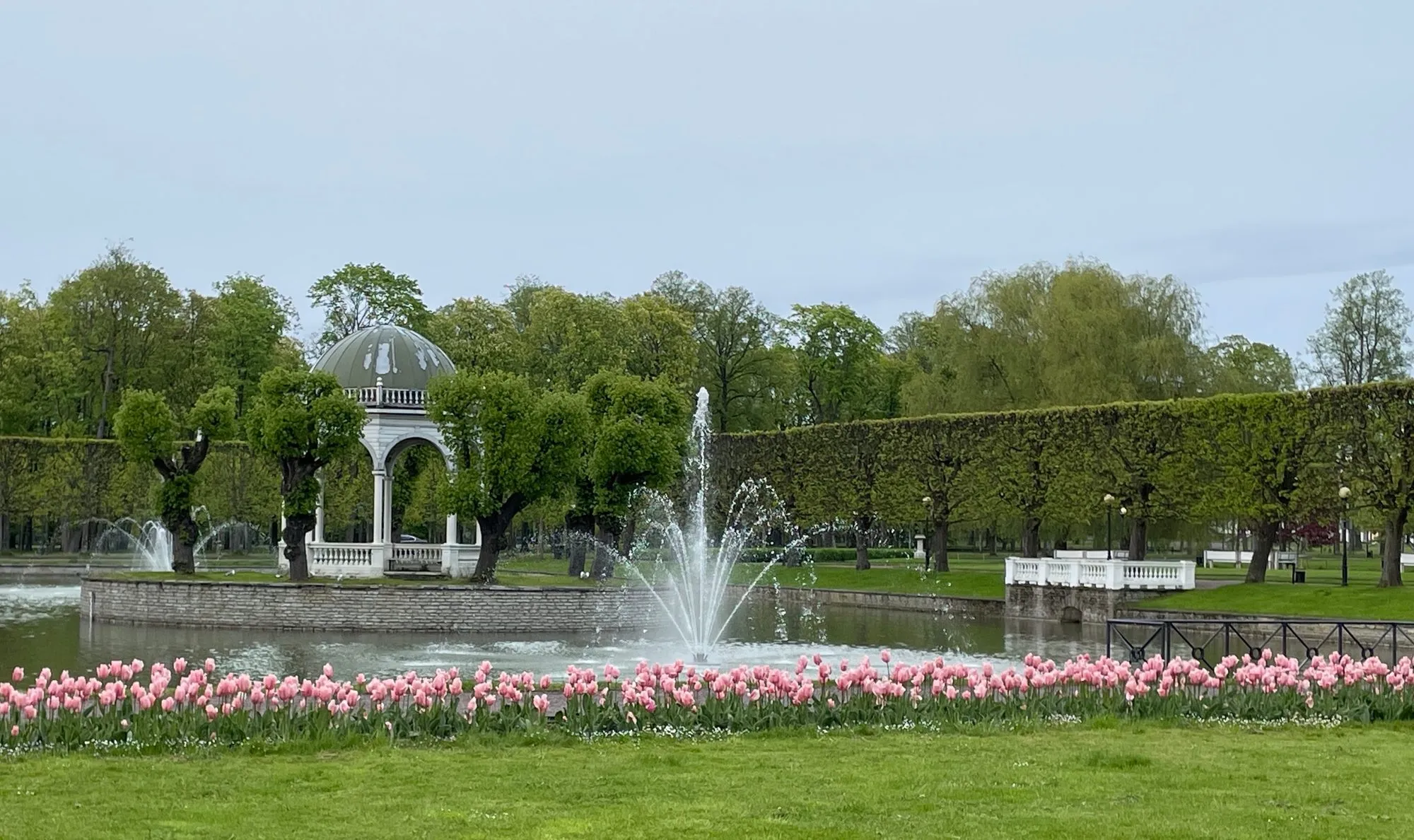
Swan Pond, Kadriorg Park. Photo: Veterine, Wikimedia Commons, CC BY-SA 4.0.
Other sights in Kadriorg Park
The park, about 70 hectares, was laid out from 1718 and has been public ever since.
Mikkel Museum (Weizenbergi 28)
The Mikkel Museum shows private collections and the habit of collecting. Most of it consists of the purchases of the collector Johannes Mikkel, with temporary exhibitions of other private collections.
Swan Pond (Luigetiik)
The Swan Pond, near the palace, appears on park plans from 1723. An islet with a pavilion was built in the middle in 1741. In the 1930s the pond was renamed for the swans that summered there, and fountains and a round pillared bandstand were added.
The Japanese Garden
The Japanese Garden near the north-eastern pond opened on 31 July 2011 and was overseen by the Kyoto designer Masao Sone. He laid out the stones to echo the church towers and gabled roofs of Tallinn’s Old Town. The garden is quiet, with no cyclists or dogs, and is generally closed in winter. Cherry blossom comes in spring, rhododendrons at the start of summer and maple colour in autumn.
Getting to Kadriorg
- By tram: tram 1 (from Kopli via Balti jaam) and tram 3 (from Tondi via Viru) both stop at Hobujaama beside the Old Town and run on to the Kadriorg terminus by Kumu. See the public transport guide for fares.
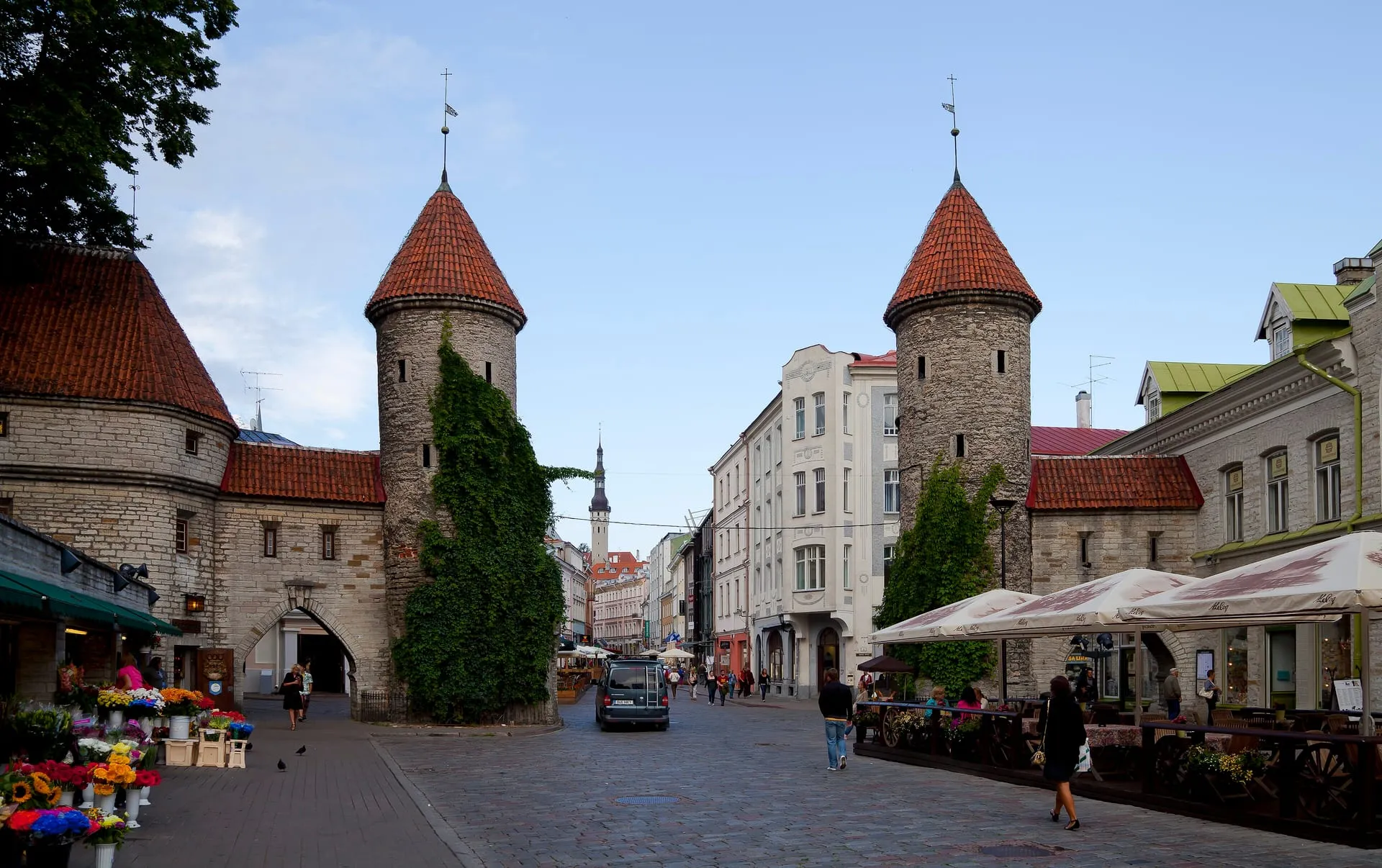
- On foot: from Viru Gate it is about 2 kilometres east, roughly 25 to 30 minutes’ walk.
Practical tips for your visit
- Combine with Kumu: Kumu, the museum of Estonian art, is at the edge of the park a short walk from the palace. The €28 three-museum ticket covers Kumu, the palace and the Mikkel Museum.
- Seaside extension: from the palace it is a walk towards the shore to the Russalka memorial, a bronze angel for the Russian warship Russalka, lost at sea in 1893.
What to see next
- Kumu Art Museum: the main building of the Art Museum of Estonia, at the edge of the park.
- Free things to do in Tallinn: including the seafront walk from Kadriorg.
- Tallinn Card: is it worth it?: what the card covers in Kadriorg and on public transport.
- Public transport in Tallinn: tram lines, contactless tickets and airport routes.
Common questions
How much are tickets to Kadriorg Palace?
An adult ticket to the Kadriorg Art Museum is €15, a concession ticket €10 and a family ticket €30. The Mikkel Museum is €10 for adults. A combined ticket for the Kadriorg and Mikkel museums is €20, and one that adds Kumu is €28. Entry is free with the Tallinn Card, and the park is free.
Is Kadriorg Palace open on Mondays?
No. The Kadriorg Art Museum and the Mikkel Museum are closed on Mondays all year. They are open Tuesday and Thursday to Sunday 10:00 to 18:00, and Wednesday 10:00 to 20:00.
Who built Kadriorg Palace?
Tsar Peter the Great began the palace in 1718 and named it Kadriorg (Catharinenthal in German) after his wife Catherine I. It was designed by the Italian architect Nicola Michetti.
How do I get to Kadriorg from Tallinn Old Town?
Take tram 1 or tram 3 from the Hobujaama stop beside the Old Town to the Kadriorg terminus, then walk through the park to the palace.
Is Kadriorg Park open year-round?
Yes, the park is public and free. The Japanese Garden in it is generally closed in winter.