In this guide
💡 The Short Version: The UK Foreign Office says crime levels in Croatia are low and violent crime is rare (FCDO). The risks it names are pickpockets in tourist areas, overcharging at some clubs and on-the-spot fines in Dubrovnik for drinking in public, walking through town in swimwear or climbing on monuments. In an emergency call 112, or police on 192. Carry your passport, and take travel insurance as well as a GHIC or EHIC. The US State Department also publishes a travel advisory for Croatia.
⚠️ Dubrovnik fines public behaviour on the spot. The Foreign Office says you can be fined on the spot for drinking alcohol in public spaces, sleeping in public spaces, urinating or vomiting in public, walking through town shirtless or in swimwear, and climbing on monuments. Public order offences can cost up to €4,000.
Crime and scams
- Pickpockets: the Foreign Office says they operate in tourist areas. It advises you to avoid carrying large sums of cash, not to leave valuables unattended and to use hotel safes.
- Club bills: tourists have been overcharged at some “gentlemen’s clubs” in Croatia, sometimes by thousands of euros, and threatened with violence when they refused to pay.
- Taxis: there have been sexual assaults in taxis in Croatia. Take a photo of the inside, where the taxi number is visible, and send it to a friend; share your ride status on the taxi app; or make a call in the taxi to say which taxi it is and where you are going. Getting around Dubrovnik covers buses.
- Drugs: carrying cannabis for personal use is decriminalised, but you can be asked to pay heavy fines, and possession, use or smuggling of illegal drugs carries severe penalties.
- Large gatherings: public events are overwhelmingly safe and peaceful in Croatia, with periodic violence between football fans around matches. If you feel uncomfortable, leave the area.
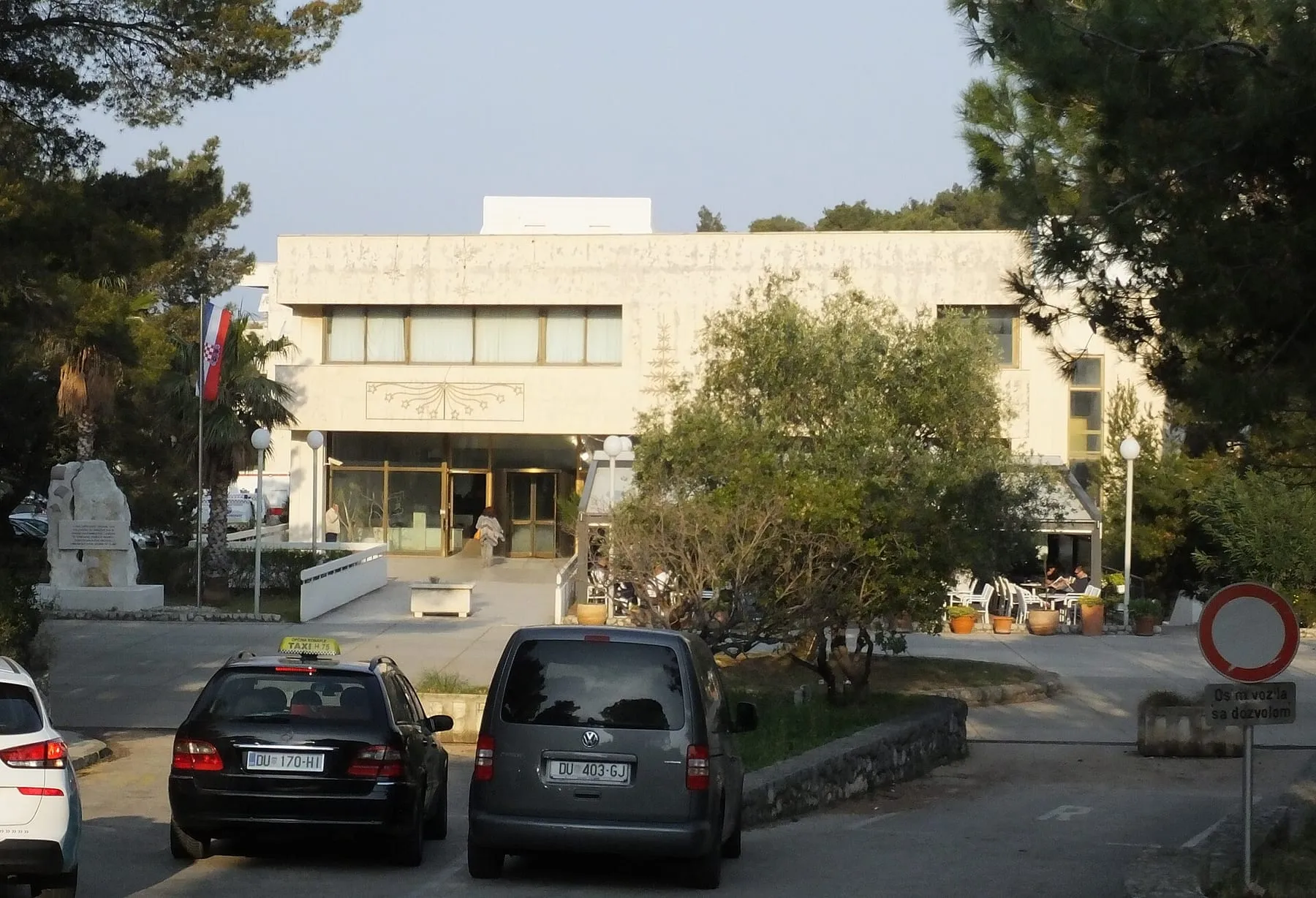
Dubrovnik General Hospital. Photo: Panek, Wikimedia Commons, CC BY-SA 4.0.
Crowds
The Dubrovnik Tourist Board publishes an arrival prediction for the historic core, with a forecast for each day and a live count from counters at all six entrances, against an upper limit of 11,275 people. It forecasts from cruise passengers, tourist arrivals, overnight stays and the weather. For the walls themselves, see the City Walls guide.
Emergency numbers
| Service | Number |
|---|---|
| Single emergency number | 112 |
| Police | 192 |
| Fire brigade | 193 |
| Emergency medical services | 194 |
| Search and rescue at sea | 195 |
| Mountain Rescue Service | +385 91 212 3003 |
| Dubrovnik General Hospital | +385 20 431 777 |
| Health Centre | +385 20 416 866 |
| Police station switchboard | +385 20 443 333 |
| Maritime Police | +385 20 443 555 |
| Croatian Automobile Club (HAK) roadside assistance | 1987 |
The numbers are from the Dubrovnik Tourist Board’s visitor information page. The Foreign Office lists 112 for ambulance, fire and police (FCDO).
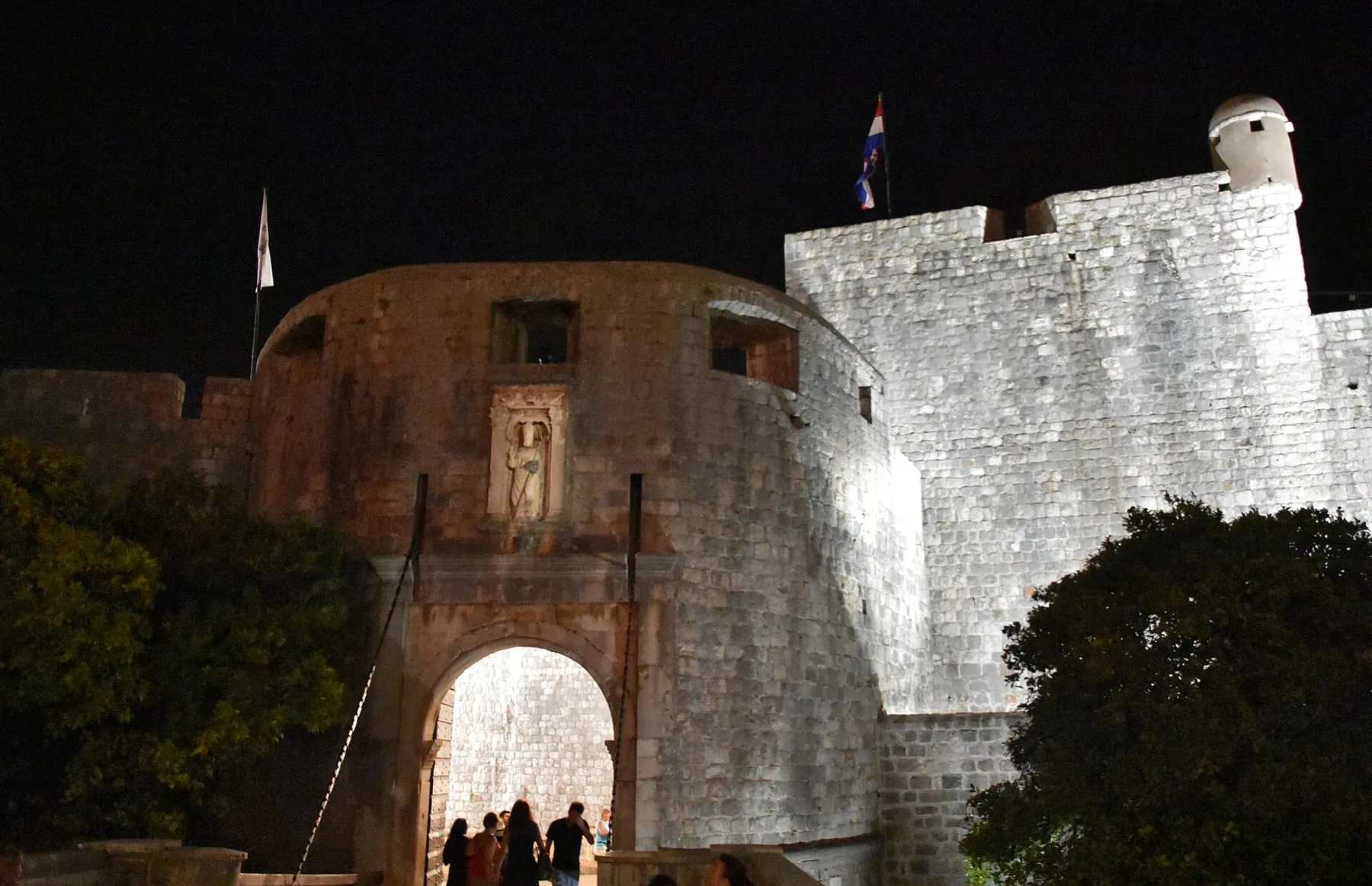
Pile Gate at night. Photo: Richard Mortel, Wikimedia Commons, CC BY 2.0.
Health
Dial 112 and ask for an ambulance. The Foreign Office says you need a GHIC or EHIC for medically necessary state healthcare, that it is not an alternative to travel insurance, and that in Croatia treatment always carries a charge, which can be up to €530. Take travel insurance that covers medical evacuation (FCDO health advice). The Foreign Office also lists dengue and biting insects and ticks among the health risks to read up on before you travel.
Heat, fire and earthquakes
- Wildfires: they are common in Croatia’s hot, dry summers. If you see a fire, call 112. From 1 June to 31 October it is illegal to set outdoor fires and barbecues except in designated areas, and fines run from €2,000 to €20,000 for intentionally causing a fire (FCDO).
- Earthquakes: small tremors happen several times a month throughout Croatia, and most pass without consequence.
- Wind: the cable car stops when wind passes its safety threshold, and when lightning is possible (Dubrovnik Cable Car).
- Hiking: if you get into trouble on a mountain, call 112 for the Croatian Mountain Rescue Service.
Rules for visitors
- ID: always carry your passport, and keep a copy of the photo page somewhere safe.
- Driving: from 1 November to 31 March you drive with headlights dipped, even in daylight, and between 15 November and 15 April you use winter tyres, according to the Foreign Office. The alcohol limit is 0.05%, and zero for drivers under 24.
- Boats: do not drink alcohol if you are in charge of a boat; penalties are heavy. Your presence in Croatia, including on a boat, must be registered with the police; a tour operator or hotel normally does this for you.
- Entry: the EU’s Entry/Exit System takes a photo and fingerprints at your first entry; the entry-rules table on the Dubrovnik guide has the details by nationality.
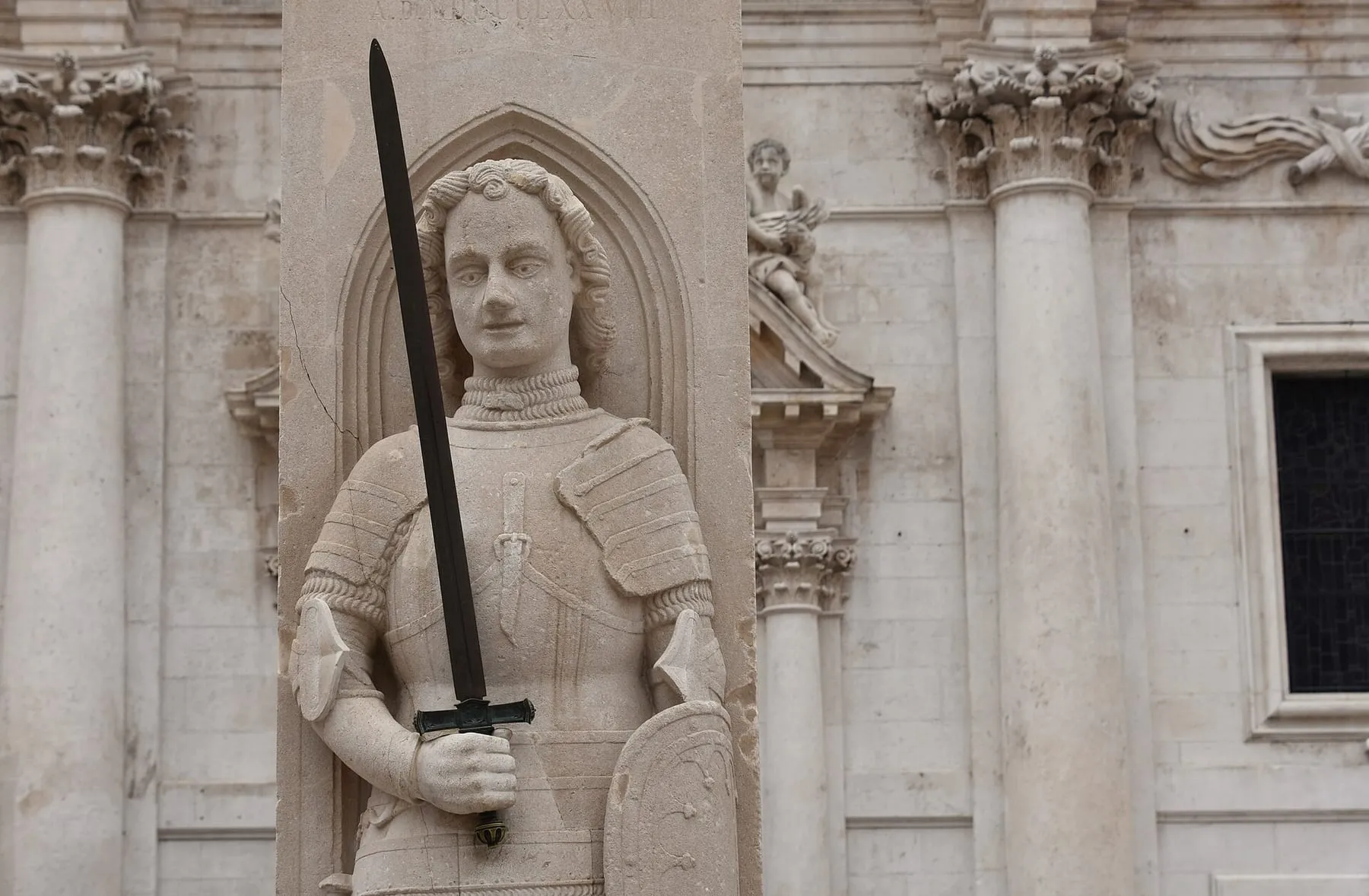
The Orlando Column on Luža Square. Photo: Richard Mortel, Wikimedia Commons, CC BY 2.0.
Solo, women and LGBT+ travellers
The Foreign Office points to its general guides for women travellers, LGBT+ travellers and solo and independent travel rather than listing Croatia-specific rules.
What to see next
- Money in Dubrovnik: the euro, the tourist tax and prices.
- Dubrovnik bars and wine: where to drink without a fine.
- Getting around Dubrovnik: buses and taxis.
- Airport to the city: the way in from the airport.
- Best time to visit Dubrovnik: when the city is quiet.
- 3 days in Dubrovnik: a route that fits the opening hours.
Common questions
Is Dubrovnik safe for tourists?
Yes. The UK Foreign Office says crime levels in Croatia are low and violent crime is rare. Its main warnings for visitors are pickpockets in tourist areas, overcharging at some clubs, and on-the-spot fines in Dubrovnik for behaviour such as drinking in public.
What are the emergency numbers in Dubrovnik?
112 is the single emergency number. The Dubrovnik Tourist Board also lists police 192, fire brigade 193, emergency medical services 194 and search and rescue at sea 195. Dubrovnik General Hospital is on +385 20 431 777.
What gets you fined in Dubrovnik?
The UK Foreign Office lists drinking alcohol or using drugs in public spaces, sleeping in public spaces, urinating or vomiting in public, walking through town shirtless or in swimwear, and climbing on monuments. Public order offences such as fighting, shouting or drunken behaviour can cost up to €4,000.
Do I need health insurance for Croatia?
Yes. The UK Foreign Office says a GHIC or EHIC gives access to medically necessary state healthcare, that it is not an alternative to travel insurance, and that in Croatia there is always a charge for treatment, which can be up to €530.
Are Croatian taxis safe?
The UK Foreign Office reports sexual assaults in taxis in Croatia and advises you to photograph the taxi number and send it to a friend, share your ride status on the taxi app, or call someone while in the taxi to say which taxi it is and where you are going.
Is it safe to walk around the Old Town at night?
The UK Foreign Office rates crime in Croatia as low and violent crime as rare, and its warnings for Dubrovnik concern pickpockets and fines for public drinking and swimwear in town.