In this guide
💡 The Short Version: The Franciscan Monastery (Mala braća, “Little Brothers”) is at Placa 30, just inside Pile Gate. The cloister and old pharmacy museum cost €8 and are free with the Dubrovnik Pass (monastery). In winter it is open 09:00 to 14:00, and from 1 November to 1 April the cloister and museum are closed on Sundays; in summer it is open 09:00 to 18:00. The pharmacy has operated without a break since 1317. Or book a tour: Dubrovnik: City Walls, Old Town Walking Tour & Adriatic Viewad (from €28, 4.8 stars from 2,526 reviews) includes a visit to the monastery and its pharmacy with a guide, so you get the history without reading the labels.
⚠️ Closed on Sundays from 1 November to 1 April, and the museum closes at 14:00 in winter. It is shut on 1 January and 25 December all year.
Tickets and hours
Prices and hours are from the monastery’s own museum hours and prices page.
| Ticket | Price |
|---|---|
| Adult | €8 |
| Adult in a group of more than 10 | €6 each |
| Pupils and students | €4 |
| Children up to 7 | Free |
| Dubrovnik Pass | Free |
| Season | Hours |
|---|---|
| Summer | 09:00 to 18:00, daily |
| Winter | 09:00 to 14:00 |
| 1 November to 1 April | Cloister and museum closed on Sundays |
The museum is open every day of the year, including public and religious holidays, except 1 January and 25 December. The ticket covers the cloister and the old pharmacy. The Dubrovnik Pass lists the monastery museum as free entry, one visit, and its guide has the sums if you are adding it to the walls and the Rector’s Palace.
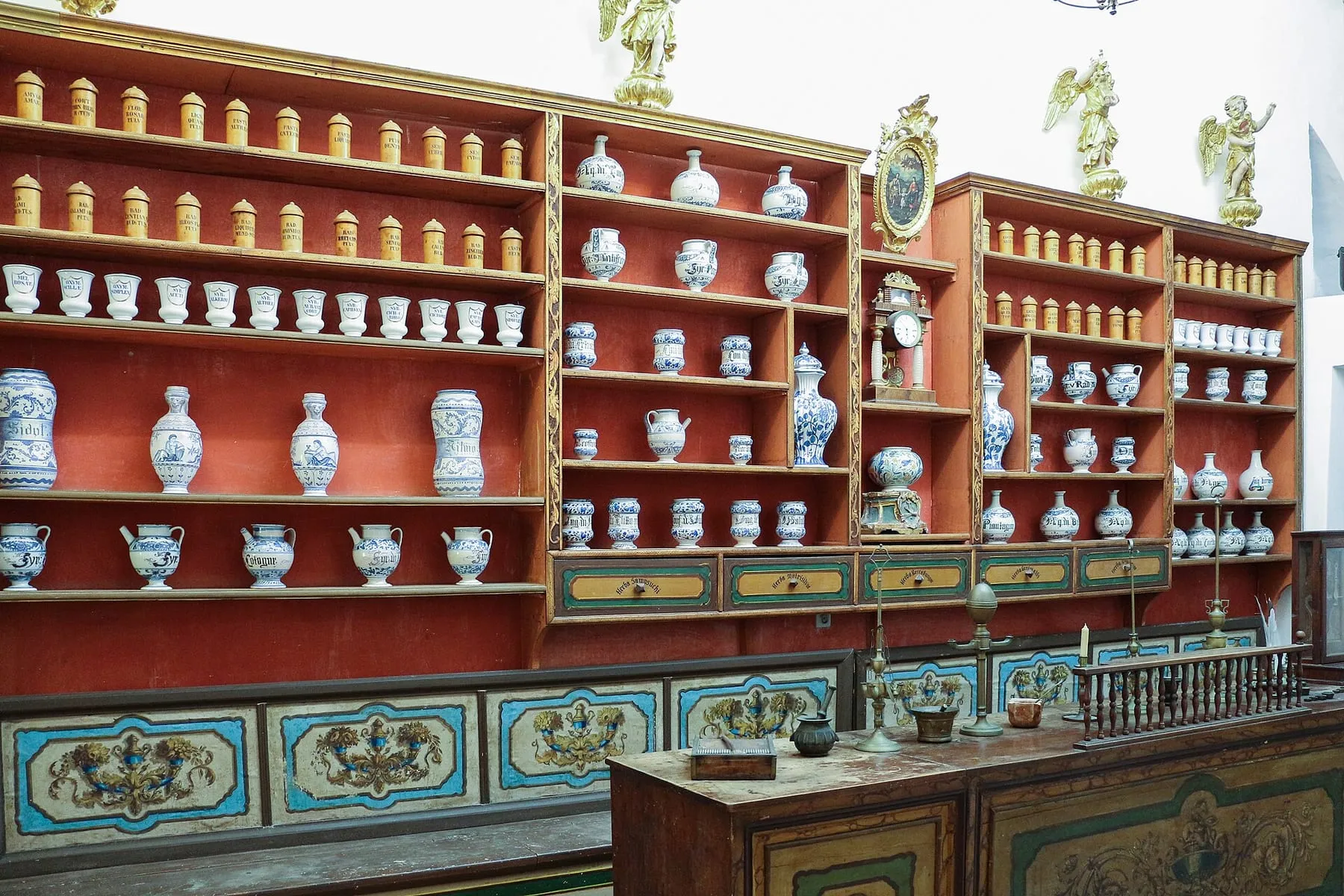
The old pharmacy. Photo: Bernard Gagnon, Wikimedia Commons, CC BY-SA 4.0.
Tours that include the monastery
The ticket office is the cheapest way in, so a tour is for context rather than access. One walking tour names the monastery and its pharmacy in its listing; the others pass Stradun, where it stands.
City walls, Old Town and the monastery
From €28 · 4.8 stars from 2,526 reviews · 2.5 hours · free cancellation
Dubrovnik: City Walls, Old Town Walking Tour & Adriatic Viewad: the walls and the Old Town in 2.5 hours, with a visit to the Franciscan Monastery and its pharmacy, which the listing describes as one of the world’s oldest. It lists skip-the-line entry and a private option. Book at least three hours ahead.
Old Town walking tour with a local guide
From €20 · 4.8 stars from 6,067 reviews · 1.5 to 3.5 hours · free cancellation
Dubrovnik: Old Town Walking Tour with Local Guidead: a guided Old Town walk, flagged as a bestseller, with a private option. Book at least 10 hours ahead. Check the date options for whether it goes inside the monastery.
Old Town and walls with an optional Dubrovnik Pass
From €27 · 4.8 stars from 83 reviews · 2.5 hours · free cancellation
Dubrovnik: Old Town and City Walls Tour with Optional DU Passad: a guided Old Town and walls walk with the pass as an option. The pass makes the monastery museum free, so this one suits a day that also takes in the Rector’s Palace and the walls.
Official ticket or tour: the prices side by side
Operator prices are for an adult. A GetYourGuide “from” price is the cheapest option in the product.
| What you want | Official | On GetYourGuide |
|---|---|---|
| Cloister and old pharmacy | €8 | Not sold alone |
| Cloister and pharmacy on a walls-and-Old-Town walk | €8 plus the walls ticket (see City Walls) | Walls and Old Town tour with monastery visit from €28 |
| Free entry on a pass | Dubrovnik Pass, €40 for one day, €50 for three (Dubrovnik Pass) | Old Town and walls tour with optional pass from €27 |
The cloister
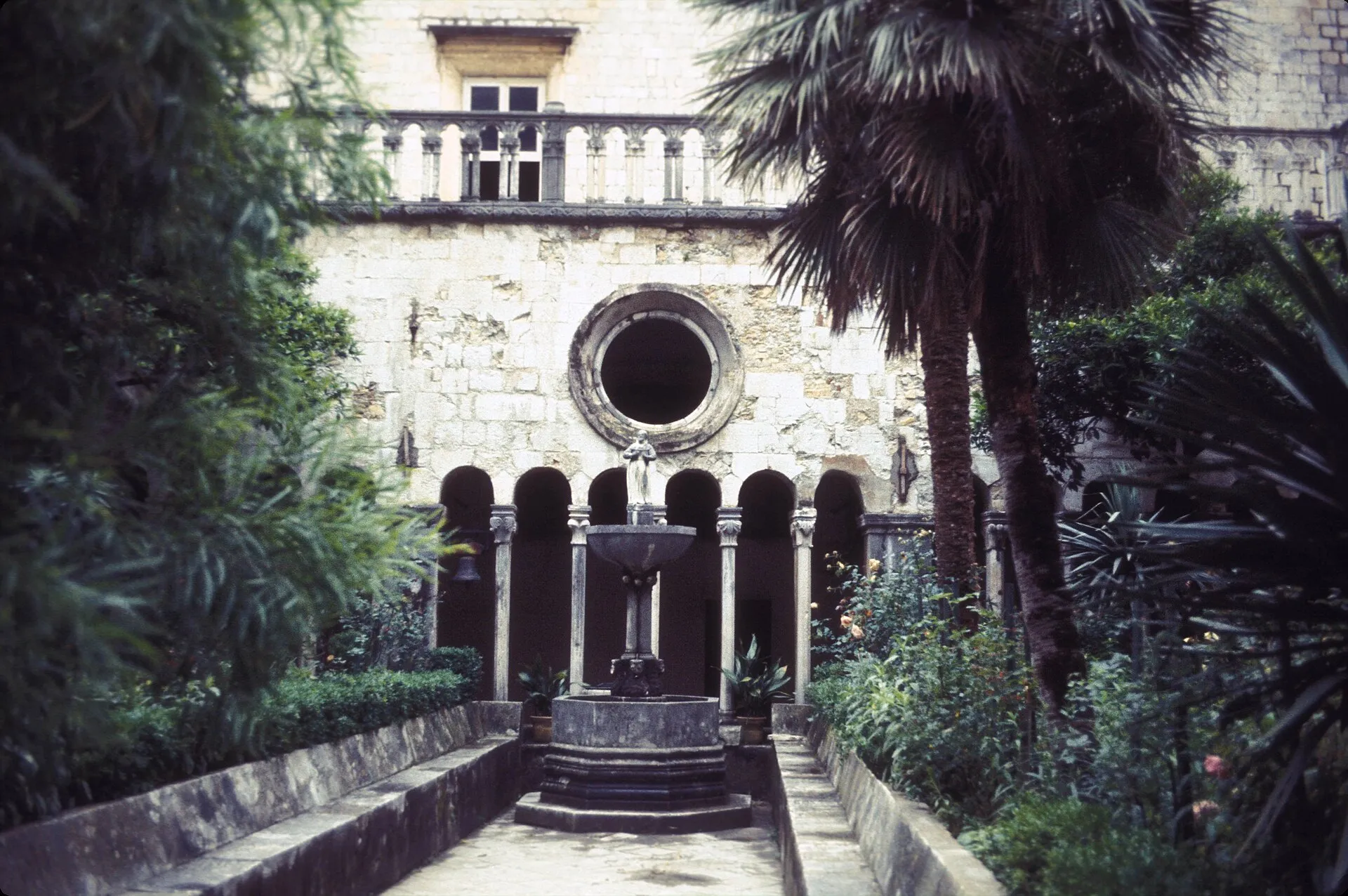
The Dubrovnik Tourist Board credits the cloister to the master Mihoje Brajkov of Bar, describes it as late Romanesque in design, and ranks it among the finest creations of its era in Dalmatia (Tourist Board). A fountain with a statue of St Francis stands in the middle of the garden.
The original Franciscan house stood outside the walls at Pile. When war threatened the Republic in the early 14th century the friars moved inside the walls. The monastery’s own history says the Republic had the old house at Pile demolished in 1317, during the war with the Serbian king Uroš II Milutin, so his soldiers could not use it in a siege (monastery). The monastery was built for 30 friars and also served as the base of a school and a hospital for the brothers.
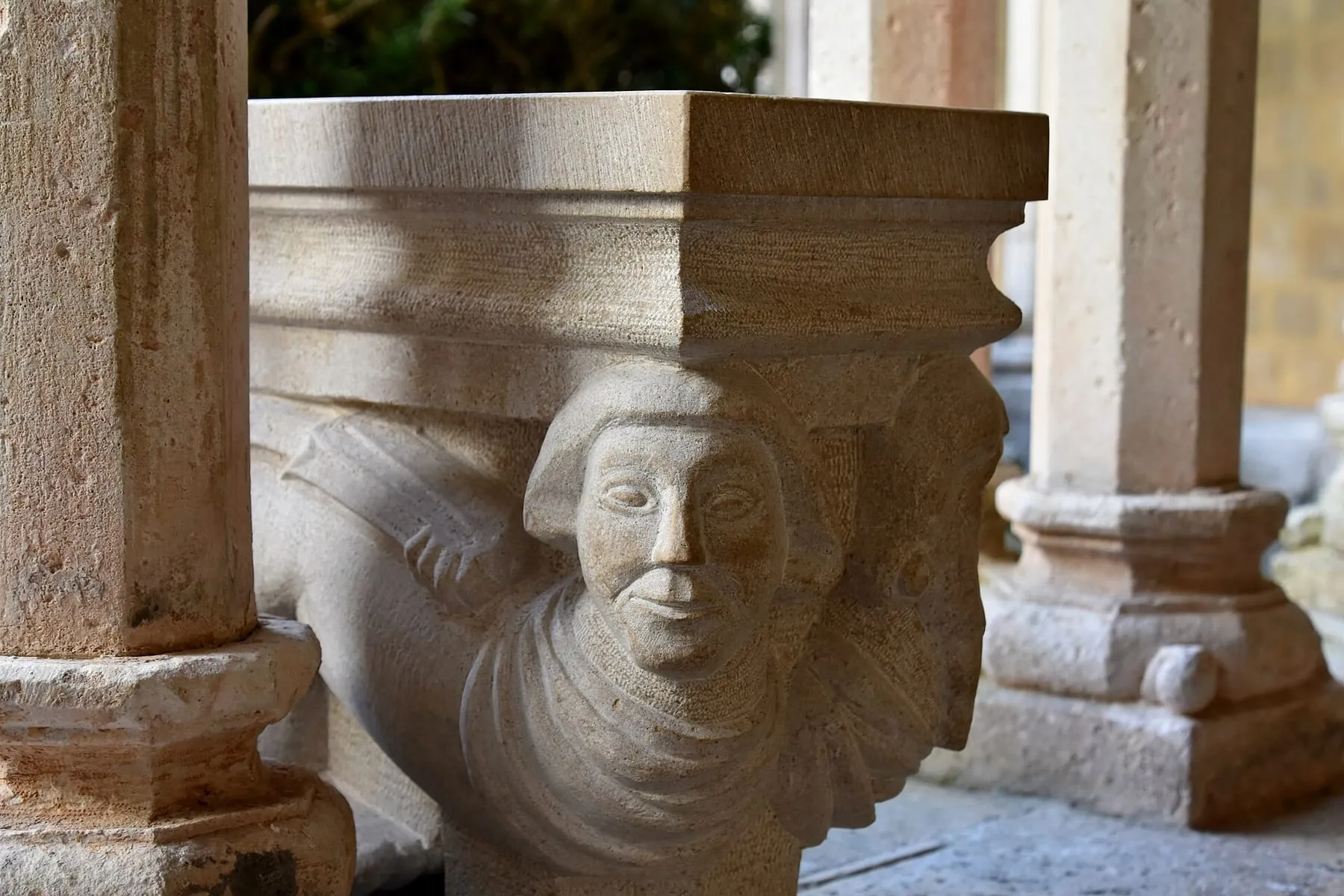
A carved capital in the cloister. Photo: Richard Mortel from Riyadh, Saudi Arabia, Wikimedia Commons, CC BY 2.0.
The old pharmacy
The monastery calls the pharmacy one of the oldest in Europe and probably the oldest in terms of continuous operation, because it is still working. It dates the pharmacy from the founding of the monastery in 1317, and it celebrated its 700th anniversary in 2017 (museum page). Its early records, up to the 1667 earthquake, were largely burnt with the archive and library.
- Where it has stood: first on the ground floor between the sacristy and the chapter hall, so citizens could reach it; from 1681 in the upper cloister beside the friars’ hospital; and, since the early 20th century, at the monastery entrance, where it still works.
- Recipes: the monastery holds about 2,000 recipes and a rich collection of pharmacology and medicine books, with part of them shown in the museum along with furniture and equipment from the 15th century onwards. Some medicines are still made to old friars’ recipes.
- The museum: the old pharmacy was moved back to its original place in the lower cloister, where it stood from 1317, and is now part of the monastery museum.
- Protection: the Croatian Ministry of Culture protected the pharmacy as intangible cultural heritage on 9 July 2019.
The Dubrovnik Pass listing adds that the museum also holds manuscripts and chorales, paintings by unknown masters, and a 14th-century reliquary of the head of St Ursula.
The church
The southern portal of the church is the main surviving fragment of the first monastery: a Gothic architrave carrying a Pietà carved in 1498 by the Dubrovnik stone-carving brothers Leonardo and Petar Petrović (Tourist Board). The 1667 earthquake and the fire that followed destroyed paintings by Titian, Urbinati and Caravaggio and 21 altars, according to the monastery. The present church was rebuilt in Baroque style, and the tomb of the poet Ivan Gundulić is inside.
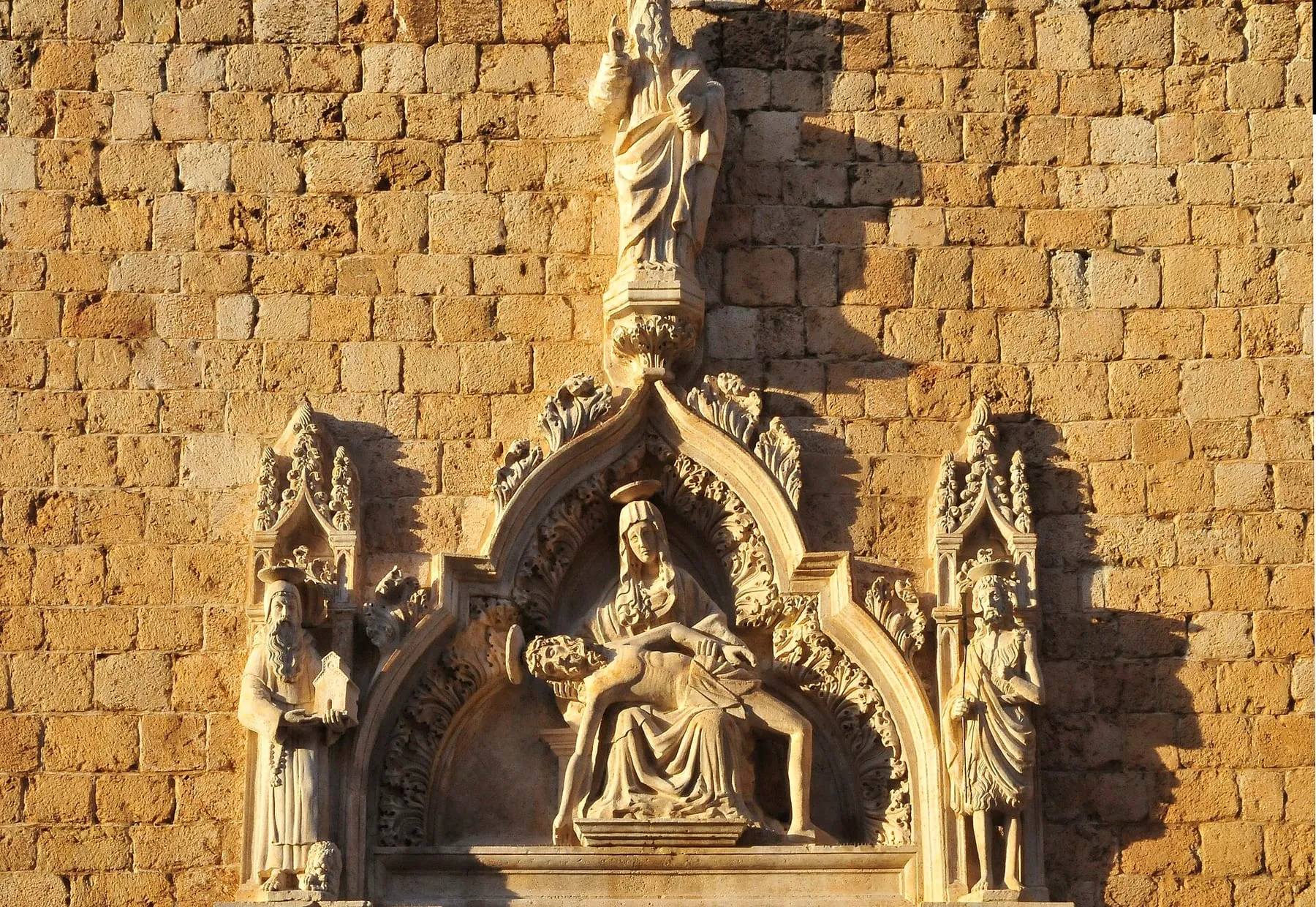
The church portal and its Pietà. Photo: LBM1948, Wikimedia Commons, CC BY-SA 4.0.
Getting there
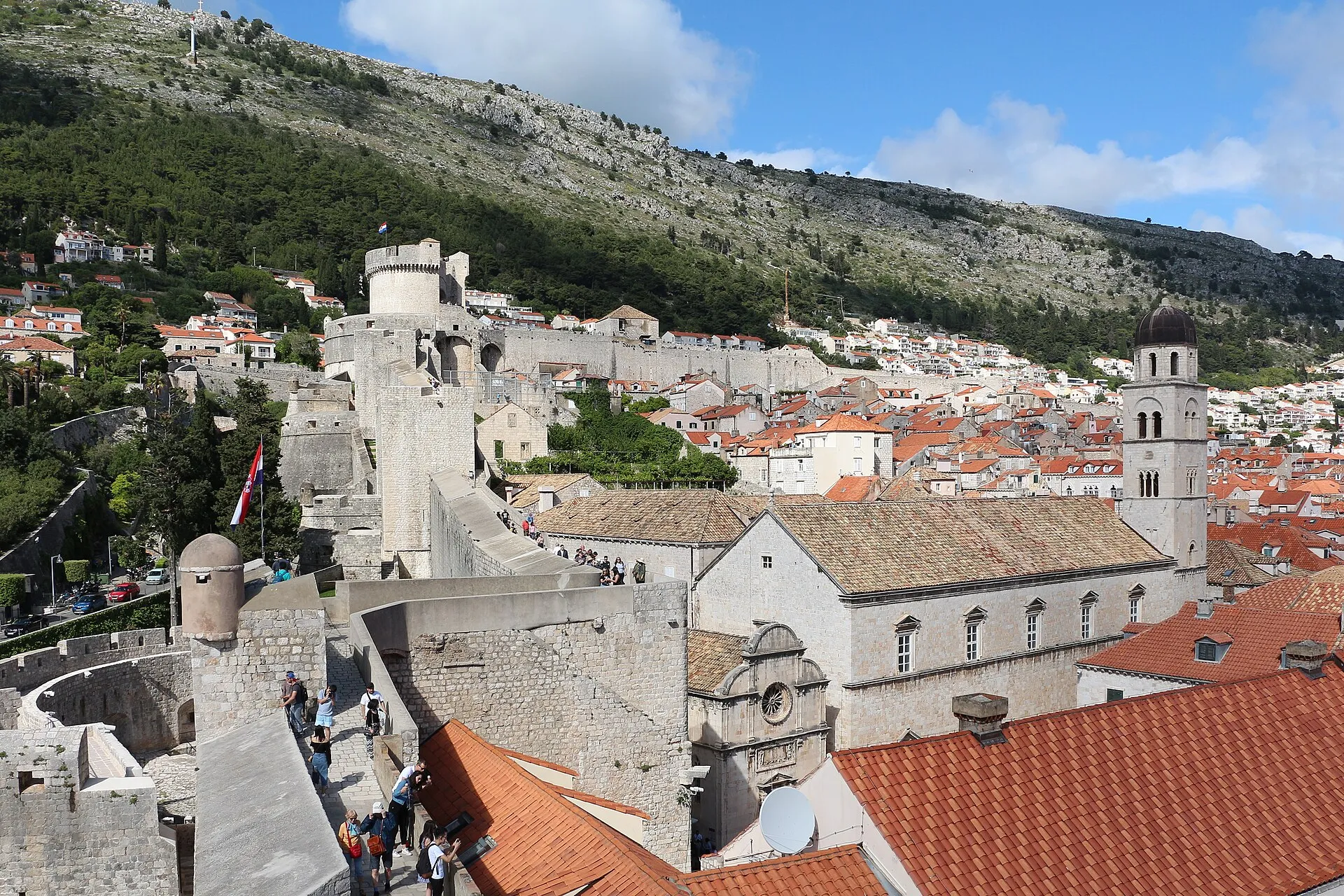
The monastery’s address is Placa 30, on Stradun (monastery). Just inside Pile Gate are the Large Onofrio Fountain and the Church of St Saviour, which stands next to the monastery. The walls’ main staircase begins beside the church (DPDS). Libertas buses stop at Pile, and a single ticket on board is €2.50 (Libertas).
For a hotel near Pile Gate, see where to stay in Dubrovnik.
What to see next
- Stradun and Old Town walk: from the monastery’s door to the Bell Tower.
- Rector’s Palace: the next museum along, closed on Mondays in winter.
- Dubrovnik Pass guide: free entry to the monastery museum with the pass.
- City Walls tickets: the entrance is a few steps away.
- Fort Lovrjenac: the fortress outside Pile Gate, on the walls ticket.
- Free things to do in Dubrovnik: the fountains and squares around it.
Common questions
How much does the Franciscan Monastery museum cost?
An adult ticket for the cloister and the old pharmacy is €8, or €6 each in a group of more than 10. Pupils and students pay €4, children up to 7 go in free, and the Dubrovnik Pass gives free entry (monastery's own price page).
What are the opening hours?
The monastery lists 09:00 to 18:00 in summer and 09:00 to 14:00 in winter. From 1 November to 1 April the cloister and museum are closed on Sundays. It is closed on 1 January and 25 December.
Is the pharmacy still working?
Yes. The Mala braća pharmacy has been active without a break since 1317, and some of its medicines are still made to old friars' recipes. The old pharmacy is also a museum in the lower cloister.
Where is the monastery?
At Placa 30, on Stradun close to Pile Gate.
Who built the cloister?
The Dubrovnik Tourist Board credits Mihoje Brajkov of Bar. It is late Romanesque in design.
Is the Franciscan Monastery free with the Dubrovnik Pass?
Yes. The Friars Minor Franciscan Monastery Museum is on the Dubrovnik Pass list of free entries, one visit per pass.