In this guide
💡 The Short Version: For an emergency call 112 (free, 24 hours) or 101 for the police. The central police station is on Kartuizerinnenstraat 4, behind the Belfry. The UK Foreign Office says theft and pickpocketing are common in crowded areas, asks for extra care at major railway stations and on public transport at night, and warns that strikes can severely disrupt travel. It also says terrorists are likely to try to carry out attacks in Belgium, with the national threat level at 3 ‘Serious’. Alcohol may not be drunk in the street in the nightlife district on Thursday, Friday and Saturday nights, and all drugs, including cannabis, are illegal in Belgium. Official advice is on the UK Foreign Office and US State Department pages for Belgium.
⚠️ Strikes can stop trains at short notice. The UK Foreign Office says strike action in Belgium can cause severe travel disruption and may be announced, and then extended, at short notice. Check your train before you leave for Bruges.
What the official advice says
The advice below is the UK Foreign Office’s page for Belgium, which covers the whole country rather than Bruges alone (UK Foreign Office).
- Theft. Theft and pickpocketing are common in crowded areas. Look after your baggage and passports and beware of anyone who tries to distract you. Take extra care in major railway stations and on public transport, particularly at night, and never leave luggage unattended.
- Where it names stations. The warnings name Brussels Gare du Midi (the Eurostar terminal) and Gare du Nord, and the Paris to Brussels and Amsterdam to Brussels international trains. Bruges visitors from London change at Brussels-Midi, so keep your bags close there (getting to Bruges has the route).
- Taxis. Use only official, licensed taxis, and do not get into one that stops to offer you a ride. Bruges taxi firms take flat-fare bookings for the airports.
- Terrorism. Terrorists are likely to try to carry out attacks in Belgium, including in places such as public transport, transport hubs, cultural events and nightlife venues. The national threat level is 3 ‘Serious’, so expect an increased police presence. Follow the advice of local authorities.
- Alerts. The Foreign Office points to the Belgian Crisis Centre and to BE-Alert, which sends emergency alerts by SMS.
- Strikes and demonstrations. Strike action is an ongoing issue that can cause severe travel disruption, and it may be announced and extended at short notice.
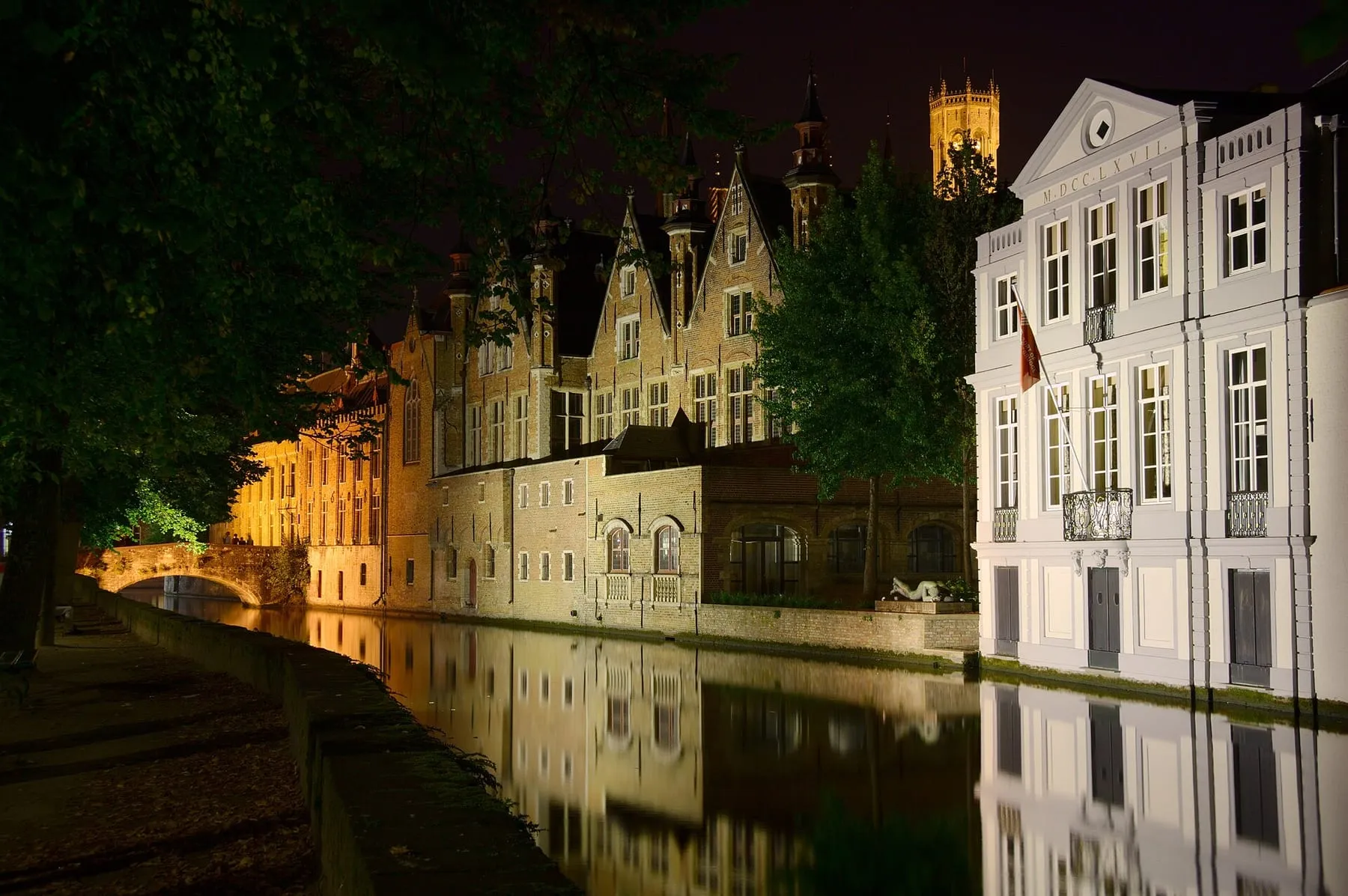
A lit canal in the centre at night, with the Belfry behind. Photo: Phupe, Wikimedia Commons, CC BY-SA 3.0.
Emergency and police
| Need | Contact |
|---|---|
| Emergency, any service | 112 (free, 24 hours) |
| Police emergency | 101 |
| Police, non-urgent | +32 50 44 88 44 |
| Out-of-hours medical advice | 1733 |
| Poison Control Centre | +32 70 245 245 |
Police stations: Central district, Kartuizerinnenstraat 4 (Monday to Friday 08:00 to 17:00, Saturday 09:00 to 18:00), and Politiehuis, Lodewijk Coiseaukaai 3 (Monday to Thursday 07:00 to 21:00, and continuously from Friday 07:00 to Sunday 21:00). In Zeebrugge the village office is at Marktplein 12 (Monday to Friday, and Saturday morning). If you lose something, contact the police, who keep an online lost-and-found photo album (Visit Bruges).
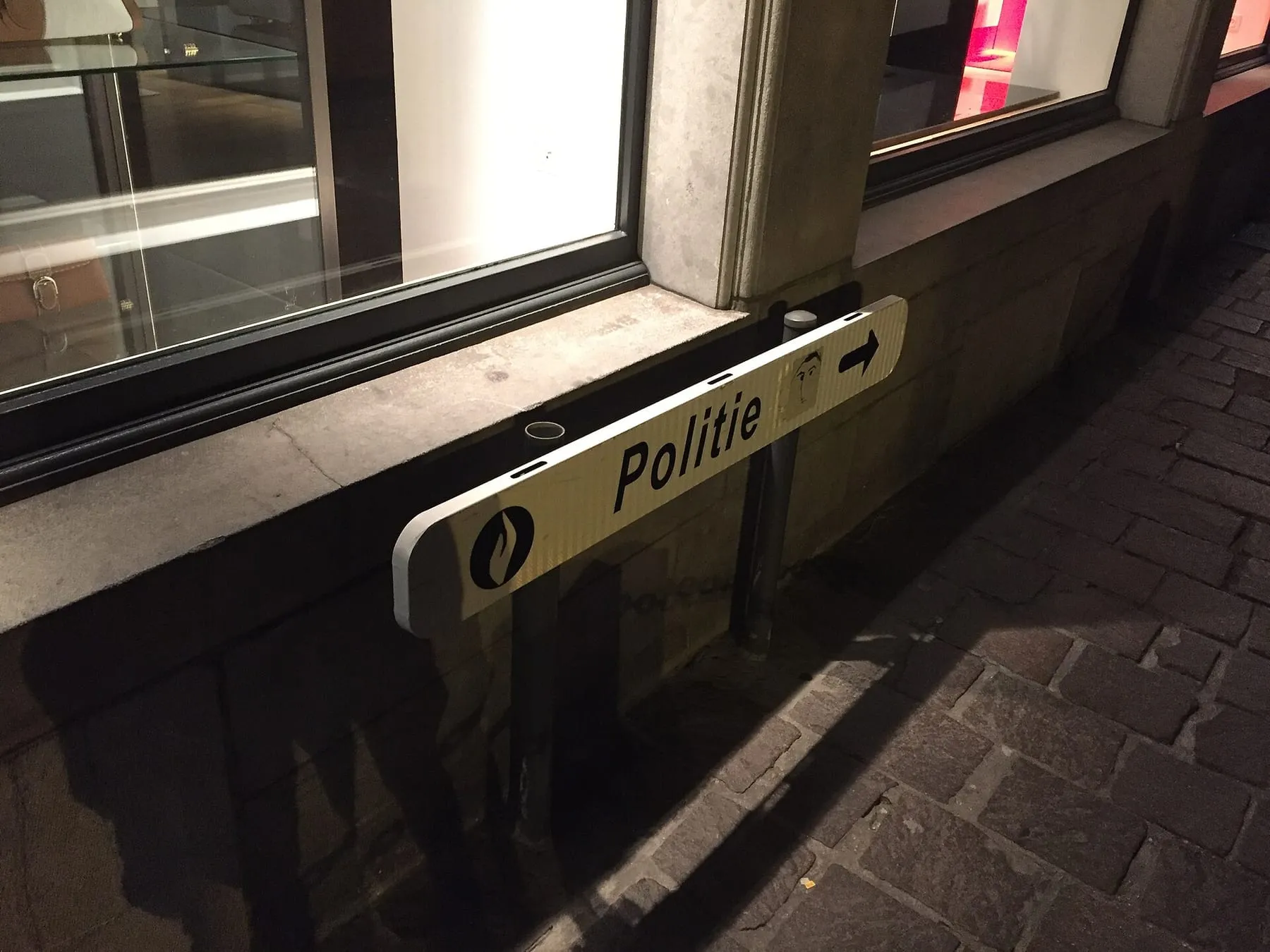
A Politie sign pointing the way on a Bruges street. Photo: Mini1300, Wikimedia Commons, CC0.
Health
- Doctor out of hours: the Bruges GP out-of-hours clinic is at AZ Sint-Jan, Ruddershove 10A, from 19:00 to 08:00 and at weekends and public holidays. For non-urgent medical help in the evening, at night or at weekends you can call 1733.
- Hospitals: AZ Sint-Jan (Ruddershove 10) and AZ Sint-Lucas (Sint-Lucaslaan 29).
- Pharmacies: green cross and the word Apotheek; the out-of-hours pharmacy rota is at apotheek.be.
- Insurance: the European Health Insurance Card covers unplanned and essential care in Belgium. The UK Foreign Office says a Global Health Insurance Card (GHIC) or an EHIC gives access to medically necessary state healthcare, and that neither replaces travel insurance (UK Foreign Office).
- Defibrillators: Visit Bruges publishes a list of the AED locations across the city.
- Fees and medicines: there is a fee for non-emergency consultations and prescriptions, which travel insurance may repay. The legal status of some medicines bought or prescribed in the UK differs in Belgium, so check before you carry them.
- Tap water: free public fountains are across the city, including Burg, Minnewaterpark and the Church of Our Lady museum. They are switched off in winter to stop them freezing.
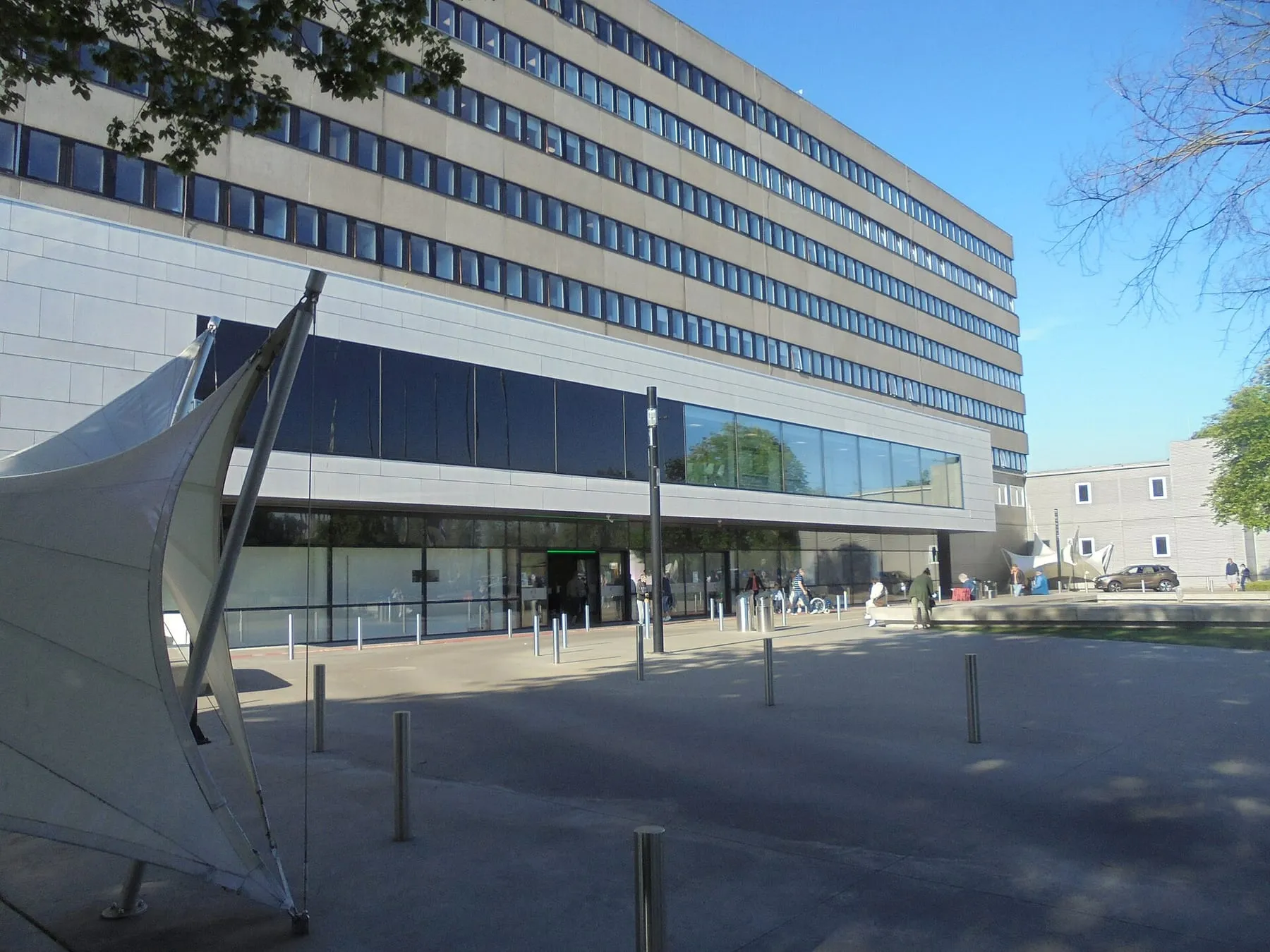
The main entrance of AZ Sint-Jan on Ruddershove. Photo: Spotter2, Wikimedia Commons, CC BY-SA 4.0.
Local rules
- Alcohol. Beer or wine may not be served to under-16s, and spirits of 15% or more to under-18s. Proof of age may be asked. Drinking in the street in the nightlife district is banned on Thursday, Friday and Saturday nights.
- Drugs. All drugs, including cannabis, are illegal. The Foreign Office says possession, use or trafficking can lead to a minimum 3-month prison sentence, and that airport scanners also check the bags of passengers in transit.
- Smoking. Smoking is banned in public buildings including train stations and airports, on public transport and in taxis and tourist coaches, in playgrounds, theme parks and nature areas, and inside cafés and restaurants. It is allowed in designated smoking rooms and on open-air terraces that meet the legal rules (Visit Bruges).
- Face coverings. Wearing clothing that hides your face, partly or completely, in a public place is illegal in Belgium, with a fine of up to €137 and detention of up to 7 days, and the Foreign Office says there is no exemption for tourists.
- Documents. Visit Bruges says you need an identity card or a valid passport. The UK Foreign Office says to carry your passport with you at all times. Non-EU visitors go through border control on entering the EU; see the entry rules on the Bruges guide.
- Bikes. The centre is a bike zone with a 30 km/h limit; see getting around Bruges.
- The Beguinage. Ask for silence: see the Beguinage guide.
- Tipping. It is optional. Service is already in the price, and 5% to 10% of the bill is the usual extra.
If something goes wrong
- Emergency. Dial 112 for an ambulance, the fire service or the police. The Foreign Office points to the 112 BE app, the official Belgian emergency app, which contacts the services directly and helps responders find your location.
- A crime or a theft. Report it to the local police at one of the stations above, or call 101; for a lost item, use the lost-and-found photo album.
- A strike. Contact your travel provider for refunds or changes, and your insurer if you are caught in a serious incident, as the Foreign Office advises. For disruption, check local news and the Belgian Railways, De Lijn and airport sites.
- Help from the UK. The Foreign Office cannot give tailored advice for individual trips, but it runs a 24-hour line in London, +44 20 7008 5000, for urgent help when something has happened to a friend or relative abroad.
Before you go
Check your train and the strike notices the day before, put a copy of your documents somewhere other than your wallet, and see getting around Bruges for left luggage. The Bruges guide has the opening days to plan around, where to stay the accommodation tax and the areas, and Bruges in one day a route through the centre.
Common questions
What is the emergency number in Bruges?
112, free and available 24 hours. You can also call 101 for the police.
Where is the police station in the centre?
Kartuizerinnenstraat 4, a street behind the Belfry. It is open Monday to Friday 08:00 to 17:00 and Saturday 09:00 to 18:00. For non-urgent matters call +32 50 44 88 44.
Is pickpocketing a problem in Bruges?
The UK Foreign Office says theft and pickpocketing are common in crowded areas of Belgium and asks visitors to take extra care in major railway stations and on public transport, particularly at night. Never leave luggage unattended.
What do I do if I lose something?
Contact the local police, who keep an online lost-and-found photo album.
Can I drink alcohol in the street?
Not in the nightlife district on Thursday, Friday and Saturday nights. Under-16s may not be served beer or wine, and under-18s may not be served spirits.
What do official sources warn about in Belgium?
The UK Foreign Office says terrorists are likely to try to carry out attacks in Belgium, that the national threat level is 3 'Serious', and that strike action, announced at short notice, can severely disrupt travel.