In this guide
💡 The Short Version: The Basilica of the Holy Blood (Heilig-Bloedbasiliek) on the Burg is free and open every day from 10:00 to 17:15. It stacks two chapels: a 12th-century Romanesque lower chapel and a Gothic upper chapel where a relic said to be the blood of Christ is shown every afternoon from 14:00 to 16:00. The museum and treasury cost €5. The Holy Blood Procession is on Thursday 6 May 2027. Or book a tour: the boat, chocolate and walking tourad (from €39, 4.8 stars from 5,125 reviews) names the basilica among its sights and adds a guide for the Burg and the old town.
⚠️ The relic is out only 14:00 to 16:00. On Fridays it is also shown from 10:15 to 11:00. Outside those times you see the chapels but not the relic. During services the chapels are open only to people attending.
Times and prices
Details are from the basilica’s own site, holyblood.com.
| What | When | Price |
|---|---|---|
| Basilica, both chapels | Daily 10:00 to 17:15 | Free |
| Veneration of the relic | Daily 14:00 to 16:00; Fridays also 10:15 to 11:00 | Free |
| Museum and treasury | Same hours as the basilica | €5; under 12 free |
| Mass | Daily at 11:00 except Monday | Free |
The basilica is at Burg 13 and is not part of Musea Brugge, so the Musea Brugge Card does not cover the museum. The phone number is +32 50 33 67 92.
The two chapels
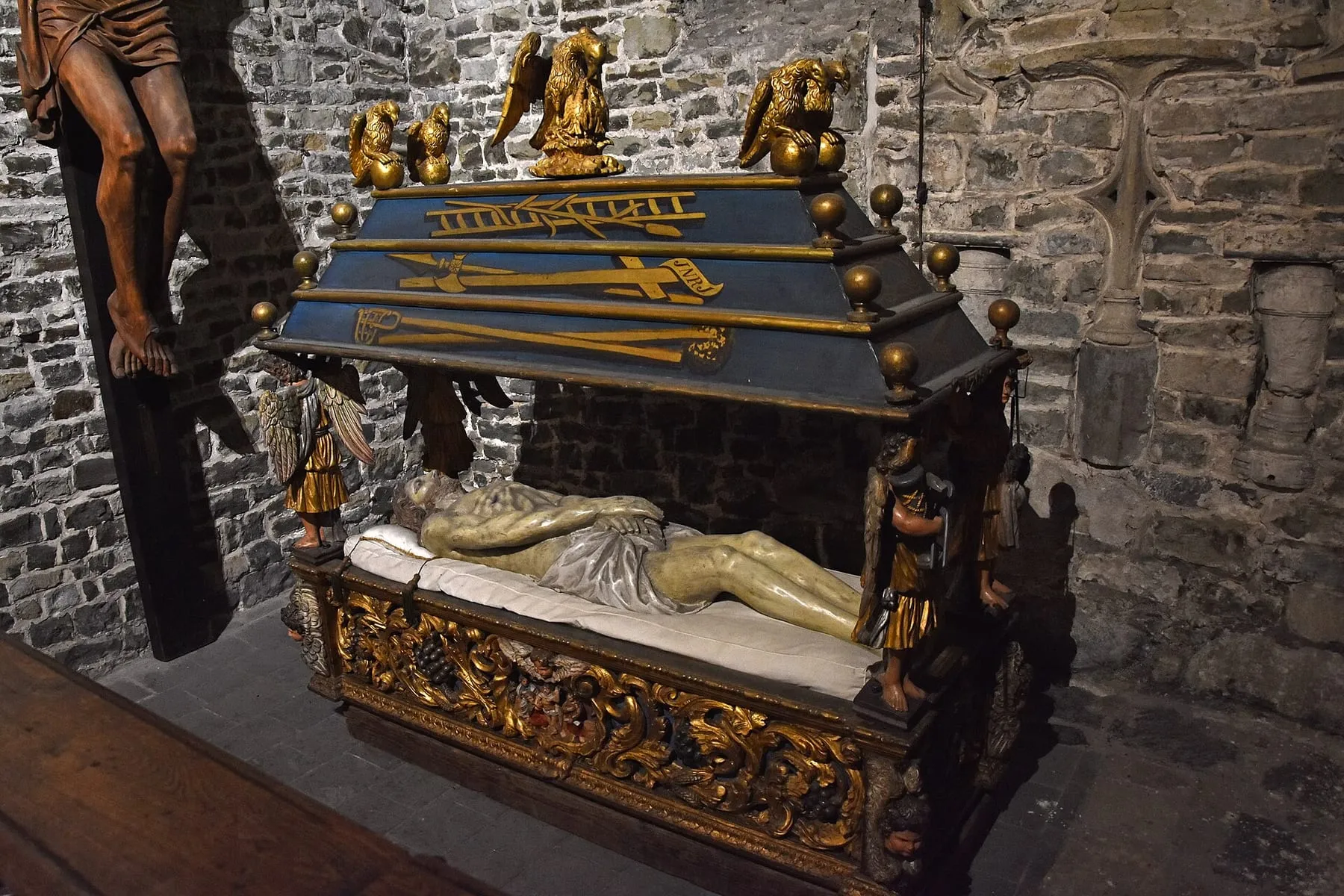
A carved figure of the dead Christ under a gilded canopy, in the stone-walled lower chapel. Photo: Phyrexian, Wikimedia Commons, CC BY-SA 4.0.
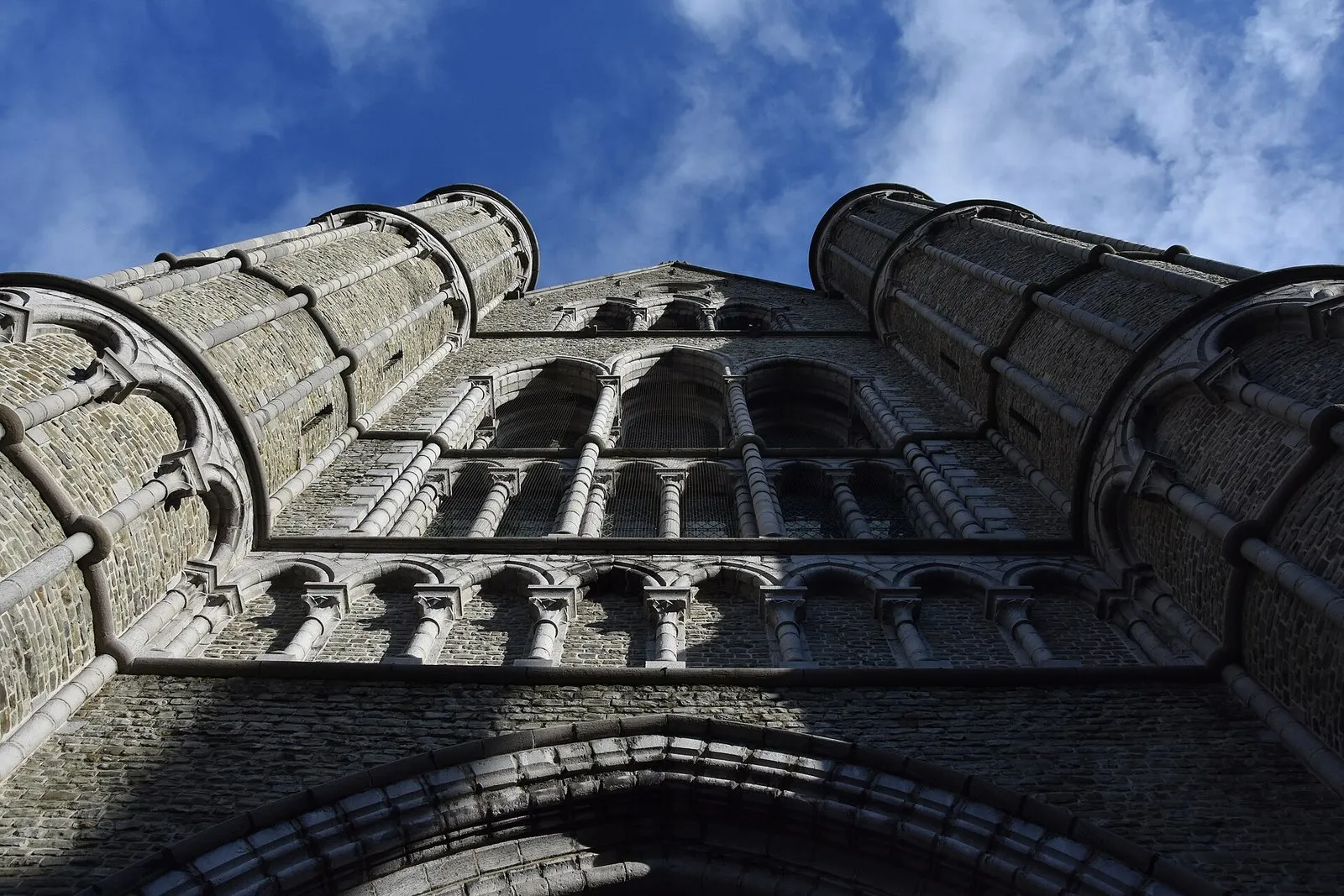
- The lower chapel, St Basil. Founded in the 12th century by Count Thierry of Alsace, it served as the chapel of the counts who lived in the Steen next door, which no longer stands. It has a nave with two narrow aisles and a rounded apse, and holds a wooden Madonna and Child from the 1300s. Both chapels became a basilica in 1923.
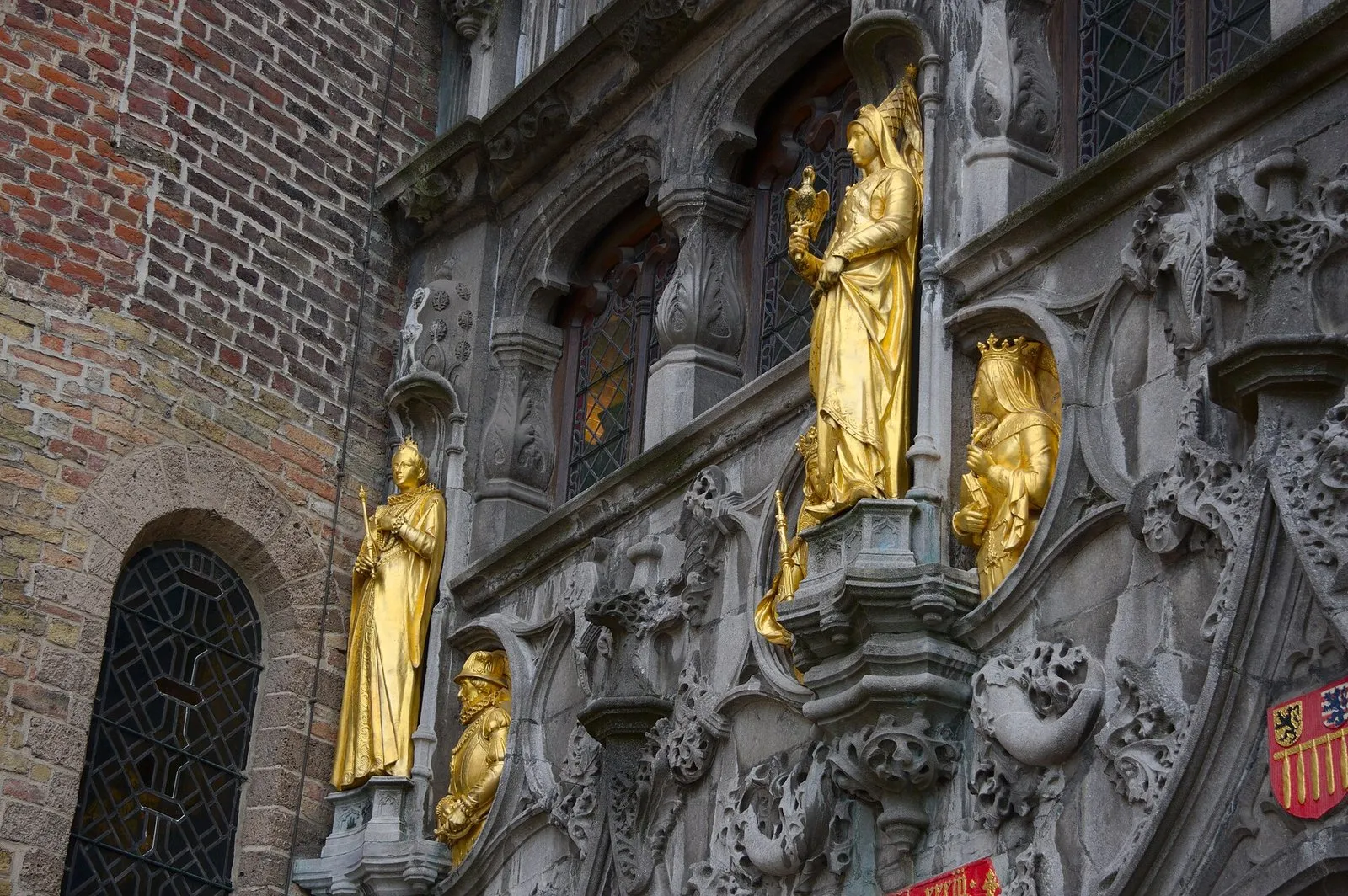
- The staircase. The Renaissance staircase to the upper chapel, De Steeghere, was built in 1533 in Renaissance style with late-Gothic decoration. The building you see dates from the 19th century, because the French Revolution destroyed the original. The gilded bronze statues on the facade show Archduchess Isabella, Mary of Burgundy, Thierry and his son Philip.
- The upper chapel. The Gothic upper basilica dates from the end of the 15th century. The choir windows of 1845 show the rulers of Flanders in order, from Philip the Bold to Maria Theresa, and a mural of 1905 shows Count Thierry receiving the relic from the Patriarch of Jerusalem.
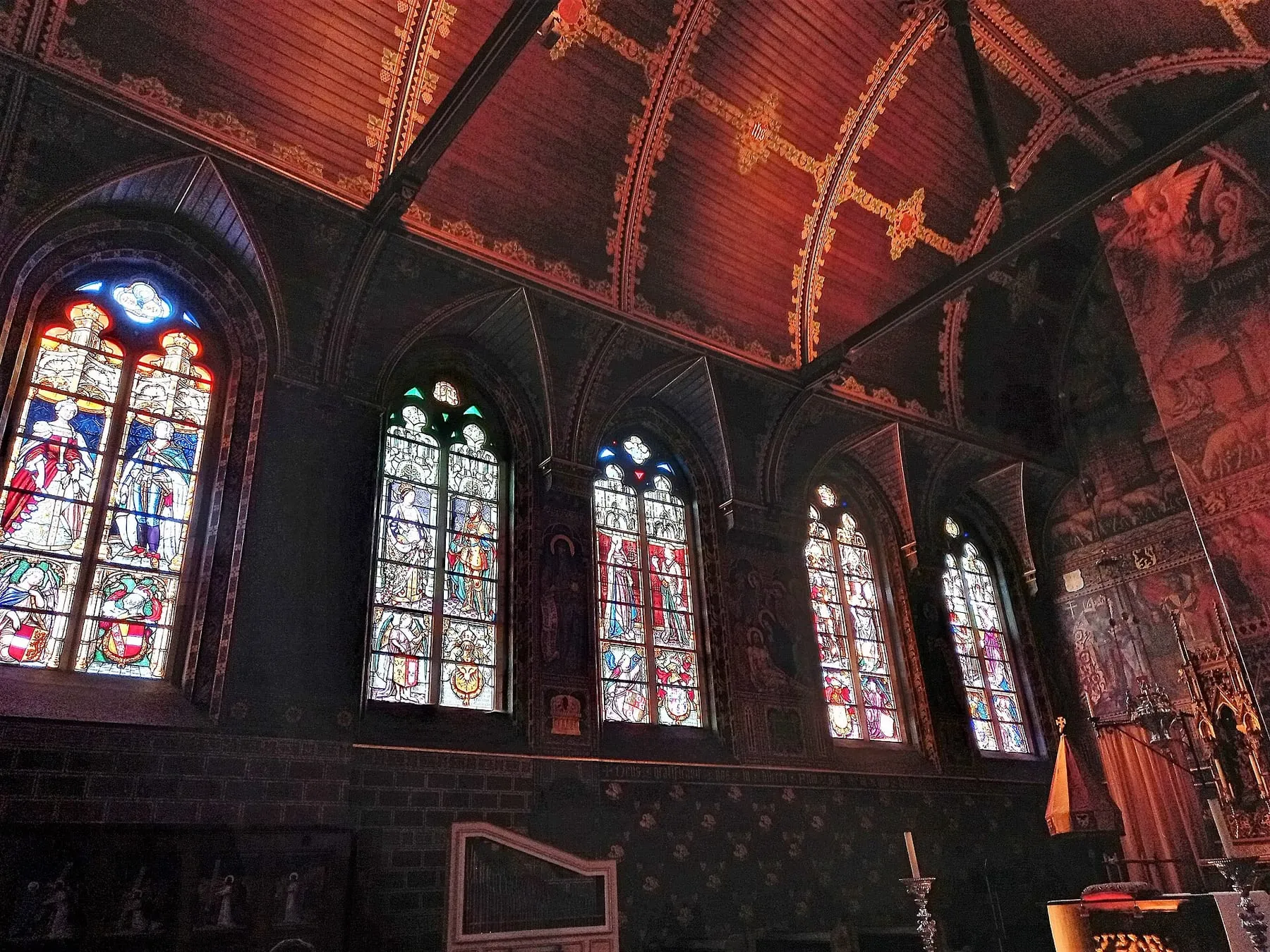
The choir windows and painted ceiling of the upper basilica. Photo: Cmcmcm1, Wikimedia Commons, CC BY-SA 4.0.
The relic and the museum
The relic is venerated as the blood of Christ. The basilica says the legend of Thierry bringing it from Jerusalem in 1150 is doubted by most historians today, and that the oldest reliable sources are from the 13th century. Each day it is offered for veneration in the upper basilica at the times above.
The museum’s best-known object is the reliquary made in 1617 by the Bruges goldsmith Jan Crabbe, built from about 30 kilograms of gold and silver and set with more than 100 gems. Its top turrets carry statuettes of St Donatian, Christ, the Virgin Mary and St Basil, and it is carried through the streets in the procession.
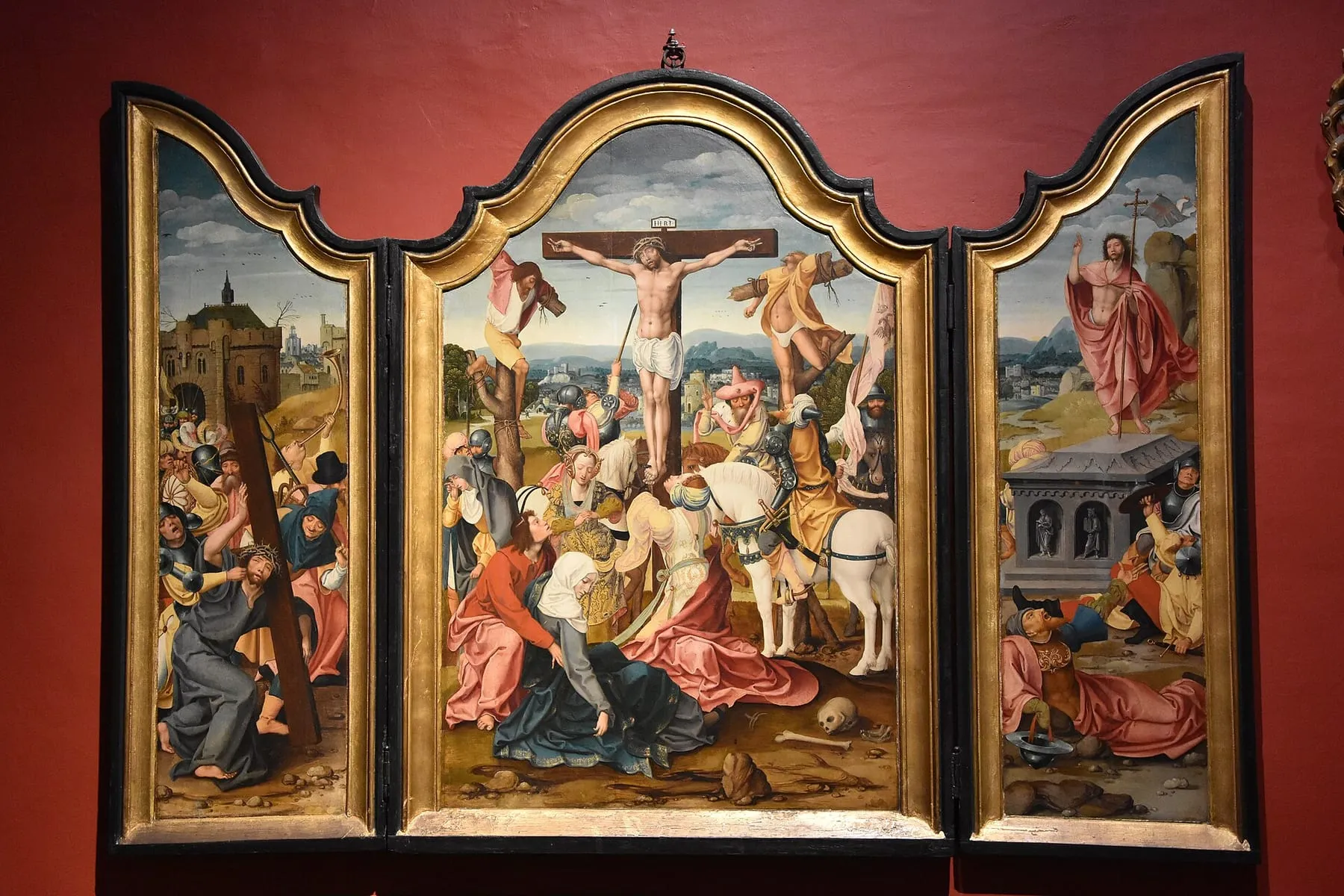
A 16th-century triptych of the Carrying of the Cross, the Crucifixion and the Resurrection in the museum. Photo: Phyrexian, Wikimedia Commons, CC BY-SA 4.0.
The museum also has:
- Two panels painted by Pieter Pourbus in 1556 that portray the 31 members of the Brotherhood of the Holy Blood.
- A triptych of the Entombment attributed to the Master of the Holy Blood (1519), and a second triptych of the Carrying of the Cross, the Crucifixion and the Resurrection.
- A tapestry of 1637 showing the transfer of the relics of St Augustine from Africa to Sardinia.
- An oak carving of the Patriarch of Jerusalem handing the relic to Count Thierry, who kneels.
Tours worth paying for
You do not need a ticket for the chapels, and the tours below do not replace the relic times. They add context for the Burg, the town hall and the streets round it. Prices are GetYourGuide’s lowest “from” prices.
Boat, chocolate and walking tour
From €39 · 4.8 stars from 5,125 reviews · 2.5 hours · small group
Bruges: Boat, Chocolate and Guided Walking Tourad lists the Basilica of the Holy Blood, the Gruuthusemuseum and the Four Horsemen among its sights, with a canal boat and a chocolate tasting.
History, chocolate and beer walking tour
From €55 · 4.9 stars from 65 reviews · 3.5 hours
Bruges: History, Chocolate and Beer Walking Tourad combines a historical walk of the city’s highlights with a visit to an artisanal chocolate shop and a local brewery tour and tasting.
Walking tour with chocolate tasting and a boat ride
From €40 · 4.8 stars from 300 reviews · 2.5 hours
Bruges: Walking Tour with Chocolate Tasting and Boat Ridead is a guided walk of the medieval centre with a chocolate tasting and a canal cruise.
Concerts and dates
- Sunday 13 December 2026, 16:30. English choral music with Holland Concertkoor and Orkest; free, with a collection.
- Saturday 26 December 2026, 20:00. Christmas concert with Musica in Gioia and the Vocal Ensemble Adriaen Willaert; tickets €25.
- Sunday 2 May 2027. Feast of the Holy Blood, with veneration of the relic at 10:00 and from 14:00 to 16:30.
- Thursday 6 May 2027. The relic is taken to St Saviour’s Cathedral at 10:30, and the procession leaves at 14:30. The basilica says 1,700 people take part and about 35,000 watch. More information is at bloedprocessiebrugge.be.
Getting there
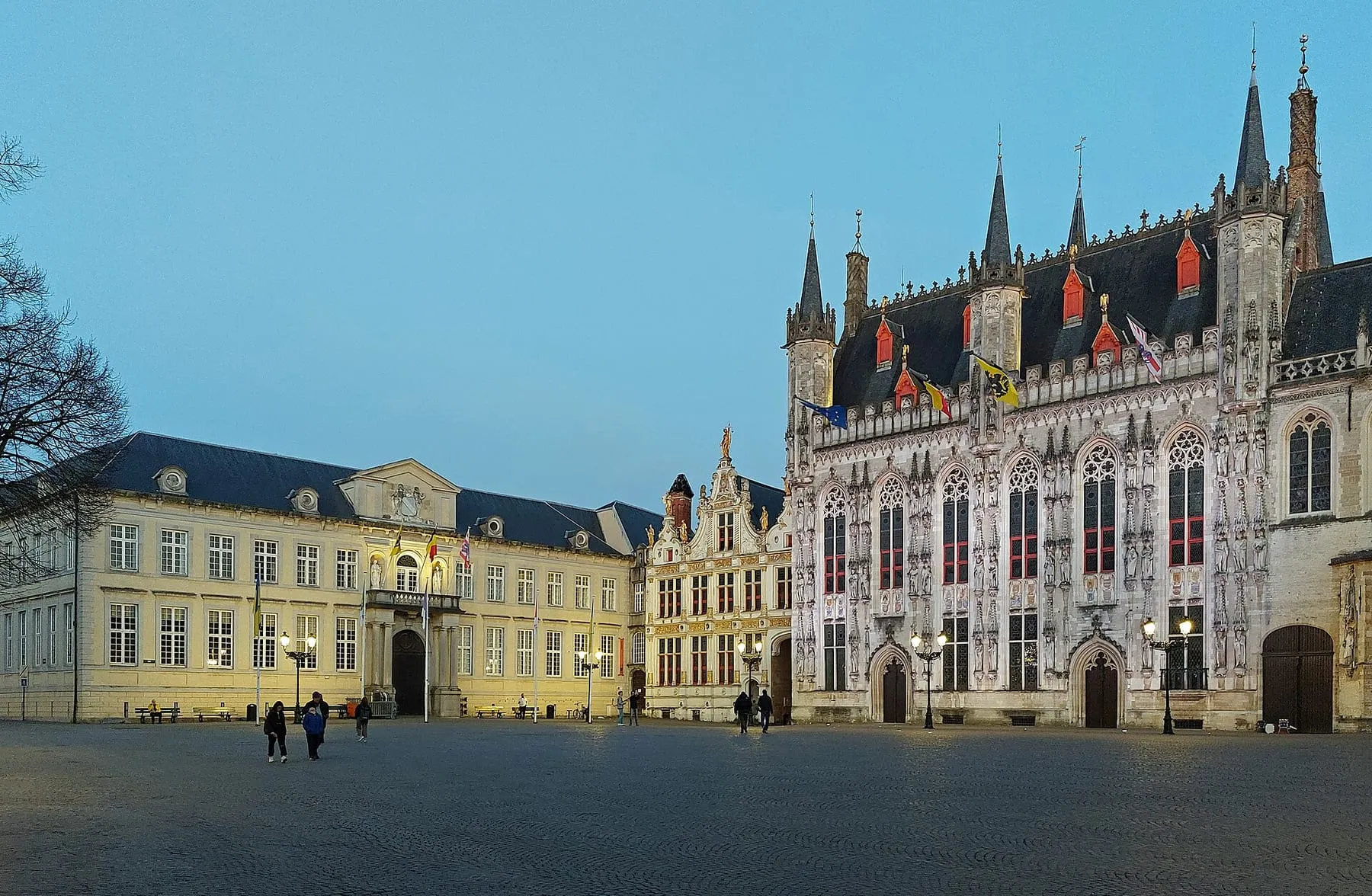
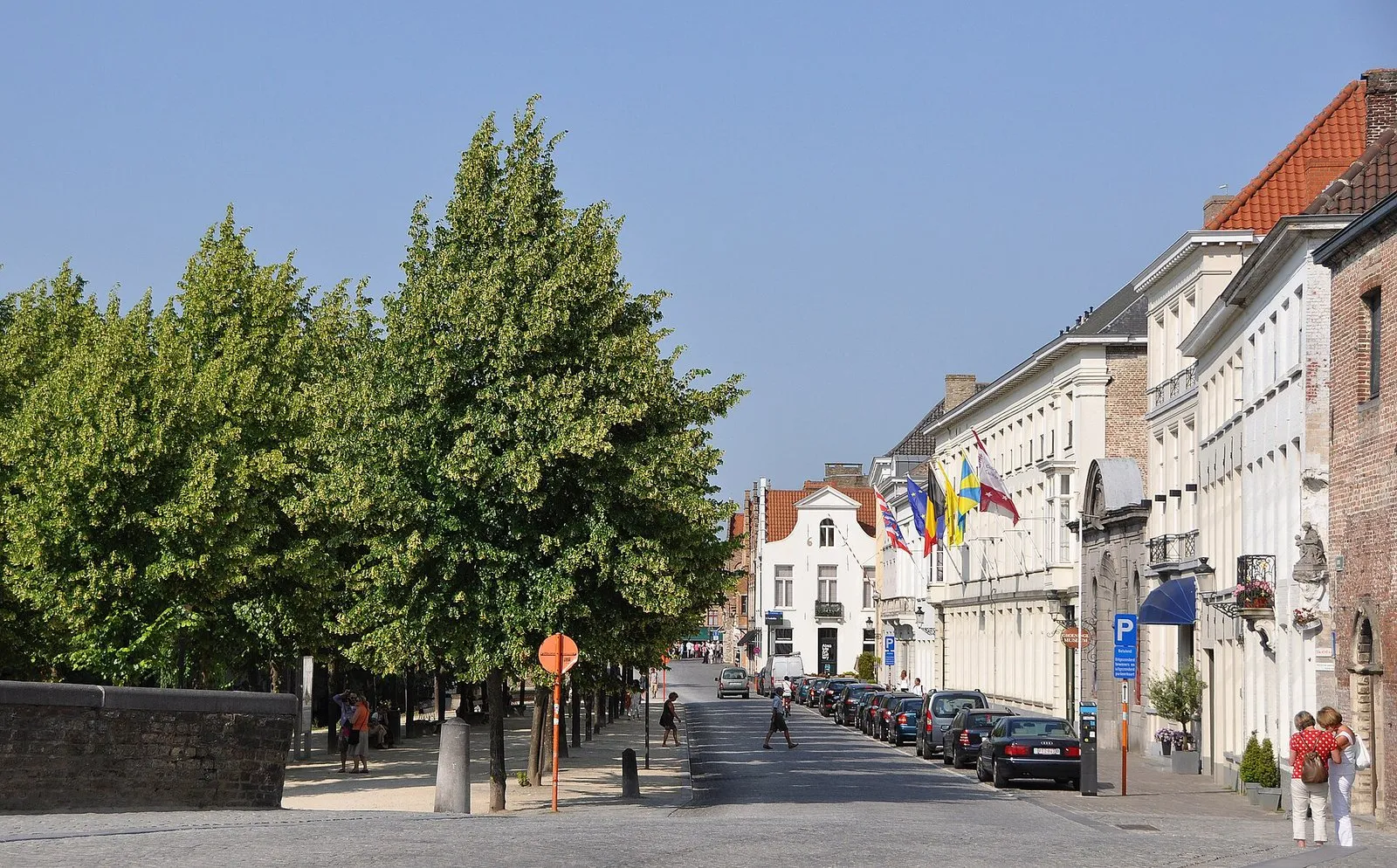
The Burg, the square the basilica stands on, with the town hall at right. Photo: Marc Ryckaert, Wikimedia Commons, CC BY 4.0.
The basilica is on the Burg, a few minutes from the Markt and the Belfry. Visit the Stadhuis next door (€8) with the other Musea Brugge sites, or walk on to the canal cruise and the Church of Our Lady.
Common questions
Is the Basilica of the Holy Blood free?
Yes. Entry to the basilica is free. The museum and treasury cost €5, and children under 12 are free.
When can I see the Holy Blood relic?
Every day from 14:00 to 16:00 and on Friday mornings from 10:15 to 11:00, in the upper basilica.
What are the opening hours?
10:00 to 17:15 every day. During religious services the chapels are open only to people attending.
When is the Holy Blood Procession?
On Thursday 6 May 2027, Ascension Day, at 14:30. The basilica says 1,700 people take part and about 35,000 watch.
Is the museum on the Musea Brugge Card?
No. The basilica runs its own museum and is not among the 12 Musea Brugge sites on the card.
Is the relic really blood from the crucifixion?
The basilica's own website says most historians now doubt the story that Count Thierry of Alsace brought it from Jerusalem in 1150. It puts the oldest reliable sources in the 13th century.