In this guide
💡 The Short Version: April to early June and mid-September to October are the milder months, with a mean daily maximum of 20.8°C in April and 27.9°C in September, and 202 to 276 hours of sun a month. July and August are hot, at 29.7°C and 30.2°C. October is the wettest month, at 77 mm. Las Fallas is from 15 to 19 March 2027, with the daily mascletà from 1 March, and Maritime Holy Week follows from 20 to 28 March. Hotels averaged €166 a night across the six Fallas nights in 2026. The figures are AEMET’s normals for 1981 to 2010. Or book a tour: the Oceanogràfic ticketad is from €37 and the old-town walk with entry to the cathedral, San Nicolás and the Lonjaad from €49 (GetYourGuide).
Valencia month by month
The figures are the normals for 1981 to 2010 that AEMET, Spain’s weather agency, prints for its Valencia station, which is 13 m above sea level. Highs and lows are the mean daily maximum and minimum in °C, rain is the monthly total in mm with the number of days with 1 mm or more, and sun is hours a month. Sunrise and sunset are approximate times for the 15th, calculated for Valencia in local time; December is the 21st.
| Month | High / low | Rain | Sun | Sunrise to sunset | What changes |
|---|---|---|---|---|---|
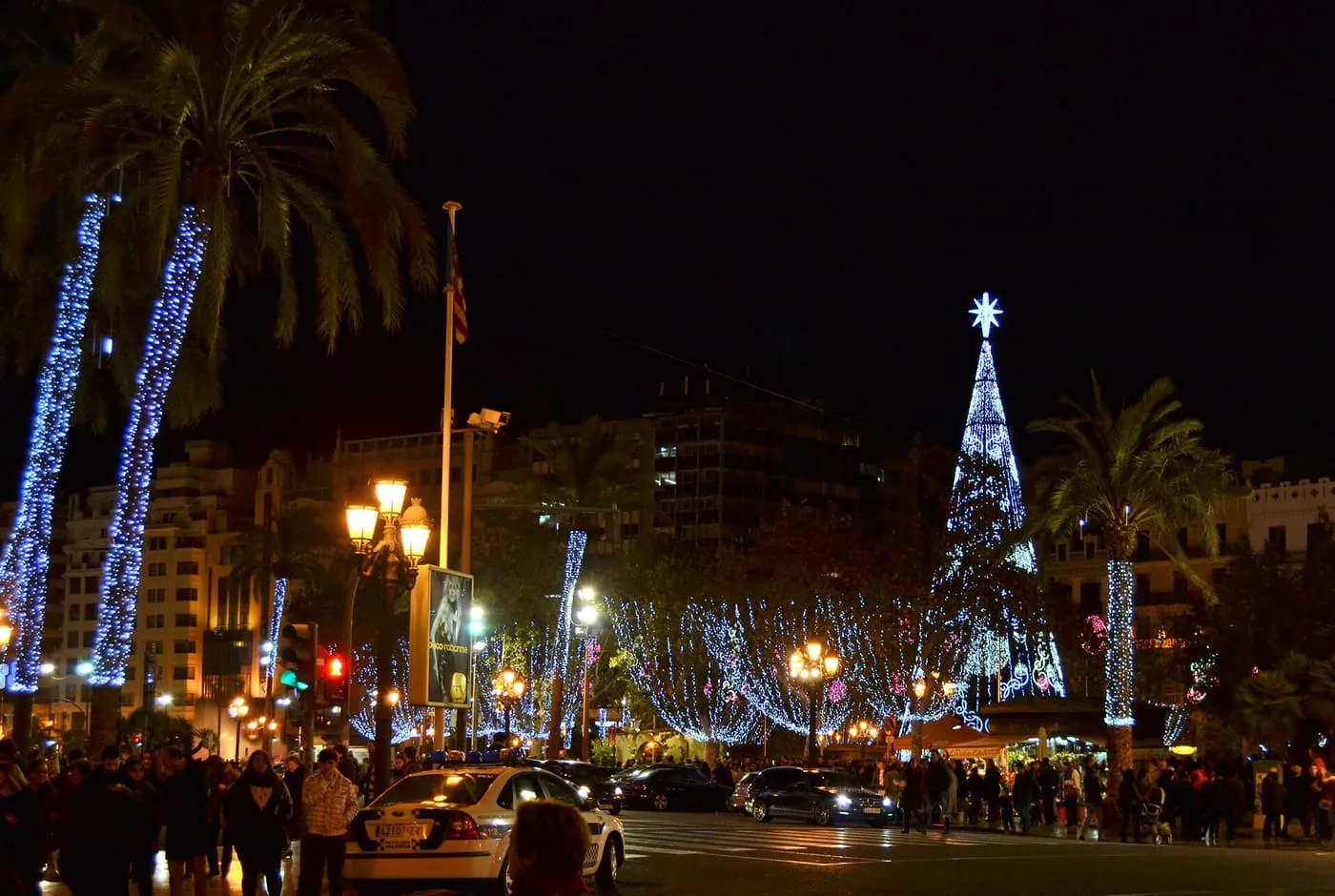
| November 2026 | 19.8 / 10.8 | 47 mm, 4.3 days | 167 h | 07:44 to 17:47 | Christmas lights from late November in a normal year. The clocks went back on 25 October |
| December 2026 | 17.0 / 8.1 | 48 mm, 4.8 days | 155 h | 08:17 to 17:40 | The Valencia Marathon on the 6th, the nativity route from the 1st, Christmas and the San Silvestre race on the 30th: see Valencia at Christmas 2026 |
| January 2027 | 16.4 / 7.1 | 37 mm, 4.4 days | 171 h | 08:20 to 18:00 | The Three Kings on the 5th; 6 January is a public holiday |
| February 2027 | 17.1 / 7.8 | 36 mm, 3.9 days | 171 h | 07:54 to 18:36 | La Crida, the Fallas proclamation, on the 28th |
| March 2027 | 19.3 / 9.6 | 33 mm, 3.6 days | 215 h | 07:14 to 19:07 | Las Fallas, with the mascletà from the 1st and the big days from the 15th to the 19th; Maritime Holy Week from the 20th. The clocks go forward on the 28th |
| April 2027 | 20.8 / 11.5 | 38 mm, 4.8 days | 234 h | 07:25 to 20:37 | The City of Arts and Sciences returns to mid-season prices after Holy Week |
| May 2027 | 23.4 / 14.6 | 39 mm, 4.3 days | 258 h | 06:48 to 21:06 | Corpus Christi on Thursday 27 May |
| June 2027 | 27.1 / 18.6 | 22 mm, 2.6 days | 276 h | 06:34 to 21:31 | Lifeguards on the beaches from 1 June in 2026. About 15 hours of daylight |
| July 2027 | 29.7 / 21.5 | 8 mm, 1.1 days | 314 h | 06:45 to 21:28 | The driest and sunniest month. The Great July Fair; the Battle of the Flowers on the last Sunday, 25 July |
| August 2027 | 30.2 / 21.9 | 20 mm, 2.4 days | 288 h | 07:13 to 20:59 | The hottest month. La Tomatina in Buñol on 25 August |
| September 2027 | 27.9 / 19.1 | 70 mm, 5.0 days | 234 h | 07:41 to 20:12 | Lifeguards to 15 September in 2026. World Paella Day on the 20th |
| October 2027 | 24.3 / 15.2 | 77 mm, 5.0 days | 202 h | 08:10 to 19:24 | The wettest month. 9 October, the Day of the Valencian Community. The clocks go back on the 31st |
The weather in numbers
- Temperature. The year averages 18.3°C. January is the coolest month, with a mean of 11.8°C, and August the warmest, with 26.1°C. Frost falls on 0.5 days a year at the city station.
- Rain. The year adds up to 475 mm over 46.3 days with 1 mm or more. October (77 mm) and September (70 mm) are the wettest months, July (8 mm) the driest, and thunder peaks in September.
- Sun. 2,696 hours a year: 314 in July and 155 in December.
- Humidity stays between 62 and 68 per cent all year.
- Autumn storms. Canada’s travel advice says torrential rain and storms are common in the autumn on the Mediterranean coast, particularly in the Valencian Community. Check AEMET’s warnings before a September to November trip.
- Daylight. About 9 hours 22 minutes at the winter solstice, with sunrise at about 08:17 and sunset at about 17:40 on 21 December, and about 14 hours 57 minutes on 21 June, with sunrise at about 06:34 and sunset at about 21:31.
- Clocks. Spain changes on the last Sunday of October and March: 25 October 2026, 28 March 2027 and 31 October 2027.
Dates that shape a visit
Las Fallas
Mascletà daily from 1 March · big days Monday 15 to Friday 19 March 2027
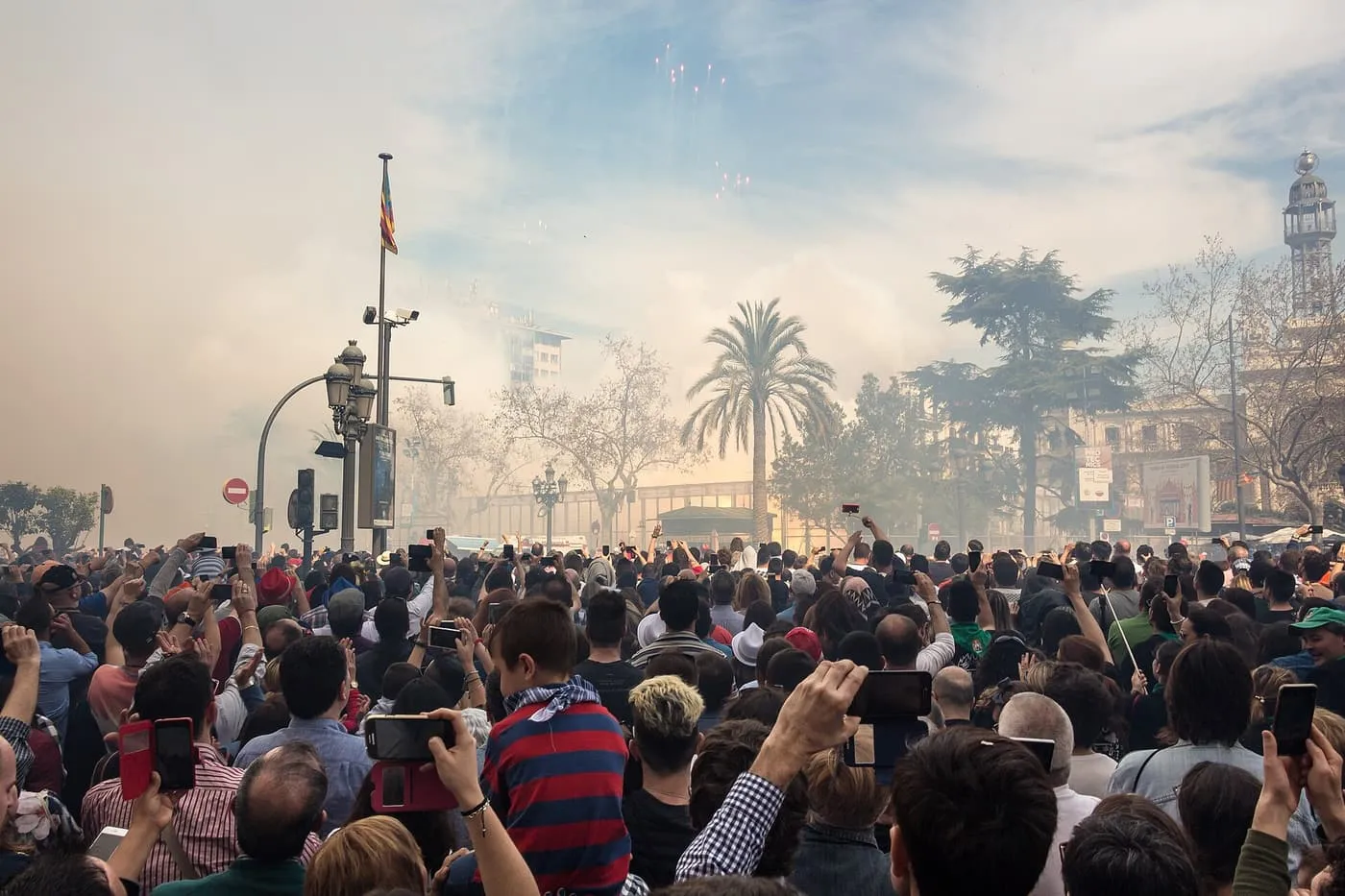
The mascletà fires at 14:00 in the Plaza del Ayuntamiento, the fallas are planted on the night of 15 March and the Cremà is on the night of Friday 19 March, a regional holiday. March’s maxima are 19.3°C, with the lowest rain of the cool months, but the square is closed to traffic from 12:00 each day and hotels cost more: they averaged €166 across the six nights in 2026, in Visit València’s survey. See Las Fallas 2027.
Maritime Holy Week
Saturday 20 to Sunday 28 March 2027 · Cabanyal, Grao and Cañamelar
Semana Santa Marinera is a Festival of National Tourist Interest, rooted in the fishermen of the maritime neighbourhoods, with about 30 brotherhoods according to Visit València (the festival’s Junta Mayor says 31). It is a set of street events with no ticket:
| Day | Date | What happens |
|---|---|---|
| Palm Sunday | 21 March | The Procession of the Palms at 09:45, lasting two and a half hours, from the Plaza de Nuestra Señora de los Ángeles |
| Maundy Thursday | 25 March | The Procession of the Torches along Avenida del Mediterráneo from 20:00, continuing past midnight |
| Good Friday | 26 March | A tribute to the victims of the sea on Las Arenas beach at 08:00; the Holy Burial at 18:30, which Visit València puts at five hours |
| Easter Sunday | 28 March | The Resurrection Parade from 13:00, with a rain of flowers, along Avenida del Mediterráneo |
Fallas ends on the 19th and Holy Week starts the next day. The cathedral gives no cultural visit on Palm Sunday and Good Friday, and the City of Arts and Sciences’ high-season prices run from 20 to 28 March.
The summer festivals
- The Great July Fair and the Battle of the Flowers. The Battle of the Flowers has been held since 1891 on the last Sunday of July on the Paseo de la Alameda, from 20:00, with more than 1.2 million carnations thrown from the floats, according to Visit València’s 2026 listing. In 2027 the last Sunday is 25 July. Metro lines 3, 5, 7 and 9 and buses 25, 26, 70 and 71 serve the Alameda.
- Corpus Christi. The Festa Grossa brings the Rocas, the processional floats, to the Plaza de la Virgen. In 2026 it ran from 4 to 7 June, and Corpus Thursday in 2027 is 27 May.
- La Tomatina, the tomato fight in Buñol, is on the last Wednesday of August, which is 25 August 2027. GetYourGuide’s La Tomatina day trip with an entry ticketad is from €169 for 10 hours, rated 4.8 from 76 reviews. See day trips from Valencia.
- The beach season. The city’s lifeguards worked from 1 June to 15 September in 2026, with weekend cover into October: see the beaches.
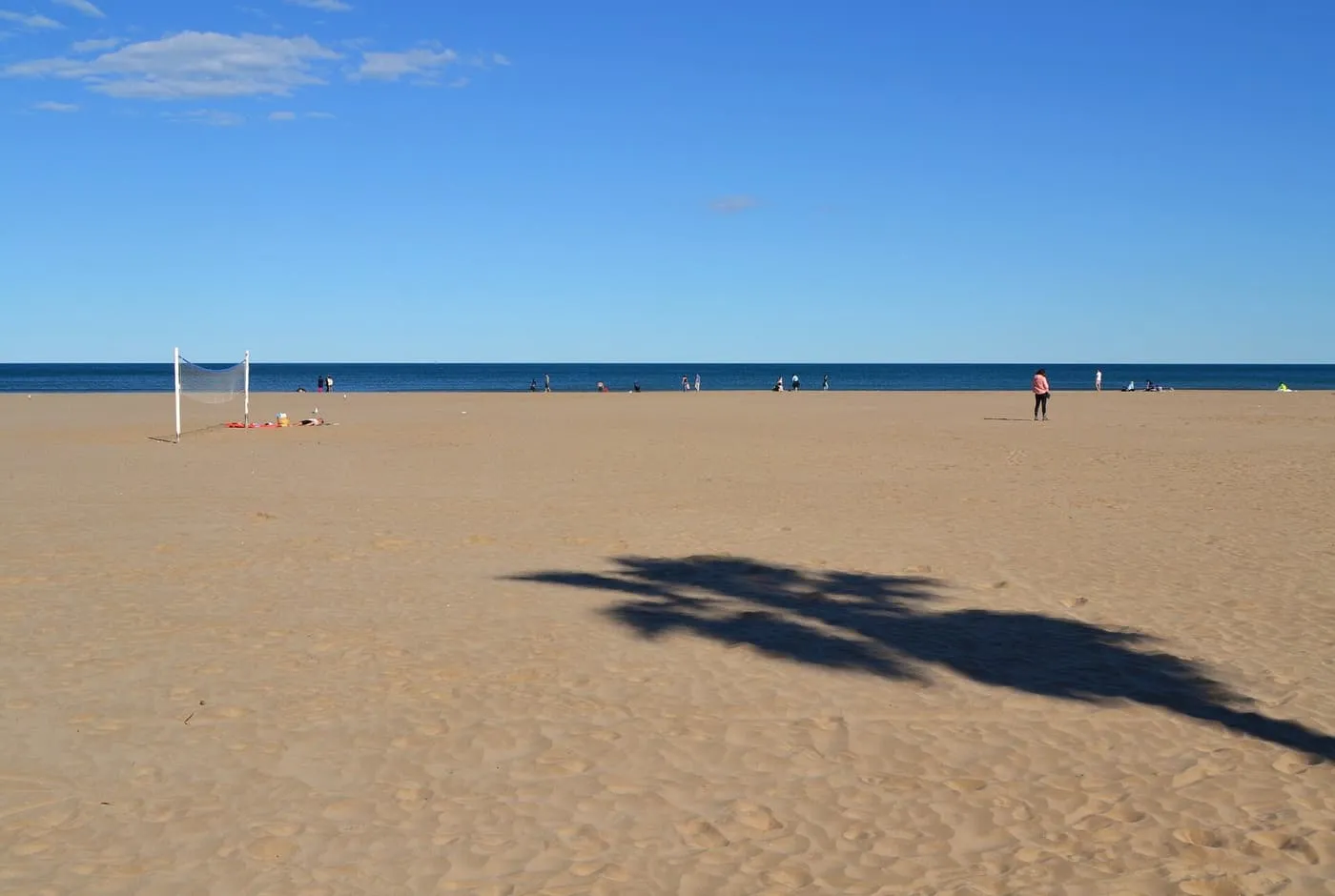
Platja de la Patacona in Alboraia. Photo: Joanbanjo, Wikimedia Commons, CC BY-SA 4.0.
Autumn and the rest of the year
- World Paella Day is 20 September, a Monday in 2027: see best paella in Valencia.
- 9 October is the Day of the Valencian Community, a day the cathedral gives no cultural visit and the City of Arts and Sciences charges high-season prices.
- The Water Court meets every Thursday at 12:00 at the cathedral’s Apostles’ Door, free to watch.
- The Valencia Marathon is on Sunday 6 December 2026, with 36,000 places sold out.
Which month for what
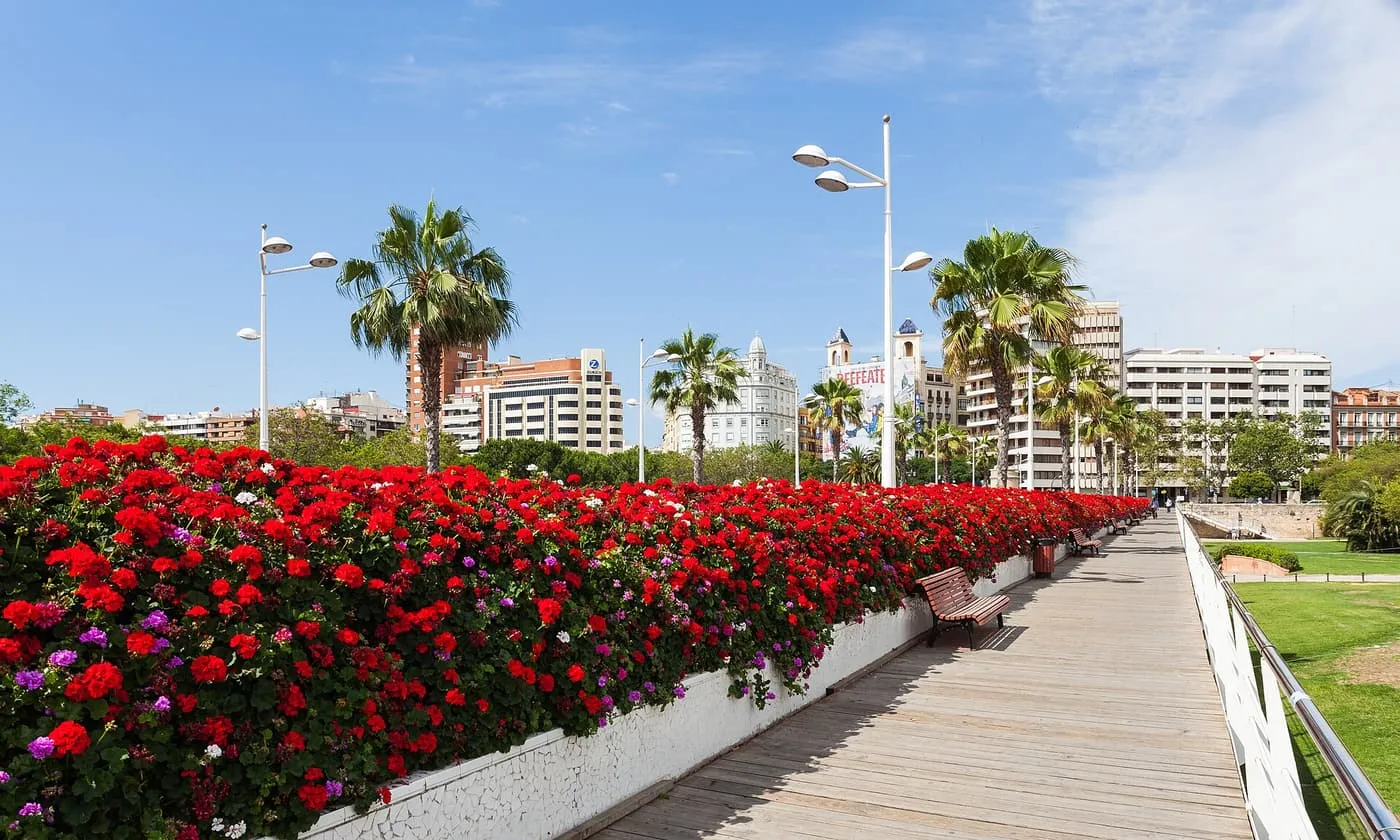
Geraniums in flower on the Puente de las Flores, over the Turia Gardens. Photo: Diego Delso, Wikimedia Commons, CC BY-SA 3.0.
- Mild weather and walking: April to early June, and mid-September to October, when the maxima are 21 to 28°C. September and October bring most of the year’s rain.
- Festivals: March for Las Fallas and Holy Week, when rooms in the centre are scarce, and July for the Battle of the Flowers.
- The beach: June to mid-September, with lifeguards.
- Winter: January and February are mild, with maxima of 16 to 17°C, and Lonely Planet says winter leaves Cabanyal feeling deserted.
- The heat: July and August, at about 30°C by day and the most sun.
- Christmas: the lights from late November, the nativity route to 6 January and the Three Kings on 5 January.
Plan the rest
Where to stay in Valencia compares the areas, and 3 days in Valencia fits the sights round the closed days. What to book before you go to Valencia has the entry rules, and Valencia airport to the city has the way in.
Common questions
What is the best month to visit Valencia?
April to early June and mid-September to October are the milder months, with a mean daily maximum of 20.8°C in April, 23.4°C in May, 27.9°C in September and 24.3°C in October, and 202 to 276 hours of sun a month. October is the wettest month and September the second.
How hot is Valencia in summer?
August has a mean daily maximum of 30.2°C and a minimum of 21.9°C, and July 29.7°C and 21.5°C, with humidity of 67 to 68 per cent. July is the driest month, with 8 mm of rain.
Is Valencia warm in winter?
It is mild: January's mean daily maximum is 16.4°C and its minimum 7.1°C, and the city has about half a day of frost a year. January has 171 hours of sun and 37 mm of rain.
When is the wettest month in Valencia?
October, with 77 mm of rain, then September with 70 mm. The year totals 475 mm over 46.3 days with 1 mm or more. Canada's travel advice says storms are common in autumn in the Valencian Community.
When are Las Fallas in 2027?
The big days are Monday 15 to Friday 19 March 2027, with the Cremà on the night of 19 March, and the daily mascletà fires from 1 March. Maritime Holy Week follows from 20 to 28 March.
Can I swim in Valencia?
The city's lifeguards worked on the beaches from 1 June to 15 September in 2026, with extra cover at weekends to early October.
When do the clocks change in Spain?
On Sunday 25 October 2026 they go back, on Sunday 28 March 2027 they go forward, and on Sunday 31 October 2027 they go back.