In this guide
💡 The Short Version: Ostia Antica, the port of ancient Rome, is a 26-minute Metromare train from Roma Porta San Paolo (next to Piramide on Metro B) for a €1.50 ticket, and the excavations cost €18, so a visit on your own is about €21. It is closed on Mondays, and on the free first Sunday of the month the Ostiense Museum inside the site is closed. Trains run every 20 minutes Monday to Saturday. Or book a tour: the guided half-day by trainad (from £42.00) includes the return train tickets and the entry ticket, which saves you working out the trains and buying tickets.
Getting there on your own
Ostia Antica is on the Metromare, formerly the Roma-Lido railway. The timetable below is Astral’s, in force from 27 July 2026 (Astral timetable, 30 September 2026); Cotral runs the trains.
| Leg | Train | Time | Fare |
|---|---|---|---|
| Piramide (Metro B) to Roma Porta San Paolo | On foot, signposted | A few minutes | Free |
| Roma Porta San Paolo to Ostia Antica | Metromare, direct | 26 minutes | €1.50 (BIT) |
- From Termini: Metro B towards Laurentina to Piramide, four stops via Cavour, Colosseo and Circo Massimo.
- Trains out, Monday to Saturday: from Porta San Paolo at 5, 25 and 45 minutes past each hour from 7:05, arriving at Ostia Antica 26 minutes later, so the 8:05 arrives at 8:31.
- Trains back, Monday to Saturday: from Ostia Antica at 11, 31 and 51 minutes past each hour, reaching Porta San Paolo 26 minutes later.
- Sundays and holidays: a train every 22 minutes, for example 9:17, 9:39 and 10:01 from Porta San Paolo.
- The last train: Monday to Friday, the last trains leave the two ends of the line at 22:30 and replacement buses take over; on Saturdays and Sundays trains run until about 23:30.
- The Roma Pass covers the Metromare, and Ostia Antica’s entry can be one of its free entries: see is the Roma Pass worth it?.
- The ticket: a BIT, €1.50, valid for 100 minutes, validated at the station turnstiles. ATAC lists the Metromare among the services a BIT covers, alongside one metro journey (atac.roma.it, 30 September 2026). Buy another for the way back. Rome’s public transport guide has the passes and the fines.
- On a strike day, Cotral guarantees trains only until 8:30 and from 17:00 to 20:00 (cotralspa.it, 30 September 2026).
From Ostia Antica station it is about 10 minutes on foot to the entrance at Viale dei Romagnoli 717. On the way you pass the village of Ostia Antica and Julius II’s castle, which stand opposite the park.
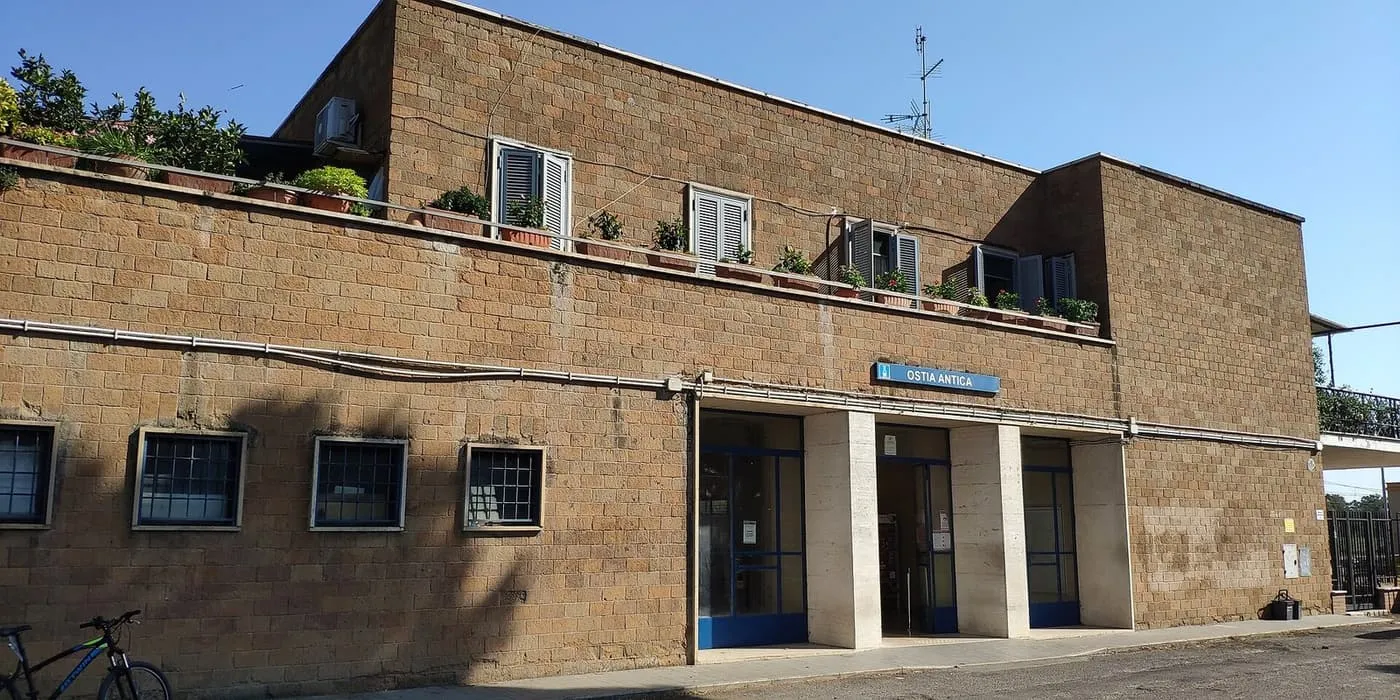
The entrance to Ostia Antica station. Photo: Kaga tau, Wikimedia Commons, CC BY-SA 4.0.
Tours from Rome
A tour covers the trains and the entry in one booking and adds a guide. Prices are GetYourGuide’s lowest “from” price on 30 September 2026.
Guided half-day by train
From £42.00 · 4.8 stars from 578 reviews · 4 hours
From Rome: Ostia Antica Guided Half-Day Trip by Trainad takes the train from Rome with a guide for a 3-hour tour of the ruins, in a small group of up to 12. The listing includes the return train tickets and the Ostia Antica entry ticket. The tour ends at Piramide at about 13:00, and you can stay on at Ostia; the return train is unescorted.
Small-group tour with admission
From £55.92 · 5 stars from 123 reviews · 4 hours
Rome: Ostia Antica Tour from Romead meets outside Piramide station on Piazzale Ostiense, takes the public train with the guide, and includes the €3 of train tickets and the admission. It is two guided halves of 1.5 hours with an optional 20-minute break, in a group of up to 12.
The ticket alone costs more on GetYourGuide
An entry ticket with audio guidead sells from £23.14. The official ticket is €18, about £15 at the ECB rate of 29 September 2026 (€1 = £0.857), and the park’s own audio guide is €5 for the short route or €7 for the long one, so buying both at the gate comes to about £21.
Tickets and hours
€18 · Viale dei Romagnoli 717 · closed Mondays
The park sells one full-price ticket, €18, and it covers every site in the park for 8 consecutive calendar days, including the Ostiense Museum and Julius II’s castle. It is €2 for EU citizens aged 18 to 25. Buy it at the ticket office with cash or a card, or online for a date from CoopCulture, the seller the park links to (ostiaantica.cultura.gov.it, 30 September 2026).
| Dates | Opens | Last entry | Closes |
|---|---|---|---|
| 1 to 24 October 2026 | 8:30 | 17:30 | 18:30 |
| 25 October 2026 to 28 February 2027 | 8:30 | 15:30 | 16:30 |
| 1 to 31 March | 8:30 | 16:15 | 17:15 |
| 1 April to 30 September | 8:30 | 18:00 | 19:00 |
- Closed on Mondays, 25 December and 1 January. Open Tuesday to Sunday and on public holidays.
- Free on the first Sunday of the month, on 25 April, 2 June and 4 November. On those days the Ostiense Museum is closed.
- The Ostiense Museum opens at 9:30, with last admission at 15:00 in winter and 17:30 from April to September.
- Julius II’s castle is €6 on its own, open Tuesday to Sunday, from 10:30 to 16:30 in winter and, from 16 June to 31 October, from 13:30 to 19:30.
- Rules: paths are uneven, there is no left-luggage service, and picnics are not allowed inside; the Café degli Scavi is in the site. Dogs are allowed on a lead. Drones are banned.
What to see
Ostia was Rome’s port at the mouth of the Tiber, and in the 2nd century AD it had, by some estimates, 50,000 inhabitants, so what survives is a town, not a monument: shops, bars, apartment blocks, warehouses, baths and a theatre. The park’s own trail for its grain trade gives an order to follow, all along the main street, the Decumanus Maximus (ostiaantica.cultura.gov.it, 30 September 2026).
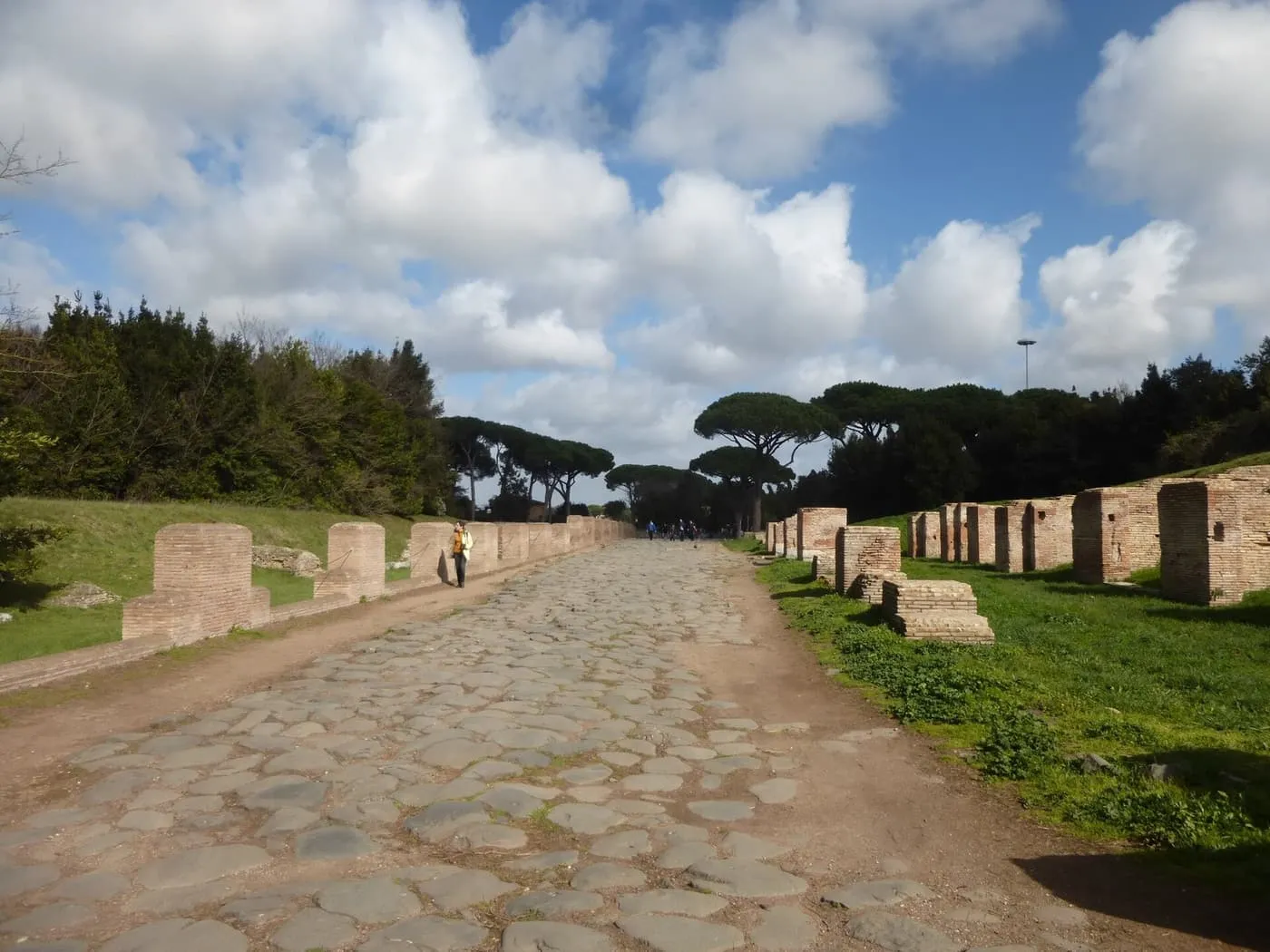
The Decumanus at Ostia Antica, looking towards Porta Romana. Photo: Lalupa, Wikimedia Commons, CC BY-SA 4.0.
- The Baths of Neptune and Via dei Vigili. The Mosaic of the Provinces is seen from Via dei Vigili, the side street along the baths.
- The Theatre and the Piazzale delle Corporazioni. Walk through the theatre to the square behind it, whose mosaic floor shows how grain was carried and measured.
- The Grandi Horrea and the Mill of Silvanus. A grain warehouse, and across from it a bakery with its mill.
- The Forum and the Capitolium. The town’s central square and its main temple, the place to get your bearings.
- The Baths of Porta Marina. The Mosaic of the Athletes shows boxers, wrestlers and a discus thrower, with a leather ball on the prize table that looks like a modern football (ostiaantica.cultura.gov.it, 30 September 2026). Nearby is the Caupona of Alexander and Helix, a tavern named for two boxers.
- The Ostiense Museum. Twelve rooms in a Renaissance salt warehouse, the Casone del Sale, with portraits of Ostians, a statue of the god Mithras and emperors’ statues found on the site.
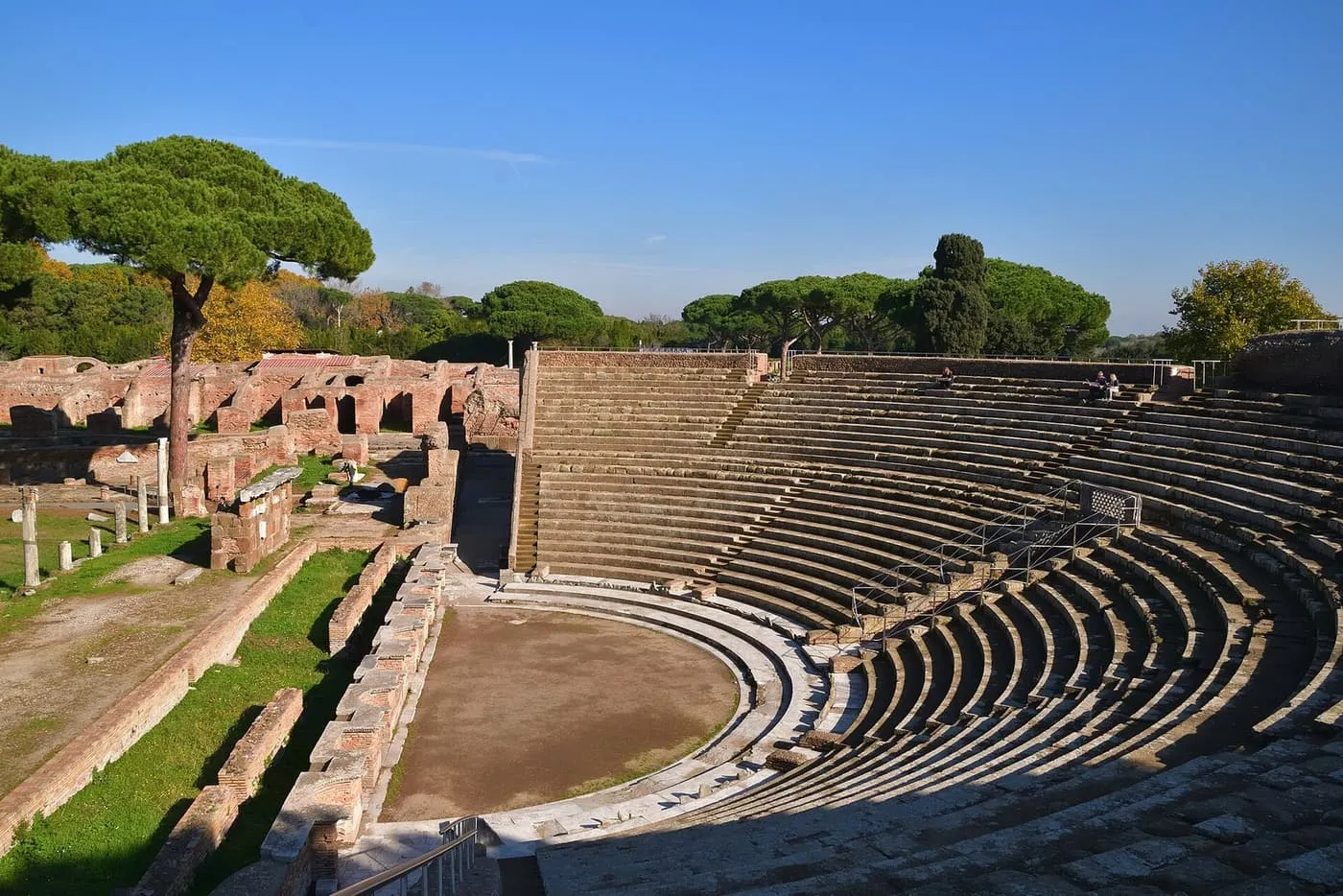
The theatre at Ostia Antica. Photo: Rabax63, Wikimedia Commons, CC BY-SA 4.0.
In a half day, skip the castle, a fortress built in 1483.
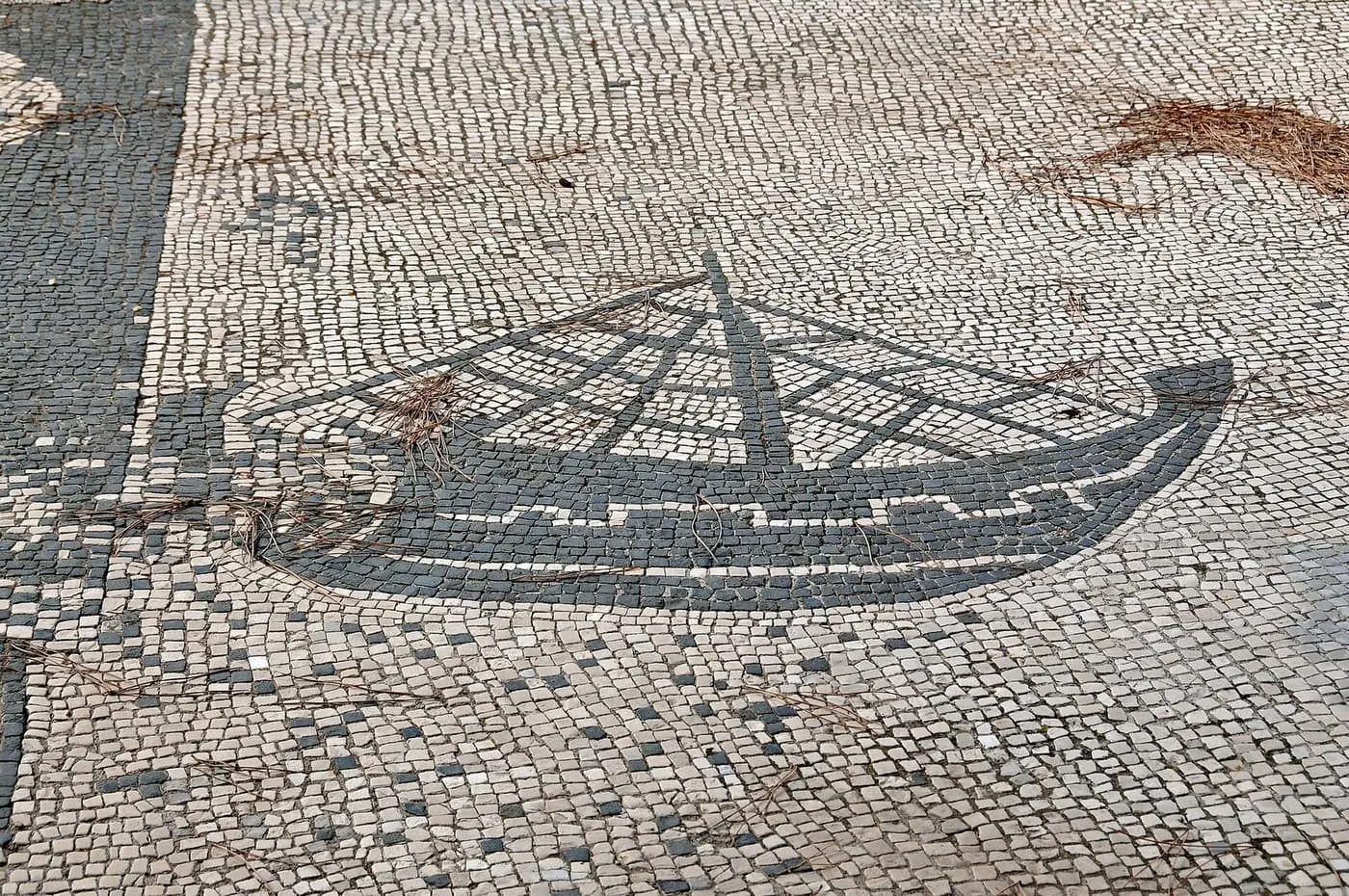
A ship mosaic in the Piazzale delle Corporazioni, Ostia Antica. Photo: Dennis G. Jarvis, Wikimedia Commons, CC BY-SA 2.0.
A half day, hour by hour
| Time | What |
|---|---|
| 8:05 | Metromare from Roma Porta San Paolo, arriving at Ostia Antica at 8:31 |
| 8:45 | At the entrance after about 10 minutes’ walk; the site opens at 8:30 |
| 9:00 to 12:00 | The Decumanus, the Baths of Neptune, the theatre and Piazzale, the Forum and Capitolium, the museum from 9:30 |
| 12:11 | Train back to Porta San Paolo, arriving at 12:37 |
The seaside town of Lido di Ostia is on the same line: Lido Centro is 5 minutes past Ostia Antica station.
Combining it with somewhere else
Ostia Antica is one of the day trips from Rome, and the only one that runs on a city ticket. The other half-day is Tivoli, a €3 train to two villas. If the Colosseum and the Forum are still ahead, the Colosseum tickets guide explains the named ticket, and the 3-day Rome itinerary shows where a half-day fits. For what to book in Rome itself, see what to book before you go.
Common questions
How do you get from Rome to Ostia Antica?
Take Metro B to Piramide and follow the signs to Roma Porta San Paolo, where the Metromare (the former Roma-Lido line) starts. Trains leave every 20 minutes Monday to Saturday and take 26 minutes to Ostia Antica station. A €1.50 BIT ticket covers the ride. The entrance to the ruins is about 10 minutes' walk from the station.
How much does Ostia Antica cost?
€18 for the excavations, museum and the rest of the park, valid for 8 consecutive days, from the park's own site on 30 September 2026. Entry is €2 for EU citizens aged 18 to 25 and free on the first Sunday of the month, on 25 April, 2 June and 4 November. With two €1.50 train tickets a visit on your own comes to €21.
Is Ostia Antica open on Mondays?
No. It is open Tuesday to Sunday and on public holidays, and closed on Mondays, 25 December and 1 January. It opens at 8:30; last entry is one hour before closing, and closing time runs from 16:30 in winter to 19:00 from April to September.
How long do you need at Ostia Antica?
Allow about three hours in the excavations, which is the length of the guided tours, and half a day in all with the train. The site is large and uneven, with no left-luggage service, so wear comfortable shoes.
.jpg)